Prajjwol Tripathi , Anil Thapa , Kamal Dhakal , Pujesh Koirala ,
Aayous Giri
Temperature and Humidity Sensor
Helsinki Metropolia University of Applied Sciences
Degree : Engineering
Degree Programme : Electronics
Sensors
Date 15th
December 2016
Abstract
Author(s)
Title
Number of Pages
Date
Prajjwol Tripathi , Kamal Dhakal , Aayous Giri , Pujesh Koirala,
Anil Thapa
Temperature and Humidity Sensor
11 pages
16 Dec 2016
Degree Engineering
Degree Programme Electronics
Instructor(s) Matti Fischer (Project Manager)
Contents
1 Introduction 2
2 HCZD-5 Sensor 3
2.1 Electrical Characteristics 3
3 Environment Chamber 4
4 Analog Configuration 4
5 Results 8
6 Conclusion 9
References 9
1 Introduction
Humidity is the presence of water vapour in the air, there is about 1% water vapour in
the air in normal room temperature. Humidity affects many properties of air and materials
in contact with it.
Humidity influences many things due to which there are many ways that can be used to
analyse it. Some methods of analysing humidity are:
Relative Humidity
Change in electronic impedance is used to measure the relative humidity
Condensation Principle Hygrometer
Condensation Principle Hygrometer measures stable temperature reported as
dew point or frost point
Dew Point Probe
Based on electronics components
A huge variety of manufacturing, storage and testing process are humidity-critical.
2 HCZD-5 Sensor
Humidity sensors have wide range of applications, can be used as a Humidifier,
Conditioner, dehumidifier or hygrometer.
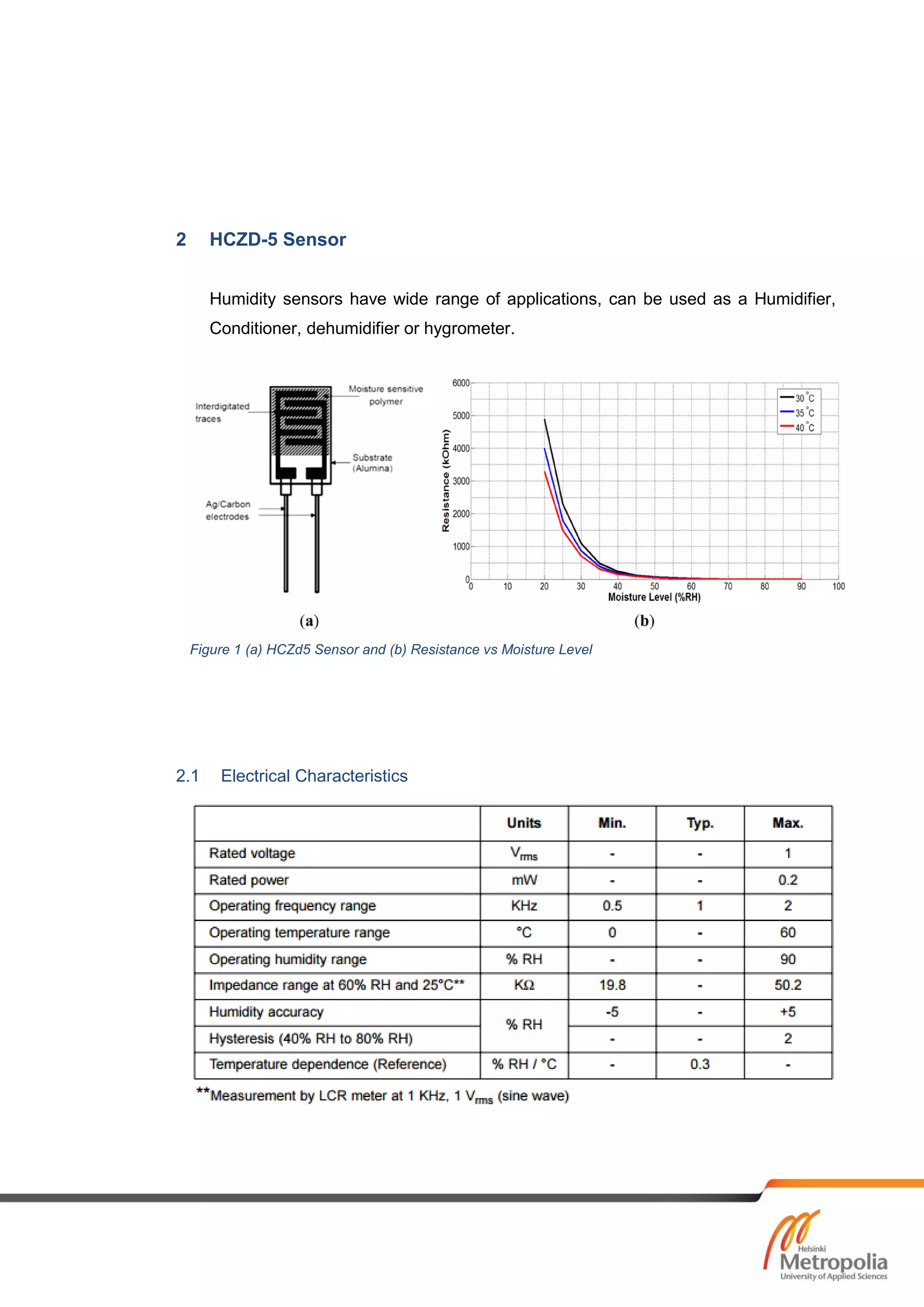
2.1 Electrical Characteristics
Figure 1 (a) HCZd5 Sensor and (b) Resistance vs Moisture Level
3 Environment Chamber
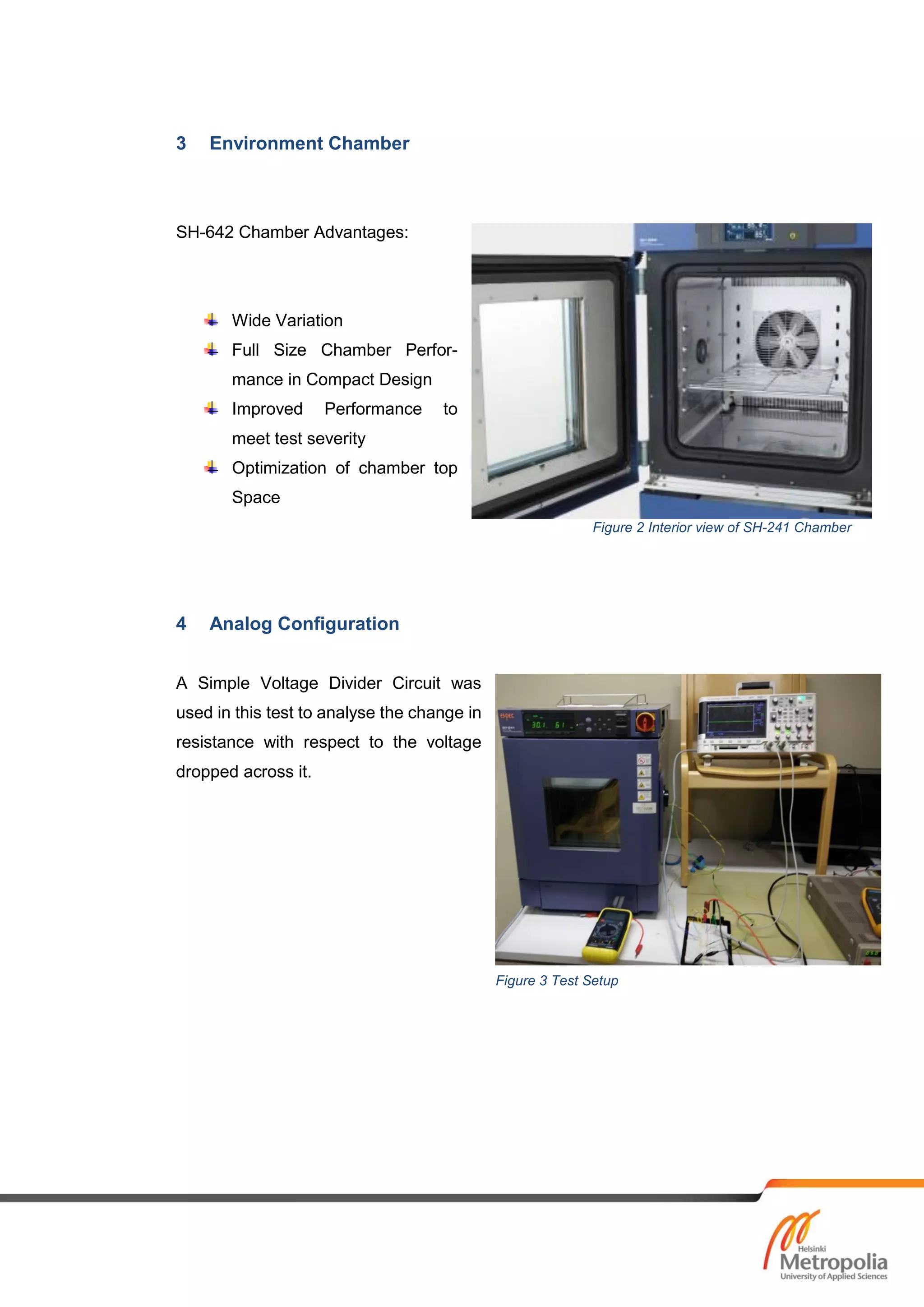
SH-642 Chamber Advantages:
Wide Variation
Full Size Chamber Perfor-
mance in Compact Design
Improved Performance to
meet test severity
Optimization of chamber top
Space
4 Analog Configuration
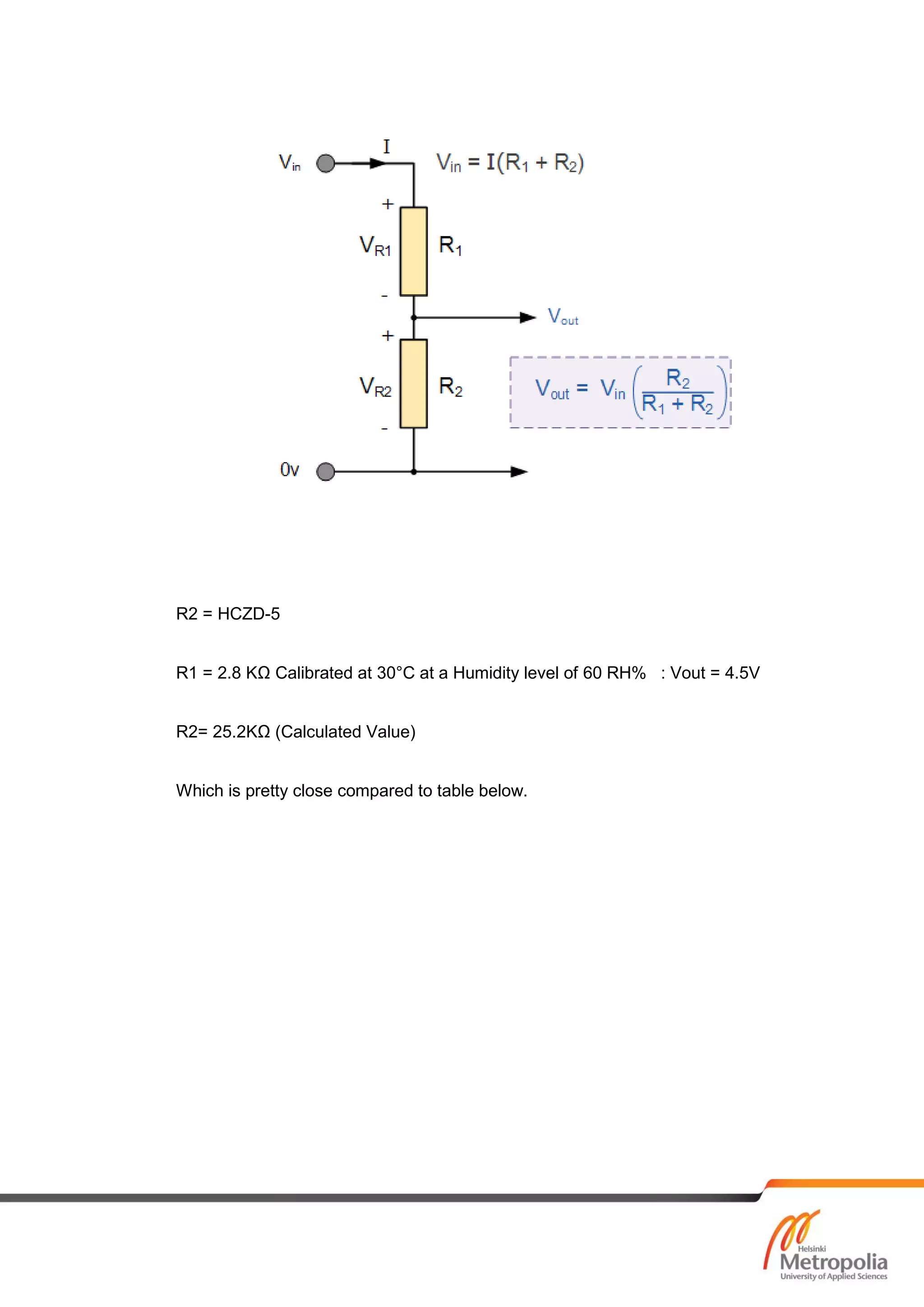
A Simple Voltage Divider Circuit was
used in this test to analyse the change in
resistance with respect to the voltage
dropped across it.
Figure 2 Interior view of SH-241 Chamber
Figure 3 Test Setup
R2 = HCZD-5
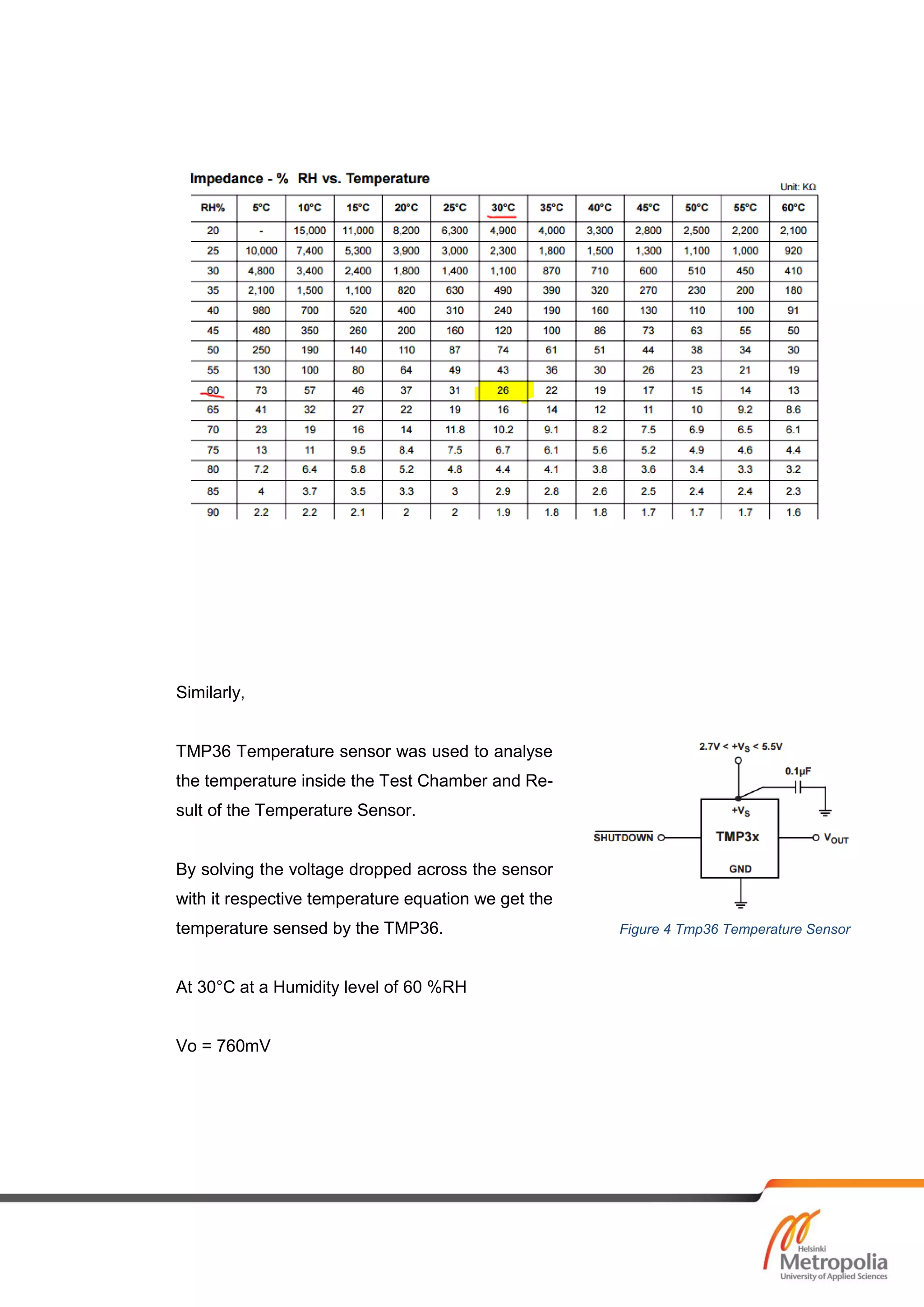
R1 = 2.8 KΩ Calibrated at 30°C at a Humidity level of 60 RH% : Vout = 4.5V
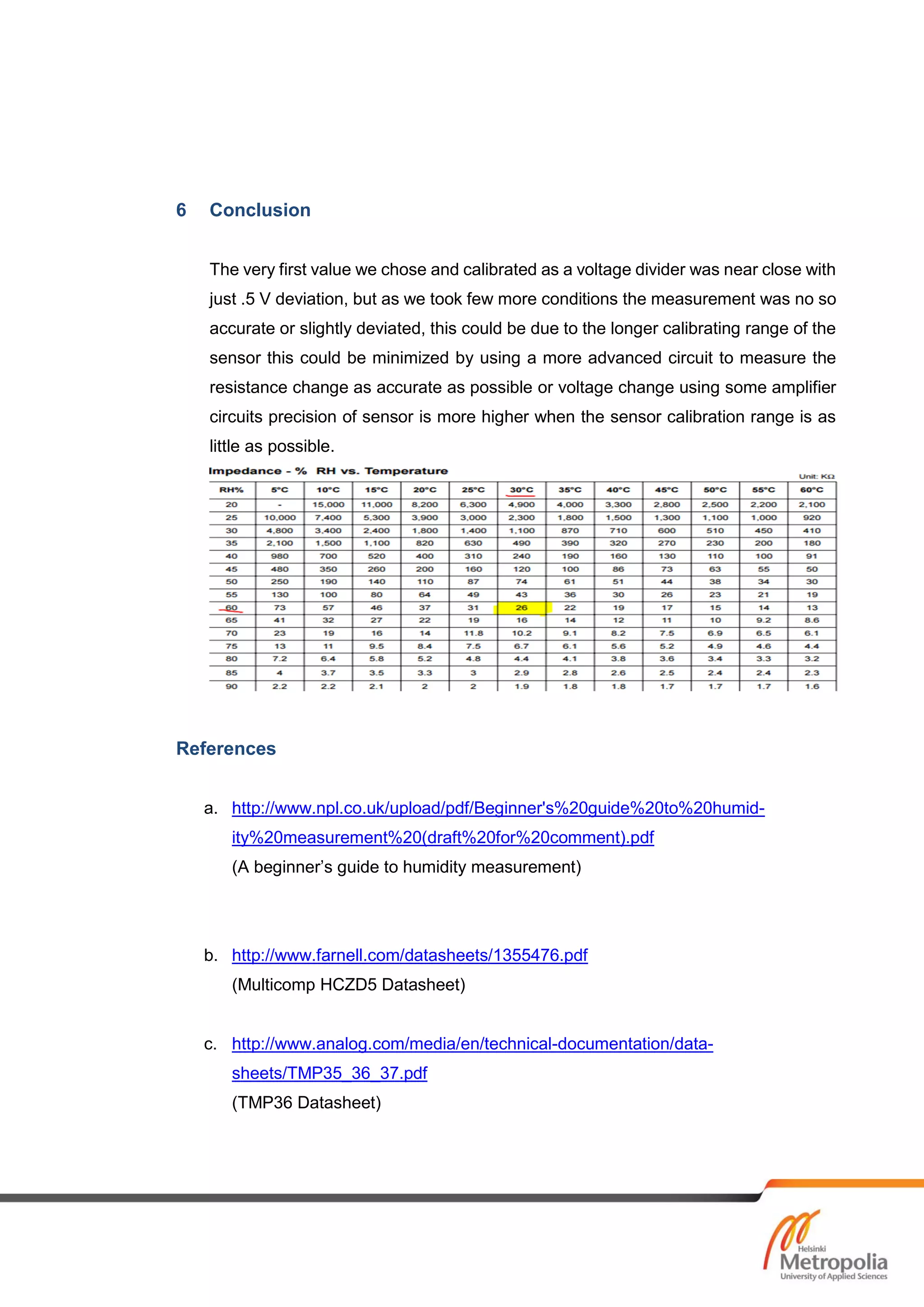
R2= 25.2KΩ (Calculated Value)
Which is pretty close compared to table below.
Similarly,
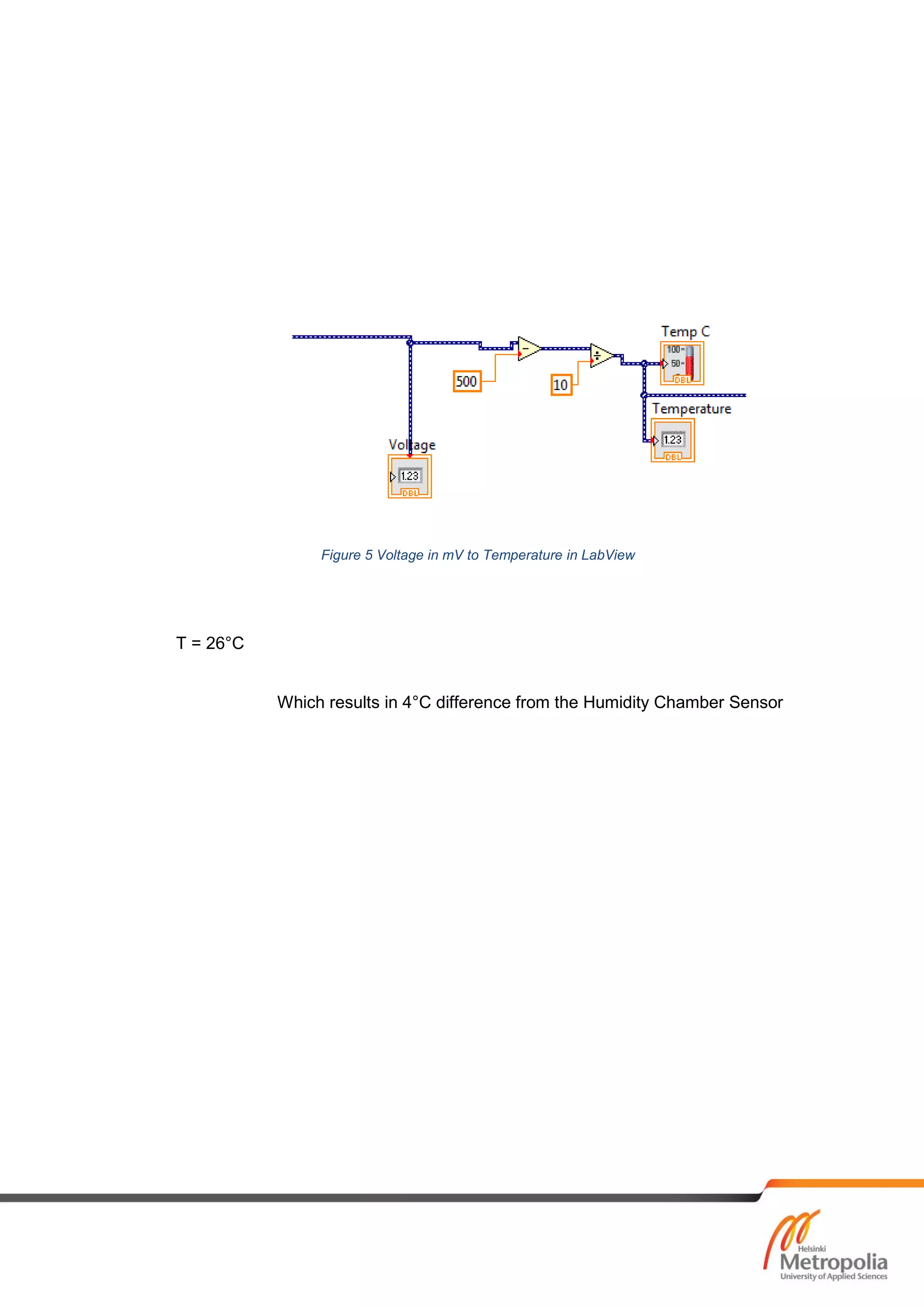
TMP36 Temperature sensor was used to analyse
the temperature inside the Test Chamber and Re-
sult of the Temperature Sensor.
By solving the voltage dropped across the sensor
with it respective temperature equation we get the
temperature sensed by the TMP36.
At 30°C at a Humidity level of 60 %RH
Vo = 760mV
Figure 4 Tmp36 Temperature Sensor
T = 26°C
Which results in 4°C difference from the Humidity Chamber Sensor
Figure 5 Voltage in mV to Temperature in LabView
5 Results
Cham-
ber Hu-
midity
(%RH)
Cham-
ber
Tem-
perature
(°C)
Vout
across
HCZD5
(V)
Vout
across
TMP36
(mV)
Measured
Tempera-
ture
TMP36
(°C)
Measured
Re-
sistance
HCZD5
(KΩ)
Datasheet
Resistance
HCZD5
(KΩ)
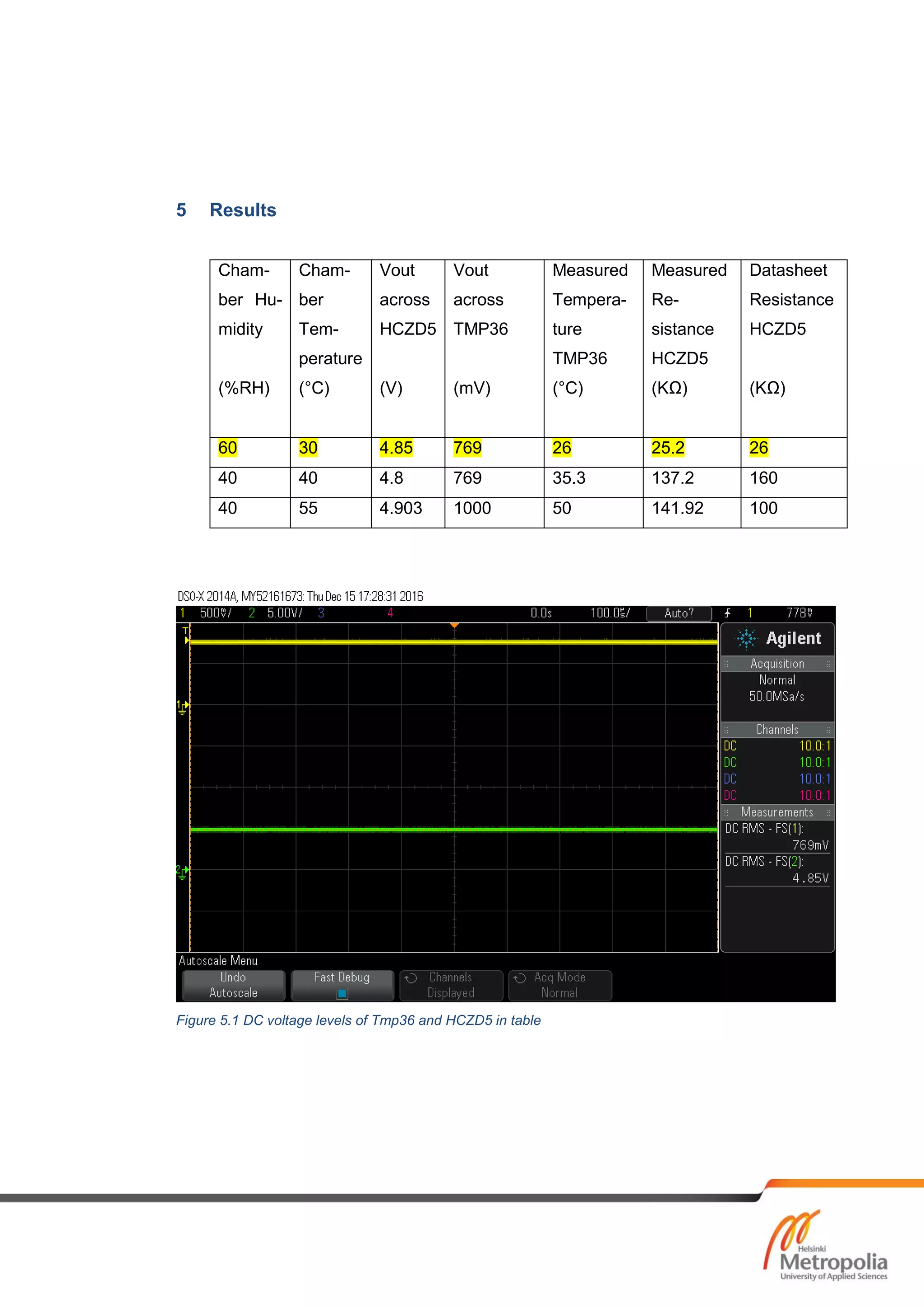
60 30 4.85 769 26 25.2 26
40 40 4.8 769 35.3 137.2 160
40 55 4.903 1000 50 141.92 100
Figure 5.1 DC voltage levels of Tmp36 and HCZD5 in table
6 Conclusion
The very first value we chose and calibrated as a voltage divider was near close with
just .5 V deviation, but as we took few more conditions the measurement was no so
accurate or slightly deviated, this could be due to the longer calibrating range of the
sensor this could be minimized by using a more advanced circuit to measure the
resistance change as accurate as possible or voltage change using some amplifier
circuits precision of sensor is more higher when the sensor calibration range is as
little as possible.
References
a. http://www.npl.co.uk/upload/pdf/Beginner's%20guide%20to%20humid-
ity%20measurement%20(draft%20for%20comment).pdf
(A beginner’s guide to humidity measurement)
b. http://www.farnell.com/datasheets/1355476.pdf
(Multicomp HCZD5 Datasheet)
c. http://www.analog.com/media/en/technical-documentation/data-
sheets/TMP35_36_37.pdf
(TMP36 Datasheet)

Humidity Sensor

  • 1.
    Prajjwol Tripathi ,Anil Thapa , Kamal Dhakal , Pujesh Koirala , Aayous Giri Temperature and Humidity Sensor Helsinki Metropolia University of Applied Sciences Degree : Engineering Degree Programme : Electronics Sensors Date 15th December 2016
  • 2.
    Abstract Author(s) Title Number of Pages Date PrajjwolTripathi , Kamal Dhakal , Aayous Giri , Pujesh Koirala, Anil Thapa Temperature and Humidity Sensor 11 pages 16 Dec 2016 Degree Engineering Degree Programme Electronics Instructor(s) Matti Fischer (Project Manager)
  • 3.
    Contents 1 Introduction 2 2HCZD-5 Sensor 3 2.1 Electrical Characteristics 3 3 Environment Chamber 4 4 Analog Configuration 4 5 Results 8 6 Conclusion 9 References 9
  • 4.
    1 Introduction Humidity isthe presence of water vapour in the air, there is about 1% water vapour in the air in normal room temperature. Humidity affects many properties of air and materials in contact with it. Humidity influences many things due to which there are many ways that can be used to analyse it. Some methods of analysing humidity are: Relative Humidity Change in electronic impedance is used to measure the relative humidity Condensation Principle Hygrometer Condensation Principle Hygrometer measures stable temperature reported as dew point or frost point Dew Point Probe Based on electronics components A huge variety of manufacturing, storage and testing process are humidity-critical.
  • 5.
    2 HCZD-5 Sensor Humiditysensors have wide range of applications, can be used as a Humidifier, Conditioner, dehumidifier or hygrometer. 2.1 Electrical Characteristics Figure 1 (a) HCZd5 Sensor and (b) Resistance vs Moisture Level
  • 6.
    3 Environment Chamber SH-642Chamber Advantages: Wide Variation Full Size Chamber Perfor- mance in Compact Design Improved Performance to meet test severity Optimization of chamber top Space 4 Analog Configuration A Simple Voltage Divider Circuit was used in this test to analyse the change in resistance with respect to the voltage dropped across it. Figure 2 Interior view of SH-241 Chamber Figure 3 Test Setup
  • 7.
    R2 = HCZD-5 R1= 2.8 KΩ Calibrated at 30°C at a Humidity level of 60 RH% : Vout = 4.5V R2= 25.2KΩ (Calculated Value) Which is pretty close compared to table below.
  • 8.
    Similarly, TMP36 Temperature sensorwas used to analyse the temperature inside the Test Chamber and Re- sult of the Temperature Sensor. By solving the voltage dropped across the sensor with it respective temperature equation we get the temperature sensed by the TMP36. At 30°C at a Humidity level of 60 %RH Vo = 760mV Figure 4 Tmp36 Temperature Sensor
  • 9.
    T = 26°C Whichresults in 4°C difference from the Humidity Chamber Sensor Figure 5 Voltage in mV to Temperature in LabView
  • 10.
  • 11.
    6 Conclusion The veryfirst value we chose and calibrated as a voltage divider was near close with just .5 V deviation, but as we took few more conditions the measurement was no so accurate or slightly deviated, this could be due to the longer calibrating range of the sensor this could be minimized by using a more advanced circuit to measure the resistance change as accurate as possible or voltage change using some amplifier circuits precision of sensor is more higher when the sensor calibration range is as little as possible. References a. http://www.npl.co.uk/upload/pdf/Beginner's%20guide%20to%20humid- ity%20measurement%20(draft%20for%20comment).pdf (A beginner’s guide to humidity measurement) b. http://www.farnell.com/datasheets/1355476.pdf (Multicomp HCZD5 Datasheet) c. http://www.analog.com/media/en/technical-documentation/data- sheets/TMP35_36_37.pdf (TMP36 Datasheet)