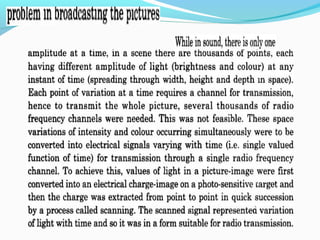
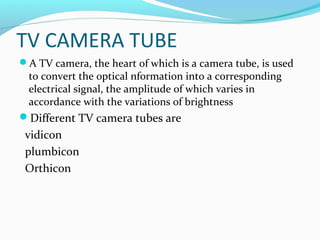
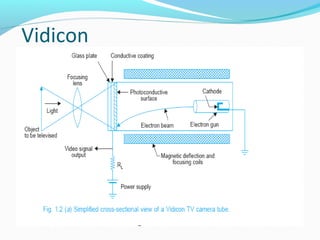
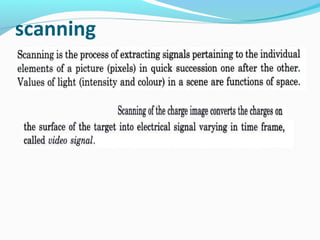
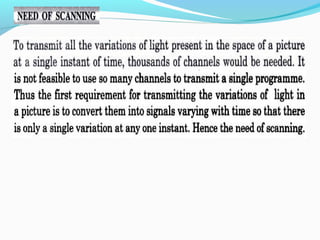
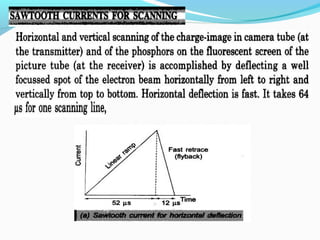
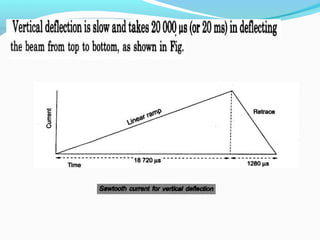
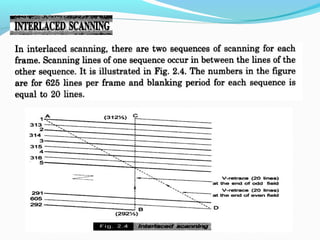
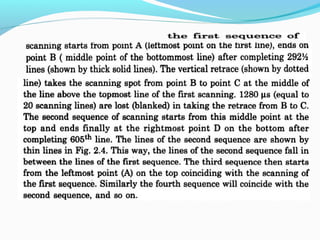
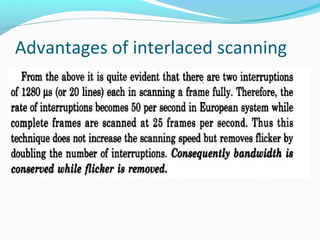
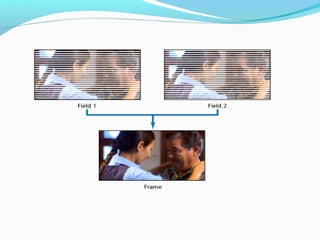
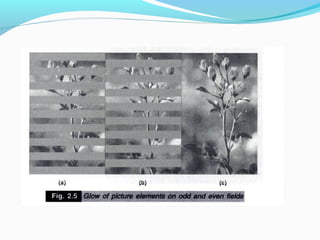
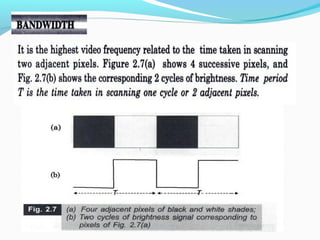
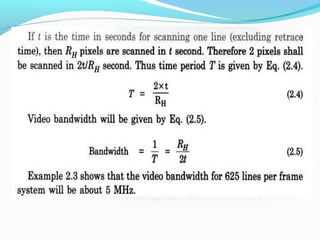
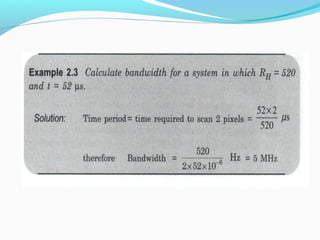
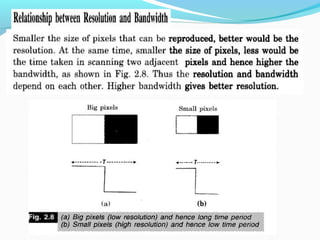
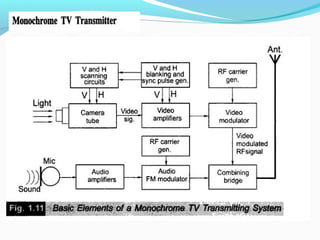
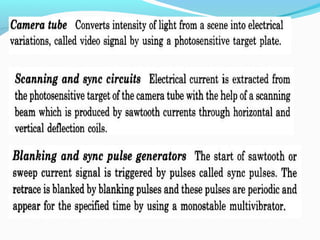
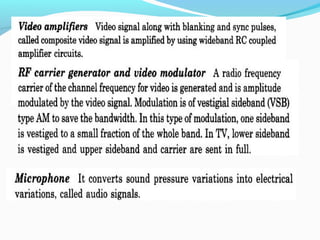
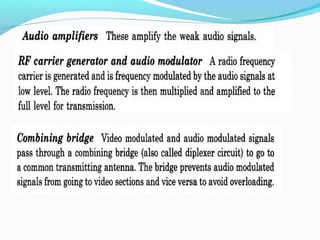
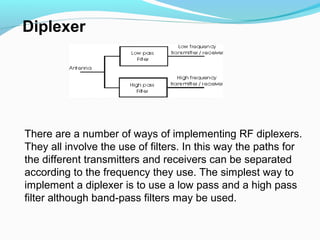
Television works by converting optical images into electrical signals using a TV camera tube like a vidicon. A vidicon uses a photoconductive layer that changes conductivity based on light intensity, allowing an electron beam to scan across it and detect the varying resistance as an electrical image. This signal is then transmitted and processed. Interlaced scanning was developed to reduce flicker without increasing bandwidth, by scanning each video frame twice using odd and even line sequences. RF diplexers separate transmitter and receiver paths by using filters like low-pass and high-pass to direct different frequencies.