Teamwork In Health Organizations
(Hcos)
Aziza Alamri
Fay Albuainain
Salma Almakinzi
Nora Alwohayeb
Mashail Alrayes
Outline:
• Introduction
• Health Care And Teamwork
• Types Of Teams
• Benefit Of Teamwork
• How To Apply Teamwork
• Importance Of Effective Teams
• Leadership In Teamwork
Introduction
Effective teamwork in health-care delivery can have an
immediate and positive impact on patient safety.
“Our challenge … is not whether we will deliver care in
teams but rather how well we will deliver care in
teams.”
Do we have a problem in that ?
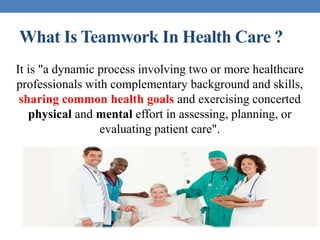
What Is Teamwork In Health Care ?
It is "a dynamic process involving two or more healthcare
professionals with complementary background and skills,
sharing common health goals and exercising concerted
physical and mental effort in assessing, planning, or
evaluating patient care".
TEAM
T
E
A
M
ogether
veryone
chieves
ore
The Different Types Of Teams Found In
Health Care:
1. Core teams
2. Coordinating teams
3. Contingency teams
4. Ancillary services
5. Support services and administration
Types Of Teams In HCOS:
 Core teams
• Consist of team leaders and members who are directly
involved in caring for the patient.
 Coordinating teams
• It is the group responsible for day-to-day operational
management, coordination functions and resource
management for core teams.
Cont.
 Contingency teams
• It is formed for emergent or specific events
 Ancillary services
• Consist of individuals such as cleaners.
 Support services and administration
• Consist of individuals who provide indirect task in a HCOs.
Administration includes the executive leadership of a unit
or facility and has 24-hour accountability for the overall
functioning of the organization.
In Healthcare..
The team members must possess specific knowledge, skills, and
attitudes such as :
• The skill in monitoring each other's performance
• Knowledge of their own and teammate's task responsibilities
• A positive disposition toward working in a team
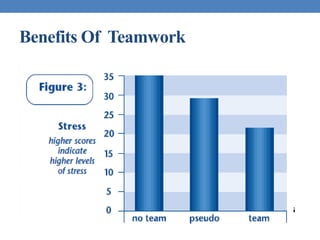
↓work stress
Benefits Of Teamwork
How ToApply Teamwork
Practical tips for health-care professionals to
practice at work:
• Always introduce yourself to the team.
• State the obvious to avoid assumptions.
• Ask questions, check and clarify.
• Clarify your role.
• Use objective (not subjective) language.
Importance Of Effective Teams
The importance of effective teams is increasing due to
factors such as:
• The increased incidence of complexity and specialization
of care.
• Increasing co-morbidities.
• The increasing incidence of chronic disease.
• Global workforce shortages.
• Initiatives for safe working hours.
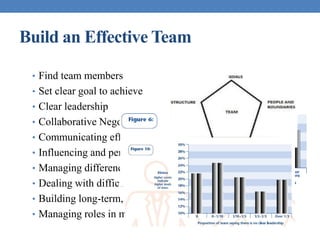
Build an Effective Team
• Find team members
• Set clear goal to achieve
• Clear leadership
• Collaborative Negotiation Skills
• Communicating effectively
• Influencing and persuading others
• Managing differences in perceptions
• Dealing with difficult behaviors
• Building long-term, strategic relationships
• Managing roles in multi-party negotiations
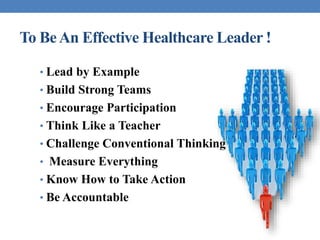
To BeAn Effective Healthcare Leader !
• Lead by Example
• Build Strong Teams
• Encourage Participation
• Think Like a Teacher
• Challenge Conventional Thinking
• Measure Everything
• Know How to Take Action
• Be Accountable
“Teamwork divides the task and multiplies the
success.” - Author Unknown
Questions ?
https://youtu.be/DI4zp7yeuMU
References :
• Topic 4: Being An Effective Team Player / World Health Organization
• Findings From The Health Care Team Effectiveness Project by Carol
Borrill, Michael West, Jeremy Dawson ,Aston Business School, Aston
University.
• http://www.hrhresourcecenter.org/HRH_Info_Teamwork
•http://smallbusiness.chron.com/elements-effective-teamwork-
964.html
•https://www.besmith.com/thought-leadership/career-management/top-
8-practices-effective-healthcare-leaders

Teamwork in HCO

  • 1.
    Teamwork In HealthOrganizations (Hcos) Aziza Alamri Fay Albuainain Salma Almakinzi Nora Alwohayeb Mashail Alrayes
  • 2.
    Outline: • Introduction • HealthCare And Teamwork • Types Of Teams • Benefit Of Teamwork • How To Apply Teamwork • Importance Of Effective Teams • Leadership In Teamwork
  • 4.
    Introduction Effective teamwork inhealth-care delivery can have an immediate and positive impact on patient safety. “Our challenge … is not whether we will deliver care in teams but rather how well we will deliver care in teams.” Do we have a problem in that ?
  • 5.
    What Is TeamworkIn Health Care ? It is "a dynamic process involving two or more healthcare professionals with complementary background and skills, sharing common health goals and exercising concerted physical and mental effort in assessing, planning, or evaluating patient care".
  • 6.
  • 7.
    The Different TypesOf Teams Found In Health Care: 1. Core teams 2. Coordinating teams 3. Contingency teams 4. Ancillary services 5. Support services and administration
  • 8.
    Types Of TeamsIn HCOS:  Core teams • Consist of team leaders and members who are directly involved in caring for the patient.  Coordinating teams • It is the group responsible for day-to-day operational management, coordination functions and resource management for core teams.
  • 9.
    Cont.  Contingency teams •It is formed for emergent or specific events  Ancillary services • Consist of individuals such as cleaners.  Support services and administration • Consist of individuals who provide indirect task in a HCOs. Administration includes the executive leadership of a unit or facility and has 24-hour accountability for the overall functioning of the organization.
  • 10.
    In Healthcare.. The teammembers must possess specific knowledge, skills, and attitudes such as : • The skill in monitoring each other's performance • Knowledge of their own and teammate's task responsibilities • A positive disposition toward working in a team
  • 11.
  • 12.
    How ToApply Teamwork Practicaltips for health-care professionals to practice at work: • Always introduce yourself to the team. • State the obvious to avoid assumptions. • Ask questions, check and clarify. • Clarify your role. • Use objective (not subjective) language.
  • 13.
    Importance Of EffectiveTeams The importance of effective teams is increasing due to factors such as: • The increased incidence of complexity and specialization of care. • Increasing co-morbidities. • The increasing incidence of chronic disease. • Global workforce shortages. • Initiatives for safe working hours.
  • 14.
    Build an EffectiveTeam • Find team members • Set clear goal to achieve • Clear leadership • Collaborative Negotiation Skills • Communicating effectively • Influencing and persuading others • Managing differences in perceptions • Dealing with difficult behaviors • Building long-term, strategic relationships • Managing roles in multi-party negotiations
  • 15.
    To BeAn EffectiveHealthcare Leader ! • Lead by Example • Build Strong Teams • Encourage Participation • Think Like a Teacher • Challenge Conventional Thinking • Measure Everything • Know How to Take Action • Be Accountable
  • 16.
    “Teamwork divides thetask and multiplies the success.” - Author Unknown
  • 17.
  • 18.
  • 19.
    References : • Topic4: Being An Effective Team Player / World Health Organization • Findings From The Health Care Team Effectiveness Project by Carol Borrill, Michael West, Jeremy Dawson ,Aston Business School, Aston University. • http://www.hrhresourcecenter.org/HRH_Info_Teamwork •http://smallbusiness.chron.com/elements-effective-teamwork- 964.html •https://www.besmith.com/thought-leadership/career-management/top- 8-practices-effective-healthcare-leaders

Editor's Notes

  • #4 Teams are essti
  • #9 Doctor and nurse Department heead and head nurse
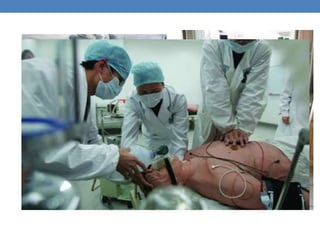
  • #10 Code blue3.
  • #11 All teams in healthcare share all of this
  • #16 Only by example can your vision be properly understood and ultimately embraced. Effective teams reflect a variety of skills and experiences. Successful leaders recruit individuals who complement each other’s leadership skills and bring together varying experiences, perspectives and ideas Successful leaders strive to create a culture of inclusion and security(Only when people feel safe do they have the confidence to share their ideas) know how to offer guidance, direct talent and provide honest, constructive feedback.  consider innovative and unconventional ideas to truly improve healthcare. Measuring everything you do is the only way to precisely benchmark your successes and identify areas for improvement. Effective leaders set into active solutions that can address problems as they arise. Successful leaders demand accountability, not just from their teams, but also from themselves
  • #18 A video about how good teamwork and a good leadership , and good delegation of tasks helps in achieving goals
  • #19 A video about how good teamwork and a good leadership , and good delegation of tasks helps in achieving goals