INTRODUCTION:
● Introduction
● HealthCare & Teamwork
● Types of Team
● Benefits of Teamwork
● Importance of Effective Teams
● Leadership in Teamwork
3.
INTRODUCTION:
🞆Effective teamwork ishealth-care delivery
can have an immediate and positive impact
on patient safety.
🞆“Our challenge…is not whether we will
deliver care in teams but rather how well we
will deliver care in teams.”
4.
WHAT IS TEAMWORKIN HEALTH
CARE?
🞆It is a “dynamic process involving
two or more healthcare professionals
with complementary background
and skills, sharing common health
goals and exercising concerted
physical and mental effort in
assessing, planning, or evaluating
patient care.
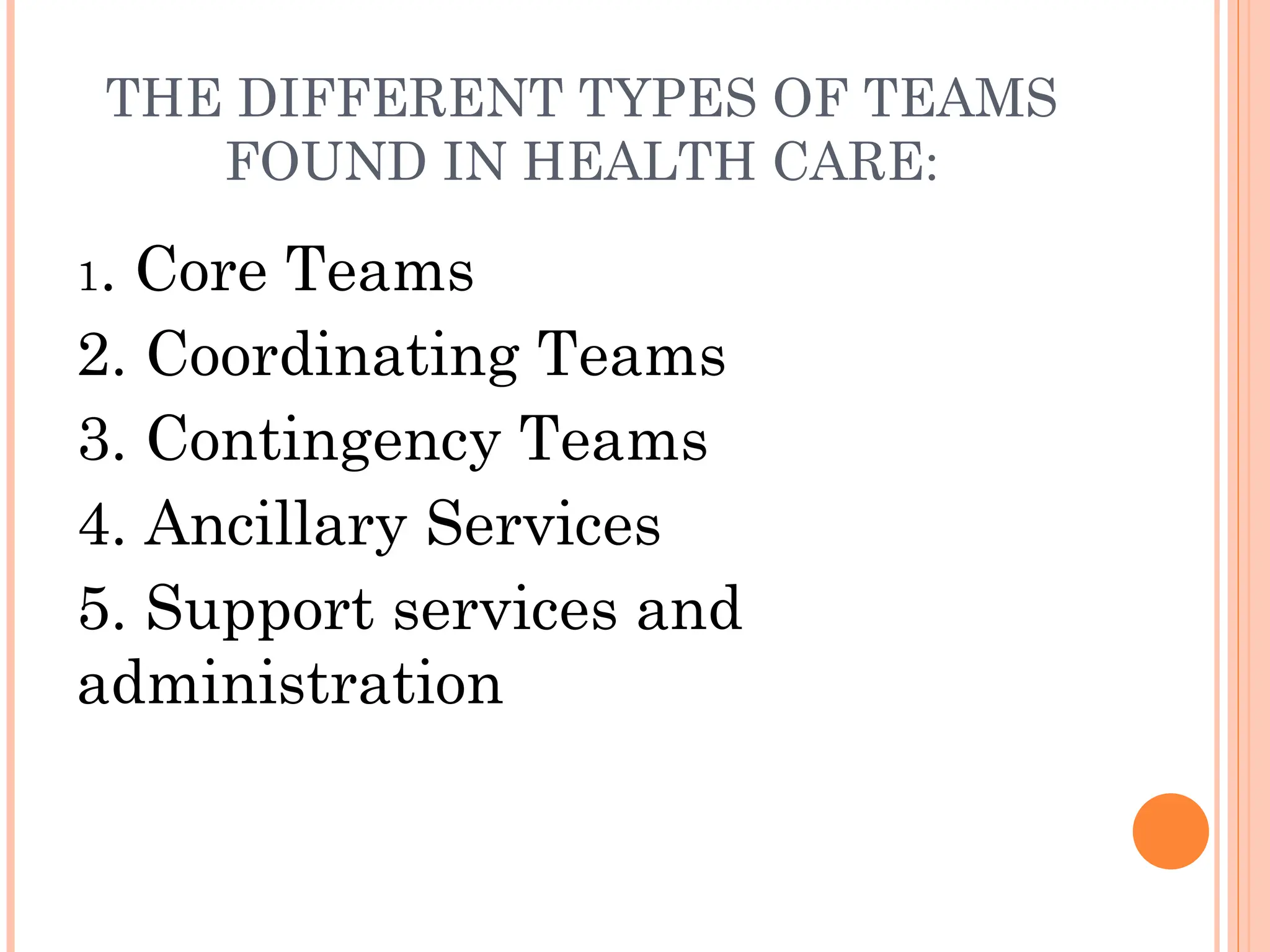
THE DIFFERENT TYPESOF TEAMS
FOUND IN HEALTH CARE:
1. Core Teams
2. Coordinating Teams
3. Contingency Teams
4. Ancillary Services
5. Support services and
administration
7.
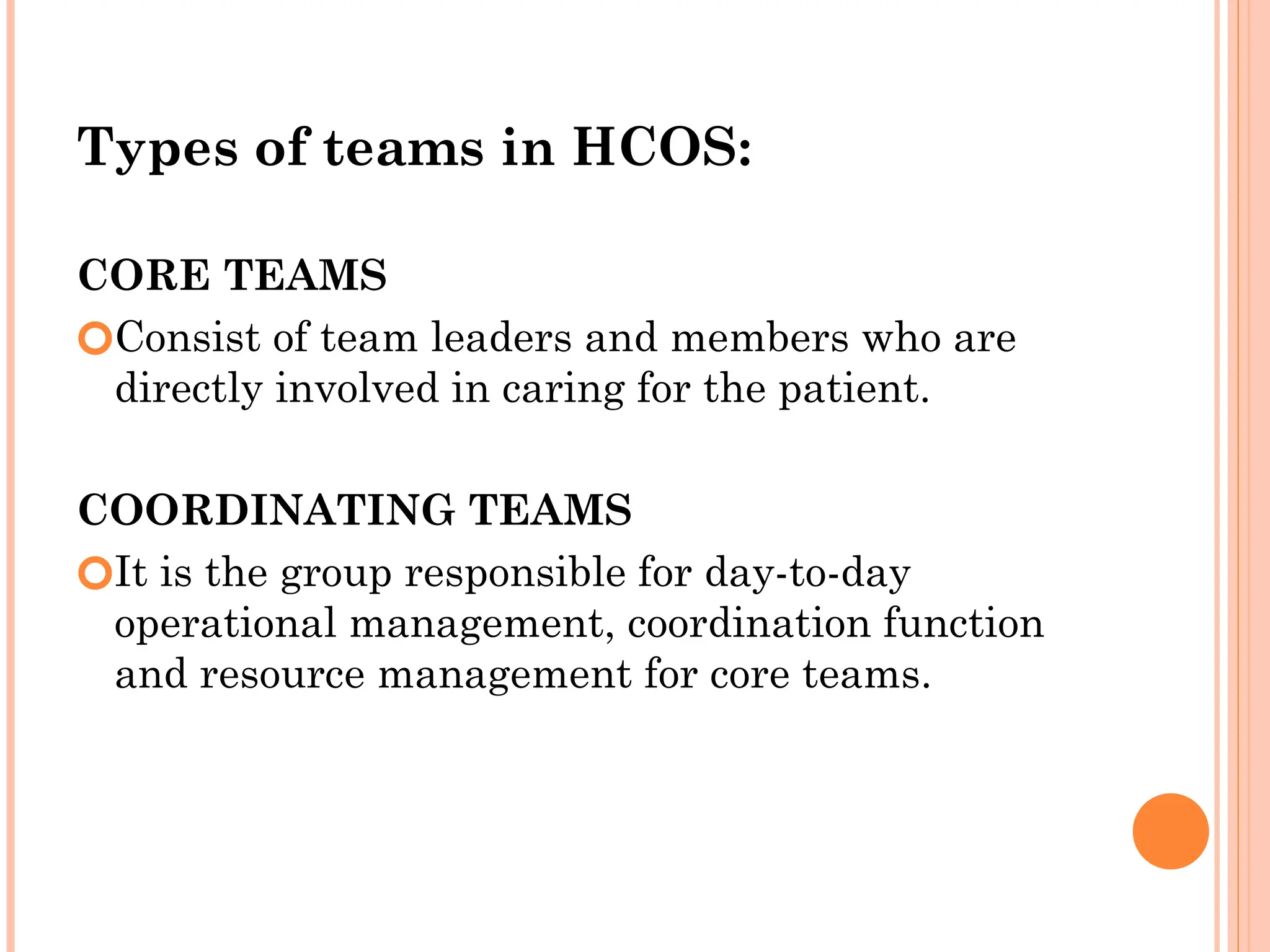
Types of teamsin HCOS:
CORE TEAMS
🞆Consist of team leaders and members who are
directly involved in caring for the patient.
COORDINATING TEAMS
🞆It is the group responsible for day-to-day
operational management, coordination function
and resource management for core teams.
8.
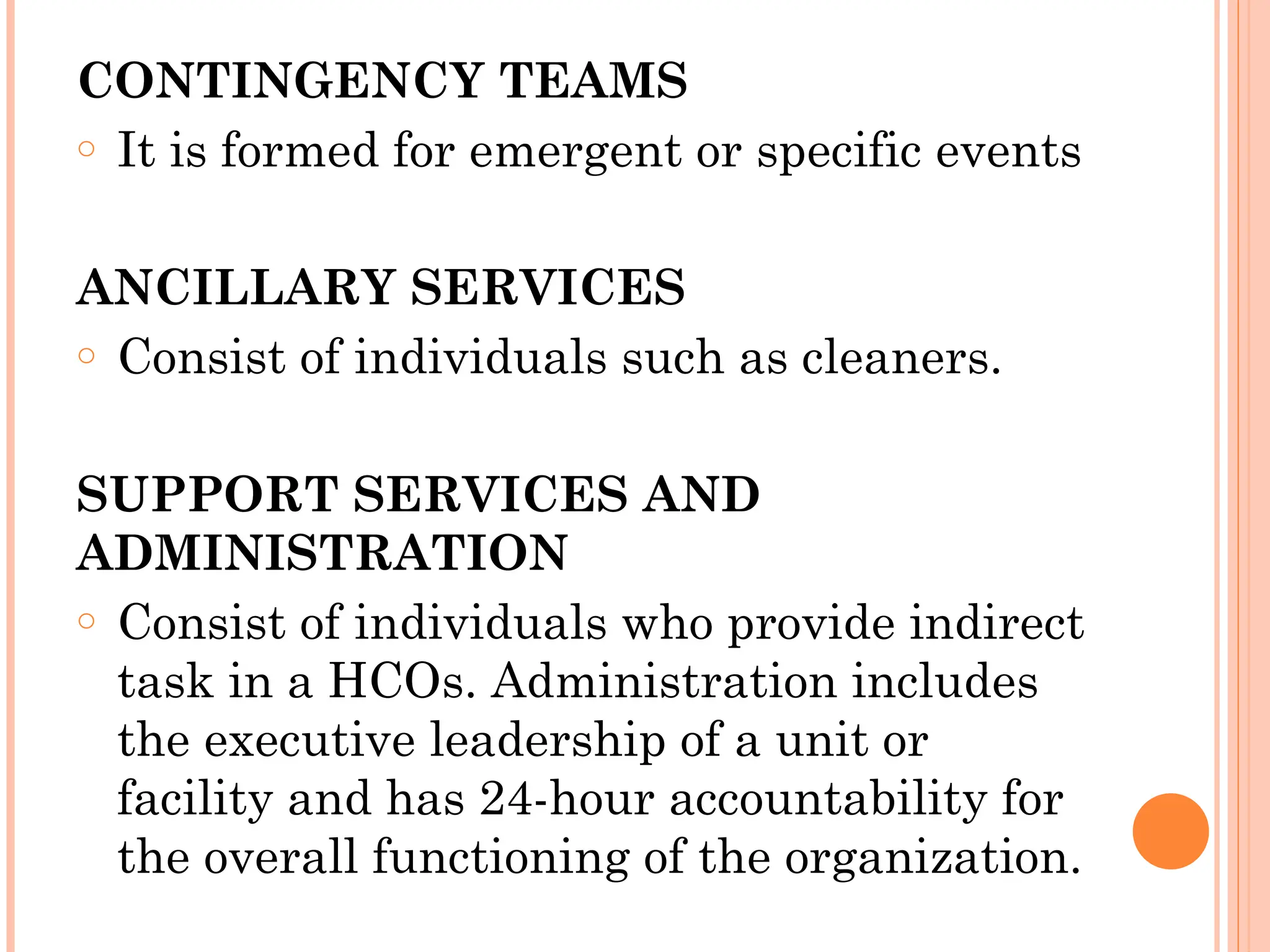
CONTINGENCY TEAMS
o Itis formed for emergent or specific events
ANCILLARY SERVICES
o Consist of individuals such as cleaners.
SUPPORT SERVICES AND
ADMINISTRATION
o Consist of individuals who provide indirect
task in a HCOs. Administration includes
the executive leadership of a unit or
facility and has 24-hour accountability for
the overall functioning of the organization.
9.
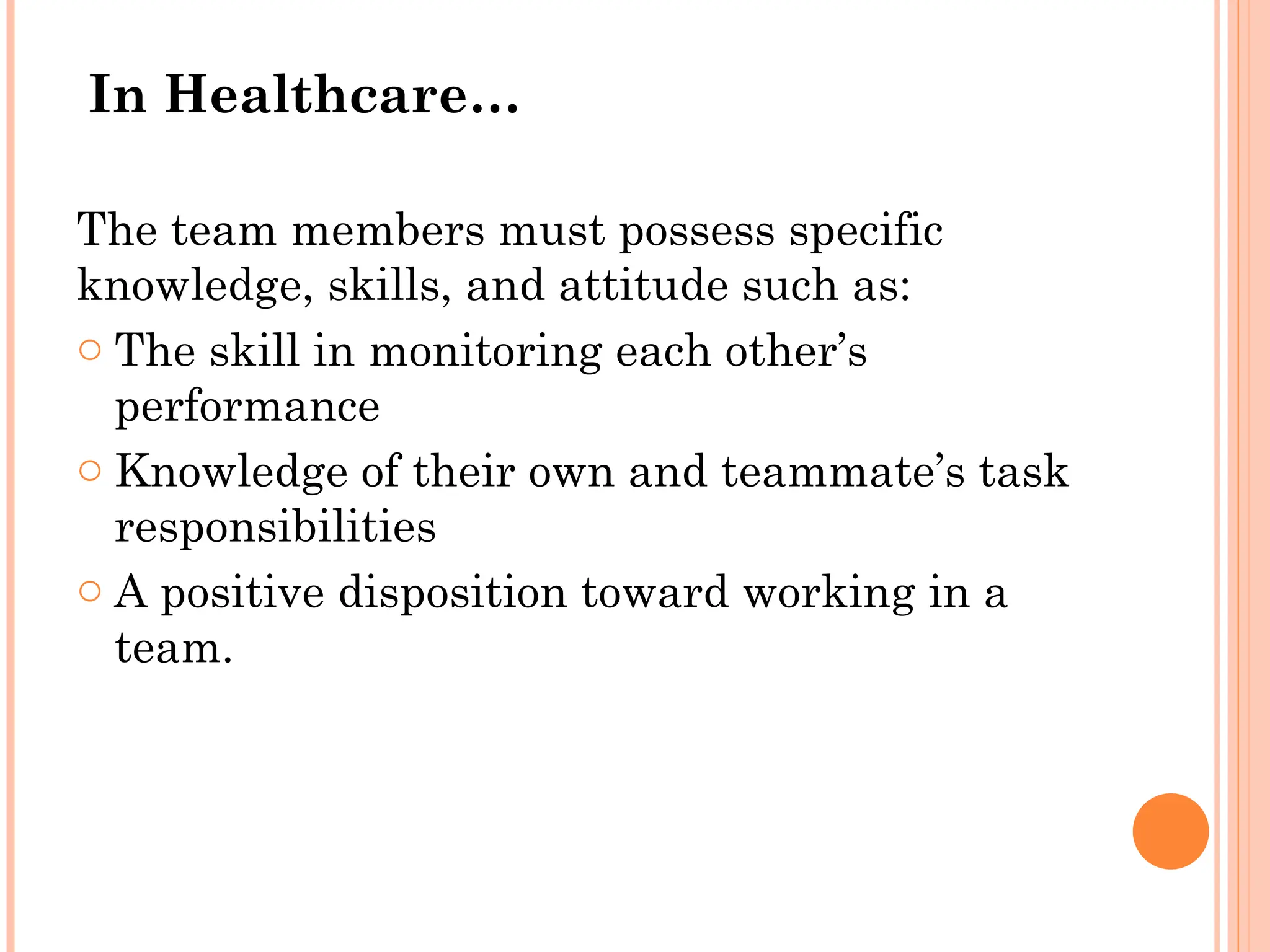
In Healthcare…
The teammembers must possess specific
knowledge, skills, and attitude such as:
o The skill in monitoring each other’s
performance
o Knowledge of their own and teammate’s task
responsibilities
o A positive disposition toward working in a
team.
10.
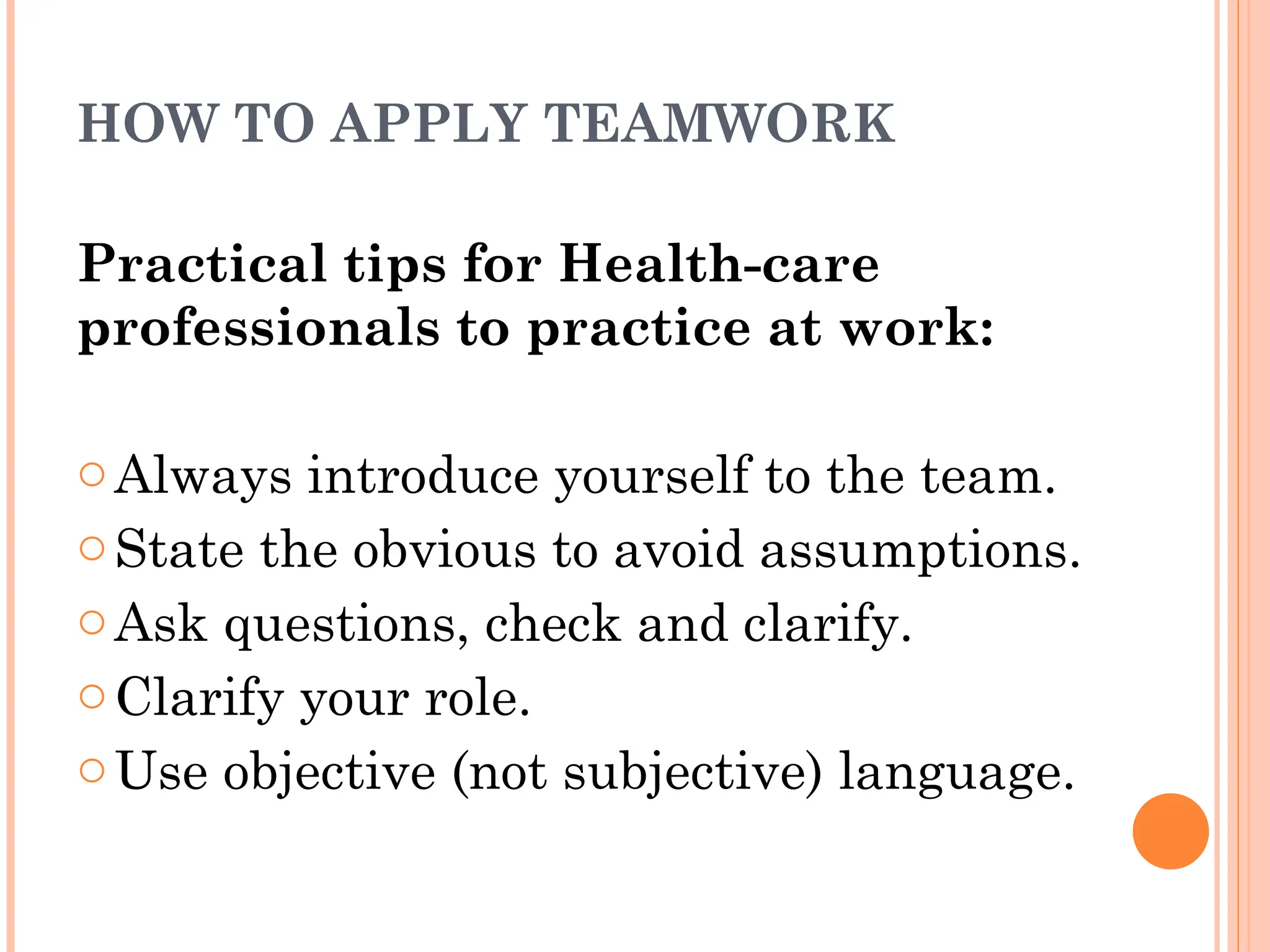
HOW TO APPLYTEAMWORK
Practical tips for Health-care
professionals to practice at work:
oAlways introduce yourself to the team.
oState the obvious to avoid assumptions.
oAsk questions, check and clarify.
oClarify your role.
oUse objective (not subjective) language.
11.
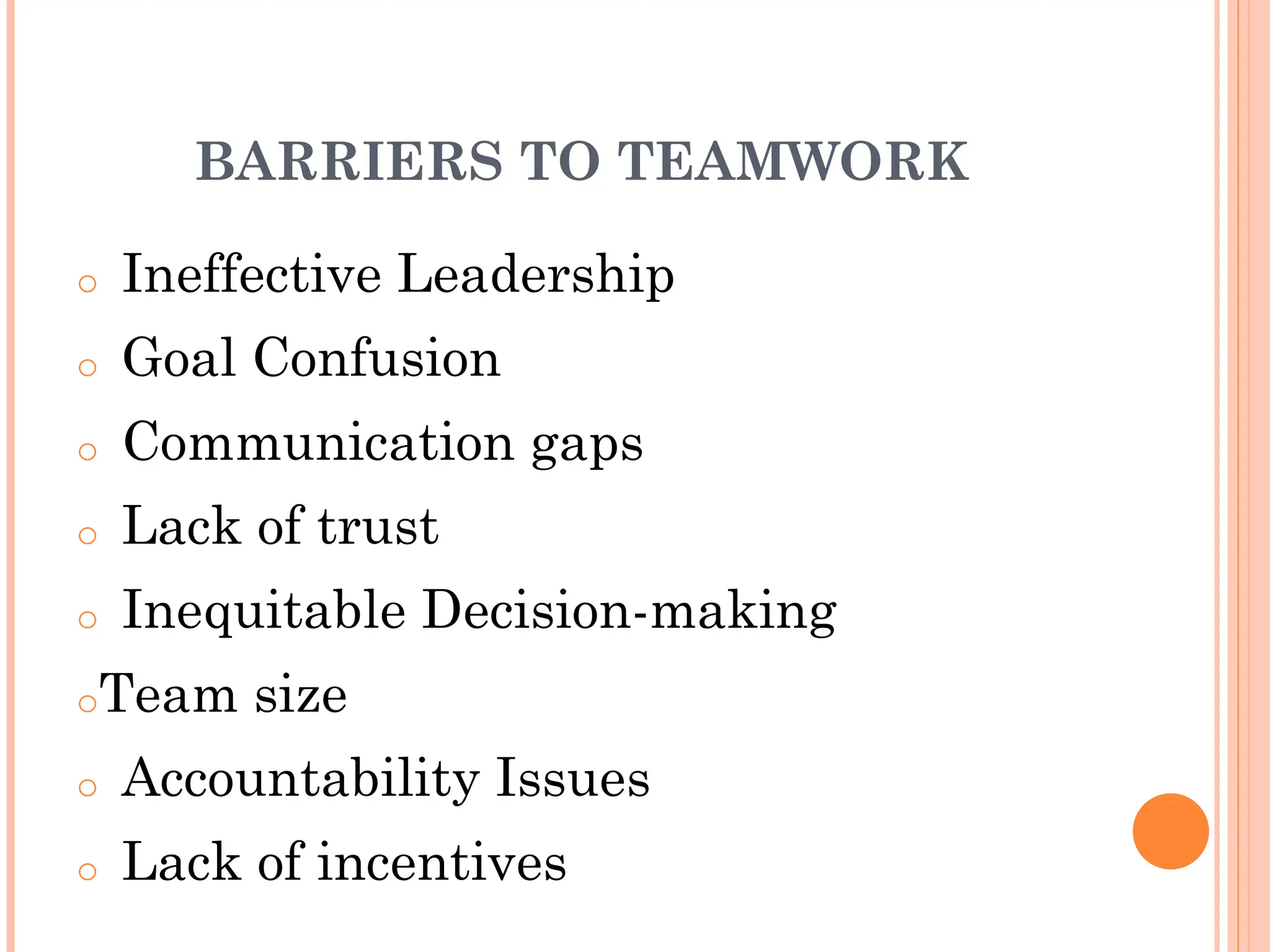
BARRIERS TO TEAMWORK
oIneffective Leadership
o Goal Confusion
o Communication gaps
o Lack of trust
o Inequitable Decision-making
oTeam size
o Accountability Issues
o Lack of incentives
12.
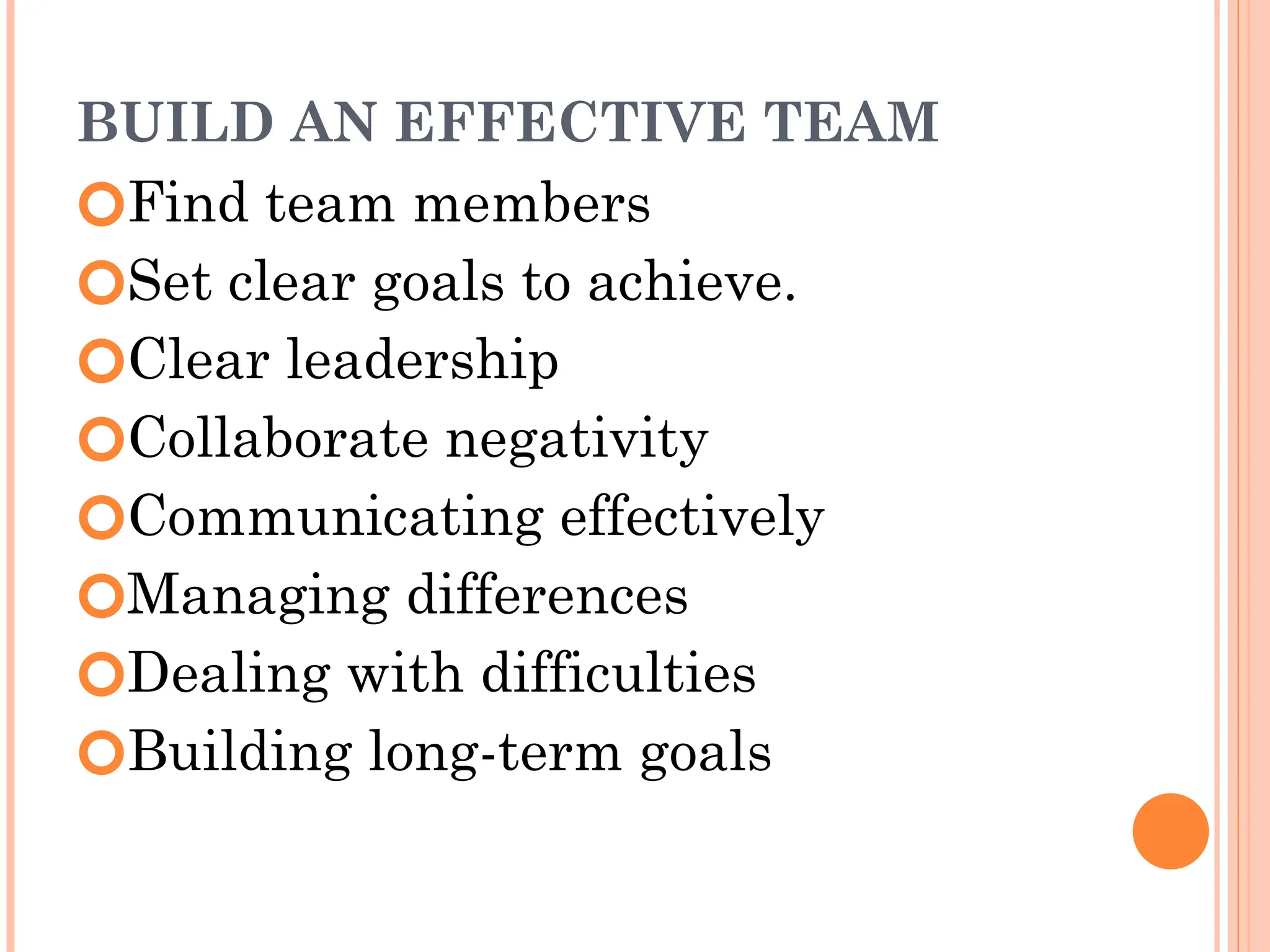
BUILD AN EFFECTIVETEAM
🞆Find team members
🞆Set clear goals to achieve.
🞆Clear leadership
🞆Collaborate negativity
🞆Communicating effectively
🞆Managing differences
🞆Dealing with difficulties
🞆Building long-term goals
13.
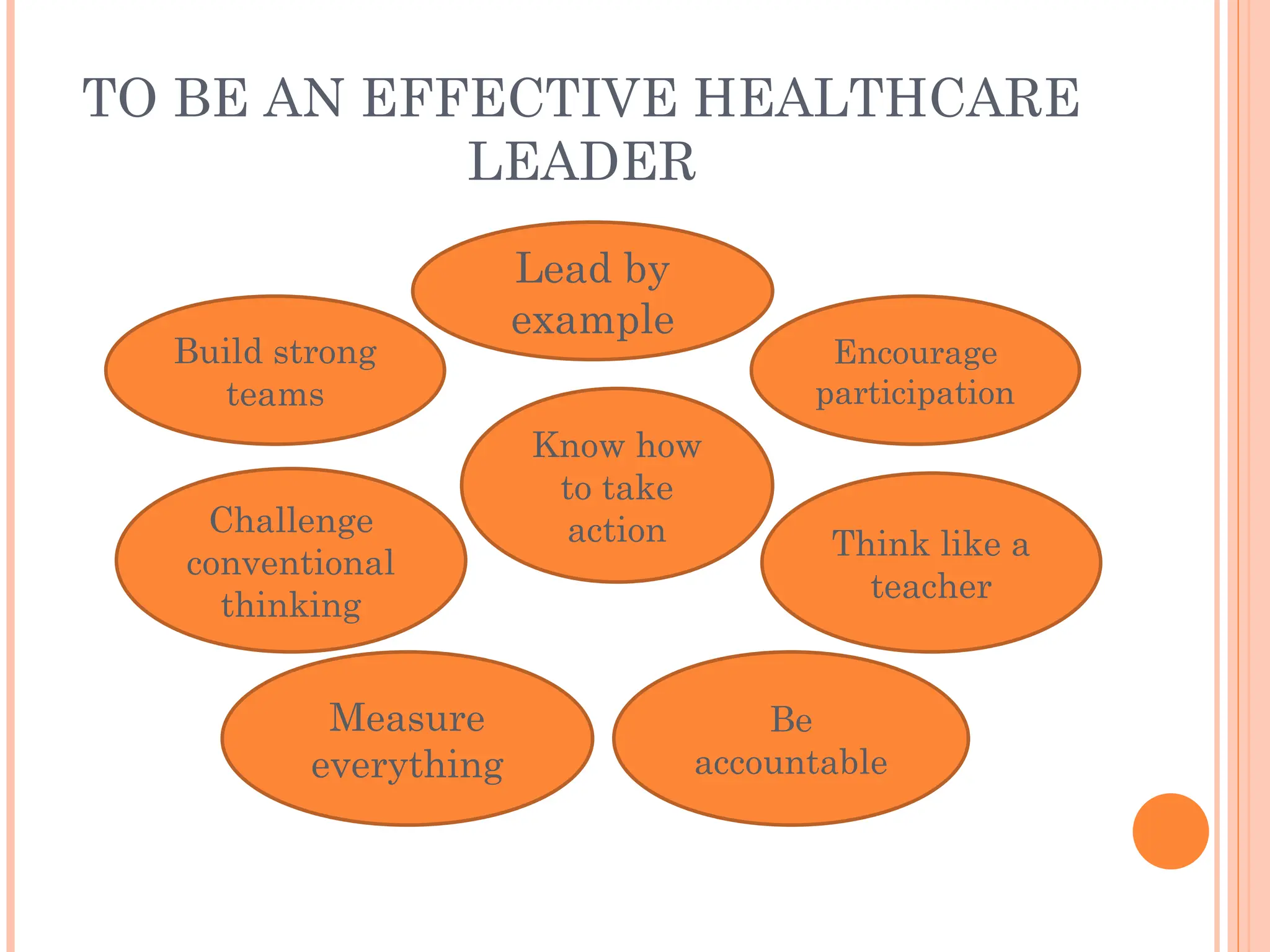
TO BE ANEFFECTIVE HEALTHCARE
LEADER
Lead by
example
Build strong
teams
Encourage
participation
Challenge
conventional
thinking
Think like a
teacher
Measure
everything
Know how
to take
action
Be
accountable
14.
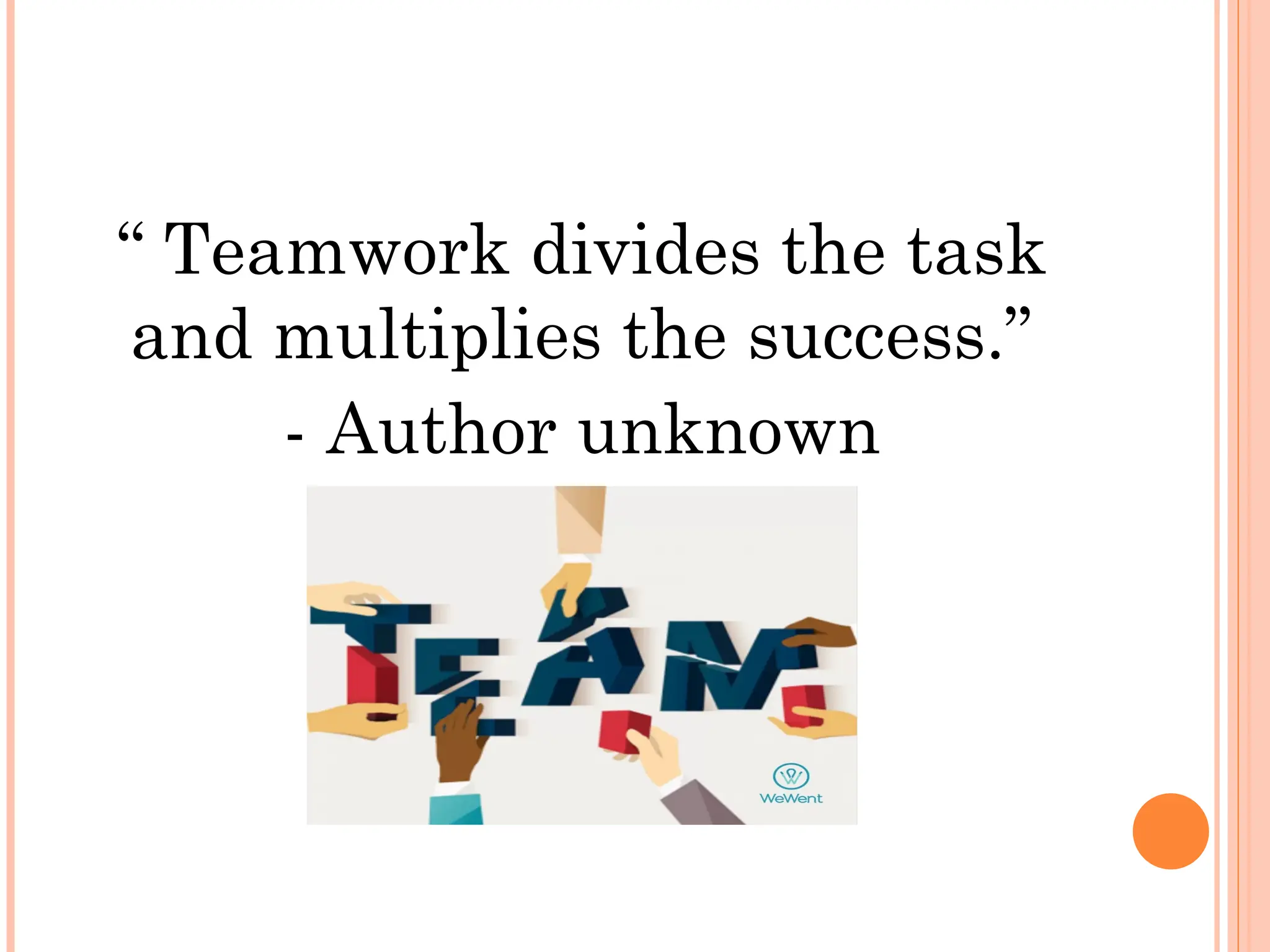
“ Teamwork dividesthe task
and multiplies the success.”
- Author unknown