METHODS AND STRATEGIES
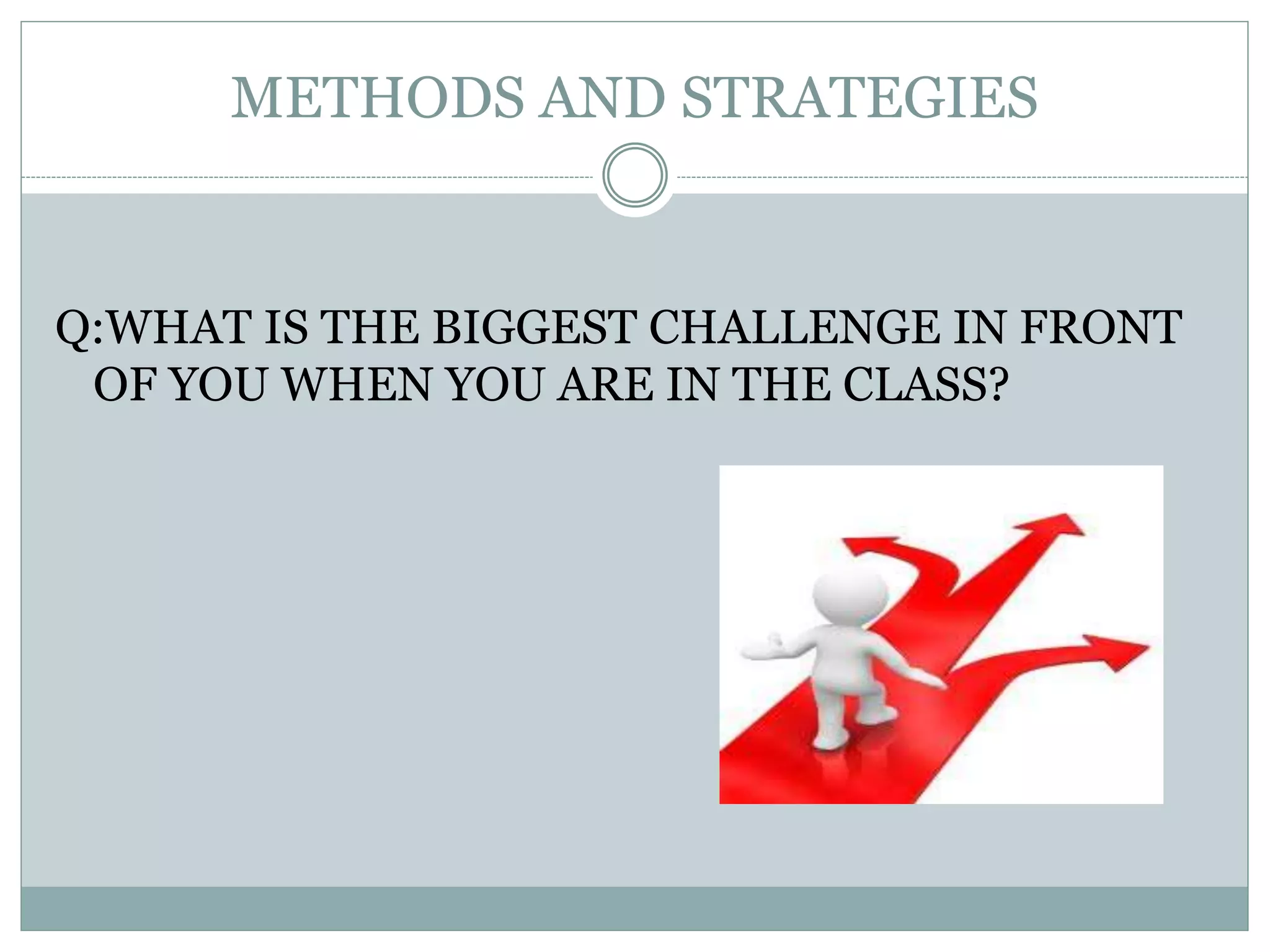
Q:WHAT IS THE BIGGEST CHALLENGE IN FRONT
OF YOU WHEN YOU ARE IN THE CLASS?
METHODS AND STRATEGIES
 OBJECTIVES:
 By the end of the session ,the participants will be
able to:
 explain various methodologies
 describe merits and demerits of some common
methods
 use innovative strategies according to the given
situations.
 plan methodology and strategies in a lesson plan
 present the plan
METHODS AND STRATEGIES
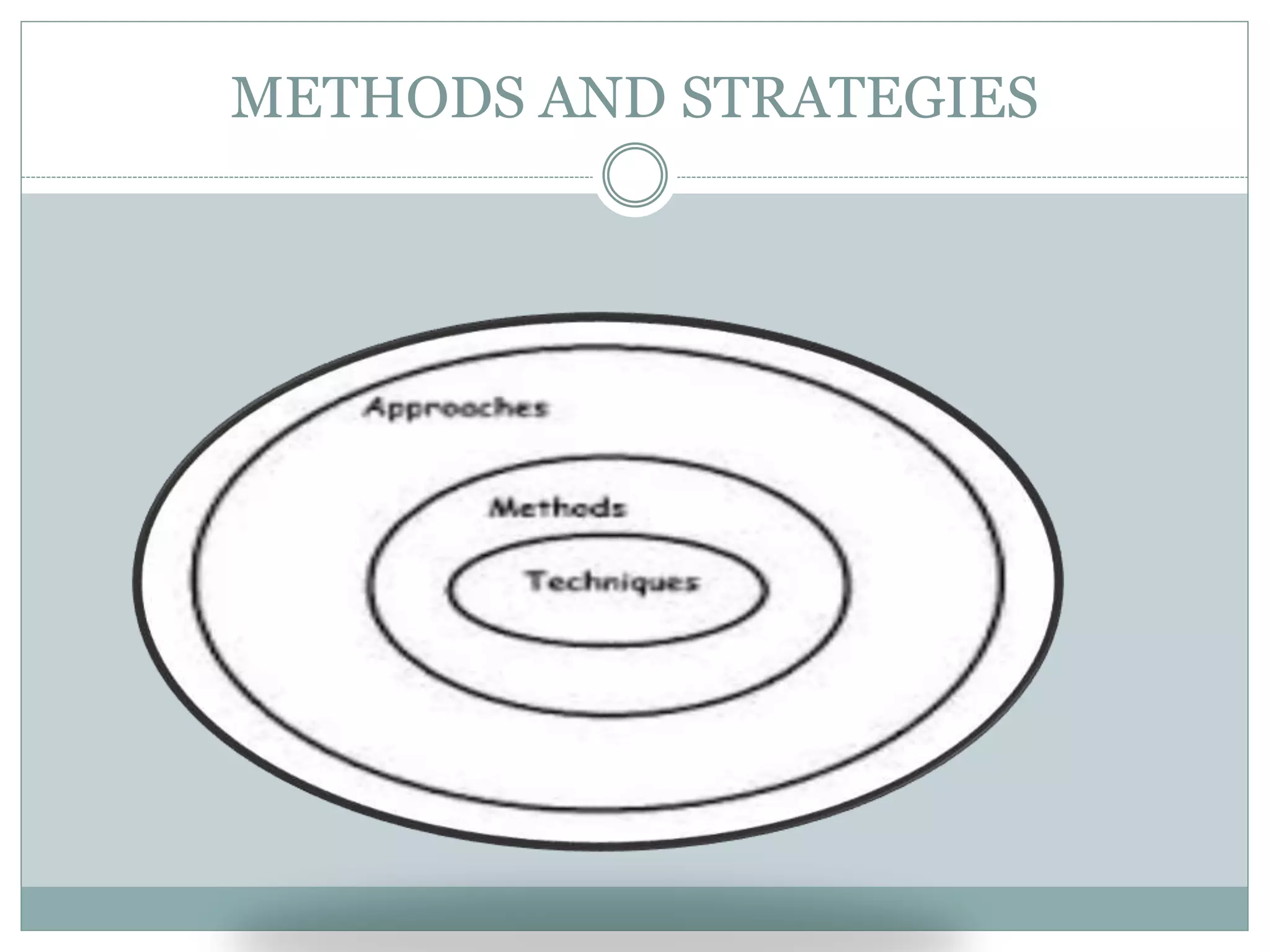
 Approach refers to the theory about the
concept(ASUMPTION)
 Method is the realization of an approach(PLAN)
 A strategy is the realization of method+objectives
(TACTIC)
 It does not follow a single track as it changes
according to the demand of situation,
interest,level,need and age.
METHODS AND STRATEGIES
 TASK SHEET :1
 Questionnaire (10mins)
Classroom Climate
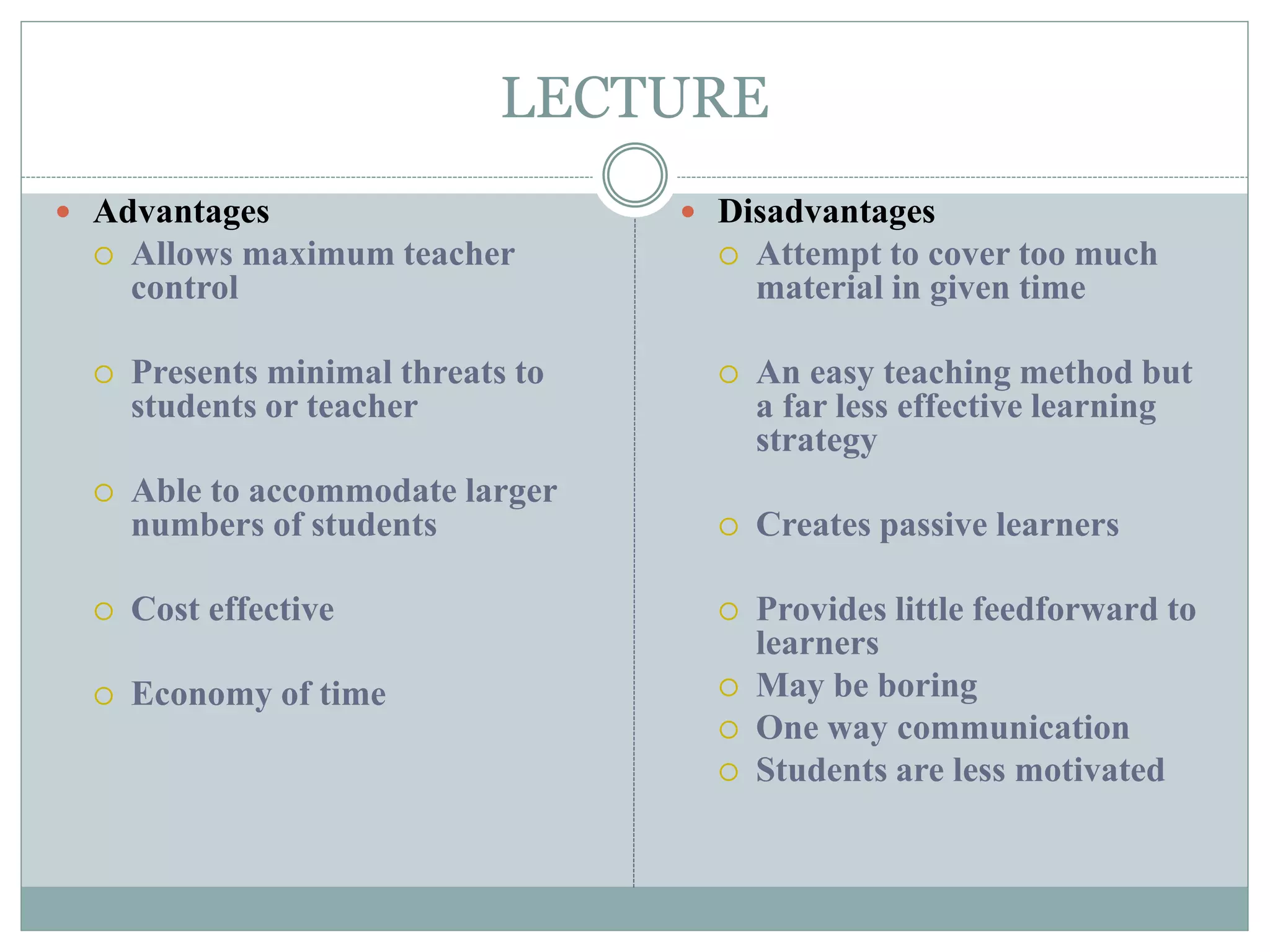
LECTURE
 Advantages
 Allows maximum teacher
control
 Presents minimal threats to
students or teacher
 Able to accommodate larger
numbers of students
 Cost effective
 Economy of time
 Disadvantages
 Attempt to cover too much
material in given time
 An easy teaching method but
a far less effective learning
strategy
 Creates passive learners
 Provides little feedforward to
learners
 May be boring
 One way communication
 Students are less motivated
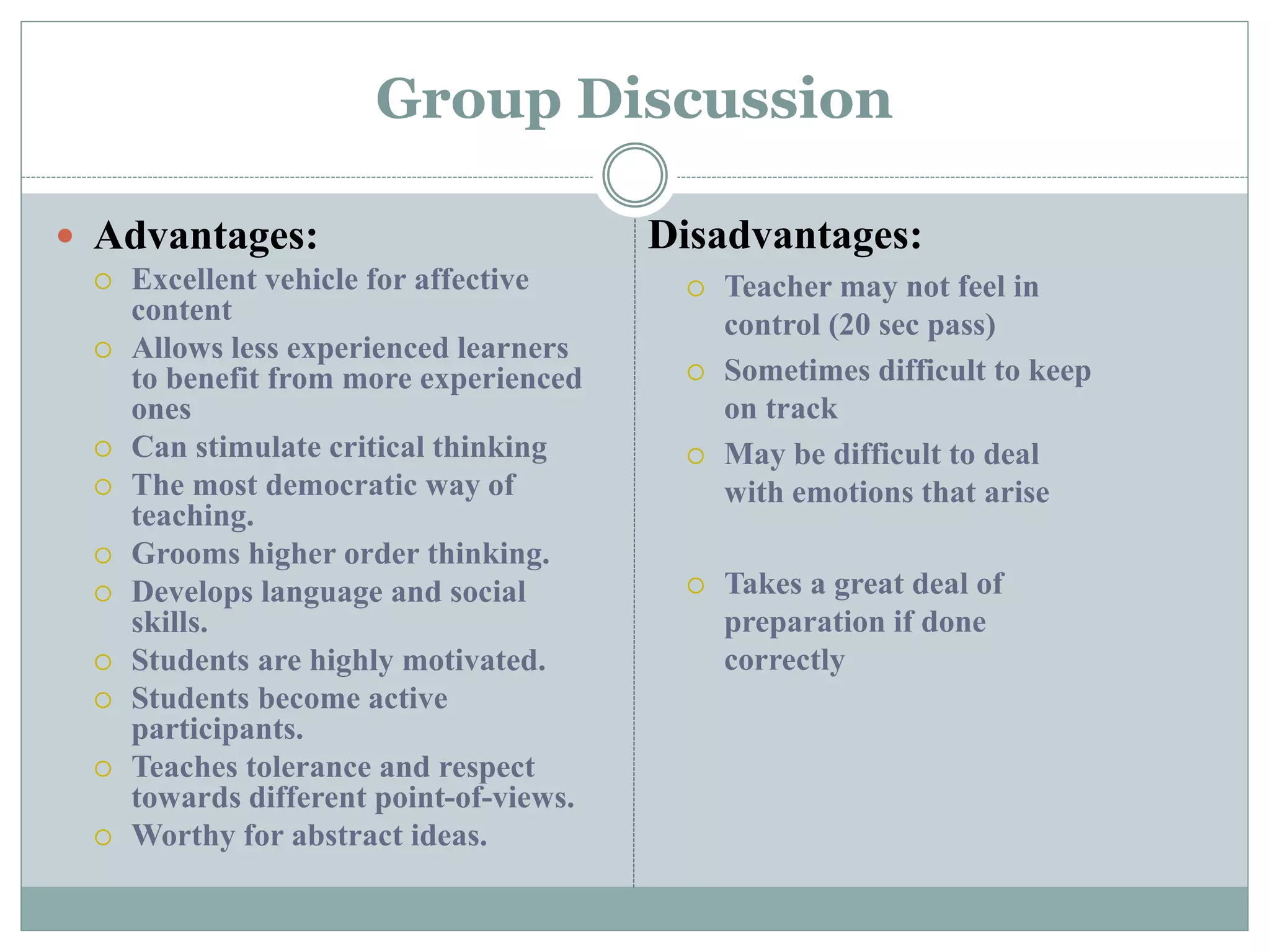
Group Discussion
 Advantages:
 Excellent vehicle for affective
content
 Allows less experienced learners
to benefit from more experienced
ones
 Can stimulate critical thinking
 The most democratic way of
teaching.
 Grooms higher order thinking.
 Develops language and social
skills.
 Students are highly motivated.
 Students become active
participants.
 Teaches tolerance and respect
towards different point-of-views.
 Worthy for abstract ideas.
Disadvantages:
 Teacher may not feel in
control (20 sec pass)
 Sometimes difficult to keep
on track
 May be difficult to deal
with emotions that arise
 Takes a great deal of
preparation if done
correctly
Discovery Method
Merits
 Real life experience boosts
motivation among learners.
 Fosters observational and
analytical skills.
 It develops understanding of
learning process among the
learners.
 Students learn problem solving
 Discovered concepts are easy
to remember.
 Discovery method is essentially
student-centered
Demerits
 Method is time consuming
 Requires highly skilled
teacher
 Demands intense planning
 Not-effective in big classes
PROJECT/ASSIGNMENT METHOD
Merits
 Practical Work
 Sense of Ownership
 Creativity
 involvement
Demerits
 Time Consumption
 Difficult to assess individual
performance in case of group
project
Games
 Determination, explanation, and strict adherence to
the rules of the game
 Try out the game on friends before using it in class
 Gather all necessary equipment ahead of class
 Token prizes
VIDEO TAPES / SLIDES
Strengths:
 interesting and
entertaining
 keep students attentive
 looks very professional
 stimulates discussion
Limitations:
 can raise too much issues.
 expensive way
 discussion may not have
full participation
 Is really effective if the
facilitator prepares
questions to discuss during
the show or after the show
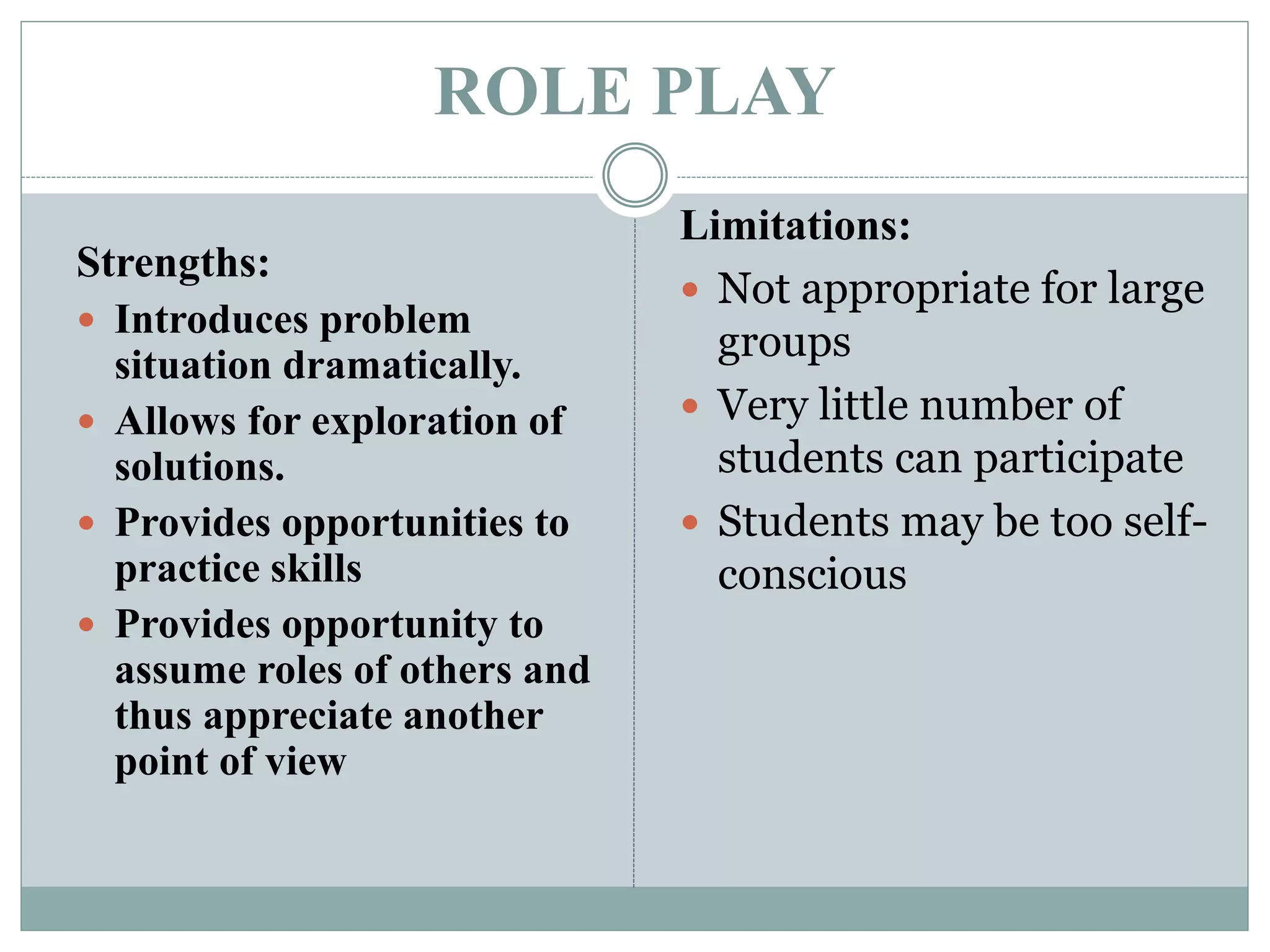
ROLE PLAY
Strengths:
 Introduces problem
situation dramatically.
 Allows for exploration of
solutions.
 Provides opportunities to
practice skills
 Provides opportunity to
assume roles of others and
thus appreciate another
point of view
Limitations:
 Not appropriate for large
groups
 Very little number of
students can participate
 Students may be too self-
conscious
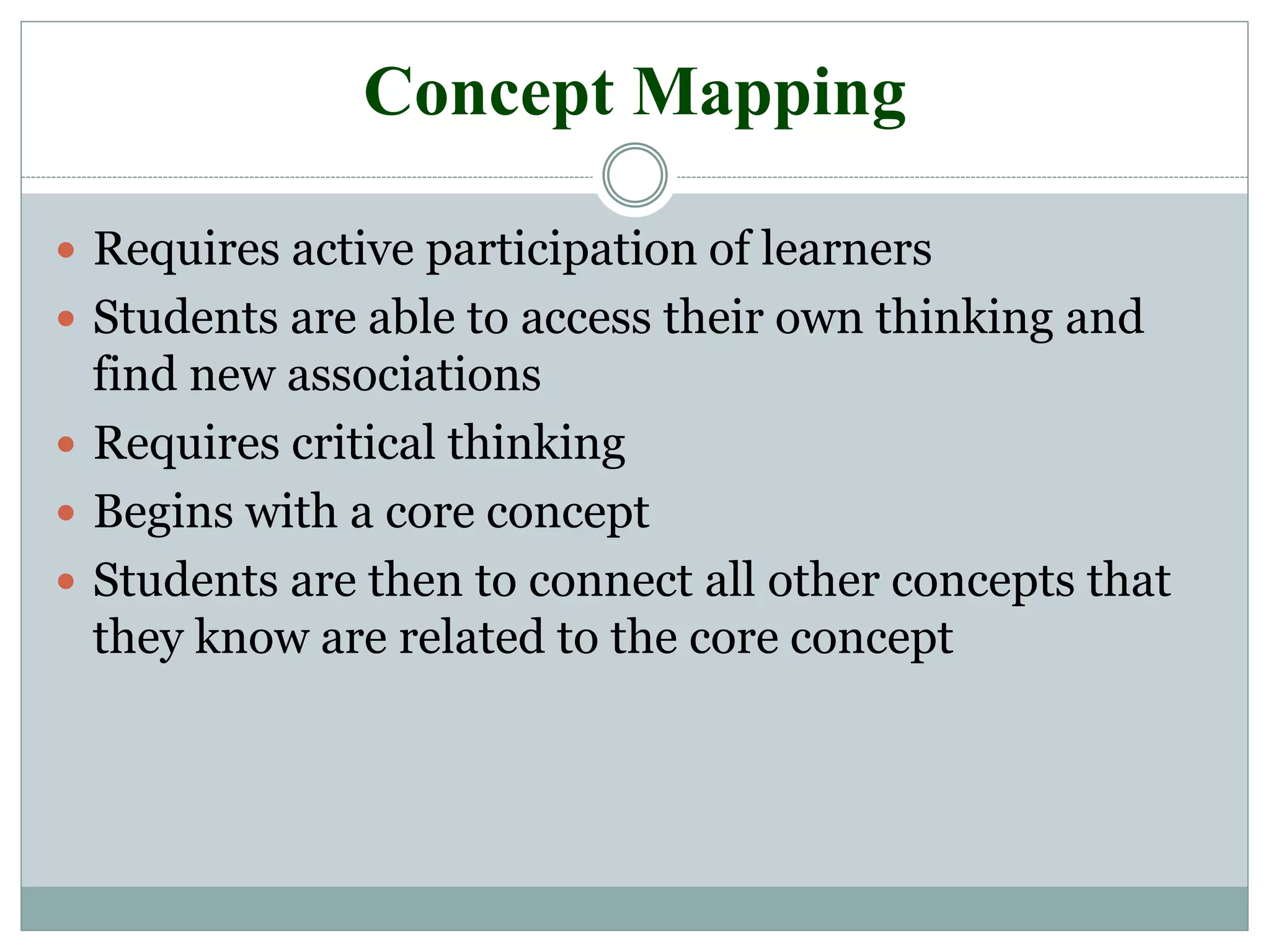
Concept Mapping
 Requires active participation of learners
 Students are able to access their own thinking and
find new associations
 Requires critical thinking
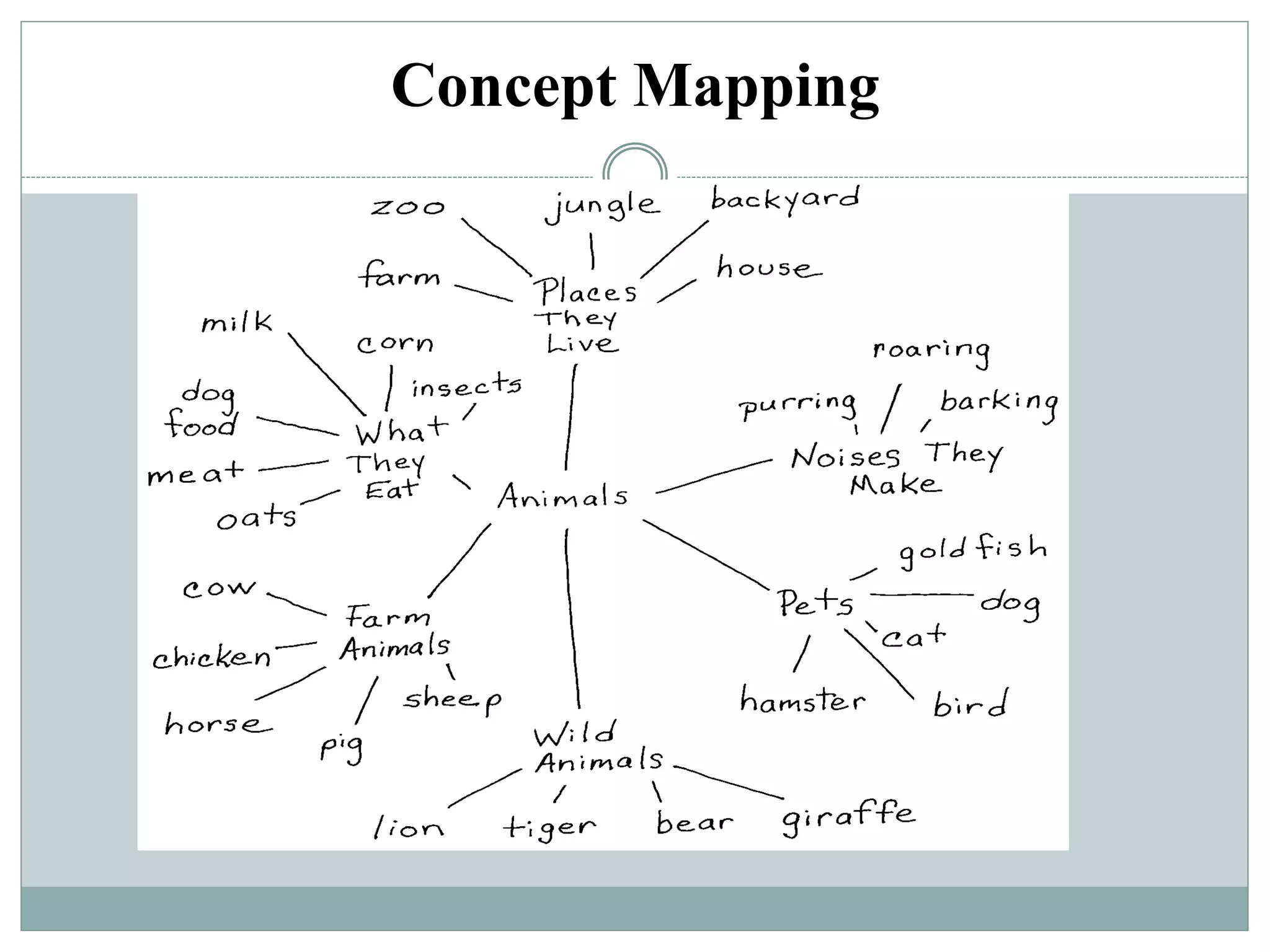
 Begins with a core concept
 Students are then to connect all other concepts that
they know are related to the core concept
Concept Mapping
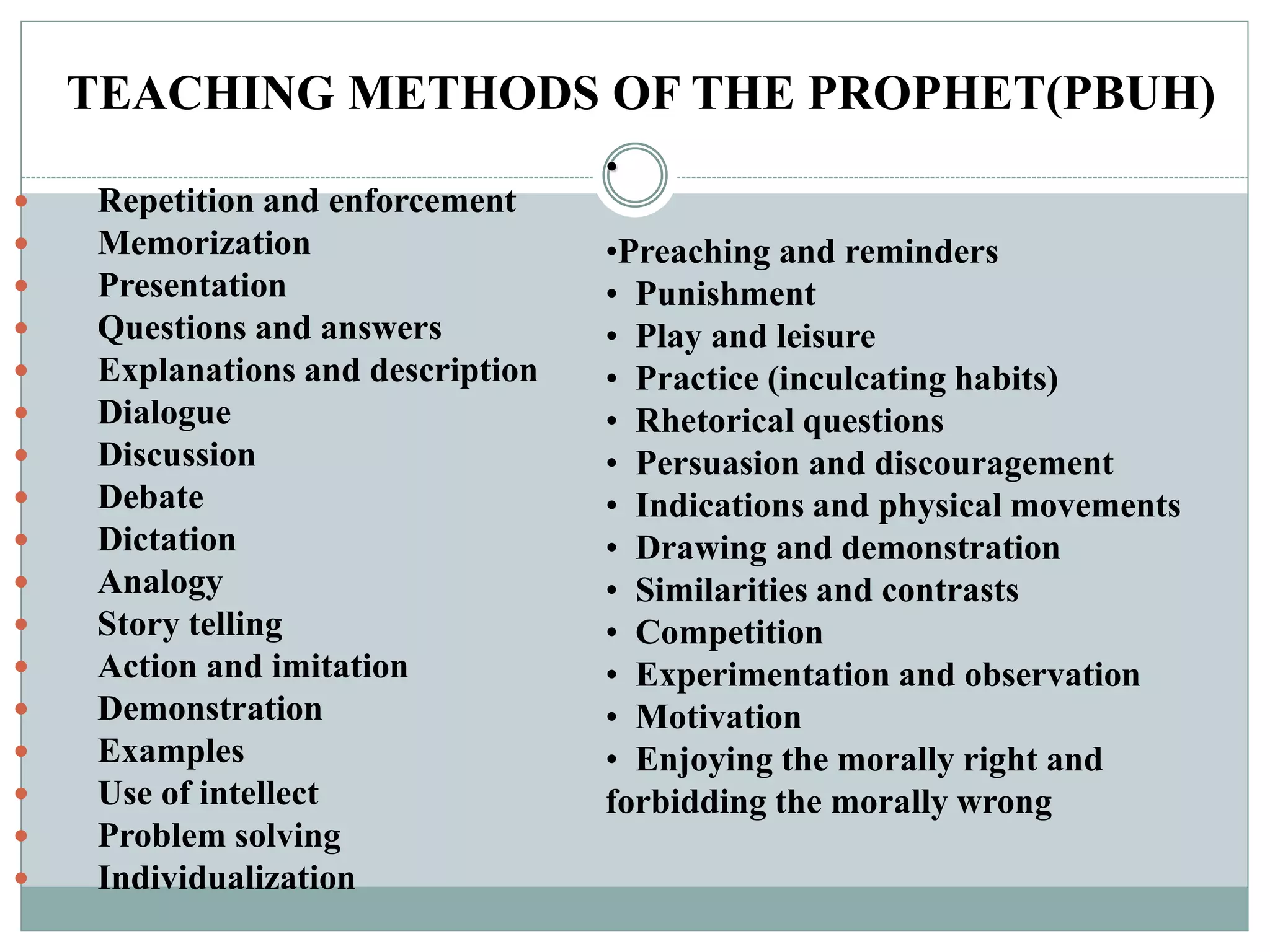
TEACHING METHODS OF THE PROPHET(PBUH)
 Repetition and enforcement
 Memorization
 Presentation
 Questions and answers
 Explanations and description
 Dialogue
 Discussion
 Debate
 Dictation
 Analogy
 Story telling
 Action and imitation
 Demonstration
 Examples
 Use of intellect
 Problem solving
 Individualization
•
•Preaching and reminders
• Punishment
• Play and leisure
• Practice (inculcating habits)
• Rhetorical questions
• Persuasion and discouragement
• Indications and physical movements
• Drawing and demonstration
• Similarities and contrasts
• Competition
• Experimentation and observation
• Motivation
• Enjoying the morally right and
forbidding the morally wrong
METHODS AND STRATEGIES
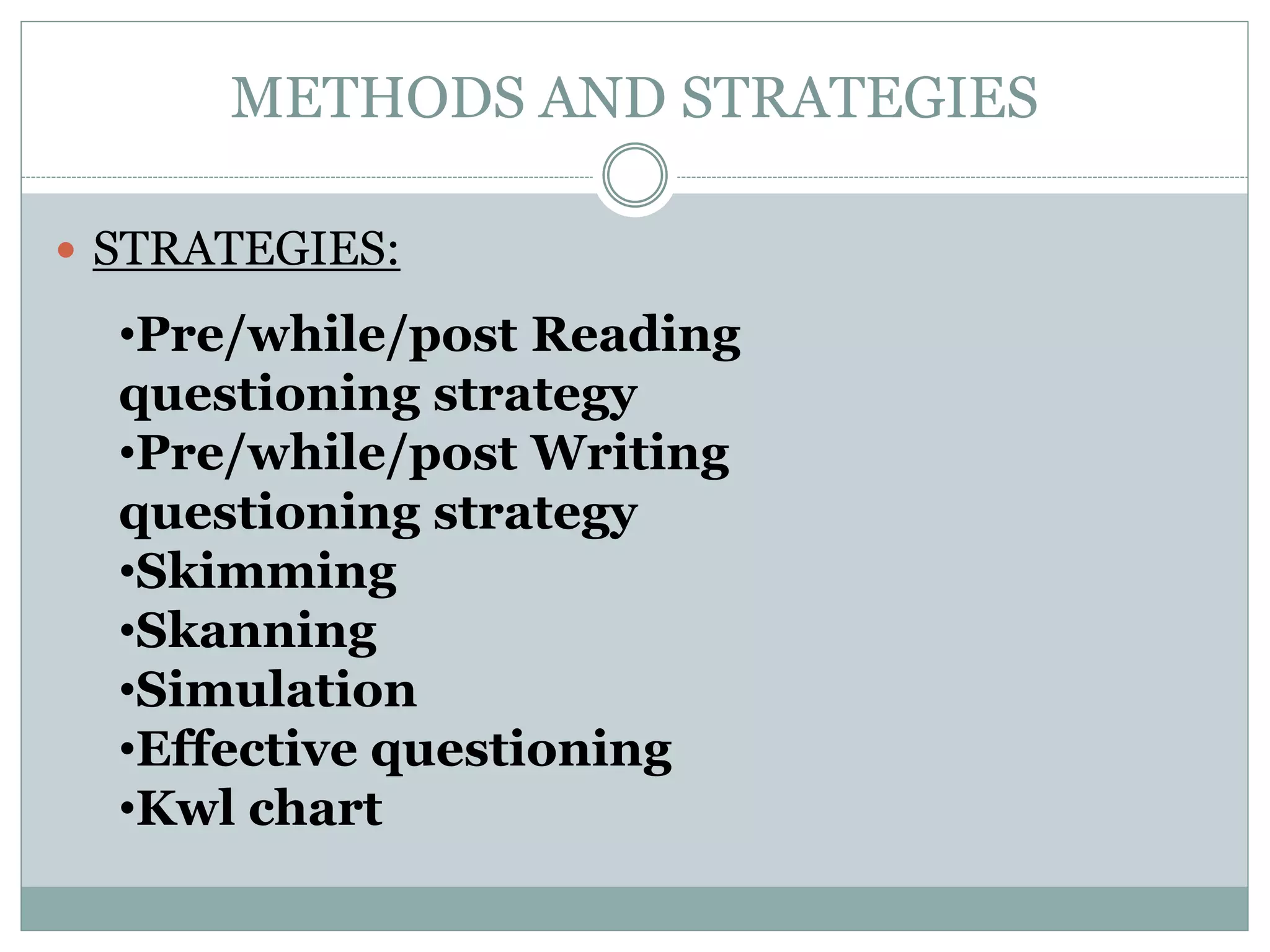
 STRATEGIES:
•Pre/while/post Reading
questioning strategy
•Pre/while/post Writing
questioning strategy
•Skimming
•Skanning
•Simulation
•Effective questioning
•Kwl chart
METHODS AND STRATEGIES
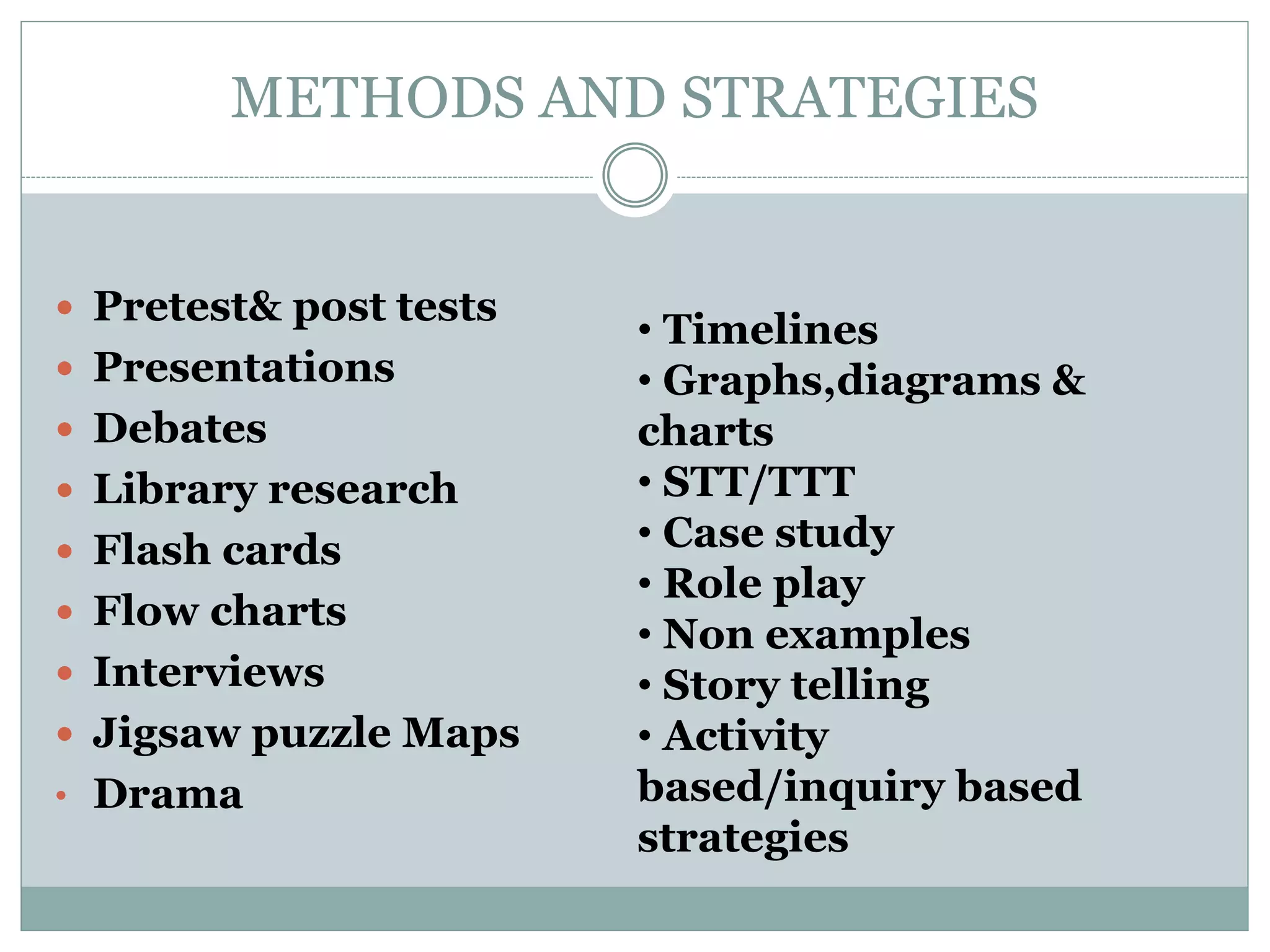
 Pretest& post tests
 Presentations
 Debates
 Library research
 Flash cards
 Flow charts
 Interviews
 Jigsaw puzzle Maps
• Drama
• Timelines
• Graphs,diagrams &
charts
• STT/TTT
• Case study
• Role play
• Non examples
• Story telling
• Activity
based/inquiry based
strategies
METHODS AND STRATEGIES
 STRATEGIES:
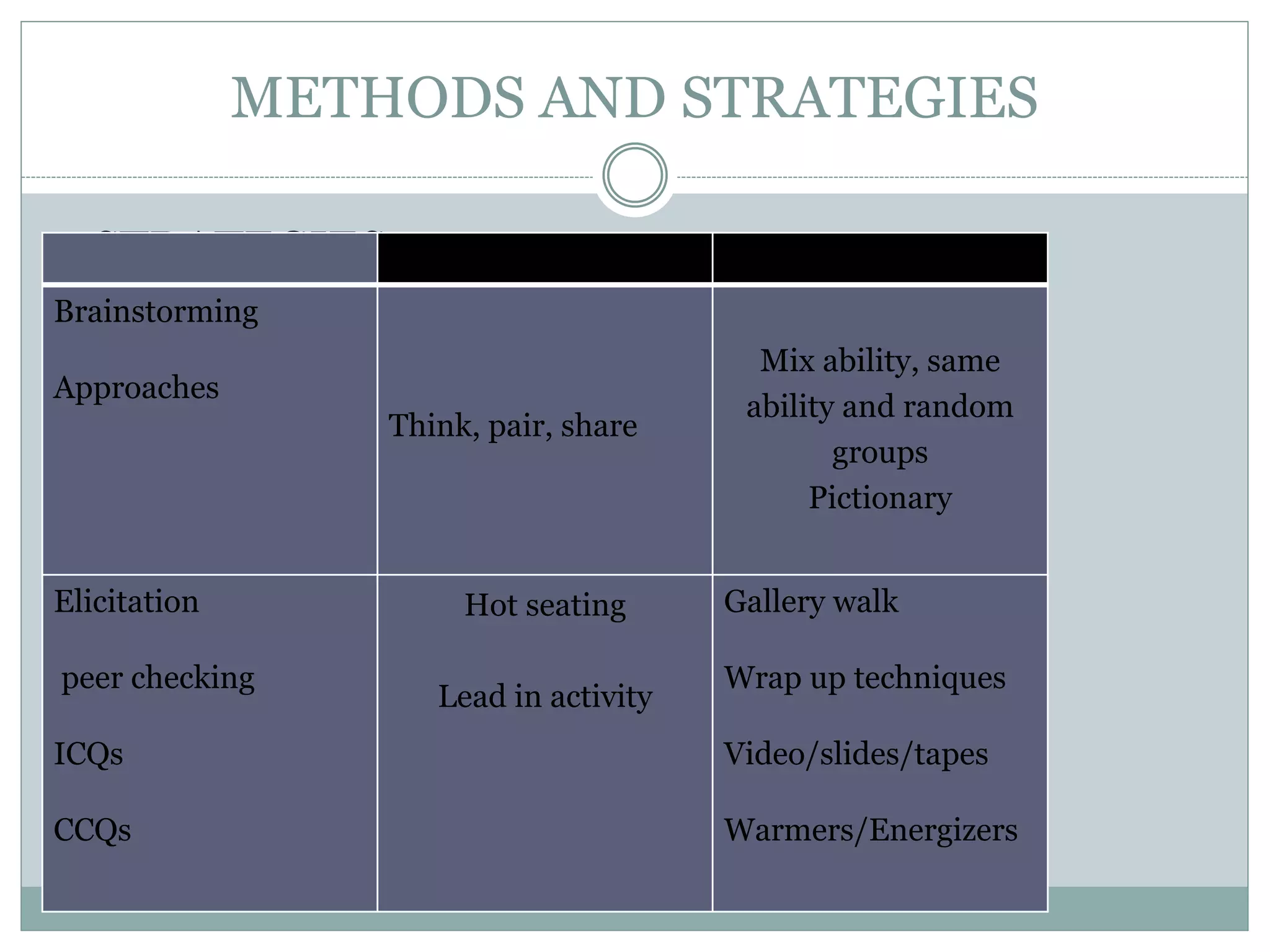
Brainstorming
Approaches
Think, pair, share
Mix ability, same
ability and random
groups
Pictionary
Elicitation
peer checking
ICQs
CCQs
Hot seating
Lead in activity
Gallery walk
Wrap up techniques
Video/slides/tapes
Warmers/Energizers
METHODS AND STRATEGIES
 Task Sheet #2
 Group Work
 Red.yellow blue,green,orange
 Q: Discuss the following scenarios and
brainstorm possible strategies as a group.(10
mins)
METHODS AND STRATEGIES
 TASK SHEET #3
 Group jigsaw 1,2,3,4,5
 Select a topic and plan the methodology part
in your lesson while incorporating innovative
strategies with realistic time
management.(15mins)
 Presentations (10mins)
 Feed forward session
THANK YOU !

Teachng mthds &strategies

  • 2.
    METHODS AND STRATEGIES Q:WHATIS THE BIGGEST CHALLENGE IN FRONT OF YOU WHEN YOU ARE IN THE CLASS?
  • 3.
    METHODS AND STRATEGIES OBJECTIVES:  By the end of the session ,the participants will be able to:  explain various methodologies  describe merits and demerits of some common methods  use innovative strategies according to the given situations.  plan methodology and strategies in a lesson plan  present the plan
  • 4.
  • 5.
    METHODS AND STRATEGIES Approach refers to the theory about the concept(ASUMPTION)  Method is the realization of an approach(PLAN)  A strategy is the realization of method+objectives (TACTIC)  It does not follow a single track as it changes according to the demand of situation, interest,level,need and age.
  • 6.
    METHODS AND STRATEGIES TASK SHEET :1  Questionnaire (10mins)
  • 7.
  • 8.
    LECTURE  Advantages  Allowsmaximum teacher control  Presents minimal threats to students or teacher  Able to accommodate larger numbers of students  Cost effective  Economy of time  Disadvantages  Attempt to cover too much material in given time  An easy teaching method but a far less effective learning strategy  Creates passive learners  Provides little feedforward to learners  May be boring  One way communication  Students are less motivated
  • 9.
    Group Discussion  Advantages: Excellent vehicle for affective content  Allows less experienced learners to benefit from more experienced ones  Can stimulate critical thinking  The most democratic way of teaching.  Grooms higher order thinking.  Develops language and social skills.  Students are highly motivated.  Students become active participants.  Teaches tolerance and respect towards different point-of-views.  Worthy for abstract ideas. Disadvantages:  Teacher may not feel in control (20 sec pass)  Sometimes difficult to keep on track  May be difficult to deal with emotions that arise  Takes a great deal of preparation if done correctly
  • 10.
    Discovery Method Merits  Reallife experience boosts motivation among learners.  Fosters observational and analytical skills.  It develops understanding of learning process among the learners.  Students learn problem solving  Discovered concepts are easy to remember.  Discovery method is essentially student-centered Demerits  Method is time consuming  Requires highly skilled teacher  Demands intense planning  Not-effective in big classes
  • 11.
    PROJECT/ASSIGNMENT METHOD Merits  PracticalWork  Sense of Ownership  Creativity  involvement Demerits  Time Consumption  Difficult to assess individual performance in case of group project
  • 12.
    Games  Determination, explanation,and strict adherence to the rules of the game  Try out the game on friends before using it in class  Gather all necessary equipment ahead of class  Token prizes
  • 13.
    VIDEO TAPES /SLIDES Strengths:  interesting and entertaining  keep students attentive  looks very professional  stimulates discussion Limitations:  can raise too much issues.  expensive way  discussion may not have full participation  Is really effective if the facilitator prepares questions to discuss during the show or after the show
  • 14.
    ROLE PLAY Strengths:  Introducesproblem situation dramatically.  Allows for exploration of solutions.  Provides opportunities to practice skills  Provides opportunity to assume roles of others and thus appreciate another point of view Limitations:  Not appropriate for large groups  Very little number of students can participate  Students may be too self- conscious
  • 15.
    Concept Mapping  Requiresactive participation of learners  Students are able to access their own thinking and find new associations  Requires critical thinking  Begins with a core concept  Students are then to connect all other concepts that they know are related to the core concept
  • 16.
  • 17.
    TEACHING METHODS OFTHE PROPHET(PBUH)  Repetition and enforcement  Memorization  Presentation  Questions and answers  Explanations and description  Dialogue  Discussion  Debate  Dictation  Analogy  Story telling  Action and imitation  Demonstration  Examples  Use of intellect  Problem solving  Individualization • •Preaching and reminders • Punishment • Play and leisure • Practice (inculcating habits) • Rhetorical questions • Persuasion and discouragement • Indications and physical movements • Drawing and demonstration • Similarities and contrasts • Competition • Experimentation and observation • Motivation • Enjoying the morally right and forbidding the morally wrong
  • 18.
    METHODS AND STRATEGIES STRATEGIES: •Pre/while/post Reading questioning strategy •Pre/while/post Writing questioning strategy •Skimming •Skanning •Simulation •Effective questioning •Kwl chart
  • 19.
    METHODS AND STRATEGIES Pretest& post tests  Presentations  Debates  Library research  Flash cards  Flow charts  Interviews  Jigsaw puzzle Maps • Drama • Timelines • Graphs,diagrams & charts • STT/TTT • Case study • Role play • Non examples • Story telling • Activity based/inquiry based strategies
  • 20.
    METHODS AND STRATEGIES STRATEGIES: Brainstorming Approaches Think, pair, share Mix ability, same ability and random groups Pictionary Elicitation peer checking ICQs CCQs Hot seating Lead in activity Gallery walk Wrap up techniques Video/slides/tapes Warmers/Energizers
  • 21.
    METHODS AND STRATEGIES Task Sheet #2  Group Work  Red.yellow blue,green,orange  Q: Discuss the following scenarios and brainstorm possible strategies as a group.(10 mins)
  • 22.
    METHODS AND STRATEGIES TASK SHEET #3  Group jigsaw 1,2,3,4,5  Select a topic and plan the methodology part in your lesson while incorporating innovative strategies with realistic time management.(15mins)  Presentations (10mins)  Feed forward session
  • 23.