






Teaching Speaking 
in the Language 
Classroom 
Christine C.M. Goh
Introduction 
What is speaking? 
Speaking plays a key role in facilitating 
language acquisition and is a vital language 
communication skill. 
It is also an indispensable tool for 
thinking and academic learning.
Objectives of this book: 
 To provide structured and guided 
learning experiences for our students to 
develop their speaking competence. 
 To develop fluency, accuracy and 
complexity among language learners. 
 To help teachers to promote the 
teaching of speaking in school and in 
institution.
Chapter 1 
Teaching 
Speaking
The first chapter offers 
essential theoretical 
perspectives in 
considering speaking as 
process, skill, and 
product.
Comprehensible Output Hypothesis 
(Swain, 1995) 
This theory proposes that when 
learners have to speak in the 
target language, they will 
potentially need to pay attention 
to its structure (i.e grammar and 
pronunciation).
Feedback from 
teachers must 
be present in 
this approach.
What do 
language 
learners face 
when producing 
speech?
According to Bygate, 
1998… 
There are three (3) 
broad interrelated 
phases of speech 
planning and 
production.
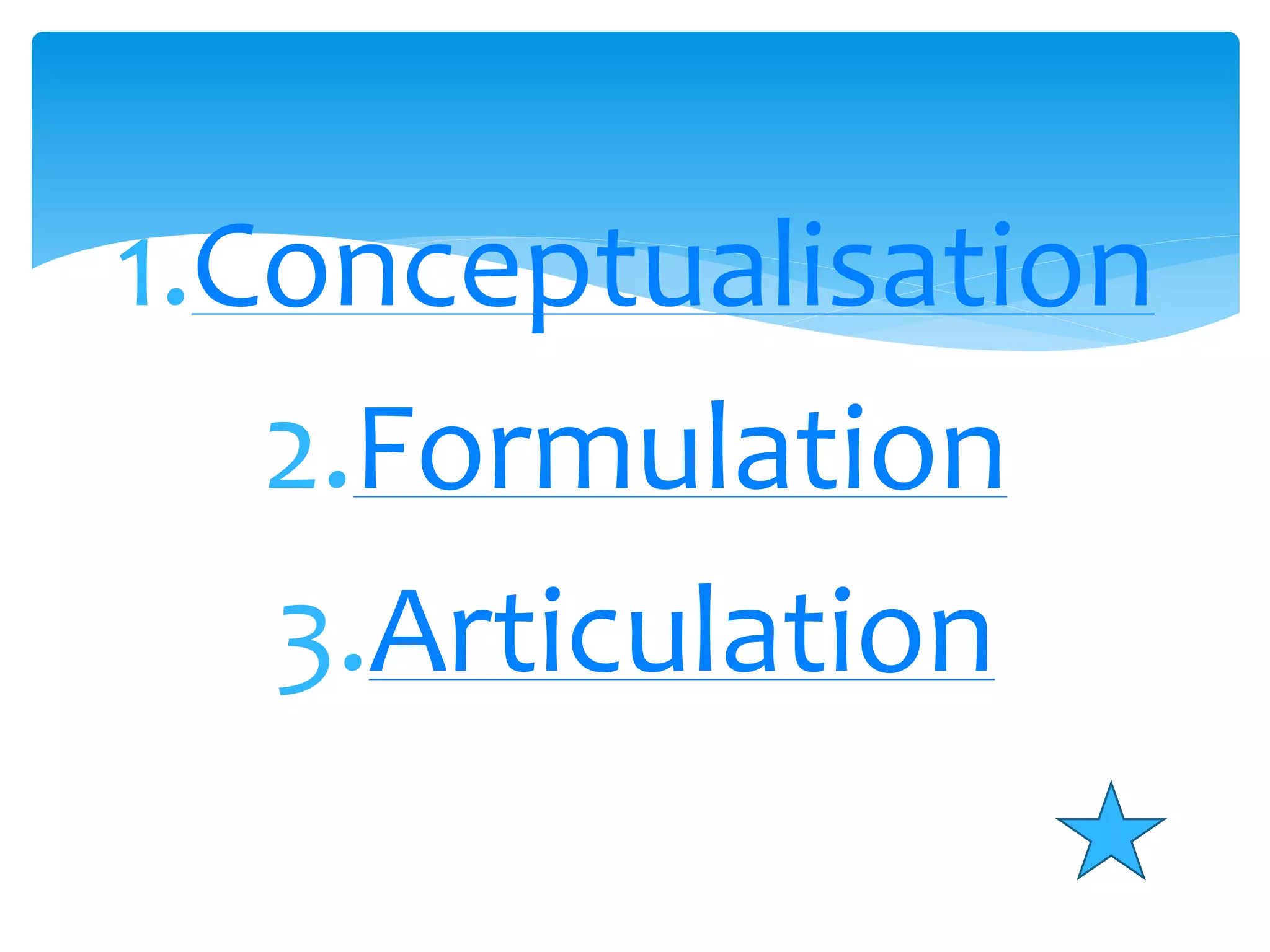
1.Conceptualisation 
2.Formulation 
3.Articulation
Conceptualisation 
the process by which 
speakers select the 
information to be 
conveyed
Formulation 
to convey the selected 
information or ideas 
speakers have to 
formulate utterances, 
often in real time
Articulation 
to formulate utterances 
which are spoken or 
phonologically encoded 
through the activation 
and control of the 
articulatory system
In preparing a speech 
1. We identify the 
information. 
2. We formulate the 
ideas to convey through 
writing down the ideas 
in sentences.
Speaking Skills 
To speak effectively 
learners need to have a 
reasonable command of 
the basic grammar of the 
target language and a 
working vocabulary.
The Four Key 
Areas of 
Speaking 
Competence
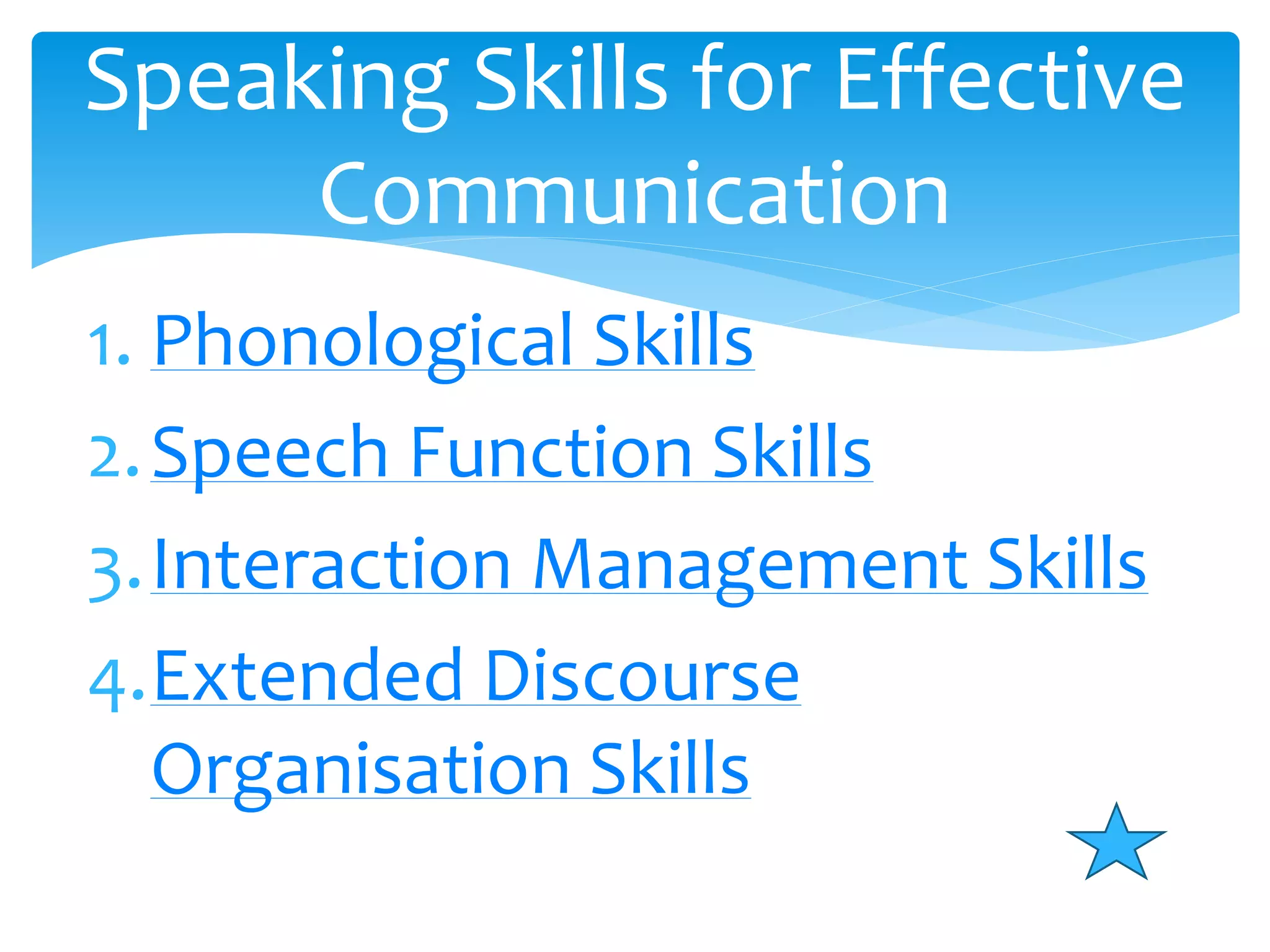
Speaking Skills for Effective 
Communication 
1. Phonological Skills 
2.Speech Function Skills 
3.Interaction Management Skills 
4.Extended Discourse 
Organisation Skills
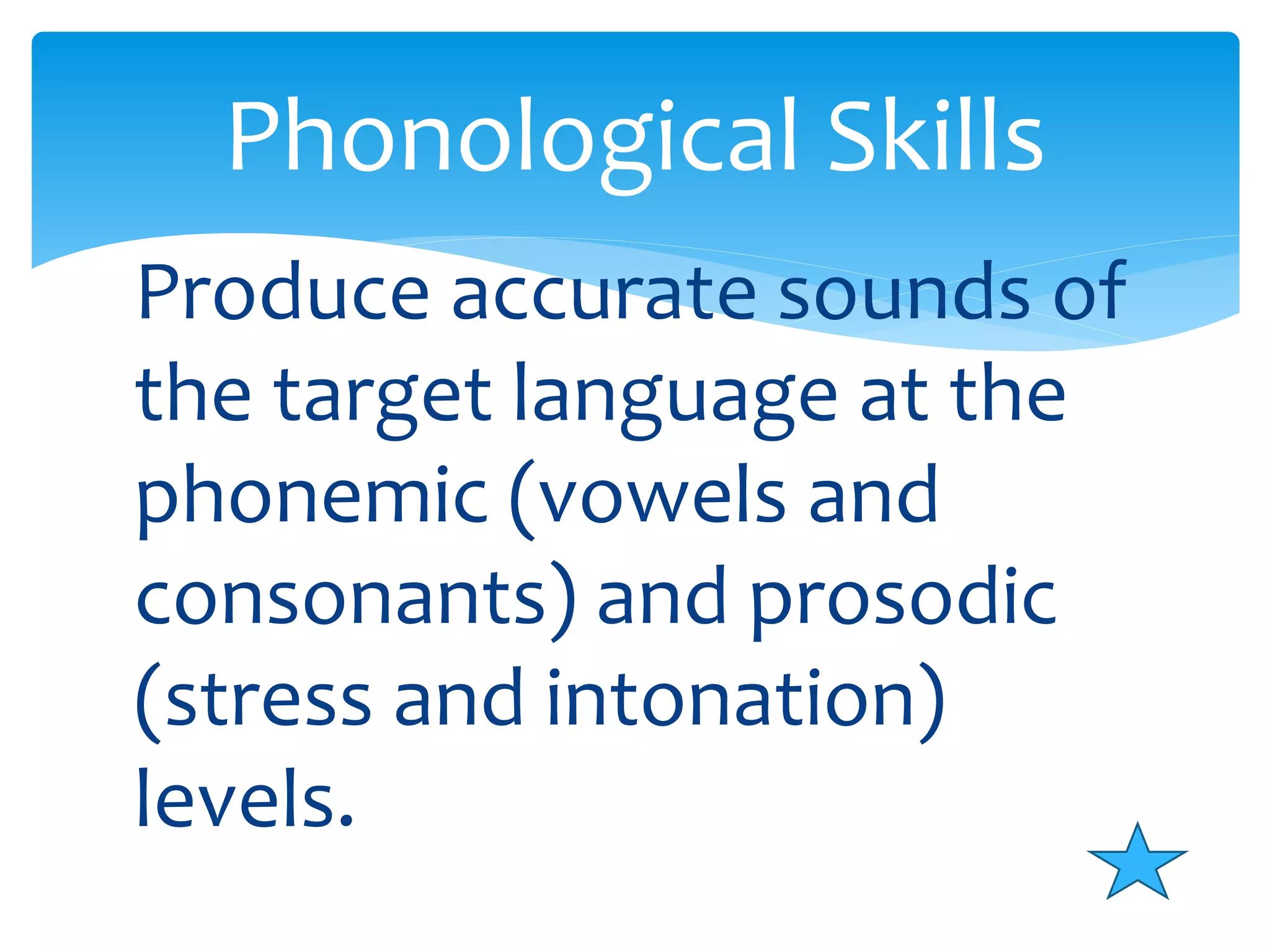
Phonological Skills 
Produce accurate sounds of 
the target language at the 
phonemic (vowels and 
consonants) and prosodic 
(stress and intonation) 
levels.
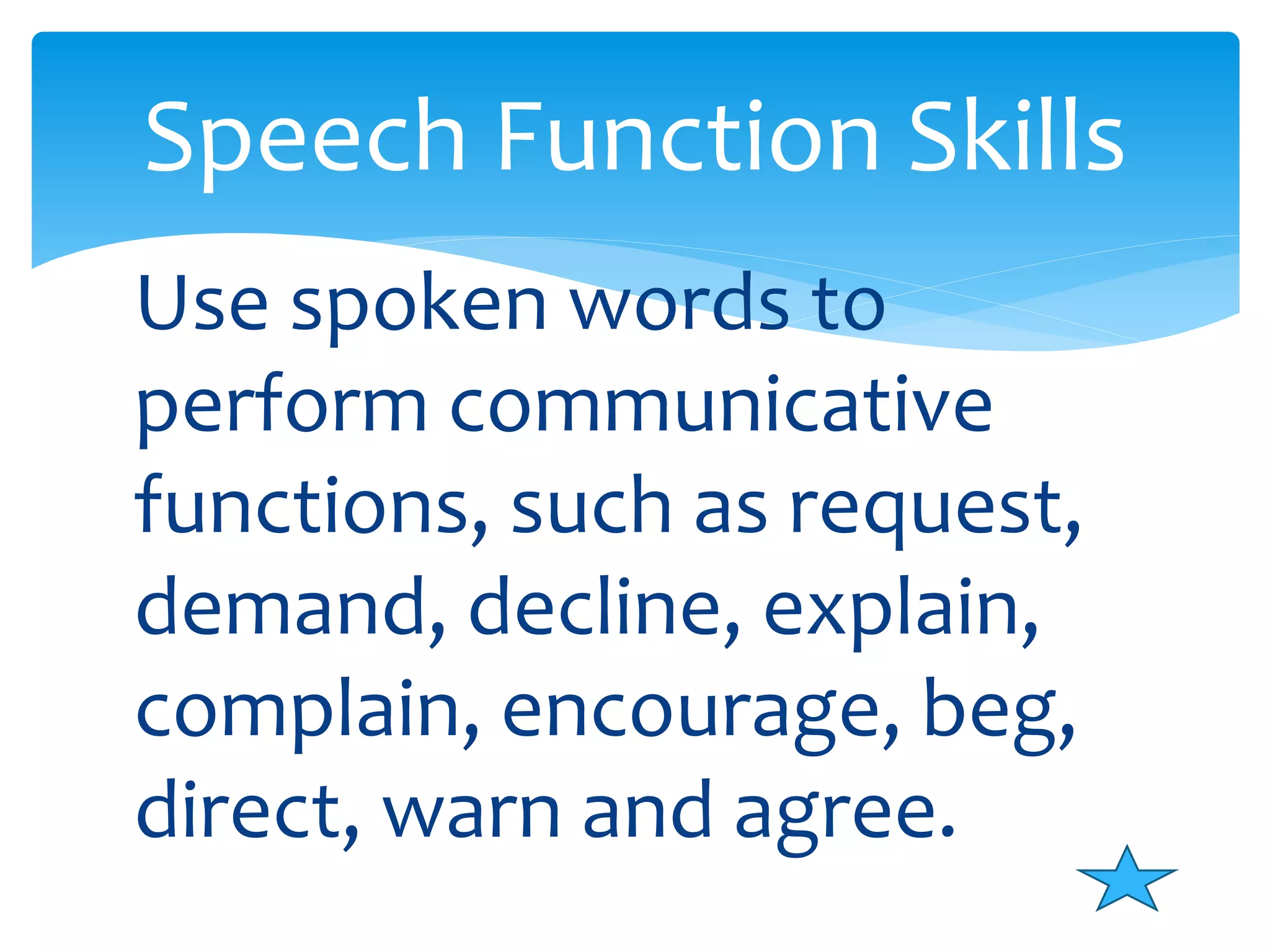
Speech Function Skills 
Use spoken words to 
perform communicative 
functions, such as request, 
demand, decline, explain, 
complain, encourage, beg, 
direct, warn and agree.
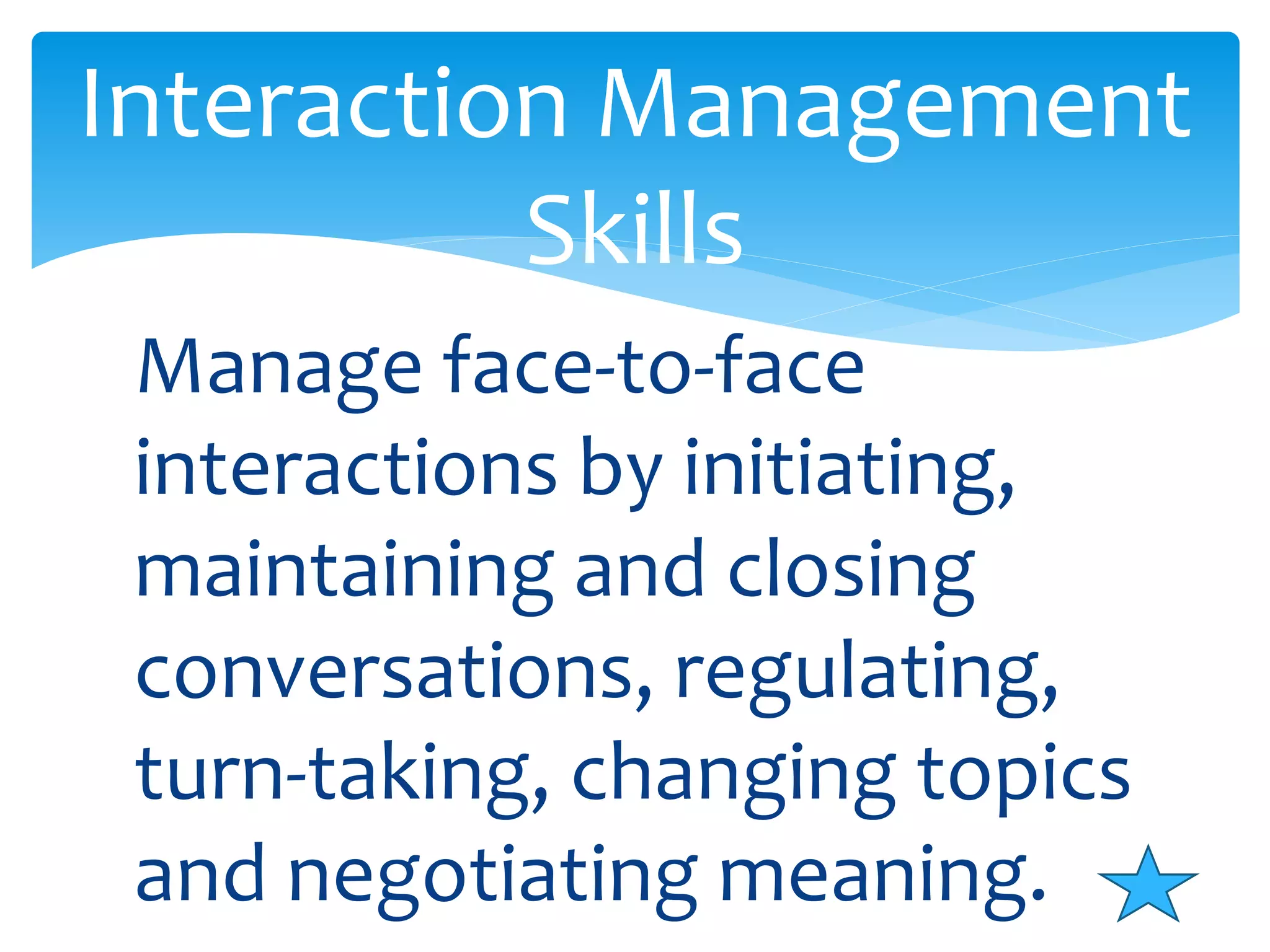
Interaction Management 
Skills 
Manage face-to-face 
interactions by initiating, 
maintaining and closing 
conversations, regulating, 
turn-taking, changing topics 
and negotiating meaning.
Extended Discourse Organisation 
Skills 
Establish 
coherence and 
cohesion.
Chapter 2 
Developing 
Fluency
Chapter 2 focuses 
on fluency-oriented 
tasks for developing 
a range of speaking 
skills.
Also, this discusses 
how we can help 
learners communicate 
meaning effectively 
with few pauses and 
hesitations.
Language learners 
Focus their attention on 
communicating meaning 
rather than utterances 
that are grammatically or 
phonologically accurate.
What is 
fluency?
Fluency 
- a reasonable command 
of grammar 
- a knowledge of 
appropriate vocabulary and 
pronunciation that is clear and 
intelligible
How can we 
encourage 
learners to 
participate in a 
speaking activity?
We must 
build into the activity 
a need to 
communicate and an 
incentive for 
completing it.
Learners must 
focus on communicating meaning as 
best as they can do. 
We can provide vocabulary and 
content support, as well as include 
training on how to use oral 
communication strategies.
Chapter 3 
Developing 
Accuracy
In chapter 3, Goh 
introduces an 
informed 
pedagogical 
model.
What is the 
ultimate goal of 
language 
learning?
To communicate 
in fluent, 
accurate 
language.
What is 
accuracy?
Accuracy 
focuses and gives 
importance on 
grammatical and 
phonological aspect 
of the target language
My reaction 
to the 
report…
Speaking lessons therefore 
should not only consist of 
fluency practice, but also 
include activities that 
promote learner’s 
awareness and acquisition 
of correct grammar
Teaching speaking involves 
drawing our students’ 
attention to its process, skills 
and outcomes. It also involves 
providing them with support 
when they speak so that they 
will not be overwhelmed by 
the demands of the task.
The End. 
Thank you for 
listening!  
Presented by: Ms. Joy Anne Rose F. Geul
Teaching speaking in the language classroom

Teaching speaking in the language classroom

  • 1.
    Teaching Speaking inthe Language Classroom Christine C.M. Goh
  • 2.
    Introduction What isspeaking? Speaking plays a key role in facilitating language acquisition and is a vital language communication skill. It is also an indispensable tool for thinking and academic learning.
  • 3.
    Objectives of thisbook:  To provide structured and guided learning experiences for our students to develop their speaking competence.  To develop fluency, accuracy and complexity among language learners.  To help teachers to promote the teaching of speaking in school and in institution.
  • 4.
  • 5.
    The first chapteroffers essential theoretical perspectives in considering speaking as process, skill, and product.
  • 6.
    Comprehensible Output Hypothesis (Swain, 1995) This theory proposes that when learners have to speak in the target language, they will potentially need to pay attention to its structure (i.e grammar and pronunciation).
  • 7.
    Feedback from teachersmust be present in this approach.
  • 8.
    What do language learners face when producing speech?
  • 9.
    According to Bygate, 1998… There are three (3) broad interrelated phases of speech planning and production.
  • 10.
  • 11.
    Conceptualisation the processby which speakers select the information to be conveyed
  • 12.
    Formulation to conveythe selected information or ideas speakers have to formulate utterances, often in real time
  • 13.
    Articulation to formulateutterances which are spoken or phonologically encoded through the activation and control of the articulatory system
  • 14.
    In preparing aspeech 1. We identify the information. 2. We formulate the ideas to convey through writing down the ideas in sentences.
  • 15.
    Speaking Skills Tospeak effectively learners need to have a reasonable command of the basic grammar of the target language and a working vocabulary.
  • 16.
    The Four Key Areas of Speaking Competence
  • 17.
    Speaking Skills forEffective Communication 1. Phonological Skills 2.Speech Function Skills 3.Interaction Management Skills 4.Extended Discourse Organisation Skills
  • 18.
    Phonological Skills Produceaccurate sounds of the target language at the phonemic (vowels and consonants) and prosodic (stress and intonation) levels.
  • 19.
    Speech Function Skills Use spoken words to perform communicative functions, such as request, demand, decline, explain, complain, encourage, beg, direct, warn and agree.
  • 20.
    Interaction Management Skills Manage face-to-face interactions by initiating, maintaining and closing conversations, regulating, turn-taking, changing topics and negotiating meaning.
  • 21.
    Extended Discourse Organisation Skills Establish coherence and cohesion.
  • 22.
  • 23.
    Chapter 2 focuses on fluency-oriented tasks for developing a range of speaking skills.
  • 24.
    Also, this discusses how we can help learners communicate meaning effectively with few pauses and hesitations.
  • 25.
    Language learners Focustheir attention on communicating meaning rather than utterances that are grammatically or phonologically accurate.
  • 26.
  • 27.
    Fluency - areasonable command of grammar - a knowledge of appropriate vocabulary and pronunciation that is clear and intelligible
  • 28.
    How can we encourage learners to participate in a speaking activity?
  • 29.
    We must buildinto the activity a need to communicate and an incentive for completing it.
  • 30.
    Learners must focuson communicating meaning as best as they can do. We can provide vocabulary and content support, as well as include training on how to use oral communication strategies.
  • 31.
  • 32.
    In chapter 3,Goh introduces an informed pedagogical model.
  • 33.
    What is the ultimate goal of language learning?
  • 34.
    To communicate influent, accurate language.
  • 35.
  • 36.
    Accuracy focuses andgives importance on grammatical and phonological aspect of the target language
  • 37.
    My reaction tothe report…
  • 38.
    Speaking lessons therefore should not only consist of fluency practice, but also include activities that promote learner’s awareness and acquisition of correct grammar
  • 39.
    Teaching speaking involves drawing our students’ attention to its process, skills and outcomes. It also involves providing them with support when they speak so that they will not be overwhelmed by the demands of the task.
  • 40.
    The End. Thankyou for listening!  Presented by: Ms. Joy Anne Rose F. Geul