


Target Controlled Infusion (TCI)
       in anaesthetic practice

            New edition


                                 ANAESTHESIA
Target Controlled Infusion (TCI)
         in anaesthetic practice
           Convenience and control
  of intravenous anaesthesia with ‘Diprivan’


                                 propofol


           New edition 1999


                   ANAESTHESIA
‘Diprifusor’ (TCI Software/Subsystem/System)
has been developed to further enhance the
convenience and control of intravenous anaesthesia
with ‘Diprivan’. ‘Diprifusor’ is incorporated in
anaesthesia syringe pumps manufactured by
SIMS Graseby, Fresenius Vial and ALARIS
Medical Systems.


                                                                  Further information about anaesthesia syringe pumps incorporating
                                                                  ‘Diprifusor’ is available from the manufacturers

                                                                  SIMS Graseby Limited
                                                                  Colonial Way
                                                                  Watford
                                                                  Herts, UK

‘Diprivan’, ‘Diprifusor’ and the stylized D with arrow logo are   Fresenius Vial SA
trade marks of the AstraZeneca group of companies.                Le Grand Chemin
                                                                  38590 Brézins
Further information about ‘Diprivan’ and clinical aspects of      France
‘Diprifusor’ TCI is available on request
                                                                  ALARIS Medical Systems
AstraZeneca                                                       The Crescent, Jays Close
Alderley House, Alderley Park                                     Basingstoke
Macclesfield, Cheshire, UK                                        Hants, UK
Contents
Introduction                                             1    Documentation                                                  31
                                                                  – pump manufacturers
‘Diprivan’                                             3–8        – AstraZeneca
Pharmacokinetic properties                               4    Principles of setting and adjusting target concentrations      32
Clinical benefits                                        6
    – quality of induction                                    ‘Diprifusor’ TCI – clinical trials                          35–53
    – quality of maintenance                                  Overview of clinical programme                                 36
    – quality of recovery                                     Accuracy of ‘Diprifusor’ TCI                                   37
                                                                  – control of the depth of anaesthesia
Target Controlled Infusion (TCI)                      9–15        – measurement of predictive performance
Development of concept and terminology                  10    Anaesthetic effects of ‘Diprivan’ administered
   – acronyms                                                 by ‘Diprifusor’ TCI                                            39
   – key components                                               – induction time
   – considerations for commercial development                    – quality of induction
   – defining TCI for anaesthesia                                 – quality of maintenance
Benefits of TCI                                         12        – haemodynamic effects
   – convenience in use                                           – recovery times
   – control of anaesthesia                                   Wide range of adult patients                                   47
   – other benefits                                               – characteristics of study population,
TCI systems for ‘Diprivan’                              15            types of surgery and other drugs
   – prototype ‘Diprifusor’ TCI systems                           – additional experience
   – other prototype TCI systems for ‘Diprivan’               Tolerability profile of ‘Diprifusor’ TCI                       48
   – extensive experience                                         – adverse events
                                                                  – equipment reliability
‘Diprifusor’ TCI – practical aspects                 17–33    User surveys with ‘Diprifusor’ TCI                             49
General requirements for use of ‘Diprifusor’ TCI         18       – familiarisation of anaesthetists
‘Diprivan’ Pre-Filled Syringe (PFS)                      19       – preference of anaesthetists
    – assembly and aseptic precautions                        European multicentre study                                     51
    – recognition tag in finger grip                              – preference of anaesthetists
‘Diprifusor’ TCI System                                  22       – induction and maintenance
    – ‘Diprifusor’ TCI Subsystem                                  – tolerability
    – ‘Diprifusor’ TCI Software
    – installation specification                              ‘Diprifusor’ TCI – main points                              54–55
Syringe pumps incorporating ‘Diprifusor’                 24
    – general principles                                      References                                                  56–57
    – Graseby 3500 Anaesthesia Syringe Pump                   TCI Glossary                                                58–59
    – Vial Médical Master TCI unit for Pilot Anaesthesia
         syringe pump                                         ‘Diprivan’ International                          Pocket inside
    – ALARIS IVAC TIVA TCI syringe pump                       Prescribing Information                             back cover
1


                                                    Introduction
Many advances in anaesthesia have arisen from developments in               Manual control of ‘Diprivan’ infusion for maintenance of
pharmacology (e.g. improved drugs) or technology (e.g. improved        anaesthesia is sometimes viewed as “not as easy” as using a
mode of administration). The introduction of a new drug has            vaporizer with an inhalational agent. There is, therefore, a general
often been the stimulus for the gradual development of more            need for a more convenient method for infusing intravenous
precise delivery systems.                                              agents.
     Historically, inhalational anaesthesia developed from inter-           Target Controlled Infusion (TCI) systems have been
mittent administration using a Schimmelbusch mask to continuous        developed to provide improved convenience and control during
administration using a vaporizer so as to provide a steady depth of    intravenous anaesthesia. The basic principle is that the anaesthetist
anaesthesia. Further refinements included the introduction of          sets and adjusts the target blood concentration – and depth of
vaporizers with automatic compensation for changes in pressure         anaesthesia – as required on clinical grounds. Infusion rates are
and temperature. Measurement of end-tidal partial pressure of          altered automatically according to a validated pharmacokinetic
volatile drugs is an example of drug delivery based on an estimate     model.
of target concentration. The basic principle is that the vaporizer          ‘Diprifusor’ (TCI Software/Subsystem/System) for ‘Diprivan’
setting – and target concentration – is adjusted on clinical grounds   is such a development. ‘Diprifusor’ is the first commercially
to provide optimum control of anaesthesia.                             available TCI system and is incorporated in syringe pumps from
     Similarly with intravenous anaesthesia, the development of        major manufacturers. ‘Diprifusor’ is designed to be as convenient
delivery systems has lagged behind that of drug development.           to use as a vaporizer; the skills required in varying target blood
Intermittent administration of bolus doses is still common. Infusion   concentration according to response have been learned during
pumps do allow the administration of a wide range of infusion          administration of volatile agents from a calibrated vaporizer.
rates as well as bolus delivery. But maintenance of optimum                 This monograph reviews aspects of ‘Diprivan’ relevant to TCI
anaesthetic conditions is difficult whenever drug is titrated          as well as outlining the principles of TCI before summarising
according to the changing needs of the patient. Frequent               practical information and clinical studies of ‘Diprifusor’ TCI for
recalculations of infusion rate may be required with corresponding     induction and maintenance of anaesthesia in adult patients.
“manual” alterations to the pump controls.
     ‘Diprivan’ (propofol) was introduced in 1986 as an intravenous
anaesthetic agent for the induction and maintenance of general
anaesthesia. Widespread clinical experience with ‘Diprivan’ has
established the benefits relating to the quality of control of
anaesthesia and the quality of recovery. Onset and offset of
anaesthetic effects are rapid and reliable. ‘Diprivan’ offers rapid
emergence, a low incidence of postoperative nausea and vomiting
(PONV) and a potential reduction in time to discharge. Total           The terms manually-controlled infusion, manual infusion and
intravenous anaesthesia (TIVA) based on ‘Diprivan’ has the general     manual control are used to designate manual adjustment of infusion rates
advantage of avoiding occupational exposure to inhalational agents.    for anaesthesia syringe pumps administering ‘Diprivan’.
2
3


‘Diprivan’
      The distinct pharmacokinetic profile and clinical benefits
      of ‘Diprivan’ were major factors in the development of
      ‘Diprifusor’ as an improved delivery system over manual
      control of infusion.This section summarises these aspects
      of ‘Diprivan’.
4


                                       Pharmacokinetic properties
    Target Controlled Infusion (TCI) is a logical approach to the                                        After a bolus dose, there is a rapid, initial distribution phase
    development of improved administration techniques for an                                         which represents distribution to highly perfused organs such as
    intravenous anaesthetic agent. TCI is based on an understanding                                  the brain (effect site). This is followed by a slower, second phase
    of the agent’s pharmacokinetic properties.                                                       representing redistribution to less well perfused tissues such as
         The pharmacokinetics of ‘Diprivan’ have been evaluated                                      muscle. Significant metabolism occurs during the second phase.
    extensively in a variety of disease states and patient groups after                              Recovery from anaesthesia is due to extensive redistribution
    either bolus doses or continuous infusions.1                                                     from the brain and to metabolic clearance.
         ‘Diprivan’ undergoes rapid and extensive distribution – and                                     The decline of blood concentrations after a bolus dose or
    rapid metabolic clearance.                                                                       termination of infusion can best be described by an open, three-
    Figure 1. Open, three-compartment pharmacokinetic model: schematic representation


                                                                                 keo                                                                                                     Intravenous infusion
                                                                                                                                             5   10   15   20   25   30   35   40   45   50


            Drug equilibrates between
                                                                                  Effect compartment
            and within compartments
                                                                                                                                                                                                        Incorporating


                                                                                          k1e
                                                                k12                                                          k13
                    Second compartment                                           Central compartment                                                  Third compartment
                             2                                                             1                                                                  3

                                                                k21                           V1                             k31
                                                                                                     k10
                                                                                          Elimination
    Central compartment represents blood or plasma
    Second compartment could represent the highly perfused tissues
    Third compartment could represent the poorly perfused tissues
    k21 k12 k31 k13 and k1e are intercompartmental distribution rate constants i.e. they describe the proportions of drug exchanged between compartments per unit time
    k10 is the elimination rate constant from the central compartment
    keo is the rate constant describing drug elimination from the effect site.
5
                                                                                      Pharmacokinetic properties


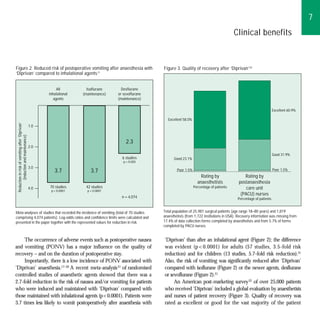
Table 1. Pharmacokinetic parameters for ‘Diprivan’ (propofol)           comparison of predicted values with measured values obtained
incorporated in ‘Diprifusor’ TCI Software*                              from a study in which the same infusion profile was
                                                                        used in all patients,7 the “Marsh” model 3 was selected for the
   V1 Volume of central compartment                      228 ml kg–1    development of ‘Diprifusor’. A subsequent comparative study8
                                                                        endorsed the accuracy of the “Marsh” model for TCI using
   k10 Elimination rate constant from the                               a validated method9 to compare the accuracy of different models.
       central compartment                               0.119 min–1    The pharmacokinetic parameters incorporated in software
                                                                        (© University of Glasgow) used in ‘Diprifusor’ are listed in Table 1.
   keo Elimination rate constant from the
                                                         0.26 min–1
       effect compartment


        Intercompartmental distribution rate constants


        k12                                              0.114 min–1

        k21                                              0.055 min–1

        k13                                              0.0419 min–1

        k31                                              0.0033 min–1

* © University of Glasgow.


compartment model2 (Figure 1). Such a model is utilised for
‘Diprifusor’ TCI. Based on specific pharmacokinetic parameters, a
microprocessor calculates the changing drug distribution and
elimination and the amount of drug needed to achieve and
maintain the desired blood concentration.
     Various models for ‘Diprivan’ with differing sets of pharmaco-
kinetic parameters have been published by independent research
groups. Standardisation and validation of pharmacokinetic parameters
are essential for the clinical application of a TCI system.
     Three models3–5 were examined in consultation with principal
academic groups. Based on computer simulation6 and a direct
6


                                                    Clinical benefits
    The rapid onset and short duration of action of ‘Diprivan’ enable               Numerous empirically-designed bolus or infusion administration
    good control of the depth of anaesthesia and good quality of               schemes have been reported for ‘Diprivan’. Infusion rates have been
    recovery.                                                                  adjusted manually within a typical range of 4 to 12 mg/kg/h.
                                                                                    The pharmacokinetic profile enables blood concentration – and
    Quality of induction                                                       hence depth of anaesthesia – to respond rapidly to changes in the
    Induction of anaesthesia with ‘Diprivan’ is characteristically smooth,     infusion rate of ‘Diprivan’. When fixed-rate infusion of ‘Diprivan’
    rapid and reliable. Induction time is related to the speed of injection.   commences, there is a rapid increase in blood concentration
    For instance, with a fixed dose of 2.5 mg/kg, mean induction time          followed by a more gradual increase. A linear relationship between
    was 30.8 seconds with an injection time of 20 seconds and 58.4             the infusion rate of ‘Diprivan’ and steady-state blood concentrations
    seconds with an injection time of 80 seconds.10 The overall quality        has been demonstrated; with continuous infusions of 3, 6 or
    of induction was rated as good or adequate in about 90% of patients        9 mg/kg/h for at least 2 hours, blood concentrations were 2.1, 3.6
    who received ‘Diprivan’ 2.0 mg/kg or 2.5 mg/kg.11 Patients over            and 5.9 µg/ml.15
    55 years of age may require lower doses of ‘Diprivan’.                          In practice, infusion rates of ‘Diprivan’ are titrated against the
         The additive or synergistic hypnotic effects of ‘Diprivan’ with       clinical response of the individual patient because of interpatient
    benzodiazepines or opioids is well documented.1                            variability as well as differences in the degree of surgical stimulation
         There is interindividual variability with respect to plasma or        and the use of supplementary analgesics.
    blood concentration and response during induction with ‘Diprivan’.
    The anaesthetic endpoint of loss of consciousness (loss of response to     Quality of recovery
    verbal or tactile stimuli) occurred in 50% of patients with plasma         Extensive clinical experience has established that anaesthesia with
    concentrations (Cp50 or EC50) ranging from 2.7 to 3.4 µg/ml.12–14          ‘Diprivan’ is characterised by a prompt, clear-headed recovery.
    Lower plasma concentrations were required to achieve loss of                    All stages of recovery have been evaluated, especially in
    eyelash reflex12 whereas higher plasma concentrations were required        investigations of ‘Diprivan’ in the induction and maintenance of
    to prevent movement on skin incision.14                                    anaesthesia for day-case surgery (see reviews1,16). Early recovery (or
                                                                               emergence), as defined by time to eye-opening and orientation,
    Quality of maintenance                                                     is rapid and predictable after ‘Diprivan’.17–20 Fast intermediate
    Maintenance of anaesthesia with ‘Diprivan’ is characterised by             recovery, including the early return of cognitive and psychomotor
    smooth, easy control of the depth of anaesthesia and good                  function and early time to discharge,17–20 has been demonstrated
    haemodynamic stability. ‘Diprivan’ has been used to maintain               after ‘Diprivan’. Features of the late stage of recovery (i.e. complete
    anaesthesia during a wide variety of surgical procedures ranging           return to the preoperative state and resumption of normal activities)
    from short procedures lasting only 10 minutes to major procedures          have also been studied after ‘Diprivan’.
    lasting several hours.
7
                                                                                                                                                      Clinical benefits


Figure 2. Reduced risk of postoperative vomiting after anaesthesia with                                 Figure 3. Quality of recovery after ‘Diprivan’ 22
‘Diprivan’ compared to inhalational agents 21


                                                             All         Isoflurane      Desflurane
                                                        inhalational   (maintenance)   or sevoflurane
                                                           agents                      (maintenance)

                                                                                                                                                                                Excellent 60.9%

                                                                                                           Excellent 58.0%
 Reduction in risk of vomiting after ‘Diprivan’


                                                  1.0
        (induction and maintenance)


                                                                                           2.3
                                                  2.0
                                                                                                                                                                                Good 31.9%
                                                                                         6 studies            Good 23.1%
                                                                                          p= 0.003
                                                  3.0
                                                           3.7             3.7                                  Poor 1.5%                                                       Poor 1.5%
                                                                                                                                 Rating by                 Rating by
                                                                                                                               anaesthetists            postanaesthesia
                                                  4.0   70 studies      42 studies                                           Percentage of patients         care unit
                                                         p <0.0001       p< 0.0001
                                                                                                                                                         (PACU) nurses
                                                                                         n =4,074                                                      Percentage of patients


Meta-analyses of studies that recorded the incidence of vomiting (total of 70 studies                   Total population of 25,981 surgical patients (age range 18–80 years) and 1,819
comprising 4,074 patients). Log-odds ratios and confidence limits were calculated and                   anaesthetists (from 1,722 institutions in USA). Recovery information was missing from
presented in the paper together with the represented values for reduction in risk.                      17.4% of data collection forms completed by anaesthetists and from 5.7% of forms
                                                                                                        completed by PACU nurses.


     The occurrence of adverse events such as postoperative nausea                                      ‘Diprivan’ than after an inhalational agent (Figure 2); the difference
and vomiting (PONV) has a major influence on the quality of                                             was evident (p < 0.0001) for adults (57 studies, 3.5-fold risk
recovery – and on the duration of postoperative stay.                                                   reduction) and for children (13 studies, 5.7-fold risk reduction).21
     Importantly, there is a low incidence of PONV associated with                                      Also, the risk of vomiting was significantly reduced after ‘Diprivan’
‘Diprivan’ anaesthesia.17–20 A recent meta-analysis 21 of randomised                                    compared with isoflurane (Figure 2) or the newer agents, desflurane
controlled studies of anaesthetic agents showed that there was a                                        or sevoflurane (Figure 2).21
2.7-fold reduction in the risk of nausea and/or vomiting for patients                                        An American post-marketing survey 22 of over 25,000 patients
who were induced and maintained with ‘Diprivan’ compared with                                           who received ‘Diprivan’ included a global evaluation by anaesthetists
those maintained with inhalational agents (p<0.0001). Patients were                                     and nurses of patient recovery (Figure 3). Quality of recovery was
3.7 times less likely to vomit postoperatively after anaesthesia with                                   rated as excellent or good for the vast majority of the patient
8
        ‘Diprivan’


    Figure 4. Most commonly reported adverse events associated with            population (Figure 3). Anaesthetists were more likely to rate
    administration of ‘Diprivan’22                                             recovery as poor when emergence from anaesthesia was delayed or
                                                                               there was postoperative confusion.
     Pain on injection                       5.2%
                                                                                    Nurses were more likely to rate recovery as poor when nausea
     Nausea and/or vomiting
                                                                               and/or vomiting occurred or there was postoperative pain. Rating
                                 1.9%
                                                                               of recovery as poor by both anaesthetist and nurse was noted for
                                                                               only 0.6% of patients.
     Excitement                 1.3%
                                                                                    The survey 22 also confirmed low frequencies of adverse events
     Hypotension                1.1%                                           (Figure 4) often associated with rating of recovery as poor; examples
                                                                               included nausea and/or vomiting (1.9%), light or delayed anaesthesia
     Bradycardia              0.4%                                             (0.2%), postoperative confusion (0.2%), somnolence (0.2%) and
                                                                               excitement (1.3%) associated with ‘Diprivan’.
     Pain                     0.3%                                                  The clinical and economic benefits resulting from the
                                                                               favourable recovery profile of ‘Diprivan’ are summarised (Table 2)
     Hypertension             0.3%                                             with particular reference to anaesthesia for day-case surgery.
                                                                                    Measurements of blood concentrations during recovery after
     Rash                     0.2%                                             ‘Diprivan’ infusion have demonstrated that patients awaken when
                                                                               concentrations are in the region of 1 to 2 µg/ml.27,28
     Confusion                0.2%

     Coughing                 0.2%                                             Table 2. Clinical and economic benefits resulting from recovery profile
                                                                               of ‘Diprivan’ for anaesthesia in day-case surgery
     Somnolence               0.2%
                                                                                 Clinical benefits of ‘Diprivan’
     Light or delayed
     anaesthesia
                              0.2%                                                         q Short time to recovery17–20
                                                                                           q Low incidence of PONV 17–20
     Tachycardia              0.1%
                                                                                           q Short time to discharge17–20

     Laryngismus              0.1%
                                                                                 Economic benefits
     Total with report
     of adverse event
                                                                 10.8%                     q Saves nursing time in the recovery room20,23,24
                                                                                           q Limits the need for anti-emetic therapy 25,26
                                        5%                 10%           15%
     n = 25,891                         Percentage of patients
                                                                                           q Allows patients an early return to work 24
9


Target Controlled Infusion (TCI)
                 The basic rationale for Target Controlled Infusion (TCI)
                 of an intravenous anaesthetic agent is to enable the
                 anaesthetist to alter the depth of anaesthesia in as simple
                 a manner as using standard volatile anaesthetics delivered
                 via calibrated vaporizers. With TCI, induction and
                 maintenance are a continuous process with a single
                 agent unlike the separate use of an intravenous agent for
                 induction and an inhalational agent for maintenance.
                    A TCI system should improve both the convenience
                 of administration and ease of control of anaesthesia
                 compared with conventional infusion techniques.
                    This section reviews the scientific principles and
                 research background to TCI in anaesthesia.
10


          Development of concept and terminology
     The concept of pharmacokinetic models with mathematical
     equations to describe infusion schedules to provide a target
                                                                             Key components
     concentration in blood of an intravenous drug originated in 1968.29     Software and hardware are required to achieve and maintain a
     By the early 1980s, a group in Bonn, Germany, had suggested and         target blood concentration of an anaesthetic by balancing the rate
     demonstrated that a computer-controlled infusion pump could             Table 3. The key components of a TCI system and considerations
     deliver complex infusion schedules of intravenous anaesthetic           for commercial development
     agents.30 Subsequently, numerous investigators in Europe and the
                                                                               Key components – basic software and hardware
     USA reported experimental systems linking computer software and
     hardware to the operation of an infusion pump for delivery of                      q Pharmacokinetics – a validated model with specific
     intravenous drugs to the patient.                                                    parameters for drug
                                                                                        q Algorithm(s) to control infusion rate
     Acronyms                                                                           q “Control unit” i.e. software and microprocessors for above

     Researchers have referred to the basic concept of utilising a pharma-              q Infusion pump
     cokinetic model and microprocessor (= computer) to control an                      q “Communication” system between “control unit”
                                                                                          and infusion pump
     infusion pump, by the following acronyms:
                                                                                        q User interface for input of patient data and
         q CATIA – Computer Assisted Total Intravenous                                    target blood concentration
           Anaesthesia
                                                                               Considerations for development of a commercial system
         q TIAC – Titration of Intravenous Agents by Computer
                                                                                        q Standardisation of the pharmacokinetic model
         q CACI – Computer Assisted Continuous Infusion                                   for a particular drug
         q CCIP – Computer Controlled Infusion Pump.                                    q Validation of the system software and
                                                                                          production processes
          The acronym TCI (Target Controlled Infusion) is now used                      q Safety mechanisms in the unlikely event of
     as a broader term to describe the technique for the continuous                       malfunction of components
     control of the concentration in blood or plasma of infused drug.31                 q Integration of basic software and hardware with
     TCI involves the use of a microprocessor to manage the pump.                         infusion pump to provide a reliable and portable unit
     Instead of setting an infusion rate in terms of mg/kg/h, the                       q User interface to be as simple to operate as the controls
     anaesthetist enters the following:                                                   of a vaporizer
                                                                                        q Convenient syringe presentation of drug
         q Body weight of the patient
                                                                                        q Documentation (e.g. prescribing information, user guides)
         q Age of the patient                                                             for drug and device

         q Required blood concentration of the drug                                     q Automatic recognition device for correct drug identification
                                                                                          and usage
           (= target blood concentration in µg/ml).
11
                                                                Development of concept and terminology


of infusion with the processes of distribution and elimination.             The user interface should, ideally, be as simple to operate as the
This requires information about the pharmacokinetic properties         controls of a vaporizer. Obviously, a suitable syringe presentation of
of the drug in appropriate patients.                                   the drug with documentation such as amended prescribing
      Software in the microprocessor incorporates a pharmacokinetic    information and user guides for drug and pump are required for a
model and a specific set of parameters for the drug to be infused.     commercial TCI system. Finally, an automatic recognition device
The microprocessor continuously calculates the variable infusion       for identification of the correct drug and concentration would
rates required to achieve a predicted blood concentration. An          provide an important safety feature.
algorithm controls the operation of the infusion pump so that
infusion rates are altered automatically to achieve this blood         Defining TCI for anaesthesia
concentration. The TCI system maintains the blood concentration        TCI is not a system for the complete computer control of
until a new target is set by the anaesthetist.                         anaesthesia. When using TCI, the anaesthetist adjusts the target
      The choice of pharmacokinetic model and infusion control         blood concentration of drug and titrates to clinical effect. A TCI
algorithm are major determinants of the performance of a TCI           system is a convenient tool to assist the anaesthetist in adjusting
system. Different models and algorithms produce different actual       the depth of anaesthesia. Control still rests with the anaesthetist,
blood concentrations even if the same target blood concentration       who uses clinical signs or more sophisticated means of
is selected.                                                           monitoring. As such, a rigorous definition of TCI, as applied to
      These key components of any TCI system in terms of software      anaesthesia, is as follows:
and hardware are summarised (Table 3).

Considerations for commercial                                            Definition of Target Controlled Infusion (TCI)
development                                                              When applied to anaesthesia,TCI is an infusion system which
                                                                         allows the anaesthetist to select the target blood concentration
Aspects of safety, reliability and user convenience are foremost         required for a particular effect, and then to control depth of
considerations for the development of a commercial TCI system            anaesthesia by adjusting the requested target concentration.
(Table 3).
     Standardisation of the amount of drug delivered at a particular
target setting (i.e. the pharmacokinetic model) for all systems used
with a given drug is an important requirement. The system
software and production processes must be validated. A basic safety
mechanism will shut the system down in the unlikely event of
malfunction of software or hardware. Integration of the basic
hardware and software with the infusion pump is important for a
commercial system; an integrated system should be more reliable
and portable than configurations used for research purposes.
12


                                                       Benefits of TCI
     Several potential benefits of TCI over manually controlled infusion        Table 4. Benefits of TCI
     (Table 4) have been summarised in authoritative reviews32,33 and
                                                                                  Convenience in use
     textbooks.34,35 Benefits can be considered mainly in terms of
     convenience in use and control of anaesthesia.32                             Practical aspects
                                                                                             q Simple to operate
     Convenience in use                                                                      q Easy to titrate the level of anaesthesia

     The simplicity of operation and ease of titration to anaesthetic effect                 q Displays calculated blood or plasma concentrations
     with a TCI system mean that it can be likened to an “intravenous                        q Compensates for interrupted infusion
     vaporizer”.36                                                                           q Avoids the need for time-consuming calculations
                                                                                             q Continuous process from induction through to maintenance
     Simple to operate
     With TCI, the anaesthetist simply sets the initial target blood              Control of anaesthesia
     concentration required for an intravenous drug in a similar way to           Theoretical aspects
     setting the percentage concentration of an inhalational agent with                      q Good control of depth of anaesthesia
     a vaporizer. The target concentration is achieved and maintained                        q Gives stable anaesthesia
     with no further intervention required by the user.                                      q Improved control of cardiovascular and
                                                                                                respiratory parameters
     Easy to titrate the level of anaesthesia
                                                                                             q Induction phase can be used to predict maintenance effects
     Titration of the target concentration and therefore the depth of
     anaesthesia is rapid and predictable with a TCI system. Setting a new      Compiled from references 32–35

     target concentration produces a proportional change in the depth of
     anaesthesia. This is unlike the situation with inhalational anaesthetics    a constant infusion rate produces fluctuations in blood concentration
     where “overpressure” is often used to titrate rapidly to deeper levels      in relation to distribution and elimination of drug. Also, manual
     of anaesthesia.                                                             control with variable infusion rates can often require calculations for
          TCI facilitates the direct transfer of fundamental skills learnt       alterations. Supplementary bolus doses may be needed to increase
     with inhalational agents. Target concentration is readily increased         the depth of anaesthesia.
     in anticipation of stimulating events (e.g. placement of laryngeal
                                                                                 Displays calculated blood concentration
     mask airway or surgical incision). Similarly, target concentration
     can be readily decreased to tailor the level of anaesthesia needed          With TCI, there is a constantly changing display of calculated (or
     towards the end of surgery.                                                 predicted) blood concentration. The system may also provide
          A TCI system is easier to operate than a manually controlled           information on the time required to reach the desired target
     infusion pump. The required target value can be achieved accurately         concentration. This advisory information from a TCI system, in
     and rapidly – and then maintained. In contrast, manual control with         conjunction with clinical signs, enables the anaesthetist to assess
13
                                                                                                                Benefits of TCI


progress and whether further changes are required i.e. the                target concentration. With manually controlled infusion, such a
anaesthetist “knows where he/she is up to.”                               procedure requires skill and experience to manage with a similar
                                                                          degree of precision.
Displays calculated effect-site concentration
                                                                          Avoids the need for time-consuming calculations
Some systems have the facility to display the propofol concentration
calculated to exist at the effect-site in the brain. This concentration   Infusion rates do not need to be calculated when using a TCI
tends to lag behind the blood concentration when the target               system. The anaesthetist simply selects a target blood concentration.
concentration is increased, and provides an indication of the degree      The system makes continuous calculations and controls the rate of
of equilibration which exists at a given time between blood and brain     drug infusion so as to achieve and maintain the requested target
concentrations of propofol.                                               concentration – and the desired level of anaesthesia. With manual
     Pharmacodynamic effects are likely to be more closely related        control of an infusion pump, calculations are needed for the initial
to effect-site concentrations but guidance in ‘Diprivan’ prescribing      infusion rate and subsequent adjustments so as to maintain a stable
information on setting of target concentration refers only to target      level of anaesthesia.
blood concentrations. However, the provision of advisory                       Potential benefits that arise from the above aspects of ease of
information on effect-site concentration should assist the                use of a TCI system include:
anaesthetist in making more rational adjustments to the blood target           q TCI might allow the anaesthetist more time to focus on
setting e.g. delaying an increase in target if the effect-site                      monitoring the patient
concentration indicates only partial equilibration.                            q TCI might avoid errors in dosage sometimes associated
                                                                                    with manual control of complex infusion regimens.
Predicts patient waking time
Some TCI systems have the facility to display predictive information      Control of anaesthesia
about the time required to achieve a lower calculated concentration       There are some theoretical or potential clinical benefits of TCI
if the infusion were to be stopped (decrement time). The anaesthetist     over conventional intravenous drug administration techniques that
can then easily modify drug administration to optimise the speed of       stem from the predictability of anaesthetic effects during induction
recovery. The decrement time displayed is influenced by the               and maintenance.
expected waking concentration which can be adjusted by the
anaesthetist.                                                             Good control of depth of anaesthesia
                                                                          TCI may assist precise control of the depth of anaesthesia by
Compensates for interrupted infusion                                      allowing the anaesthetist to make rapid and predictable changes
When an infusion is interrupted (e.g. for a change of syringe), a TCI     simply by setting a new target blood concentration. It is easy to
system may make automatic compensation. When infusion stops, the          make proportional changes in target concentration so that the level
system continues to predict the blood concentration. When infusion        of anaesthesia can be readily titrated as necessary to suit individual
restarts, the rate is adjusted automatically to maintain the desired      patients and varying degrees of stimulation.
14
         Target Controlled Infusion (TCI)


          The initial target concentration required to induce anaesthesia      maintenance of anaesthesia, blood concentrations could rise higher
     is selected according to age, ASA status, premedication and               or fall lower than intended with manual alteration of the rate of drug
     supplementary analgesic administration. Response to the initial target    administration; there could be a corresponding loss of control of
     concentration may be used as a guide to subsequent requirements,          haemodynamic variables. A TCI system provides more predictable
     including during the maintenance phase.                                   blood concentrations. There is automatic reduction of drug
          TCI allows the anaesthetist to make small (e.g. 0.1 µg/ml) as        administration when the predicted concentration is reached. Manual
     well as large changes (e.g. 1 µg/ml) to target concentration at any       administration of supplementary bolus doses is not required with
     time. Stimulating events (e.g. surgical incision) may be anticipated by   TCI. Overall, a TCI technique may provide smoother control of
     increasing the target concentration. Decreases in target concentrations   anaesthetic, haemodynamic and respiratory effects than manually
     may be required in response to events such as a fall in blood pressure.   adjusted administration techniques.
     Target concentrations can also be reduced as the operation progresses
     in anticipation of the end of surgery.                                    Other benefits
                                                                               When an intravenous anaesthetic agent is administered by a
     Stability of anaesthesia                                                  TCI technique, induction and maintenance can be viewed as a
     Theoretically, a more stable blood concentration of drug – and            continuous process.
     more precise control of the depth of anaesthesia – may be obtained             TCI facilitates TIVA. There is the general advantage with
     with TCI than with manual methods of administration. The                  TIVA of avoiding the use of, and therefore occupational exposure
     response of the patient to surgical stimulation may be countered          to, inhalational agents.
     rapidly and in a well-controlled manner with TCI. As mentioned,                A TCI system makes the administration of an intravenous agent,
     the anaesthetist titrates to effect. The facility to make small           especially for maintenance, analogous to the use of a vaporizer.
     increments and decrements to target concentration is useful should             The features of the syringe pumps and microprocessors that
     the anaesthetist have to “fine tune” the depth of anaesthesia in          form part of a TCI system for anaesthesia may confer additional
     “difficult” patients e.g. those with respiratory or cardiovascular        advantages such as:
     disease.                                                                      q Portability

     Control of cardiovascular and respiratory parameters                          q Data storage and retrieval capability
                                                                                   q Creation of documentary record at the time of the
     The careful control of blood concentrations of drug with TCI could,
                                                                                     anaesthetic procedure (e.g. for clinical audit).
     in theory, improve haemodynamic and/or respiratory stability – and
     help to avoid dose-dependent events such as apnoea or hypotension.             The general benefits of TCI as outlined in this section are
          Conventional bolus administration of an induction dose of an         obtainable with many prototype TCI systems. ‘Diprifusor’ takes
     intravenous anaesthetic agent may produce an “overshoot” of blood         these benefits and adds features such as an improved user interface
     concentration; with some agents, there is a high attendant risk of        and improved portability, details of which are given in the next
     apnoea or an undue reduction in blood pressure. Similarly, during         section.
15


                              TCI systems for ‘Diprivan’
Several academic centres, including the University of Glasgow,37         Extensive experience
have developed independently and published clinical results4, 37–41
on a variety of prototype systems for the administration of              Extensive published experience* with prototype ‘Diprifusor’ and
‘Diprivan’ by TCI (Table 5).                                             other TCI systems for ‘Diprivan’ has helped to establish the
     These systems cannot be regarded as equivalent; they utilise        scientific principles and methods for clinical testing and validation
different pharmacokinetic parameters and/or different infusion           of a commercial system. Relevant publications are summarised in
control algorithms.                                                      subsequent sections of this review.

                                                                         * A bibliography of published reports is available on request from
Prototype ‘Diprifusor’ TCI systems                                       AstraZeneca

The system 37,42 developed by the University of Glasgow contains a
                                                                         Table 5. Prototype systems for the administration of ‘Diprivan’ by TCI
pharmacokinetic model and parameters together with infusion
control algorithms that are identical to those incorporated in            Prototype ‘Diprifusor’ TCI system
‘Diprifusor’ TCI Software (see also pages 5 and 22). This Software
                                                                                    q University of Glasgow, UK (GNC Kenny and colleagues) 37
(© University of Glasgow) has been licensed to the manufacturers of
‘Diprivan’ and was incorporated in the ‘Diprifusor’ TCI System            Other prototype TCI systems for ‘Diprivan’
used in the programme of clinical trials (see pages 35 to 53).
                                                                                    q CACI (computer-assisted continuous infusion,
     Published studies on the University of Glasgow system refer                      Duke University, USA) 38
to a variety of hardware configurations. The software was identical
                                                                                    q STANPUMP (S Shafer, Stanford, USA)39
but differing computers and user interfaces evolved. The reported
                                                                                    q STELPUMP (JF Coetzee, University of Stellenbosch,
versions of the basic system can be regarded as prototype ‘Diprifusor’                South Africa)
TCI systems. Published experience with ‘Diprifusor’ or prototype
                                                                                    q J Schüttler (Bonn, Germany)40
‘Diprifusor’ TCI systems extends to over 1,500 anaesthetised
                                                                                    q RM Tackley (Bristol, UK)4
adults .*
                                                                                    q FHM Engbers (Leiden, Holland)41

Other prototype TCI systems
for ‘Diprivan’
At least six systems other than from the University of Glasgow
have been reported and are listed (Table 5). These systems cannot
be regarded as equivalent to ‘Diprifusor’ TCI because of differing
pharmacokinetic parameters and/or control software. Published
reports describe a total of over 1,000 patients who have been
anaesthetised with such prototype TCI systems for ‘Diprivan’.*
16
17


‘Diprifusor’ TCI – practical aspects
                   ‘Diprifusor’ (TCI Software/Subsystem/System for
                   ‘Diprivan’) is the first commercially available TCI system
                   and is incorporated in syringe pumps from leading
                   manufacturers. This section summarises practical aspects
                   including user requirements.
                      The term ‘Diprifusor’ is used when referring to the
                   infusion system whereas ‘Diprifusor’ TCI is used to
                   describe the technique of anaesthetising a patient with
                   ‘Diprivan’ using a ‘Diprifusor’ system (see also Glossary
                   on page 58). ‘Diprifusor’ TCI is only indicated for
                   anaesthesia in adult patients (see also Prescribing
                   Information for ‘Diprivan’).
18


                         General requirements for use of
                                 ‘Diprifusor’ TCI
     The basic requirements for anaesthetising a patient with ‘Diprifusor’
     TCI are:
         q Documentation – information from the pump manufacturer
           (e.g. Instruction Manual) and from AstraZeneca
           (current Prescribing Information for ‘Diprivan’ and Guide
           for Anaesthetists on administration by ‘Diprifusor’ TCI)
         q Drug – ‘Diprivan’ Pre-Filled Syringe (PFS) with recognition
           tag
         q Delivery system – commercially-available syringe pump
           incorporating ‘Diprifusor’.
19


                  ‘Diprivan’ Pre-Filled Syringe (PFS)
A range of Pre-Filled Syringe (PFS) presentations of ‘Diprivan’ has                Regarding pack sizes, most markets will have 1 x ‘Diprivan’
been developed. Your local AstraZeneca representative or office                PFS in a blister tray packed into an outer carton. Packaging
will be pleased to advise on available presentations, whether                  includes statements that the ‘Diprivan’ PFS can be used for
‘Diprivan’ 1% or 2% and syringe sizes.                                         ‘Diprifusor’ TCI.
    For administration by TCI, a ‘Diprivan’ PFS first needs to be                  The blister tray (Figure 5) contains the following components:
assembled before loading into a syringe pump that incorporates
                                                                                     q PFS (glass barrel containing sterile drug; rubber stopper
‘Diprifusor’.
                                                                                       and rubber plunger; colour-coded crimp and “flip-off”
    The ‘Diprivan’ PFS can be used for the following methods of
                                                                                       plastic seal)
administration:
                                                                                     q Finger grip (fitted into base of glass barrel, incorporates a
    q TCI with a syringe pump that incorporates ‘Diprifusor’                           recognition tag*)
    q “Manual” control of infusion with compatible syringe
      pumps i.e. appropriate setting of syringe size as for 50/60 ml                 q Plastic plunger rod (for attachment to the screw threads of
      B-D Plastipak                                                                    the rubber plunger)
    q Hand-held.                                                                     q Luer connector (as a separate sterile unit).

Figure 5. ‘Diprivan’ PFS components in blister tray
                                                                       Plastic plunger rod (for attachment to the
                                                                          screw threads of the rubber plunger)


     Luer connector
     (as a separate
       sterile unit)
                                                                                                                                       Finger grip
                                                                                                                                  (fitted into base of
                                                                                                                                      glass barrel,
                                                                                                                                      incorporates
                                                                                                                                  a recognition tag*)


                            Plastic             Colour-coded            Rubber              Glass barrel            Rubber
                           “flip-off”         aluminium crimp           stopper         containing sterile drug     plunger
                              seal         (blue = 1%, red = 2%)
20
         ‘Diprifusor’ TCI – practical aspects


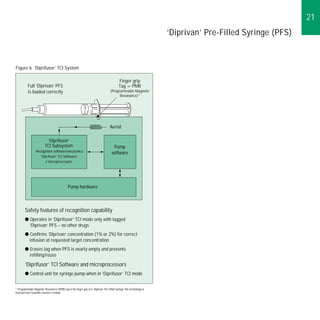
                                                                                  when the PFS has been loaded correctly. Magnetic resonance
     Assembly and aseptic precautions                                             “signals” are generated by the tag. An aerial (Figure 6) in the syringe
     PFS components need to be assembled before use. Detailed assembly            pump detects these signals and relays them to the ‘Diprifusor’ TCI
     instructions are on the back of the carton and with the blister tray. All    Subsystem.
     presentations of ‘Diprivan’ support microbial growth and are for                  The electronics and software in the ‘Diprifusor’ TCI Subsystem
     single use in an individual patient. The exterior of the syringe and the     “read” these “signals” and ensure that:
     plunger are not sterile. Asepsis must be maintained during assembly –
     and subsequent use.                                                               q The syringe pump will only operate in ‘Diprifusor’ TCI
          The standard aseptic precautions for ‘Diprivan’ PFS are as                     mode with a tagged ‘Diprivan’ PFS
     follows:                                                                          q The ‘Diprifusor’ TCI Software recognises whether a 1%
                                                                                         or 2% ‘Diprivan’ PFS has been loaded.
         q Single use in an individual patient – the PFS is NOT A
           MULTIDOSE CONTAINER                                                         There are two consequences for safe operation:
         q Maintain asepsis for both ‘Diprivan’ and infusion equipment
                                                                                       q ‘Diprivan’ is the only drug that is infused when the syringe
         q Discard unused drug.                                                          pump is in ‘Diprifusor’ TCI mode
           The maintenance of asepsis starts with alcohol swabbing or                  q The automatic confirmation of concentration means that
     spraying of the rubber stopper after removal of the “flip-off” plastic              the correct infusion pattern – and target concentration –
     seal.                                                                               is obtained irrespective of whether a 1% or 2% ‘Diprivan’
           There is a built-in safety feature with ‘Diprifusor’ to help prevent          PFS is loaded.
     refilling and multiple-patient use of the ‘Diprivan’ PFS. A detailed               A third feature enhances patient safety relating to aseptic
     description follows.                                                         precautions. When the contents of a ‘Diprivan’ PFS have been
                                                                                  infused, the recognition tag is erased. This helps prevent any
     Recognition tag in finger grip                                               refilling and reuse of that syringe in TCI mode whether in the same
     The recognition tag* (“electronic marker”) in the finger grip of a           or another patient. The user can, of course, load another tagged
     ‘Diprivan’ PFS provides important safety features for correct drug           ‘Diprivan’ PFS. (The syringe pump displays instructions about
     identification and usage.43                                                  loading a new ‘Diprivan’ PFS and ‘Diprifusor’ provides automatic
          The tag is an encoded capsule that is visible on one side of the        compensation for the short interruption.)
     finger grip. To load a ‘Diprivan’ PFS into a syringe pump that
     incorporates ‘Diprifusor’, the tagged side of the finger grip is inserted    * Programmable Magnetic Resonance (PMR) tag in the finger grip of a ‘Diprivan’
     into the slot (syringe “ear groove”) and rotated. The display indicates      Pre-Filled Syringe: this technology is licensed from Scientific Generics Limited.
21
                                                                                                                        ‘Diprivan’ Pre-Filled Syringe (PFS)


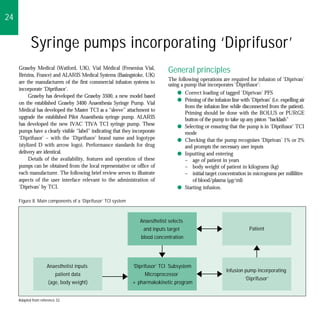
Figure 6. ‘Diprifusor’ TCI System

                                                                                             Finger grip
           Full ‘Diprivan’ PFS                                                               Tag = PMR
           is loaded correctly                                                        (Programmable Magnetic
                                                                                            Resonance)*


                                                                                     Aerial

                           ‘Diprifusor’
                          TCI Subsystem                                                 Pump
                  Recognition software/electronics
                                                                                       software
                     ‘Diprifusor’ TCI Software/
                         2 microprocessors


                                               Pump hardware


        Safety features of recognition capability
        q Operates in ‘Diprifusor’ TCI mode only with tagged
          ‘Diprivan’ PFS – no other drugs
        q Confirms ‘Diprivan’ concentration (1% or 2%) for correct
          infusion at requested target concentration
        q Erases tag when PFS is nearly empty and prevents
          refilling/reuse
        ‘Diprifusor’ TCI Software and microprocessors
        q Control unit for syringe pump when in ‘Diprifusor’ TCI mode


* Programmable Magnetic Resonance (PMR) tag in the finger grip of a ‘Diprivan’ Pre-Filled Syringe: this technology is
licensed from Scientific Generics Limited.
22


                                           ‘Diprifusor’ TCI System
     The ‘Diprifusor’ TCI System is the complete delivery system.                q Recognition of tagged ‘Diprivan’ PFS with software and
     Commercial systems integrate the ‘Diprifusor’ TCI Subsystem with              electronic components
     a syringe pump.
                                                                                 q Control unit for syringe pump when in TCI mode with
     ‘Diprifusor’ TCI Subsystem                                                    ‘Diprifusor’ TCI Software and 2 microprocessors.

     The ‘Diprifusor’ TCI Subsystem is the control unit (“controller”) for        When in TCI mode, the syringe pump is a “slave” to these
     commercially-available pumps that incorporate ‘Diprifusor’.             recognition and control devices. They “communicate” with the
         The Subsystem contains electronic components and associated         pump software to “operate” the pump hardware i.e. infuse ‘Diprivan’
     software. It can be considered as a module and measures                 according to the pharmacokinetic model. But the pump still retains
     approximately 8 x 5 x 2 cm (Figure 7). There are two functions:         its own special features such as alarms for EMPTY/OCCLUSION,
                                                                             LOW BATTERY etc.

     Figure 7. ‘Diprifusor’ TCI Subsystem installed in syringe pumps that    ‘Diprifusor’ TCI Software
     incorporate ‘Diprifusor’
                                                                             ‘Diprifusor’ TCI Software (© University of Glasgow) consists of:
                                                                                 q A three-compartment pharmacokinetic model with a
                                             8 cm                                  specific set of pharmacokinetic parameters for ‘Diprivan’
                                                                                   (propofol)
                                                                                 q Two independent infusion control algorithms.
                                                                                 Pharmacokinetics has been reviewed starting on page 4 with
                                                                             details of the pharmacokinetic model (Figure 1) and parameters
                                                                             (Table 1).

                                                                             Fail-safe mechanism
                                                                             The two independent algorithms for infusion control run in parallel
                                                                             and provide a fail-safe mechanism to enhance patient safety. Both
                                                                             algorithms use the same pharmacokinetic model but each one operates
                                                                             with different mathematics. This is a more robust and secure situation
                                                                             than if a single algorithm were to be used.
                                                                                  Each control algorithm has its own microprocessor. The second
         FUNCTIONS
         q Control unit for syringe pump
                                                                             microprocessor checks the output from the first microprocessor.
         q Recognition of tagged ‘Diprivan’ PFS                              The blood concentrations predicted by the two microprocessors are
                                                                             continuously calculated and compared.
23
                                                                                                 ‘Diprifusor’ TCI System


Should the discrepancy between the two be greater than 20% – for           much less than that resulting from pharmacokinetic variability
a period longer than 10 seconds – the following happens:                   between patients.
                                                                                This specification compares favourably with an international
    q An alarm is activated                                                standard for anaesthesia machines (ISO 5358) which recommends
    q An error message is displayed                                        that: the concentration of an inhalational agent delivered by a
    q The infusion stops.                                                  vaporizer should not deviate from the indicated value by more than
                                                                           ± 20% of the setting, or 5% of the maximum setting, whichever is
     The threshold of 20% for discrepancy between microprocessors          the greater.44
is based on the extensive clinical experience obtained by the                   Test protocols were developed for the incorporation of
originators of the software (© University of Glasgow). It is also of the   ‘Diprifusor’ by pump manufacturers. As a medical device, an infusion
same order as pharmacokinetic variability between patients.                pump that incorporates ‘Diprifusor’ meets rigorous technical, delivery
     Laboratory studies led to the determination of specifications         performance and regulatory standards to ensure:
for delivery performance in terms of cumulative volume
delivered (generally ± 5% of the ideal volume) at specific time                q Correct installation
points.6 Thus, the tolerance level for the checking algorithm will             q Equivalent delivery to that of systems used for ZENECA
avoid nuisance alarms during the rapid infusion phase but                        clinical trials
will detect any major discrepancy resulting from unexpected
software errors.                                                               q Operation in a manner consistent with revised Prescribing
                                                                                 Information for ‘Diprivan’.
Installation specification
Delivery performance is a measure of whether or not the syringe
pump actually delivers drug at the rate that the software calculates
that it should. A stringent specification of delivery performance
sets the standard which pump manufacturers have achieved to
demonstrate that the ‘Diprifusor’ Subsystem has been installed
correctly in their pump.
     Percentage infusion error is an index of the amount of
‘Diprivan’ actually delivered against the ideal amount predicted by
a computer simulation. Laboratory studies have shown that there
was minimal variability between ‘Diprivan’ Pre-Filled Syringes
and between pumps used in the trial programme. 6 The
specification for commercial systems is such that the error in
target concentration which can be attributed to the delivery
system should generally be less than 5%. Thus, infusion error is
24


            Syringe pumps incorporating ‘Diprifusor’
     Graseby Medical (Watford, UK), Vial Médical (Fresenius Vial,
     Brézins, France) and ALARIS Medical Systems (Basingstoke, UK)
                                                                               General principles
                                                                               The following operations are required for infusion of ‘Diprivan’
     are the manufacturers of the first commercial infusion systems to         using a pump that incorporates ‘Diprifusor’:
     incorporate ‘Diprifusor’.
                                                                                   q Correct loading of tagged ‘Diprivan’ PFS
          Graseby has developed the Graseby 3500, a new model based
                                                                                   q Priming of the infusion line with ‘Diprivan’ (i.e. expelling air
     on the established Graseby 3400 Anaesthesia Syringe Pump. Vial
                                                                                     from the infusion line while disconnected from the patient).
     Médical has developed the Master TCI as a “sleeve” attachment to
                                                                                     Priming should be done with the BOLUS or PURGE
     upgrade the established Pilot Anaesthesia syringe pump. ALARIS                  button of the pump to take up any piston “backlash”
     has developed the new IVAC TIVA TCI syringe pump. These                       q Selecting or ensuring that the pump is in ‘Diprifusor’ TCI
     pumps have a clearly visible “label” indicating that they incorporate           mode
     ‘Diprifusor’ – with the ‘Diprifusor’ brand name and logotype                  q Checking that the pump recognises ‘Diprivan’ 1% or 2%
     (stylized D with arrow logo). Performance standards for drug                    and prompts the necessary user inputs
     delivery are identical.                                                       q Inputting and entering
          Details of the availability, features and operation of these               – age of patient in years
     pumps can be obtained from the local representative or office of                – body weight of patient in kilograms (kg)
     each manufacturer. The following brief review serves to illustrate              – initial target concentration in micrograms per millilitre
     aspects of the user interface relevant to the administration of                     of blood/plasma (µg/ml)
     ‘Diprivan’ by TCI.                                                            q Starting infusion.

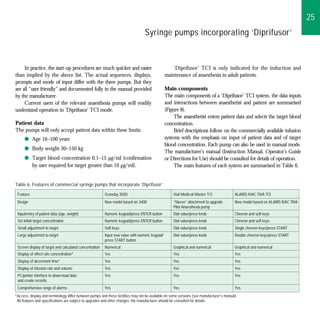
     Figure 8. Main components of a ‘Diprifusor’ TCI system


                                                                  Anaesthetist selects
                                                                   and inputs target                                    Patient
                                                                  blood concentration


                      Anaesthetist inputs                     ‘Diprifusor’ TCI Subsystem
                                                                                                            Infusion pump incorporating
                         patient data                               Microprocessor
                                                                                                                     ‘Diprifusor’
                      (age, body weight)                      + pharmakokinetic program


     Adapted from reference 32.
25
                                                                                  Syringe pumps incorporating ‘Diprifusor’


     In practice, the start-up procedures are much quicker and easier                               ‘Diprifusor’ TCI is only indicated for the induction and
than implied by the above list. The actual sequences, displays,                                 maintenance of anaesthesia in adult patients.
prompts and mode of input differ with the three pumps. But they
are all “user friendly” and documented fully in the manual provided                             Main components
by the manufacturer.                                                                            The main components of a ‘Diprifusor’ TCI system, the data inputs
     Current users of the relevant anaesthesia pumps will readily                               and interactions between anaesthetist and patient are summarised
understand operation in ‘Diprifusor’ TCI mode.                                                  (Figure 8).
                                                                                                     The anaesthetist enters patient data and selects the target blood
Patient data                                                                                    concentration.
The pumps will only accept patient data within these limits:                                         Brief descriptions follow on the commercially available infusion
      q Age 16–100 years                                                                        systems with the emphasis on input of patient data and of target
                                                                                                blood concentration. Each pump can also be used in manual mode.
      q Body weight 30–150 kg
                                                                                                The manufacturer’s manual (Instruction Manual, Operator’s Guide
      q Target blood concentration 0.1–15 µg/ml (confirmation                                   or Directions for Use) should be consulted for details of operation.
        by user required for target greater than 10 µg/ml).                                          The main features of each system are summarised in Table 6.


Table 6. Features of commercial syringe pumps that incorporate ‘Diprifusor’
 Feature                                                 Graseby 3500                               Vial Médical Master TCI                ALARIS IVAC TIVA TCI
 Design                                                  New model based on 3400                    “Sleeve” attachment to upgrade         New model based on ALARIS IVAC TIVA
                                                                                                    Pilot Anaesthesia pump
 Input/entry of patient data (age, weight)               Numeric keypad/press ENTER button          Dial value/press knob                  Chevron and soft keys
 Set initial target concentration                        Numeric keypad/press ENTER button          Dial value/press knob                  Chevron and soft keys
 Small adjustment to target                              Soft keys                                  Dial value/press knob                  Single chevron keys/press START
 Large adjustment to target                              Input new value with numeric keypad/       Dial value/press knob                  Double chevron keys/press START
                                                         press START button
 Screen display of target and calculated concentration   Numerical                                  Graphical and numerical                Graphical and numerical
 Display of effect-site concentration*                   Yes                                        Yes                                    Yes
 Display of decrement time*                              Yes                                        Yes                                    Yes
 Display of infusion rate and volume                     Yes                                        Yes                                    Yes
 PC/printer interface to down-load data                  Yes                                        Yes                                    Yes
 and create records
 Comprehensive range of alarms                           Yes                                        Yes                                    Yes
*Access, display and terminology differ between pumps and these facilities may not be available on some versions (see manufacturer’s manual)
 All features and specifications are subject to upgrades and other changes; the manufacturer should be consulted for details.
26
           ‘Diprifusor’ TCI – practical aspects


     Graseby 3500 Anaesthesia Syringe Pump                                           Small alterations (minimum 0.1 µg/ml) to target concentration
                                                                                 are made by pressing the up ( ) or down ( ) soft keys found
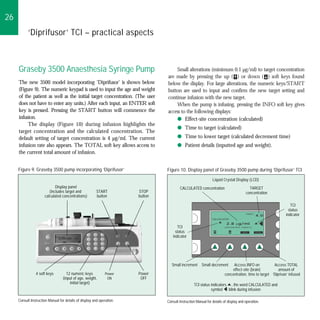
     The new 3500 model incorporating ‘Diprifusor’ is shown below                below the display. For large alterations, the numeric keys/START
     (Figure 9). The numeric keypad is used to input the age and weight          button are used to input and confirm the new target setting and
     of the patient as well as the initial target concentration. (The user       continue infusion with the new target.
     does not have to enter any units.) After each input, an ENTER soft              When the pump is infusing, pressing the INFO soft key gives
     key is pressed. Pressing the START button will commence the                 access to the following displays:
     infusion.                                                                       q Effect-site concentration (calculated)
          The display (Figure 10) during infusion highlights the
                                                                                        q Time to target (calculated)
     target concentration and the calculated concentration. The
     default setting of target concentration is 4 µg/ml. The current                    q Time to lower target (calculated decrement time)
     infusion rate also appears. The TOTAL soft key allows access to                    q Patient details (inputted age and weight).
     the current total amount of infusion.


     Figure 9. Graseby 3500 pump incorporating ‘Diprifusor’                      Figure 10. Display panel of Graseby 3500 pump during ‘Diprifusor’ TCI

                                                                                                                Liquid Crystal Display (LCD)
                             Display panel                                               CALCULATED concentration                           TARGET
                         (includes target and            START          STOP                                                              concentration
                      calculated concentrations)         button         button

                                                                                                                                                                   TCI
                                                                                                                                                                  status
                                                                                                                                          TARGET:
                                                                                                                                                    4.0         indicator
                                                                                                                CALCULATED
                                                                                                                          2.8 µg/ml
                                                                                        TCI                             (INFUSION RATE 1200ML/H)

                                                                                       status                                          INFO         TOTAL

                                                                                     indicator


                                                                                    Small increment     Small decrement       Access INFO on            Access TOTAL
                                                                                                                             effect-site (brain)           amount of
                4 soft keys         12 numeric keys            Power    Power                                            concentration, time to target ‘Diprivan’ infused
                                  (input of age, weight,        ON       OFF
                                      initial target)                                              TCI status indicators , the word CALCULATED and
                                                                                                              symbol blink during infusion

     Consult Instruction Manual for details of display and operation.            Consult Instruction Manual for details of display and operation.
27
                                                                  Syringe pumps incorporating ‘Diprifusor’


     Serial linkage of the Graseby 3500 (via an RS232 interface) to      Figure 11a. Master TCI module incorporating ‘Diprifusor’ for
                                                                         Vial Médical Pilot Anaesthesia syringe pump
a Personal Computer (PC) enables down-loading of data and
creation of a record of the anaesthetic procedure. (Please contact                           Existing Pilot Anaesthesia syringe pump
Graseby for the computer protocol; such facilities are features of
the pump and not of ‘Diprifusor’.)
     Alarm messages are similar to those during manual control of
infusion (see Instruction Manual).
     Numerous display languages are available and can be
individually selected.

Vial Médical Master TCI unit for
                                                                                                                +
                                                                                                         Master TCI module
Pilot Anaesthesia syringe pump
A Pilot Anaesthesia syringe pump can be upgraded to capability
for ‘Diprifusor’ by adding a Master TCI unit (Figure 11).
     A control knob is used to dial up the following inputs:
    q Age of patient
    q Weight of patient
    q Target concentration.
     The user does not have to key in any values; the knob is
turned to select the required value from a full listing on the display
                                                                                                                =                   Knob to dial inputs
                                                                                                        ‘Diprifusor’ System              (age, weight,
screen. Simply pressing the knob enters the value. The infusion                                                                      target concentration)
begins when the START button is pressed. To set any new target,                                                                     Press knob to enter

Figure 11b


                                                                                                                      START       STOP
                                                                                               Display panel          button      button


                                                                         Consult Operator’s Guide for details of display and operation.
28
           ‘Diprifusor’ TCI – practical aspects


     the user dials up (i.e. turns the knob) to indicate the new value and                       Information nor is it supported by clinical trials data for the
     then presses the knob.                                                                      administration of ‘Diprivan’ by ‘Diprifusor’ TCI.
          The screen becomes a graphical display (Figure 12) of calculated                            The Master TCI has data storage (15,000 events) and retrieval
     concentration against time with the target concentration clearly                            capability. Patient initials or number can be assigned as an
     marked. The curve shows where calculated concentrations are in                              individual identifier. Data can be displayed on screen or down-
     relation to the target. The screen can be changed to a listing of                           loaded to a PC to create documentary records including the curve
     numerical values for target, calculated, infused dosage, duration and                       of calculated concentrations against time. This facility is a feature of
     flowrate.                                                                                   the pump and not of ‘Diprifusor’.
          The main display includes calculated decrement time (based on                               Alarm messages are similar to those during manual control of
     an “awakening” concentration selected by the anaesthetist) and a                            infusion with a Pilot syringe pump (see Operator’s Guides for
     graph of calculated effect-site concentration.                                              Master TCI/Pilot).
          The Master TCI offers a choice of induction mode. The initial
     target concentration can be achieved as quickly as possible based on
     ‘Diprifusor’ or achieved gradually according to a selected induction
                                                                                                 ALARIS IVAC TIVA TCI Syringe Pump
     time of between 30 seconds and 10 minutes.                                                  The ALARIS IVAC TIVA TCI is shown opposite in Figure 13.
          The gradual mode of induction is not a feature of ‘Diprifusor’                         The chevron and soft keys are used to input the age and weight
     but of the pump. This option is not included in Prescribing                                 of the patient as well as the initial target concentration. After
                                                                                                 confirmation, the main display is shown and pressing START
     Figure 12. Display panel of Vial Médical Master TCI during                                  will commence TCI. All the information relevant to TCI is
     ‘Diprifusor’ TCI                                                                            shown on the main display.
                             Graphical Liquid Crystal Display (LCD)                                  Target concentration and the continuously changing
        Concentration         Decrement time                   Target                            calculated concentration are displayed numerically (Figure 14).
           µg/ml              (to predict time              concentration                        In addition, a graphical trend is displayed of the calculated
                               of awakening)
                                                                                                 concentration which builds up as the infusion proceeds. This
                                                                                                 trend graph depicts the concentration over the last 30 minutes,
                                    10 min        2 µg/ml
                                                                                                 2 hours or 8 hours. The calculated effect-site concentration is
       Effect-site              5
                                                                                                 shown as an icon in the top right hand corner and below this is
      concentration
                                                                                                 an optional display of estimate time to a preset lower
                                                                                                 concentration (decrement time). The volume infused and
                               0 h 00     (324 ml/h)    35 min                                   infusion rate of ‘Diprivan’ are also displayed.
                                                                                                     The target concentration may be titrated using the chevron
                                                                                                 keys and START is pressed to confirm the new target. The
      Time (minutes/hours)              Current infusion rate         Calculated concentration   single chevron keys are used to make small changes
     Consult Operator’s Guide for details of display and operation.
                                                                                                 (0.1 µg/ml), and the double chevron keys used to make larger
29
                                                                                Syringe pumps incorporating ‘Diprifusor’


changes (1.0 µg/ml) to the target concentration.                                              Figure 13. ALARIS IVAC TIVA TCI syringe pump incorporating ‘Diprifusor’
     The ALARIS IVAC TIVA TCI has an event log, including                                         START                                               Main display       OPTIONS
patient details, that can be reviewed on-screen and from which                                    button                                                (LCD)              button
                                                                                                                                                                         (features)
data can be retrieved via an RS232 interface.
     Alarm messages are similar to those during manual control
of infusion with an ALARIS IVAC TIVA syringe pump.                                                STOP
                                                                                                  button
     For further details of the ALARIS IVAC TIVA TCI
operation, please refer to the manufacturer’s Directions For Use.


                                                                                                             Chevron keys                       Soft keys            ON/OFF button
                                                                                                         (input of age, weight,               (prompts on            (pump switch)
                                                                                                         target concentration)                main display)

                                                                                              Consult Directions for Use for details of display and operation.

Figure 14. ALARIS IVAC TIVA TCI panel and main display during ‘Diprifusor’ TCI

      Calculated                                        Pump                     Volume of                        Effect-site (brain) concentration
     concentration                                      status               ‘Diprivan’ infused                          and estimate time


                                                         INFUSING                     7.5ml                              3.0µg/ml
                                                                                                                         0:03:03
                                                          4.0µg/ml

                                                          4.0µg/ml
        Target                                              + ADJUST -                        37.0ml/h
                                                                                                                         0h:30m
     concentration


                                               Chevron keys for increment/decrement           Trend graph of
                                                                                         calculated concentration

Consult Directions for Use for details of display and operation.
30
31


                                              Documentation
Key documents as set out below for the potential ‘Diprifusor’ user
are available from the pump companies and from AstraZeneca.
                                                                      AstraZeneca
                                                                      Prescribing Information (PI) for ‘Diprivan’ (see international version
Pump manufacturers                                                    in pocket inside back cover) and package inserts cover the following
                                                                      aspects:
Each pump manufacturer provides a comprehensive manual on
operation of their pump. The manual should be consulted for                q Administration of ‘Diprivan’ by a ‘Diprifusor’ TCI system
detailed information on:                                                     is restricted to induction and maintenance of general
                                                                             anaesthesia in adults
    q General features
                                                                           q Guidance on target concentrations
    q Power supply including battery
                                                                           q Target concentration should be titrated against the response
    q Loading a syringe, recognition procedure
                                                                             of the patient in order to achieve the depth of anaesthesia
    q Step-by-step guide to using ‘Diprifusor’ TCI                           required
    q Changing from ‘Diprifusor’ to manually-controlled infusion           q Aseptic precautions for ‘Diprivan’ PFS.
    q Alarm systems applicable to ‘Diprifusor’
    q Facilities available in ‘Diprifusor’ TCI mode                     Users should consult full, local prescribing information.
    q Technical specifications
    q Care and maintenance.                                                AstraZeneca has produced a Guide for Anaesthetists* on the
                                                                      administration of ‘Diprivan’ by ‘Diprifusor’ TCI that provides the
     Pump manufacturers should be contacted for detailed infor-
                                                                      following details:
mation about availability, features, operation, price and technical
service.                                                                   q Guidance on target concentrations based on revised
                                                                             Prescribing Information for ‘Diprivan’
                                                                           q Background information, relevant to the anaesthetist, on
                                                                             the concept of TCI and the main features of ‘Diprifusor’
                                                                             TCI
                                                                           q Practical use of the ‘Diprifusor’ system.
                                                                           AstraZeneca can provide a wide range of information sources
                                                                      (e.g. reprints of papers, reviews and symposium publications) on the
                                                                      medical aspects of ‘Diprifusor’ TCI.

                                                                      * This guide is incorporated in the Instruction Manual for the Graseby 3500 pump
                                                                      and is included in the documentation pack provided with pumps by the other
                                                                      manufacturers.
32


                     Principles of setting and adjusting
                           target concentrations
     What happens when an initial target concentration has been set?            Selection of a higher target concentration results in
                                                                           administration of a bolus followed by infusion at an increased rate
     Answer                                                                (Figure 15). Selection of a lower target concentration results in a
     A ‘Diprifusor’ System can be considered as a “smart pump”.            temporary discontinuation of infusion followed by resumption at
     ‘Diprifusor’ TCI Software “commands” the syringe pump to deliver      a lower rate (Figure 15). The calculated concentration is displayed
     a rapid infusion at a rate of 1,200 ml/h until the pharmacokinetic    continuously both during and after stopping drug infusion. The
     model calculates that the selected target concentration has           display of both the selected target concentration and the calculated
     been reached (Figure 15). Variable-rate infusions are then provided   concentration provides feedback to the anaesthetist.
     automatically to maintain the selected target concentration                These principles apply to the commercially-available pumps
     (Figure 15).                                                          that incorporate ‘Diprifusor’ as well as to the ‘Diprifusor’ System
          The target concentration can be changed at any time by the       used for clinical trials (see next section).
     anaesthetist – and is displayed.
33
                                                     Principles of setting and adjusting target concentrations


Figure 15. Principles of setting and adjusting target concentrations with ‘Diprifusor’ TCI
                                    8

                                                                                                            1 Start ‘Diprifusor’ TCI with initial
                                                                                                                target concentration of 6 µg/ml
                                            2        3                                            5             Rapid bolus (1,200 ml/h) to
                                    6
                                                                                                                reach target
   Blood concentration (µg/ml)


                                                                    4                                       2 Variable-rate infusion to
                                                                                                                maintain initial target
                                    4
                                                                                                            3 10 minutes, select lower target
                                                                                                                of 4 µg/ml (titrate downwards)
                                                            Calculated concentration (automatic
                                                                                                                Infusion stops until blood
                                                            calculation and display by system)
                                                                                                                concentration falls to lower
                                    2
                                                                                                                target. Resumption of infusion
                                                            Target concentration (selected                      at decreased rate to maintain
                                                            by anaesthetist, displayed)                         new target
                                            1                                                               4 20 minutes, select higher target
                                    0
                                                                                                                of 6 µg/ml (titrate upwards)
                                 1200                                                                           Another bolus to reach new
                                                                                                                target. Resumption of infusion
                                                                                                                at increased rate to maintain
                                                                                                                new target

                                                                                                            5 30 minutes, end of
   Infusion rate (ml/h)


                                 100                                                                            ‘Diprifusor’ TCI
                                                                                                                Blood concentration falls...


                                   50


                                    0

                                        0       5   10    15          20            25            30   35
                                                         Time (minutes)
34
35


                       ‘Diprifusor’ TCI – clinical trials
                                                                           This section summarises a detailed programme of clinical
                                                                           studies that were designed to:

                                                                              q Provide guidance on target concentrations in
                                                                                  relation to age, ASA status, premedication and
                                                                                  supplementary analgesia

                                                                              q Assess whether ‘Diprifusor’ TCI provides the
                                                                                  recognised benefits of ‘Diprivan’:
                                                                                  – smooth induction
                                                                                  – good quality of maintenance
                                                                                  – rapid, clear-headed recovery

                                                                              q Examine whether ‘Diprifusor’ TCI compared
                                                                                  with manually-controlled infusion of ‘Diprivan’
                                                                                  offers additional advantages:
                                                                                  – more convenient administration (easier to use)
                                                                                  – more predictable and precise control of the
                                                                                    depth of anaesthesia (improved control).

                                                                              Results from regulatory studies are supplemented
The terms manually-controlled infusion, manual infusion and
                                                                           by published exper ience with ‘Dipr ifusor’ or
manual control are used to designate manual adjustment of infusion rates
for anaesthesia syringe pumps administering ‘Diprivan’.                    prototype ‘Diprifusor’ TCI systems.
36


                            Overview of clinical programme
     There were 8 regulatory studies, 7 of which can be regarded as                           q Definition of target blood concentrations of ‘Diprivan’
     definitive studies45–51 and 1 as a pilot study 52 (see Table 7 for brief                   (propofol) for induction and maintenance
     outline). Information about the characteristics of the study                             q Monitoring of haemodynamic changes
     population, types of surgery and other drugs is summarised on
                                                                                              q Use of ‘Diprivan’ 1% (10 mg/ml)
     page 47.
          Consistent features of all studies included:                                        q Use of identical ‘Diprifusor’ TCI Software.

         q Use for induction and maintenance of general anaesthesia                          All these clinical studies used ‘Diprifusor’ TCI Software
           in adults                                                                     incorporated in an external purpose-built computer linked via an
         q Assessment of efficacy and tolerability                                       RS232 serial port to a syringe infusion pump.

     Table 7. Outline of clinical trials of ‘Diprifusor’ TCI

      Centre(s)                   Main objective               Design                  ‘Diprifusor’ TCI      Manual control of          Reference
                                                                                       patients (n=)         ‘Diprivan’ patients (n=)

      Sheffield, UK*              Assessment of                Open, non-comparative              46                     –                          45
                                  predictive performance

      Gent, Belgium               Effect of premedication      Open, comparative                  45                     –                          46

      Paris, France*              Effect of analgesic          Open, comparative                  40                     –                          47
                                  supplementation

      Durham, NC & Atlanta,       Comparison of TCI vs         Double-blind,                      30                    31                          48
      GA, USA                     manual control in            comparative
                                  cardiac patients

      Oldham, UK*                 Effect of ventilatory        Open, comparative                  40                     –                          49
                                  mode

      Brussels, Belgium*          Cardiac anaesthesia          Open, non-comparative              21                     –                          50

      Birmingham & Glasgow, Comparison of TCI vs               Open, comparative                  80                    80                          51
      UK                    manual control

      4 centres* for definitive   Familiarisation with TCI     Open, non-comparative              15                     –                          52
      studies                     system

      TOTAL NUMBER OF PATIENTS                                                                   317                   111
37


                           Accuracy of ‘Diprifusor’ TCI
The accuracy of ‘Diprifusor’ TCI meets the standards required for       Figure 16. Predictive performance of ‘Diprifusor’ TCI: MDAPE
clinical purposes with respect to:
                                                                                                                    MDAPE
1. Control of the depth of anaesthesia as shown in all clinical            General surgical           10%            20%           30%           40%
                                                                             patients 45a
   studies45–52                                                             (median values)

2. Formal measurement of predictive performance.        45,50                   Overall                              24.1%
                                                                                 n =46


Control of the depth of anaesthesia                                             Young
                                                                             (18–40 years)                        22.6%
All 8 studies45–52 showed consistently that ‘Diprifusor’ TCI                     n =10

delivers the required anaesthetic effect when a particular target               Middle
concentration of drug is selected. The control of anaesthesia is             (41–55 years)                            25.0%
                                                                                 n =15
more important than the specific blood concentration achieved.
                                                                                 Older
However, standardisation of device performance provides                                                              24.2%
                                                                              (> 56 years)
                                                                               _
reassurance that drug delivery is reproducible at a particular target            n =21

setting.                                                                    Cardiac patients
                                                                             (pre-bypass) 50                          23%
Measurement of predictive performance                                         (mean value)
                                                                                 n =21


‘Diprifusor’ TCI meets proposed standards 40,53 of predictive                                                        20%                          40%
performance for the clinical acceptability of a TCI system.                                                                              40,53
                                                                                                     Proposed maximum acceptable range
     Predictive performance has been quantified in clinical studies
performed by groups in Sheffield, UK45 and Brussels, Belgium.50
     Both studies measured actual drug concentration in samples of      clinically acceptable – and that MDPE (= bias) should be no
arterial blood at various times. These results were compared with       greater than 10% to 20%.40 ‘Diprifusor’ TCI meets these criteria;
the target and predicted concentrations. Median performance             predictive accuracy is acceptable and the positive bias indicates that
errors (MDPE) and median absolute performance errors                    measured values are, in general, slightly higher than the predicted
(MDAPE) were calculated. MDAPE is a measure of precision and            values.
provides an indication of the size of the typical error from the
                                                                        Sources of performance error
predicted concentration. MDPE is a measure of bias and can
represent under-prediction (positive value) or over-prediction          As with any TCI system, the principal source of performance error
(negative value) of the performance error. The results for MDAPE        with ‘Diprifusor’ TCI is pharmacokinetic variability of 20% to 30%
are shown in Figure 16. Also, the overall median MDPE was               between patients. Haemodynamic changes during anaesthesia and
16.2% in the UK study.45a                                               concomitant medication can influence pharmacokinetic variability.
     It has been proposed40,53 that MDAPE should be no greater          Some error can also be attributed to variability in the measurement
than 20% to 40% for the performance of a TCI system to be               of drug concentrations in blood.
38
         ‘Diprifusor’ TCI – clinical trials


     Actual blood concentrations                                               concentration is titrated to the particular requirement of that patient
                                                                               at different stages of surgery. Clearly, pharmacokinetic variability of
     Measured drug concentrations tended generally to be slightly
                                                                               20% to 30% is relatively unimportant compared with the larger
     higher than those predicted with ‘Diprifusor’ TCI. This was found
                                                                               adjustments in target concentration that are often made in response
     in the UK study for three age groups45a and in the Belgian study of
                                                                               to a change in surgical stimulus. For instance, target concentration
     patients before coronary artery bypass grafting.50
                                                                               for an individual patient might be increased from 6 to 8 µg/ml
          The general tendency for measured drug concentrations to
                                                                               following slight movement on initial surgical incision and then be
     be higher than predicted was also shown by the Glasgow group
                                                                               gradually reduced to 2 µg/ml towards the end of surgery. Such a
     in a study54 of the prototype ‘Diprifusor’ TCI system in patients
                                                                               range of between 2 and 8 µg/ml at different stages of a procedure
     undergoing breast surgery. An additional finding in the Sheffield
                                                                               represents a four-fold difference (400%).
     study45b was that the predictive performance of the ‘Diprifusor’
                                                                                    ‘Diprifusor’ TCI offers the anaesthetist a convenient way to
     TCI system did not appear to be influenced by duration of
                                                                               make proportional changes in the depth of anaesthesia with the
     anaesthesia nor by the target concentration requested by the
                                                                               confidence of reproducible delivery of drug at a particular target
     anaesthetist.
                                                                               setting.
     Predictive performance compared with available data
     on inhalational agents
     There have not been direct comparisons.
          However, the bias seen with ‘Diprifusor’ TCI (MDPE of
     16.2%45a) is comparable to the 20% difference between end-tidal
     and arterial partial pressure of isoflurane after 1 hour of anaesthesia
     i.e. the arterial concentration of isoflurane remained 20% lower
     than end-tidal concentration.55 A larger discrepancy is seen when
     the ratio between arterial and inspired partial pressures of isoflurane
     is examined.56 The vaporizer setting is only an approximate
     indicator of the inspired concentration of an inhalational agent and
     does not accurately represent actual blood concentration.

     Clinical relevance of predictive performance
     The anaesthetist will be more interested in the ease of making
     proportional changes in the depth of anaesthesia than in the
     absolute accuracy of a delivery system.
         In an individual patient, the target concentrations required
     during the course of surgery may vary considerably. The target
39


                     Anaesthetic effects of ‘Diprivan’
                     administered by ‘Diprifusor’ TCI
The anaesthetic effects of ‘Diprivan’ administered by ‘Diprifusor’              q When the patient has received premedication with a benzo-
TCI have been established in the clinical trial programme with the                diazepine or receives a concomitant opioid analgesic.
following efficacy assessments:
                                                                                 A high initial target concentration equates to a large induction
    q Induction time                                                        dose.
    q Quality of induction                                                       Guidance on target concentration and induction time, based
                                                                            on study results,45–52 is given in revised Prescribing Information for
    q Quality of maintenance
                                                                            ‘Diprivan’ (see pocket inside back cover). Full, local prescribing
    q Haemodynamic effects                                                  information should be consulted. The following summary is
    q Recovery time.                                                        intended as a guide only:
     In all studies 45–52 information was recorded on target
concentrations set during induction and maintenance of anaesthesia.
     ‘Diprifusor’ TCI was used for the unified anaesthetic manage-           q Target blood concentrations of propofol should be titrated
ment of the patient i.e. throughout the induction and maintenance                against the response of the patient in order to achieve the
phases. No studies involved induction with ‘Diprifusor’ TCI                      depth of anaesthesia required
followed by maintenance with an inhalational agent. Statistical
analyses are included as available (e.g. for induction time). In general,    q In adults (under 55 years of age), anaesthesia can usually
formal statistical analysis was not carried out on assessments of the            be induced with target concentrations of 4 to 8 µg/ml
quality of induction and maintenance.
                                                                             q In premedicated patients, an initial target concentration
Induction time                                                                   of 4 µg/ml is advised
Induction time (usually defined as the interval from the start of            q In unpremedicated patients an initial target concentration
administration until loss of verbal contact) was recorded in all                 of 6 µg/ml is advised
clinical studies.45–52
                                                                             q Induction time with these targets is generally within the range
Overall findings in clinical trial programme                                     of 60 to 120 seconds
‘Diprifusor’ TCI allows the anaesthetist to achieve a desired speed of       q A lower initial target concentration should be used in patients
induction by setting and adjusting the target blood concentration.
                                                                                 over the age of about 55 years and in patients of ASA
Induction time is faster:
                                                                                 grades III or IV.
    q With a high target concentration
40
                                                      ‘Diprifusor’ TCI – clinical trials


          Note that induction time with the above target concentrations                                  Prototype ‘Diprifusor’ TCI systems
     for healthy adults aged under 55 years is generally within the range
                                                                                                         Published experience57–60 with prototype ‘Diprifusor’ TCI systems
     of 60-120 seconds. Higher targets will allow more rapid induction
                                                                                                         in adult patients provides additional support for successful induction
     of anaesthesia but may be associated with more pronounced
                                                                                                         of anaesthesia in most patients with the target concentrations given
     haemodynamic and respiratory depression. Also, the age and fitness
                                                                                                         for guidance.
     of the patient influence the selection of an initial target concen-
                                                                                                              A study 57 in patients premedicated with temazepam showed
     tration – and induction time.
                                                                                                         that a target concentration of 5 µg/ml successfully induced
          Target concentrations should be titrated against the response
                                                                                                         anaesthesia in 90% of patients with a mean induction time of 103
     of the patient. The anaesthetist can quickly and easily set a new
                                                                                                         seconds (range 45–136 seconds); lower target concentrations (3 or
     target concentration during induction with ‘Diprifusor’ TCI. The
                                                                                                         4 µg/ml) were less effective (Figure 17). Broadly similar results
     principle of titration to effect is similar to manual infusion
                                                                                                         have been obtained in other studies.58–60
     of ‘Diprivan’ – and to altering the inspired concentration of an
     inhalational agent with a vaporizer. It is easier to set a new target                               Effect of midazolam
     concentration with ‘Diprifusor’ TCI than to change a manual                                         Small IV doses of midazolam enhance the anaesthetic effects of
     infusion rate.                                                                                      ‘Diprivan’, including during induction with ‘Diprifusor’ TCI.
          The constantly changing display of predicted (calculated)                                           A study 61 of 80 patients premedicated with temazepam
     concentrations, together with the information from monitoring the                                   compared the effects of varying doses of midazolam administered
     patient, enables the anaesthetist to assess whether further changes are                             as an IV bolus 4 minutes before the start of ‘Diprifusor’ TCI (fixed
     required.                                                                                           target concentration of 3 µg/ml). Anaesthesia was successfully
     Figure 17. Effect of initial target concentration on successful induction                           induced within 3 minutes of starting ‘Diprifusor’ TCI in 45% of
     of anaesthesia with a prototype ‘Diprifusor’ TCI system 57
                                                                                                         patients receiving no midazolam, in 70% receiving 1 mg, in 85%
                                                      100%              Target concentration             receiving 2 mg and in 95% receiving 4 mg; between-group
                                                                                               5 µg/ml
                                                                                                         differences did not reach statistical significance.61
        Percentage of patients successfully induced


                                                                                                90%
                                                                             4 µg/ml
                                                       75%
                                                                                                         ‘Diprifusor’ TCI compared with manual infusion
                                                                                75%
                                                                                                         ‘Diprifusor’ TCI may allow improved control of the induction rate
                                                       50%                                               compared with manually-controlled infusion of ‘Diprivan’.
                                                              3 µg/ml
                                                                                                              Induction of anaesthesia with ‘Diprifusor’ TCI has been
                                                                40%
                                                       25%                                               compared with various manual pump methods for the administration
                                                                                                         of ‘Diprivan’ in studies performed in the UK,51a USA48 and
                                                                                                         Belgium.62 Findings are summarised opposite and must be interpreted
                                                              n = 20          n = 20           n = 20
                                                                                                         in the context of the rapid initial infusion rate (1,200 ml/h) provided
     Failure of induction (patients not induced within 3 minutes of achieving the target
                                                                                                         by ‘Diprifusor’ TCI, the initial target setting and the total
     concentration): target increased to 6 µg/ml.                                                        administered dose of ‘Diprivan’.
41
                              Anaesthetic effects of ‘Diprivan’ administered by ‘Diprifusor’ TCI


UK study                                                                                           administered at this time was significantly higher (p<0.05) with
                                                                                                   ‘Diprifusor’ TCI (201 mg) than with manual control (160 mg).51a
The UK two-centre, open, randomised study51a was in 160 patients
mainly of ASA grade I or II requiring a variety of different surgical                              USA study
procedures involving skin incision and lasting between 20 and 60
                                                                                                   The USA two-centre, double-blind randomised study 48 was in
minutes. All patients were premedicated with temazepam (20 mg
                                                                                                   patients of ASA grades III or IV requiring cardiopulmonary bypass
orally) and received a single dose of fentanyl (1.5 µg/kg IV)
                                                                                                   surgery. All patients were premedicated with lorazepam (2 to 4 mg
approximately 2 minutes before induction of anaesthesia. Anaesthesia
                                                                                                   orally). Anaesthesia was induced with an infusion of 1.0 to 1.5 mg/kg
was induced with a rapid infusion of 600 ml/h of ‘Diprivan’ in the
                                                                                                   of ‘Diprivan’ titrated to individual clinical response in the manual
manual control group. In the ‘Diprifusor’ TCI group, the mean target
                                                                                                   control group. In the ‘Diprifusor’ TCI group, the guideline for target
concentration was 7.5 µg/ml (range 4 to 12 µg/ml) during the first
                                                                                                   concentration was 3.0 to 4.0 µg/ml, titrated to clinical response.
minute of induction with titration thereafter according to response.
                                                                                                        The mean induction time was significantly shorter with
     The mean induction time was significantly shorter (p<0.01)
                                                                                                   ‘Diprifusor’ TCI (81.7 seconds) compared with manual infusion
with ‘Diprifusor’ TCI compared with manual infusion (Figure 18)51a
                                                                                                   (101.2 seconds).48 The mean dose of ‘Diprivan’ required to achieve
and the mean difference was 20 seconds. This difference is probably
                                                                                                   induction was similar in the ‘Diprifusor’ TCI group (0.98 mg/kg)
due to the difference in peak infusion rates (600 ml/h for manual
                                                                                                   and manual control group (1.0 mg/kg).
control and 1,200 ml/h for TCI). Also, the mean time to successful
insertion of the laryngeal mask airway (LMA) was significantly                                     Belgium study
shorter (p<0.05) with ‘Diprifusor’ TCI (114 seconds) compared                                      In the Belgium single-centre study, 90 women of ASA grades
with manual control (132 seconds); the mean dose of ‘Diprivan’                                     I or II requiring gynaecological surgery as day cases were
                                                                                                   randomised to the following groups:
Figure 18. Induction time with ‘Diprifusor’ TCI in healthy patients 51a
                                                                                                       q ‘Diprifusor’ TCI (initial target concentration of 4 µg/ml
                                           Mean induction time (seconds)                                 increased by 2 µg/ml after 3 minutes if consciousness
                                   20         40          60        80         100        120
                                                                                                         was not lost)
                                                                                                       q Manual control with induction bolus of 1,200 ml/h
  ‘Diprifusor’ TCI
                                                   55
      n = 79                                                                                           q Manual control with induction bolus of 600 ml/h.62
                                          (SD 10.6)                            p < 0.01
                                                                                                        All patients received a single bolus dose of a benzodiazepine
  Manual control                                                                                   (midazolam 0.03 mg/kg IV, 7 minutes before induction) and an
                                                               75
     n = 80
                                                        (SD 18.8)
                                                                                                   opioid (alfentanil 10 µg/kg IV, 2 minutes before induction).
                                                                                                        Mean induction times were 78 seconds with ‘Diprifusor’,
The initial infusion rate was higher with ‘Diprifusor’ TCI (1,200 ml/h) than with manual control   51 seconds with the manual induction bolus of 1,200 ml/h and
(600 ml/h). The mean dose of ‘Diprivan’ administered at the time of insertion of the laryngeal
mask airway was significantly higher (p < 0.05) with ‘Diprifusor’ TCI (201 mg) than with
                                                                                                   62 seconds with the manual induction bolus of 600 ml/h; the
manual control (160 mg).                                                                           difference between the two manual induction groups was statistically
42
           ‘Diprifusor’ TCI – clinical trials


     significant (p<0.05). The corresponding mean induction doses were                                        This finding highlights the fact that ‘Diprifusor’ TCI is a
     1.31 mg/kg (‘Diprifusor’ TCI), 2.74 mg/kg (manual 1,200 ml/h)                                      convenient way of delivering a major clinical benefit of ‘Diprivan’
     and 1.71 mg/kg (manual 600 ml/h); all between-group differences                                    – smooth induction of anaesthesia.
     were statistically significant (p<0.05). Therefore, less ‘Diprivan’ was                                  The quality of induction of anaesthesia in the UK study 51b was
     used for induction in the ‘Diprifusor’ TCI group without producing                                 assessed by an observer at each centre as good, adequate or poor. Prior
     a significantly longer induction time.62                                                           to the study, the anaesthetists who administered study drugs had
          Computer simulation of predicted blood and effect-site                                        little or no previous experience of the use of ‘Diprivan’ by infusion.
     concentrations showed that there was “overshoot” with the fast                                     They quickly became familiar with the techniques and obtained a
     manually-controlled infusion rate (high dose) but not with the                                     similar quality of induction with ‘Diprifusor’ TCI and manual
     slower infusion rate or when using ‘Diprifusor’ TCI.62                                             control (Figure 19).

     Quality of induction                                                                                 Prior to the study,51 the anaesthetists were unfamiliar
     In the study population45–52 of 317 adult patients, the quality of                                   with infusion techniques for ‘Diprivan’.
     induction with ‘Diprifusor’ TCI was assessed as good or adequate
     in the vast majority of patients.
                                                                                                        Quality of maintenance
                                                                                                        The quality of maintenance, especially the ease of control of the
     Figure 19. Quality of induction of anaesthesia with ‘Diprifusor’ TCI in
     healthy patients 51b                                                                               depth of anaesthesia, achieved with ‘Diprifusor’ TCI has been
                                                                                                        assessed in all clinical studies.45–52
                                         Percentage of patients
                                                                                                             Assessments included:
                      ‘Diprifusor’ TCI                             Manual control
                                                                                                             q Overall quality
                                                                                                             q Ease of control
                       Good 74.7%                                   Good 72.5%                               q Quality of anaesthesia score
                                                                                                             q Depth of anaesthesia score.
              Adequate                                      Adequate                                         The trial programme also provided detailed information about
               22.8%                                         22.5%                                      maintenance target concentrations.

                                                                                                        Overall quality
                                         n = 79                                        n = 80
                          Poor                                          Poor                            Overall quality of anaesthesia was rated as good (uncomplicated
                          2.5%                                          5.0%
                                                                                                        maintenance), adequate (minor problems but easily managed) or poor
     The initial infusion rate was higher with ‘Diprifusor’ TCI (1,200 ml/h) than with manual control   (significant problems) in 7 studies.45–47,49–52 For the great majority of
     (600 ml/h). The mean dose of ‘Diprivan’ administered at the time of insertion of the laryngeal
     mask airway was significantly higher (p<0.05) with ‘Diprifusor’ TCI (201 mg) than with             patients, overall quality was rated as either good or adequate during
     manual control (160 mg).                                                                           maintenance of anaesthesia with ‘Diprifusor’ TCI.
43
                           Anaesthetic effects of ‘Diprivan’ administered by ‘Diprifusor’ TCI


Figure 20. Overall quality of maintenance of anaesthesia with                            In general, the trial programme supports the good quality of
‘Diprifusor’ TCI in healthy patients 51b                                            anaesthesia achieved with ‘Diprifusor’ TCI. Published experience
                    Percentage of patients (assessed by observer)
                                                                                    with the prototype ‘Diprifusor’ TCI system in a large population of
            ‘Diprifusor’ TCI                           Manual control
                                                                                    adult patients provides additional support for successful maintenance
                                                                                    of anaesthesia in most patients.
                                                                                         Quality of maintenance may be slightly better with ‘Diprifusor’
              Good 77.6%                                Good 68.7%                  TCI than with manual control. In the UK comparative study,51b the
                                                                                    mean value of the total quality of anaesthesia score was 3.63 with
       Adequate                                   Adequate                          ‘Diprifusor’ TCI and 4.11 with manual control, suggesting a
        22.4%                                      27.5%
                                                                                    marginally better quality of maintenance with ‘Diprifusor’ TCI
                                                                                    although a statistical analysis was not performed. Also, the mean
                                n = 76                                     n = 80   overall infusion rate during maintenance was significantly greater
             Poor                                                   Poor
              0%                                                    3.8%
                                                                                    (p=0.001) in the ‘Diprifusor’ TCI group (13.2 mg/kg/h) than in
                                                                                    the manual control group (8.2 mg/kg/h). The range of mean values
    Results from the UK comparative study 51b showed that the                       for the total quality of anaesthesia score in other studies (1.8049 to
overall quality of anaesthesia (anaesthetic conditions as assessed by               7.8547) was broadly similar to that seen with ‘Diprifusor’ TCI in the
observers) was similar with ‘Diprifusor’ TCI and manual control                     UK comparative study.51b
(Figure 20).                                                                             Movement by the patient in response to the initial surgical
                                                                                    incision – and during the remaining period of maintenance of
Ease of control                                                                     anaesthesia – was observed in numerically fewer patients in the
Ease of control of the depth of anaesthesia was rated as good, adequate             ‘Diprifusor’ TCI group than in the manual control group
or poor (without further definition of these ratings in protocols) in               (Figure 21).51a The difference in movement during maintenance
all studies.45–52 For all but a few patients, the ease of control of                was statistically significant (p=0.02) but failed to reach statistical
anaesthesia was rated as either good or adequate during maintenance                 significance (p=0.19) for initial incision. Once again, such
of anaesthesia with ‘Diprifusor’ TCI. Ease of control of anaesthesia                findings must be interpreted in the context of the higher
was similar with ‘Diprifusor’ TCI and manual control by anaesthetists               infusion rate with ‘Diprifusor’ TCI than with manual control.
who had just learned the techniques.51b                                                  Patient movement that interrupted surgery was less likely
                                                                                    during maintenance with ‘Diprifusor’ TCI than with manual
Quality of anaesthesia score
                                                                                    control.51a During the maintenance period, there were 4/80 patients
A quality of anaesthesia score 63 was used in several studies.46,47,49–52           (5%) with movement assessed as “marked” that led to a temporary
The scoring system included evaluations of response to surgical                     interruption to surgery in the manual control group and 1/76 such
stimulation, respiratory depression, haemodynamic instability and                   patients (1.3%) in the ‘Diprifusor’ TCI group.51a Clearly, the higher
recovery times. The range of total possible scores is from 0 (ideal)                infusion rate with ‘Diprifusor’ TCI than with manual control should
to 29.                                                                              be considered.
44
          ‘Diprifusor’ TCI – clinical trials


     Figure 21. Movement in response to surgical stimuli during                                    The practical implication is that ‘Diprifusor’ TCI avoids the
     maintenance with ‘Diprifusor’ TCI in healthy patients 51a                                inconvenience of manual administration of supplementary bolus
                                                                                              doses to increase the depth of anaesthesia. The potential benefits
                                          Movement in response to initial surgical incision
                                                            NS p = 0.19                       include user convenience, improved control and more time to
                                   30%                                                        monitor the patient.
                                                   28.8%
          Percentage of patients


                                                                                              Figure 22. Need for supplementary manual bolus doses during
                                   20%                                                        maintenance of anaesthesia with manual control or ‘Diprifusor’ TCI 51b
                                                                               19.7%
                                                                                                                                                  50%
                                   10%


                                                                                                 Percentage of patients requiring supplementary
                                                                                                                                                            10%


                                                                                                   manual bolus doses to deepen anaesthesia
                                                                                                                                                          3–5 doses

                                               Manual control              ‘Diprifusor’ TCI
                                                  n = 80                       n = 76

                                         Movement during remainder of maintenance period
                                                                                                                                                  25%
                                                                p = 0.02
                                   30%
          Percentage of patients


                                                   26.2%                                                                                                    40%
                                   20%                                                                                                                    1–2 doses


                                   10%                                                                                                                                         0%
                                                                               11.8%
                                                                                                                                                        Manual control   ‘Diprifusor’ TCI
                                                                                                                                                            n = 80            n = 75

                                               Manual control              ‘Diprifusor’ TCI   The mean overall infusion rate during maintenance was significantly greater (p=0.001) in
                                                  n = 80                       n = 76         the ‘Diprifusor’ TCI group (13.2 mg/kg/h) than in the manual control group (8.2 mg/kg/h).
                                                                                              Setting a higher target concentration with ‘Diprifusor’ TCI results in automatic
                                                                                              administration of a bolus.
     The mean overall infusion rate during maintenance was significantly greater
     (p = 0.001) in the ‘Diprifusor’ TCI group (13.2 mg/kg/h) than in the manual
     control group (8.2 mg/kg/h).                                                             Depth of anaesthesia score
          In the manual control group supplementary bolus doses were                          A depth of anaesthesia score 63 was used in several studies.45,47,49–52 The
     required in 50% of patients so as to deepen anaesthesia at times of                      range of total possible scores is from –9 (deepest level of anaesthesia)
     increased surgical stimulation.51b Manually-administered bolus doses                     to +19 (lightest level of anaesthesia).
     were not required for any patient in the ‘Diprifusor’ TCI group51b                            In general, the trial programme supports the good control of
     (Figure 22); the setting of a higher target with ‘Diprifusor’ TCI                        the depth of anaesthesia achieved with ‘Diprifusor’ TCI. In the UK
     resulted in the automatic delivery of a bolus dose followed by                           comparative study,51b the mean value of the depth of anaesthesia
     infusion at an increased rate.                                                           score was –1.79 in the ‘Diprifusor’ TCI group and –0.46 in the
45
                             Anaesthetic effects of ‘Diprivan’ administered by ‘Diprifusor’ TCI


manual control group, suggesting that a deeper level of anaesthesia      The concurrent administration of 67% nitrous oxide with
was obtained with ‘Diprifusor’ TCI.                                      ‘Diprifusor’ TCI reduced the EC50 (Effective Concentration
                                                                         50, the concentration at which 50% of patients do not
Maintenance target concentrations
                                                                         respond to a painful stimulus) of ‘Diprivan’ by approximately
Maintenance target concentrations were recorded in all studies.45–52     30% in ASA I or II female patients breathing oxygen.54
Supplementary analgesia was used routinely. In general, the trial
programme showed that target concentrations in the region of 3 to        Changes in target concentration
6 µg/ml usually maintain satisfactory anaesthesia. Additional support    There is a delay of 2 to 3 minutes between the achievement of a
comes from several published studies with prototype ‘Diprifusor’         target concentration in blood and equilibration (maximum
TCI systems.                                                             concentration) in the effect site (brain). Thus, particularly in elderly or
    Consult local prescribing information for dosage                     ASA grade III or IV patients, adequate time should be allowed to
recommendations.
                                                                         assess the effect obtained at a particular target concentration before
    Mean target concentrations (or approximate range of means)
                                                                         making any further alterations to the target setting (see page 13).
used for maintenance in specific patient types as studied in the trial
                                                                              The number of times the target is changed depends on the type
programme are summarised (Table 8). Lower maintenance target
                                                                         of patient and surgery – and the duration of the procedure. In the
concentrations should be used for the following patient types:
                                                                         UK comparative study,51b adjustments to the manual infusion rate or
     q ASA grades III or IV                                              the target concentration occurred with similar frequencies and ranged
     q Age over 55 years                                                 between 1 and 10 times for most patients. A large study 64 with a
     q Those receiving large amounts of supplementary analgesia.         prototype ‘Diprifusor’ TCI system used by 31 anaesthetists for 746
   The mode of ventilation had no effect on maintenance target           adult patients illustrates the variability. The median number of target
concentrations required for acceptable anaesthesia in a direct           alterations was 6 per procedure (range 0–28) whilst the mean time of
comparison of controlled ventilation and spontaneous respiration.49      maintenance was 26.1 minutes (range 1.1–268 minutes).64
                                                                              A practical advantage is that it is easier to change target
Table 8. Maintenance target concentrations in ‘Diprifusor’ TCI
trial programme
                                                                         concen-tration with ‘Diprifusor’ TCI than to calculate and adjust
                                                                         infusion rates and/or administer supplementary bolus doses with
  Patient type                                  Mean maintenance         manual control.
                                                target concentration

  Healthy adult patients                                                 Haemodynamic effects
  (ASA I or II)45–47,49,51b,52                  3.5 to 5.3 µg/ml         Haemodynamic effects during induction and maintenance of
  Cardiac patients                                                       anaesthesia with ‘Diprifusor’ TCI have been documented in all
  (ASA II, III or IV)48,50                      2.8 to 3.4 µg/ml         studies.45–52

                                                                         Overall results from clinical trial programme
  Age over 55 years 45a                         3.5 µg/ml
                                                                         During induction with ‘Diprifusor’ TCI in healthy adults,45,47,49,51,52
46
          ‘Diprifusor’ TCI – clinical trials


     falls in mean systolic blood pressure (SBP) in the range of 12 to 26% and        patients in both groups made a prompt, clear-headed recovery.51a
     in mean diastolic pressure (DBP) in the range of 16 to 28% were                       As mentioned, a deeper level of anaesthesia was achieved with
     comparable in magnitude to those known to occur with manual                      ‘Diprifusor’ TCI than with manual control in this study – and the
     administration of ‘Diprivan’. A similar pattern was seen with ‘Diprifusor’       mean overall maintenance infusion rate was higher (p=0.001) in the
     TCI in patients aged over 55 years.45 In cardiac patients, the hypotensive       ‘Diprifusor’ TCI group (13.2 mg/kg/h) than in the manual control
     effect was exacerbated when opioid infusion was started before                   group (8.2 mg/kg/h).51b There was no evidence that the study
     ‘Diprifusor’ TCI.50 Premedication with benzodiazepines had no                    investigators gradually reduced target concentrations towards the end
     significant effect on haemodynamic response.46                                   of surgery. In practice, ‘Diprifusor’ TCI may facilitate “tail off” of
            In healthy adults45,47,49,51,52 and in cardiac patients,48,50 there was   dose before the end of a surgical procedure in two ways:
     usually little further change from induction to the maintenance
     phases. In patients aged over 55 years, the changes in SBP during                    q Ease of reduction of target concentrations
     maintenance were greater than those seen in younger age groups.45b                   q Display of predictive information about awakening time.
            Results of comparative studies48,51b did not support the
                                                                                            Thus, commercial infusion pumps incorporating ‘Diprifusor’
     hypothesis that ‘Diprifusor’ TCI might attenuate the hypotensive
                                                                                      enable the anaesthetist to optimise the speed of recovery.
     effect compared with manual control by avoiding an “overshoot” in
                                                                                            Confirmation of the quality of recovery comes from studies
     blood concentration at induction. Mean changes in SBP and DBP
                                                                                      with prototype ‘Diprifusor’ TCI systems in day-case patients.59,60
     were very similar with ‘Diprifusor’ TCI and with manually
                                                                                      Emergence was rapid when measured by time to awakening 59,60 and
     controlled infusions during both induction and maintenance of
                                                                                      by time to orientation.60 Patients soon left the postanaesthesia
     anaesthesia. A possible explanation is the use of an infusion
                                                                                      recovery room.59 Patients were fit for discharge home at 2 hours
     induction technique in the manual groups.
                                                                                      after surgery when assessment showed no nausea and vomiting,
                                                                                      ability to converse normally, walk unaided, retain oral fluids and full
     Recovery times                                                                   recovery of cognitive mental function.60
     Mean recovery times (usually from end of infusion to eyes
                                                                                      Calculated concentrations on recovery
     opening) after ‘Diprifusor’ TCI in the clinical trial programme
     were consistent with the rapid early-phase recovery established                  From clinical studies with ‘Diprifusor’ TCI 45b,47,49,65 and prototype
     after ‘Diprivan’ administration.                                                 systems,66 it can be concluded that, in the majority of patients, waking
           After short procedures (30 to 40 minutes), mean recovery                   (eyes open) will occur at calculated concentrations in the region of 1 to
     times were in the range of 5.0 to 10.3 minutes.46,49,51a After                   2 µg/ml. The mean calculated concentration was at the lower end of
     longer procedures (lasting up to 6 hours), mean recovery times                   this range (1.1 to 1.3 µg/ml) in the study 45b where the greatest amount
     were in the range of 9.6 to 21.3 minutes.45,47,52                                of analgesic supplementation was used.
           The UK comparative study 51a showed marginal extensions (not                     A detailed investigation65 of electrophysiological variables during
     statistically significant) in mean times to recovery (eyes opening               emergence from anaesthesia after ‘Diprifusor’ TCI showed that
     spontaneously or to speech) and to orientation (recall of date of birth)         bispectral index values before eye opening were linearly related to
     in the ‘Diprifusor’ TCI group compared with manual control. Most                 calculated blood concentrations.
47


                          Wide range of adult patients
The clinical trial programme included a wide range of adult patients    Table 9. Patient characteristics, surgical procedures and other
requiring general anaesthesia for a variety of surgical procedures      drug therapy in ‘Diprifusor’ TCI clinical programme45-52
performed as inpatients or outpatients (day cases).
                                                                         Adult patients

Characteristics of study population,                                               q Age range 16 to 83 years (mean 45.4 years)
                                                                                   q Male (n=186) or female (n=131)
types of surgery and other drugs                                                   q ASA Class I, II, III and IV
‘Diprifusor’ TCI was used in a total of 317 patients.45–52 Duration                q Inpatients and outpatients/day cases
of treatment ranged from 10 minutes to over 8 hours. Table 9                       q Spontaneous breathing and controlled ventilation
summarises the characteristics of the study population and lists the
types of frequently performed surgery plus the wide range of             Type of surgery
premedicants and supplementary analgesics used in studies.                         q General
                                                                                   q Cardiac
Additional experience                                                              q Neurosurgery
                                                                                   q Gynaecological
Published experience with ‘Diprifusor’ or prototype ‘Diprifusor’
                                                                                   q Orthopaedic
TCI systems extends to over 1,500 anaesthetised adults.Types of
                                                                                   q Arthroscopic
surgery included the following: urological,67 gynaecological,62,66,67
orthopaedic,68 vascular 69 and ophthalmic,60,70,71 neurosurgical,72
                                                                          Other drug therapy
general and day case.73
                                                                                    q Premedication
    Case reports endorsed the value of the technique in patients                    q – benzodiazepines (temazepam, diazepam, midazolam)
with particular anaesthetic problems such as:                                       q – ranitidine
                                                                                    q Pre-induction analgesia
    q Bronchopleural fistula 74                                                     q – opioids (alfentanil, fentanyl, sufentanil)
    q Undrained 75 or drained 76 pneumothorax                                       q – ketorolac
    q Difficult airway due to fixed-flexion deformity of cervical                   q Supplementary analgesia
      spine 77                                                                      q – nitrous oxide
    q Myotonic dystrophy.78                                                         q – alfentanil
                                                                                    q – sufentanil
    The anaesthetist was able to maintain precise control over the                  q – alfentanil + nitrous oxide/oxygen
                                                                                    q – fentanyl + nitrous oxide
depth of anaesthesia by making small incremental changes in target
                                                                                    q Neuromuscular blocking drugs
concentrations. In most cases, the patient could be anaesthetised
                                                                         n=317
without episodes of apnoea or exposure to nitrous oxide.
    Published experience with other TCI systems that
administered ‘Diprivan’ – but differ from ‘Diprifusor’ TCI in
pharmacokinetic models and/or control software - extends to over
1,000 anaesthetised patients.
48


                Tolerability profile of ‘Diprifusor’ TCI
     The tolerability profile of ‘Diprivan’ is unchanged when                 q The printer or syringe pump
     administered by TCI.                                                     q Occlusion or disconnection of the IV infusion line
                                                                              q Low battery condition in the external computer.
     Adverse events
                                                                              Communication errors (6 incidents) between the external
     In the clinial trial programme,45–52 the total number of patients
                                                                          computer and syringe pump were resolved by restarting TCI or
     with an adverse event was similar for ‘Diprifusor’ TCI (7.3%,
                                                                          reverting to a manual or alternative technique. Communication
     23/317 patients) and for manually-controlled infusions of
                                                                          problems should not occur in the validated, commercial syringe
     ‘Diprivan’ (6.3%, 7/111 patients).
                                                                          pumps that incorporate ‘Diprifusor’ in an integrated TCI system.
          Published studies with prototype ‘Diprifusor’ TCI systems and
                                                                              In all cases, the action taken prevented any adverse patient
     other TCI systems for ‘Diprivan’ did not reveal any unexpected
                                                                          outcome.
     adverse events.
          As expected, there have been occasional reports of the
     following well-recognised types (and examples) of side effect with
     ‘Diprivan’ when administered by TCI:
         q Cardiovascular (e.g. sinus bradycardia, hypotension)
         q Respiratory (e.g. apnoea, hypoxia)
         q CNS (e.g. mild excitatory phenomena, dreaming)
         q Local reactions (e.g. pain or discomfort on injection).
         Of the events reported in the clinical trial programme for
     ‘Diprifusor’ TCI, only sinus bradycardia (1.26%, 4/317 patients)
     and hypotension (1.58%, 5/317 patients) occurred at a frequency
     greater than 1%. There were no reports of awareness in the
     ‘Diprifusor’ TCI trial programme.

     Equipment reliability
     There were infrequent reports of technical problems related to the
     equipment used in the trial programme; an infusion pump was
     interfaced with an external control unit.
          Examples related to operator error (13 incidents) included
     problems with:
49


                       User surveys with ‘Diprifusor’ TCI
Anaesthetists quickly became familiar with the technique 51b,52 and          with the ‘Diprifusor’ TCI technique after anaesthetising only 1 or 2
confident in its use51a – and expressed a preference for ‘Diprifusor’        patients. These anaesthetists then proceeded to definitive studies
TCI over manually-controlled infusion.51a                                    with ‘Diprifusor’ TCI at centres in Belgium,50 France 47 and the
                                                                             UK.45,49
Familiarisation of anaesthetists
The UK comparative study 51a involved 8 consultant anaesthetists
                                                                             Preference of anaesthetists
who were unfamiliar with the use of ‘Diprivan’ by infusion prior             At the end of the UK comparative study,51a the preferences of the
to the study. They attended a workshop where they received                   8 investigators on ease of use of each technique were assessed with
instruction and practical demonstration of ‘Diprifusor’ TCI and              a questionnaire. Most of these anaesthetists expressed “an overall
manual control. Comprehensive written instructions in the                    preference” for ‘Diprifusor’ TCI over manual control (Table 10);
rationale of each technique and practical aspects were provided.             6/8 considered ‘Diprifusor’ TCI to be easier to use and 7/8 would
     Each consultant anaesthetised 10 patients in sequential fashion         choose to use the system.51a
with each technique.51a All quickly became familiar and confident 51a             Subsequently, an extensive European multicentre study79 (see
with the use of ‘Diprifusor’ TCI or manual control usually after             page 51) confirmed that the use of ‘Diprifusor’ TCI does not
anaesthetising 2 or 3 patients.51b                                           require extensive training and, when compared with manual
     In an initial familiarisation trial,52 investigators who were           control, is preferred by anaesthetists because of its simplicity.
experienced in the use of ‘Diprivan’ by infusion, became confident

Table 10. User preferences on ease of use (convenience) of ‘Diprifusor’ TCI or manual control as assessed by questionnaire 51a

 Feature or variable                                                                Number of anaesthetists (n=8) expressing preference

                                                                              ‘Diprifusor’ TCI         Manual control            No preference

 Ease of set-up                                                                     q                      qqq                     qqqq

 Ease of setting target or infusion rate                                       qqqqqq                                                qq

 Ease of adjusting depth of anaesthesia                                          qqqq                        q                      qqq

 Portability                                                                                              qqqq                     qqqq

 Reliability                                                                        q                       qq                    q q qqq
                                                                                                                                  qq

 Easier to use                                                                 qqqqqq                        q                        q

 Preferred choice of infusion technique                                       qqqqqqq
                                                                                   qq                                                 q
Statistical analysis was not performed.
50
         ‘Diprivan’ TCI – clinical trials


        Factors relating to the overall preference 51a for ‘Diprifusor’ TCI       q ‘Diprifusor’ TCI should allow the anaesthetist more time
     may include:                                                                   to monitor the patient
                                                                                  q ‘Diprifusor’ TCI compensates rapidly and automatically for
         q Increased confidence regarding predictability of anaesthetic
                                                                                    any interruption to drug administration (e.g. replacement
           effects
                                                                                    of a syringe)
         q The fact that, when making the transition to IV anaesthesia,           q ‘Diprifusor’ TCI might avoid errors in dosage sometimes
           traditional anaesthetic skills are used with ‘Diprifusor’ TCI            associated with the calculation and administration by
         q Target concentrations can be increased or decreased                      manual control of complex infusion regimens.
           according to response in the same way that anaesthetists
                                                                                  Advantages that relate to the features of syringe pumps that
           are familiar with varying the inspired concentration of
                                                                              incorporate ‘Diprifusor’ are summarised on pages 24 to 29.
           inhalational agents.51a
          The equipment used in the UK study 51a and European
     multicentre study79 linked a syringe pump to an external computer
     containing ‘Diprifusor’ Software (© University of Glasgow).
     Commercially-available syringe pumps incorporate ‘Diprifusor’ in a
     single unit and have various “user friendly” features (see page 24).
     Therefore, the portability and reliability of ‘Diprifusor’ should be
     improved in the integrated systems that are marketed.
          In a questionnaire survey 64 of anaesthetists who used prototype
     ‘Diprifusor’ TCI systems to anaesthetise over 700 patients, 27 of 30
     respondents indicated that the technique facilitated the
     administration of ‘Diprivan’ for maintenance. The main reasons
     cited were “greater ease of use and more confidence in the
     predictability of anaesthetic effects” compared with manually-
     controlled infusions.64
          The convenience or ease of use of ‘Diprifusor’ reflects the
     simplicity of changing target concentrations with ‘Diprifusor’ TCI
     without the need to calculate infusion rates, administer sup-
     plementary bolus doses etc in response to changing anaesthetic
     conditions and surgical stimuli.
          Although not documented in clinical trials, there are potential
     benefits that stem from user convenience, including:
51


                              European multicentre study
A European multicentre study confirmed that anaesthetists preferred          or manual control) and efficacy endpoints (e.g. dose for induction,
‘Diprifusor’ TCI to manual control in a wide variety of clinical             target concentrations). The anaesthetists had previous experience
settings.79 The study also provided confirmatory data on target              of manual infusion techniques for the administration of ‘Diprivan’
concentrations as well as the efficacy and tolerability of ‘Diprifusor’      but most had never used TCI before. ‘Diprifusor’ Software was
TCI for induction and maintenance of anaesthesia.                            incorporated in an external control unit interfaced with a
     A total of 29 centres in 6 European countries (see Table 11)            conventional syringe pump.
collected data on the primary endpoint (preference for ‘Diprifusor’               Characteristics of randomised patients are summarised in
Table 11. European multicentre study of ‘Diprifusor’ TCI versus              Table 11. Surgical procedures ranged from day cases to intra-
manual control in general surgery 79a                                        abdominal or neurosurgical procedures of longer duration. Most
                                                                             patients received premedication (with a benzo-diazepine or
 Countries                                                                   hydroxyzine) and an opioid prior to induction.
             q France (Paris, Villejuif, Rennes, Nancy, Bordeaux, Créteil,
               Marseille, Clichy, Vandoeuvre-lès-Nancy)                      Preference of anaesthetists
             q Germany (Mainz, Solingen, Erlangen, Münster, Ulm)
             q Holland (Utrecht, Enschede)                                   More than 90% of anaesthetists had an overall preference for
             q Ireland (Dublin, Cork, Ballinasloe)                           ‘Diprifusor’ TCI over manual control (Figure 23) based on
             q Portugal (Vila Franca De Xira, Coimbra)                       completion of a questionnaire.79 Factors that contributed to the
             q UK (Nottingham)                                               overall preference for ‘Diprifusor’ TCI included ease of use and
                                                                             aspects of control of the depth of anaesthesia (Figure 23).
 Patient population
             q Male or female subjects requiring general anaesthesia         Induction and maintenance
               for elective surgery
                                                                             The study79b confirmed the general guidelines (see page 39) for
             q ASA Class I, II or III
                                                                             target concentrations during induction, including:
             q Aged 18 years or older
                                                                                 q A suitable range for adult patients aged less than 55 years
  Randomised patients                                                              is 4 to 8 µg/ml
             q ‘Diprifusor’ TCI                                                  q Initial target should be reduced in premedicated patients
             q – mean age 46 years
                                                                                   and those who receive pre-induction opioids
             q – ASA Class I 65%, II 31%, III 4%             n = 283
             q – duration of anaesthesia                                         q A lower initial target and titration to effect are appropriate
             q (mean 99, range 7–519 minutes)                                      in patients who are debilitated or of advancing age.
             q Manual control
             q – mean age 45 years                                               The dose of ‘Diprivan’ for induction was lower with
             q – ASA Class I 63%, II 34%, III 4%             n = 279         ‘Diprifusor’ TCI (mean 1.69 mg/kg) than with manual control
             q – duration of anaesthesia
             q (mean 98, range 6–560 minutes)                                (mean 2.31 mg/kg, p<0.001).79a
52
         ‘Diprivan’ TCI – clinical trials


     Figure 23. User preference for ‘Diprifusor’ TCI or manual control as assessed by questionnaire 79b

                                                                              Percentage of anaesthetists (n=28)
                                                                                    expressing preference
                                                        25%                       50%                       75%                           100%


          Overall preference                                                                                                93        7          p<0.05


                                                                                                                                 0
            Setting of initial
                                                                                                                            93        7          p<0.05
          target/infusion rate


            Overall ease                                                                57             18                            25          p<0.05
             of set-up


         Adjustment of depth
                                                                                                             79    4                 18          p<0.05
           of anaesthesia


       Management of depth of
      anaesthesia during syringe                                                        57     11                                    32          p<0.05
              changes


        Management of depth of
          anaesthesia during                                                 50                        25                            25           NS
      unexpected syringe changes


          Overall ease of use                                                                                          89        7    4          p<0.05


                                     ‘Diprifusor’ TCI   Manual control      No difference
53
                                                                                                                        European multicentre study


     Target concentrations and infusion rates were titrated            Figure 24. Movement in response to surgical stimuli during
downwards as anaesthesia progressed. The overall infusion rate         maintenance with ‘Diprifusor’ TCI or manual control 79a
for ‘Diprivan’ was slightly greater (p<0.05) in the ‘Diprifusor’
TCI group (mean 12.1 mg/kg/h) than in the manual control                                                                                    p <0.05
                                                                                                                  20%
group (mean 11.0 mg/kg/h) and recovery time (time to


                                                                           Percentage of non-paralysed patients
opening eyes) was slightly prolonged (p<0.05) after ‘Diprifusor’
TCI (mean 15 minutes) compared with manual control (mean                                                          15%

14 minutes). The control of anaesthesia in the ‘Diprifusor’ TCI                                                                14.6%

group was easier and more precise, as shown by a reduced                                                          10%
incidence of movement on surgical incision (Figure 24).79a
     Anaesthetists made more adjustments to the manual infusion
                                                                                                                  5%
rate than to target concentrations illustrating the user convenience
                                                                                                                                                           4.6%
of ‘Diprifusor’ TCI (Figure 25).79a

                                                                                                                           Manual control             ‘Diprifusor’ TCI
                                                                                                                             n =144                       n= 153
Tolerability
This European multicentre study 79b confirmed the finding from
regulatory studies 45–52 (see page 48) that the tolerability profile
                                                                       Figure 25. Need for changes to dosage rate with ‘Diprifusor’ TCI (target
of ‘Diprivan’ is unchanged when administered by TCI. The               concentration) or manual control (infusion rate)79a
overall pattern and incidence of side effects (e.g. hypotension
and sinus bradycardia) was similar for ‘Diprifusor’ TCI and
manually-controlled infusion of ‘Diprivan’.79b                                                                                              p <0.01
                                                                                                                    8
                                                                           Mean number of cahnges


 Conclusions                                                                                                        6

                                                                                                                                5.7
 q ‘Diprifusor’ TCI was easily learnt and well accepted by
                                                                                                                                                            4.9
    anaesthetists                                                                                                   4


 q For anaesthesia with ‘Diprivan’, the clinical profiles of
    ‘Diprifusor’TCI and manual control are very similar                                                             2


 q Overall user preference: of the two techniques, ‘Diprifusor’
    TCI was preferred by most anaesthetists (93%) and they                                                                 Manual control             ‘Diprifusor’ TCI
    found it easier to use (89%).
54


                          ‘Diprifusor’ TCI – main points
                            Use: induction and maintenance of anaesthesia in adult patients
     General principles
       q The anaesthetist adjusts the target blood concentration of propofol – and depth of anaesthesia – as required on clinical grounds
       q Infusion rates are altered automatically according to a validated pharmacokinetic model
     User requirements
       q Documentation – from pump manufacturer (e.g. Instruction Manual) and from AstraZeneca (e.g. Guide for Anaesthetists,
       q revised Prescribing Information)
       q Drug – tagged ‘Diprivan’ Pre-Filled Syringe (PFS)
       q Delivery system – commercially-available syringe pump incorporating ‘Diprifusor’
     Marketed ‘Diprifusor’ Systems
       q Graseby 3500 Anaesthesia Syringe Pump (new model based on 3400)
       q Vial Médical TCI (“sleeve” attachment to upgrade Pilot Anaesthesia syringe pump)
       q ALARIS IVAC TIVA TCI syringe pump (new model based on ALARIS IVAC TIVA)

     Clinical trial programme
       q Provides guidance on target concentrations in relation to age, ASA status, premedication and supplementary analgesia
       q Confirms that ‘Diprifusor’ TCI provides the major benefits of ‘Diprivan’:
       q – smooth induction
       q – good quality of maintenance
       q – rapid, clear-headed recovery with low frequency of PONV
       q Shows that ‘Diprifusor’ TCI compared with manually-controlled infusion of ‘Diprivan’ offers additional advantages:
       q – more convenient administration (easier to use)
       q – improved control (more predictable and precise control of the depth of anaesthesia)

     Benefits to anaesthetist
       q More convenient than manually-controlled infusion
       q Avoids the need for time-consuming calculation of infusion rates
       q Continuous process for induction and maintenance
       q – more convenient than intravenous induction/vaporizer for maintenance
       q Allows wider appreciation and experience of the clinical benefits of ‘Diprivan’
55
                                            ‘Diprifusor’ TCI – main points


Induction and maintenance of anaesthesia


                            Control and Recovery


                   Target Controlled Infusion (TCI)
                          Convenience and Control
56


                                                                    References
     1.  Bryson HM et al. Drugs 1995; 50: 513.                                          36. Egan TD. In White PF, Ed. Textbook of Intravenous Anesthesia. Baltimore:
     2.  Gepts E. Anaesthesia 1998; 53(Suppl. 1): 4.                                         Williams & Wilkins, 1997: 517.
     3.  Marsh B et al. Br J Anaesth 1991; 67: 41.                                      37. White M & Kenny GNC. Anaesthesia 1990; 45: 204.
     4.  Tackley RM et al. Br J Anaesth 1989; 62: 46.                                   38. Glass P et al. Anesthesiology 1989; 71(3A): A277.
     5.  Dyck JB & Shafer SL. Sem Anesth 1992; 11: 2.                                   39. Jain U et al. Anesthesiology 1994; 81(3A): A549.
     6.  Glen JB. Anaesthesia 1998; 53(Suppl. 1): 13.                                   40. Schüttler J et al. Anaesthesia 1988; 43(Suppl.): 2.
     7.  Servin F et al. Anesthesiology 1990; 65: 177.                                  41. Mulder SM, Engbers FHM & Jannsen CT.
     8.  Coetzee JF et al. Anesthesiology 1995; 82: 1328.                                    Br J Anaesth 1995; 44(Suppl. 1): 83.
     9.  Varvel JR et al. J Pharmacokinet Biopharm 1992; 20: 63.                        42. Kenny GNC & White M. Anaesthesia 1990; 45: 692.
     10. Gillies GWA & Lees NW. Anaesthesia 1989; 44: 386.                              43. Gray JM & Kenny GNC. Anaesthesia 1998; 53(Suppl. 1): 22.
     11. Cummings GC et al. Anaesthesia 1984; 39: 1168.                                 44. Allison JM et al. Br J Anaesth 1995; 74: 84.
     12. Vuyk J et al. Anesthesiology 1992; 77: 3.                                      45a. Swinhoe CF, Peacock JE, Glen JB & Reilly CS.
     13. Crankshaw DP et al. Anaesth Intensive Care 1994; 22: 481.                           Anaesthesia 1998; 53(Suppl. 1): 61.
     14. Smith C et al. Anesthesiology 1994; 81: 820.                                   45b. Reilly CS for the investigators. Report of study 08591L/0042, registration
     15. Gepts E et al. Anesth Analg 1987; 66: 1256.                                         documentation, 1995.
     16. Smith I et al. Anesthesiology 1994; 81: 1005.                                  46a. Struys M, Versichelen L & Rolly G. Anaesthesia 1998; 53(Suppl. 1): 68.
     17. Millar JM & Jewkes CF. Anaesthesia 1988; 43: 738.                              46b. Rolly G for the investigators. Report of study 08591L/0043, registration
     18. Korttila K et al. Acta Anaesthesiol Scand 1990; 34: 400.                            documentation, 1995.
     19. Valanne J. Acta Anaesthesiol Scand 1992; 36: 530.                              47a. Servin FS, Marchand-Maillet F & Desmonts JM.
     20. Wetchler BV et al. Sem Anesth 1992; 11(Suppl. 1): 20.                               Anaesthesia 1998; 53(Suppl. 1): 72.
     21. Sneyd JR et al. Eur J Anaesthesiol, accepted for publication.                  47b. Desmonts JM & Servin F for the investigators.
     22. McLeskey CH et al. Anesth Analg 1993; 77: S3.                                       Report of study 08591L/ 0044, registration documentation, 1995.
     23. Marais ML et al. Anesthesiol Rev 1989; 16: 29.                                 48. Stanley T & Bailey J for the investigators. Report of study 08591L/0045,
     24. Sung Y-F et al. J Clin Anesth 1991; 3: 391.                                         registration documentation, 1995.
     25. Raftery S & Sherry E. Can J Anaesth 1992; 39: 37.                              49a. Richards AL, Orton JK & Gregory MJ. Anaesthesia 1998; 53(Suppl. 1): 77.
     26. Siler JN et al. Sem Anesth 1992; 11(Suppl. 1): 14.                             49b. Orton JK. Report of study 08591L/0046, registration documentation, 1995.
     27. Cockshott ID et al. Eur J Anaesth 1990; 7: 265.                                50. Barvais L et al. J Cardiothorac Vasc Anesth 1996; 10: 877.
     28. Shafer A et al. Anesthesiology 1988; 69: 348.                                  51a. Russell D et al. Br J Anaesth 1995; 75: 562.
     29. Kruger-Theimer E. Eur J Pharmacol 1968; 4: 317.                                51b. Hutton P & Kenny GNC for the investigators. Report of study ICI
     30. Schwilden H. Eur J Pharmacol 1981; 20: 379.                                         035868/0443, registration documentation, 1995.
     31. Glass PSA et al. Anesthesiology 1997; 86: 1430.                                52. Desmonts JM, Reilly CS, Orton JK & Barvais L for the investigators. Report
     32. Engbers F & Vujk J. Target-controlled infusion. Anaesthesia Rounds,                 of study ZD08591L/0041, registration documentation, 1995.
         Oxford: Medicine Group (Education) Ltd, 1996.                                  53. Glass PJA, Jacobs JR & Reeves JG. Intravenous drug delivery.
     33. Billard V et al. Ann Fr Anesth Reanim 1997; 16: 250.                                In Millder RD, Ed. Anesthesia 3rd edition. New York: Churchill
     34. Hitchcock M. In Millar JM et al. Practical Anaesthesia and Analgesia for Day        Livingstone Inc, 1990: 367.
         Surgery. Oxford: Bios Scientific Publishers, 1997: 65.                         54. Davidson JAH et al. Acta Anaesthesiol Scand 1993; 37: 458.
     35. Kenny GNC & Sutcliffe N. In White PF, Ed. Textbook of Intravenous              55. Frei RJ et al. Br J Anaesth 1991; 66: 331.
         Anesthesia. Baltimore: Williams & Wilkins, 1997: 527.                          56. Dwyer RC et al. Br J Anaesth 1991; 66: 572.
57
                                                                                                                                       References


57.   Chaudhri S, White M & Kenny GNC. Anaesthesia 1992; 47: 551.                  70.    Akhtar TM et al. Anaesthesia 1992; 47: 668.
58.   Rogers R & Williams C. Int J Clin Monit Comput 1994; 11: 208 (Abstract 2).   71.    Sutcliffe NP, Hyde R & Martay K. Anaesthesia 1998; 53(Suppl. 1): 49.
59.   Reiss WG et al. Pharmacother 1994; 14: 372 (Abstract 167).                   72.    Huggins NJ. Anaesthesia 1998; 53(Suppl. 1): 53.
60.   Moffat A & Cullen PM. Br J Anaesth 1995; 74: 145.                            73.    Coates D. Anaesthesia 1998; 53(Suppl. 1): 46.
61.   Tzabar Y et al. Anaesthesia 1996; 51: 536.                                   74.    Donnelly JA & Webster RE. Anaesthesia 1991; 46: 383.
62.   Struys M et al. Anaesthesia 1997; 52: 41.                                    75.    Crofts SL & Hutchison GL. Anaesthesia 1991; 46: 192.
63.   Glen JB. Anaesthesia 1991; 46: 1081.                                         76.    Millar FA, Hutchison GL & Wood RAB. Anaesthesia 1992; 47: 1060.
64.   Taylor I, White M & Kenny GNC. Int J Clin Monit Comput 1993; 10: 175.        77.    MacKenzie RE & McFadzean WA. Anaesthesia 1992; 47: 663.
65.   Doi M et al. Br J Anaesth 1997; 78: 180.                                     78.    Tzabar Y & Marshall R. Br J Anaesth 1995; 74: 108.
66.   Arndt GA et al. Clin Pharmacol Ther 1993; 53: 224 (Abstract PIII-70).        79a.   Servin FS. Anaesthesia 1998; 53(Suppl. 1): 82.
67.   Akhtar TM, Kerr WJ & Kenny GNC. Eur J Anaesthesiol 1993; 10: 337.            79b.   Servin F. Poster presented at Annual Meeting of American Society of
68.   Sutcliffe NP et al. Br J Anaesth 1994; 73: 265P (Abstract).                         Anesthesiologists. San Diego, USA, 18–22 October 1997.
69.   Boyd O et al. Acta Anaesthesiol Scand 1994; 38: 357.                                Anesthesiology 1997; 87(No 3A): A311 (Abstract).
58


                                                       TCI Glossary
     ‘Diprifusor’                                                       ‘Diprifusor’ TCI module
     ‘DIPRIFUSOR’ is a trade mark, the property of ZENECA               The module, approximately 8 x 5 x 2cm, contains electronic
     Limited. This trade mark can be applied to software and            components and associated software. It has been developed by
     hardware for the administration of ‘Diprivan’ by Target            the manufacturers of ‘Diprivan’ and is intended for inclusion in
     Controlled Infusion (TCI).                                         conventional infusion pumps to provide an additional function
                                                                        for the administration of ‘Diprivan’ by ‘Diprifusor’ TCI. The
     Target Controlled Infusion (TCI)                                   module incorporates ‘Diprifusor’ TCI software and additional
     A technique of drug administration using an infusion system        software to provide a syringe recognition system.
     which allows the anaesthetist to select, on the infusion pump,
                                                                        ‘Diprifusor’ TCI Subsystem
     a target blood concentration of a drug required for a particular
     pharmacodynamic effect.                                            Comprises the ‘Diprifusor’ TCI module connected to an aerial
                                                                        in the pump and an identification tag in the pre-filled syringe
     ‘Diprifusor’ TCI                                                   finger grip.
     A computer assisted technique for the target controlled infusion
                                                                        ‘Diprifusor’ TCI System
     of ‘Diprivan’ using a ‘Diprifusor’ TCI system.
                                                                        A complete delivery system (including an infusion pump)
     ‘Diprifusor’ TCI Software                                          which utilises ‘Diprifusor’ TCI software for the administration
     Software for the administration of ‘Diprivan’ by Target            of ‘Diprivan’ by ‘Diprifusor’ TCI.
     Controlled Infusion (TCI). This software, which has been
                                                                        Infusion Control Algorithms
     licensed by the manufacturers of ‘Diprivan’ from the University
     of Glasgow, incorporates infusion control algorithms linked to     Mathematical equations written as a computer program, which
     a pharmacokinetic simulation programme. The simulation is          derive appropriate infusion rates required to achieve and
     based upon a three-compartment model, programmed with              maintain a desired (target) concentration.
     pharmacokinetic parameters (constants) specific for propofol.
                                                                        Pharmacokinetic Model/PK Model
     ‘Diprifusor’ TCI pump
                                                                        Mathematical representation of the distribution and elimination
     An infusion pump incorporating ‘Diprifusor’ TCI software.          of a drug within an individual.
59
                                                                                                          TCI Glossary


Pharmacokinetic Parameters                                            Target Blood Propofol Concentration
Values for the volume of the central compartment of the               The desired target blood concentration set by an anaesthetist on
pharmacokinetic model, the elimination rate constant, and             a ‘Diprifusor’ TCI system. Recommended target propofol
intercompartmental distribution rate constants.                       concentrations for Induction and Maintenance of General
                                                                      Anaesthesia in adult patients will be provided in ‘Diprivan’
Calculated Blood Propofol Concentration                               prescribing information.
The blood concentration calculated by ‘Diprifusor’ TCI
software. At most times this will equal the target concentration.
However, the calculated propofol concentration will differ
from the target concentration for a time following a decrease in
target concentration.

Calculated Effect-Site Concentration
The propofol concentration calculated to exist at the effect-site
in the brian. This concentration tends to lag behind the blood
concentration when the target concentration is increased, and
provides an indication of the degree of equilibration which
exists at a given time between blood and brain concentrations
of propofol.

‘Diprifusor’ TCI Recognition System
The ‘Diprifusor’ TCI module is connected to an aerial in the
pump and comprises electronics and software which will allow
it to detect the presence of a recognition tag (also referred to as
a PMR tag, programmable magnetic resonance tag) in the
finger grip of a 1% ‘Diprivan’ pre-filled syringe. Data encoded
in the recognition tag will identify the presence of a syringe
containing 1% ‘Diprivan’.
60
‘Diprivan’ Prescribing Information
Please retain International Prescribing Information in this pocket
         Consult full, local prescribing information
i


 ‘Diprivan’ International Prescribing Information
NAME OF MEDICINAL PRODUCT                                                             clinical signs show the onset of anaesthesia. Most adult patients aged less than 55
‘DIPRIVAN’ Injection (1% & 2%).                                                       years are likely to require 1.5 to 2.5 mg/kg of ‘Diprivan’. The total dose required
                                                                                      can be reduced by lower rates of administration (20-50 mg/min.). Over this age,
QUALITATIVE AND QUANTITATIVE COMPOSITION                                              the requirement will generally be less. In patients of ASA Grades 3 and 4, lower
Propofol 10 mg/ml (‘Diprivan’ 1%) or 20 mg/ml (‘Diprivan’ 2%).                        rates of administration should be used (approximately 20 mg every 10 seconds).
PHARMACEUTICAL FORM                                                                   MAINTENANCE OF GENERAL ANAESTHESIA
White aqueous isotonic oil-in-water emulsion for iv injection.                        Anaesthesia can be maintained by administering ‘Diprivan’ either by continuous
                                                                                      infusion or by repeat bolus injections to maintain the depth of anaesthesia required.
CLINICAL PARTICULARS
                                                                                      Continuous Infusion: ‘Diprivan’ 1% or ‘Diprivan’ 2% may be used. The required
Therapeutic Indications
                                                                                      rate of administration varies considerably between patients but rates in the region
‘Diprivan’ is a short-acting intravenous anaesthetic agent suitable for induction
                                                                                      of 4 to 12 mg/kg/h usually maintain satisfactory anaesthesia.
and maintenance of general anaesthesia.
                                                                                      Repeat Bolus Injections: It is recommended that only ‘Diprivan’ 1% is used. If a
‘Diprivan’ may also be used for sedation of ventilated adult patients receiving
                                                                                      technique involving repeat bolus injections is used, increments of 25 mg to
intensive care.
                                                                                      50 mg may be given according to clinical need.
‘Diprivan’ may also be used for conscious sedation for surgical and diagnostic
procedures.                                                                           SEDATION DURING INTENSIVE CARE
                                                                                      When used to provide sedation for ventilated adult patients undergoing intensive
Dosage and Method of Administration                                                   care, it is recommended that ‘Diprivan’ be given by continuous infusion. The
Supplementary analgesic agents are generally required in addition to ‘Diprivan’.      infusion rate should be adjusted according to the depth of sedation required but
‘Diprivan’ has been used in association with spinal and epidural anaesthesia and      rates in the region of 0.3 to 4.0 mg/kg/h should achieve satisfactory sedation.
with commonly used premedicants, neuromuscular blocking drugs, inhalation             Administration of ‘Diprivan’ by a ‘Diprifusor’ TCI system is not recommended
agents and analgesic agents; no pharmacological incompatibility has been              for sedation during intensive care.
encountered. Lower doses of ‘Diprivan’ may be required where general anaesthesia
is used as an adjunct to regional anaesthetic techniques.                             CONSCIOUS SEDATION FOR SURGICAL AND DIAGNOSTIC
                                                                                      PROCEDURES
For specific guidance relating to the administration of ‘Diprivan’ using the
                                                                                      To provide sedation for surgical and diagnostic procedures rates of administration
‘Diprifusor’ target controlled infusion (TCI) system, which incorporates
                                                                                      should be individualised and titrated to clinical response.
‘Diprifusor’ TCI software, see section Target Controlled Infusion - Administration
of ‘Diprivan’ by ‘Diprifusor’ TCI System. Such use is restricted to induction         Most patients will require 0.5 to 1 mg/kg over 1 to 5 minutes to initiate sedation.
and maintenance of anaesthesia in adults. The ‘Diprifusor’ TCI system is not          Maintenance of sedation may be accomplished by titrating ‘Diprivan’ infusion to
recommended for use in ICU sedation or conscious sedation, or in children.            the desired level of sedation - most patients will require 1.5 to 4.5 mg/kg/h. In
Adults                                                                                addition to the infusion, bolus administration of 10 to 20 mg may be used if a
INDUCTION OF GENERAL ANAESTHESIA                                                      rapid increase in the depth of sedation is required. In patients in ASA grades 3 and
‘Diprivan’ 1% may be used to induce anaesthesia by slow bolus injection or            4 the rate of administration and dosage may need to be reduced.
infusion.                                                                             Administration of ‘Diprivan’ by a ‘Diprifusor’ TCI system is not recommended
‘Diprivan’ 2% should be used to induce anaesthesia by infusion and only in those      for conscious sedation.
patients who will receive ‘Diprivan’ 2% for maintenance of anaesthesia.               Elderly Patients
In unpremedicated and premedicated patients, it is recommended that ‘Diprivan’        ‘Diprivan’ should be titrated against the response of the patient. Patients over the
should be titrated (approximately 40 mg every 10 seconds in an average healthy        age of about 55 years may require lower doses of ‘Diprivan’ for induction of
adult by bolus injection or infusion) against the response of the patient until the   anaesthesia and for conscious sedation for surgical and diagnostic procedures.
ii
           ‘Diprivan’ International Prescribing Information


     Children                                                                                exceed 1 in 5 (2 mg propofol/ml) should be prepared aseptically immediately
     INDUCTION OF GENERAL ANAESTHESIA                                                        before administration. The mixture is stable for up to 6 hours.
     ‘Diprivan’ is not recommended for use in infants less than 1 month old.                 The dilution may be used with a variety of infusion control techniques but a
     When used to induce anaesthesia in children, it is recommended that ‘Diprivan’          giving set used alone will not avoid the risk of accidental, uncontrolled infusion
     be given slowly until the clinical signs show the onset of anaesthesia. The dose        of large volumes of diluted ‘Diprivan’. A burette, drop counter or volumetric
     should be adjusted for age and/or weight. Most patients over 8 years of age             pump must be included in the infusion line. The risk of uncontrolled infusion
     are likely to require approximately 2.5 mg/kg of ‘Diprivan’ for induction of            must be taken into account when deciding the maximum amount of dilution in
     anaesthesia. Under this age the requirement may be more. Lower dosage is                the burette.
     recommended for children of ASA grades 3 and 4.                                         ‘Diprivan’ may be administered via a Y-piece close to the injection site, into
     MAINTENANCE OF GENERAL ANAESTHESIA                                                      infusions of Dextrose 5% Intravenous Infusion, Sodium Chloride 0.9% Intravenous
     ‘Diprivan’ is not recommended for use in infants less than 1 month old.                 Infusion or Dextrose 4% with Sodium Chloride 0.18% Intravenous Infusion.

     Anaesthesia can be maintained by administering ‘Diprivan’ by infusion or repeat         The glass pre-filled syringe (PFS) has a lower frictional resistance than plastic
     bolus injection to maintain the depth of anaesthesia required. It is recommended        disposable syringes and operates more easily. Therefore, if ‘Diprivan’ is administered
     that only ‘Diprivan’ 1% is used if repeat bolus injections are used. The required       using a hand held pre-filled syringe, the line between the syringe and the patient
     rate of administration varies considerably between patients but rates in the region     must not be left open if unattended.
     of 9 to 15 mg/kg/h usually achieve satisfactory anaesthesia.                            When the pre-filled syringe presentation is used in a syringe pump appropriate
                                                                                             compatibility should be ensured. In particular, the pump should be designed
     CONSCIOUS SEDATION FOR SURGICAL AND DIAGNOSTIC                                          to prevent siphoning and should have an occlusion alarm set no greater than
     PROCEDURES                                                                              1000 mm Hg. If using a programmable or equivalent pump that offers options
     ‘Diprivan’ is not recommended for sedation in children as safety and efficacy           for use of different syringes then choose only the ‘B-D’ 50/60 ml ‘PLASTIPAK’
     have not been demonstrated.                                                             setting when using the ‘Diprivan’ pre-filled syringe.

     SEDATION DURING INTENSIVE CARE                                                          ‘Diprivan’1% may be premixed with alfentanil injection containing 500 µg/ml
     ‘Diprivan’ is not recommended for sedation in children as safety and efficacy have      alfentanil (‘Rapifen’; Janssen Pharmaceuticals Ltd.) in the ratio of 20:1 to 50:1 v/v.
     not been demonstrated. Although no causal relationship has been established,            Mixtures should be prepared using sterile technique and used within 6 hours of
     serious adverse events (including fatalities) have been observed from spontaneous       preparation.
     reports of unlicensed use and these events were seen most often in children with        To reduce pain on initial injection, ‘Diprivan’ 1% used for induction may be mixed
     respiratory tract infections given doses in excess of those recommended for adults.     with Lignocaine Injection in a plastic syringe in the ratio of 20 parts ‘Diprivan’ 1%
     Administration of ‘Diprivan’ by a ‘Diprifusor’ TCI system is not recommended            with up to one part of 0.5 or 1% Lignocaine Injection immediately prior to
     for any indication in children.                                                         administration.

     Administration
     Administration of ‘Diprivan’ 2% by bolus injection is not recommended.
     ‘Diprivan’ can be used for infusion undiluted from plastic syringes or glass infusion
     bottles or ‘Diprivan’ pre-filled syringes. When ‘Diprivan’ is used undiluted to
     maintain anaesthesia, it is recommended that equipment such as syringe pumps or
     volumetric infusion pumps should always be used to control infusion rates.
     ‘Diprivan’ 1% may also be used diluted with 5% Dextrose Intravenous Infusion
     only, in PVC infusion bags or glass infusion bottles. Dilutions, which must not
iii
                                                    ‘Diprivan’ International Prescribing Information


DILUTION AND CO-ADMINISTRATION OF ‘DIPRIVAN’ WITH
OTHER DRUGS OR INFUSION FLUIDS                                               Co-administration      Dextrose 5%        Co-administer          Place the Y-
(see section Warnings and Precautions for Use)                               via a Y-piece          Intravenous        via a Y-piece          piece connector
                                                                             connector              Infusion           connector.             close to the
Co-administration   Additive or      Preparation          Precautions                                                                         injection site.
Technique           Diluent                                                                         Sodium             As above               As above
                                                                                                    Chloride 0.9%
Pre-mixing          Dextrose 5%      Mix 1 part of        Prepare                                   Intravenous
                    Intravenous      ‘Diprivan’ 1%        aseptically                               Infusion
                    Infusion         with up to 4 parts   immediately
                                     of Dextrose 5%       before                                    Dextrose 4%    As above                   As above
                                     Intravenous          administration.                           with Sodium
                                     Infusion in either   The mixture                               Chloride 0.18%
                                     PVC infusion         is stable for up                          Intravenous
                                     bags or glass        to 6 hours.                               Infusion
                                     infusion bottles.
                                     When diluted                            Target Controlled Infusion - Administration of ‘Diprivan’ by
                                     in PVC bags it                          ‘Diprifusor’ TCI System.
                                     is recommended                          Administration of ‘Diprivan’ by a ‘Diprifusor’ TCI system is restricted to
                                     that the bag                            induction and maintenance of general anaesthesia in adults. It is not recommended
                                     should be full and                      for use in ICU sedation or conscious sedation, or in children.
                                     that the dilution                       To achieve induction and maintenance of anaesthesia in adults, ‘Diprivan’ may be
                                     be prepared by                          administered with the assistance of a Target Controlled Infusion (TCI) system.
                                     withdrawing                             Such systems allow the anaesthetist to achieve and control a desired speed of
                                     a volume of                             induction and depth of anaesthesia by setting and adjusting target (predicted) blood
                                     infusion fluid and                      concentrations of propofol. ‘Diprivan’ may be administered by TCI only with a
                                     replacing it with                       ‘Diprifusor’ TCI system incorporating ‘Diprifusor’ TCI software. Such systems will
                                     an equal volume                         operate only on recognition of electronically tagged pre-filled syringes containing
                                     of ‘Diprivan’ 1%.                       ‘Diprivan’ 1% or 2% injection. The ‘Diprifusor’ TCI system will automatically
                    Lignocaine       Mix 20 parts of      Prepare mixture    adjust the infusion rate for the concentration of ‘Diprivan’ recognised. Users must
                    Hydrochloride    ‘Diprivan’ 1%        aseptically        be familiar with the infusion pump users manual and with the administration of
                    Injection.       with up to 1 part    immediately        ‘Diprivan’ by TCI and with the correct use of the syringe identification system, all
                    (0.5% or 1%      of either 0.5%       prior to           of which are set out in the ‘Diprifusor’ training manual available from AstraZeneca
                    without          or 1% Lignocaine     administration.    at the address below.
                    preservatives)   Hydrochloride        Use for            Guidance on propofol target concentrations is given below. In view of interpatient
                                     Injection.           Induction only.
                                                                             variability in propofol pharmacokinetics and pharmacodynamics, in both
                    Alfentanil       Mix Diprivan 1%      Prepare mixture    premedicated and unpremedicated patients the target propofol concentration
                    injection        with alfentanil      aseptically; use   should be titrated against the response of the patient in order to achieve the depth
                    (500 µg/ml)      injection in a       within 6 hours     of anaesthesia required.
                                     ratio of 20:1 to     of preparation.    In adult patients under 55 years of age anaesthesia can usually be induced with
                                     50:1 v/v.
                                                                             target propofol concentrations in the region of 4 to 8 µg/ml. An initial target of
                                                                             4 µg/ml is recommended in premedicated patients and in unpremedicated patients
iv
           ‘Diprivan’ International Prescribing Information


     an initial target of 6 µg/ml is advised. Induction time with these targets is generally   anticholinergic agent before induction or during maintenance of anaesthesia should
     within the range of 60-120 seconds. Higher targets will allow more rapid induction        be considered, especially in situations where vagal tone is likely to predominate
     of anaesthesia but may be associated with more pronounced haemodynamic and                or when ‘Diprivan’ is used in conjunction with other agents likely to cause a
     respiratory depression.                                                                   bradycardia.
     A lower initial target concentration should be used in patients over the age of about     When ‘Diprivan’ is administered to an epileptic patient, there may be a risk
     55 years and in patients of ASA grades 3 and 4. The target concentrations can then        of convulsion.
     be increased in steps of 0.5 to 1.0 µg/ml at intervals of 1 minute to achieve a gradual   Appropriate care should be applied in patients with disorders of fat metabolism
     induction of anaesthesia.                                                                 and in other conditions where lipid emulsions must be used cautiously.
     Supplementary analgesia will generally be required and the extent to which target         It is recommended that blood lipid levels should be monitored if ‘Diprivan’
     concentrations for maintenance of anaesthesia can be reduced will be influenced by        is administered to patients thought to be at particular risk of fat overload.
     the amount of concomitant analgesia administered. Target propofol concentrations          Administration of ‘Diprivan’ should be adjusted appropriately if the monitoring
     in the region of 3 to 6 µg/ml usually maintain satisfactory anaesthesia.                  indicates that fat is being inadequately cleared from the body. If the patient is
     The predicted propofol concentration on waking is generally in the region of              receiving other intravenous lipid concurrently, a reduction in quantity should be
     1.0 to 2.0 µg/ml and will be influenced by the amount of analgesia given during           made in order to take account of the amount of lipid infused as part of the
     maintenance.                                                                              ‘Diprivan’ formulation; 1.0 ml of ‘Diprivan’ contains approximately 0.1 g of fat.
                                                                                               EDTA-containing formulation only:
     Contraindications                                                                         EDTA is a chelator of metal ions, including zinc. The need for supplemental zinc
     ‘Diprivan’ is contraindicated in patients with a known allergy to ‘Diprivan’.             should be considered during prolonged administration of ‘Diprivan’, particularly
                                                                                               in patients who are predisposed to zinc deficiency, such as those with burns,
     Warnings and Precautions for Use
                                                                                               diarrhoea and/or major sepsis.
     ‘Diprivan’ should be given by those trained in anaesthesia (or, where appropriate,
     doctors trained in the care of patients in Intensive Care). Patients should be            Additional Precautions
     constantly monitored and facilities for maintenance of a patent airway, artificial        ‘Diprivan’ contains no antimicrobial preservatives and supports growth of micro-
     ventilation, oxygen enrichment and other resuscitative facilities should be readily       organisms. When ‘Diprivan’ is to be aspirated, it must be drawn aseptically into a
     available at all times. ‘Diprivan’ should not be administered by the person               sterile syringe or giving set immediately after opening the ampoule or breaking
     conducting the diagnostic or surgical procedure.                                          the vial seal. Administration must commence without delay. Asepsis must be
                                                                                               maintained for both ‘Diprivan’ and infusion equipment throughout the infusion
     When ‘Diprivan’ is administered for conscious sedation for surgical and diagnostic        period. Any infusion fluids added to the ‘Diprivan’ line must be administered close
     procedures, patients should be continually monitored for early signs of hypotension,      to the cannula site. ‘Diprivan’ must not be administered via a microbiological
     airway obstruction and oxygen desaturation.                                               filter.
     An adequate period is needed prior to discharge of the patient to ensure full recovery    ‘Diprivan’ and any syringe containing ‘Diprivan’ are for single use in an individual
     after general anaesthesia. Very rarely the use of ‘Diprivan’ may be associated with       patient. In accordance with established guidelines for other lipid emulsions, a
     the development of a period of post-operative unconsciousness, which may be               single infusion of ‘Diprivan’ must not exceed 12 hours. At the end of the
     accompanied by an increase in muscle tone. This may or may not be preceded by             procedure or at 12 hours, whichever is the sooner, both the reservoir of ‘Diprivan’
     a period of wakefulness. Although recovery is spontaneous, appropriate care of an         and the infusion line must be discarded and replaced as appropriate.
     unconscious patient should be administered.
                                                                                               Interactions with other Medicaments and Other Forms of Interactions
     As with other intravenous anaesthetic agents, caution should be applied in patients       ‘Diprivan’ has been used in association with spinal and epidural anaesthesia and
     with cardiac, respiratory, renal or hepatic impairment or in hypovolaemic or              with commonly used premedicants, neuromuscular blocking drugs, inhalational
     debilitated patients.                                                                     agents and analgesic agents; no pharmacological incompatibility has been
     ‘Diprivan’ lacks vagolytic activity and has been associated with reports of bradycardia   encountered. Lower doses of ‘Diprivan’ may be required where general anaesthesia
     (occasionally profound) and also asystole. The intravenous administration of an           is used as an adjunct to regional anaesthetic techniques.
v
                                                         ‘Diprivan’ International Prescribing Information


Pregnancy and Lactation                                                             section Dosage and Method of Administration). Thrombosis and phlebitis
Pregnancy                                                                           are rare. Accidental clinical extravasation and animal studies showed minimal
‘Diprivan’ should not be used in pregnancy. ‘Diprivan’ has been used,               tissue reaction. Intra-arterial injection in animals did not induce local tissue effects.
however, during termination of pregnancy in the first trimester.                    Overdosage
Obstetrics                                                                          Accidental overdosage is likely to cause cardiorespiratory depression. Respiratory
‘Diprivan’ crosses the placenta and may be associated with neonatal depression.     depression should be treated by artificial ventilation with oxygen. Cardiovascular
It should not be used for obstetric anaesthesia.                                    depression may require lowering of the patient’s head and, if severe, use of plasma
Lactation                                                                           expanders and pressor agents.
Safety to the neonate following the use of ‘Diprivan’ in mothers who are breast     PHARMACOLOGICAL PROPERTIES
feeding has not been established.
                                                                                    Pharmacodynamic Properties
Effects on Ability to Drive and Use Machines                                        Propofol (2, 6-diisopropylphenol) is a short-acting general anaesthetic agent with
Patients should be advised that performance at skilled tasks, such as driving and   a rapid onset of action of approximately 30 seconds. Recovery from anaesthesia
operating machinery, may be impaired for some time after general anaesthesia.       is usually rapid. The mechanism of action, like all general anaesthetics, is poorly
                                                                                    understood.
Possible Adverse Reactions
General                                                                             In general, falls in mean arterial blood pressure and slight changes in heart rate
Induction of anaesthesia is generally smooth with minimal evidence of excitation.   are observed when ‘Diprivan’ is administered for induction and maintenance of
During induction of anaesthesia, hypotension and transient apnoea may occur         anaesthesia. However, the haemodynamic parameters normally remain relatively
depending on the dose and use of premedicants and other agents.                     stable during maintenance and the incidence of untoward haemodynamic
                                                                                    changes is low.
Occasionally, hypotension may require use of intravenous fluids and reduction
of the rate of administration of ‘Diprivan’ during the period of anaesthetic        Although ventilatory depression can occur following administration of ‘Diprivan’,
maintenance.                                                                        any effects are qualitatively similar to those of other intravenous anaesthetic agents
                                                                                    and are readily manageable in clinical practice.
During the recovery phase, nausea, vomiting and headache occur in only a small
proportion of patients.                                                             ‘Diprivan’ reduces cerebral blood flow, intracranial pressure and cerebral
                                                                                    metabolism. The reduction in intracranial pressure is greater in patients with an
There have been very rare reports of rhabdomyolysis when ‘Diprivan’ has been
                                                                                    elevated baseline intracranial pressure.
administered at doses greater than 4 mg/kg/hr for ICU sedation.
                                                                                    Recovery from anaesthesia is usually rapid and clear headed with a low incidence
Epileptiform movements, including convulsions and opisthotonus, have been
                                                                                    of headache and post-operative nausea and vomiting.
reported rarely during induction, maintenance and recovery.
                                                                                    In general, there is less post-operative nausea and vomiting following anaesthesia
Rarely, clinical features of anaphylaxis, which may include angioedema broncho-
                                                                                    with ‘Diprivan’ than following anaesthesia with inhalational agents. There is
spasm, erythema and hypotension, occur following ‘Diprivan’ administration.
                                                                                    evidence that this may be related to an antiemetic effect of propofol.
Pulmonary oedema has been observed. There have been reports of post-operative
                                                                                    ‘Diprivan’, at the concentrations likely to occur clinically, does not inhibit the
fever.
                                                                                    synthesis of adrenocortical hormones.
As with other anaesthetics sexual disinhibition may occur.
                                                                                    Pharmacokinetic Properties
Rarely, discolouration of urine has been reported following prolonged               The decline in propofol concentrations following a bolus dose or following
administration of ‘Diprivan’.                                                       the termination of an infusion can be described by a three compartment open
Local                                                                               model. The first phase is characterised by a very rapid distribution (half-life
The local pain which may occur during the induction phase can be minimised by       2-4 minutes) followed by rapid elimination (half-life 30-60 minutes) and a
the use of the larger veins of the forearm and antecubital fossa. With ‘Diprivan’   slower final phase, representative of redistribution of propofol from poorly
1% local pain can also be minimised by the co-administration of Lignocaine (see     perfused tissue.
vi
           ‘Diprivan’ International Prescribing Information


     Propofol is extensively distributed and rapidly cleared from the body (total body       Nature and Content of Containers*
     clearance 1.5-2 litres/minute). Clearance occurs by metabolic processes, mainly in      ‘Diprivan’ 1% (and EDTA-containing formulation):
     the liver, to form inactive conjugates of propofol and its corresponding quinol,             glass ampoules (20 ml) (boxes of 5)
     which are excreted in urine.                                                                 glass vials (50 ml) (100 ml)
     When ‘Diprivan’ is used to maintain anaesthesia, blood concentrations of propofol            glass pre-filled syringe (20 ml) (50 ml)
     asymptotically approach the steady-state value for the given administration rate.       ‘Diprivan’ 2% (and EDTA-containing formulation):
     The pharmacokinetics are linear over the recommended range of infusion rates of              glass pre-filled syringe (10 ml) (50 ml)
     ‘Diprivan’.                                                                                  glass vial (50 ml)
     Pre-clinical Safety Data Relevant to the Prescriber                                     Instructions for Use/Handling
     Propofol is a drug on which extensive clinical experience has been obtained.            Containers should be shaken before use. Any portion of the contents remaining
     Relevant information for the prescriber is provided elsewhere in the Core               after use should be discarded.
     Prescribing Information.
                                                                                             Asepsis for ‘Diprivan’ and infusion equipment must be maintained (see warnings
     PHARMACEUTICAL PARTICULARS                                                              and precautions for use.)

     Incompatibilities                                                                       Date of revision of the text December 1999
     ‘Diprivan’ should not be mixed prior to administration with injections or infusion
     fluids with the exception of ‘Diprivan’ 1% which can be mixed with 5% Dextrose          * Your local AstraZeneca representative or office can advise on available presentations.
     in PVC bags or glass infusion bottles or Lignocaine Injection or alfentanil injection
     in plastic syringes (see section Dosage and Method of Administration).
     The neuromuscular blocking agents, atracurium and mivacurium should not be
     given through the same iv line as ‘Diprivan’ without prior flushing.                       Consult full, local prescribing information
     Shelf life
     As packaged for sale:
     3 years for ‘Diprivan’ and ‘Diprivan’ (EDTA-containing formulation)
     1% ampoules and vials.
     2 years for ‘Diprivan’ and ‘Diprivan’ (EDTA-containing formulation)
     2% vials.
     2 years for ‘Diprivan’ and ‘Diprivan’ (EDTA-containing formulation) 1% and
     2% pre-filled syringes.
     After dilution use within 6 hours of dilution.

     Special Precautions for Storage
     Store between 2°C and 25°C. Do not freeze.


                                                                                             Further information is available on request

                                                                                             AstraZeneca
                                                                                             Alderley House, Alderley Park
                                                                                             Macclesfield, Cheshire, UK
ANAESTHESIA

               AstraZeneca
               Alderley House, Alderley Park
5217/Dec ’99   Macclesfield, Cheshire, UK

TCI - opis techniki

  • 1.
    Target Controlled Infusion(TCI) in anaesthetic practice New edition ANAESTHESIA
  • 3.
    Target Controlled Infusion(TCI) in anaesthetic practice Convenience and control of intravenous anaesthesia with ‘Diprivan’ propofol New edition 1999 ANAESTHESIA
  • 4.
    ‘Diprifusor’ (TCI Software/Subsystem/System) hasbeen developed to further enhance the convenience and control of intravenous anaesthesia with ‘Diprivan’. ‘Diprifusor’ is incorporated in anaesthesia syringe pumps manufactured by SIMS Graseby, Fresenius Vial and ALARIS Medical Systems. Further information about anaesthesia syringe pumps incorporating ‘Diprifusor’ is available from the manufacturers SIMS Graseby Limited Colonial Way Watford Herts, UK ‘Diprivan’, ‘Diprifusor’ and the stylized D with arrow logo are Fresenius Vial SA trade marks of the AstraZeneca group of companies. Le Grand Chemin 38590 Brézins Further information about ‘Diprivan’ and clinical aspects of France ‘Diprifusor’ TCI is available on request ALARIS Medical Systems AstraZeneca The Crescent, Jays Close Alderley House, Alderley Park Basingstoke Macclesfield, Cheshire, UK Hants, UK
  • 5.
    Contents Introduction 1 Documentation 31 – pump manufacturers ‘Diprivan’ 3–8 – AstraZeneca Pharmacokinetic properties 4 Principles of setting and adjusting target concentrations 32 Clinical benefits 6 – quality of induction ‘Diprifusor’ TCI – clinical trials 35–53 – quality of maintenance Overview of clinical programme 36 – quality of recovery Accuracy of ‘Diprifusor’ TCI 37 – control of the depth of anaesthesia Target Controlled Infusion (TCI) 9–15 – measurement of predictive performance Development of concept and terminology 10 Anaesthetic effects of ‘Diprivan’ administered – acronyms by ‘Diprifusor’ TCI 39 – key components – induction time – considerations for commercial development – quality of induction – defining TCI for anaesthesia – quality of maintenance Benefits of TCI 12 – haemodynamic effects – convenience in use – recovery times – control of anaesthesia Wide range of adult patients 47 – other benefits – characteristics of study population, TCI systems for ‘Diprivan’ 15 types of surgery and other drugs – prototype ‘Diprifusor’ TCI systems – additional experience – other prototype TCI systems for ‘Diprivan’ Tolerability profile of ‘Diprifusor’ TCI 48 – extensive experience – adverse events – equipment reliability ‘Diprifusor’ TCI – practical aspects 17–33 User surveys with ‘Diprifusor’ TCI 49 General requirements for use of ‘Diprifusor’ TCI 18 – familiarisation of anaesthetists ‘Diprivan’ Pre-Filled Syringe (PFS) 19 – preference of anaesthetists – assembly and aseptic precautions European multicentre study 51 – recognition tag in finger grip – preference of anaesthetists ‘Diprifusor’ TCI System 22 – induction and maintenance – ‘Diprifusor’ TCI Subsystem – tolerability – ‘Diprifusor’ TCI Software – installation specification ‘Diprifusor’ TCI – main points 54–55 Syringe pumps incorporating ‘Diprifusor’ 24 – general principles References 56–57 – Graseby 3500 Anaesthesia Syringe Pump TCI Glossary 58–59 – Vial Médical Master TCI unit for Pilot Anaesthesia syringe pump ‘Diprivan’ International Pocket inside – ALARIS IVAC TIVA TCI syringe pump Prescribing Information back cover
  • 7.
    1 Introduction Many advances in anaesthesia have arisen from developments in Manual control of ‘Diprivan’ infusion for maintenance of pharmacology (e.g. improved drugs) or technology (e.g. improved anaesthesia is sometimes viewed as “not as easy” as using a mode of administration). The introduction of a new drug has vaporizer with an inhalational agent. There is, therefore, a general often been the stimulus for the gradual development of more need for a more convenient method for infusing intravenous precise delivery systems. agents. Historically, inhalational anaesthesia developed from inter- Target Controlled Infusion (TCI) systems have been mittent administration using a Schimmelbusch mask to continuous developed to provide improved convenience and control during administration using a vaporizer so as to provide a steady depth of intravenous anaesthesia. The basic principle is that the anaesthetist anaesthesia. Further refinements included the introduction of sets and adjusts the target blood concentration – and depth of vaporizers with automatic compensation for changes in pressure anaesthesia – as required on clinical grounds. Infusion rates are and temperature. Measurement of end-tidal partial pressure of altered automatically according to a validated pharmacokinetic volatile drugs is an example of drug delivery based on an estimate model. of target concentration. The basic principle is that the vaporizer ‘Diprifusor’ (TCI Software/Subsystem/System) for ‘Diprivan’ setting – and target concentration – is adjusted on clinical grounds is such a development. ‘Diprifusor’ is the first commercially to provide optimum control of anaesthesia. available TCI system and is incorporated in syringe pumps from Similarly with intravenous anaesthesia, the development of major manufacturers. ‘Diprifusor’ is designed to be as convenient delivery systems has lagged behind that of drug development. to use as a vaporizer; the skills required in varying target blood Intermittent administration of bolus doses is still common. Infusion concentration according to response have been learned during pumps do allow the administration of a wide range of infusion administration of volatile agents from a calibrated vaporizer. rates as well as bolus delivery. But maintenance of optimum This monograph reviews aspects of ‘Diprivan’ relevant to TCI anaesthetic conditions is difficult whenever drug is titrated as well as outlining the principles of TCI before summarising according to the changing needs of the patient. Frequent practical information and clinical studies of ‘Diprifusor’ TCI for recalculations of infusion rate may be required with corresponding induction and maintenance of anaesthesia in adult patients. “manual” alterations to the pump controls. ‘Diprivan’ (propofol) was introduced in 1986 as an intravenous anaesthetic agent for the induction and maintenance of general anaesthesia. Widespread clinical experience with ‘Diprivan’ has established the benefits relating to the quality of control of anaesthesia and the quality of recovery. Onset and offset of anaesthetic effects are rapid and reliable. ‘Diprivan’ offers rapid emergence, a low incidence of postoperative nausea and vomiting (PONV) and a potential reduction in time to discharge. Total The terms manually-controlled infusion, manual infusion and intravenous anaesthesia (TIVA) based on ‘Diprivan’ has the general manual control are used to designate manual adjustment of infusion rates advantage of avoiding occupational exposure to inhalational agents. for anaesthesia syringe pumps administering ‘Diprivan’.
  • 8.
  • 9.
    3 ‘Diprivan’ The distinct pharmacokinetic profile and clinical benefits of ‘Diprivan’ were major factors in the development of ‘Diprifusor’ as an improved delivery system over manual control of infusion.This section summarises these aspects of ‘Diprivan’.
  • 10.
    4 Pharmacokinetic properties Target Controlled Infusion (TCI) is a logical approach to the After a bolus dose, there is a rapid, initial distribution phase development of improved administration techniques for an which represents distribution to highly perfused organs such as intravenous anaesthetic agent. TCI is based on an understanding the brain (effect site). This is followed by a slower, second phase of the agent’s pharmacokinetic properties. representing redistribution to less well perfused tissues such as The pharmacokinetics of ‘Diprivan’ have been evaluated muscle. Significant metabolism occurs during the second phase. extensively in a variety of disease states and patient groups after Recovery from anaesthesia is due to extensive redistribution either bolus doses or continuous infusions.1 from the brain and to metabolic clearance. ‘Diprivan’ undergoes rapid and extensive distribution – and The decline of blood concentrations after a bolus dose or rapid metabolic clearance. termination of infusion can best be described by an open, three- Figure 1. Open, three-compartment pharmacokinetic model: schematic representation keo Intravenous infusion 5 10 15 20 25 30 35 40 45 50 Drug equilibrates between Effect compartment and within compartments Incorporating k1e k12 k13 Second compartment Central compartment Third compartment 2 1 3 k21 V1 k31 k10 Elimination Central compartment represents blood or plasma Second compartment could represent the highly perfused tissues Third compartment could represent the poorly perfused tissues k21 k12 k31 k13 and k1e are intercompartmental distribution rate constants i.e. they describe the proportions of drug exchanged between compartments per unit time k10 is the elimination rate constant from the central compartment keo is the rate constant describing drug elimination from the effect site.
  • 11.
    5 Pharmacokinetic properties Table 1. Pharmacokinetic parameters for ‘Diprivan’ (propofol) comparison of predicted values with measured values obtained incorporated in ‘Diprifusor’ TCI Software* from a study in which the same infusion profile was used in all patients,7 the “Marsh” model 3 was selected for the V1 Volume of central compartment 228 ml kg–1 development of ‘Diprifusor’. A subsequent comparative study8 endorsed the accuracy of the “Marsh” model for TCI using k10 Elimination rate constant from the a validated method9 to compare the accuracy of different models. central compartment 0.119 min–1 The pharmacokinetic parameters incorporated in software (© University of Glasgow) used in ‘Diprifusor’ are listed in Table 1. keo Elimination rate constant from the 0.26 min–1 effect compartment Intercompartmental distribution rate constants k12 0.114 min–1 k21 0.055 min–1 k13 0.0419 min–1 k31 0.0033 min–1 * © University of Glasgow. compartment model2 (Figure 1). Such a model is utilised for ‘Diprifusor’ TCI. Based on specific pharmacokinetic parameters, a microprocessor calculates the changing drug distribution and elimination and the amount of drug needed to achieve and maintain the desired blood concentration. Various models for ‘Diprivan’ with differing sets of pharmaco- kinetic parameters have been published by independent research groups. Standardisation and validation of pharmacokinetic parameters are essential for the clinical application of a TCI system. Three models3–5 were examined in consultation with principal academic groups. Based on computer simulation6 and a direct
  • 12.
    6 Clinical benefits The rapid onset and short duration of action of ‘Diprivan’ enable Numerous empirically-designed bolus or infusion administration good control of the depth of anaesthesia and good quality of schemes have been reported for ‘Diprivan’. Infusion rates have been recovery. adjusted manually within a typical range of 4 to 12 mg/kg/h. The pharmacokinetic profile enables blood concentration – and Quality of induction hence depth of anaesthesia – to respond rapidly to changes in the Induction of anaesthesia with ‘Diprivan’ is characteristically smooth, infusion rate of ‘Diprivan’. When fixed-rate infusion of ‘Diprivan’ rapid and reliable. Induction time is related to the speed of injection. commences, there is a rapid increase in blood concentration For instance, with a fixed dose of 2.5 mg/kg, mean induction time followed by a more gradual increase. A linear relationship between was 30.8 seconds with an injection time of 20 seconds and 58.4 the infusion rate of ‘Diprivan’ and steady-state blood concentrations seconds with an injection time of 80 seconds.10 The overall quality has been demonstrated; with continuous infusions of 3, 6 or of induction was rated as good or adequate in about 90% of patients 9 mg/kg/h for at least 2 hours, blood concentrations were 2.1, 3.6 who received ‘Diprivan’ 2.0 mg/kg or 2.5 mg/kg.11 Patients over and 5.9 µg/ml.15 55 years of age may require lower doses of ‘Diprivan’. In practice, infusion rates of ‘Diprivan’ are titrated against the The additive or synergistic hypnotic effects of ‘Diprivan’ with clinical response of the individual patient because of interpatient benzodiazepines or opioids is well documented.1 variability as well as differences in the degree of surgical stimulation There is interindividual variability with respect to plasma or and the use of supplementary analgesics. blood concentration and response during induction with ‘Diprivan’. The anaesthetic endpoint of loss of consciousness (loss of response to Quality of recovery verbal or tactile stimuli) occurred in 50% of patients with plasma Extensive clinical experience has established that anaesthesia with concentrations (Cp50 or EC50) ranging from 2.7 to 3.4 µg/ml.12–14 ‘Diprivan’ is characterised by a prompt, clear-headed recovery. Lower plasma concentrations were required to achieve loss of All stages of recovery have been evaluated, especially in eyelash reflex12 whereas higher plasma concentrations were required investigations of ‘Diprivan’ in the induction and maintenance of to prevent movement on skin incision.14 anaesthesia for day-case surgery (see reviews1,16). Early recovery (or emergence), as defined by time to eye-opening and orientation, Quality of maintenance is rapid and predictable after ‘Diprivan’.17–20 Fast intermediate Maintenance of anaesthesia with ‘Diprivan’ is characterised by recovery, including the early return of cognitive and psychomotor smooth, easy control of the depth of anaesthesia and good function and early time to discharge,17–20 has been demonstrated haemodynamic stability. ‘Diprivan’ has been used to maintain after ‘Diprivan’. Features of the late stage of recovery (i.e. complete anaesthesia during a wide variety of surgical procedures ranging return to the preoperative state and resumption of normal activities) from short procedures lasting only 10 minutes to major procedures have also been studied after ‘Diprivan’. lasting several hours.
  • 13.
    7 Clinical benefits Figure 2. Reduced risk of postoperative vomiting after anaesthesia with Figure 3. Quality of recovery after ‘Diprivan’ 22 ‘Diprivan’ compared to inhalational agents 21 All Isoflurane Desflurane inhalational (maintenance) or sevoflurane agents (maintenance) Excellent 60.9% Excellent 58.0% Reduction in risk of vomiting after ‘Diprivan’ 1.0 (induction and maintenance) 2.3 2.0 Good 31.9% 6 studies Good 23.1% p= 0.003 3.0 3.7 3.7 Poor 1.5% Poor 1.5% Rating by Rating by anaesthetists postanaesthesia 4.0 70 studies 42 studies Percentage of patients care unit p <0.0001 p< 0.0001 (PACU) nurses n =4,074 Percentage of patients Meta-analyses of studies that recorded the incidence of vomiting (total of 70 studies Total population of 25,981 surgical patients (age range 18–80 years) and 1,819 comprising 4,074 patients). Log-odds ratios and confidence limits were calculated and anaesthetists (from 1,722 institutions in USA). Recovery information was missing from presented in the paper together with the represented values for reduction in risk. 17.4% of data collection forms completed by anaesthetists and from 5.7% of forms completed by PACU nurses. The occurrence of adverse events such as postoperative nausea ‘Diprivan’ than after an inhalational agent (Figure 2); the difference and vomiting (PONV) has a major influence on the quality of was evident (p < 0.0001) for adults (57 studies, 3.5-fold risk recovery – and on the duration of postoperative stay. reduction) and for children (13 studies, 5.7-fold risk reduction).21 Importantly, there is a low incidence of PONV associated with Also, the risk of vomiting was significantly reduced after ‘Diprivan’ ‘Diprivan’ anaesthesia.17–20 A recent meta-analysis 21 of randomised compared with isoflurane (Figure 2) or the newer agents, desflurane controlled studies of anaesthetic agents showed that there was a or sevoflurane (Figure 2).21 2.7-fold reduction in the risk of nausea and/or vomiting for patients An American post-marketing survey 22 of over 25,000 patients who were induced and maintained with ‘Diprivan’ compared with who received ‘Diprivan’ included a global evaluation by anaesthetists those maintained with inhalational agents (p<0.0001). Patients were and nurses of patient recovery (Figure 3). Quality of recovery was 3.7 times less likely to vomit postoperatively after anaesthesia with rated as excellent or good for the vast majority of the patient
  • 14.
    8 ‘Diprivan’ Figure 4. Most commonly reported adverse events associated with population (Figure 3). Anaesthetists were more likely to rate administration of ‘Diprivan’22 recovery as poor when emergence from anaesthesia was delayed or there was postoperative confusion. Pain on injection 5.2% Nurses were more likely to rate recovery as poor when nausea Nausea and/or vomiting and/or vomiting occurred or there was postoperative pain. Rating 1.9% of recovery as poor by both anaesthetist and nurse was noted for only 0.6% of patients. Excitement 1.3% The survey 22 also confirmed low frequencies of adverse events Hypotension 1.1% (Figure 4) often associated with rating of recovery as poor; examples included nausea and/or vomiting (1.9%), light or delayed anaesthesia Bradycardia 0.4% (0.2%), postoperative confusion (0.2%), somnolence (0.2%) and excitement (1.3%) associated with ‘Diprivan’. Pain 0.3% The clinical and economic benefits resulting from the favourable recovery profile of ‘Diprivan’ are summarised (Table 2) Hypertension 0.3% with particular reference to anaesthesia for day-case surgery. Measurements of blood concentrations during recovery after Rash 0.2% ‘Diprivan’ infusion have demonstrated that patients awaken when concentrations are in the region of 1 to 2 µg/ml.27,28 Confusion 0.2% Coughing 0.2% Table 2. Clinical and economic benefits resulting from recovery profile of ‘Diprivan’ for anaesthesia in day-case surgery Somnolence 0.2% Clinical benefits of ‘Diprivan’ Light or delayed anaesthesia 0.2% q Short time to recovery17–20 q Low incidence of PONV 17–20 Tachycardia 0.1% q Short time to discharge17–20 Laryngismus 0.1% Economic benefits Total with report of adverse event 10.8% q Saves nursing time in the recovery room20,23,24 q Limits the need for anti-emetic therapy 25,26 5% 10% 15% n = 25,891 Percentage of patients q Allows patients an early return to work 24
  • 15.
    9 Target Controlled Infusion(TCI) The basic rationale for Target Controlled Infusion (TCI) of an intravenous anaesthetic agent is to enable the anaesthetist to alter the depth of anaesthesia in as simple a manner as using standard volatile anaesthetics delivered via calibrated vaporizers. With TCI, induction and maintenance are a continuous process with a single agent unlike the separate use of an intravenous agent for induction and an inhalational agent for maintenance. A TCI system should improve both the convenience of administration and ease of control of anaesthesia compared with conventional infusion techniques. This section reviews the scientific principles and research background to TCI in anaesthesia.
  • 16.
    10 Development of concept and terminology The concept of pharmacokinetic models with mathematical equations to describe infusion schedules to provide a target Key components concentration in blood of an intravenous drug originated in 1968.29 Software and hardware are required to achieve and maintain a By the early 1980s, a group in Bonn, Germany, had suggested and target blood concentration of an anaesthetic by balancing the rate demonstrated that a computer-controlled infusion pump could Table 3. The key components of a TCI system and considerations deliver complex infusion schedules of intravenous anaesthetic for commercial development agents.30 Subsequently, numerous investigators in Europe and the Key components – basic software and hardware USA reported experimental systems linking computer software and hardware to the operation of an infusion pump for delivery of q Pharmacokinetics – a validated model with specific intravenous drugs to the patient. parameters for drug q Algorithm(s) to control infusion rate Acronyms q “Control unit” i.e. software and microprocessors for above Researchers have referred to the basic concept of utilising a pharma- q Infusion pump cokinetic model and microprocessor (= computer) to control an q “Communication” system between “control unit” and infusion pump infusion pump, by the following acronyms: q User interface for input of patient data and q CATIA – Computer Assisted Total Intravenous target blood concentration Anaesthesia Considerations for development of a commercial system q TIAC – Titration of Intravenous Agents by Computer q Standardisation of the pharmacokinetic model q CACI – Computer Assisted Continuous Infusion for a particular drug q CCIP – Computer Controlled Infusion Pump. q Validation of the system software and production processes The acronym TCI (Target Controlled Infusion) is now used q Safety mechanisms in the unlikely event of as a broader term to describe the technique for the continuous malfunction of components control of the concentration in blood or plasma of infused drug.31 q Integration of basic software and hardware with TCI involves the use of a microprocessor to manage the pump. infusion pump to provide a reliable and portable unit Instead of setting an infusion rate in terms of mg/kg/h, the q User interface to be as simple to operate as the controls anaesthetist enters the following: of a vaporizer q Convenient syringe presentation of drug q Body weight of the patient q Documentation (e.g. prescribing information, user guides) q Age of the patient for drug and device q Required blood concentration of the drug q Automatic recognition device for correct drug identification and usage (= target blood concentration in µg/ml).
  • 17.
    11 Development of concept and terminology of infusion with the processes of distribution and elimination. The user interface should, ideally, be as simple to operate as the This requires information about the pharmacokinetic properties controls of a vaporizer. Obviously, a suitable syringe presentation of of the drug in appropriate patients. the drug with documentation such as amended prescribing Software in the microprocessor incorporates a pharmacokinetic information and user guides for drug and pump are required for a model and a specific set of parameters for the drug to be infused. commercial TCI system. Finally, an automatic recognition device The microprocessor continuously calculates the variable infusion for identification of the correct drug and concentration would rates required to achieve a predicted blood concentration. An provide an important safety feature. algorithm controls the operation of the infusion pump so that infusion rates are altered automatically to achieve this blood Defining TCI for anaesthesia concentration. The TCI system maintains the blood concentration TCI is not a system for the complete computer control of until a new target is set by the anaesthetist. anaesthesia. When using TCI, the anaesthetist adjusts the target The choice of pharmacokinetic model and infusion control blood concentration of drug and titrates to clinical effect. A TCI algorithm are major determinants of the performance of a TCI system is a convenient tool to assist the anaesthetist in adjusting system. Different models and algorithms produce different actual the depth of anaesthesia. Control still rests with the anaesthetist, blood concentrations even if the same target blood concentration who uses clinical signs or more sophisticated means of is selected. monitoring. As such, a rigorous definition of TCI, as applied to These key components of any TCI system in terms of software anaesthesia, is as follows: and hardware are summarised (Table 3). Considerations for commercial Definition of Target Controlled Infusion (TCI) development When applied to anaesthesia,TCI is an infusion system which allows the anaesthetist to select the target blood concentration Aspects of safety, reliability and user convenience are foremost required for a particular effect, and then to control depth of considerations for the development of a commercial TCI system anaesthesia by adjusting the requested target concentration. (Table 3). Standardisation of the amount of drug delivered at a particular target setting (i.e. the pharmacokinetic model) for all systems used with a given drug is an important requirement. The system software and production processes must be validated. A basic safety mechanism will shut the system down in the unlikely event of malfunction of software or hardware. Integration of the basic hardware and software with the infusion pump is important for a commercial system; an integrated system should be more reliable and portable than configurations used for research purposes.
  • 18.
    12 Benefits of TCI Several potential benefits of TCI over manually controlled infusion Table 4. Benefits of TCI (Table 4) have been summarised in authoritative reviews32,33 and Convenience in use textbooks.34,35 Benefits can be considered mainly in terms of convenience in use and control of anaesthesia.32 Practical aspects q Simple to operate Convenience in use q Easy to titrate the level of anaesthesia The simplicity of operation and ease of titration to anaesthetic effect q Displays calculated blood or plasma concentrations with a TCI system mean that it can be likened to an “intravenous q Compensates for interrupted infusion vaporizer”.36 q Avoids the need for time-consuming calculations q Continuous process from induction through to maintenance Simple to operate With TCI, the anaesthetist simply sets the initial target blood Control of anaesthesia concentration required for an intravenous drug in a similar way to Theoretical aspects setting the percentage concentration of an inhalational agent with q Good control of depth of anaesthesia a vaporizer. The target concentration is achieved and maintained q Gives stable anaesthesia with no further intervention required by the user. q Improved control of cardiovascular and respiratory parameters Easy to titrate the level of anaesthesia q Induction phase can be used to predict maintenance effects Titration of the target concentration and therefore the depth of anaesthesia is rapid and predictable with a TCI system. Setting a new Compiled from references 32–35 target concentration produces a proportional change in the depth of anaesthesia. This is unlike the situation with inhalational anaesthetics a constant infusion rate produces fluctuations in blood concentration where “overpressure” is often used to titrate rapidly to deeper levels in relation to distribution and elimination of drug. Also, manual of anaesthesia. control with variable infusion rates can often require calculations for TCI facilitates the direct transfer of fundamental skills learnt alterations. Supplementary bolus doses may be needed to increase with inhalational agents. Target concentration is readily increased the depth of anaesthesia. in anticipation of stimulating events (e.g. placement of laryngeal Displays calculated blood concentration mask airway or surgical incision). Similarly, target concentration can be readily decreased to tailor the level of anaesthesia needed With TCI, there is a constantly changing display of calculated (or towards the end of surgery. predicted) blood concentration. The system may also provide A TCI system is easier to operate than a manually controlled information on the time required to reach the desired target infusion pump. The required target value can be achieved accurately concentration. This advisory information from a TCI system, in and rapidly – and then maintained. In contrast, manual control with conjunction with clinical signs, enables the anaesthetist to assess
  • 19.
    13 Benefits of TCI progress and whether further changes are required i.e. the target concentration. With manually controlled infusion, such a anaesthetist “knows where he/she is up to.” procedure requires skill and experience to manage with a similar degree of precision. Displays calculated effect-site concentration Avoids the need for time-consuming calculations Some systems have the facility to display the propofol concentration calculated to exist at the effect-site in the brain. This concentration Infusion rates do not need to be calculated when using a TCI tends to lag behind the blood concentration when the target system. The anaesthetist simply selects a target blood concentration. concentration is increased, and provides an indication of the degree The system makes continuous calculations and controls the rate of of equilibration which exists at a given time between blood and brain drug infusion so as to achieve and maintain the requested target concentrations of propofol. concentration – and the desired level of anaesthesia. With manual Pharmacodynamic effects are likely to be more closely related control of an infusion pump, calculations are needed for the initial to effect-site concentrations but guidance in ‘Diprivan’ prescribing infusion rate and subsequent adjustments so as to maintain a stable information on setting of target concentration refers only to target level of anaesthesia. blood concentrations. However, the provision of advisory Potential benefits that arise from the above aspects of ease of information on effect-site concentration should assist the use of a TCI system include: anaesthetist in making more rational adjustments to the blood target q TCI might allow the anaesthetist more time to focus on setting e.g. delaying an increase in target if the effect-site monitoring the patient concentration indicates only partial equilibration. q TCI might avoid errors in dosage sometimes associated with manual control of complex infusion regimens. Predicts patient waking time Some TCI systems have the facility to display predictive information Control of anaesthesia about the time required to achieve a lower calculated concentration There are some theoretical or potential clinical benefits of TCI if the infusion were to be stopped (decrement time). The anaesthetist over conventional intravenous drug administration techniques that can then easily modify drug administration to optimise the speed of stem from the predictability of anaesthetic effects during induction recovery. The decrement time displayed is influenced by the and maintenance. expected waking concentration which can be adjusted by the anaesthetist. Good control of depth of anaesthesia TCI may assist precise control of the depth of anaesthesia by Compensates for interrupted infusion allowing the anaesthetist to make rapid and predictable changes When an infusion is interrupted (e.g. for a change of syringe), a TCI simply by setting a new target blood concentration. It is easy to system may make automatic compensation. When infusion stops, the make proportional changes in target concentration so that the level system continues to predict the blood concentration. When infusion of anaesthesia can be readily titrated as necessary to suit individual restarts, the rate is adjusted automatically to maintain the desired patients and varying degrees of stimulation.
  • 20.
    14 Target Controlled Infusion (TCI) The initial target concentration required to induce anaesthesia maintenance of anaesthesia, blood concentrations could rise higher is selected according to age, ASA status, premedication and or fall lower than intended with manual alteration of the rate of drug supplementary analgesic administration. Response to the initial target administration; there could be a corresponding loss of control of concentration may be used as a guide to subsequent requirements, haemodynamic variables. A TCI system provides more predictable including during the maintenance phase. blood concentrations. There is automatic reduction of drug TCI allows the anaesthetist to make small (e.g. 0.1 µg/ml) as administration when the predicted concentration is reached. Manual well as large changes (e.g. 1 µg/ml) to target concentration at any administration of supplementary bolus doses is not required with time. Stimulating events (e.g. surgical incision) may be anticipated by TCI. Overall, a TCI technique may provide smoother control of increasing the target concentration. Decreases in target concentrations anaesthetic, haemodynamic and respiratory effects than manually may be required in response to events such as a fall in blood pressure. adjusted administration techniques. Target concentrations can also be reduced as the operation progresses in anticipation of the end of surgery. Other benefits When an intravenous anaesthetic agent is administered by a Stability of anaesthesia TCI technique, induction and maintenance can be viewed as a Theoretically, a more stable blood concentration of drug – and continuous process. more precise control of the depth of anaesthesia – may be obtained TCI facilitates TIVA. There is the general advantage with with TCI than with manual methods of administration. The TIVA of avoiding the use of, and therefore occupational exposure response of the patient to surgical stimulation may be countered to, inhalational agents. rapidly and in a well-controlled manner with TCI. As mentioned, A TCI system makes the administration of an intravenous agent, the anaesthetist titrates to effect. The facility to make small especially for maintenance, analogous to the use of a vaporizer. increments and decrements to target concentration is useful should The features of the syringe pumps and microprocessors that the anaesthetist have to “fine tune” the depth of anaesthesia in form part of a TCI system for anaesthesia may confer additional “difficult” patients e.g. those with respiratory or cardiovascular advantages such as: disease. q Portability Control of cardiovascular and respiratory parameters q Data storage and retrieval capability q Creation of documentary record at the time of the The careful control of blood concentrations of drug with TCI could, anaesthetic procedure (e.g. for clinical audit). in theory, improve haemodynamic and/or respiratory stability – and help to avoid dose-dependent events such as apnoea or hypotension. The general benefits of TCI as outlined in this section are Conventional bolus administration of an induction dose of an obtainable with many prototype TCI systems. ‘Diprifusor’ takes intravenous anaesthetic agent may produce an “overshoot” of blood these benefits and adds features such as an improved user interface concentration; with some agents, there is a high attendant risk of and improved portability, details of which are given in the next apnoea or an undue reduction in blood pressure. Similarly, during section.
  • 21.
    15 TCI systems for ‘Diprivan’ Several academic centres, including the University of Glasgow,37 Extensive experience have developed independently and published clinical results4, 37–41 on a variety of prototype systems for the administration of Extensive published experience* with prototype ‘Diprifusor’ and ‘Diprivan’ by TCI (Table 5). other TCI systems for ‘Diprivan’ has helped to establish the These systems cannot be regarded as equivalent; they utilise scientific principles and methods for clinical testing and validation different pharmacokinetic parameters and/or different infusion of a commercial system. Relevant publications are summarised in control algorithms. subsequent sections of this review. * A bibliography of published reports is available on request from Prototype ‘Diprifusor’ TCI systems AstraZeneca The system 37,42 developed by the University of Glasgow contains a Table 5. Prototype systems for the administration of ‘Diprivan’ by TCI pharmacokinetic model and parameters together with infusion control algorithms that are identical to those incorporated in Prototype ‘Diprifusor’ TCI system ‘Diprifusor’ TCI Software (see also pages 5 and 22). This Software q University of Glasgow, UK (GNC Kenny and colleagues) 37 (© University of Glasgow) has been licensed to the manufacturers of ‘Diprivan’ and was incorporated in the ‘Diprifusor’ TCI System Other prototype TCI systems for ‘Diprivan’ used in the programme of clinical trials (see pages 35 to 53). q CACI (computer-assisted continuous infusion, Published studies on the University of Glasgow system refer Duke University, USA) 38 to a variety of hardware configurations. The software was identical q STANPUMP (S Shafer, Stanford, USA)39 but differing computers and user interfaces evolved. The reported q STELPUMP (JF Coetzee, University of Stellenbosch, versions of the basic system can be regarded as prototype ‘Diprifusor’ South Africa) TCI systems. Published experience with ‘Diprifusor’ or prototype q J Schüttler (Bonn, Germany)40 ‘Diprifusor’ TCI systems extends to over 1,500 anaesthetised q RM Tackley (Bristol, UK)4 adults .* q FHM Engbers (Leiden, Holland)41 Other prototype TCI systems for ‘Diprivan’ At least six systems other than from the University of Glasgow have been reported and are listed (Table 5). These systems cannot be regarded as equivalent to ‘Diprifusor’ TCI because of differing pharmacokinetic parameters and/or control software. Published reports describe a total of over 1,000 patients who have been anaesthetised with such prototype TCI systems for ‘Diprivan’.*
  • 22.
  • 23.
    17 ‘Diprifusor’ TCI –practical aspects ‘Diprifusor’ (TCI Software/Subsystem/System for ‘Diprivan’) is the first commercially available TCI system and is incorporated in syringe pumps from leading manufacturers. This section summarises practical aspects including user requirements. The term ‘Diprifusor’ is used when referring to the infusion system whereas ‘Diprifusor’ TCI is used to describe the technique of anaesthetising a patient with ‘Diprivan’ using a ‘Diprifusor’ system (see also Glossary on page 58). ‘Diprifusor’ TCI is only indicated for anaesthesia in adult patients (see also Prescribing Information for ‘Diprivan’).
  • 24.
    18 General requirements for use of ‘Diprifusor’ TCI The basic requirements for anaesthetising a patient with ‘Diprifusor’ TCI are: q Documentation – information from the pump manufacturer (e.g. Instruction Manual) and from AstraZeneca (current Prescribing Information for ‘Diprivan’ and Guide for Anaesthetists on administration by ‘Diprifusor’ TCI) q Drug – ‘Diprivan’ Pre-Filled Syringe (PFS) with recognition tag q Delivery system – commercially-available syringe pump incorporating ‘Diprifusor’.
  • 25.
    19 ‘Diprivan’ Pre-Filled Syringe (PFS) A range of Pre-Filled Syringe (PFS) presentations of ‘Diprivan’ has Regarding pack sizes, most markets will have 1 x ‘Diprivan’ been developed. Your local AstraZeneca representative or office PFS in a blister tray packed into an outer carton. Packaging will be pleased to advise on available presentations, whether includes statements that the ‘Diprivan’ PFS can be used for ‘Diprivan’ 1% or 2% and syringe sizes. ‘Diprifusor’ TCI. For administration by TCI, a ‘Diprivan’ PFS first needs to be The blister tray (Figure 5) contains the following components: assembled before loading into a syringe pump that incorporates q PFS (glass barrel containing sterile drug; rubber stopper ‘Diprifusor’. and rubber plunger; colour-coded crimp and “flip-off” The ‘Diprivan’ PFS can be used for the following methods of plastic seal) administration: q Finger grip (fitted into base of glass barrel, incorporates a q TCI with a syringe pump that incorporates ‘Diprifusor’ recognition tag*) q “Manual” control of infusion with compatible syringe pumps i.e. appropriate setting of syringe size as for 50/60 ml q Plastic plunger rod (for attachment to the screw threads of B-D Plastipak the rubber plunger) q Hand-held. q Luer connector (as a separate sterile unit). Figure 5. ‘Diprivan’ PFS components in blister tray Plastic plunger rod (for attachment to the screw threads of the rubber plunger) Luer connector (as a separate sterile unit) Finger grip (fitted into base of glass barrel, incorporates a recognition tag*) Plastic Colour-coded Rubber Glass barrel Rubber “flip-off” aluminium crimp stopper containing sterile drug plunger seal (blue = 1%, red = 2%)
  • 26.
    20 ‘Diprifusor’ TCI – practical aspects when the PFS has been loaded correctly. Magnetic resonance Assembly and aseptic precautions “signals” are generated by the tag. An aerial (Figure 6) in the syringe PFS components need to be assembled before use. Detailed assembly pump detects these signals and relays them to the ‘Diprifusor’ TCI instructions are on the back of the carton and with the blister tray. All Subsystem. presentations of ‘Diprivan’ support microbial growth and are for The electronics and software in the ‘Diprifusor’ TCI Subsystem single use in an individual patient. The exterior of the syringe and the “read” these “signals” and ensure that: plunger are not sterile. Asepsis must be maintained during assembly – and subsequent use. q The syringe pump will only operate in ‘Diprifusor’ TCI The standard aseptic precautions for ‘Diprivan’ PFS are as mode with a tagged ‘Diprivan’ PFS follows: q The ‘Diprifusor’ TCI Software recognises whether a 1% or 2% ‘Diprivan’ PFS has been loaded. q Single use in an individual patient – the PFS is NOT A MULTIDOSE CONTAINER There are two consequences for safe operation: q Maintain asepsis for both ‘Diprivan’ and infusion equipment q ‘Diprivan’ is the only drug that is infused when the syringe q Discard unused drug. pump is in ‘Diprifusor’ TCI mode The maintenance of asepsis starts with alcohol swabbing or q The automatic confirmation of concentration means that spraying of the rubber stopper after removal of the “flip-off” plastic the correct infusion pattern – and target concentration – seal. is obtained irrespective of whether a 1% or 2% ‘Diprivan’ There is a built-in safety feature with ‘Diprifusor’ to help prevent PFS is loaded. refilling and multiple-patient use of the ‘Diprivan’ PFS. A detailed A third feature enhances patient safety relating to aseptic description follows. precautions. When the contents of a ‘Diprivan’ PFS have been infused, the recognition tag is erased. This helps prevent any Recognition tag in finger grip refilling and reuse of that syringe in TCI mode whether in the same The recognition tag* (“electronic marker”) in the finger grip of a or another patient. The user can, of course, load another tagged ‘Diprivan’ PFS provides important safety features for correct drug ‘Diprivan’ PFS. (The syringe pump displays instructions about identification and usage.43 loading a new ‘Diprivan’ PFS and ‘Diprifusor’ provides automatic The tag is an encoded capsule that is visible on one side of the compensation for the short interruption.) finger grip. To load a ‘Diprivan’ PFS into a syringe pump that incorporates ‘Diprifusor’, the tagged side of the finger grip is inserted * Programmable Magnetic Resonance (PMR) tag in the finger grip of a ‘Diprivan’ into the slot (syringe “ear groove”) and rotated. The display indicates Pre-Filled Syringe: this technology is licensed from Scientific Generics Limited.
  • 27.
    21 ‘Diprivan’ Pre-Filled Syringe (PFS) Figure 6. ‘Diprifusor’ TCI System Finger grip Full ‘Diprivan’ PFS Tag = PMR is loaded correctly (Programmable Magnetic Resonance)* Aerial ‘Diprifusor’ TCI Subsystem Pump Recognition software/electronics software ‘Diprifusor’ TCI Software/ 2 microprocessors Pump hardware Safety features of recognition capability q Operates in ‘Diprifusor’ TCI mode only with tagged ‘Diprivan’ PFS – no other drugs q Confirms ‘Diprivan’ concentration (1% or 2%) for correct infusion at requested target concentration q Erases tag when PFS is nearly empty and prevents refilling/reuse ‘Diprifusor’ TCI Software and microprocessors q Control unit for syringe pump when in ‘Diprifusor’ TCI mode * Programmable Magnetic Resonance (PMR) tag in the finger grip of a ‘Diprivan’ Pre-Filled Syringe: this technology is licensed from Scientific Generics Limited.
  • 28.
    22 ‘Diprifusor’ TCI System The ‘Diprifusor’ TCI System is the complete delivery system. q Recognition of tagged ‘Diprivan’ PFS with software and Commercial systems integrate the ‘Diprifusor’ TCI Subsystem with electronic components a syringe pump. q Control unit for syringe pump when in TCI mode with ‘Diprifusor’ TCI Subsystem ‘Diprifusor’ TCI Software and 2 microprocessors. The ‘Diprifusor’ TCI Subsystem is the control unit (“controller”) for When in TCI mode, the syringe pump is a “slave” to these commercially-available pumps that incorporate ‘Diprifusor’. recognition and control devices. They “communicate” with the The Subsystem contains electronic components and associated pump software to “operate” the pump hardware i.e. infuse ‘Diprivan’ software. It can be considered as a module and measures according to the pharmacokinetic model. But the pump still retains approximately 8 x 5 x 2 cm (Figure 7). There are two functions: its own special features such as alarms for EMPTY/OCCLUSION, LOW BATTERY etc. Figure 7. ‘Diprifusor’ TCI Subsystem installed in syringe pumps that ‘Diprifusor’ TCI Software incorporate ‘Diprifusor’ ‘Diprifusor’ TCI Software (© University of Glasgow) consists of: q A three-compartment pharmacokinetic model with a 8 cm specific set of pharmacokinetic parameters for ‘Diprivan’ (propofol) q Two independent infusion control algorithms. Pharmacokinetics has been reviewed starting on page 4 with details of the pharmacokinetic model (Figure 1) and parameters (Table 1). Fail-safe mechanism The two independent algorithms for infusion control run in parallel and provide a fail-safe mechanism to enhance patient safety. Both algorithms use the same pharmacokinetic model but each one operates with different mathematics. This is a more robust and secure situation than if a single algorithm were to be used. Each control algorithm has its own microprocessor. The second FUNCTIONS q Control unit for syringe pump microprocessor checks the output from the first microprocessor. q Recognition of tagged ‘Diprivan’ PFS The blood concentrations predicted by the two microprocessors are continuously calculated and compared.
  • 29.
    23 ‘Diprifusor’ TCI System Should the discrepancy between the two be greater than 20% – for much less than that resulting from pharmacokinetic variability a period longer than 10 seconds – the following happens: between patients. This specification compares favourably with an international q An alarm is activated standard for anaesthesia machines (ISO 5358) which recommends q An error message is displayed that: the concentration of an inhalational agent delivered by a q The infusion stops. vaporizer should not deviate from the indicated value by more than ± 20% of the setting, or 5% of the maximum setting, whichever is The threshold of 20% for discrepancy between microprocessors the greater.44 is based on the extensive clinical experience obtained by the Test protocols were developed for the incorporation of originators of the software (© University of Glasgow). It is also of the ‘Diprifusor’ by pump manufacturers. As a medical device, an infusion same order as pharmacokinetic variability between patients. pump that incorporates ‘Diprifusor’ meets rigorous technical, delivery Laboratory studies led to the determination of specifications performance and regulatory standards to ensure: for delivery performance in terms of cumulative volume delivered (generally ± 5% of the ideal volume) at specific time q Correct installation points.6 Thus, the tolerance level for the checking algorithm will q Equivalent delivery to that of systems used for ZENECA avoid nuisance alarms during the rapid infusion phase but clinical trials will detect any major discrepancy resulting from unexpected software errors. q Operation in a manner consistent with revised Prescribing Information for ‘Diprivan’. Installation specification Delivery performance is a measure of whether or not the syringe pump actually delivers drug at the rate that the software calculates that it should. A stringent specification of delivery performance sets the standard which pump manufacturers have achieved to demonstrate that the ‘Diprifusor’ Subsystem has been installed correctly in their pump. Percentage infusion error is an index of the amount of ‘Diprivan’ actually delivered against the ideal amount predicted by a computer simulation. Laboratory studies have shown that there was minimal variability between ‘Diprivan’ Pre-Filled Syringes and between pumps used in the trial programme. 6 The specification for commercial systems is such that the error in target concentration which can be attributed to the delivery system should generally be less than 5%. Thus, infusion error is
  • 30.
    24 Syringe pumps incorporating ‘Diprifusor’ Graseby Medical (Watford, UK), Vial Médical (Fresenius Vial, Brézins, France) and ALARIS Medical Systems (Basingstoke, UK) General principles The following operations are required for infusion of ‘Diprivan’ are the manufacturers of the first commercial infusion systems to using a pump that incorporates ‘Diprifusor’: incorporate ‘Diprifusor’. q Correct loading of tagged ‘Diprivan’ PFS Graseby has developed the Graseby 3500, a new model based q Priming of the infusion line with ‘Diprivan’ (i.e. expelling air on the established Graseby 3400 Anaesthesia Syringe Pump. Vial from the infusion line while disconnected from the patient). Médical has developed the Master TCI as a “sleeve” attachment to Priming should be done with the BOLUS or PURGE upgrade the established Pilot Anaesthesia syringe pump. ALARIS button of the pump to take up any piston “backlash” has developed the new IVAC TIVA TCI syringe pump. These q Selecting or ensuring that the pump is in ‘Diprifusor’ TCI pumps have a clearly visible “label” indicating that they incorporate mode ‘Diprifusor’ – with the ‘Diprifusor’ brand name and logotype q Checking that the pump recognises ‘Diprivan’ 1% or 2% (stylized D with arrow logo). Performance standards for drug and prompts the necessary user inputs delivery are identical. q Inputting and entering Details of the availability, features and operation of these – age of patient in years pumps can be obtained from the local representative or office of – body weight of patient in kilograms (kg) each manufacturer. The following brief review serves to illustrate – initial target concentration in micrograms per millilitre aspects of the user interface relevant to the administration of of blood/plasma (µg/ml) ‘Diprivan’ by TCI. q Starting infusion. Figure 8. Main components of a ‘Diprifusor’ TCI system Anaesthetist selects and inputs target Patient blood concentration Anaesthetist inputs ‘Diprifusor’ TCI Subsystem Infusion pump incorporating patient data Microprocessor ‘Diprifusor’ (age, body weight) + pharmakokinetic program Adapted from reference 32.
  • 31.
    25 Syringe pumps incorporating ‘Diprifusor’ In practice, the start-up procedures are much quicker and easier ‘Diprifusor’ TCI is only indicated for the induction and than implied by the above list. The actual sequences, displays, maintenance of anaesthesia in adult patients. prompts and mode of input differ with the three pumps. But they are all “user friendly” and documented fully in the manual provided Main components by the manufacturer. The main components of a ‘Diprifusor’ TCI system, the data inputs Current users of the relevant anaesthesia pumps will readily and interactions between anaesthetist and patient are summarised understand operation in ‘Diprifusor’ TCI mode. (Figure 8). The anaesthetist enters patient data and selects the target blood Patient data concentration. The pumps will only accept patient data within these limits: Brief descriptions follow on the commercially available infusion q Age 16–100 years systems with the emphasis on input of patient data and of target blood concentration. Each pump can also be used in manual mode. q Body weight 30–150 kg The manufacturer’s manual (Instruction Manual, Operator’s Guide q Target blood concentration 0.1–15 µg/ml (confirmation or Directions for Use) should be consulted for details of operation. by user required for target greater than 10 µg/ml). The main features of each system are summarised in Table 6. Table 6. Features of commercial syringe pumps that incorporate ‘Diprifusor’ Feature Graseby 3500 Vial Médical Master TCI ALARIS IVAC TIVA TCI Design New model based on 3400 “Sleeve” attachment to upgrade New model based on ALARIS IVAC TIVA Pilot Anaesthesia pump Input/entry of patient data (age, weight) Numeric keypad/press ENTER button Dial value/press knob Chevron and soft keys Set initial target concentration Numeric keypad/press ENTER button Dial value/press knob Chevron and soft keys Small adjustment to target Soft keys Dial value/press knob Single chevron keys/press START Large adjustment to target Input new value with numeric keypad/ Dial value/press knob Double chevron keys/press START press START button Screen display of target and calculated concentration Numerical Graphical and numerical Graphical and numerical Display of effect-site concentration* Yes Yes Yes Display of decrement time* Yes Yes Yes Display of infusion rate and volume Yes Yes Yes PC/printer interface to down-load data Yes Yes Yes and create records Comprehensive range of alarms Yes Yes Yes *Access, display and terminology differ between pumps and these facilities may not be available on some versions (see manufacturer’s manual) All features and specifications are subject to upgrades and other changes; the manufacturer should be consulted for details.
  • 32.
    26 ‘Diprifusor’ TCI – practical aspects Graseby 3500 Anaesthesia Syringe Pump Small alterations (minimum 0.1 µg/ml) to target concentration are made by pressing the up ( ) or down ( ) soft keys found The new 3500 model incorporating ‘Diprifusor’ is shown below below the display. For large alterations, the numeric keys/START (Figure 9). The numeric keypad is used to input the age and weight button are used to input and confirm the new target setting and of the patient as well as the initial target concentration. (The user continue infusion with the new target. does not have to enter any units.) After each input, an ENTER soft When the pump is infusing, pressing the INFO soft key gives key is pressed. Pressing the START button will commence the access to the following displays: infusion. q Effect-site concentration (calculated) The display (Figure 10) during infusion highlights the q Time to target (calculated) target concentration and the calculated concentration. The default setting of target concentration is 4 µg/ml. The current q Time to lower target (calculated decrement time) infusion rate also appears. The TOTAL soft key allows access to q Patient details (inputted age and weight). the current total amount of infusion. Figure 9. Graseby 3500 pump incorporating ‘Diprifusor’ Figure 10. Display panel of Graseby 3500 pump during ‘Diprifusor’ TCI Liquid Crystal Display (LCD) Display panel CALCULATED concentration TARGET (includes target and START STOP concentration calculated concentrations) button button TCI status TARGET: 4.0 indicator CALCULATED 2.8 µg/ml TCI (INFUSION RATE 1200ML/H) status INFO TOTAL indicator Small increment Small decrement Access INFO on Access TOTAL effect-site (brain) amount of 4 soft keys 12 numeric keys Power Power concentration, time to target ‘Diprivan’ infused (input of age, weight, ON OFF initial target) TCI status indicators , the word CALCULATED and symbol blink during infusion Consult Instruction Manual for details of display and operation. Consult Instruction Manual for details of display and operation.
  • 33.
    27 Syringe pumps incorporating ‘Diprifusor’ Serial linkage of the Graseby 3500 (via an RS232 interface) to Figure 11a. Master TCI module incorporating ‘Diprifusor’ for Vial Médical Pilot Anaesthesia syringe pump a Personal Computer (PC) enables down-loading of data and creation of a record of the anaesthetic procedure. (Please contact Existing Pilot Anaesthesia syringe pump Graseby for the computer protocol; such facilities are features of the pump and not of ‘Diprifusor’.) Alarm messages are similar to those during manual control of infusion (see Instruction Manual). Numerous display languages are available and can be individually selected. Vial Médical Master TCI unit for + Master TCI module Pilot Anaesthesia syringe pump A Pilot Anaesthesia syringe pump can be upgraded to capability for ‘Diprifusor’ by adding a Master TCI unit (Figure 11). A control knob is used to dial up the following inputs: q Age of patient q Weight of patient q Target concentration. The user does not have to key in any values; the knob is turned to select the required value from a full listing on the display = Knob to dial inputs ‘Diprifusor’ System (age, weight, screen. Simply pressing the knob enters the value. The infusion target concentration) begins when the START button is pressed. To set any new target, Press knob to enter Figure 11b START STOP Display panel button button Consult Operator’s Guide for details of display and operation.
  • 34.
    28 ‘Diprifusor’ TCI – practical aspects the user dials up (i.e. turns the knob) to indicate the new value and Information nor is it supported by clinical trials data for the then presses the knob. administration of ‘Diprivan’ by ‘Diprifusor’ TCI. The screen becomes a graphical display (Figure 12) of calculated The Master TCI has data storage (15,000 events) and retrieval concentration against time with the target concentration clearly capability. Patient initials or number can be assigned as an marked. The curve shows where calculated concentrations are in individual identifier. Data can be displayed on screen or down- relation to the target. The screen can be changed to a listing of loaded to a PC to create documentary records including the curve numerical values for target, calculated, infused dosage, duration and of calculated concentrations against time. This facility is a feature of flowrate. the pump and not of ‘Diprifusor’. The main display includes calculated decrement time (based on Alarm messages are similar to those during manual control of an “awakening” concentration selected by the anaesthetist) and a infusion with a Pilot syringe pump (see Operator’s Guides for graph of calculated effect-site concentration. Master TCI/Pilot). The Master TCI offers a choice of induction mode. The initial target concentration can be achieved as quickly as possible based on ‘Diprifusor’ or achieved gradually according to a selected induction ALARIS IVAC TIVA TCI Syringe Pump time of between 30 seconds and 10 minutes. The ALARIS IVAC TIVA TCI is shown opposite in Figure 13. The gradual mode of induction is not a feature of ‘Diprifusor’ The chevron and soft keys are used to input the age and weight but of the pump. This option is not included in Prescribing of the patient as well as the initial target concentration. After confirmation, the main display is shown and pressing START Figure 12. Display panel of Vial Médical Master TCI during will commence TCI. All the information relevant to TCI is ‘Diprifusor’ TCI shown on the main display. Graphical Liquid Crystal Display (LCD) Target concentration and the continuously changing Concentration Decrement time Target calculated concentration are displayed numerically (Figure 14). µg/ml (to predict time concentration In addition, a graphical trend is displayed of the calculated of awakening) concentration which builds up as the infusion proceeds. This trend graph depicts the concentration over the last 30 minutes, 10 min 2 µg/ml 2 hours or 8 hours. The calculated effect-site concentration is Effect-site 5 shown as an icon in the top right hand corner and below this is concentration an optional display of estimate time to a preset lower concentration (decrement time). The volume infused and 0 h 00 (324 ml/h) 35 min infusion rate of ‘Diprivan’ are also displayed. The target concentration may be titrated using the chevron keys and START is pressed to confirm the new target. The Time (minutes/hours) Current infusion rate Calculated concentration single chevron keys are used to make small changes Consult Operator’s Guide for details of display and operation. (0.1 µg/ml), and the double chevron keys used to make larger
  • 35.
    29 Syringe pumps incorporating ‘Diprifusor’ changes (1.0 µg/ml) to the target concentration. Figure 13. ALARIS IVAC TIVA TCI syringe pump incorporating ‘Diprifusor’ The ALARIS IVAC TIVA TCI has an event log, including START Main display OPTIONS patient details, that can be reviewed on-screen and from which button (LCD) button (features) data can be retrieved via an RS232 interface. Alarm messages are similar to those during manual control of infusion with an ALARIS IVAC TIVA syringe pump. STOP button For further details of the ALARIS IVAC TIVA TCI operation, please refer to the manufacturer’s Directions For Use. Chevron keys Soft keys ON/OFF button (input of age, weight, (prompts on (pump switch) target concentration) main display) Consult Directions for Use for details of display and operation. Figure 14. ALARIS IVAC TIVA TCI panel and main display during ‘Diprifusor’ TCI Calculated Pump Volume of Effect-site (brain) concentration concentration status ‘Diprivan’ infused and estimate time INFUSING 7.5ml 3.0µg/ml 0:03:03 4.0µg/ml 4.0µg/ml Target + ADJUST - 37.0ml/h 0h:30m concentration Chevron keys for increment/decrement Trend graph of calculated concentration Consult Directions for Use for details of display and operation.
  • 36.
  • 37.
    31 Documentation Key documents as set out below for the potential ‘Diprifusor’ user are available from the pump companies and from AstraZeneca. AstraZeneca Prescribing Information (PI) for ‘Diprivan’ (see international version Pump manufacturers in pocket inside back cover) and package inserts cover the following aspects: Each pump manufacturer provides a comprehensive manual on operation of their pump. The manual should be consulted for q Administration of ‘Diprivan’ by a ‘Diprifusor’ TCI system detailed information on: is restricted to induction and maintenance of general anaesthesia in adults q General features q Guidance on target concentrations q Power supply including battery q Target concentration should be titrated against the response q Loading a syringe, recognition procedure of the patient in order to achieve the depth of anaesthesia q Step-by-step guide to using ‘Diprifusor’ TCI required q Changing from ‘Diprifusor’ to manually-controlled infusion q Aseptic precautions for ‘Diprivan’ PFS. q Alarm systems applicable to ‘Diprifusor’ q Facilities available in ‘Diprifusor’ TCI mode Users should consult full, local prescribing information. q Technical specifications q Care and maintenance. AstraZeneca has produced a Guide for Anaesthetists* on the administration of ‘Diprivan’ by ‘Diprifusor’ TCI that provides the Pump manufacturers should be contacted for detailed infor- following details: mation about availability, features, operation, price and technical service. q Guidance on target concentrations based on revised Prescribing Information for ‘Diprivan’ q Background information, relevant to the anaesthetist, on the concept of TCI and the main features of ‘Diprifusor’ TCI q Practical use of the ‘Diprifusor’ system. AstraZeneca can provide a wide range of information sources (e.g. reprints of papers, reviews and symposium publications) on the medical aspects of ‘Diprifusor’ TCI. * This guide is incorporated in the Instruction Manual for the Graseby 3500 pump and is included in the documentation pack provided with pumps by the other manufacturers.
  • 38.
    32 Principles of setting and adjusting target concentrations What happens when an initial target concentration has been set? Selection of a higher target concentration results in administration of a bolus followed by infusion at an increased rate Answer (Figure 15). Selection of a lower target concentration results in a A ‘Diprifusor’ System can be considered as a “smart pump”. temporary discontinuation of infusion followed by resumption at ‘Diprifusor’ TCI Software “commands” the syringe pump to deliver a lower rate (Figure 15). The calculated concentration is displayed a rapid infusion at a rate of 1,200 ml/h until the pharmacokinetic continuously both during and after stopping drug infusion. The model calculates that the selected target concentration has display of both the selected target concentration and the calculated been reached (Figure 15). Variable-rate infusions are then provided concentration provides feedback to the anaesthetist. automatically to maintain the selected target concentration These principles apply to the commercially-available pumps (Figure 15). that incorporate ‘Diprifusor’ as well as to the ‘Diprifusor’ System The target concentration can be changed at any time by the used for clinical trials (see next section). anaesthetist – and is displayed.
  • 39.
    33 Principles of setting and adjusting target concentrations Figure 15. Principles of setting and adjusting target concentrations with ‘Diprifusor’ TCI 8 1 Start ‘Diprifusor’ TCI with initial target concentration of 6 µg/ml 2 3 5 Rapid bolus (1,200 ml/h) to 6 reach target Blood concentration (µg/ml) 4 2 Variable-rate infusion to maintain initial target 4 3 10 minutes, select lower target of 4 µg/ml (titrate downwards) Calculated concentration (automatic Infusion stops until blood calculation and display by system) concentration falls to lower 2 target. Resumption of infusion Target concentration (selected at decreased rate to maintain by anaesthetist, displayed) new target 1 4 20 minutes, select higher target 0 of 6 µg/ml (titrate upwards) 1200 Another bolus to reach new target. Resumption of infusion at increased rate to maintain new target 5 30 minutes, end of Infusion rate (ml/h) 100 ‘Diprifusor’ TCI Blood concentration falls... 50 0 0 5 10 15 20 25 30 35 Time (minutes)
  • 40.
  • 41.
    35 ‘Diprifusor’ TCI – clinical trials This section summarises a detailed programme of clinical studies that were designed to: q Provide guidance on target concentrations in relation to age, ASA status, premedication and supplementary analgesia q Assess whether ‘Diprifusor’ TCI provides the recognised benefits of ‘Diprivan’: – smooth induction – good quality of maintenance – rapid, clear-headed recovery q Examine whether ‘Diprifusor’ TCI compared with manually-controlled infusion of ‘Diprivan’ offers additional advantages: – more convenient administration (easier to use) – more predictable and precise control of the depth of anaesthesia (improved control). Results from regulatory studies are supplemented The terms manually-controlled infusion, manual infusion and by published exper ience with ‘Dipr ifusor’ or manual control are used to designate manual adjustment of infusion rates for anaesthesia syringe pumps administering ‘Diprivan’. prototype ‘Diprifusor’ TCI systems.
  • 42.
    36 Overview of clinical programme There were 8 regulatory studies, 7 of which can be regarded as q Definition of target blood concentrations of ‘Diprivan’ definitive studies45–51 and 1 as a pilot study 52 (see Table 7 for brief (propofol) for induction and maintenance outline). Information about the characteristics of the study q Monitoring of haemodynamic changes population, types of surgery and other drugs is summarised on q Use of ‘Diprivan’ 1% (10 mg/ml) page 47. Consistent features of all studies included: q Use of identical ‘Diprifusor’ TCI Software. q Use for induction and maintenance of general anaesthesia All these clinical studies used ‘Diprifusor’ TCI Software in adults incorporated in an external purpose-built computer linked via an q Assessment of efficacy and tolerability RS232 serial port to a syringe infusion pump. Table 7. Outline of clinical trials of ‘Diprifusor’ TCI Centre(s) Main objective Design ‘Diprifusor’ TCI Manual control of Reference patients (n=) ‘Diprivan’ patients (n=) Sheffield, UK* Assessment of Open, non-comparative 46 – 45 predictive performance Gent, Belgium Effect of premedication Open, comparative 45 – 46 Paris, France* Effect of analgesic Open, comparative 40 – 47 supplementation Durham, NC & Atlanta, Comparison of TCI vs Double-blind, 30 31 48 GA, USA manual control in comparative cardiac patients Oldham, UK* Effect of ventilatory Open, comparative 40 – 49 mode Brussels, Belgium* Cardiac anaesthesia Open, non-comparative 21 – 50 Birmingham & Glasgow, Comparison of TCI vs Open, comparative 80 80 51 UK manual control 4 centres* for definitive Familiarisation with TCI Open, non-comparative 15 – 52 studies system TOTAL NUMBER OF PATIENTS 317 111
  • 43.
    37 Accuracy of ‘Diprifusor’ TCI The accuracy of ‘Diprifusor’ TCI meets the standards required for Figure 16. Predictive performance of ‘Diprifusor’ TCI: MDAPE clinical purposes with respect to: MDAPE 1. Control of the depth of anaesthesia as shown in all clinical General surgical 10% 20% 30% 40% patients 45a studies45–52 (median values) 2. Formal measurement of predictive performance. 45,50 Overall 24.1% n =46 Control of the depth of anaesthesia Young (18–40 years) 22.6% All 8 studies45–52 showed consistently that ‘Diprifusor’ TCI n =10 delivers the required anaesthetic effect when a particular target Middle concentration of drug is selected. The control of anaesthesia is (41–55 years) 25.0% n =15 more important than the specific blood concentration achieved. Older However, standardisation of device performance provides 24.2% (> 56 years) _ reassurance that drug delivery is reproducible at a particular target n =21 setting. Cardiac patients (pre-bypass) 50 23% Measurement of predictive performance (mean value) n =21 ‘Diprifusor’ TCI meets proposed standards 40,53 of predictive 20% 40% performance for the clinical acceptability of a TCI system. 40,53 Proposed maximum acceptable range Predictive performance has been quantified in clinical studies performed by groups in Sheffield, UK45 and Brussels, Belgium.50 Both studies measured actual drug concentration in samples of clinically acceptable – and that MDPE (= bias) should be no arterial blood at various times. These results were compared with greater than 10% to 20%.40 ‘Diprifusor’ TCI meets these criteria; the target and predicted concentrations. Median performance predictive accuracy is acceptable and the positive bias indicates that errors (MDPE) and median absolute performance errors measured values are, in general, slightly higher than the predicted (MDAPE) were calculated. MDAPE is a measure of precision and values. provides an indication of the size of the typical error from the Sources of performance error predicted concentration. MDPE is a measure of bias and can represent under-prediction (positive value) or over-prediction As with any TCI system, the principal source of performance error (negative value) of the performance error. The results for MDAPE with ‘Diprifusor’ TCI is pharmacokinetic variability of 20% to 30% are shown in Figure 16. Also, the overall median MDPE was between patients. Haemodynamic changes during anaesthesia and 16.2% in the UK study.45a concomitant medication can influence pharmacokinetic variability. It has been proposed40,53 that MDAPE should be no greater Some error can also be attributed to variability in the measurement than 20% to 40% for the performance of a TCI system to be of drug concentrations in blood.
  • 44.
    38 ‘Diprifusor’ TCI – clinical trials Actual blood concentrations concentration is titrated to the particular requirement of that patient at different stages of surgery. Clearly, pharmacokinetic variability of Measured drug concentrations tended generally to be slightly 20% to 30% is relatively unimportant compared with the larger higher than those predicted with ‘Diprifusor’ TCI. This was found adjustments in target concentration that are often made in response in the UK study for three age groups45a and in the Belgian study of to a change in surgical stimulus. For instance, target concentration patients before coronary artery bypass grafting.50 for an individual patient might be increased from 6 to 8 µg/ml The general tendency for measured drug concentrations to following slight movement on initial surgical incision and then be be higher than predicted was also shown by the Glasgow group gradually reduced to 2 µg/ml towards the end of surgery. Such a in a study54 of the prototype ‘Diprifusor’ TCI system in patients range of between 2 and 8 µg/ml at different stages of a procedure undergoing breast surgery. An additional finding in the Sheffield represents a four-fold difference (400%). study45b was that the predictive performance of the ‘Diprifusor’ ‘Diprifusor’ TCI offers the anaesthetist a convenient way to TCI system did not appear to be influenced by duration of make proportional changes in the depth of anaesthesia with the anaesthesia nor by the target concentration requested by the confidence of reproducible delivery of drug at a particular target anaesthetist. setting. Predictive performance compared with available data on inhalational agents There have not been direct comparisons. However, the bias seen with ‘Diprifusor’ TCI (MDPE of 16.2%45a) is comparable to the 20% difference between end-tidal and arterial partial pressure of isoflurane after 1 hour of anaesthesia i.e. the arterial concentration of isoflurane remained 20% lower than end-tidal concentration.55 A larger discrepancy is seen when the ratio between arterial and inspired partial pressures of isoflurane is examined.56 The vaporizer setting is only an approximate indicator of the inspired concentration of an inhalational agent and does not accurately represent actual blood concentration. Clinical relevance of predictive performance The anaesthetist will be more interested in the ease of making proportional changes in the depth of anaesthesia than in the absolute accuracy of a delivery system. In an individual patient, the target concentrations required during the course of surgery may vary considerably. The target
  • 45.
    39 Anaesthetic effects of ‘Diprivan’ administered by ‘Diprifusor’ TCI The anaesthetic effects of ‘Diprivan’ administered by ‘Diprifusor’ q When the patient has received premedication with a benzo- TCI have been established in the clinical trial programme with the diazepine or receives a concomitant opioid analgesic. following efficacy assessments: A high initial target concentration equates to a large induction q Induction time dose. q Quality of induction Guidance on target concentration and induction time, based on study results,45–52 is given in revised Prescribing Information for q Quality of maintenance ‘Diprivan’ (see pocket inside back cover). Full, local prescribing q Haemodynamic effects information should be consulted. The following summary is q Recovery time. intended as a guide only: In all studies 45–52 information was recorded on target concentrations set during induction and maintenance of anaesthesia. ‘Diprifusor’ TCI was used for the unified anaesthetic manage- q Target blood concentrations of propofol should be titrated ment of the patient i.e. throughout the induction and maintenance against the response of the patient in order to achieve the phases. No studies involved induction with ‘Diprifusor’ TCI depth of anaesthesia required followed by maintenance with an inhalational agent. Statistical analyses are included as available (e.g. for induction time). In general, q In adults (under 55 years of age), anaesthesia can usually formal statistical analysis was not carried out on assessments of the be induced with target concentrations of 4 to 8 µg/ml quality of induction and maintenance. q In premedicated patients, an initial target concentration Induction time of 4 µg/ml is advised Induction time (usually defined as the interval from the start of q In unpremedicated patients an initial target concentration administration until loss of verbal contact) was recorded in all of 6 µg/ml is advised clinical studies.45–52 q Induction time with these targets is generally within the range Overall findings in clinical trial programme of 60 to 120 seconds ‘Diprifusor’ TCI allows the anaesthetist to achieve a desired speed of q A lower initial target concentration should be used in patients induction by setting and adjusting the target blood concentration. over the age of about 55 years and in patients of ASA Induction time is faster: grades III or IV. q With a high target concentration
  • 46.
    40 ‘Diprifusor’ TCI – clinical trials Note that induction time with the above target concentrations Prototype ‘Diprifusor’ TCI systems for healthy adults aged under 55 years is generally within the range Published experience57–60 with prototype ‘Diprifusor’ TCI systems of 60-120 seconds. Higher targets will allow more rapid induction in adult patients provides additional support for successful induction of anaesthesia but may be associated with more pronounced of anaesthesia in most patients with the target concentrations given haemodynamic and respiratory depression. Also, the age and fitness for guidance. of the patient influence the selection of an initial target concen- A study 57 in patients premedicated with temazepam showed tration – and induction time. that a target concentration of 5 µg/ml successfully induced Target concentrations should be titrated against the response anaesthesia in 90% of patients with a mean induction time of 103 of the patient. The anaesthetist can quickly and easily set a new seconds (range 45–136 seconds); lower target concentrations (3 or target concentration during induction with ‘Diprifusor’ TCI. The 4 µg/ml) were less effective (Figure 17). Broadly similar results principle of titration to effect is similar to manual infusion have been obtained in other studies.58–60 of ‘Diprivan’ – and to altering the inspired concentration of an inhalational agent with a vaporizer. It is easier to set a new target Effect of midazolam concentration with ‘Diprifusor’ TCI than to change a manual Small IV doses of midazolam enhance the anaesthetic effects of infusion rate. ‘Diprivan’, including during induction with ‘Diprifusor’ TCI. The constantly changing display of predicted (calculated) A study 61 of 80 patients premedicated with temazepam concentrations, together with the information from monitoring the compared the effects of varying doses of midazolam administered patient, enables the anaesthetist to assess whether further changes are as an IV bolus 4 minutes before the start of ‘Diprifusor’ TCI (fixed required. target concentration of 3 µg/ml). Anaesthesia was successfully Figure 17. Effect of initial target concentration on successful induction induced within 3 minutes of starting ‘Diprifusor’ TCI in 45% of of anaesthesia with a prototype ‘Diprifusor’ TCI system 57 patients receiving no midazolam, in 70% receiving 1 mg, in 85% 100% Target concentration receiving 2 mg and in 95% receiving 4 mg; between-group 5 µg/ml differences did not reach statistical significance.61 Percentage of patients successfully induced 90% 4 µg/ml 75% ‘Diprifusor’ TCI compared with manual infusion 75% ‘Diprifusor’ TCI may allow improved control of the induction rate 50% compared with manually-controlled infusion of ‘Diprivan’. 3 µg/ml Induction of anaesthesia with ‘Diprifusor’ TCI has been 40% 25% compared with various manual pump methods for the administration of ‘Diprivan’ in studies performed in the UK,51a USA48 and Belgium.62 Findings are summarised opposite and must be interpreted n = 20 n = 20 n = 20 in the context of the rapid initial infusion rate (1,200 ml/h) provided Failure of induction (patients not induced within 3 minutes of achieving the target by ‘Diprifusor’ TCI, the initial target setting and the total concentration): target increased to 6 µg/ml. administered dose of ‘Diprivan’.
  • 47.
    41 Anaesthetic effects of ‘Diprivan’ administered by ‘Diprifusor’ TCI UK study administered at this time was significantly higher (p<0.05) with ‘Diprifusor’ TCI (201 mg) than with manual control (160 mg).51a The UK two-centre, open, randomised study51a was in 160 patients mainly of ASA grade I or II requiring a variety of different surgical USA study procedures involving skin incision and lasting between 20 and 60 The USA two-centre, double-blind randomised study 48 was in minutes. All patients were premedicated with temazepam (20 mg patients of ASA grades III or IV requiring cardiopulmonary bypass orally) and received a single dose of fentanyl (1.5 µg/kg IV) surgery. All patients were premedicated with lorazepam (2 to 4 mg approximately 2 minutes before induction of anaesthesia. Anaesthesia orally). Anaesthesia was induced with an infusion of 1.0 to 1.5 mg/kg was induced with a rapid infusion of 600 ml/h of ‘Diprivan’ in the of ‘Diprivan’ titrated to individual clinical response in the manual manual control group. In the ‘Diprifusor’ TCI group, the mean target control group. In the ‘Diprifusor’ TCI group, the guideline for target concentration was 7.5 µg/ml (range 4 to 12 µg/ml) during the first concentration was 3.0 to 4.0 µg/ml, titrated to clinical response. minute of induction with titration thereafter according to response. The mean induction time was significantly shorter with The mean induction time was significantly shorter (p<0.01) ‘Diprifusor’ TCI (81.7 seconds) compared with manual infusion with ‘Diprifusor’ TCI compared with manual infusion (Figure 18)51a (101.2 seconds).48 The mean dose of ‘Diprivan’ required to achieve and the mean difference was 20 seconds. This difference is probably induction was similar in the ‘Diprifusor’ TCI group (0.98 mg/kg) due to the difference in peak infusion rates (600 ml/h for manual and manual control group (1.0 mg/kg). control and 1,200 ml/h for TCI). Also, the mean time to successful insertion of the laryngeal mask airway (LMA) was significantly Belgium study shorter (p<0.05) with ‘Diprifusor’ TCI (114 seconds) compared In the Belgium single-centre study, 90 women of ASA grades with manual control (132 seconds); the mean dose of ‘Diprivan’ I or II requiring gynaecological surgery as day cases were randomised to the following groups: Figure 18. Induction time with ‘Diprifusor’ TCI in healthy patients 51a q ‘Diprifusor’ TCI (initial target concentration of 4 µg/ml Mean induction time (seconds) increased by 2 µg/ml after 3 minutes if consciousness 20 40 60 80 100 120 was not lost) q Manual control with induction bolus of 1,200 ml/h ‘Diprifusor’ TCI 55 n = 79 q Manual control with induction bolus of 600 ml/h.62 (SD 10.6) p < 0.01 All patients received a single bolus dose of a benzodiazepine Manual control (midazolam 0.03 mg/kg IV, 7 minutes before induction) and an 75 n = 80 (SD 18.8) opioid (alfentanil 10 µg/kg IV, 2 minutes before induction). Mean induction times were 78 seconds with ‘Diprifusor’, The initial infusion rate was higher with ‘Diprifusor’ TCI (1,200 ml/h) than with manual control 51 seconds with the manual induction bolus of 1,200 ml/h and (600 ml/h). The mean dose of ‘Diprivan’ administered at the time of insertion of the laryngeal mask airway was significantly higher (p < 0.05) with ‘Diprifusor’ TCI (201 mg) than with 62 seconds with the manual induction bolus of 600 ml/h; the manual control (160 mg). difference between the two manual induction groups was statistically
  • 48.
    42 ‘Diprifusor’ TCI – clinical trials significant (p<0.05). The corresponding mean induction doses were This finding highlights the fact that ‘Diprifusor’ TCI is a 1.31 mg/kg (‘Diprifusor’ TCI), 2.74 mg/kg (manual 1,200 ml/h) convenient way of delivering a major clinical benefit of ‘Diprivan’ and 1.71 mg/kg (manual 600 ml/h); all between-group differences – smooth induction of anaesthesia. were statistically significant (p<0.05). Therefore, less ‘Diprivan’ was The quality of induction of anaesthesia in the UK study 51b was used for induction in the ‘Diprifusor’ TCI group without producing assessed by an observer at each centre as good, adequate or poor. Prior a significantly longer induction time.62 to the study, the anaesthetists who administered study drugs had Computer simulation of predicted blood and effect-site little or no previous experience of the use of ‘Diprivan’ by infusion. concentrations showed that there was “overshoot” with the fast They quickly became familiar with the techniques and obtained a manually-controlled infusion rate (high dose) but not with the similar quality of induction with ‘Diprifusor’ TCI and manual slower infusion rate or when using ‘Diprifusor’ TCI.62 control (Figure 19). Quality of induction Prior to the study,51 the anaesthetists were unfamiliar In the study population45–52 of 317 adult patients, the quality of with infusion techniques for ‘Diprivan’. induction with ‘Diprifusor’ TCI was assessed as good or adequate in the vast majority of patients. Quality of maintenance The quality of maintenance, especially the ease of control of the Figure 19. Quality of induction of anaesthesia with ‘Diprifusor’ TCI in healthy patients 51b depth of anaesthesia, achieved with ‘Diprifusor’ TCI has been assessed in all clinical studies.45–52 Percentage of patients Assessments included: ‘Diprifusor’ TCI Manual control q Overall quality q Ease of control Good 74.7% Good 72.5% q Quality of anaesthesia score q Depth of anaesthesia score. Adequate Adequate The trial programme also provided detailed information about 22.8% 22.5% maintenance target concentrations. Overall quality n = 79 n = 80 Poor Poor Overall quality of anaesthesia was rated as good (uncomplicated 2.5% 5.0% maintenance), adequate (minor problems but easily managed) or poor The initial infusion rate was higher with ‘Diprifusor’ TCI (1,200 ml/h) than with manual control (significant problems) in 7 studies.45–47,49–52 For the great majority of (600 ml/h). The mean dose of ‘Diprivan’ administered at the time of insertion of the laryngeal mask airway was significantly higher (p<0.05) with ‘Diprifusor’ TCI (201 mg) than with patients, overall quality was rated as either good or adequate during manual control (160 mg). maintenance of anaesthesia with ‘Diprifusor’ TCI.
  • 49.
    43 Anaesthetic effects of ‘Diprivan’ administered by ‘Diprifusor’ TCI Figure 20. Overall quality of maintenance of anaesthesia with In general, the trial programme supports the good quality of ‘Diprifusor’ TCI in healthy patients 51b anaesthesia achieved with ‘Diprifusor’ TCI. Published experience Percentage of patients (assessed by observer) with the prototype ‘Diprifusor’ TCI system in a large population of ‘Diprifusor’ TCI Manual control adult patients provides additional support for successful maintenance of anaesthesia in most patients. Quality of maintenance may be slightly better with ‘Diprifusor’ Good 77.6% Good 68.7% TCI than with manual control. In the UK comparative study,51b the mean value of the total quality of anaesthesia score was 3.63 with Adequate Adequate ‘Diprifusor’ TCI and 4.11 with manual control, suggesting a 22.4% 27.5% marginally better quality of maintenance with ‘Diprifusor’ TCI although a statistical analysis was not performed. Also, the mean n = 76 n = 80 overall infusion rate during maintenance was significantly greater Poor Poor 0% 3.8% (p=0.001) in the ‘Diprifusor’ TCI group (13.2 mg/kg/h) than in the manual control group (8.2 mg/kg/h). The range of mean values Results from the UK comparative study 51b showed that the for the total quality of anaesthesia score in other studies (1.8049 to overall quality of anaesthesia (anaesthetic conditions as assessed by 7.8547) was broadly similar to that seen with ‘Diprifusor’ TCI in the observers) was similar with ‘Diprifusor’ TCI and manual control UK comparative study.51b (Figure 20). Movement by the patient in response to the initial surgical incision – and during the remaining period of maintenance of Ease of control anaesthesia – was observed in numerically fewer patients in the Ease of control of the depth of anaesthesia was rated as good, adequate ‘Diprifusor’ TCI group than in the manual control group or poor (without further definition of these ratings in protocols) in (Figure 21).51a The difference in movement during maintenance all studies.45–52 For all but a few patients, the ease of control of was statistically significant (p=0.02) but failed to reach statistical anaesthesia was rated as either good or adequate during maintenance significance (p=0.19) for initial incision. Once again, such of anaesthesia with ‘Diprifusor’ TCI. Ease of control of anaesthesia findings must be interpreted in the context of the higher was similar with ‘Diprifusor’ TCI and manual control by anaesthetists infusion rate with ‘Diprifusor’ TCI than with manual control. who had just learned the techniques.51b Patient movement that interrupted surgery was less likely during maintenance with ‘Diprifusor’ TCI than with manual Quality of anaesthesia score control.51a During the maintenance period, there were 4/80 patients A quality of anaesthesia score 63 was used in several studies.46,47,49–52 (5%) with movement assessed as “marked” that led to a temporary The scoring system included evaluations of response to surgical interruption to surgery in the manual control group and 1/76 such stimulation, respiratory depression, haemodynamic instability and patients (1.3%) in the ‘Diprifusor’ TCI group.51a Clearly, the higher recovery times. The range of total possible scores is from 0 (ideal) infusion rate with ‘Diprifusor’ TCI than with manual control should to 29. be considered.
  • 50.
    44 ‘Diprifusor’ TCI – clinical trials Figure 21. Movement in response to surgical stimuli during The practical implication is that ‘Diprifusor’ TCI avoids the maintenance with ‘Diprifusor’ TCI in healthy patients 51a inconvenience of manual administration of supplementary bolus doses to increase the depth of anaesthesia. The potential benefits Movement in response to initial surgical incision NS p = 0.19 include user convenience, improved control and more time to 30% monitor the patient. 28.8% Percentage of patients Figure 22. Need for supplementary manual bolus doses during 20% maintenance of anaesthesia with manual control or ‘Diprifusor’ TCI 51b 19.7% 50% 10% Percentage of patients requiring supplementary 10% manual bolus doses to deepen anaesthesia 3–5 doses Manual control ‘Diprifusor’ TCI n = 80 n = 76 Movement during remainder of maintenance period 25% p = 0.02 30% Percentage of patients 26.2% 40% 20% 1–2 doses 10% 0% 11.8% Manual control ‘Diprifusor’ TCI n = 80 n = 75 Manual control ‘Diprifusor’ TCI The mean overall infusion rate during maintenance was significantly greater (p=0.001) in n = 80 n = 76 the ‘Diprifusor’ TCI group (13.2 mg/kg/h) than in the manual control group (8.2 mg/kg/h). Setting a higher target concentration with ‘Diprifusor’ TCI results in automatic administration of a bolus. The mean overall infusion rate during maintenance was significantly greater (p = 0.001) in the ‘Diprifusor’ TCI group (13.2 mg/kg/h) than in the manual control group (8.2 mg/kg/h). Depth of anaesthesia score In the manual control group supplementary bolus doses were A depth of anaesthesia score 63 was used in several studies.45,47,49–52 The required in 50% of patients so as to deepen anaesthesia at times of range of total possible scores is from –9 (deepest level of anaesthesia) increased surgical stimulation.51b Manually-administered bolus doses to +19 (lightest level of anaesthesia). were not required for any patient in the ‘Diprifusor’ TCI group51b In general, the trial programme supports the good control of (Figure 22); the setting of a higher target with ‘Diprifusor’ TCI the depth of anaesthesia achieved with ‘Diprifusor’ TCI. In the UK resulted in the automatic delivery of a bolus dose followed by comparative study,51b the mean value of the depth of anaesthesia infusion at an increased rate. score was –1.79 in the ‘Diprifusor’ TCI group and –0.46 in the
  • 51.
    45 Anaesthetic effects of ‘Diprivan’ administered by ‘Diprifusor’ TCI manual control group, suggesting that a deeper level of anaesthesia The concurrent administration of 67% nitrous oxide with was obtained with ‘Diprifusor’ TCI. ‘Diprifusor’ TCI reduced the EC50 (Effective Concentration 50, the concentration at which 50% of patients do not Maintenance target concentrations respond to a painful stimulus) of ‘Diprivan’ by approximately Maintenance target concentrations were recorded in all studies.45–52 30% in ASA I or II female patients breathing oxygen.54 Supplementary analgesia was used routinely. In general, the trial programme showed that target concentrations in the region of 3 to Changes in target concentration 6 µg/ml usually maintain satisfactory anaesthesia. Additional support There is a delay of 2 to 3 minutes between the achievement of a comes from several published studies with prototype ‘Diprifusor’ target concentration in blood and equilibration (maximum TCI systems. concentration) in the effect site (brain). Thus, particularly in elderly or Consult local prescribing information for dosage ASA grade III or IV patients, adequate time should be allowed to recommendations. assess the effect obtained at a particular target concentration before Mean target concentrations (or approximate range of means) making any further alterations to the target setting (see page 13). used for maintenance in specific patient types as studied in the trial The number of times the target is changed depends on the type programme are summarised (Table 8). Lower maintenance target of patient and surgery – and the duration of the procedure. In the concentrations should be used for the following patient types: UK comparative study,51b adjustments to the manual infusion rate or q ASA grades III or IV the target concentration occurred with similar frequencies and ranged q Age over 55 years between 1 and 10 times for most patients. A large study 64 with a q Those receiving large amounts of supplementary analgesia. prototype ‘Diprifusor’ TCI system used by 31 anaesthetists for 746 The mode of ventilation had no effect on maintenance target adult patients illustrates the variability. The median number of target concentrations required for acceptable anaesthesia in a direct alterations was 6 per procedure (range 0–28) whilst the mean time of comparison of controlled ventilation and spontaneous respiration.49 maintenance was 26.1 minutes (range 1.1–268 minutes).64 A practical advantage is that it is easier to change target Table 8. Maintenance target concentrations in ‘Diprifusor’ TCI trial programme concen-tration with ‘Diprifusor’ TCI than to calculate and adjust infusion rates and/or administer supplementary bolus doses with Patient type Mean maintenance manual control. target concentration Healthy adult patients Haemodynamic effects (ASA I or II)45–47,49,51b,52 3.5 to 5.3 µg/ml Haemodynamic effects during induction and maintenance of Cardiac patients anaesthesia with ‘Diprifusor’ TCI have been documented in all (ASA II, III or IV)48,50 2.8 to 3.4 µg/ml studies.45–52 Overall results from clinical trial programme Age over 55 years 45a 3.5 µg/ml During induction with ‘Diprifusor’ TCI in healthy adults,45,47,49,51,52
  • 52.
    46 ‘Diprifusor’ TCI – clinical trials falls in mean systolic blood pressure (SBP) in the range of 12 to 26% and patients in both groups made a prompt, clear-headed recovery.51a in mean diastolic pressure (DBP) in the range of 16 to 28% were As mentioned, a deeper level of anaesthesia was achieved with comparable in magnitude to those known to occur with manual ‘Diprifusor’ TCI than with manual control in this study – and the administration of ‘Diprivan’. A similar pattern was seen with ‘Diprifusor’ mean overall maintenance infusion rate was higher (p=0.001) in the TCI in patients aged over 55 years.45 In cardiac patients, the hypotensive ‘Diprifusor’ TCI group (13.2 mg/kg/h) than in the manual control effect was exacerbated when opioid infusion was started before group (8.2 mg/kg/h).51b There was no evidence that the study ‘Diprifusor’ TCI.50 Premedication with benzodiazepines had no investigators gradually reduced target concentrations towards the end significant effect on haemodynamic response.46 of surgery. In practice, ‘Diprifusor’ TCI may facilitate “tail off” of In healthy adults45,47,49,51,52 and in cardiac patients,48,50 there was dose before the end of a surgical procedure in two ways: usually little further change from induction to the maintenance phases. In patients aged over 55 years, the changes in SBP during q Ease of reduction of target concentrations maintenance were greater than those seen in younger age groups.45b q Display of predictive information about awakening time. Results of comparative studies48,51b did not support the Thus, commercial infusion pumps incorporating ‘Diprifusor’ hypothesis that ‘Diprifusor’ TCI might attenuate the hypotensive enable the anaesthetist to optimise the speed of recovery. effect compared with manual control by avoiding an “overshoot” in Confirmation of the quality of recovery comes from studies blood concentration at induction. Mean changes in SBP and DBP with prototype ‘Diprifusor’ TCI systems in day-case patients.59,60 were very similar with ‘Diprifusor’ TCI and with manually Emergence was rapid when measured by time to awakening 59,60 and controlled infusions during both induction and maintenance of by time to orientation.60 Patients soon left the postanaesthesia anaesthesia. A possible explanation is the use of an infusion recovery room.59 Patients were fit for discharge home at 2 hours induction technique in the manual groups. after surgery when assessment showed no nausea and vomiting, ability to converse normally, walk unaided, retain oral fluids and full Recovery times recovery of cognitive mental function.60 Mean recovery times (usually from end of infusion to eyes Calculated concentrations on recovery opening) after ‘Diprifusor’ TCI in the clinical trial programme were consistent with the rapid early-phase recovery established From clinical studies with ‘Diprifusor’ TCI 45b,47,49,65 and prototype after ‘Diprivan’ administration. systems,66 it can be concluded that, in the majority of patients, waking After short procedures (30 to 40 minutes), mean recovery (eyes open) will occur at calculated concentrations in the region of 1 to times were in the range of 5.0 to 10.3 minutes.46,49,51a After 2 µg/ml. The mean calculated concentration was at the lower end of longer procedures (lasting up to 6 hours), mean recovery times this range (1.1 to 1.3 µg/ml) in the study 45b where the greatest amount were in the range of 9.6 to 21.3 minutes.45,47,52 of analgesic supplementation was used. The UK comparative study 51a showed marginal extensions (not A detailed investigation65 of electrophysiological variables during statistically significant) in mean times to recovery (eyes opening emergence from anaesthesia after ‘Diprifusor’ TCI showed that spontaneously or to speech) and to orientation (recall of date of birth) bispectral index values before eye opening were linearly related to in the ‘Diprifusor’ TCI group compared with manual control. Most calculated blood concentrations.
  • 53.
    47 Wide range of adult patients The clinical trial programme included a wide range of adult patients Table 9. Patient characteristics, surgical procedures and other requiring general anaesthesia for a variety of surgical procedures drug therapy in ‘Diprifusor’ TCI clinical programme45-52 performed as inpatients or outpatients (day cases). Adult patients Characteristics of study population, q Age range 16 to 83 years (mean 45.4 years) q Male (n=186) or female (n=131) types of surgery and other drugs q ASA Class I, II, III and IV ‘Diprifusor’ TCI was used in a total of 317 patients.45–52 Duration q Inpatients and outpatients/day cases of treatment ranged from 10 minutes to over 8 hours. Table 9 q Spontaneous breathing and controlled ventilation summarises the characteristics of the study population and lists the types of frequently performed surgery plus the wide range of Type of surgery premedicants and supplementary analgesics used in studies. q General q Cardiac Additional experience q Neurosurgery q Gynaecological Published experience with ‘Diprifusor’ or prototype ‘Diprifusor’ q Orthopaedic TCI systems extends to over 1,500 anaesthetised adults.Types of q Arthroscopic surgery included the following: urological,67 gynaecological,62,66,67 orthopaedic,68 vascular 69 and ophthalmic,60,70,71 neurosurgical,72 Other drug therapy general and day case.73 q Premedication Case reports endorsed the value of the technique in patients q – benzodiazepines (temazepam, diazepam, midazolam) with particular anaesthetic problems such as: q – ranitidine q Pre-induction analgesia q Bronchopleural fistula 74 q – opioids (alfentanil, fentanyl, sufentanil) q Undrained 75 or drained 76 pneumothorax q – ketorolac q Difficult airway due to fixed-flexion deformity of cervical q Supplementary analgesia spine 77 q – nitrous oxide q Myotonic dystrophy.78 q – alfentanil q – sufentanil The anaesthetist was able to maintain precise control over the q – alfentanil + nitrous oxide/oxygen q – fentanyl + nitrous oxide depth of anaesthesia by making small incremental changes in target q Neuromuscular blocking drugs concentrations. In most cases, the patient could be anaesthetised n=317 without episodes of apnoea or exposure to nitrous oxide. Published experience with other TCI systems that administered ‘Diprivan’ – but differ from ‘Diprifusor’ TCI in pharmacokinetic models and/or control software - extends to over 1,000 anaesthetised patients.
  • 54.
    48 Tolerability profile of ‘Diprifusor’ TCI The tolerability profile of ‘Diprivan’ is unchanged when q The printer or syringe pump administered by TCI. q Occlusion or disconnection of the IV infusion line q Low battery condition in the external computer. Adverse events Communication errors (6 incidents) between the external In the clinial trial programme,45–52 the total number of patients computer and syringe pump were resolved by restarting TCI or with an adverse event was similar for ‘Diprifusor’ TCI (7.3%, reverting to a manual or alternative technique. Communication 23/317 patients) and for manually-controlled infusions of problems should not occur in the validated, commercial syringe ‘Diprivan’ (6.3%, 7/111 patients). pumps that incorporate ‘Diprifusor’ in an integrated TCI system. Published studies with prototype ‘Diprifusor’ TCI systems and In all cases, the action taken prevented any adverse patient other TCI systems for ‘Diprivan’ did not reveal any unexpected outcome. adverse events. As expected, there have been occasional reports of the following well-recognised types (and examples) of side effect with ‘Diprivan’ when administered by TCI: q Cardiovascular (e.g. sinus bradycardia, hypotension) q Respiratory (e.g. apnoea, hypoxia) q CNS (e.g. mild excitatory phenomena, dreaming) q Local reactions (e.g. pain or discomfort on injection). Of the events reported in the clinical trial programme for ‘Diprifusor’ TCI, only sinus bradycardia (1.26%, 4/317 patients) and hypotension (1.58%, 5/317 patients) occurred at a frequency greater than 1%. There were no reports of awareness in the ‘Diprifusor’ TCI trial programme. Equipment reliability There were infrequent reports of technical problems related to the equipment used in the trial programme; an infusion pump was interfaced with an external control unit. Examples related to operator error (13 incidents) included problems with:
  • 55.
    49 User surveys with ‘Diprifusor’ TCI Anaesthetists quickly became familiar with the technique 51b,52 and with the ‘Diprifusor’ TCI technique after anaesthetising only 1 or 2 confident in its use51a – and expressed a preference for ‘Diprifusor’ patients. These anaesthetists then proceeded to definitive studies TCI over manually-controlled infusion.51a with ‘Diprifusor’ TCI at centres in Belgium,50 France 47 and the UK.45,49 Familiarisation of anaesthetists The UK comparative study 51a involved 8 consultant anaesthetists Preference of anaesthetists who were unfamiliar with the use of ‘Diprivan’ by infusion prior At the end of the UK comparative study,51a the preferences of the to the study. They attended a workshop where they received 8 investigators on ease of use of each technique were assessed with instruction and practical demonstration of ‘Diprifusor’ TCI and a questionnaire. Most of these anaesthetists expressed “an overall manual control. Comprehensive written instructions in the preference” for ‘Diprifusor’ TCI over manual control (Table 10); rationale of each technique and practical aspects were provided. 6/8 considered ‘Diprifusor’ TCI to be easier to use and 7/8 would Each consultant anaesthetised 10 patients in sequential fashion choose to use the system.51a with each technique.51a All quickly became familiar and confident 51a Subsequently, an extensive European multicentre study79 (see with the use of ‘Diprifusor’ TCI or manual control usually after page 51) confirmed that the use of ‘Diprifusor’ TCI does not anaesthetising 2 or 3 patients.51b require extensive training and, when compared with manual In an initial familiarisation trial,52 investigators who were control, is preferred by anaesthetists because of its simplicity. experienced in the use of ‘Diprivan’ by infusion, became confident Table 10. User preferences on ease of use (convenience) of ‘Diprifusor’ TCI or manual control as assessed by questionnaire 51a Feature or variable Number of anaesthetists (n=8) expressing preference ‘Diprifusor’ TCI Manual control No preference Ease of set-up q qqq qqqq Ease of setting target or infusion rate qqqqqq qq Ease of adjusting depth of anaesthesia qqqq q qqq Portability qqqq qqqq Reliability q qq q q qqq qq Easier to use qqqqqq q q Preferred choice of infusion technique qqqqqqq qq q Statistical analysis was not performed.
  • 56.
    50 ‘Diprivan’ TCI – clinical trials Factors relating to the overall preference 51a for ‘Diprifusor’ TCI q ‘Diprifusor’ TCI should allow the anaesthetist more time may include: to monitor the patient q ‘Diprifusor’ TCI compensates rapidly and automatically for q Increased confidence regarding predictability of anaesthetic any interruption to drug administration (e.g. replacement effects of a syringe) q The fact that, when making the transition to IV anaesthesia, q ‘Diprifusor’ TCI might avoid errors in dosage sometimes traditional anaesthetic skills are used with ‘Diprifusor’ TCI associated with the calculation and administration by q Target concentrations can be increased or decreased manual control of complex infusion regimens. according to response in the same way that anaesthetists Advantages that relate to the features of syringe pumps that are familiar with varying the inspired concentration of incorporate ‘Diprifusor’ are summarised on pages 24 to 29. inhalational agents.51a The equipment used in the UK study 51a and European multicentre study79 linked a syringe pump to an external computer containing ‘Diprifusor’ Software (© University of Glasgow). Commercially-available syringe pumps incorporate ‘Diprifusor’ in a single unit and have various “user friendly” features (see page 24). Therefore, the portability and reliability of ‘Diprifusor’ should be improved in the integrated systems that are marketed. In a questionnaire survey 64 of anaesthetists who used prototype ‘Diprifusor’ TCI systems to anaesthetise over 700 patients, 27 of 30 respondents indicated that the technique facilitated the administration of ‘Diprivan’ for maintenance. The main reasons cited were “greater ease of use and more confidence in the predictability of anaesthetic effects” compared with manually- controlled infusions.64 The convenience or ease of use of ‘Diprifusor’ reflects the simplicity of changing target concentrations with ‘Diprifusor’ TCI without the need to calculate infusion rates, administer sup- plementary bolus doses etc in response to changing anaesthetic conditions and surgical stimuli. Although not documented in clinical trials, there are potential benefits that stem from user convenience, including:
  • 57.
    51 European multicentre study A European multicentre study confirmed that anaesthetists preferred or manual control) and efficacy endpoints (e.g. dose for induction, ‘Diprifusor’ TCI to manual control in a wide variety of clinical target concentrations). The anaesthetists had previous experience settings.79 The study also provided confirmatory data on target of manual infusion techniques for the administration of ‘Diprivan’ concentrations as well as the efficacy and tolerability of ‘Diprifusor’ but most had never used TCI before. ‘Diprifusor’ Software was TCI for induction and maintenance of anaesthesia. incorporated in an external control unit interfaced with a A total of 29 centres in 6 European countries (see Table 11) conventional syringe pump. collected data on the primary endpoint (preference for ‘Diprifusor’ Characteristics of randomised patients are summarised in Table 11. European multicentre study of ‘Diprifusor’ TCI versus Table 11. Surgical procedures ranged from day cases to intra- manual control in general surgery 79a abdominal or neurosurgical procedures of longer duration. Most patients received premedication (with a benzo-diazepine or Countries hydroxyzine) and an opioid prior to induction. q France (Paris, Villejuif, Rennes, Nancy, Bordeaux, Créteil, Marseille, Clichy, Vandoeuvre-lès-Nancy) Preference of anaesthetists q Germany (Mainz, Solingen, Erlangen, Münster, Ulm) q Holland (Utrecht, Enschede) More than 90% of anaesthetists had an overall preference for q Ireland (Dublin, Cork, Ballinasloe) ‘Diprifusor’ TCI over manual control (Figure 23) based on q Portugal (Vila Franca De Xira, Coimbra) completion of a questionnaire.79 Factors that contributed to the q UK (Nottingham) overall preference for ‘Diprifusor’ TCI included ease of use and aspects of control of the depth of anaesthesia (Figure 23). Patient population q Male or female subjects requiring general anaesthesia Induction and maintenance for elective surgery The study79b confirmed the general guidelines (see page 39) for q ASA Class I, II or III target concentrations during induction, including: q Aged 18 years or older q A suitable range for adult patients aged less than 55 years Randomised patients is 4 to 8 µg/ml q ‘Diprifusor’ TCI q Initial target should be reduced in premedicated patients q – mean age 46 years and those who receive pre-induction opioids q – ASA Class I 65%, II 31%, III 4% n = 283 q – duration of anaesthesia q A lower initial target and titration to effect are appropriate q (mean 99, range 7–519 minutes) in patients who are debilitated or of advancing age. q Manual control q – mean age 45 years The dose of ‘Diprivan’ for induction was lower with q – ASA Class I 63%, II 34%, III 4% n = 279 ‘Diprifusor’ TCI (mean 1.69 mg/kg) than with manual control q – duration of anaesthesia q (mean 98, range 6–560 minutes) (mean 2.31 mg/kg, p<0.001).79a
  • 58.
    52 ‘Diprivan’ TCI – clinical trials Figure 23. User preference for ‘Diprifusor’ TCI or manual control as assessed by questionnaire 79b Percentage of anaesthetists (n=28) expressing preference 25% 50% 75% 100% Overall preference 93 7 p<0.05 0 Setting of initial 93 7 p<0.05 target/infusion rate Overall ease 57 18 25 p<0.05 of set-up Adjustment of depth 79 4 18 p<0.05 of anaesthesia Management of depth of anaesthesia during syringe 57 11 32 p<0.05 changes Management of depth of anaesthesia during 50 25 25 NS unexpected syringe changes Overall ease of use 89 7 4 p<0.05 ‘Diprifusor’ TCI Manual control No difference
  • 59.
    53 European multicentre study Target concentrations and infusion rates were titrated Figure 24. Movement in response to surgical stimuli during downwards as anaesthesia progressed. The overall infusion rate maintenance with ‘Diprifusor’ TCI or manual control 79a for ‘Diprivan’ was slightly greater (p<0.05) in the ‘Diprifusor’ TCI group (mean 12.1 mg/kg/h) than in the manual control p <0.05 20% group (mean 11.0 mg/kg/h) and recovery time (time to Percentage of non-paralysed patients opening eyes) was slightly prolonged (p<0.05) after ‘Diprifusor’ TCI (mean 15 minutes) compared with manual control (mean 15% 14 minutes). The control of anaesthesia in the ‘Diprifusor’ TCI 14.6% group was easier and more precise, as shown by a reduced 10% incidence of movement on surgical incision (Figure 24).79a Anaesthetists made more adjustments to the manual infusion 5% rate than to target concentrations illustrating the user convenience 4.6% of ‘Diprifusor’ TCI (Figure 25).79a Manual control ‘Diprifusor’ TCI n =144 n= 153 Tolerability This European multicentre study 79b confirmed the finding from regulatory studies 45–52 (see page 48) that the tolerability profile Figure 25. Need for changes to dosage rate with ‘Diprifusor’ TCI (target of ‘Diprivan’ is unchanged when administered by TCI. The concentration) or manual control (infusion rate)79a overall pattern and incidence of side effects (e.g. hypotension and sinus bradycardia) was similar for ‘Diprifusor’ TCI and manually-controlled infusion of ‘Diprivan’.79b p <0.01 8 Mean number of cahnges Conclusions 6 5.7 q ‘Diprifusor’ TCI was easily learnt and well accepted by 4.9 anaesthetists 4 q For anaesthesia with ‘Diprivan’, the clinical profiles of ‘Diprifusor’TCI and manual control are very similar 2 q Overall user preference: of the two techniques, ‘Diprifusor’ TCI was preferred by most anaesthetists (93%) and they Manual control ‘Diprifusor’ TCI found it easier to use (89%).
  • 60.
    54 ‘Diprifusor’ TCI – main points Use: induction and maintenance of anaesthesia in adult patients General principles q The anaesthetist adjusts the target blood concentration of propofol – and depth of anaesthesia – as required on clinical grounds q Infusion rates are altered automatically according to a validated pharmacokinetic model User requirements q Documentation – from pump manufacturer (e.g. Instruction Manual) and from AstraZeneca (e.g. Guide for Anaesthetists, q revised Prescribing Information) q Drug – tagged ‘Diprivan’ Pre-Filled Syringe (PFS) q Delivery system – commercially-available syringe pump incorporating ‘Diprifusor’ Marketed ‘Diprifusor’ Systems q Graseby 3500 Anaesthesia Syringe Pump (new model based on 3400) q Vial Médical TCI (“sleeve” attachment to upgrade Pilot Anaesthesia syringe pump) q ALARIS IVAC TIVA TCI syringe pump (new model based on ALARIS IVAC TIVA) Clinical trial programme q Provides guidance on target concentrations in relation to age, ASA status, premedication and supplementary analgesia q Confirms that ‘Diprifusor’ TCI provides the major benefits of ‘Diprivan’: q – smooth induction q – good quality of maintenance q – rapid, clear-headed recovery with low frequency of PONV q Shows that ‘Diprifusor’ TCI compared with manually-controlled infusion of ‘Diprivan’ offers additional advantages: q – more convenient administration (easier to use) q – improved control (more predictable and precise control of the depth of anaesthesia) Benefits to anaesthetist q More convenient than manually-controlled infusion q Avoids the need for time-consuming calculation of infusion rates q Continuous process for induction and maintenance q – more convenient than intravenous induction/vaporizer for maintenance q Allows wider appreciation and experience of the clinical benefits of ‘Diprivan’
  • 61.
    55 ‘Diprifusor’ TCI – main points Induction and maintenance of anaesthesia Control and Recovery Target Controlled Infusion (TCI) Convenience and Control
  • 62.
    56 References 1. Bryson HM et al. Drugs 1995; 50: 513. 36. Egan TD. In White PF, Ed. Textbook of Intravenous Anesthesia. Baltimore: 2. Gepts E. Anaesthesia 1998; 53(Suppl. 1): 4. Williams & Wilkins, 1997: 517. 3. Marsh B et al. Br J Anaesth 1991; 67: 41. 37. White M & Kenny GNC. Anaesthesia 1990; 45: 204. 4. Tackley RM et al. Br J Anaesth 1989; 62: 46. 38. Glass P et al. Anesthesiology 1989; 71(3A): A277. 5. Dyck JB & Shafer SL. Sem Anesth 1992; 11: 2. 39. Jain U et al. Anesthesiology 1994; 81(3A): A549. 6. Glen JB. Anaesthesia 1998; 53(Suppl. 1): 13. 40. Schüttler J et al. Anaesthesia 1988; 43(Suppl.): 2. 7. Servin F et al. Anesthesiology 1990; 65: 177. 41. Mulder SM, Engbers FHM & Jannsen CT. 8. Coetzee JF et al. Anesthesiology 1995; 82: 1328. Br J Anaesth 1995; 44(Suppl. 1): 83. 9. Varvel JR et al. J Pharmacokinet Biopharm 1992; 20: 63. 42. Kenny GNC & White M. Anaesthesia 1990; 45: 692. 10. Gillies GWA & Lees NW. Anaesthesia 1989; 44: 386. 43. Gray JM & Kenny GNC. Anaesthesia 1998; 53(Suppl. 1): 22. 11. Cummings GC et al. Anaesthesia 1984; 39: 1168. 44. Allison JM et al. Br J Anaesth 1995; 74: 84. 12. Vuyk J et al. Anesthesiology 1992; 77: 3. 45a. Swinhoe CF, Peacock JE, Glen JB & Reilly CS. 13. Crankshaw DP et al. Anaesth Intensive Care 1994; 22: 481. Anaesthesia 1998; 53(Suppl. 1): 61. 14. Smith C et al. Anesthesiology 1994; 81: 820. 45b. Reilly CS for the investigators. Report of study 08591L/0042, registration 15. Gepts E et al. Anesth Analg 1987; 66: 1256. documentation, 1995. 16. Smith I et al. Anesthesiology 1994; 81: 1005. 46a. Struys M, Versichelen L & Rolly G. Anaesthesia 1998; 53(Suppl. 1): 68. 17. Millar JM & Jewkes CF. Anaesthesia 1988; 43: 738. 46b. Rolly G for the investigators. Report of study 08591L/0043, registration 18. Korttila K et al. Acta Anaesthesiol Scand 1990; 34: 400. documentation, 1995. 19. Valanne J. Acta Anaesthesiol Scand 1992; 36: 530. 47a. Servin FS, Marchand-Maillet F & Desmonts JM. 20. Wetchler BV et al. Sem Anesth 1992; 11(Suppl. 1): 20. Anaesthesia 1998; 53(Suppl. 1): 72. 21. Sneyd JR et al. Eur J Anaesthesiol, accepted for publication. 47b. Desmonts JM & Servin F for the investigators. 22. McLeskey CH et al. Anesth Analg 1993; 77: S3. Report of study 08591L/ 0044, registration documentation, 1995. 23. Marais ML et al. Anesthesiol Rev 1989; 16: 29. 48. Stanley T & Bailey J for the investigators. Report of study 08591L/0045, 24. Sung Y-F et al. J Clin Anesth 1991; 3: 391. registration documentation, 1995. 25. Raftery S & Sherry E. Can J Anaesth 1992; 39: 37. 49a. Richards AL, Orton JK & Gregory MJ. Anaesthesia 1998; 53(Suppl. 1): 77. 26. Siler JN et al. Sem Anesth 1992; 11(Suppl. 1): 14. 49b. Orton JK. Report of study 08591L/0046, registration documentation, 1995. 27. Cockshott ID et al. Eur J Anaesth 1990; 7: 265. 50. Barvais L et al. J Cardiothorac Vasc Anesth 1996; 10: 877. 28. Shafer A et al. Anesthesiology 1988; 69: 348. 51a. Russell D et al. Br J Anaesth 1995; 75: 562. 29. Kruger-Theimer E. Eur J Pharmacol 1968; 4: 317. 51b. Hutton P & Kenny GNC for the investigators. Report of study ICI 30. Schwilden H. Eur J Pharmacol 1981; 20: 379. 035868/0443, registration documentation, 1995. 31. Glass PSA et al. Anesthesiology 1997; 86: 1430. 52. Desmonts JM, Reilly CS, Orton JK & Barvais L for the investigators. Report 32. Engbers F & Vujk J. Target-controlled infusion. Anaesthesia Rounds, of study ZD08591L/0041, registration documentation, 1995. Oxford: Medicine Group (Education) Ltd, 1996. 53. Glass PJA, Jacobs JR & Reeves JG. Intravenous drug delivery. 33. Billard V et al. Ann Fr Anesth Reanim 1997; 16: 250. In Millder RD, Ed. Anesthesia 3rd edition. New York: Churchill 34. Hitchcock M. In Millar JM et al. Practical Anaesthesia and Analgesia for Day Livingstone Inc, 1990: 367. Surgery. Oxford: Bios Scientific Publishers, 1997: 65. 54. Davidson JAH et al. Acta Anaesthesiol Scand 1993; 37: 458. 35. Kenny GNC & Sutcliffe N. In White PF, Ed. Textbook of Intravenous 55. Frei RJ et al. Br J Anaesth 1991; 66: 331. Anesthesia. Baltimore: Williams & Wilkins, 1997: 527. 56. Dwyer RC et al. Br J Anaesth 1991; 66: 572.
  • 63.
    57 References 57. Chaudhri S, White M & Kenny GNC. Anaesthesia 1992; 47: 551. 70. Akhtar TM et al. Anaesthesia 1992; 47: 668. 58. Rogers R & Williams C. Int J Clin Monit Comput 1994; 11: 208 (Abstract 2). 71. Sutcliffe NP, Hyde R & Martay K. Anaesthesia 1998; 53(Suppl. 1): 49. 59. Reiss WG et al. Pharmacother 1994; 14: 372 (Abstract 167). 72. Huggins NJ. Anaesthesia 1998; 53(Suppl. 1): 53. 60. Moffat A & Cullen PM. Br J Anaesth 1995; 74: 145. 73. Coates D. Anaesthesia 1998; 53(Suppl. 1): 46. 61. Tzabar Y et al. Anaesthesia 1996; 51: 536. 74. Donnelly JA & Webster RE. Anaesthesia 1991; 46: 383. 62. Struys M et al. Anaesthesia 1997; 52: 41. 75. Crofts SL & Hutchison GL. Anaesthesia 1991; 46: 192. 63. Glen JB. Anaesthesia 1991; 46: 1081. 76. Millar FA, Hutchison GL & Wood RAB. Anaesthesia 1992; 47: 1060. 64. Taylor I, White M & Kenny GNC. Int J Clin Monit Comput 1993; 10: 175. 77. MacKenzie RE & McFadzean WA. Anaesthesia 1992; 47: 663. 65. Doi M et al. Br J Anaesth 1997; 78: 180. 78. Tzabar Y & Marshall R. Br J Anaesth 1995; 74: 108. 66. Arndt GA et al. Clin Pharmacol Ther 1993; 53: 224 (Abstract PIII-70). 79a. Servin FS. Anaesthesia 1998; 53(Suppl. 1): 82. 67. Akhtar TM, Kerr WJ & Kenny GNC. Eur J Anaesthesiol 1993; 10: 337. 79b. Servin F. Poster presented at Annual Meeting of American Society of 68. Sutcliffe NP et al. Br J Anaesth 1994; 73: 265P (Abstract). Anesthesiologists. San Diego, USA, 18–22 October 1997. 69. Boyd O et al. Acta Anaesthesiol Scand 1994; 38: 357. Anesthesiology 1997; 87(No 3A): A311 (Abstract).
  • 64.
    58 TCI Glossary ‘Diprifusor’ ‘Diprifusor’ TCI module ‘DIPRIFUSOR’ is a trade mark, the property of ZENECA The module, approximately 8 x 5 x 2cm, contains electronic Limited. This trade mark can be applied to software and components and associated software. It has been developed by hardware for the administration of ‘Diprivan’ by Target the manufacturers of ‘Diprivan’ and is intended for inclusion in Controlled Infusion (TCI). conventional infusion pumps to provide an additional function for the administration of ‘Diprivan’ by ‘Diprifusor’ TCI. The Target Controlled Infusion (TCI) module incorporates ‘Diprifusor’ TCI software and additional A technique of drug administration using an infusion system software to provide a syringe recognition system. which allows the anaesthetist to select, on the infusion pump, ‘Diprifusor’ TCI Subsystem a target blood concentration of a drug required for a particular pharmacodynamic effect. Comprises the ‘Diprifusor’ TCI module connected to an aerial in the pump and an identification tag in the pre-filled syringe ‘Diprifusor’ TCI finger grip. A computer assisted technique for the target controlled infusion ‘Diprifusor’ TCI System of ‘Diprivan’ using a ‘Diprifusor’ TCI system. A complete delivery system (including an infusion pump) ‘Diprifusor’ TCI Software which utilises ‘Diprifusor’ TCI software for the administration Software for the administration of ‘Diprivan’ by Target of ‘Diprivan’ by ‘Diprifusor’ TCI. Controlled Infusion (TCI). This software, which has been Infusion Control Algorithms licensed by the manufacturers of ‘Diprivan’ from the University of Glasgow, incorporates infusion control algorithms linked to Mathematical equations written as a computer program, which a pharmacokinetic simulation programme. The simulation is derive appropriate infusion rates required to achieve and based upon a three-compartment model, programmed with maintain a desired (target) concentration. pharmacokinetic parameters (constants) specific for propofol. Pharmacokinetic Model/PK Model ‘Diprifusor’ TCI pump Mathematical representation of the distribution and elimination An infusion pump incorporating ‘Diprifusor’ TCI software. of a drug within an individual.
  • 65.
    59 TCI Glossary Pharmacokinetic Parameters Target Blood Propofol Concentration Values for the volume of the central compartment of the The desired target blood concentration set by an anaesthetist on pharmacokinetic model, the elimination rate constant, and a ‘Diprifusor’ TCI system. Recommended target propofol intercompartmental distribution rate constants. concentrations for Induction and Maintenance of General Anaesthesia in adult patients will be provided in ‘Diprivan’ Calculated Blood Propofol Concentration prescribing information. The blood concentration calculated by ‘Diprifusor’ TCI software. At most times this will equal the target concentration. However, the calculated propofol concentration will differ from the target concentration for a time following a decrease in target concentration. Calculated Effect-Site Concentration The propofol concentration calculated to exist at the effect-site in the brian. This concentration tends to lag behind the blood concentration when the target concentration is increased, and provides an indication of the degree of equilibration which exists at a given time between blood and brain concentrations of propofol. ‘Diprifusor’ TCI Recognition System The ‘Diprifusor’ TCI module is connected to an aerial in the pump and comprises electronics and software which will allow it to detect the presence of a recognition tag (also referred to as a PMR tag, programmable magnetic resonance tag) in the finger grip of a 1% ‘Diprivan’ pre-filled syringe. Data encoded in the recognition tag will identify the presence of a syringe containing 1% ‘Diprivan’.
  • 66.
  • 67.
    ‘Diprivan’ Prescribing Information Pleaseretain International Prescribing Information in this pocket Consult full, local prescribing information
  • 68.
    i ‘Diprivan’ InternationalPrescribing Information NAME OF MEDICINAL PRODUCT clinical signs show the onset of anaesthesia. Most adult patients aged less than 55 ‘DIPRIVAN’ Injection (1% & 2%). years are likely to require 1.5 to 2.5 mg/kg of ‘Diprivan’. The total dose required can be reduced by lower rates of administration (20-50 mg/min.). Over this age, QUALITATIVE AND QUANTITATIVE COMPOSITION the requirement will generally be less. In patients of ASA Grades 3 and 4, lower Propofol 10 mg/ml (‘Diprivan’ 1%) or 20 mg/ml (‘Diprivan’ 2%). rates of administration should be used (approximately 20 mg every 10 seconds). PHARMACEUTICAL FORM MAINTENANCE OF GENERAL ANAESTHESIA White aqueous isotonic oil-in-water emulsion for iv injection. Anaesthesia can be maintained by administering ‘Diprivan’ either by continuous infusion or by repeat bolus injections to maintain the depth of anaesthesia required. CLINICAL PARTICULARS Continuous Infusion: ‘Diprivan’ 1% or ‘Diprivan’ 2% may be used. The required Therapeutic Indications rate of administration varies considerably between patients but rates in the region ‘Diprivan’ is a short-acting intravenous anaesthetic agent suitable for induction of 4 to 12 mg/kg/h usually maintain satisfactory anaesthesia. and maintenance of general anaesthesia. Repeat Bolus Injections: It is recommended that only ‘Diprivan’ 1% is used. If a ‘Diprivan’ may also be used for sedation of ventilated adult patients receiving technique involving repeat bolus injections is used, increments of 25 mg to intensive care. 50 mg may be given according to clinical need. ‘Diprivan’ may also be used for conscious sedation for surgical and diagnostic procedures. SEDATION DURING INTENSIVE CARE When used to provide sedation for ventilated adult patients undergoing intensive Dosage and Method of Administration care, it is recommended that ‘Diprivan’ be given by continuous infusion. The Supplementary analgesic agents are generally required in addition to ‘Diprivan’. infusion rate should be adjusted according to the depth of sedation required but ‘Diprivan’ has been used in association with spinal and epidural anaesthesia and rates in the region of 0.3 to 4.0 mg/kg/h should achieve satisfactory sedation. with commonly used premedicants, neuromuscular blocking drugs, inhalation Administration of ‘Diprivan’ by a ‘Diprifusor’ TCI system is not recommended agents and analgesic agents; no pharmacological incompatibility has been for sedation during intensive care. encountered. Lower doses of ‘Diprivan’ may be required where general anaesthesia is used as an adjunct to regional anaesthetic techniques. CONSCIOUS SEDATION FOR SURGICAL AND DIAGNOSTIC PROCEDURES For specific guidance relating to the administration of ‘Diprivan’ using the To provide sedation for surgical and diagnostic procedures rates of administration ‘Diprifusor’ target controlled infusion (TCI) system, which incorporates should be individualised and titrated to clinical response. ‘Diprifusor’ TCI software, see section Target Controlled Infusion - Administration of ‘Diprivan’ by ‘Diprifusor’ TCI System. Such use is restricted to induction Most patients will require 0.5 to 1 mg/kg over 1 to 5 minutes to initiate sedation. and maintenance of anaesthesia in adults. The ‘Diprifusor’ TCI system is not Maintenance of sedation may be accomplished by titrating ‘Diprivan’ infusion to recommended for use in ICU sedation or conscious sedation, or in children. the desired level of sedation - most patients will require 1.5 to 4.5 mg/kg/h. In Adults addition to the infusion, bolus administration of 10 to 20 mg may be used if a INDUCTION OF GENERAL ANAESTHESIA rapid increase in the depth of sedation is required. In patients in ASA grades 3 and ‘Diprivan’ 1% may be used to induce anaesthesia by slow bolus injection or 4 the rate of administration and dosage may need to be reduced. infusion. Administration of ‘Diprivan’ by a ‘Diprifusor’ TCI system is not recommended ‘Diprivan’ 2% should be used to induce anaesthesia by infusion and only in those for conscious sedation. patients who will receive ‘Diprivan’ 2% for maintenance of anaesthesia. Elderly Patients In unpremedicated and premedicated patients, it is recommended that ‘Diprivan’ ‘Diprivan’ should be titrated against the response of the patient. Patients over the should be titrated (approximately 40 mg every 10 seconds in an average healthy age of about 55 years may require lower doses of ‘Diprivan’ for induction of adult by bolus injection or infusion) against the response of the patient until the anaesthesia and for conscious sedation for surgical and diagnostic procedures.
  • 69.
    ii ‘Diprivan’ International Prescribing Information Children exceed 1 in 5 (2 mg propofol/ml) should be prepared aseptically immediately INDUCTION OF GENERAL ANAESTHESIA before administration. The mixture is stable for up to 6 hours. ‘Diprivan’ is not recommended for use in infants less than 1 month old. The dilution may be used with a variety of infusion control techniques but a When used to induce anaesthesia in children, it is recommended that ‘Diprivan’ giving set used alone will not avoid the risk of accidental, uncontrolled infusion be given slowly until the clinical signs show the onset of anaesthesia. The dose of large volumes of diluted ‘Diprivan’. A burette, drop counter or volumetric should be adjusted for age and/or weight. Most patients over 8 years of age pump must be included in the infusion line. The risk of uncontrolled infusion are likely to require approximately 2.5 mg/kg of ‘Diprivan’ for induction of must be taken into account when deciding the maximum amount of dilution in anaesthesia. Under this age the requirement may be more. Lower dosage is the burette. recommended for children of ASA grades 3 and 4. ‘Diprivan’ may be administered via a Y-piece close to the injection site, into MAINTENANCE OF GENERAL ANAESTHESIA infusions of Dextrose 5% Intravenous Infusion, Sodium Chloride 0.9% Intravenous ‘Diprivan’ is not recommended for use in infants less than 1 month old. Infusion or Dextrose 4% with Sodium Chloride 0.18% Intravenous Infusion. Anaesthesia can be maintained by administering ‘Diprivan’ by infusion or repeat The glass pre-filled syringe (PFS) has a lower frictional resistance than plastic bolus injection to maintain the depth of anaesthesia required. It is recommended disposable syringes and operates more easily. Therefore, if ‘Diprivan’ is administered that only ‘Diprivan’ 1% is used if repeat bolus injections are used. The required using a hand held pre-filled syringe, the line between the syringe and the patient rate of administration varies considerably between patients but rates in the region must not be left open if unattended. of 9 to 15 mg/kg/h usually achieve satisfactory anaesthesia. When the pre-filled syringe presentation is used in a syringe pump appropriate compatibility should be ensured. In particular, the pump should be designed CONSCIOUS SEDATION FOR SURGICAL AND DIAGNOSTIC to prevent siphoning and should have an occlusion alarm set no greater than PROCEDURES 1000 mm Hg. If using a programmable or equivalent pump that offers options ‘Diprivan’ is not recommended for sedation in children as safety and efficacy for use of different syringes then choose only the ‘B-D’ 50/60 ml ‘PLASTIPAK’ have not been demonstrated. setting when using the ‘Diprivan’ pre-filled syringe. SEDATION DURING INTENSIVE CARE ‘Diprivan’1% may be premixed with alfentanil injection containing 500 µg/ml ‘Diprivan’ is not recommended for sedation in children as safety and efficacy have alfentanil (‘Rapifen’; Janssen Pharmaceuticals Ltd.) in the ratio of 20:1 to 50:1 v/v. not been demonstrated. Although no causal relationship has been established, Mixtures should be prepared using sterile technique and used within 6 hours of serious adverse events (including fatalities) have been observed from spontaneous preparation. reports of unlicensed use and these events were seen most often in children with To reduce pain on initial injection, ‘Diprivan’ 1% used for induction may be mixed respiratory tract infections given doses in excess of those recommended for adults. with Lignocaine Injection in a plastic syringe in the ratio of 20 parts ‘Diprivan’ 1% Administration of ‘Diprivan’ by a ‘Diprifusor’ TCI system is not recommended with up to one part of 0.5 or 1% Lignocaine Injection immediately prior to for any indication in children. administration. Administration Administration of ‘Diprivan’ 2% by bolus injection is not recommended. ‘Diprivan’ can be used for infusion undiluted from plastic syringes or glass infusion bottles or ‘Diprivan’ pre-filled syringes. When ‘Diprivan’ is used undiluted to maintain anaesthesia, it is recommended that equipment such as syringe pumps or volumetric infusion pumps should always be used to control infusion rates. ‘Diprivan’ 1% may also be used diluted with 5% Dextrose Intravenous Infusion only, in PVC infusion bags or glass infusion bottles. Dilutions, which must not
  • 70.
    iii ‘Diprivan’ International Prescribing Information DILUTION AND CO-ADMINISTRATION OF ‘DIPRIVAN’ WITH OTHER DRUGS OR INFUSION FLUIDS Co-administration Dextrose 5% Co-administer Place the Y- (see section Warnings and Precautions for Use) via a Y-piece Intravenous via a Y-piece piece connector connector Infusion connector. close to the Co-administration Additive or Preparation Precautions injection site. Technique Diluent Sodium As above As above Chloride 0.9% Pre-mixing Dextrose 5% Mix 1 part of Prepare Intravenous Intravenous ‘Diprivan’ 1% aseptically Infusion Infusion with up to 4 parts immediately of Dextrose 5% before Dextrose 4% As above As above Intravenous administration. with Sodium Infusion in either The mixture Chloride 0.18% PVC infusion is stable for up Intravenous bags or glass to 6 hours. Infusion infusion bottles. When diluted Target Controlled Infusion - Administration of ‘Diprivan’ by in PVC bags it ‘Diprifusor’ TCI System. is recommended Administration of ‘Diprivan’ by a ‘Diprifusor’ TCI system is restricted to that the bag induction and maintenance of general anaesthesia in adults. It is not recommended should be full and for use in ICU sedation or conscious sedation, or in children. that the dilution To achieve induction and maintenance of anaesthesia in adults, ‘Diprivan’ may be be prepared by administered with the assistance of a Target Controlled Infusion (TCI) system. withdrawing Such systems allow the anaesthetist to achieve and control a desired speed of a volume of induction and depth of anaesthesia by setting and adjusting target (predicted) blood infusion fluid and concentrations of propofol. ‘Diprivan’ may be administered by TCI only with a replacing it with ‘Diprifusor’ TCI system incorporating ‘Diprifusor’ TCI software. Such systems will an equal volume operate only on recognition of electronically tagged pre-filled syringes containing of ‘Diprivan’ 1%. ‘Diprivan’ 1% or 2% injection. The ‘Diprifusor’ TCI system will automatically Lignocaine Mix 20 parts of Prepare mixture adjust the infusion rate for the concentration of ‘Diprivan’ recognised. Users must Hydrochloride ‘Diprivan’ 1% aseptically be familiar with the infusion pump users manual and with the administration of Injection. with up to 1 part immediately ‘Diprivan’ by TCI and with the correct use of the syringe identification system, all (0.5% or 1% of either 0.5% prior to of which are set out in the ‘Diprifusor’ training manual available from AstraZeneca without or 1% Lignocaine administration. at the address below. preservatives) Hydrochloride Use for Guidance on propofol target concentrations is given below. In view of interpatient Injection. Induction only. variability in propofol pharmacokinetics and pharmacodynamics, in both Alfentanil Mix Diprivan 1% Prepare mixture premedicated and unpremedicated patients the target propofol concentration injection with alfentanil aseptically; use should be titrated against the response of the patient in order to achieve the depth (500 µg/ml) injection in a within 6 hours of anaesthesia required. ratio of 20:1 to of preparation. In adult patients under 55 years of age anaesthesia can usually be induced with 50:1 v/v. target propofol concentrations in the region of 4 to 8 µg/ml. An initial target of 4 µg/ml is recommended in premedicated patients and in unpremedicated patients
  • 71.
    iv ‘Diprivan’ International Prescribing Information an initial target of 6 µg/ml is advised. Induction time with these targets is generally anticholinergic agent before induction or during maintenance of anaesthesia should within the range of 60-120 seconds. Higher targets will allow more rapid induction be considered, especially in situations where vagal tone is likely to predominate of anaesthesia but may be associated with more pronounced haemodynamic and or when ‘Diprivan’ is used in conjunction with other agents likely to cause a respiratory depression. bradycardia. A lower initial target concentration should be used in patients over the age of about When ‘Diprivan’ is administered to an epileptic patient, there may be a risk 55 years and in patients of ASA grades 3 and 4. The target concentrations can then of convulsion. be increased in steps of 0.5 to 1.0 µg/ml at intervals of 1 minute to achieve a gradual Appropriate care should be applied in patients with disorders of fat metabolism induction of anaesthesia. and in other conditions where lipid emulsions must be used cautiously. Supplementary analgesia will generally be required and the extent to which target It is recommended that blood lipid levels should be monitored if ‘Diprivan’ concentrations for maintenance of anaesthesia can be reduced will be influenced by is administered to patients thought to be at particular risk of fat overload. the amount of concomitant analgesia administered. Target propofol concentrations Administration of ‘Diprivan’ should be adjusted appropriately if the monitoring in the region of 3 to 6 µg/ml usually maintain satisfactory anaesthesia. indicates that fat is being inadequately cleared from the body. If the patient is The predicted propofol concentration on waking is generally in the region of receiving other intravenous lipid concurrently, a reduction in quantity should be 1.0 to 2.0 µg/ml and will be influenced by the amount of analgesia given during made in order to take account of the amount of lipid infused as part of the maintenance. ‘Diprivan’ formulation; 1.0 ml of ‘Diprivan’ contains approximately 0.1 g of fat. EDTA-containing formulation only: Contraindications EDTA is a chelator of metal ions, including zinc. The need for supplemental zinc ‘Diprivan’ is contraindicated in patients with a known allergy to ‘Diprivan’. should be considered during prolonged administration of ‘Diprivan’, particularly in patients who are predisposed to zinc deficiency, such as those with burns, Warnings and Precautions for Use diarrhoea and/or major sepsis. ‘Diprivan’ should be given by those trained in anaesthesia (or, where appropriate, doctors trained in the care of patients in Intensive Care). Patients should be Additional Precautions constantly monitored and facilities for maintenance of a patent airway, artificial ‘Diprivan’ contains no antimicrobial preservatives and supports growth of micro- ventilation, oxygen enrichment and other resuscitative facilities should be readily organisms. When ‘Diprivan’ is to be aspirated, it must be drawn aseptically into a available at all times. ‘Diprivan’ should not be administered by the person sterile syringe or giving set immediately after opening the ampoule or breaking conducting the diagnostic or surgical procedure. the vial seal. Administration must commence without delay. Asepsis must be maintained for both ‘Diprivan’ and infusion equipment throughout the infusion When ‘Diprivan’ is administered for conscious sedation for surgical and diagnostic period. Any infusion fluids added to the ‘Diprivan’ line must be administered close procedures, patients should be continually monitored for early signs of hypotension, to the cannula site. ‘Diprivan’ must not be administered via a microbiological airway obstruction and oxygen desaturation. filter. An adequate period is needed prior to discharge of the patient to ensure full recovery ‘Diprivan’ and any syringe containing ‘Diprivan’ are for single use in an individual after general anaesthesia. Very rarely the use of ‘Diprivan’ may be associated with patient. In accordance with established guidelines for other lipid emulsions, a the development of a period of post-operative unconsciousness, which may be single infusion of ‘Diprivan’ must not exceed 12 hours. At the end of the accompanied by an increase in muscle tone. This may or may not be preceded by procedure or at 12 hours, whichever is the sooner, both the reservoir of ‘Diprivan’ a period of wakefulness. Although recovery is spontaneous, appropriate care of an and the infusion line must be discarded and replaced as appropriate. unconscious patient should be administered. Interactions with other Medicaments and Other Forms of Interactions As with other intravenous anaesthetic agents, caution should be applied in patients ‘Diprivan’ has been used in association with spinal and epidural anaesthesia and with cardiac, respiratory, renal or hepatic impairment or in hypovolaemic or with commonly used premedicants, neuromuscular blocking drugs, inhalational debilitated patients. agents and analgesic agents; no pharmacological incompatibility has been ‘Diprivan’ lacks vagolytic activity and has been associated with reports of bradycardia encountered. Lower doses of ‘Diprivan’ may be required where general anaesthesia (occasionally profound) and also asystole. The intravenous administration of an is used as an adjunct to regional anaesthetic techniques.
  • 72.
    v ‘Diprivan’ International Prescribing Information Pregnancy and Lactation section Dosage and Method of Administration). Thrombosis and phlebitis Pregnancy are rare. Accidental clinical extravasation and animal studies showed minimal ‘Diprivan’ should not be used in pregnancy. ‘Diprivan’ has been used, tissue reaction. Intra-arterial injection in animals did not induce local tissue effects. however, during termination of pregnancy in the first trimester. Overdosage Obstetrics Accidental overdosage is likely to cause cardiorespiratory depression. Respiratory ‘Diprivan’ crosses the placenta and may be associated with neonatal depression. depression should be treated by artificial ventilation with oxygen. Cardiovascular It should not be used for obstetric anaesthesia. depression may require lowering of the patient’s head and, if severe, use of plasma Lactation expanders and pressor agents. Safety to the neonate following the use of ‘Diprivan’ in mothers who are breast PHARMACOLOGICAL PROPERTIES feeding has not been established. Pharmacodynamic Properties Effects on Ability to Drive and Use Machines Propofol (2, 6-diisopropylphenol) is a short-acting general anaesthetic agent with Patients should be advised that performance at skilled tasks, such as driving and a rapid onset of action of approximately 30 seconds. Recovery from anaesthesia operating machinery, may be impaired for some time after general anaesthesia. is usually rapid. The mechanism of action, like all general anaesthetics, is poorly understood. Possible Adverse Reactions General In general, falls in mean arterial blood pressure and slight changes in heart rate Induction of anaesthesia is generally smooth with minimal evidence of excitation. are observed when ‘Diprivan’ is administered for induction and maintenance of During induction of anaesthesia, hypotension and transient apnoea may occur anaesthesia. However, the haemodynamic parameters normally remain relatively depending on the dose and use of premedicants and other agents. stable during maintenance and the incidence of untoward haemodynamic changes is low. Occasionally, hypotension may require use of intravenous fluids and reduction of the rate of administration of ‘Diprivan’ during the period of anaesthetic Although ventilatory depression can occur following administration of ‘Diprivan’, maintenance. any effects are qualitatively similar to those of other intravenous anaesthetic agents and are readily manageable in clinical practice. During the recovery phase, nausea, vomiting and headache occur in only a small proportion of patients. ‘Diprivan’ reduces cerebral blood flow, intracranial pressure and cerebral metabolism. The reduction in intracranial pressure is greater in patients with an There have been very rare reports of rhabdomyolysis when ‘Diprivan’ has been elevated baseline intracranial pressure. administered at doses greater than 4 mg/kg/hr for ICU sedation. Recovery from anaesthesia is usually rapid and clear headed with a low incidence Epileptiform movements, including convulsions and opisthotonus, have been of headache and post-operative nausea and vomiting. reported rarely during induction, maintenance and recovery. In general, there is less post-operative nausea and vomiting following anaesthesia Rarely, clinical features of anaphylaxis, which may include angioedema broncho- with ‘Diprivan’ than following anaesthesia with inhalational agents. There is spasm, erythema and hypotension, occur following ‘Diprivan’ administration. evidence that this may be related to an antiemetic effect of propofol. Pulmonary oedema has been observed. There have been reports of post-operative ‘Diprivan’, at the concentrations likely to occur clinically, does not inhibit the fever. synthesis of adrenocortical hormones. As with other anaesthetics sexual disinhibition may occur. Pharmacokinetic Properties Rarely, discolouration of urine has been reported following prolonged The decline in propofol concentrations following a bolus dose or following administration of ‘Diprivan’. the termination of an infusion can be described by a three compartment open Local model. The first phase is characterised by a very rapid distribution (half-life The local pain which may occur during the induction phase can be minimised by 2-4 minutes) followed by rapid elimination (half-life 30-60 minutes) and a the use of the larger veins of the forearm and antecubital fossa. With ‘Diprivan’ slower final phase, representative of redistribution of propofol from poorly 1% local pain can also be minimised by the co-administration of Lignocaine (see perfused tissue.
  • 73.
    vi ‘Diprivan’ International Prescribing Information Propofol is extensively distributed and rapidly cleared from the body (total body Nature and Content of Containers* clearance 1.5-2 litres/minute). Clearance occurs by metabolic processes, mainly in ‘Diprivan’ 1% (and EDTA-containing formulation): the liver, to form inactive conjugates of propofol and its corresponding quinol, glass ampoules (20 ml) (boxes of 5) which are excreted in urine. glass vials (50 ml) (100 ml) When ‘Diprivan’ is used to maintain anaesthesia, blood concentrations of propofol glass pre-filled syringe (20 ml) (50 ml) asymptotically approach the steady-state value for the given administration rate. ‘Diprivan’ 2% (and EDTA-containing formulation): The pharmacokinetics are linear over the recommended range of infusion rates of glass pre-filled syringe (10 ml) (50 ml) ‘Diprivan’. glass vial (50 ml) Pre-clinical Safety Data Relevant to the Prescriber Instructions for Use/Handling Propofol is a drug on which extensive clinical experience has been obtained. Containers should be shaken before use. Any portion of the contents remaining Relevant information for the prescriber is provided elsewhere in the Core after use should be discarded. Prescribing Information. Asepsis for ‘Diprivan’ and infusion equipment must be maintained (see warnings PHARMACEUTICAL PARTICULARS and precautions for use.) Incompatibilities Date of revision of the text December 1999 ‘Diprivan’ should not be mixed prior to administration with injections or infusion fluids with the exception of ‘Diprivan’ 1% which can be mixed with 5% Dextrose * Your local AstraZeneca representative or office can advise on available presentations. in PVC bags or glass infusion bottles or Lignocaine Injection or alfentanil injection in plastic syringes (see section Dosage and Method of Administration). The neuromuscular blocking agents, atracurium and mivacurium should not be given through the same iv line as ‘Diprivan’ without prior flushing. Consult full, local prescribing information Shelf life As packaged for sale: 3 years for ‘Diprivan’ and ‘Diprivan’ (EDTA-containing formulation) 1% ampoules and vials. 2 years for ‘Diprivan’ and ‘Diprivan’ (EDTA-containing formulation) 2% vials. 2 years for ‘Diprivan’ and ‘Diprivan’ (EDTA-containing formulation) 1% and 2% pre-filled syringes. After dilution use within 6 hours of dilution. Special Precautions for Storage Store between 2°C and 25°C. Do not freeze. Further information is available on request AstraZeneca Alderley House, Alderley Park Macclesfield, Cheshire, UK
  • 74.
    ANAESTHESIA AstraZeneca Alderley House, Alderley Park 5217/Dec ’99 Macclesfield, Cheshire, UK