• “ In this world, nothing can
be said to be certain, except
death and taxes.” Benjamin Franklin
• “Death and taxes may be
certain, but we don’t have to
die every year.” anonymous
Taxes?
• What types/kind of taxes do American
pay?
What are Taxes Used for…?
Financing Government
• Objectives: SWBAT -
• Understand how the Federal Government raises
money
• Differentiate between the various types of
federal/state/local taxes
• Determine why the government must borrow
money
• Discover how the federal Government spends
money
• Explain how the President and Congress
prepare the federal budget
The Power to Tax
• Congress uses this power to pay for
government’s expenses
• Regulate things government thinks are
dangerous
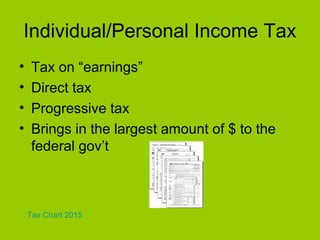
Individual/Personal Income Tax
• Tax on “earnings”
• Direct tax
• Progressive tax
• Brings in the largest amount of $ to the
federal gov’t
Tax Chart 2015
Tax Return
• April 15th
• Income – W2 form, interest – 1099,
Winnings, profit from sale, gifts, etc.
• Exemptions - credits for certain people
• Deductions – expenses not taxed,
charities, interest in mortgages
• IRS – processes tax returns
Corporate Income Tax
• Tax on business profits
• Progressive tax
• Non profit organizations and charities are
not taxed
Social Insurances taxes
• Three important programs
– Social Security
– Medicare
– Unemployment
– Paid by both employer and employee
– Regressive taxes – same rate
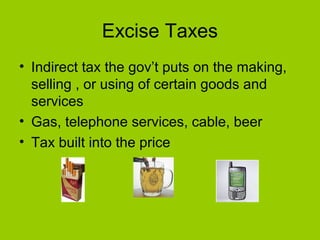
Excise Taxes
• Indirect tax the gov’t puts on the making,
selling , or using of certain goods and
services
• Gas, telephone services, cable, beer
• Tax built into the price
Estate and Gift Taxes
• Estate – on the property and $ of a person
who has died
• Gift – a tax on gifts over 14,000
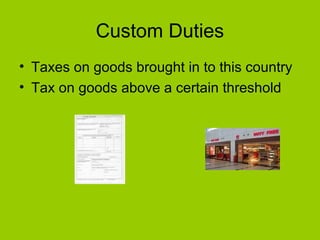
Custom Duties
• Taxes on goods brought in to this country
• Tax on goods above a certain threshold
Sales Taxes
• taxes placed on the sale or lease of goods
and services in the United States.
– Can be
» National
» State
» Local
» Pa 6%
» Phila 2%
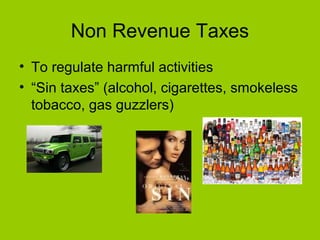
Non Revenue Taxes
• To regulate harmful activities
• “Sin taxes” (alcohol, cigarettes, smokeless
tobacco, gas guzzlers)
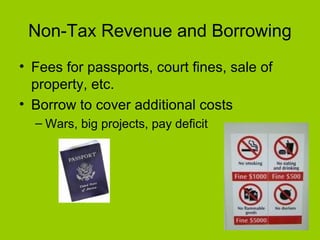
Non-Tax Revenue and Borrowing
• Fees for passports, court fines, sale of
property, etc.
• Borrow to cover additional costs
– Wars, big projects, pay deficit
Public Debt
• Also called the national debt
– Amount borrowed but not yet paid back
– Includes interest
– Deficit spending – borrowing to meet
expenses
Debt Clock
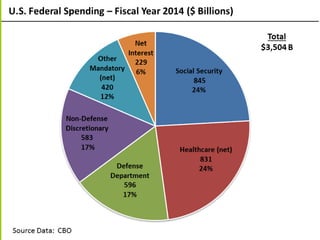
Spending and the Budget
• Budget – plan for income and expenses
– Entitlement programs – paying to people who
meet certain requirements
• Largest area of spending
• Social Security. Medicare, food stamps,
unemployment
– Interest on national debt
– Defenses spending
Controllable vs. Uncontrollable
Spending
• Controllable – Congress and the President
can raise or lower
• Uncontrollable – gov’t must spend
because it promised it will do so.
(Entitlements – Social Security, welfare)
• Most government spending is
uncontrollable
Federal Budget
• Government’s yearly plan for spending
• President and Congress work on the
budget
• President and OMB (Office of
Management and the Budget) put budget
together
• Congress studies and decides on
spending limits
What Happens When The Costs of
Government Exceed Revenue?
• 1.?
• 2.?
• 3?
What Happens When The Costs of
Government Exceed Revenue?
• 1. Cut expenses; cut government
programs; cut spending
• 2.?
• 3?
What Happens When The Costs of
Government Exceed Revenue?
• 1. Cut expenses; cut government
programs; cut spending
• 2. Raise taxes
• 3?
What Happens When The Costs of
Government Exceed Revenue?
• 1. Cut expenses; cut government
programs; cut spending
• 2. Raise taxes
• 3. Borrow more money let future
generations pay back

Tax and the Budgetary Process

  • 1.
    • “ Inthis world, nothing can be said to be certain, except death and taxes.” Benjamin Franklin
  • 2.
    • “Death andtaxes may be certain, but we don’t have to die every year.” anonymous
  • 3.
    Taxes? • What types/kindof taxes do American pay?
  • 4.
    What are TaxesUsed for…?
  • 5.
    Financing Government • Objectives:SWBAT - • Understand how the Federal Government raises money • Differentiate between the various types of federal/state/local taxes • Determine why the government must borrow money • Discover how the federal Government spends money • Explain how the President and Congress prepare the federal budget
  • 6.
    The Power toTax • Congress uses this power to pay for government’s expenses • Regulate things government thinks are dangerous
  • 7.
    Individual/Personal Income Tax •Tax on “earnings” • Direct tax • Progressive tax • Brings in the largest amount of $ to the federal gov’t Tax Chart 2015
  • 8.
    Tax Return • April15th • Income – W2 form, interest – 1099, Winnings, profit from sale, gifts, etc. • Exemptions - credits for certain people • Deductions – expenses not taxed, charities, interest in mortgages • IRS – processes tax returns
  • 9.
    Corporate Income Tax •Tax on business profits • Progressive tax • Non profit organizations and charities are not taxed
  • 10.
    Social Insurances taxes •Three important programs – Social Security – Medicare – Unemployment – Paid by both employer and employee – Regressive taxes – same rate
  • 11.
    Excise Taxes • Indirecttax the gov’t puts on the making, selling , or using of certain goods and services • Gas, telephone services, cable, beer • Tax built into the price
  • 12.
    Estate and GiftTaxes • Estate – on the property and $ of a person who has died • Gift – a tax on gifts over 14,000
  • 13.
    Custom Duties • Taxeson goods brought in to this country • Tax on goods above a certain threshold
  • 14.
    Sales Taxes • taxesplaced on the sale or lease of goods and services in the United States. – Can be » National » State » Local » Pa 6% » Phila 2%
  • 15.
    Non Revenue Taxes •To regulate harmful activities • “Sin taxes” (alcohol, cigarettes, smokeless tobacco, gas guzzlers)
  • 16.
    Non-Tax Revenue andBorrowing • Fees for passports, court fines, sale of property, etc. • Borrow to cover additional costs – Wars, big projects, pay deficit
  • 17.
    Public Debt • Alsocalled the national debt – Amount borrowed but not yet paid back – Includes interest – Deficit spending – borrowing to meet expenses Debt Clock
  • 18.
    Spending and theBudget • Budget – plan for income and expenses – Entitlement programs – paying to people who meet certain requirements • Largest area of spending • Social Security. Medicare, food stamps, unemployment – Interest on national debt – Defenses spending
  • 20.
    Controllable vs. Uncontrollable Spending •Controllable – Congress and the President can raise or lower • Uncontrollable – gov’t must spend because it promised it will do so. (Entitlements – Social Security, welfare) • Most government spending is uncontrollable
  • 21.
    Federal Budget • Government’syearly plan for spending • President and Congress work on the budget • President and OMB (Office of Management and the Budget) put budget together • Congress studies and decides on spending limits
  • 22.
    What Happens WhenThe Costs of Government Exceed Revenue? • 1.? • 2.? • 3?
  • 23.
    What Happens WhenThe Costs of Government Exceed Revenue? • 1. Cut expenses; cut government programs; cut spending • 2.? • 3?
  • 24.
    What Happens WhenThe Costs of Government Exceed Revenue? • 1. Cut expenses; cut government programs; cut spending • 2. Raise taxes • 3?
  • 25.
    What Happens WhenThe Costs of Government Exceed Revenue? • 1. Cut expenses; cut government programs; cut spending • 2. Raise taxes • 3. Borrow more money let future generations pay back