CH 2: The Origins of the
American Government
Section 1: The Colonial Period
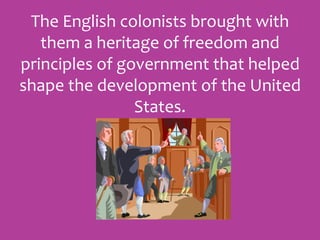
The English colonists brought with
them a heritage of freedom and
principles of government that helped
shape the development of the United
States.
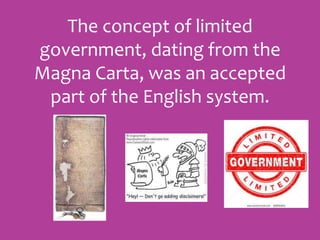
The concept of limited
government, dating from the
Magna Carta, was an accepted
part of the English system.
The Petition of Right in 1628 severely
limited the power of the English
monarch.
The colonists believed in the limits on
the ruler’s power and the freedoms
protected in the English Bill of Rights
passed by Parliament in 1688.
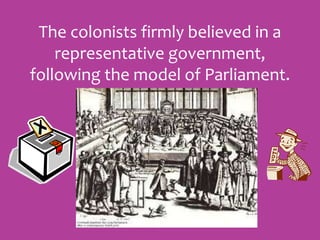
The colonists firmly believed in a
representative government,
following the model of Parliament.
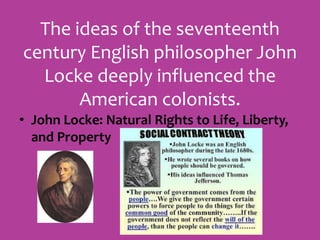
The ideas of the seventeenth
century English philosopher John
Locke deeply influenced the
American colonists.
• John Locke: Natural Rights to Life, Liberty,
and Property
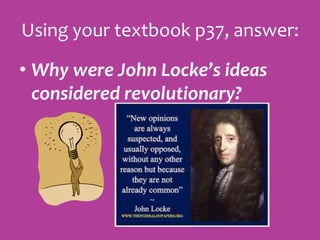
Using your textbook p37, answer:
• Why were John Locke’s ideas
considered revolutionary?
Where did our ideas on
government come from?
• The present system of American
government evolved largely from
colonial governments and their
practices.
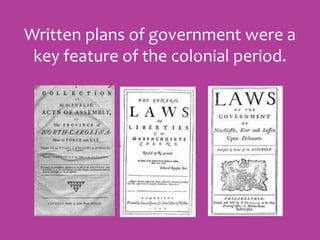
Written plans of government were a
key feature of the colonial period.
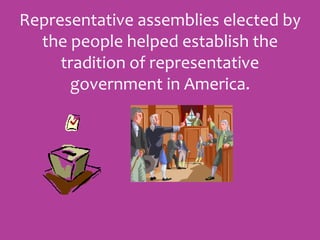
Representative assemblies elected by
the people helped establish the
tradition of representative
government in America.
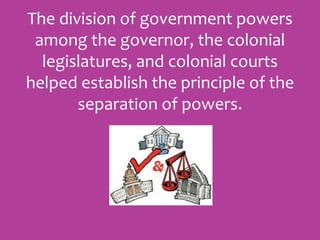
The division of government powers
among the governor, the colonial
legislatures, and colonial courts
helped establish the principle of the
separation of powers.
Let’s Sum It All Up!
• Answer the questions listed below in your
notes while you view this:
• Magna Carta, English Bill of Rights, and
American Government
• 1. How does a constitution limit
government?
• 2. What 3 things are in the Magna Carta?
• 3. What are the key features of the English
Bill of Rights?
Let’s Compare!
MAGNA CARTA – 1215
• 1. No taxation w/o
representation
•
•
•
• 2. Trial by jury
•
Check it out…
• 1. Article I, Section 2 &
Article 1, Sec.2, 1
• 15th Amendment, 24th
Amendment, 26th
Amendment, 16th
Amendment,
•
• 2.Bill of Right- 6th
Amendment
•
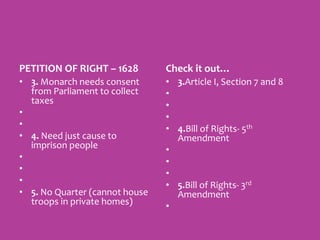
PETITION OF RIGHT – 1628
• 3. Monarch needs consent
from Parliament to collect
taxes
•
•
• 4. Need just cause to
imprison people
•
•
•
• 5. No Quarter (cannot house
troops in private homes)
Check it out…
• 3.Article I, Section 7 and 8
•
•
•
• 4.Bill of Rights- 5th
Amendment
•
•
•
• 5.Bill of Rights- 3rd
Amendment
•
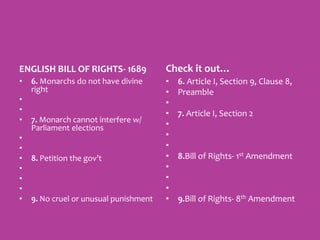
ENGLISH BILL OF RIGHTS- 1689
• 6. Monarchs do not have divine
right
•
•
• 7. Monarch cannot interfere w/
Parliament elections
•
•
• 8. Petition the gov’t
•
•
•
• 9. No cruel or unusual punishment
Check it out…
• 6. Article I, Section 9, Clause 8,
• Preamble
•
• 7. Article I, Section 2
•
•
•
• 8.Bill of Rights- 1st Amendment
•
•
•
• 9.Bill of Rights- 8th Amendment

Ch2 Sec 1, The Colonial Period

  • 1.
    CH 2: TheOrigins of the American Government Section 1: The Colonial Period
  • 2.
    The English colonistsbrought with them a heritage of freedom and principles of government that helped shape the development of the United States.
  • 3.
    The concept oflimited government, dating from the Magna Carta, was an accepted part of the English system.
  • 4.
    The Petition ofRight in 1628 severely limited the power of the English monarch. The colonists believed in the limits on the ruler’s power and the freedoms protected in the English Bill of Rights passed by Parliament in 1688.
  • 5.
    The colonists firmlybelieved in a representative government, following the model of Parliament.
  • 6.
    The ideas ofthe seventeenth century English philosopher John Locke deeply influenced the American colonists. • John Locke: Natural Rights to Life, Liberty, and Property
  • 7.
    Using your textbookp37, answer: • Why were John Locke’s ideas considered revolutionary?
  • 8.
    Where did ourideas on government come from? • The present system of American government evolved largely from colonial governments and their practices.
  • 9.
    Written plans ofgovernment were a key feature of the colonial period.
  • 10.
    Representative assemblies electedby the people helped establish the tradition of representative government in America.
  • 11.
    The division ofgovernment powers among the governor, the colonial legislatures, and colonial courts helped establish the principle of the separation of powers.
  • 12.
    Let’s Sum ItAll Up! • Answer the questions listed below in your notes while you view this: • Magna Carta, English Bill of Rights, and American Government • 1. How does a constitution limit government? • 2. What 3 things are in the Magna Carta? • 3. What are the key features of the English Bill of Rights?
  • 13.
    Let’s Compare! MAGNA CARTA– 1215 • 1. No taxation w/o representation • • • • 2. Trial by jury • Check it out… • 1. Article I, Section 2 & Article 1, Sec.2, 1 • 15th Amendment, 24th Amendment, 26th Amendment, 16th Amendment, • • 2.Bill of Right- 6th Amendment •
  • 14.
    PETITION OF RIGHT– 1628 • 3. Monarch needs consent from Parliament to collect taxes • • • 4. Need just cause to imprison people • • • • 5. No Quarter (cannot house troops in private homes) Check it out… • 3.Article I, Section 7 and 8 • • • • 4.Bill of Rights- 5th Amendment • • • • 5.Bill of Rights- 3rd Amendment •
  • 15.
    ENGLISH BILL OFRIGHTS- 1689 • 6. Monarchs do not have divine right • • • 7. Monarch cannot interfere w/ Parliament elections • • • 8. Petition the gov’t • • • • 9. No cruel or unusual punishment Check it out… • 6. Article I, Section 9, Clause 8, • Preamble • • 7. Article I, Section 2 • • • • 8.Bill of Rights- 1st Amendment • • • • 9.Bill of Rights- 8th Amendment