
Introduction to Systems 
Thinking
Systems Thinking is a way of seeing 
and talking about reality that helps us 
better understand and work with 
organization and communities to 
influx the quality of our lives.
A system is any group of 
interacting, interrelated, or 
interdependent parts that form a 
complex and unified whole that has 
a specific purpose
Which are systems and which are 
collections 
• Bowl of fruit 
• Football team 
• Toaster 
• Kitchen 
• Database of client 
• Cornerstone 
• Tool in a toolbox 
• Marriage 
• Local public health 
agency 
• Community
Whenever you add people 
to a collection you almost 
always transform a collection 
to a system
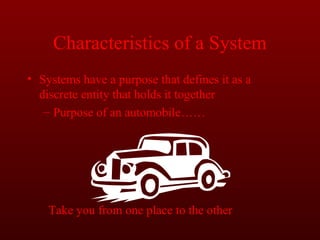
Characteristics of a System 
• Systems have a purpose that defines it as a 
discrete entity that holds it together 
– Purpose of an automobile…… 
Take you from one place to the other
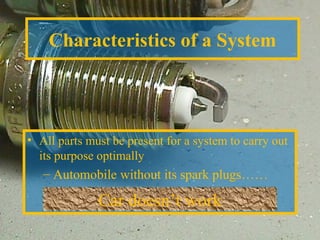
Characteristics of a System 
• All parts must be present for a system to carry out 
its purpose optimally 
– Automobile without its spark plugs…… 
Car doesn’t work
Characteristics of a System 
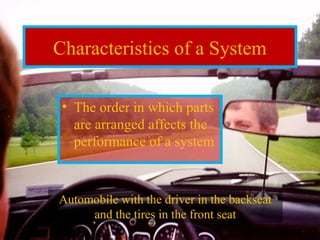
• The order in which parts 
are arranged affects the 
performance of a system 
Automobile with the driver in the backseat 
and the tires in the front seat
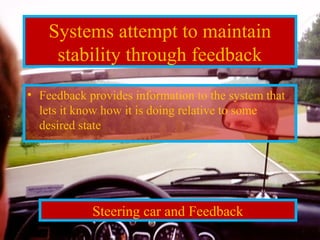
Systems attempt to maintain 
stability through feedback 
• Feedback provides information to the system that 
lets it know how it is doing relative to some 
desired state 
Steering car and Feedback
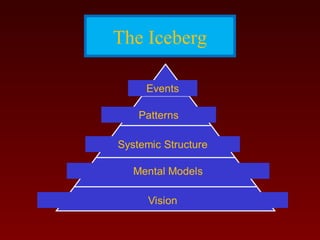
The Iceberg
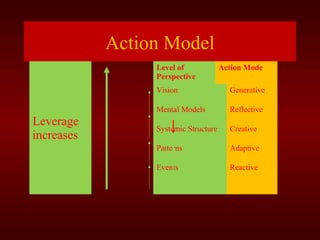
Action Model 
Leverage 
increases 
Level of 
Perspective 
Action Mode 
Vision Generative 
Mental Models Reflective 
Systemic Structure Creative 
Patterns Adaptive 
Events Reactive
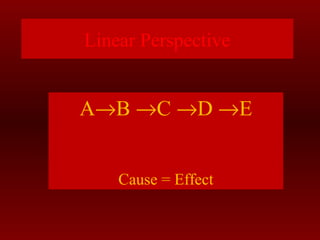
Linear Perspective 
A®B ®C ®D ®E 
Cause = Effect
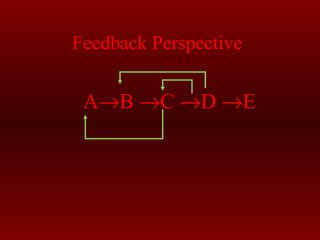
Feedback Perspective 
A®B ®C ®D ®E
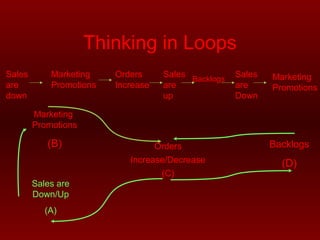
Thinking in Loops 
Sales 
are 
down 
Marketing 
Promotions 
Orders 
Increase 
Sales 
are 
up 
Backlogs Sales 
are 
Down 
Marketing 
Promotions 
Marketing 
Promotions 
(B) Orders 
Increase/Decrease 
(C) 
Backlogs 
(D) 
Sales are 
Down/Up 
(A)
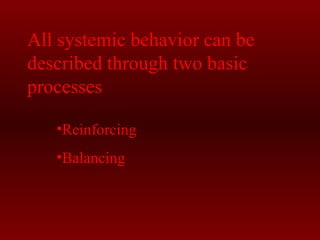
All systemic behavior can be 
described through two basic 
processes 
•Reinforcing 
•Balancing
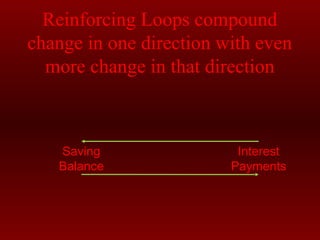
Reinforcing Loops compound 
change in one direction with even 
more change in that direction 
Saving 
Balance 
Interest 
Payments
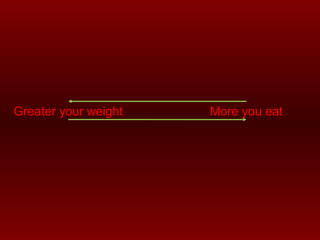
Greater your weight More you eat
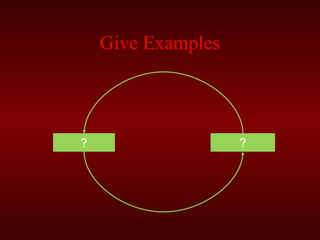
Give Examples
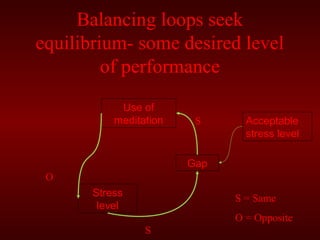
Balancing loops seek 
equilibrium- some desired level 
of performance 
Use of 
meditation Acceptable 
stress level 
Gap 
Stress 
level 
S 
O 
S 
S = Same 
O = Opposite
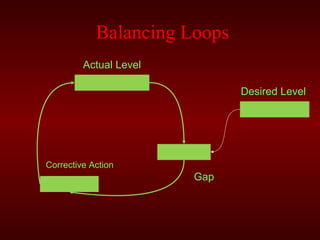
Balancing Loops 
Actual Level 
Desired Level 
Gap 
Corrective Action
Questions these Diagrams help answer 
• Which gaps are driving our system when and by 
how much? 
• How accurately do we know what each of the gaps 
is? 
• How are we monitoring the gaps? 
• What are the different ways in which we can close 
the gaps? 
• How long does it take for perception to catch up to 
actual quality?
Every link in a system contains a delay 
• Physical 
• Transactional 
• Informational 
• Perceptual
Put the Pieces together 
Archetypes
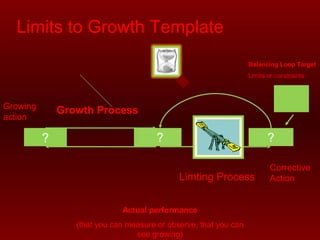
Growing Growth Process 
action 
? ? 
Limting Process 
Actual performance 
(that you can measure or observe, that you can 
see growing) 
Balancing Loop Target 
Limits or constraints 
Limits to Growth Template 
Corrective 
Action
Leaders work on the system 
not in the system

Systems thinking

  • 1.
  • 2.
    Systems Thinking isa way of seeing and talking about reality that helps us better understand and work with organization and communities to influx the quality of our lives.
  • 3.
    A system isany group of interacting, interrelated, or interdependent parts that form a complex and unified whole that has a specific purpose
  • 4.
    Which are systemsand which are collections • Bowl of fruit • Football team • Toaster • Kitchen • Database of client • Cornerstone • Tool in a toolbox • Marriage • Local public health agency • Community
  • 5.
    Whenever you addpeople to a collection you almost always transform a collection to a system
  • 6.
    Characteristics of aSystem • Systems have a purpose that defines it as a discrete entity that holds it together – Purpose of an automobile…… Take you from one place to the other
  • 7.
    Characteristics of aSystem • All parts must be present for a system to carry out its purpose optimally – Automobile without its spark plugs…… Car doesn’t work
  • 8.
    Characteristics of aSystem • The order in which parts are arranged affects the performance of a system Automobile with the driver in the backseat and the tires in the front seat
  • 9.
    Systems attempt tomaintain stability through feedback • Feedback provides information to the system that lets it know how it is doing relative to some desired state Steering car and Feedback
  • 10.
  • 11.
    Action Model Leverage increases Level of Perspective Action Mode Vision Generative Mental Models Reflective Systemic Structure Creative Patterns Adaptive Events Reactive
  • 12.
    Linear Perspective A®B®C ®D ®E Cause = Effect
  • 13.
  • 14.
    Thinking in Loops Sales are down Marketing Promotions Orders Increase Sales are up Backlogs Sales are Down Marketing Promotions Marketing Promotions (B) Orders Increase/Decrease (C) Backlogs (D) Sales are Down/Up (A)
  • 15.
    All systemic behaviorcan be described through two basic processes •Reinforcing •Balancing
  • 16.
    Reinforcing Loops compound change in one direction with even more change in that direction Saving Balance Interest Payments
  • 17.
    Greater your weightMore you eat
  • 18.
  • 19.
    Balancing loops seek equilibrium- some desired level of performance Use of meditation Acceptable stress level Gap Stress level S O S S = Same O = Opposite
  • 20.
    Balancing Loops ActualLevel Desired Level Gap Corrective Action
  • 21.
    Questions these Diagramshelp answer • Which gaps are driving our system when and by how much? • How accurately do we know what each of the gaps is? • How are we monitoring the gaps? • What are the different ways in which we can close the gaps? • How long does it take for perception to catch up to actual quality?
  • 22.
    Every link ina system contains a delay • Physical • Transactional • Informational • Perceptual
  • 23.
    Put the Piecestogether Archetypes
  • 24.
    Growing Growth Process action ? ? Limting Process Actual performance (that you can measure or observe, that you can see growing) Balancing Loop Target Limits or constraints Limits to Growth Template Corrective Action
  • 25.
    Leaders work onthe system not in the system