Systems Thinking
Prepared by:
Arindam Bhattacharjee
Research Intern at IIM Kozhikode
MBA 1st year, NIT Rourkela
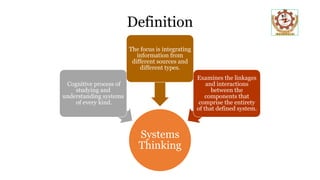
Definition
Systems
Thinking
Cognitive process of
studying and
understanding systems
of every kind.
The focus is integrating
information from
different sources and
different types.
Examines the linkages
and interactions
between the
components that
comprise the entirety
of that defined system.
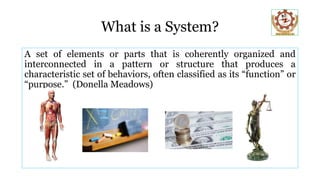
What is a System?
A set of elements or parts that is coherently organized and
interconnected in a pattern or structure that produces a
characteristic set of behaviors, often classified as its “function” or
“purpose.” (Donella Meadows)
Components of a System
Elements
Inter-
connections
Function
Elements
Elements
• Typically the most obvious
part of a dynamic system.
• Changing elements often has
very little effect on the system.
Image Source: Armchair GM
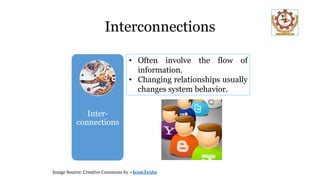
Interconnections
Inter-
connections
• Often involve the flow of
information.
• Changing relationships usually
changes system behavior.
Image Source: Creative Commons by ~IconTexto
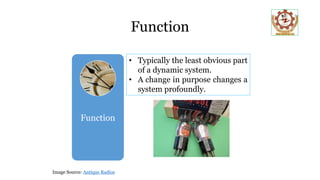
Function
• Typically the least obvious part
of a dynamic system.
• A change in purpose changes a
system profoundly.
Image Source: Antique Radios
Function
Systems: Key Points
• A system is more than the sum of its parts.
• Many of the interconnections in systems operate through the
flow of information.
• The least obvious part of the system, its function or purpose, is
often the most crucial determinate of the system’s behavior.
• System structure is the source of system behavior. System
behavior reveals itself as a series of events over time.
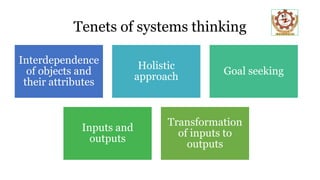
Tenets of systems thinking
Interdependence
of objects and
their attributes
Holistic
approach
Goal seeking
Inputs and
outputs
Transformation
of inputs to
outputs
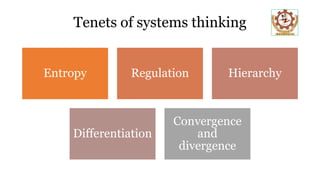
Tenets of systems thinking
Entropy Regulation Hierarchy
Differentiation
Convergence
and
divergence
Systems Thinking Diagram
Source: Wikipedia
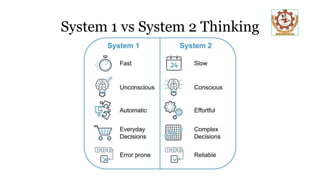
System 1 vs System 2 Thinking
• System 1 and System 2 are two distinct modes of decision
making:
• System 1 is an automatic, fast and often unconscious way of
thinking. It is autonomous and efficient, requiring little energy
or attention, but is prone to biases and systematic errors.
• System 2 is an effortful, slow and controlled way of thinking. It
requires energy and can’t work without attention but, once
engaged, it has the ability to filter the instincts of System 1.
Examples of System 2 Thinking
• How would you decide :
• Which college to attend?
• Which house to buy? or
• Whether to change careers?
• These are the types of decisions that engage System 2. They
require attention and slow, effortful, considered responses.
Examples of System 1 Thinking
• How would you decide:
• Which seat to take in a waiting room?
• Which chicken dish to buy? or
• Whether to change sketch pen colors?
• System 1 is capable of making quick decisions, based on very
little information.
Thinking in Systems
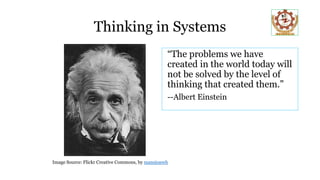
“The problems we have
created in the world today will
not be solved by the level of
thinking that created them.”
--Albert Einstein
Image Source: Flickr Creative Commons, by mansionwb
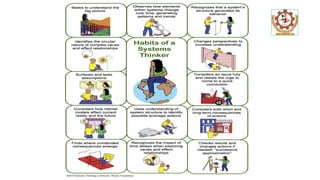
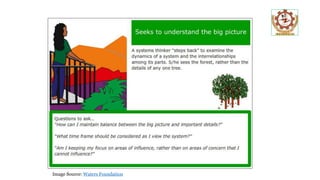
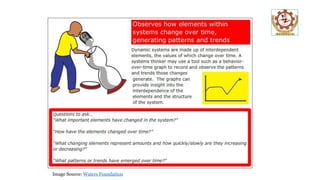
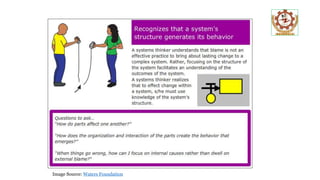
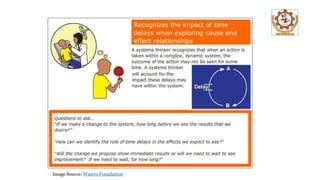
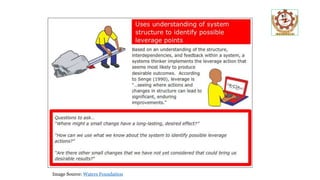
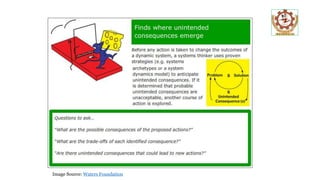
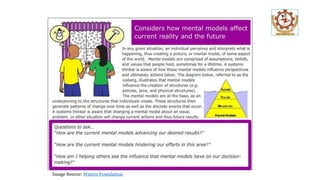
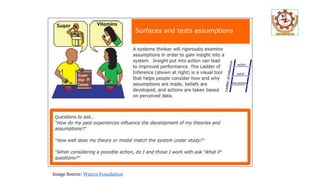
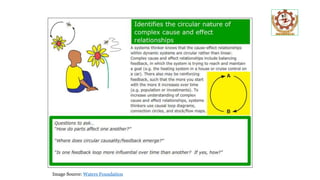
Image Source: Waters Foundation
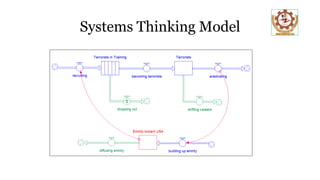
Systems Thinking Model
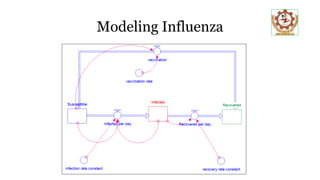
Modeling Influenza
Conclusion
•The leadership challenge is accentuated by the realization that for every
legitimate, official or consciously designed system (which is intended to be and is
supposedly rational) there is a shadow system. The shadow system is where all the
non-rational issues reside; e.g. politics, trust, hopes, ambitions, greed, favors,
power struggles, etc.
•The system can confuse, overpower, block, and fail leadership. But leadership can
fail the system. A major failure of leadership within, across or down an
organization is referred to as ‘systemic’.
•Here systems thinking can go a long way to mitigate problems.
References
http://www.systemicleadershipinstitute.org/systemic-
leadership/theories/basic-principles-of-systems-thinking-as-applied-to-
management-and-leadership-2/, accessed on 20th May 2017.
www.wikipedia.com, https://en.wikipedia.org/wiki/Systems_thinking,
accessed on 20th May 2017.
http://upfrontanalytics.com/market-research-system-1-vs-system-2-
decision-making/, accessed on 20th May 2017.
www.slideshare.com, https://www.slideshare.net/pwoessner/systems-
thinking-lli2012, accessed on 20th May 2017.
THANKS

Systems thinking

  • 1.
    Systems Thinking Prepared by: ArindamBhattacharjee Research Intern at IIM Kozhikode MBA 1st year, NIT Rourkela
  • 2.
    Definition Systems Thinking Cognitive process of studyingand understanding systems of every kind. The focus is integrating information from different sources and different types. Examines the linkages and interactions between the components that comprise the entirety of that defined system.
  • 3.
    What is aSystem? A set of elements or parts that is coherently organized and interconnected in a pattern or structure that produces a characteristic set of behaviors, often classified as its “function” or “purpose.” (Donella Meadows)
  • 4.
    Components of aSystem Elements Inter- connections Function
  • 5.
    Elements Elements • Typically themost obvious part of a dynamic system. • Changing elements often has very little effect on the system. Image Source: Armchair GM
  • 6.
    Interconnections Inter- connections • Often involvethe flow of information. • Changing relationships usually changes system behavior. Image Source: Creative Commons by ~IconTexto
  • 7.
    Function • Typically theleast obvious part of a dynamic system. • A change in purpose changes a system profoundly. Image Source: Antique Radios Function
  • 8.
    Systems: Key Points •A system is more than the sum of its parts. • Many of the interconnections in systems operate through the flow of information. • The least obvious part of the system, its function or purpose, is often the most crucial determinate of the system’s behavior. • System structure is the source of system behavior. System behavior reveals itself as a series of events over time.
  • 9.
    Tenets of systemsthinking Interdependence of objects and their attributes Holistic approach Goal seeking Inputs and outputs Transformation of inputs to outputs
  • 10.
    Tenets of systemsthinking Entropy Regulation Hierarchy Differentiation Convergence and divergence
  • 11.
  • 12.
    System 1 vsSystem 2 Thinking
  • 13.
    System 1 vsSystem 2 Thinking • System 1 and System 2 are two distinct modes of decision making: • System 1 is an automatic, fast and often unconscious way of thinking. It is autonomous and efficient, requiring little energy or attention, but is prone to biases and systematic errors. • System 2 is an effortful, slow and controlled way of thinking. It requires energy and can’t work without attention but, once engaged, it has the ability to filter the instincts of System 1.
  • 14.
    Examples of System2 Thinking • How would you decide : • Which college to attend? • Which house to buy? or • Whether to change careers? • These are the types of decisions that engage System 2. They require attention and slow, effortful, considered responses.
  • 15.
    Examples of System1 Thinking • How would you decide: • Which seat to take in a waiting room? • Which chicken dish to buy? or • Whether to change sketch pen colors? • System 1 is capable of making quick decisions, based on very little information.
  • 16.
    Thinking in Systems “Theproblems we have created in the world today will not be solved by the level of thinking that created them.” --Albert Einstein Image Source: Flickr Creative Commons, by mansionwb
  • 18.
  • 19.
  • 20.
  • 21.
  • 22.
  • 23.
  • 24.
  • 25.
  • 26.
  • 27.
  • 28.
  • 29.
  • 30.
  • 31.
  • 32.
  • 33.
    Conclusion •The leadership challengeis accentuated by the realization that for every legitimate, official or consciously designed system (which is intended to be and is supposedly rational) there is a shadow system. The shadow system is where all the non-rational issues reside; e.g. politics, trust, hopes, ambitions, greed, favors, power struggles, etc. •The system can confuse, overpower, block, and fail leadership. But leadership can fail the system. A major failure of leadership within, across or down an organization is referred to as ‘systemic’. •Here systems thinking can go a long way to mitigate problems.
  • 34.
    References http://www.systemicleadershipinstitute.org/systemic- leadership/theories/basic-principles-of-systems-thinking-as-applied-to- management-and-leadership-2/, accessed on20th May 2017. www.wikipedia.com, https://en.wikipedia.org/wiki/Systems_thinking, accessed on 20th May 2017. http://upfrontanalytics.com/market-research-system-1-vs-system-2- decision-making/, accessed on 20th May 2017. www.slideshare.com, https://www.slideshare.net/pwoessner/systems- thinking-lli2012, accessed on 20th May 2017.
  • 35.

Editor's Notes

  • #6 Textbooks, curriculum, administrators, presidents, etc. don’t affect major change within a system. Ex: Tony LaRussa and Albert Pujols left the Cardinals, but they are still the 11 time World Champs
  • #8 System functions seem obvious but may not be clear to all observers Ex: Raytheon Company began as the American Appliance Company, a maker of machinery, motors and components (vacuum tubes). Today they make weapon defense systems (Patriot Missles).