Athabasca University-
Canada’s Open University
May 21, 2107
Jiangsu Open University
Terry Anderson
Professor Emeritus,
Athabasca University
Presentation overview
• Introduction to Athabasca University
• Course Production Process
• Innovations at Athabasca
• Your questions and comments
Mission
Athabasca University, Canada’s Open University,
is dedicated to the removal of barriers that
restrict access to, and success in, university-
level studies and to increasing equality of
educational opportunity for adult learners
worldwide.
We are committed to excellence in teaching,
research and scholarship, and to being of service
to the general public.
rededicated by Athabasca University Board of Governors October 21, 2011
History
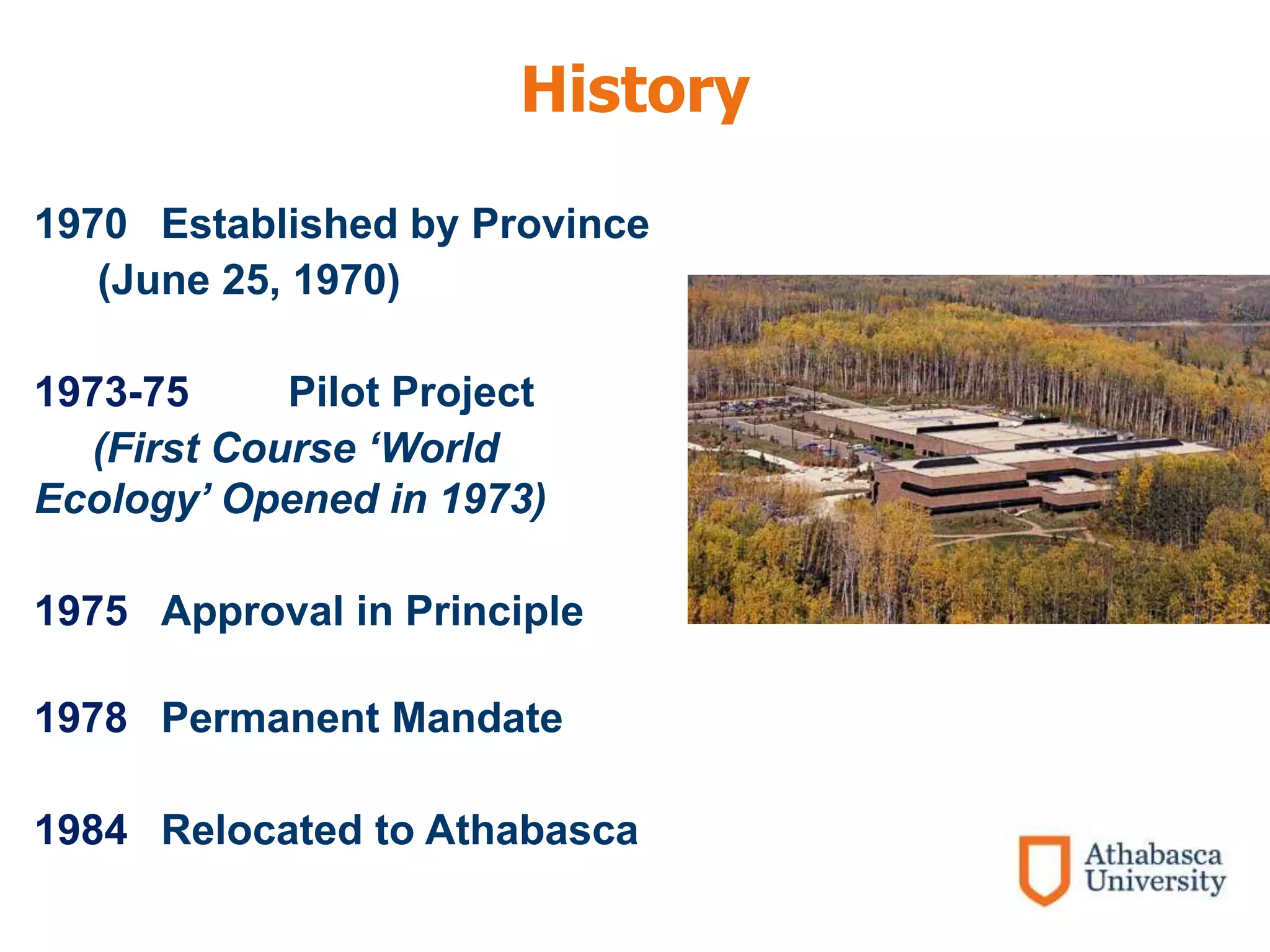
1970 Established by Province
(June 25, 1970)
1973-75 Pilot Project
(First Course ‘World
Ecology’ Opened in 1973)
1975 Approval in Principle
1978 Permanent Mandate
1984 Relocated to Athabasca
History
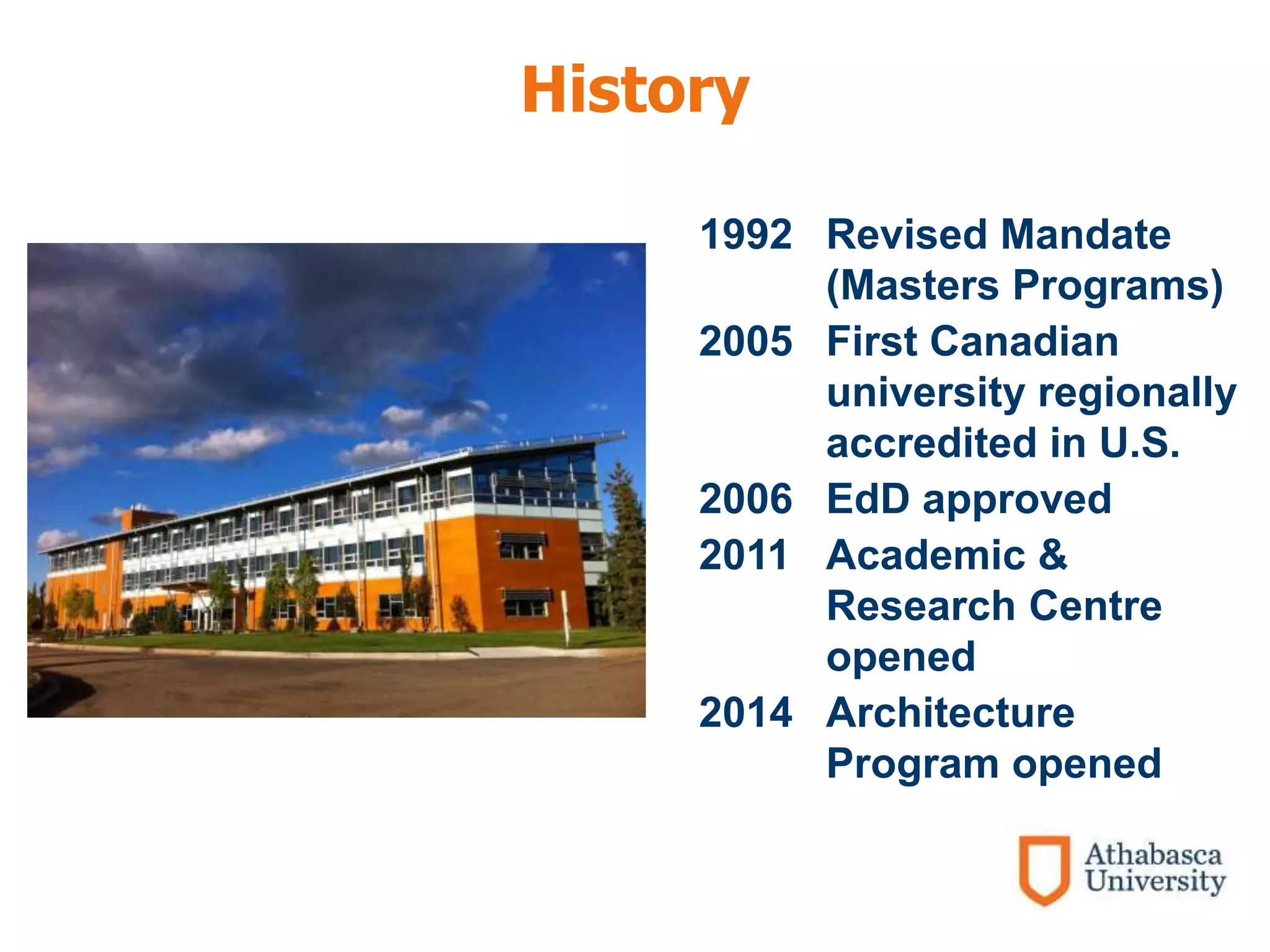
1992 Revised Mandate
(Masters Programs)
2005 First Canadian
university regionally
accredited in U.S.
2006 EdD approved
2011 Academic &
Research Centre
opened
2014 Architecture
Program opened
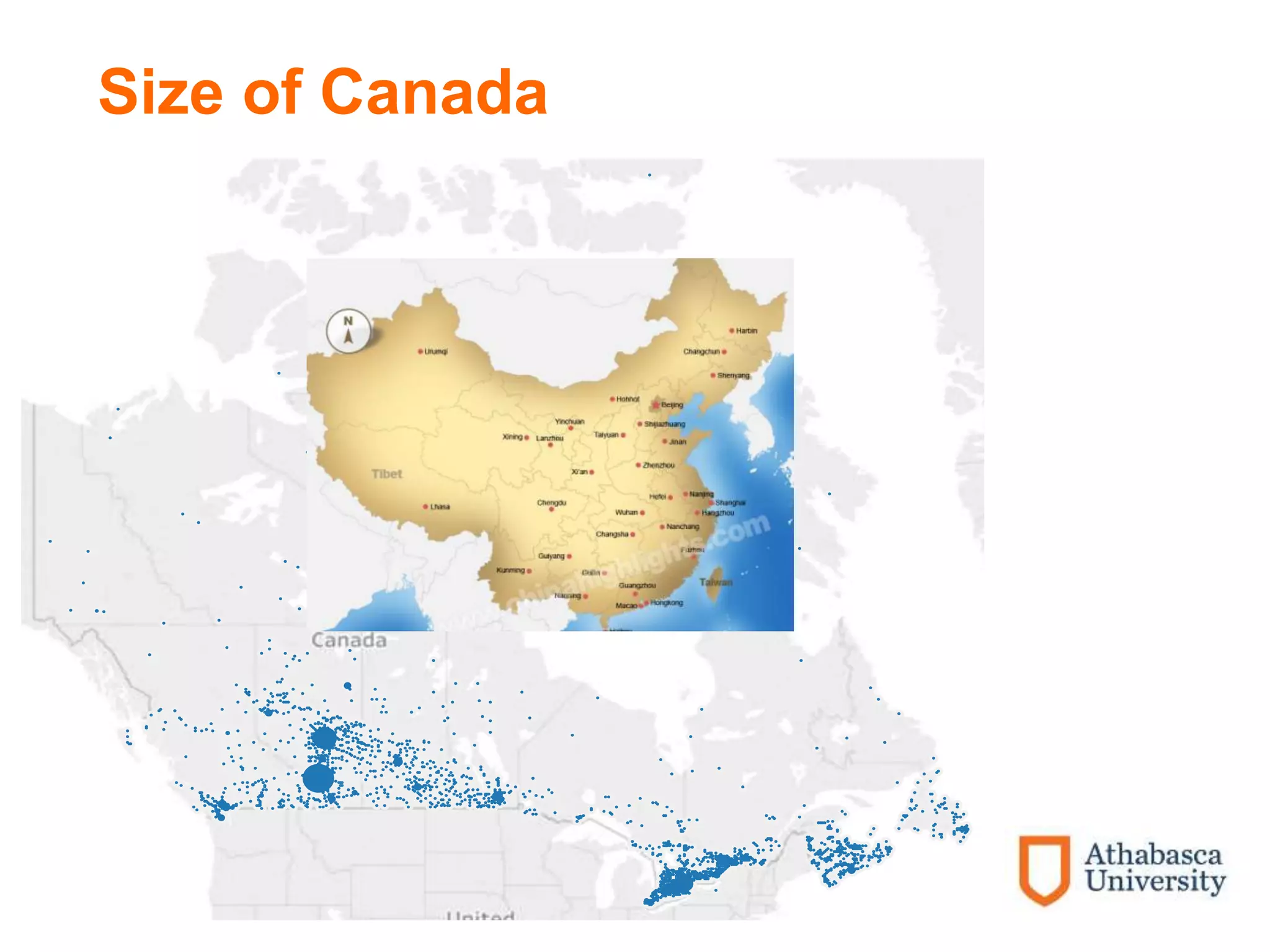
Size of Canada
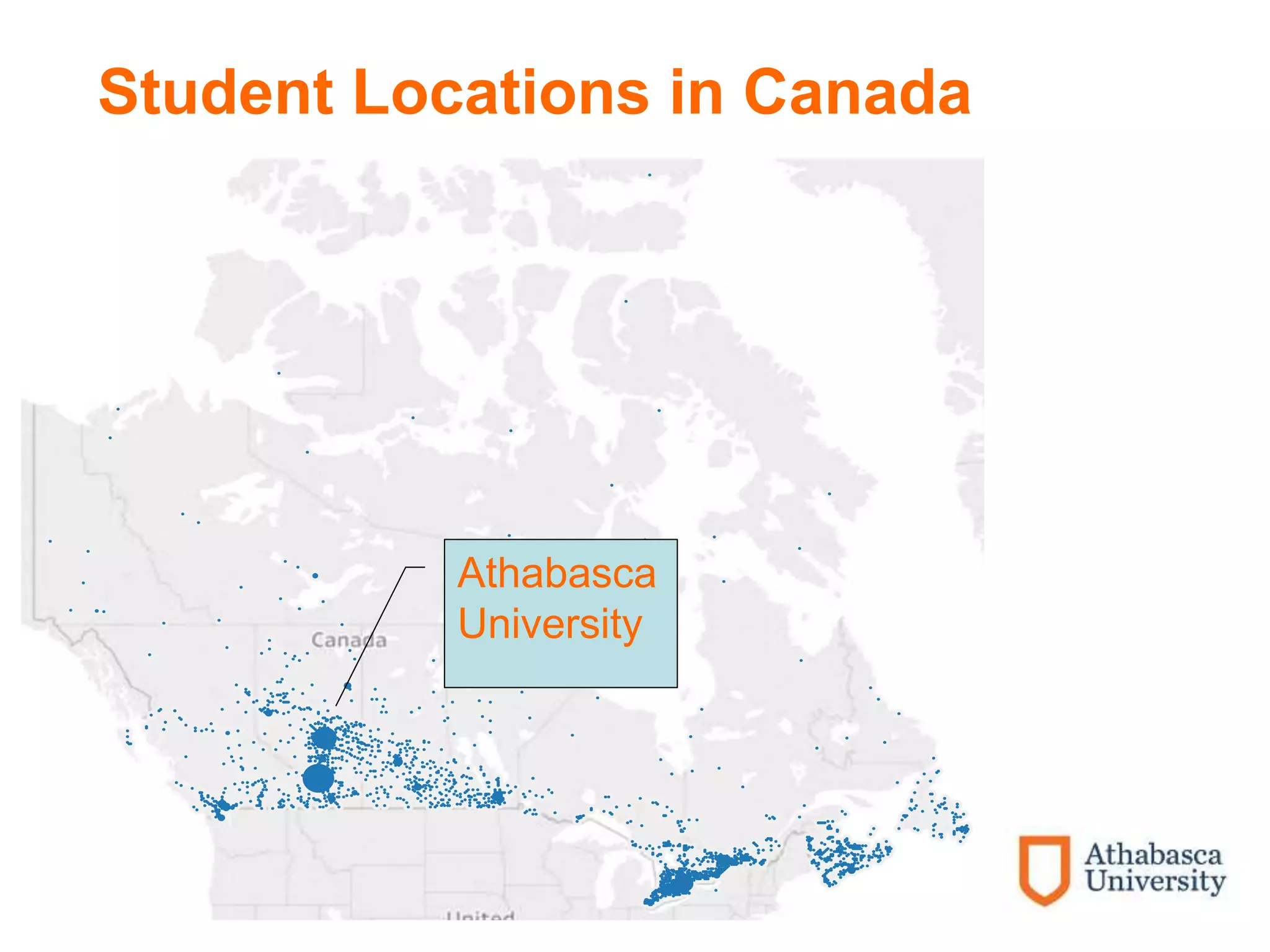
Student Locations in Canada
Athabasca
University
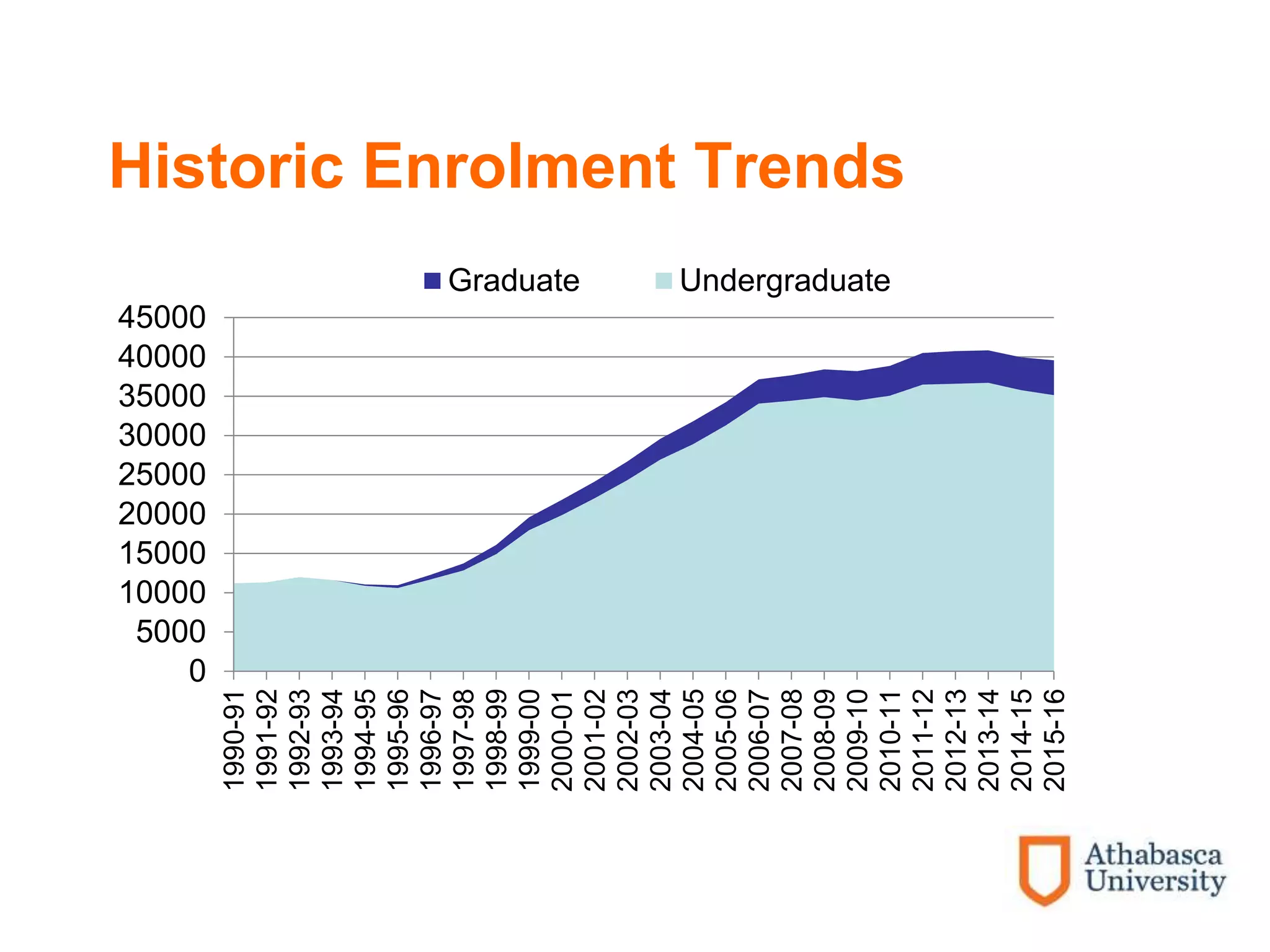
Historic Enrolment Trends
0
5000
10000
15000
20000
25000
30000
35000
40000
45000
1990-91
1991-92
1992-93
1993-94
1994-95
1995-96
1996-97
1997-98
1998-99
1999-00
2000-01
2001-02
2002-03
2003-04
2004-05
2005-06
2006-07
2007-08
2008-09
2009-10
2010-11
2011-12
2012-13
2013-14
2014-15
2015-16
Graduate Undergraduate
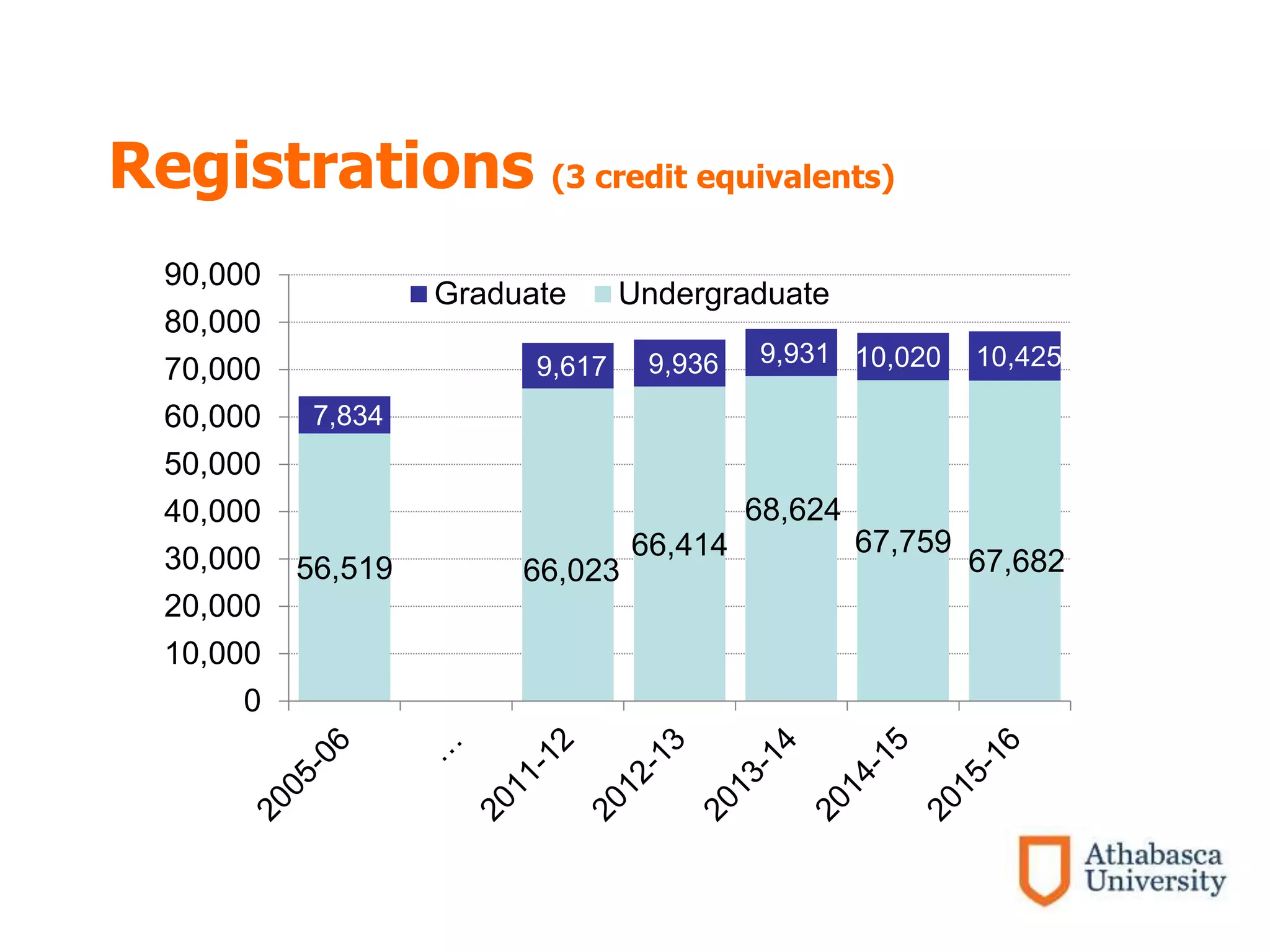
Registrations (3 credit equivalents)
56,519 66,023
66,414
68,624
67,759
67,682
7,834
9,617 9,936 9,931 10,020 10,425
0
10,000
20,000
30,000
40,000
50,000
60,000
70,000
80,000
90,000
Graduate Undergraduate
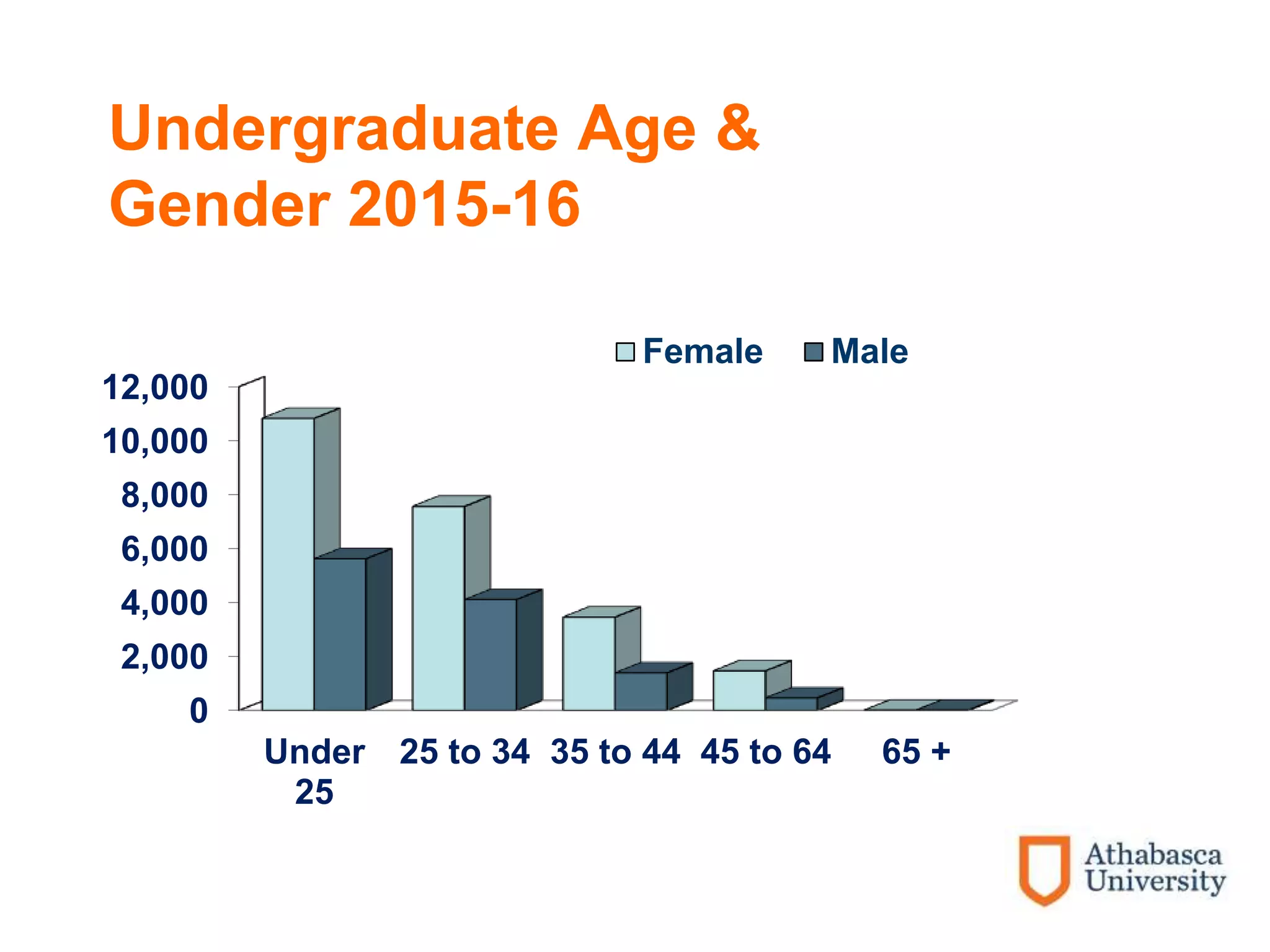
Undergraduate Age &
Gender 2015-16
0
2,000
4,000
6,000
8,000
10,000
12,000
Under
25
25 to 34 35 to 44 45 to 64 65 +
Female Male
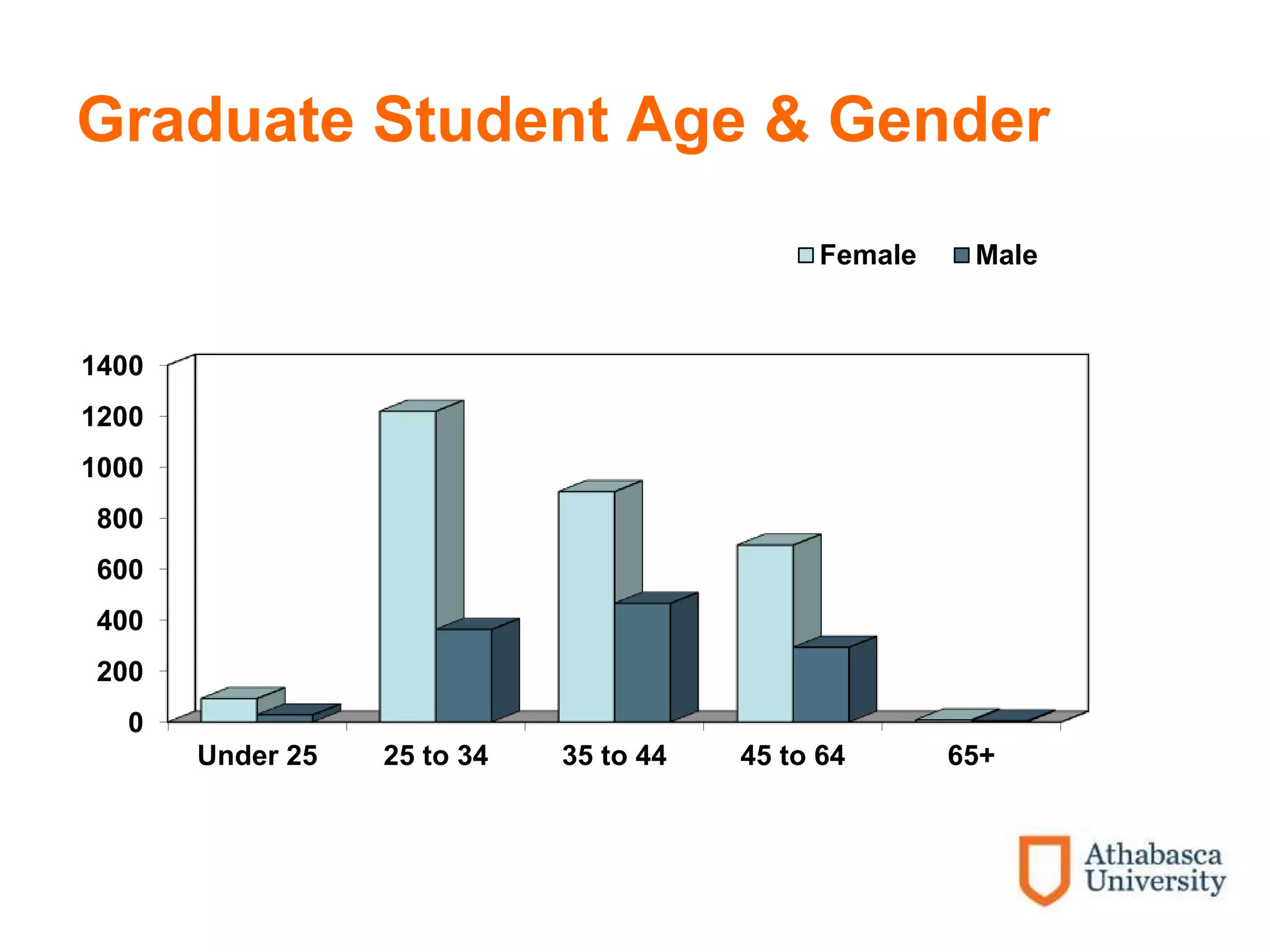
Graduate Student Age & Gender
0
200
400
600
800
1000
1200
1400
Under 25 25 to 34 35 to 44 45 to 64 65+
Female Male
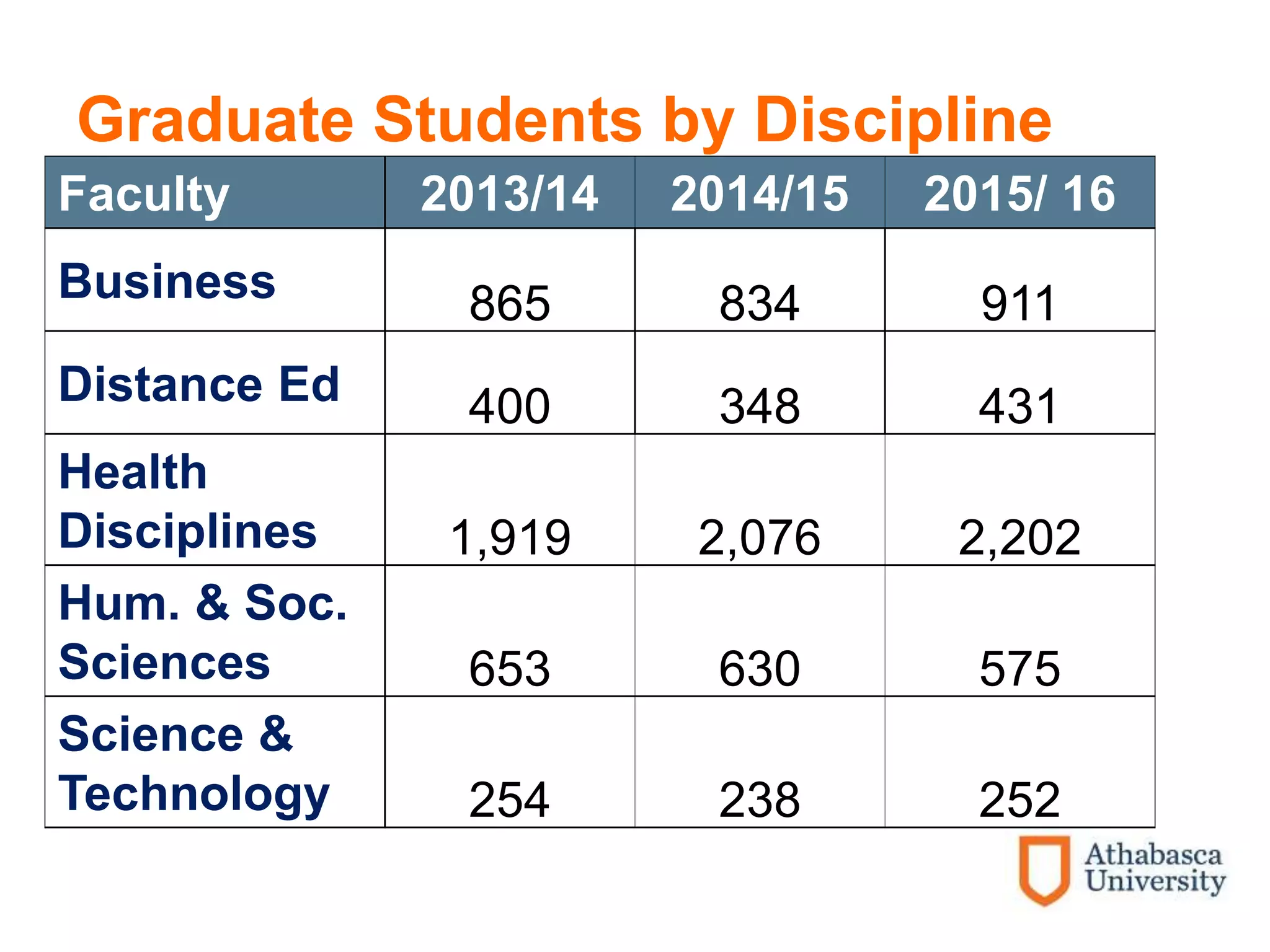
Graduate Students by Discipline
Faculty 2013/14 2014/15 2015/ 16
Business 865 834 911
Distance Ed 400 348 431
Health
Disciplines 1,919 2,076 2,202
Hum. & Soc.
Sciences 653 630 575
Science &
Technology 254 238 252
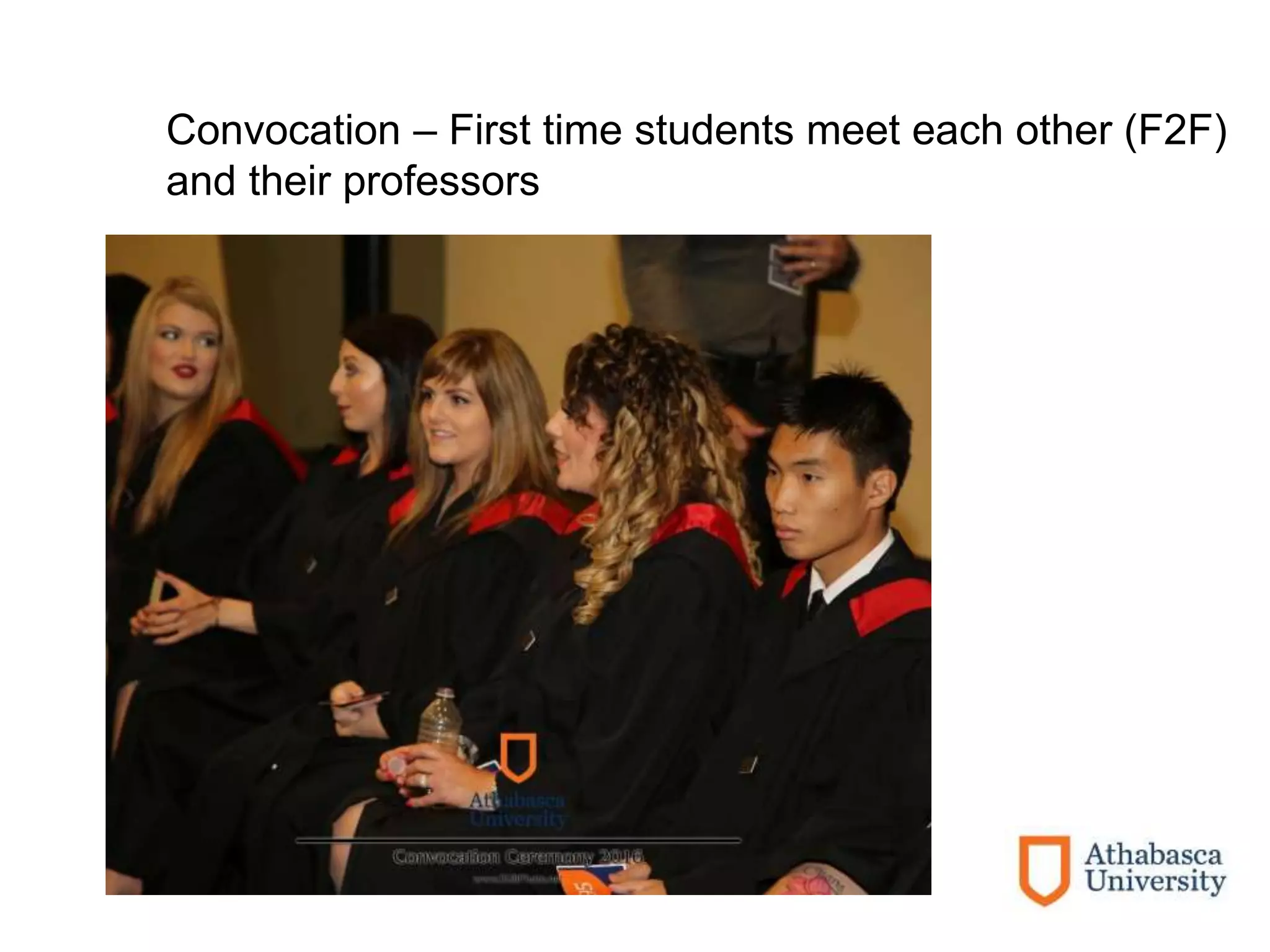
Convocation – First time students meet each other (F2F)
and their professors
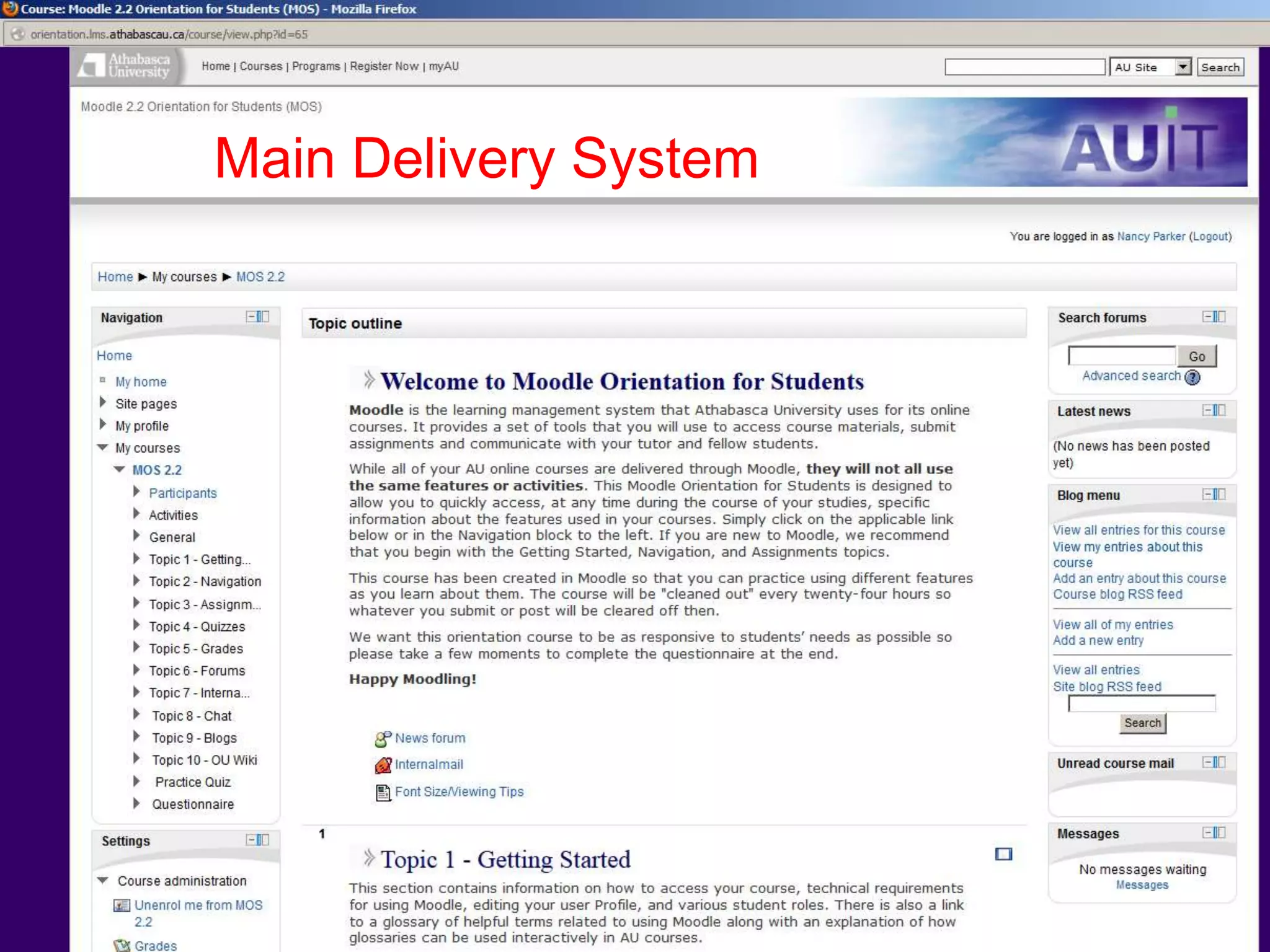
Main Delivery System
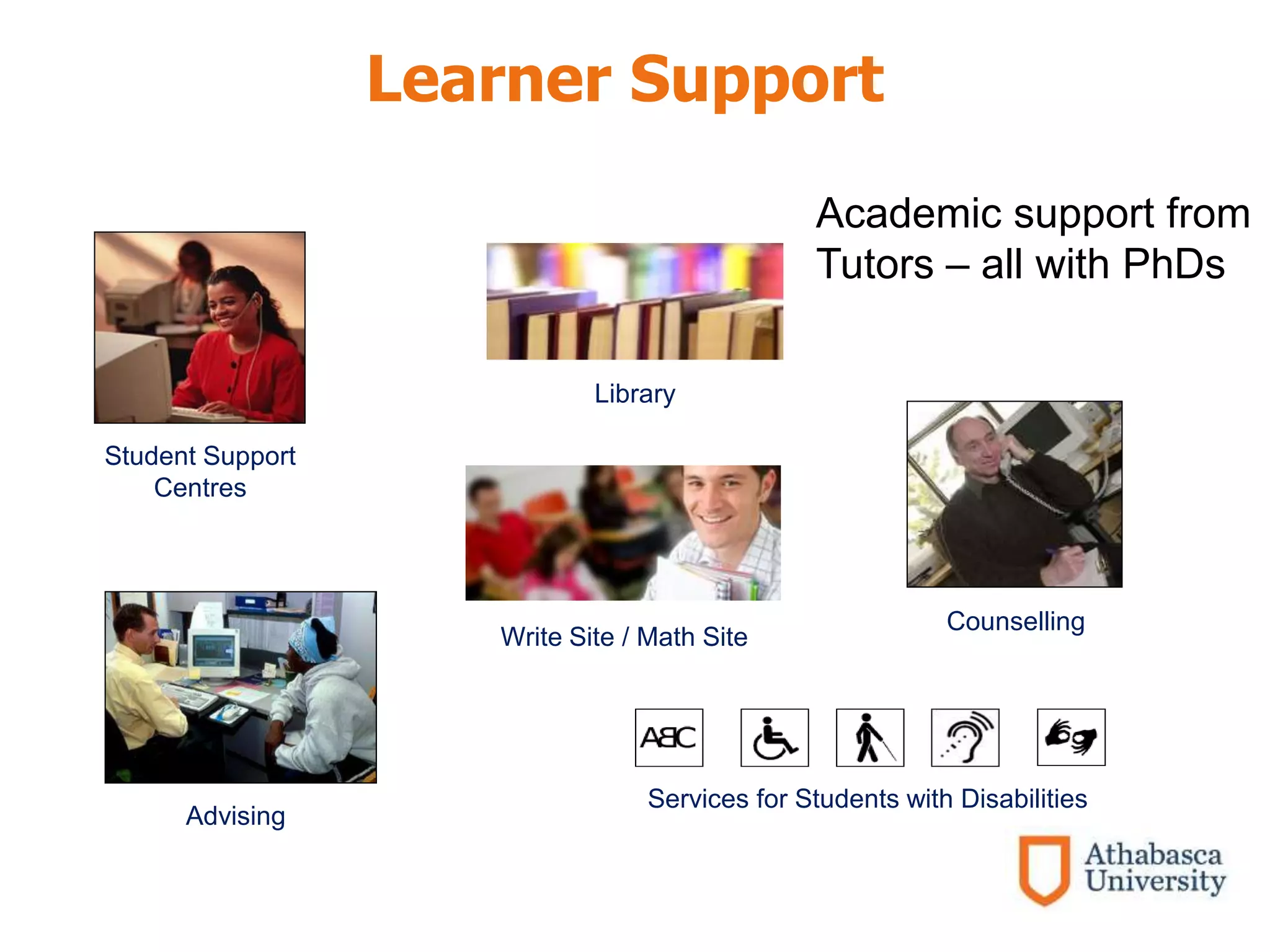
Learner Support
Student Support
Centres
Library
Counselling
Advising
Services for Students with Disabilities
Write Site / Math Site
Academic support from
Tutors – all with PhDs
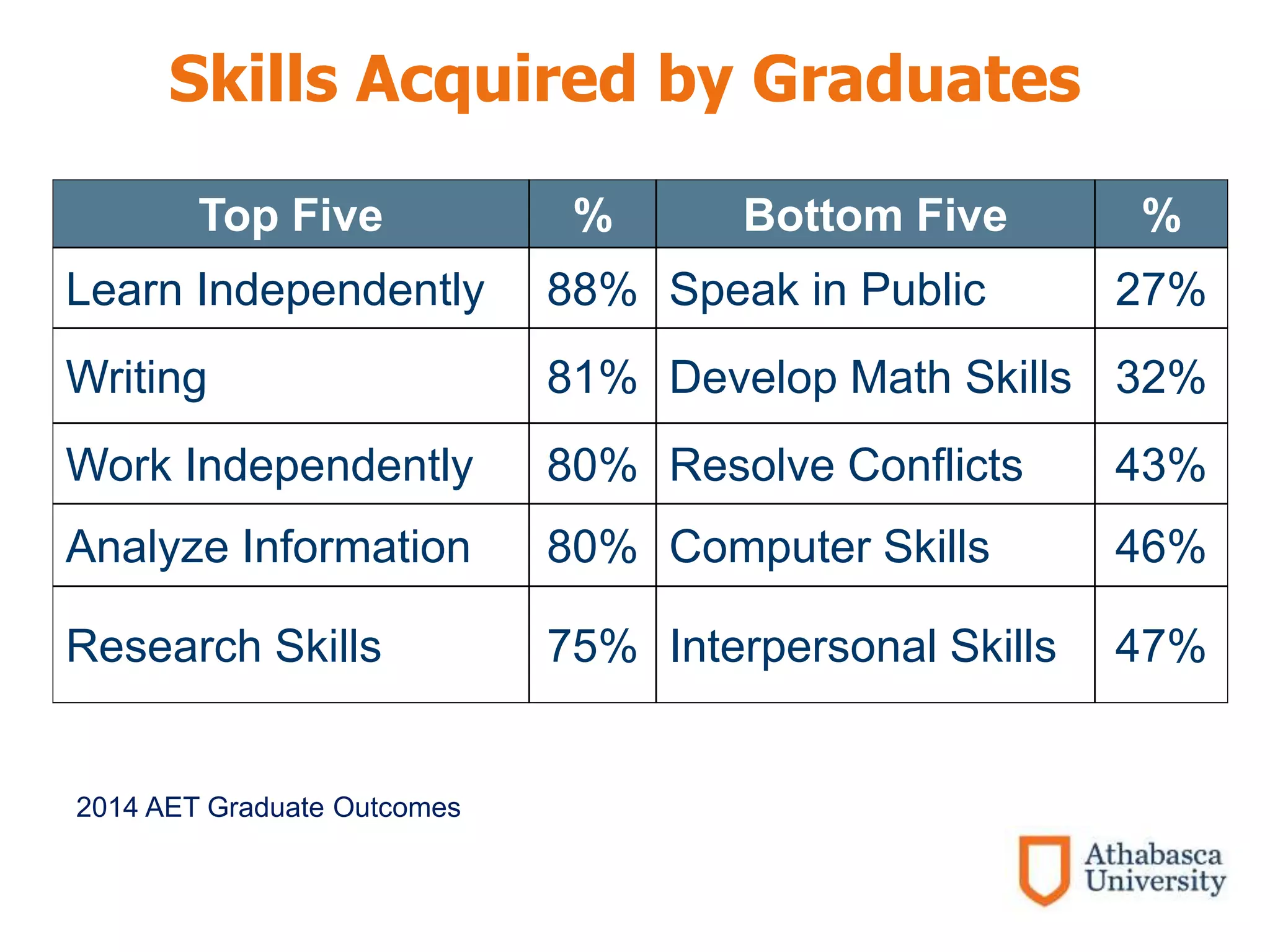
Skills Acquired by Graduates
Top Five % Bottom Five %
Learn Independently 88% Speak in Public 27%
Writing 81% Develop Math Skills 32%
Work Independently 80% Resolve Conflicts 43%
Analyze Information 80% Computer Skills 46%
Research Skills 75% Interpersonal Skills 47%
2014 AET Graduate Outcomes
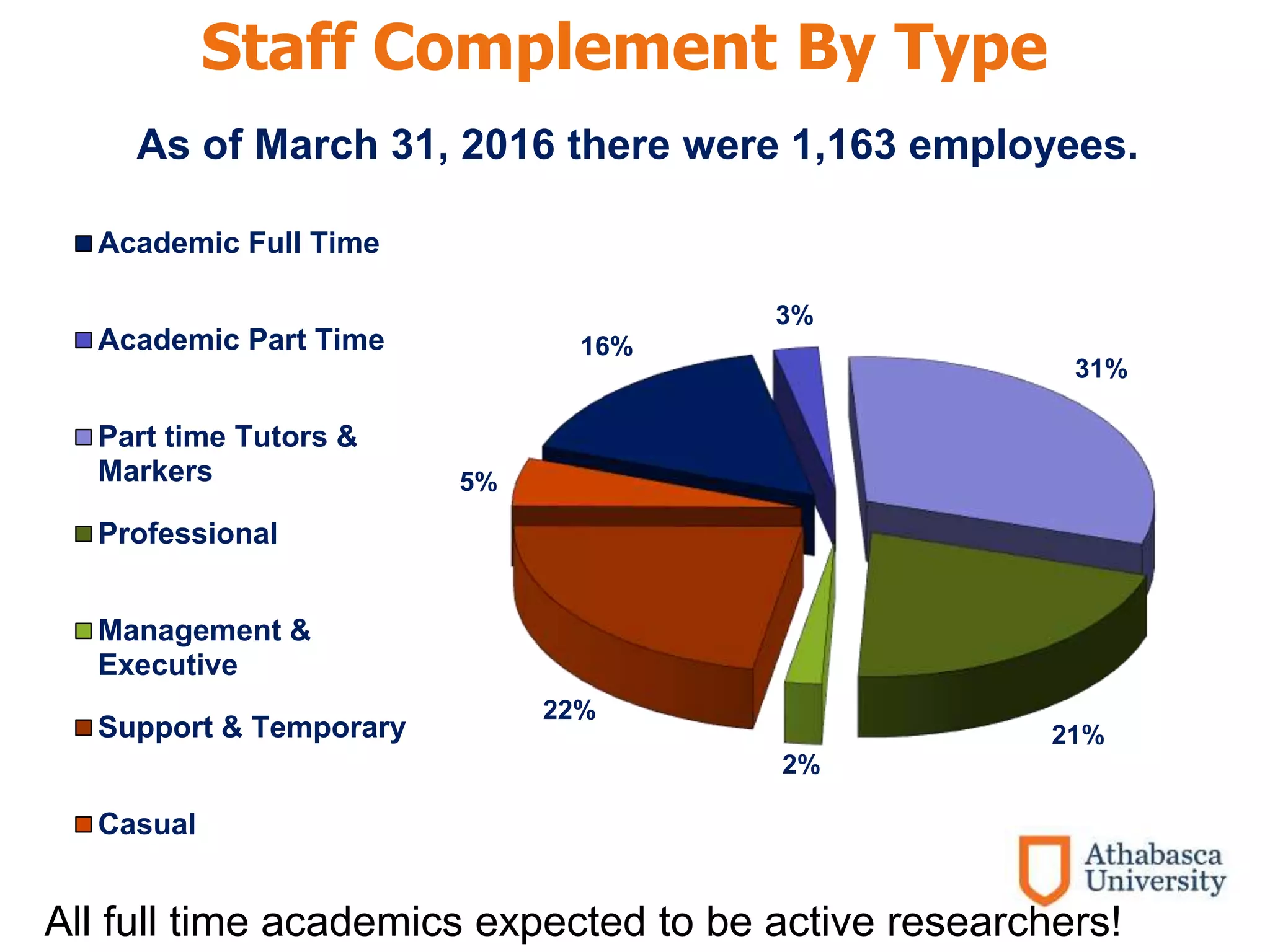
Staff Complement By Type
16%
3%
31%
21%
2%
22%
5%
Academic Full Time
Academic Part Time
Part time Tutors &
Markers
Professional
Management &
Executive
Support & Temporary
Casual
As of March 31, 2016 there were 1,163 employees.
All full time academics expected to be active researchers!
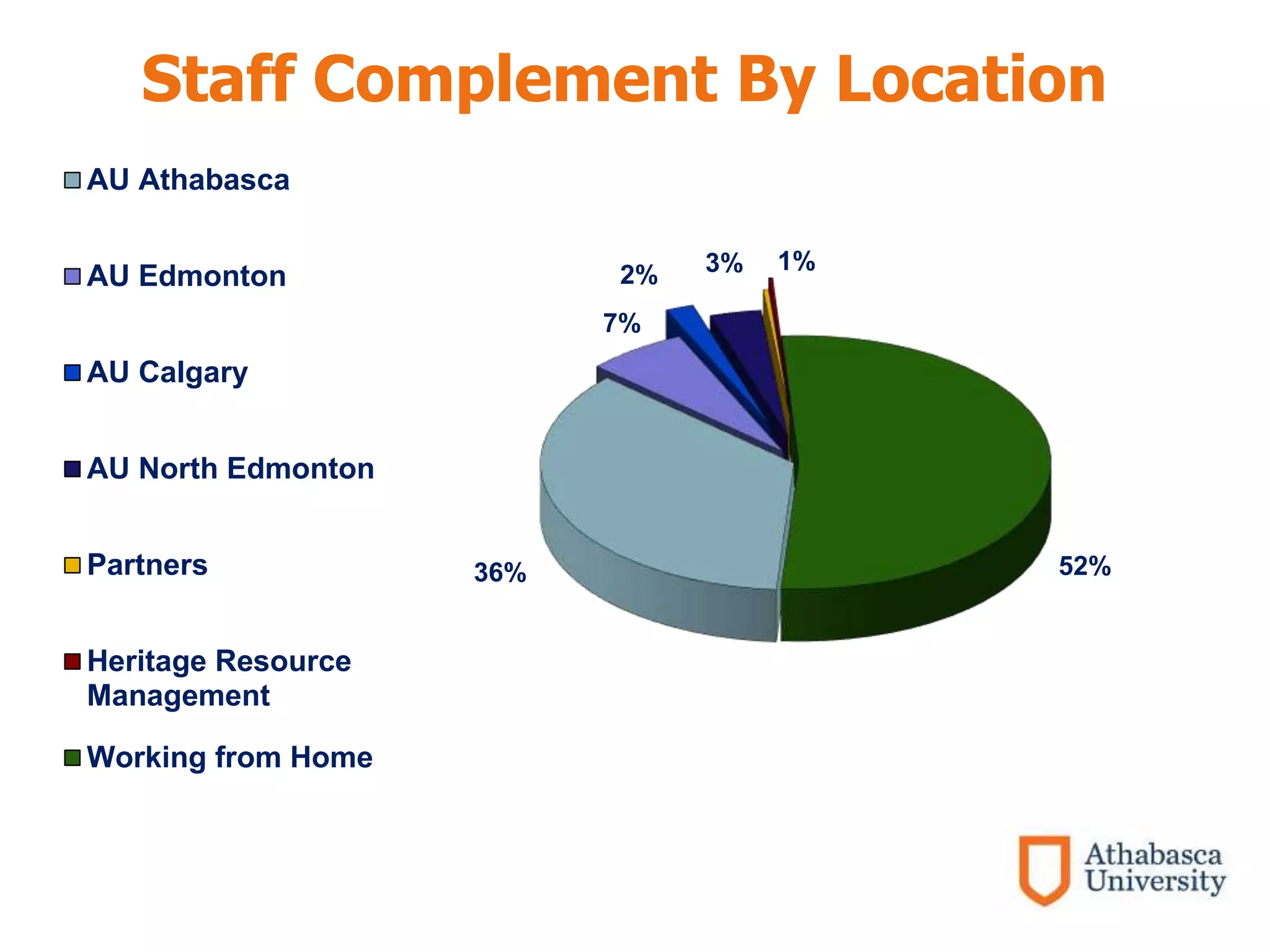
Staff Complement By Location
36%
7%
2% 3% 1%
52%
AU Athabasca
AU Edmonton
AU Calgary
AU North Edmonton
Partners
Heritage Resource
Management
Working from Home
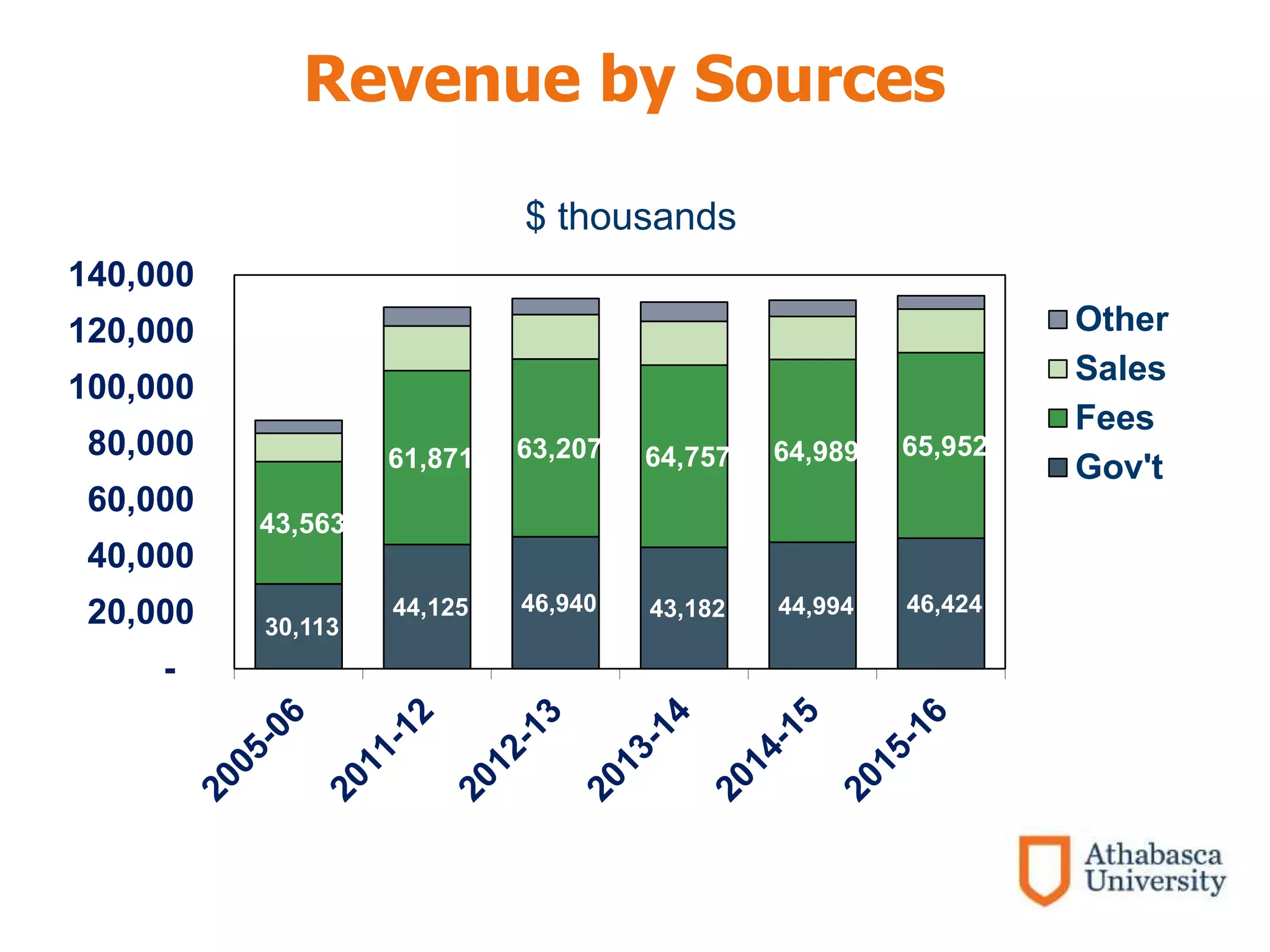
Revenue by Sources
30,113
44,125 46,940 43,182 44,994 46,424
43,563
61,871 63,207 64,757 64,989 65,952
-
20,000
40,000
60,000
80,000
100,000
120,000
140,000
$ thousands
Other
Sales
Fees
Gov't
Part 2 Course Development
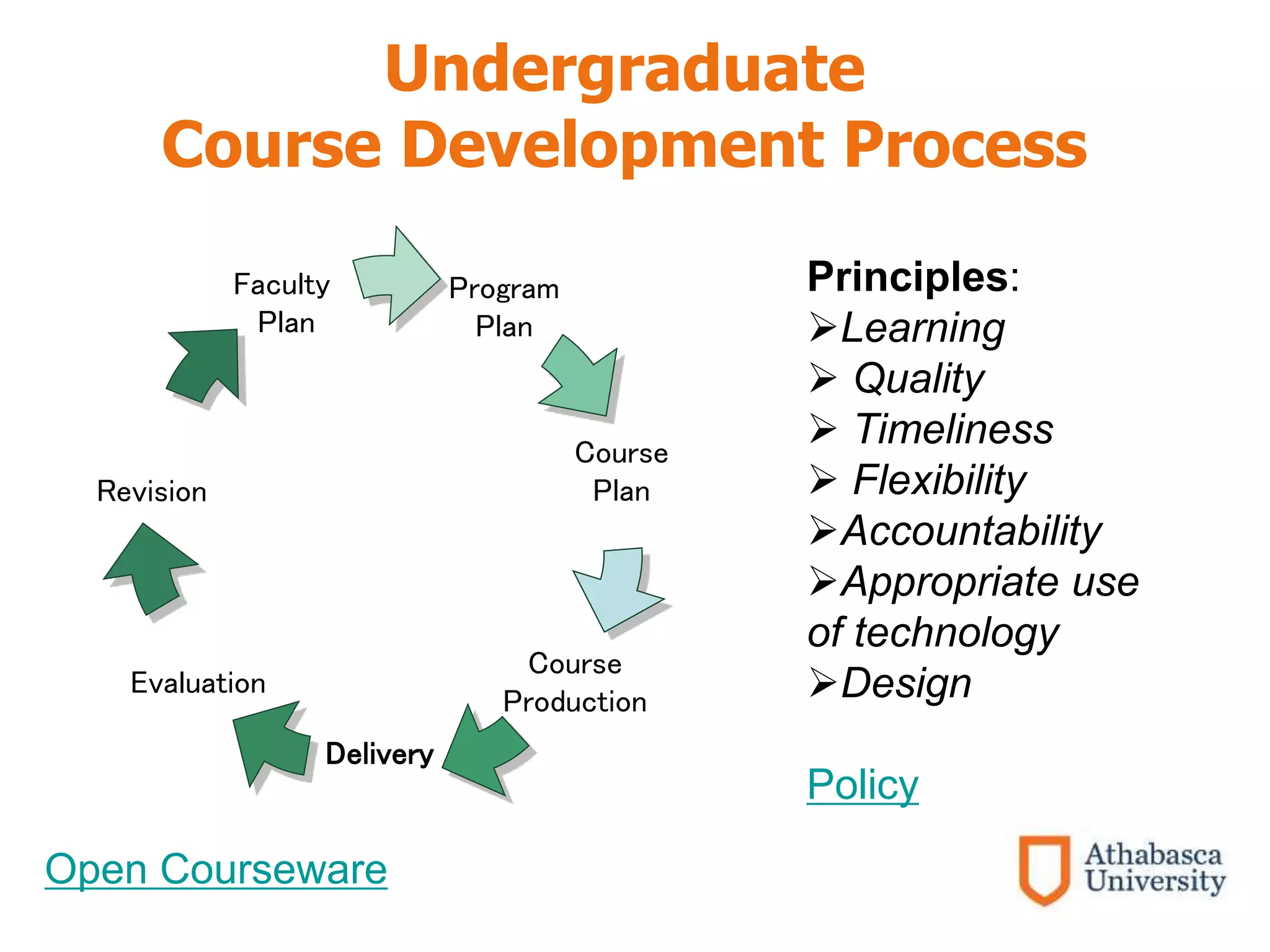
Undergraduate
Course Development Process
Program
Plan
Evaluation
Revision
Course
Plan
Course
Production
Delivery
Faculty
Plan
Open Courseware
Principles:
Learning
 Quality
 Timeliness
 Flexibility
Accountability
Appropriate use
of technology
Design
Policy
Course Team
• Core Team
– Subject Matter expert(s) – professors
– Learning Designer
• Added near end
– Media staff
– Editor
– Peer reviewers
Course Development
• Preparation & Design
– 1. Assess all relevant information
including Open Access Sourcs
a. Review course evaluations
b. Solicit input from instructors, tutors
and learners
c. Review other university offerings.
Review course outcomes in relation to
the overall program. Discuss course
styles and ideas.
Course Development
2. Create course map
• a. Measurable learning outcomes
– i. Collecting measurable learning outcomes and
assigning them to course units
• b. Determine evaluation and assessment tools for the
outcomes
• c. Learning Activities for each unit
• d. Content Topics Determine content needed for each
outcome and unit.
• e. Learning Materials
• f. Team feedback and approval.
Course Development
3. Develop Unit 1
a. Team lead develops first unit based on the
course map and standard requirements provided
by the learning designer.
4. 20% presentation to interested faculty and
instructors
Production
• 5. Continue Unit Development
– a. Incorporate feedback from team and interested faculty
and develop several more units.
• 6. Team Review
– a. Team reviews units and the course map before
approving continued development.
• 7. Develop Remaining Units
• 8. Editor Review
• 9. Evaluation and Assessment Development
a. Evaluation and Assessment development including all
assignments and test instructions.
• 10. 80% presentation
Online production
• 11. Create Moodle Shell
• a. Create unit web pages
• b. Create media
– i. Video and audio
• c. Create graphics
ii. Graphics, photos, animations
• d. Copyright clearances
• e. Create test items
Types of Course Development
1. Major development
• change course title, course aims, course
description, learning outcomes / learning
objectives / competencies
• redesign course structure and assessment
• substantially change the Study Guide (text,
images, figures, tables, multimedia,
interactivity, etc.) and Course Orientation
• transfer course from one media format to
another (e.g., print to online, desktop to
mobile, etc.)
Types of Course Development
2. Minor development
• change questions in assessment: quizzes,
assignments, Lab or projects
• insert new required readings in some units
• for new edition of textbook or eText: change
references to a new edition of the same
textbook or eText in study guide.
Types of Course Development
3. Maintenance
• correct typos, grammar, broken links.
• rewording, clarification, or elaboration
• add or delete items in Supplementary Materials
• replace exam without affecting marking scheme (Note:
Exam unit must be involved)
• open a paced course in a new semester but does not
require any changes to the content or layout
Final Testing
• User testing
• Final proofing
• Syllabus update
Part 3.
Innovations At Athabasca
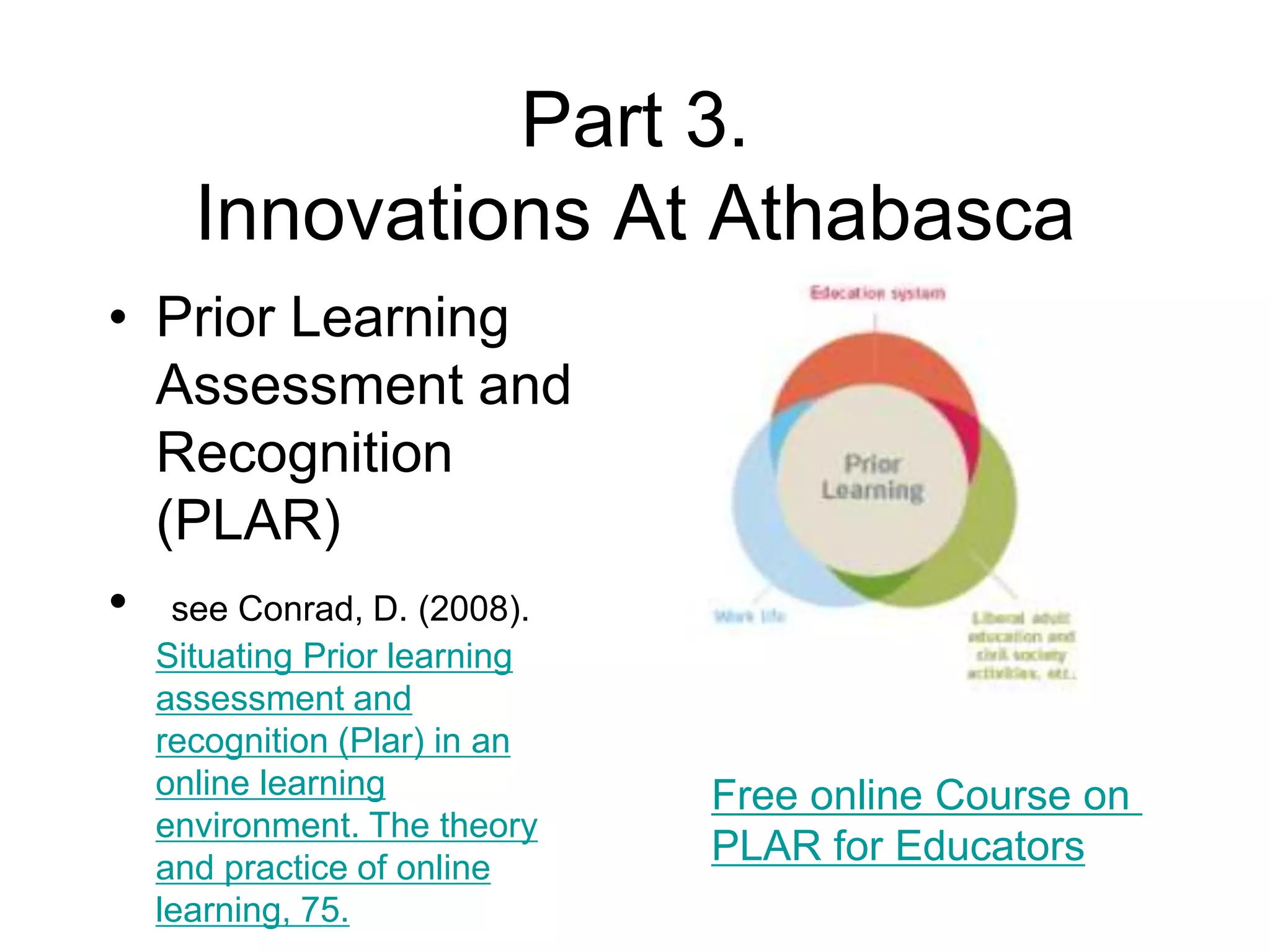
• Prior Learning
Assessment and
Recognition
(PLAR)
• see Conrad, D. (2008).
Situating Prior learning
assessment and
recognition (Plar) in an
online learning
environment. The theory
and practice of online
learning, 75.
Free online Course on
PLAR for Educators
Innovations At Athabasca
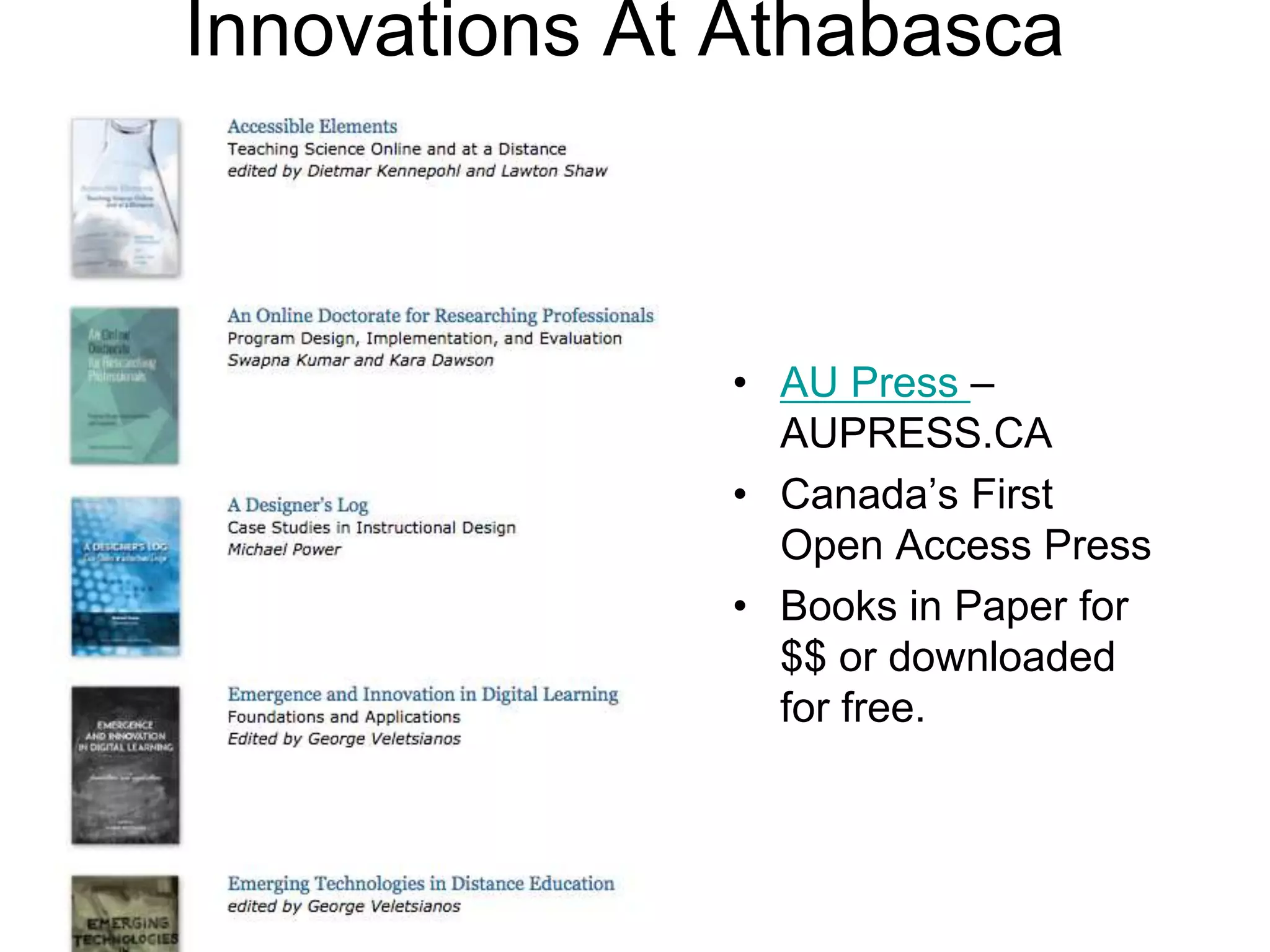
• AU Press –
AUPRESS.CA
• Canada’s First
Open Access Press
• Books in Paper for
$$ or downloaded
for free.
Continuous Enrollment
• Students enroll whenever they want
• Have 6 months to complete course
• Arrange to write test at a learning centre
when they chose
• More freedom and flexibility for students
• Attracts students enrolled in
conventional universities
• Higher drop our rate
• No summer holidays for teachers/tutors
Doctoral Programs -not PHD
Designed for those who
will likely not be
researchers or university
professors.
Designed to help
practitioners make a
major, research-orientated
contribution to a
profession.
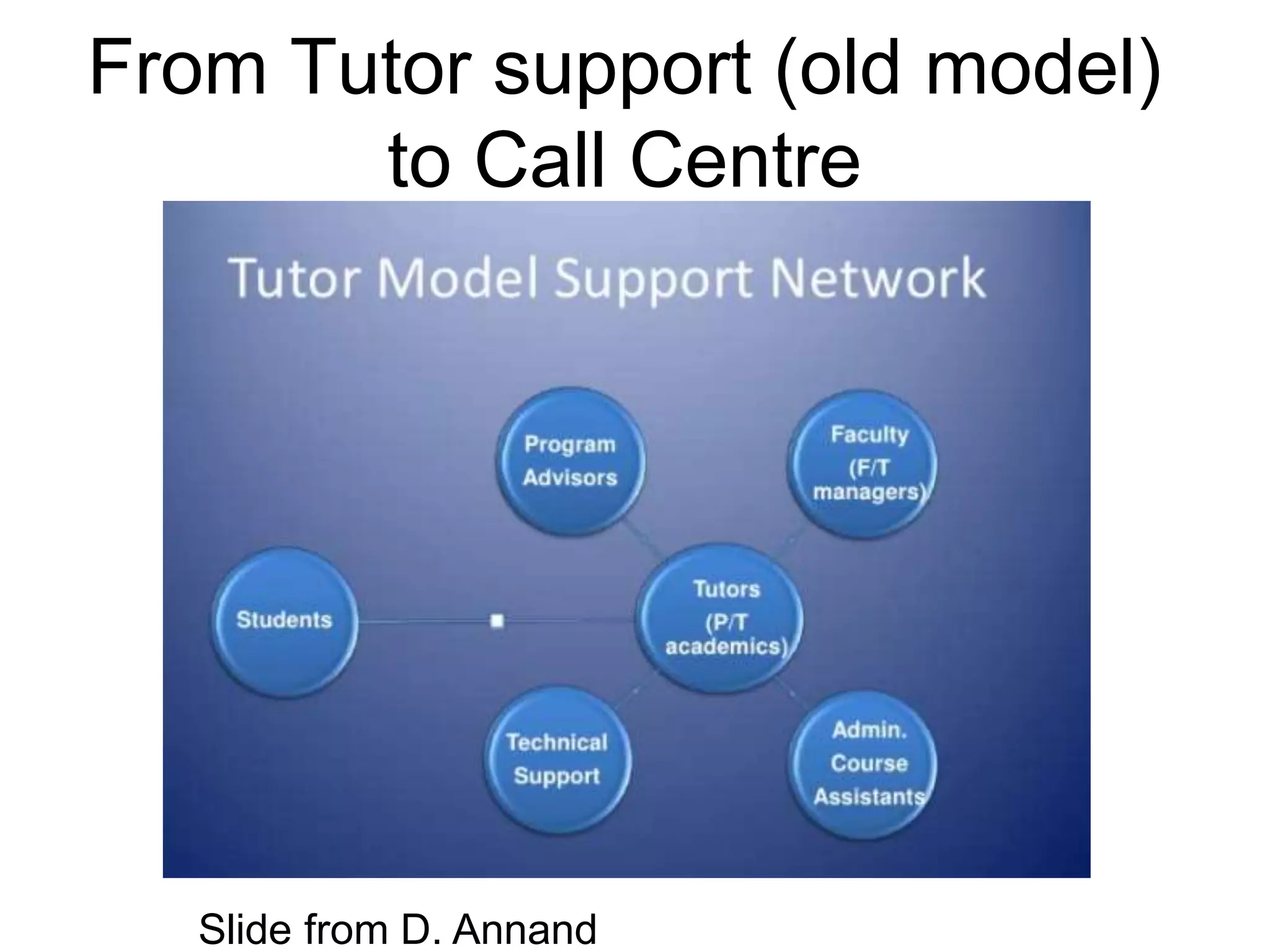
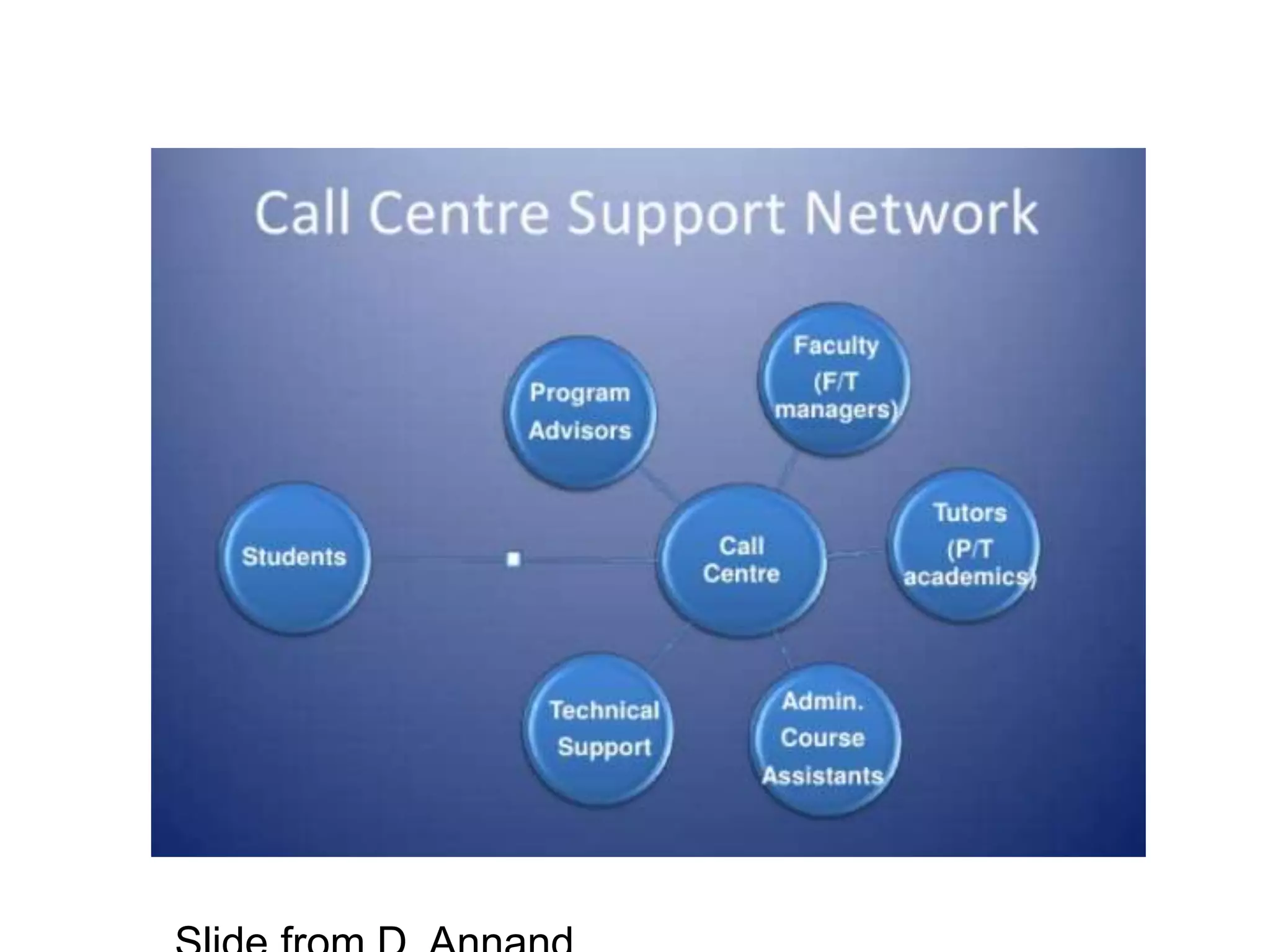
From Tutor support (old model)
to Call Centre
Slide from D. Annand
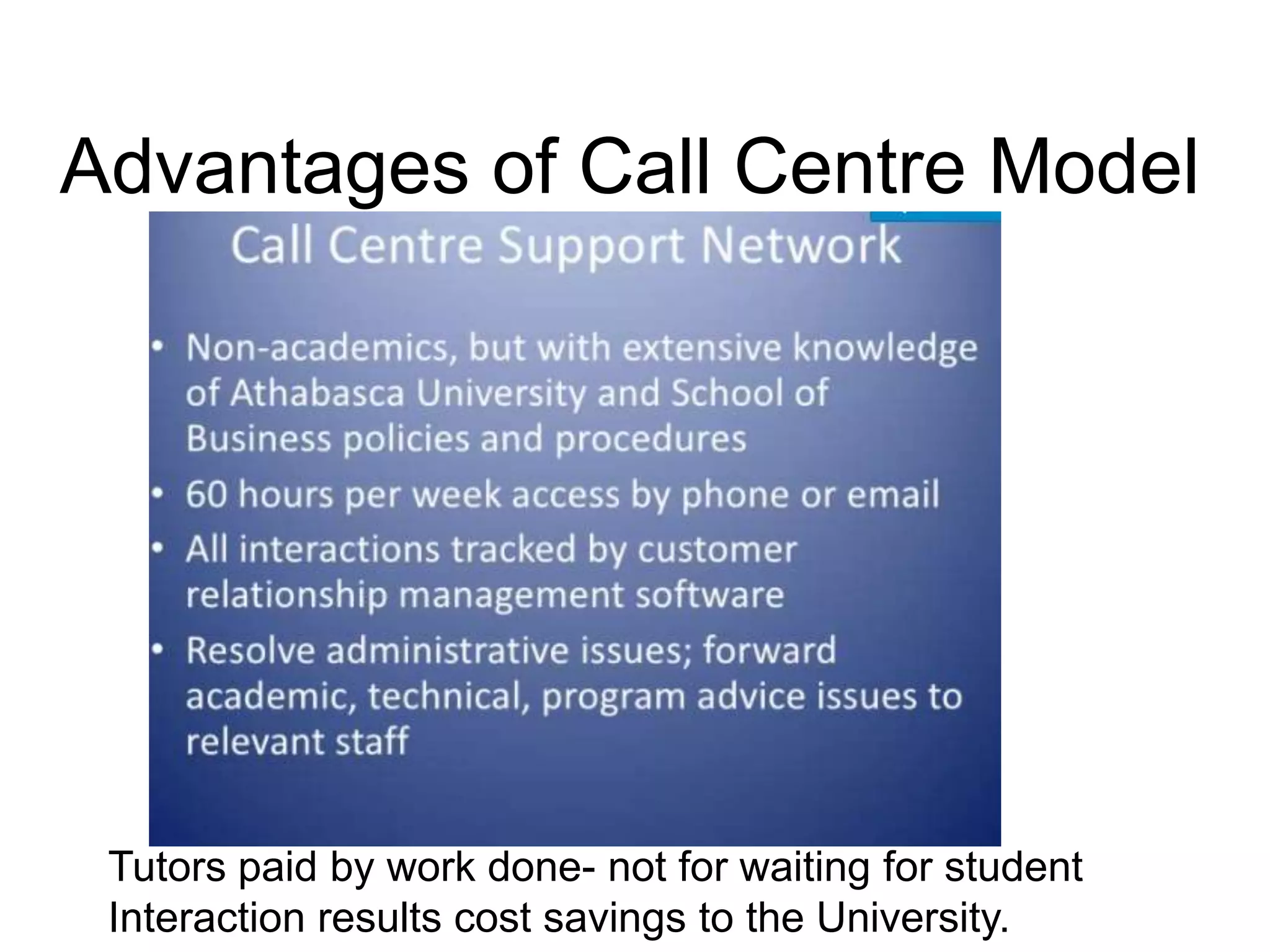
Advantages of Call Centre Model
Tutors paid by work done- not for waiting for student
Interaction results cost savings to the University.
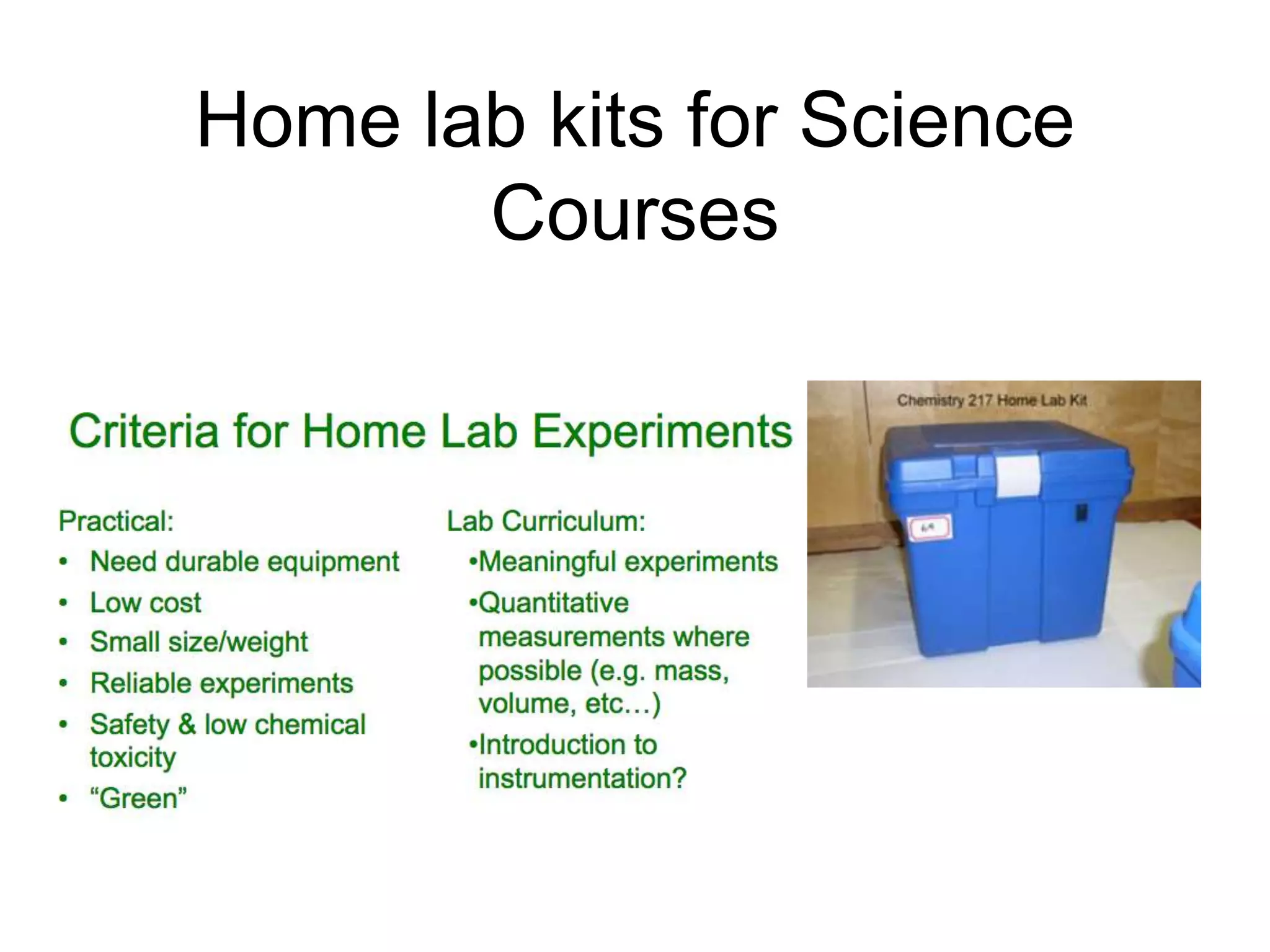
Home lab kits for Science
Courses
IRRODL
• Most widely Cited and widely read Distance Education
Journal in the World
• Only Open Access and SSCI Journal in Distance Education
• Readers, reviewers and contributors needed
• Irrodl.org
Social Network to Create
Community
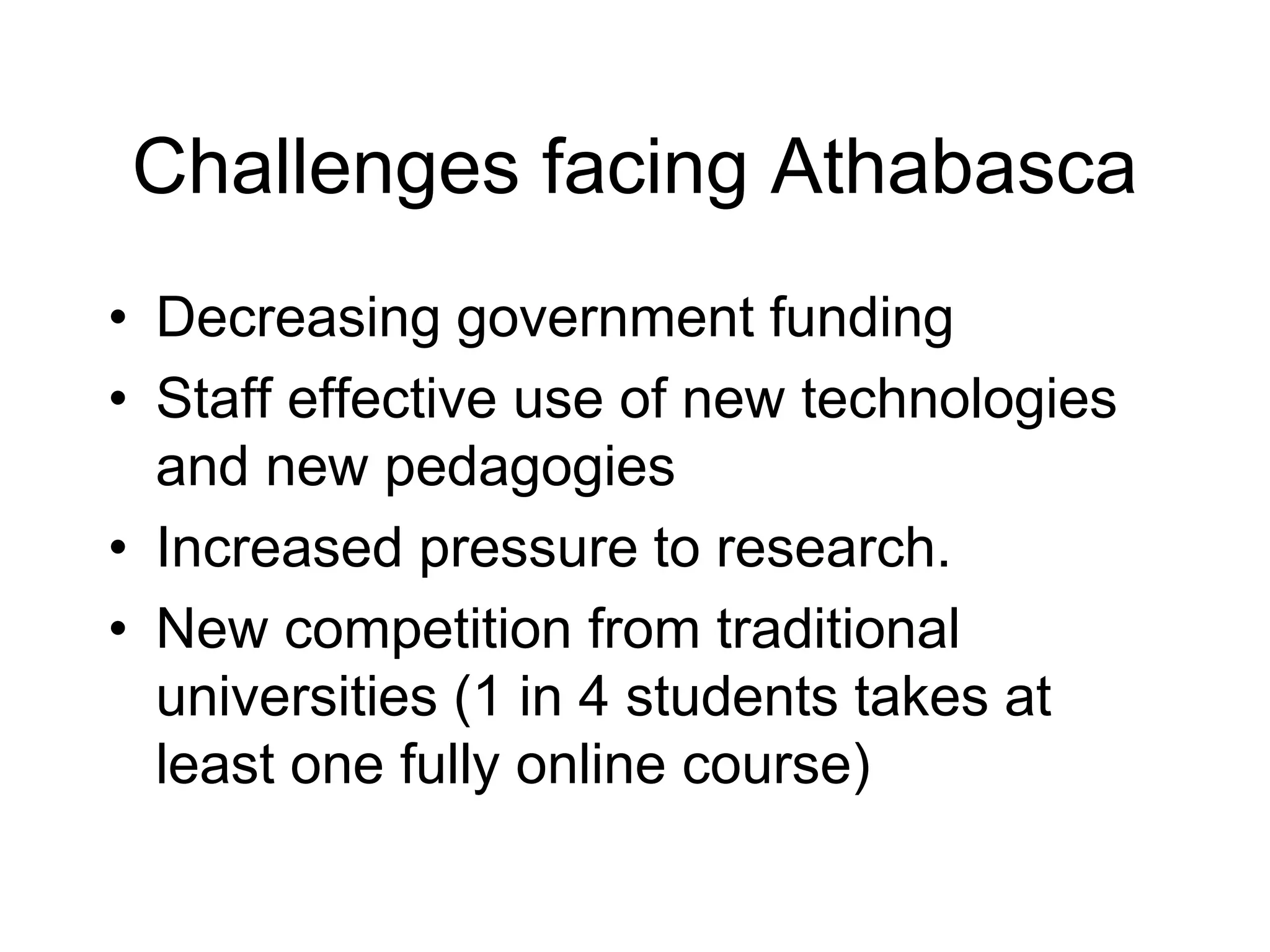
Challenges facing Athabasca
• Decreasing government funding
• Staff effective use of new technologies
and new pedagogies
• Increased pressure to research.
• New competition from traditional
universities (1 in 4 students takes at
least one fully online course)
Terry Anderson terrya@athabascau.ca
Blog: virtualcanuck.ca
Your comments &
questions
most welcomed!

Athabasca Universityoverview Jiangsu Open University, May 2017

  • 1.
    Athabasca University- Canada’s OpenUniversity May 21, 2107 Jiangsu Open University Terry Anderson Professor Emeritus, Athabasca University
  • 2.
    Presentation overview • Introductionto Athabasca University • Course Production Process • Innovations at Athabasca • Your questions and comments
  • 3.
    Mission Athabasca University, Canada’sOpen University, is dedicated to the removal of barriers that restrict access to, and success in, university- level studies and to increasing equality of educational opportunity for adult learners worldwide. We are committed to excellence in teaching, research and scholarship, and to being of service to the general public. rededicated by Athabasca University Board of Governors October 21, 2011
  • 4.
    History 1970 Established byProvince (June 25, 1970) 1973-75 Pilot Project (First Course ‘World Ecology’ Opened in 1973) 1975 Approval in Principle 1978 Permanent Mandate 1984 Relocated to Athabasca
  • 5.
    History 1992 Revised Mandate (MastersPrograms) 2005 First Canadian university regionally accredited in U.S. 2006 EdD approved 2011 Academic & Research Centre opened 2014 Architecture Program opened
  • 6.
  • 7.
    Student Locations inCanada Athabasca University
  • 8.
  • 9.
    Registrations (3 creditequivalents) 56,519 66,023 66,414 68,624 67,759 67,682 7,834 9,617 9,936 9,931 10,020 10,425 0 10,000 20,000 30,000 40,000 50,000 60,000 70,000 80,000 90,000 Graduate Undergraduate
  • 10.
    Undergraduate Age & Gender2015-16 0 2,000 4,000 6,000 8,000 10,000 12,000 Under 25 25 to 34 35 to 44 45 to 64 65 + Female Male
  • 11.
    Graduate Student Age& Gender 0 200 400 600 800 1000 1200 1400 Under 25 25 to 34 35 to 44 45 to 64 65+ Female Male
  • 12.
    Graduate Students byDiscipline Faculty 2013/14 2014/15 2015/ 16 Business 865 834 911 Distance Ed 400 348 431 Health Disciplines 1,919 2,076 2,202 Hum. & Soc. Sciences 653 630 575 Science & Technology 254 238 252
  • 13.
    Convocation – Firsttime students meet each other (F2F) and their professors
  • 14.
  • 15.
    Learner Support Student Support Centres Library Counselling Advising Servicesfor Students with Disabilities Write Site / Math Site Academic support from Tutors – all with PhDs
  • 16.
    Skills Acquired byGraduates Top Five % Bottom Five % Learn Independently 88% Speak in Public 27% Writing 81% Develop Math Skills 32% Work Independently 80% Resolve Conflicts 43% Analyze Information 80% Computer Skills 46% Research Skills 75% Interpersonal Skills 47% 2014 AET Graduate Outcomes
  • 17.
    Staff Complement ByType 16% 3% 31% 21% 2% 22% 5% Academic Full Time Academic Part Time Part time Tutors & Markers Professional Management & Executive Support & Temporary Casual As of March 31, 2016 there were 1,163 employees. All full time academics expected to be active researchers!
  • 18.
    Staff Complement ByLocation 36% 7% 2% 3% 1% 52% AU Athabasca AU Edmonton AU Calgary AU North Edmonton Partners Heritage Resource Management Working from Home
  • 19.
    Revenue by Sources 30,113 44,12546,940 43,182 44,994 46,424 43,563 61,871 63,207 64,757 64,989 65,952 - 20,000 40,000 60,000 80,000 100,000 120,000 140,000 $ thousands Other Sales Fees Gov't
  • 20.
    Part 2 CourseDevelopment
  • 21.
    Undergraduate Course Development Process Program Plan Evaluation Revision Course Plan Course Production Delivery Faculty Plan OpenCourseware Principles: Learning  Quality  Timeliness  Flexibility Accountability Appropriate use of technology Design Policy
  • 22.
    Course Team • CoreTeam – Subject Matter expert(s) – professors – Learning Designer • Added near end – Media staff – Editor – Peer reviewers
  • 23.
    Course Development • Preparation& Design – 1. Assess all relevant information including Open Access Sourcs a. Review course evaluations b. Solicit input from instructors, tutors and learners c. Review other university offerings. Review course outcomes in relation to the overall program. Discuss course styles and ideas.
  • 24.
    Course Development 2. Createcourse map • a. Measurable learning outcomes – i. Collecting measurable learning outcomes and assigning them to course units • b. Determine evaluation and assessment tools for the outcomes • c. Learning Activities for each unit • d. Content Topics Determine content needed for each outcome and unit. • e. Learning Materials • f. Team feedback and approval.
  • 25.
    Course Development 3. DevelopUnit 1 a. Team lead develops first unit based on the course map and standard requirements provided by the learning designer. 4. 20% presentation to interested faculty and instructors
  • 26.
    Production • 5. ContinueUnit Development – a. Incorporate feedback from team and interested faculty and develop several more units. • 6. Team Review – a. Team reviews units and the course map before approving continued development. • 7. Develop Remaining Units • 8. Editor Review • 9. Evaluation and Assessment Development a. Evaluation and Assessment development including all assignments and test instructions. • 10. 80% presentation
  • 27.
    Online production • 11.Create Moodle Shell • a. Create unit web pages • b. Create media – i. Video and audio • c. Create graphics ii. Graphics, photos, animations • d. Copyright clearances • e. Create test items
  • 28.
    Types of CourseDevelopment 1. Major development • change course title, course aims, course description, learning outcomes / learning objectives / competencies • redesign course structure and assessment • substantially change the Study Guide (text, images, figures, tables, multimedia, interactivity, etc.) and Course Orientation • transfer course from one media format to another (e.g., print to online, desktop to mobile, etc.)
  • 29.
    Types of CourseDevelopment 2. Minor development • change questions in assessment: quizzes, assignments, Lab or projects • insert new required readings in some units • for new edition of textbook or eText: change references to a new edition of the same textbook or eText in study guide.
  • 30.
    Types of CourseDevelopment 3. Maintenance • correct typos, grammar, broken links. • rewording, clarification, or elaboration • add or delete items in Supplementary Materials • replace exam without affecting marking scheme (Note: Exam unit must be involved) • open a paced course in a new semester but does not require any changes to the content or layout
  • 31.
    Final Testing • Usertesting • Final proofing • Syllabus update
  • 32.
    Part 3. Innovations AtAthabasca • Prior Learning Assessment and Recognition (PLAR) • see Conrad, D. (2008). Situating Prior learning assessment and recognition (Plar) in an online learning environment. The theory and practice of online learning, 75. Free online Course on PLAR for Educators
  • 33.
    Innovations At Athabasca •AU Press – AUPRESS.CA • Canada’s First Open Access Press • Books in Paper for $$ or downloaded for free.
  • 34.
    Continuous Enrollment • Studentsenroll whenever they want • Have 6 months to complete course • Arrange to write test at a learning centre when they chose • More freedom and flexibility for students • Attracts students enrolled in conventional universities • Higher drop our rate • No summer holidays for teachers/tutors
  • 35.
    Doctoral Programs -notPHD Designed for those who will likely not be researchers or university professors. Designed to help practitioners make a major, research-orientated contribution to a profession.
  • 36.
    From Tutor support(old model) to Call Centre Slide from D. Annand
  • 38.
    Advantages of CallCentre Model Tutors paid by work done- not for waiting for student Interaction results cost savings to the University.
  • 39.
    Home lab kitsfor Science Courses
  • 40.
    IRRODL • Most widelyCited and widely read Distance Education Journal in the World • Only Open Access and SSCI Journal in Distance Education • Readers, reviewers and contributors needed • Irrodl.org
  • 41.
    Social Network toCreate Community
  • 42.
    Challenges facing Athabasca •Decreasing government funding • Staff effective use of new technologies and new pedagogies • Increased pressure to research. • New competition from traditional universities (1 in 4 students takes at least one fully online course)
  • 43.
    Terry Anderson terrya@athabascau.ca Blog:virtualcanuck.ca Your comments & questions most welcomed!