Quality Online Teaching and
Learning - Is it really different than
campus-based education?
Terry Anderson, PhD
Professor Emeritus
Athabasca University, Canada
Conferencia Red MECDL (UNAM, UADY, UABC)
Tijauna, Mexico
Sept 27, 2016
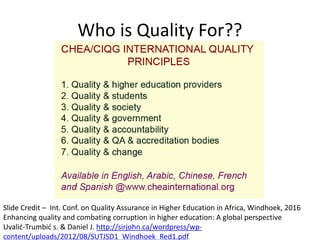
Who is Quality For??
Slide Credit – Int. Conf. on Quality Assurance in Higher Education in Africa, Windhoek, 2016
Enhancing quality and combating corruption in higher education: A global perspective
Uvalić-Trumbić s. & Daniel J. http://sirjohn.ca/wordpress/wp-
content/uploads/2012/08/SUTJSD1_Windhoek_Red1.pdf
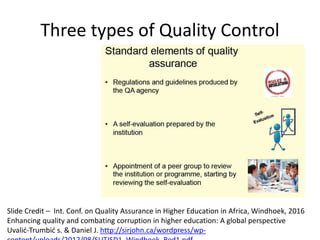
Three types of Quality Control
Slide Credit – Int. Conf. on Quality Assurance in Higher Education in Africa, Windhoek, 2016
Enhancing quality and combating corruption in higher education: A global perspective
Uvalić-Trumbić s. & Daniel J. http://sirjohn.ca/wordpress/wp-
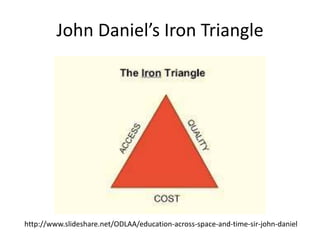
John Daniel’s Iron Triangle
http://www.slideshare.net/ODLAA/education-across-space-and-time-sir-john-daniel
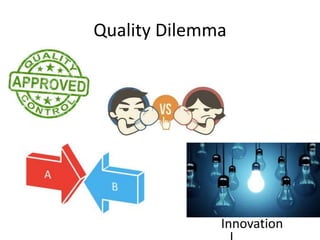
Quality Dilemma
Innovation
Example
Quality Depends on Learning Design
Quality Depends on Pedagogy
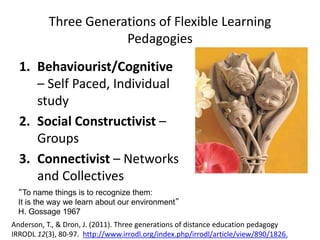
Three Generations of Flexible Learning
Pedagogies
1. Behaviourist/Cognitive
– Self Paced, Individual
study
2. Social Constructivist –
Groups
3. Connectivist – Networks
and Collectives
“To name things is to recognize them:
It is the way we learn about our environment”
H. Gossage 1967
Anderson, T., & Dron, J. (2011). Three generations of distance education pedagogy
IRRODL 12(3), 80-97. http://www.irrodl.org/index.php/irrodl/article/view/890/1826.
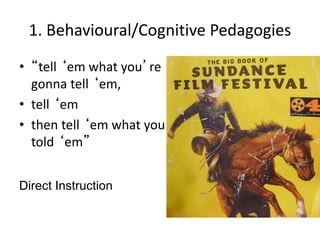
1. Behavioural/Cognitive Pedagogies
• “tell ‘em what you’re
gonna tell ‘em,
• tell ‘em
• then tell ‘em what you
told ‘em”
Direct Instruction
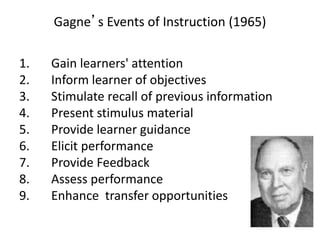
Gagne’s Events of Instruction (1965)
1. Gain learners' attention
2. Inform learner of objectives
3. Stimulate recall of previous information
4. Present stimulus material
5. Provide learner guidance
6. Elicit performance
7. Provide Feedback
8. Assess performance
9. Enhance transfer opportunities
Enhanced by the “cognitive revolution”
• Chunking
• Cognitive Load
• Working Memory
• Multiple Representations
• Split-attention effect
• Variability Effect
• Multi-media effect
– (Sorden, 2005)
“learning as acquiring and using conceptual and cognitive
structures” Greeno, Collins and Resnick, 1996
Focus is on the Content and the
Individual Learner
Nature of Knowledge
• Knowledge is logically coherent, existing
independent of perspective
• Context free
• Capable of being transmitted
• Assumes closed systems with discoverable
relationships between inputs and outputs
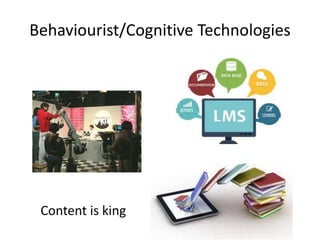
Behaviourist/Cognitive Technologies
Content is king
• What are quality indicators for cognitive-
behavioral generation e-learning?
Quality is
• Clearness of presentation
• Logical sequence of events
• Timely and accurate feedback
• Clear instructions and activities
• Rubrics and transparent assessment
1st Generation,
Cognitive Behavioural Pedagogy
Summary
• Scalable
• Few requirements, or opportunities, for social
learning
• Works most efficiently with individual learning
models
• Effective and efficient for some types of
learning
• Have we really taught learners to succeed with
this type of learning?
18
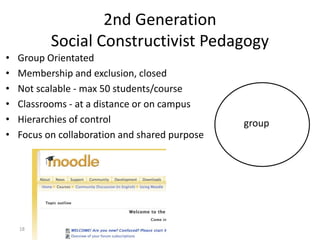
2nd Generation
Social Constructivist Pedagogy
• Group Orientated
• Membership and exclusion, closed
• Not scalable - max 50 students/course
• Classrooms - at a distance or on campus
• Hierarchies of control
• Focus on collaboration and shared purpose
group
Constructivist Knowledge is:
• Knowledge is constructed, not transmitted
• Arrived at through dialogic encounters
(Bakhtin,) - the presence of others adds
motivation, conflicting ideas, social validation
• Teacher as group facilitator
“Dialogic as an epistemological framework supports an account of
education as the discursive construction of shared knowledge”
Wegerif, R.
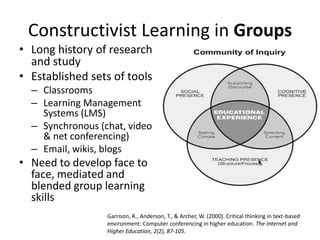
Constructivist Learning in Groups
• Long history of research
and study
• Established sets of tools
– Classrooms
– Learning Management
Systems (LMS)
– Synchronous (chat, video
& net conferencing)
– Email, wikis, blogs
• Need to develop face to
face, mediated and
blended group learning
skills
Garrison, R., Anderson, T., & Archer, W. (2000). Critical thinking in text-based
environment: Computer conferencing in higher education. The Internet and
Higher Education, 2(2), 87-105.
• What is quality in social constructivist
pedagogy based courses?
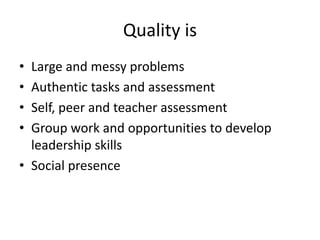
Quality is
• Large and messy problems
• Authentic tasks and assessment
• Self, peer and teacher assessment
• Group work and opportunities to develop
leadership skills
• Social presence
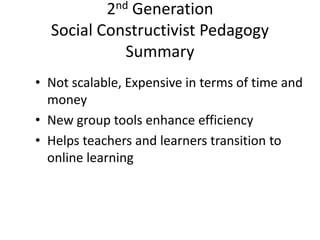
2nd Generation
Social Constructivist Pedagogy
Summary
• Not scalable, Expensive in terms of time and
money
• New group tools enhance efficiency
• Helps teachers and learners transition to
online learning
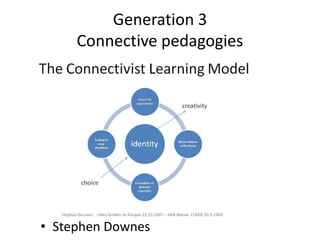
Generation 3
Connective pedagogies
• Stephen Downes
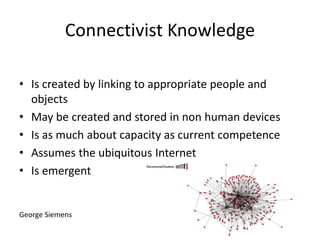
Connectivist Knowledge
• Is created by linking to appropriate people and
objects
• May be created and stored in non human devices
• Is as much about capacity as current competence
• Assumes the ubiquitous Internet
• Is emergent
George Siemens
Connectivism
• “connectivism is the thesis that knowledge is
distributed across a network of connections,
and therefore that learning consists of the
ability to construct and traverse those
networks.” Stephen Downes 2007
See special issue of
IRRODL.org
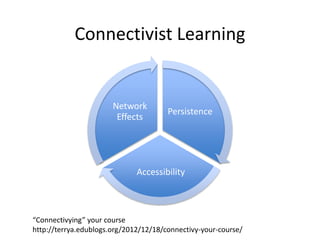
Connectivist Learning
Persistence
Accessibility
Network
Effects
“Connectivying” your course
http://terrya.edublogs.org/2012/12/18/connectivy-your-course/
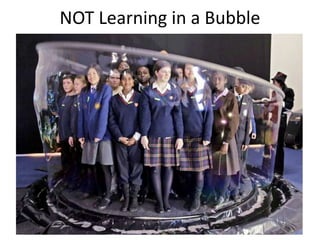
NOT Learning in a Bubble
Disruptions of Connectivism
• Demands net literacy and net
presence of students and
teachers
• Openness is scary
• New roles for teachers and
students
• Artifact ownership,
persistence and privacy
• Too manic for some
Connectivity Quality is
• Building and sharing of artifacts
• Developing and assessing new networks
• Critically evaluating resources
• Global activities and challenges
Quality Control needs to align with:
• State Authority expectation
• Pedagogical consistency
• Teacher time
• Need for innovation
• Community of educators, parents and
students within which it is imposed.
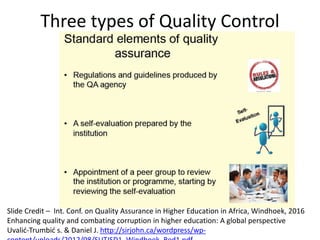
Three types of Quality Control
Slide Credit – Int. Conf. on Quality Assurance in Higher Education in Africa, Windhoek, 2016
Enhancing quality and combating corruption in higher education: A global perspective
Uvalić-Trumbić s. & Daniel J. http://sirjohn.ca/wordpress/wp-
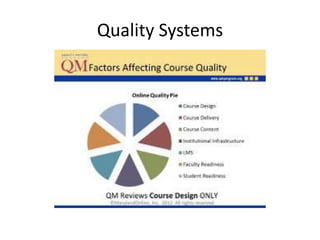
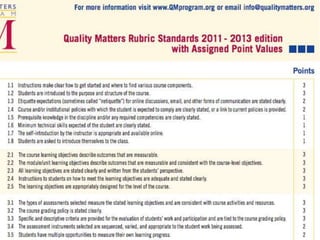
Quality Systems
Quality Online Teaching
and Learning –
Is it really different than
campus based education?
Terry Anderson terrya@athabascau.ca
Blog: terrya.edublogs.org
Your comments &
questions
most welcomed!

Online quality Mexico

  • 1.
    Quality Online Teachingand Learning - Is it really different than campus-based education? Terry Anderson, PhD Professor Emeritus Athabasca University, Canada Conferencia Red MECDL (UNAM, UADY, UABC) Tijauna, Mexico Sept 27, 2016
  • 2.
    Who is QualityFor?? Slide Credit – Int. Conf. on Quality Assurance in Higher Education in Africa, Windhoek, 2016 Enhancing quality and combating corruption in higher education: A global perspective Uvalić-Trumbić s. & Daniel J. http://sirjohn.ca/wordpress/wp- content/uploads/2012/08/SUTJSD1_Windhoek_Red1.pdf
  • 3.
    Three types ofQuality Control Slide Credit – Int. Conf. on Quality Assurance in Higher Education in Africa, Windhoek, 2016 Enhancing quality and combating corruption in higher education: A global perspective Uvalić-Trumbić s. & Daniel J. http://sirjohn.ca/wordpress/wp-
  • 4.
    John Daniel’s IronTriangle http://www.slideshare.net/ODLAA/education-across-space-and-time-sir-john-daniel
  • 5.
  • 6.
  • 7.
  • 8.
    Three Generations ofFlexible Learning Pedagogies 1. Behaviourist/Cognitive – Self Paced, Individual study 2. Social Constructivist – Groups 3. Connectivist – Networks and Collectives “To name things is to recognize them: It is the way we learn about our environment” H. Gossage 1967 Anderson, T., & Dron, J. (2011). Three generations of distance education pedagogy IRRODL 12(3), 80-97. http://www.irrodl.org/index.php/irrodl/article/view/890/1826.
  • 9.
    1. Behavioural/Cognitive Pedagogies •“tell ‘em what you’re gonna tell ‘em, • tell ‘em • then tell ‘em what you told ‘em” Direct Instruction
  • 10.
    Gagne’s Events ofInstruction (1965) 1. Gain learners' attention 2. Inform learner of objectives 3. Stimulate recall of previous information 4. Present stimulus material 5. Provide learner guidance 6. Elicit performance 7. Provide Feedback 8. Assess performance 9. Enhance transfer opportunities
  • 11.
    Enhanced by the“cognitive revolution” • Chunking • Cognitive Load • Working Memory • Multiple Representations • Split-attention effect • Variability Effect • Multi-media effect – (Sorden, 2005) “learning as acquiring and using conceptual and cognitive structures” Greeno, Collins and Resnick, 1996
  • 12.
    Focus is onthe Content and the Individual Learner
  • 13.
    Nature of Knowledge •Knowledge is logically coherent, existing independent of perspective • Context free • Capable of being transmitted • Assumes closed systems with discoverable relationships between inputs and outputs
  • 14.
  • 15.
    • What arequality indicators for cognitive- behavioral generation e-learning?
  • 16.
    Quality is • Clearnessof presentation • Logical sequence of events • Timely and accurate feedback • Clear instructions and activities • Rubrics and transparent assessment
  • 17.
    1st Generation, Cognitive BehaviouralPedagogy Summary • Scalable • Few requirements, or opportunities, for social learning • Works most efficiently with individual learning models • Effective and efficient for some types of learning • Have we really taught learners to succeed with this type of learning?
  • 18.
    18 2nd Generation Social ConstructivistPedagogy • Group Orientated • Membership and exclusion, closed • Not scalable - max 50 students/course • Classrooms - at a distance or on campus • Hierarchies of control • Focus on collaboration and shared purpose group
  • 19.
    Constructivist Knowledge is: •Knowledge is constructed, not transmitted • Arrived at through dialogic encounters (Bakhtin,) - the presence of others adds motivation, conflicting ideas, social validation • Teacher as group facilitator “Dialogic as an epistemological framework supports an account of education as the discursive construction of shared knowledge” Wegerif, R.
  • 20.
    Constructivist Learning inGroups • Long history of research and study • Established sets of tools – Classrooms – Learning Management Systems (LMS) – Synchronous (chat, video & net conferencing) – Email, wikis, blogs • Need to develop face to face, mediated and blended group learning skills Garrison, R., Anderson, T., & Archer, W. (2000). Critical thinking in text-based environment: Computer conferencing in higher education. The Internet and Higher Education, 2(2), 87-105.
  • 21.
    • What isquality in social constructivist pedagogy based courses?
  • 22.
    Quality is • Largeand messy problems • Authentic tasks and assessment • Self, peer and teacher assessment • Group work and opportunities to develop leadership skills • Social presence
  • 23.
    2nd Generation Social ConstructivistPedagogy Summary • Not scalable, Expensive in terms of time and money • New group tools enhance efficiency • Helps teachers and learners transition to online learning
  • 24.
  • 25.
    Connectivist Knowledge • Iscreated by linking to appropriate people and objects • May be created and stored in non human devices • Is as much about capacity as current competence • Assumes the ubiquitous Internet • Is emergent George Siemens
  • 26.
    Connectivism • “connectivism isthe thesis that knowledge is distributed across a network of connections, and therefore that learning consists of the ability to construct and traverse those networks.” Stephen Downes 2007 See special issue of IRRODL.org
  • 27.
    Connectivist Learning Persistence Accessibility Network Effects “Connectivying” yourcourse http://terrya.edublogs.org/2012/12/18/connectivy-your-course/
  • 28.
  • 29.
    Disruptions of Connectivism •Demands net literacy and net presence of students and teachers • Openness is scary • New roles for teachers and students • Artifact ownership, persistence and privacy • Too manic for some
  • 30.
    Connectivity Quality is •Building and sharing of artifacts • Developing and assessing new networks • Critically evaluating resources • Global activities and challenges
  • 31.
    Quality Control needsto align with: • State Authority expectation • Pedagogical consistency • Teacher time • Need for innovation • Community of educators, parents and students within which it is imposed.
  • 32.
    Three types ofQuality Control Slide Credit – Int. Conf. on Quality Assurance in Higher Education in Africa, Windhoek, 2016 Enhancing quality and combating corruption in higher education: A global perspective Uvalić-Trumbić s. & Daniel J. http://sirjohn.ca/wordpress/wp-
  • 33.
  • 35.
    Quality Online Teaching andLearning – Is it really different than campus based education?
  • 36.
    Terry Anderson terrya@athabascau.ca Blog:terrya.edublogs.org Your comments & questions most welcomed!