
Learning Forward Annual Conference 
DECEMBER 2014 
PROFESSIONAL LEARNING 
WITH SOCIAL MEDIA
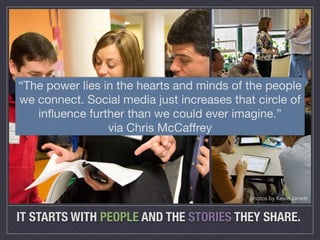
“The power lies in the hearts and minds of the people 
we connect. Social media just increases that circle of 
influence further than we could ever imagine.” 
via Chris McCaffrey 
photos by Kevin Jarrett 
IT STARTS WITH PEOPLE AND THE STORIES THEY SHARE.
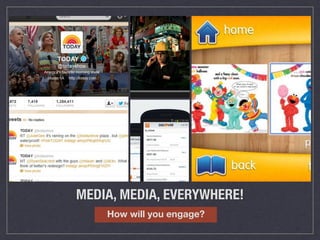
MEDIA, MEDIA, EVERYWHERE! 
How will you engage?
The Shift 
Exponential access to 
information and the need to 
evaluate critically 
Digital tools readily available 
Movement from banning 
tools to embracing social 
media 
The rise of the connected 
educator
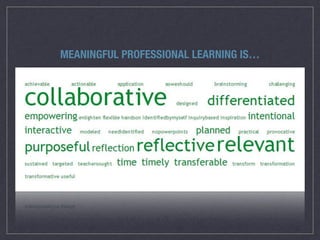
MEANINGFUL PROFESSIONAL LEARNING IS…
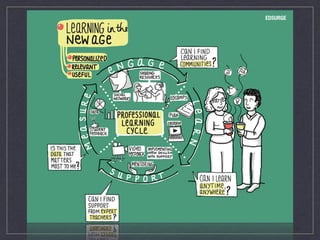
EDSURGE
“Technology is rapidly enhancing and extending 
opportunities for professional learning. It 
particularly facilitates access to, sharing, 
construction, and analysis of information to 
enhance practice. Technology exponentially 
increases possibilities for personalizing, 
differentiating, and deepening learning, 
especially for educators who have limited access 
to on-site professional learning or who are eager 
to reach beyond the boundaries of their own work 
setting to join local or global networks to enrich 
their learning.” 
Learning Forward (2012)
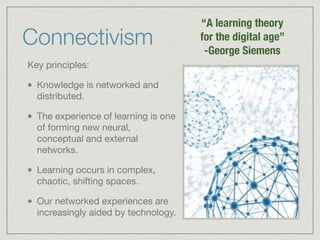
“A learning theory 
for the digital age” 
-George Siemens 
Connectivism 
Key principles: 
Knowledge is networked and 
distributed. 
The experience of learning is one 
of forming new neural, 
conceptual and external 
networks. 
Learning occurs in complex, 
chaotic, shifting spaces. 
Our networked experiences are 
increasingly aided by technology. http://www.connectivism.ca/about.html
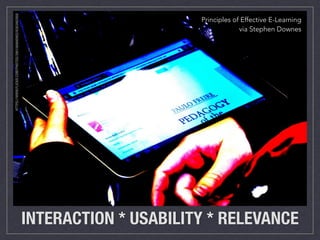
Principles of Effective E-Learning 
via Stephen Downes 
INTERACTION * USABILITY * RELEVANCE 
HTTPS://WWW.FLICKR.COM/PHOTOS/39015696@N02/6383462959
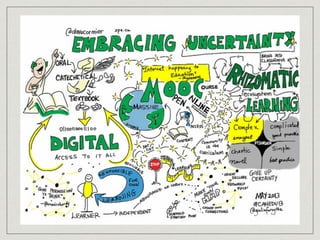
Rhizomatic Learning 
“In the rhizomatic model of learning, curriculum is not 
driven by predefined inputs from experts; 
it is constructed and negotiated in real time by the 
contributions of those engaged in the learning process. 
This community acts as the curriculum, spontaneously 
shaping, constructing, and reconstructing itself and the 
subject of its learning in the same way that the rhizome 
responds to changing environmental conditions.” 
Dave Cormier (2008)
Guilia Forsythe via Flickr
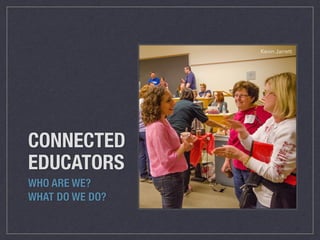
CONNECTED 
EDUCATORS 
WHO ARE WE? 
WHAT DO WE DO? 
Kevin Jarrett
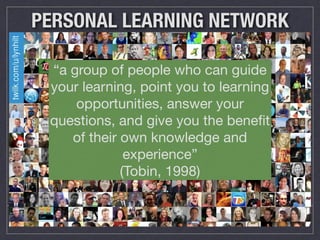
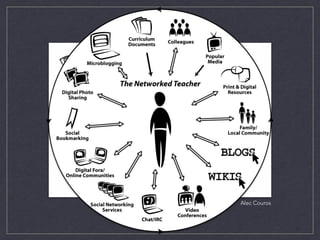
PERSONAL LEARNING NETWORK 
“a group of people who can guide 
your learning, point you to learning 
opportunities, answer your 
questions, and give you the benefit 
of their own knowledge and 
experience” 
(Tobin, 1998)
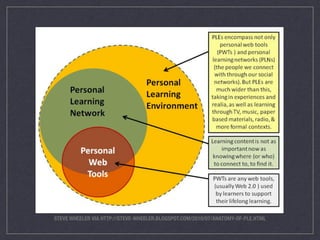
STEVE WHEELER VIA HTTP://STEVE-WHEELER.BLOGSPOT.COM/2010/07/ANATOMY-OF-PLE.HTML
Alec Couros
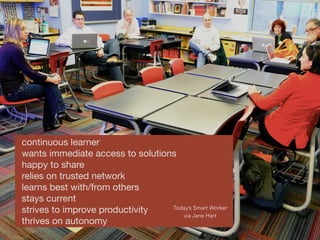
continuous learner 
wants immediate access to solutions 
happy to share 
relies on trusted network 
learns best with/from others 
stays current 
strives to improve productivity 
thrives on autonomy 
Today’s Smart Worker 
via Jane Hart
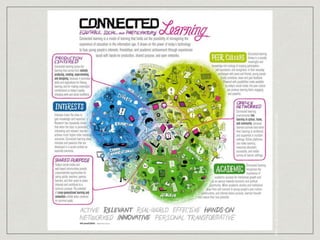
http://jrichard64.files.wordpress.com/2012/05/connectedlearninginfo.jpeg
Why social media? 
Learner first 
Promotes collaboration and establishes 
relationships through connections 
Reflective 
Timely and relevant 
Practical and available
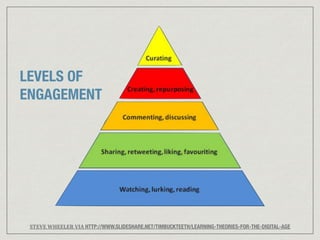
LEVELS OF 
ENGAGEMENT 
STEVE 
WHEELER 
VIA 
HTTP://WWW.SLIDESHARE.NET/TIMBUCKTEETH/LEARNING-THEORIES-FOR-THE-DIGITAL-AGE
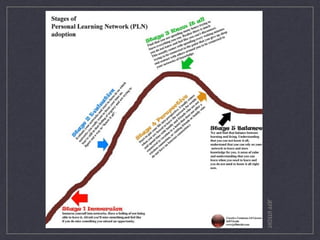
JEFF UTECHT
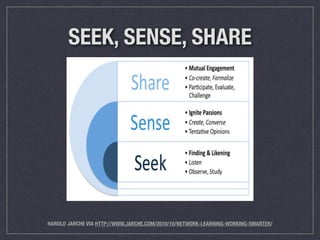
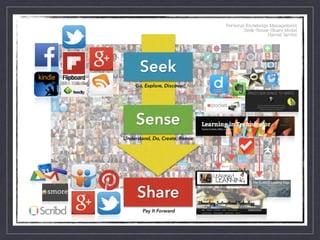
SEEK, SENSE, SHARE 
HAROLD JARCHE VIA HTTP://WWW.JARCHE.COM/2010/10/NETWORK-LEARNING-WORKING-SMARTER/
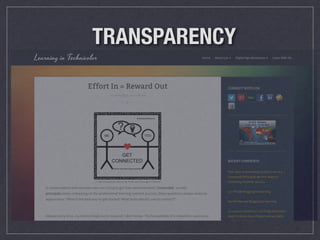
TRANSPARENCY
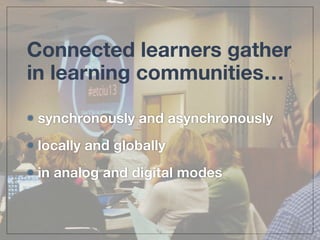
Connected learners gather 
in learning communities… 
synchronously and asynchronously 
locally and globally 
in analog and digital modes
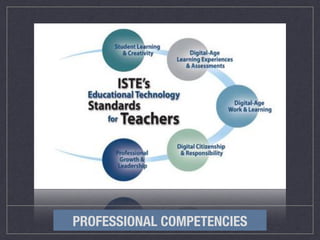
PROFESSIONAL COMPETENCIES
http://www.flickr.com/photos/plugusin/8253853804/sizes/o/in/pool-858082@N25/
KRISSY VENOSDALE 
LET’S GET STARTED!
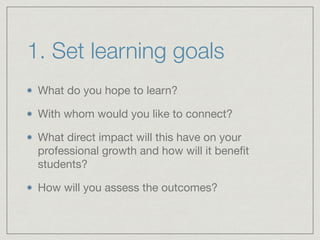
1. Set learning goals 
What do you hope to learn? 
With whom would you like to connect? 
What direct impact will this have on your 
professional growth and how will it benefit 
students? 
How will you assess the outcomes?
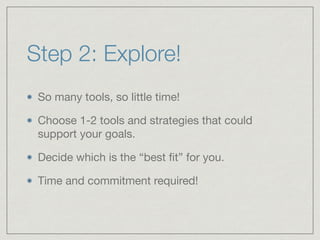
Step 2: Explore! 
So many tools, so little time! 
Choose 1-2 tools and strategies that could 
support your goals. 
Decide which is the “best fit” for you. 
Time and commitment required!
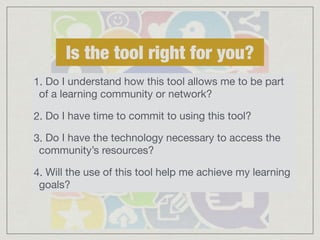
Is the tool right for you? 
1. Do I understand how this tool allows me to be part 
of a learning community or network? 
2. Do I have time to commit to using this tool? 
3. Do I have the technology necessary to access the 
community’s resources? 
4. Will the use of this tool help me achieve my learning 
goals?
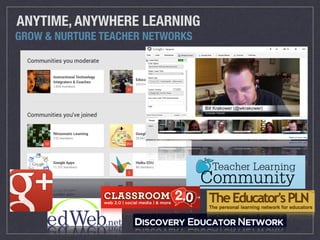
ANYTIME, ANYWHERE LEARNING 
GROW & NURTURE TEACHER NETWORKS 
anytime, anywhere learning 
expand teachers’ networks
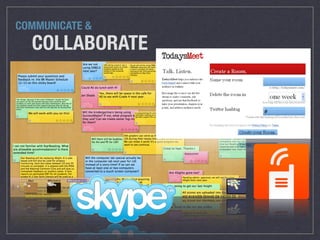
COMMUNICATE & 
COLLABORATE
LET’S TAKE A LOOK… 
Twitter 
Google+ Communities 
Blogs and Feedly
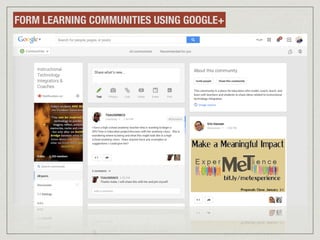
FORM LEARNING COMMUNITIES USING GOOGLE+
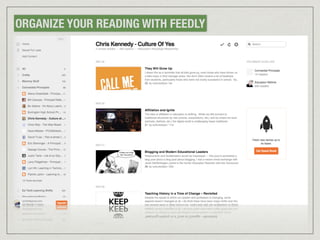
ORGANIZE YOUR READING WITH FEEDLY
Step 3: Engage! 
Make an engagement plan. 
Establish a digital presence. 
Forge connections and build relationships. 
Contribute!
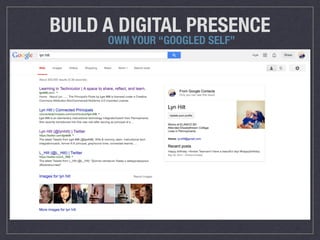
BUILD A DIGITAL PRESENCE 
OWN YOUR “GOOGLED SELF”
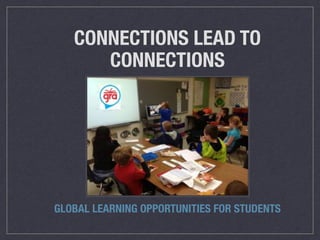
CONNECTIONS LEAD TO 
CONNECTIONS 
GLOBAL LEARNING OPPORTUNITIES FOR STUDENTS
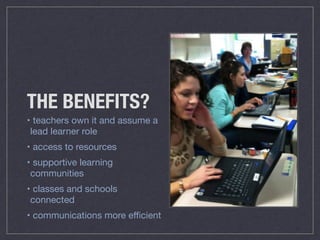
THE BENEFITS? 
• teachers own it and assume a 
lead learner role 
• access to resources 
• supportive learning 
communities 
• classes and schools 
connected 
• communications more efficient
More resources for you 
Quick-start guides for Twitter, Google+, and blogs 
A look at additional productivity/connectivity tools 
Tools for managing social media
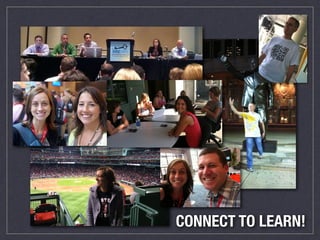
CONNECT TO LEARN!
Thank you! 
@LYNHILT 
LYNHILT@GMAIL.COM 
LYNHILT.COM

#learnfwd14 - Professional Learning w/Social Media

  • 1.
    Learning Forward AnnualConference DECEMBER 2014 PROFESSIONAL LEARNING WITH SOCIAL MEDIA
  • 3.
    “The power liesin the hearts and minds of the people we connect. Social media just increases that circle of influence further than we could ever imagine.” via Chris McCaffrey photos by Kevin Jarrett IT STARTS WITH PEOPLE AND THE STORIES THEY SHARE.
  • 4.
    MEDIA, MEDIA, EVERYWHERE! How will you engage?
  • 5.
    The Shift Exponentialaccess to information and the need to evaluate critically Digital tools readily available Movement from banning tools to embracing social media The rise of the connected educator
  • 6.
  • 7.
  • 8.
    “Technology is rapidlyenhancing and extending opportunities for professional learning. It particularly facilitates access to, sharing, construction, and analysis of information to enhance practice. Technology exponentially increases possibilities for personalizing, differentiating, and deepening learning, especially for educators who have limited access to on-site professional learning or who are eager to reach beyond the boundaries of their own work setting to join local or global networks to enrich their learning.” Learning Forward (2012)
  • 9.
    “A learning theory for the digital age” -George Siemens Connectivism Key principles: Knowledge is networked and distributed. The experience of learning is one of forming new neural, conceptual and external networks. Learning occurs in complex, chaotic, shifting spaces. Our networked experiences are increasingly aided by technology. http://www.connectivism.ca/about.html
  • 10.
    Principles of EffectiveE-Learning via Stephen Downes INTERACTION * USABILITY * RELEVANCE HTTPS://WWW.FLICKR.COM/PHOTOS/39015696@N02/6383462959
  • 11.
    Rhizomatic Learning “Inthe rhizomatic model of learning, curriculum is not driven by predefined inputs from experts; it is constructed and negotiated in real time by the contributions of those engaged in the learning process. This community acts as the curriculum, spontaneously shaping, constructing, and reconstructing itself and the subject of its learning in the same way that the rhizome responds to changing environmental conditions.” Dave Cormier (2008)
  • 12.
  • 13.
    CONNECTED EDUCATORS WHOARE WE? WHAT DO WE DO? Kevin Jarrett
  • 14.
    PERSONAL LEARNING NETWORK “a group of people who can guide your learning, point you to learning opportunities, answer your questions, and give you the benefit of their own knowledge and experience” (Tobin, 1998)
  • 15.
    STEVE WHEELER VIAHTTP://STEVE-WHEELER.BLOGSPOT.COM/2010/07/ANATOMY-OF-PLE.HTML
  • 16.
  • 17.
    continuous learner wantsimmediate access to solutions happy to share relies on trusted network learns best with/from others stays current strives to improve productivity thrives on autonomy Today’s Smart Worker via Jane Hart
  • 18.
  • 19.
    Why social media? Learner first Promotes collaboration and establishes relationships through connections Reflective Timely and relevant Practical and available
  • 20.
    LEVELS OF ENGAGEMENT STEVE WHEELER VIA HTTP://WWW.SLIDESHARE.NET/TIMBUCKTEETH/LEARNING-THEORIES-FOR-THE-DIGITAL-AGE
  • 21.
  • 22.
    SEEK, SENSE, SHARE HAROLD JARCHE VIA HTTP://WWW.JARCHE.COM/2010/10/NETWORK-LEARNING-WORKING-SMARTER/
  • 24.
  • 25.
    Connected learners gather in learning communities… synchronously and asynchronously locally and globally in analog and digital modes
  • 26.
  • 27.
  • 28.
  • 29.
    1. Set learninggoals What do you hope to learn? With whom would you like to connect? What direct impact will this have on your professional growth and how will it benefit students? How will you assess the outcomes?
  • 30.
    Step 2: Explore! So many tools, so little time! Choose 1-2 tools and strategies that could support your goals. Decide which is the “best fit” for you. Time and commitment required!
  • 31.
    Is the toolright for you? 1. Do I understand how this tool allows me to be part of a learning community or network? 2. Do I have time to commit to using this tool? 3. Do I have the technology necessary to access the community’s resources? 4. Will the use of this tool help me achieve my learning goals?
  • 32.
    ANYTIME, ANYWHERE LEARNING GROW & NURTURE TEACHER NETWORKS anytime, anywhere learning expand teachers’ networks
  • 33.
  • 35.
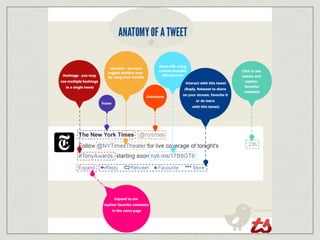
    LET’S TAKE ALOOK… Twitter Google+ Communities Blogs and Feedly
  • 37.
  • 38.
  • 39.
    Step 3: Engage! Make an engagement plan. Establish a digital presence. Forge connections and build relationships. Contribute!
  • 40.
    BUILD A DIGITALPRESENCE OWN YOUR “GOOGLED SELF”
  • 41.
    CONNECTIONS LEAD TO CONNECTIONS GLOBAL LEARNING OPPORTUNITIES FOR STUDENTS
  • 44.
    THE BENEFITS? •teachers own it and assume a lead learner role • access to resources • supportive learning communities • classes and schools connected • communications more efficient
  • 45.
    More resources foryou Quick-start guides for Twitter, Google+, and blogs A look at additional productivity/connectivity tools Tools for managing social media
  • 46.
  • 47.
    Thank you! @LYNHILT LYNHILT@GMAIL.COM LYNHILT.COM