Spotlight on Emerging Technology:
 Online Learning in K-12 Schools


                  Patrick Zedrow
                Walden University
   EDUC-6715I-1: New and Emerging Technologies
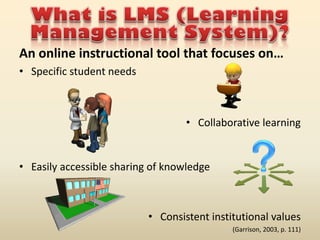
An online instructional tool that focuses on…
• Specific student needs


                                   • Collaborative learning


• Easily accessible sharing of knowledge


                           • Consistent institutional values
                                             (Garrison, 2003, p. 111)
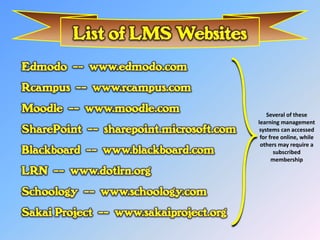
Several of these
learning management
 systems can accessed
 for free online, while
 others may require a
       subscribed
      membership
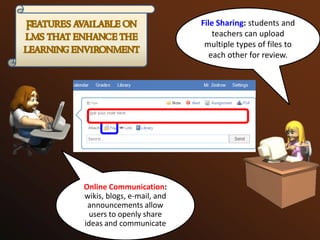
File Sharing: students and
                                teachers can upload
                             multiple types of files to
                               each other for review.


Online Communication:
wikis, blogs, e-mail, and
 announcements allow
 users to openly share
ideas and communicate
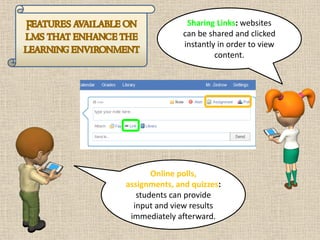
Sharing Links: websites
               can be shared and clicked
               instantly in order to view
                        content.


       Online polls,
assignments, and quizzes:
   students can provide
  input and view results
 immediately afterward.
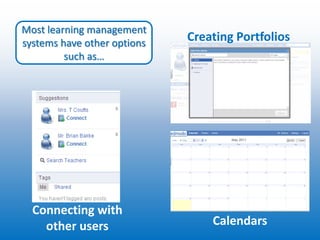
Most learning management
systems have other options
                             Creating Portfolios
         such as…


  Connecting with
    other users                  Calendars
Still feeling on the fence? Consider this…

To offer meaningful learning opportunities for students, the
instructor of a learning management system must seek inventive
teaching methods to deliver the course subject matter.

Besides providing the instruction, educators of online learning
systems have the responsibility to enhance the utilization of
technology within the class while collaborating with learners.


                                                      (Young, 2004)
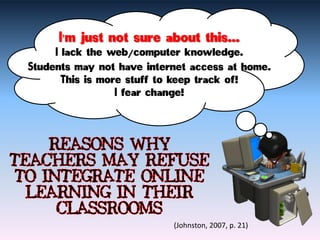
I’m just not sure
                      ` about this...
     I lack the web/computer knowledge.
Students may not have internet access at home.
       This is more stuff to keep track of!
                  I fear change!


                           (Johnston, 2007, p. 21)
Rebuttal of Potential
Apprehension from educators
Refusing to include online learning or a learning
management system in your class?
Here are the facts…

• As each year passes, incoming students are even more digitally
  competent than those from the year before.

• Students are influenced by the direction that technology is taking.

• Teachers must stay on the cutting edge in order to meet the digital
  needs of our students and provide choices in their learning.

                                               (Johnston, 2007, p. 30)
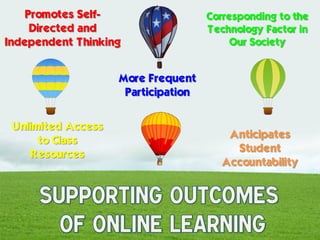
Promotes Self-                   Corresponding to the
     Directed and                    Technology Factor in
Independent Thinking                      Our Society


                    More Frequent
                     Participation

 Unlimited Access
                                         Anticipates
      to Class
                                          Student
     Resources
                                        Accountability
References
Garrison, D. R. and Anderson, T.. (2003). E-Learning in the 21stCentury: A
     Framework for Research and Practice. London: Routledge/Falmer, 2003.

Johnston, S. (2007). Developing Quality Virtual Courses: Selecting Instructional
    Models. In P. Adamson, B. Adamson, & N. Clausen-Grace, et al (Eds.),What
    Works in K-12 Online Learning (Chapter 2, pp. 21-31). Eugene, OR:
    International Society for Technology in Education.

Young, S . S .-C. (2004). In search of online pedagogical models: investigating a
    paradigm change in teaching through the School for All community. Journal
    of Computer Assisted Learning 20 (2):133-151.

Online Learning in K-12 Schools

  • 1.
    Spotlight on EmergingTechnology: Online Learning in K-12 Schools Patrick Zedrow Walden University EDUC-6715I-1: New and Emerging Technologies
  • 2.
    An online instructionaltool that focuses on… • Specific student needs • Collaborative learning • Easily accessible sharing of knowledge • Consistent institutional values (Garrison, 2003, p. 111)
  • 3.
    Several of these learningmanagement systems can accessed for free online, while others may require a subscribed membership
  • 5.
    File Sharing: studentsand teachers can upload multiple types of files to each other for review. Online Communication: wikis, blogs, e-mail, and announcements allow users to openly share ideas and communicate
  • 6.
    Sharing Links: websites can be shared and clicked instantly in order to view content. Online polls, assignments, and quizzes: students can provide input and view results immediately afterward.
  • 7.
    Most learning management systemshave other options Creating Portfolios such as… Connecting with other users Calendars
  • 8.
    Still feeling onthe fence? Consider this… To offer meaningful learning opportunities for students, the instructor of a learning management system must seek inventive teaching methods to deliver the course subject matter. Besides providing the instruction, educators of online learning systems have the responsibility to enhance the utilization of technology within the class while collaborating with learners. (Young, 2004)
  • 9.
    I’m just notsure ` about this... I lack the web/computer knowledge. Students may not have internet access at home. This is more stuff to keep track of! I fear change! (Johnston, 2007, p. 21)
  • 10.
    Rebuttal of Potential Apprehensionfrom educators Refusing to include online learning or a learning management system in your class? Here are the facts… • As each year passes, incoming students are even more digitally competent than those from the year before. • Students are influenced by the direction that technology is taking. • Teachers must stay on the cutting edge in order to meet the digital needs of our students and provide choices in their learning. (Johnston, 2007, p. 30)
  • 11.
    Promotes Self- Corresponding to the Directed and Technology Factor in Independent Thinking Our Society More Frequent Participation Unlimited Access Anticipates to Class Student Resources Accountability
  • 12.
    References Garrison, D. R.and Anderson, T.. (2003). E-Learning in the 21stCentury: A Framework for Research and Practice. London: Routledge/Falmer, 2003. Johnston, S. (2007). Developing Quality Virtual Courses: Selecting Instructional Models. In P. Adamson, B. Adamson, & N. Clausen-Grace, et al (Eds.),What Works in K-12 Online Learning (Chapter 2, pp. 21-31). Eugene, OR: International Society for Technology in Education. Young, S . S .-C. (2004). In search of online pedagogical models: investigating a paradigm change in teaching through the School for All community. Journal of Computer Assisted Learning 20 (2):133-151.