SUPRAMOLECULAR POLYMERS
A d n a n M u ra d B h ay o
a d n a n m u r a d 0 0 1 @ g m a i l . c o m
Supramolecular polymers
Polymeric arrays of
monomeric units that are
brought together by non-
covalent interactions
Non-Covalent Forces
Ion-Ion Interaction Ion dipole Interaction Dipole-dipole Interaction
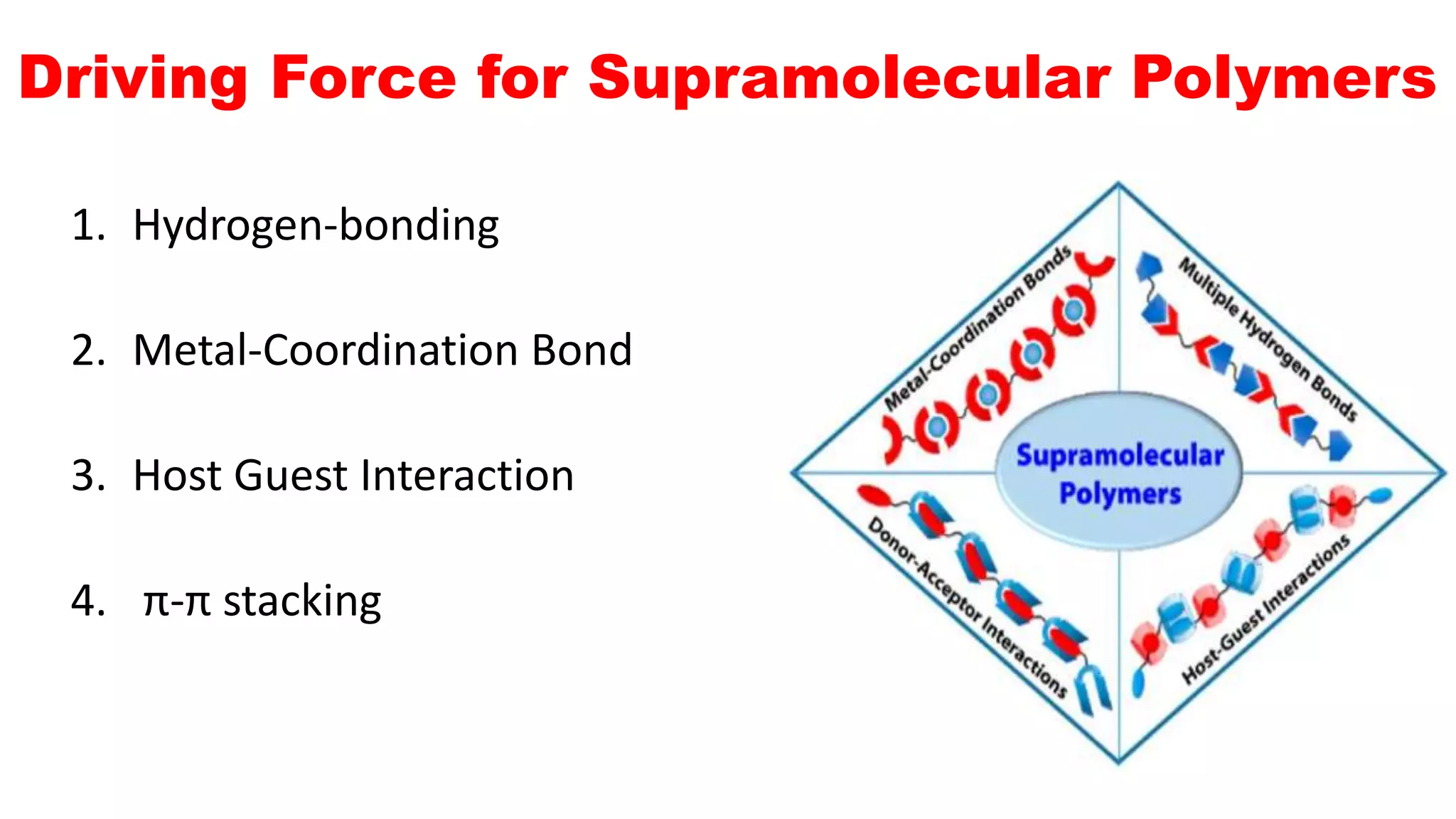
1. Hydrogen-bonding
2. Metal-Coordination Bond
3. Host Guest Interaction
4. π-π stacking
Driving Force for Supramolecular Polymers
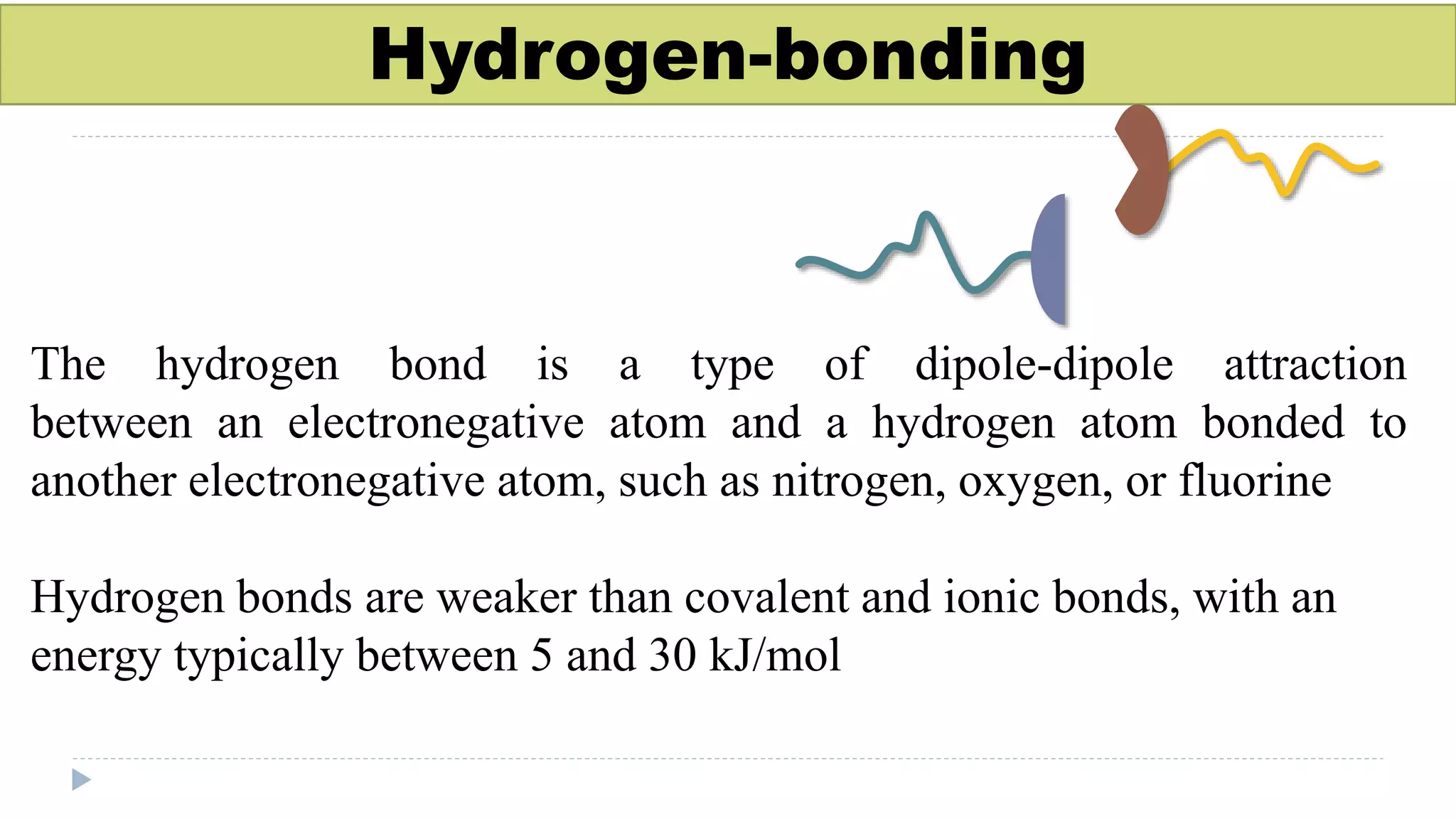
Hydrogen-bonding
The hydrogen bond is a type of dipole-dipole attraction
between an electronegative atom and a hydrogen atom bonded to
another electronegative atom, such as nitrogen, oxygen, or fluorine
Hydrogen bonds are weaker than covalent and ionic bonds, with an
energy typically between 5 and 30 kJ/mol
Based on Metal-Coordination Bond
Central atom or ion, which is usually metallic and is called the co--
ordination centre and a surrounding array of bound molecules or ions,
known as ligands
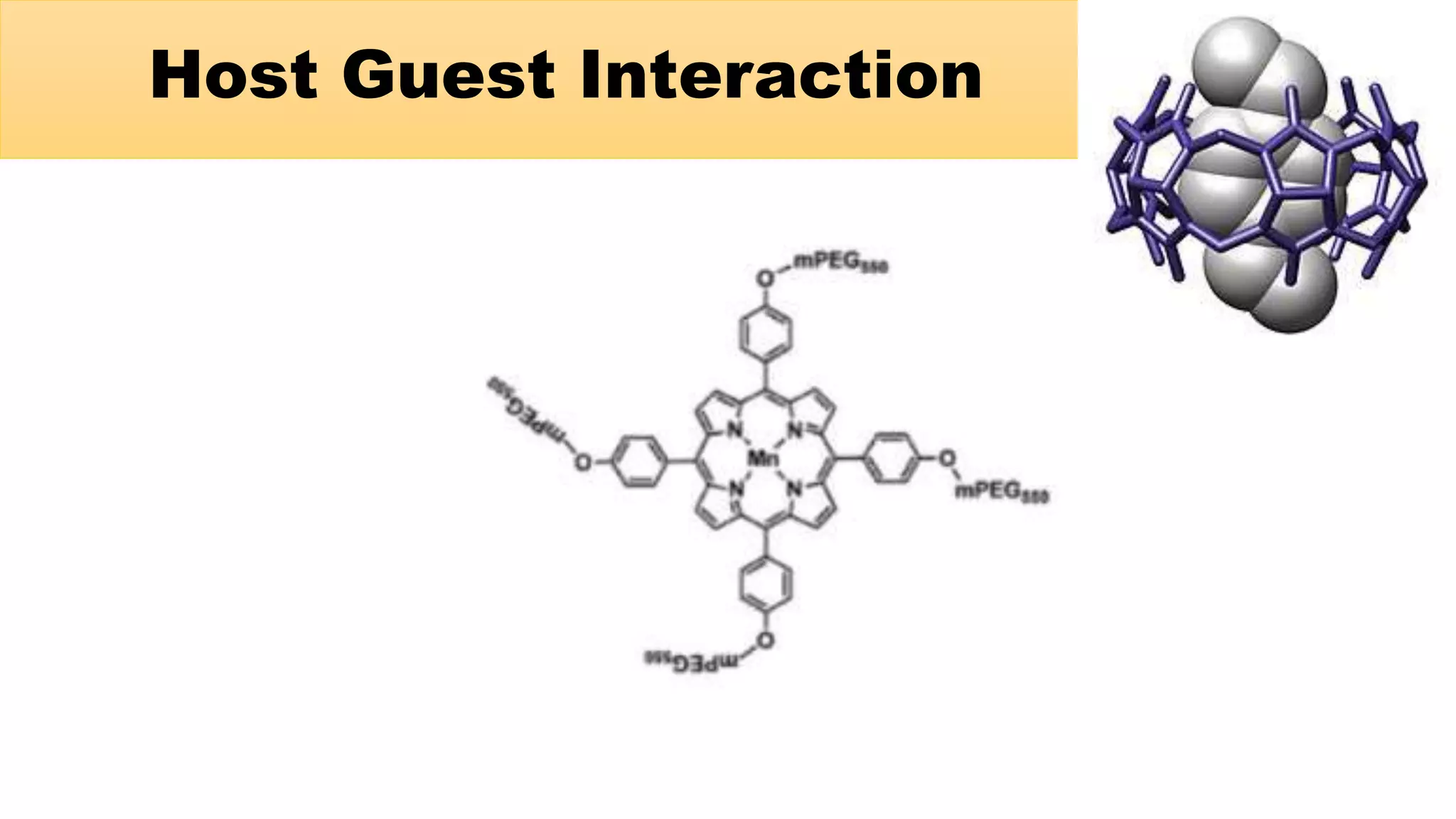
Host Guest Interaction
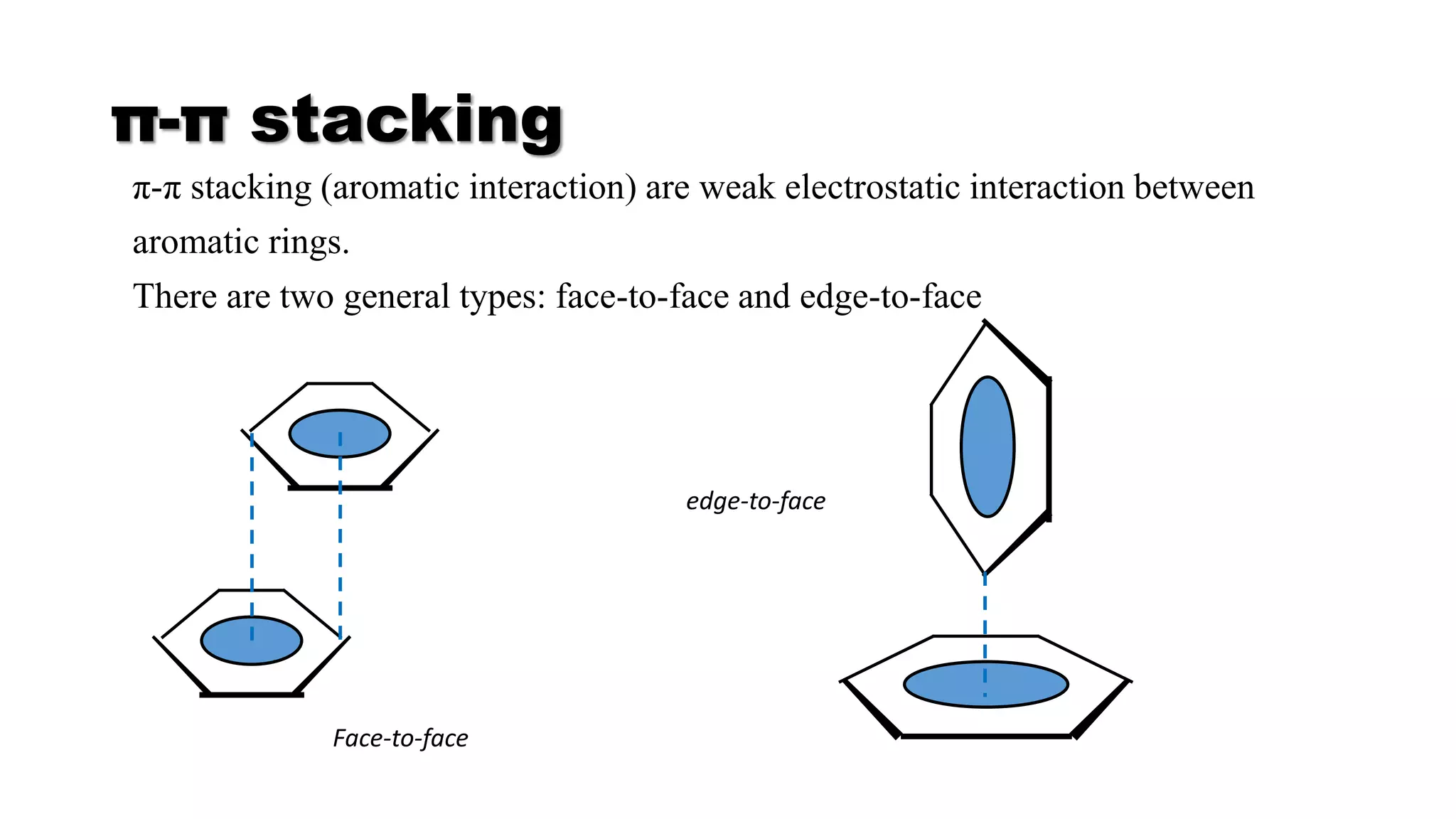
π-π stacking
π-π stacking (aromatic interaction) are weak electrostatic interaction between
aromatic rings.
There are two general types: face-to-face and edge-to-face
Face-to-face
edge-to-face
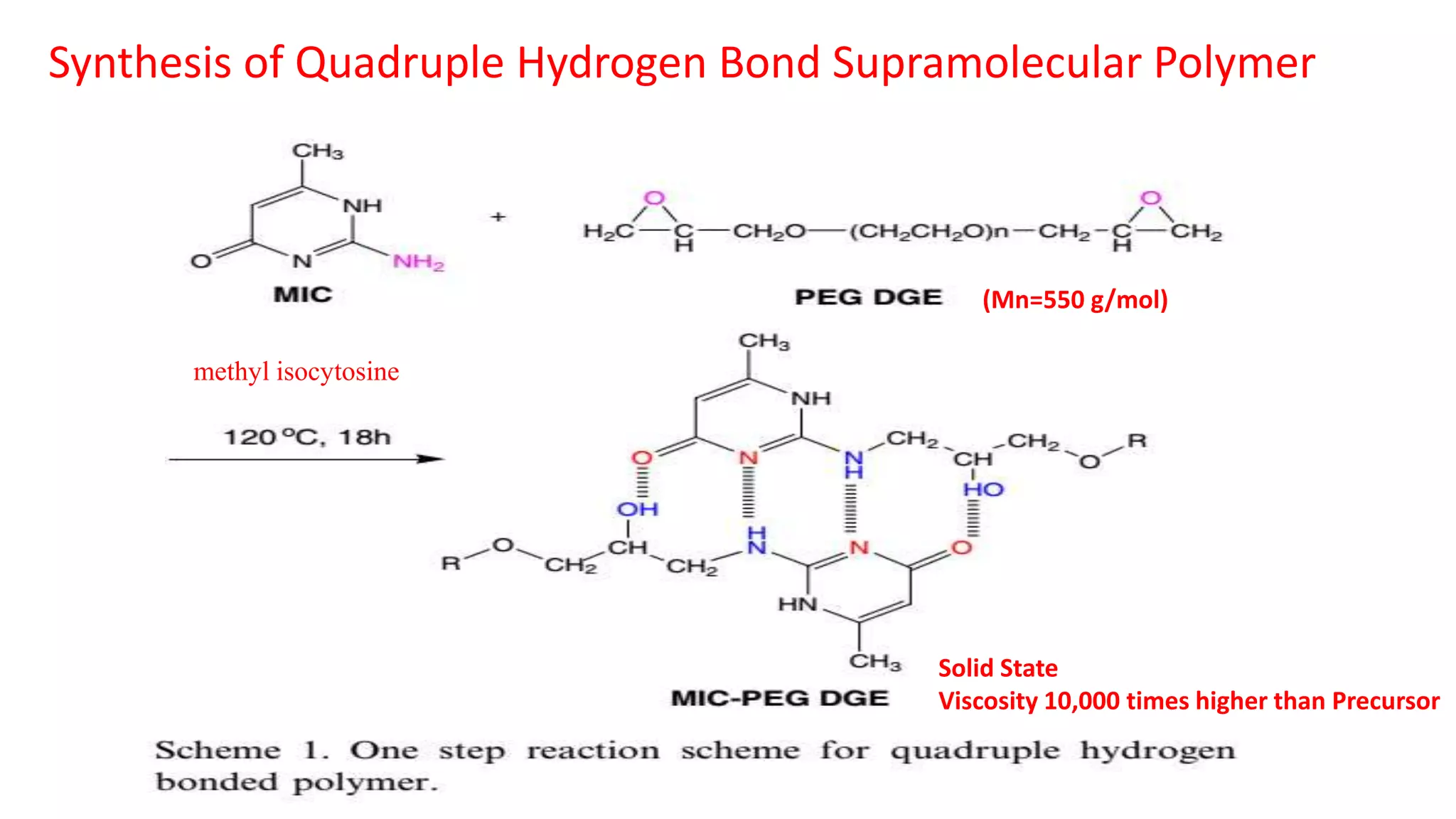
Synthesis of Quadruple Hydrogen Bond Supramolecular Polymer
Solid State
Viscosity 10,000 times higher than Precursor
(Mn=550 g/mol)
methyl isocytosine
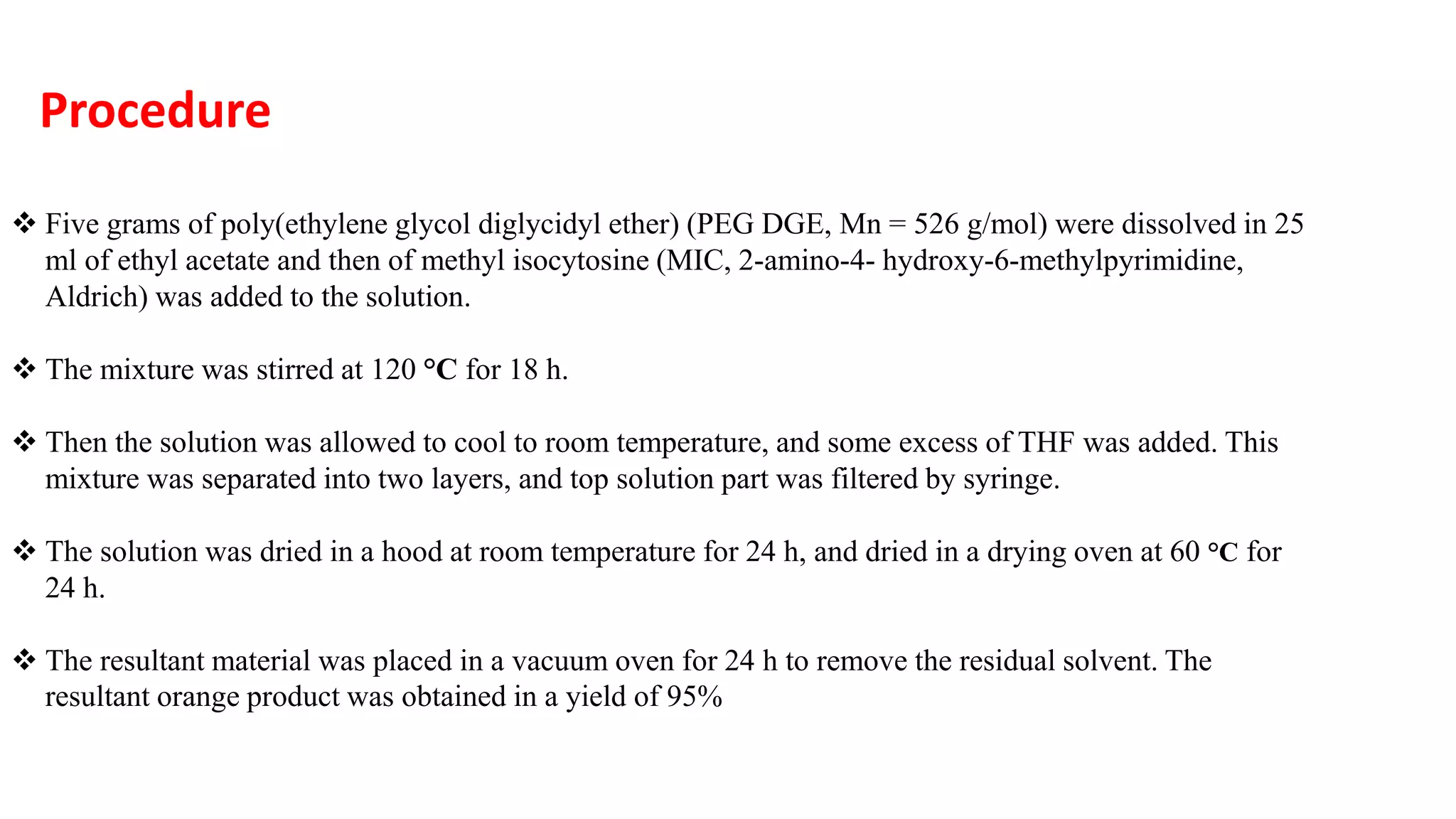
 Five grams of poly(ethylene glycol diglycidyl ether) (PEG DGE, Mn = 526 g/mol) were dissolved in 25
ml of ethyl acetate and then of methyl isocytosine (MIC, 2-amino-4- hydroxy-6-methylpyrimidine,
Aldrich) was added to the solution.
 The mixture was stirred at 120 °C for 18 h.
 Then the solution was allowed to cool to room temperature, and some excess of THF was added. This
mixture was separated into two layers, and top solution part was filtered by syringe.
 The solution was dried in a hood at room temperature for 24 h, and dried in a drying oven at 60 °C for
24 h.
 The resultant material was placed in a vacuum oven for 24 h to remove the residual solvent. The
resultant orange product was obtained in a yield of 95%
Procedure
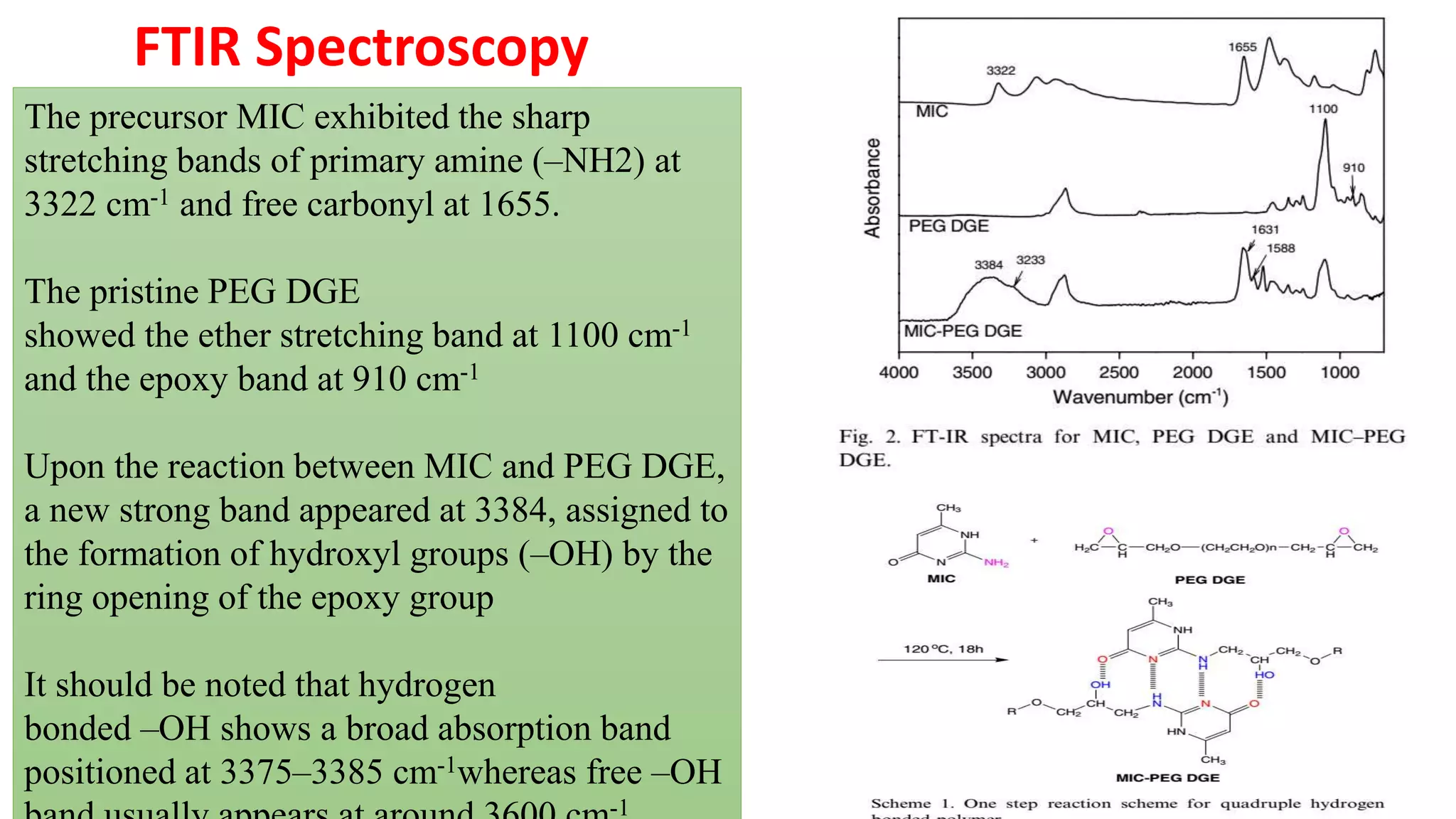
The precursor MIC exhibited the sharp
stretching bands of primary amine (–NH2) at
3322 cm-1 and free carbonyl at 1655.
The pristine PEG DGE
showed the ether stretching band at 1100 cm-1
and the epoxy band at 910 cm-1
Upon the reaction between MIC and PEG DGE,
a new strong band appeared at 3384, assigned to
the formation of hydroxyl groups (–OH) by the
ring opening of the epoxy group
It should be noted that hydrogen
bonded –OH shows a broad absorption band
positioned at 3375–3385 cm-1whereas free –OH
-1
FTIR Spectroscopy
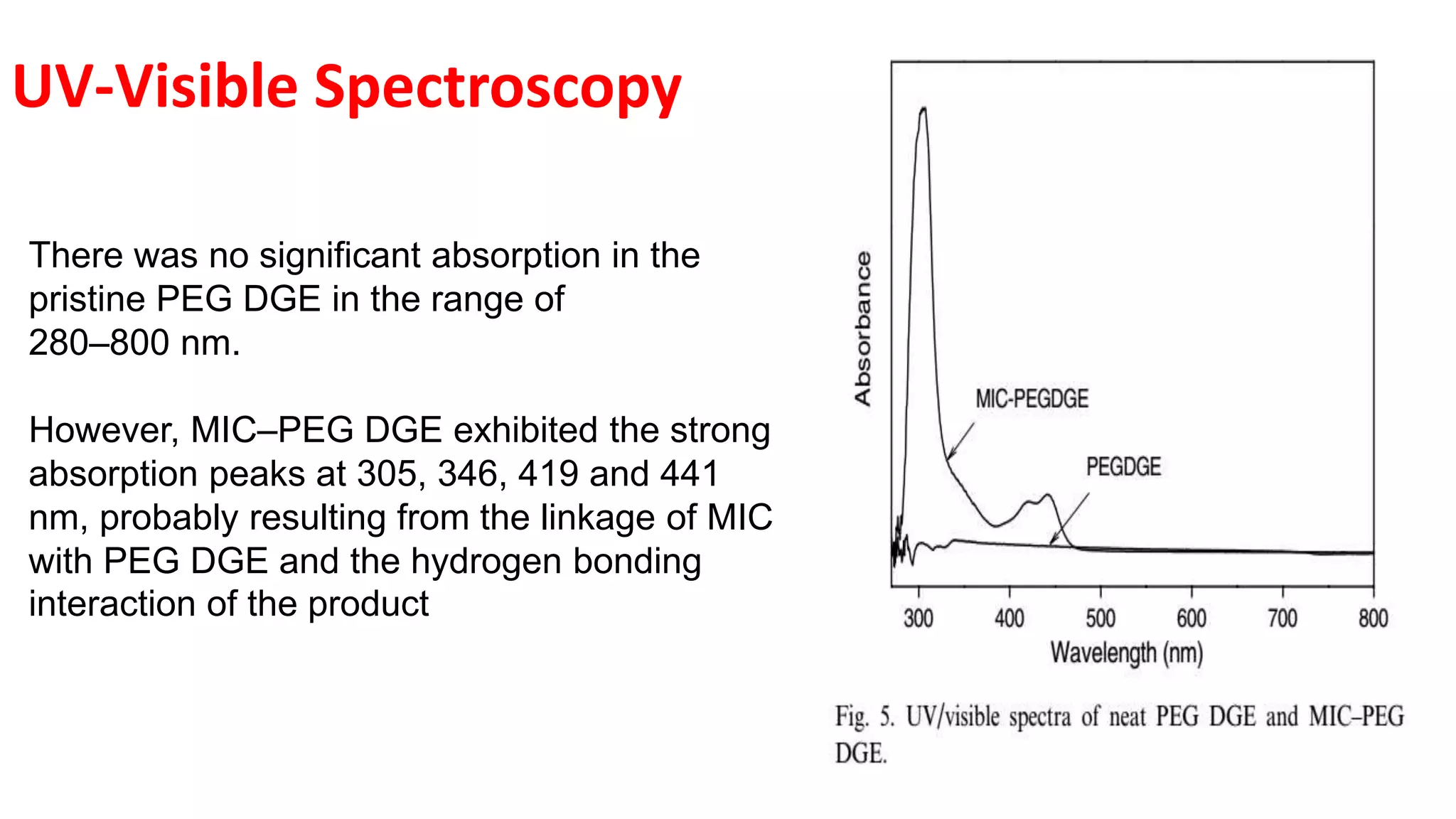
There was no significant absorption in the
pristine PEG DGE in the range of
280–800 nm.
However, MIC–PEG DGE exhibited the strong
absorption peaks at 305, 346, 419 and 441
nm, probably resulting from the linkage of MIC
with PEG DGE and the hydrogen bonding
interaction of the product
UV-Visible Spectroscopy
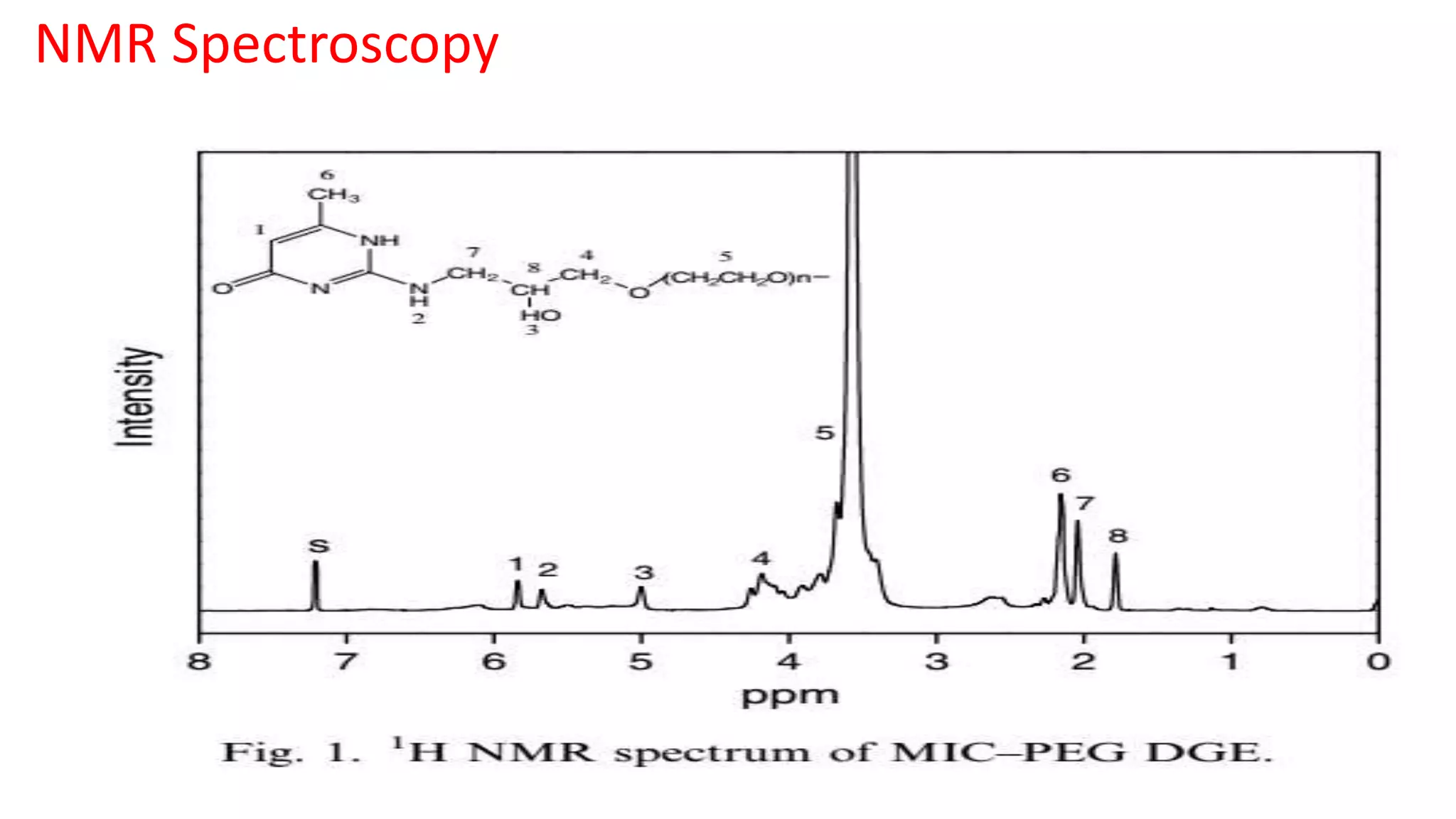
NMR Spectroscopy
No characteristic peak was observed
in MIC because the melting temperature of
MIC is known to be above 300 °C
Neat PEG DGE showed Tm of 5.2 °C,
demonstrating that it is completely amorphous
and liquid state at room temperature
Upon the reaction between MIC and PEG DGE,
the sharp melting peak around 5.2 °C
attributable to PEG DGE disappeared and its
Tg significantly increased to -20 °C.
DSC Analysis
FUNCTIONALIZATION OF TELECHELIC POLYCAPROLACTONE
)
Synthesis of NCO precursor (96% Yld)
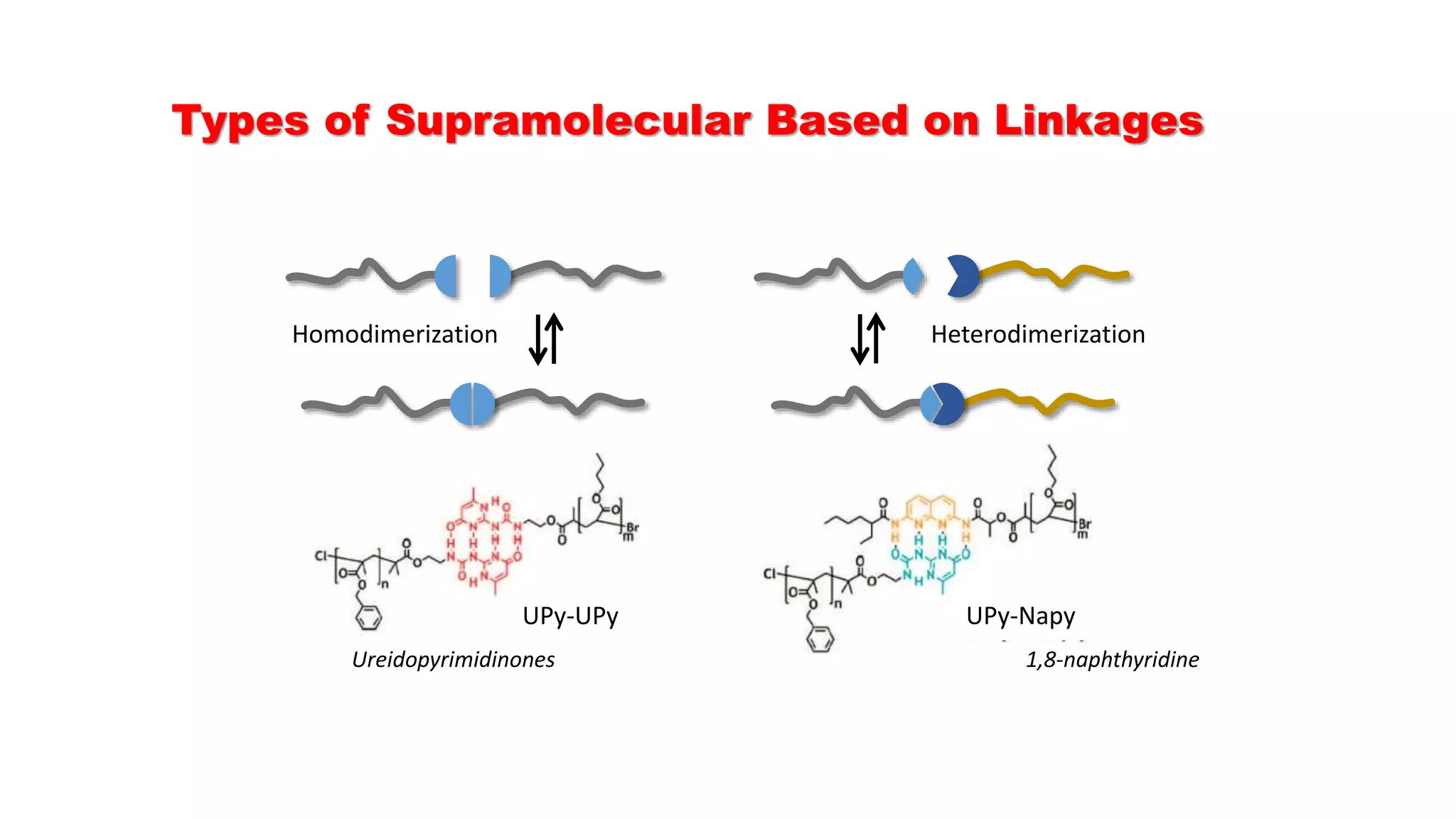
Types of Supramolecular Based on Linkages
Homodimerization Heterodimerization
UPy-UPy UPy-Napy
1,8-naphthyridineUreidopyrimidinones
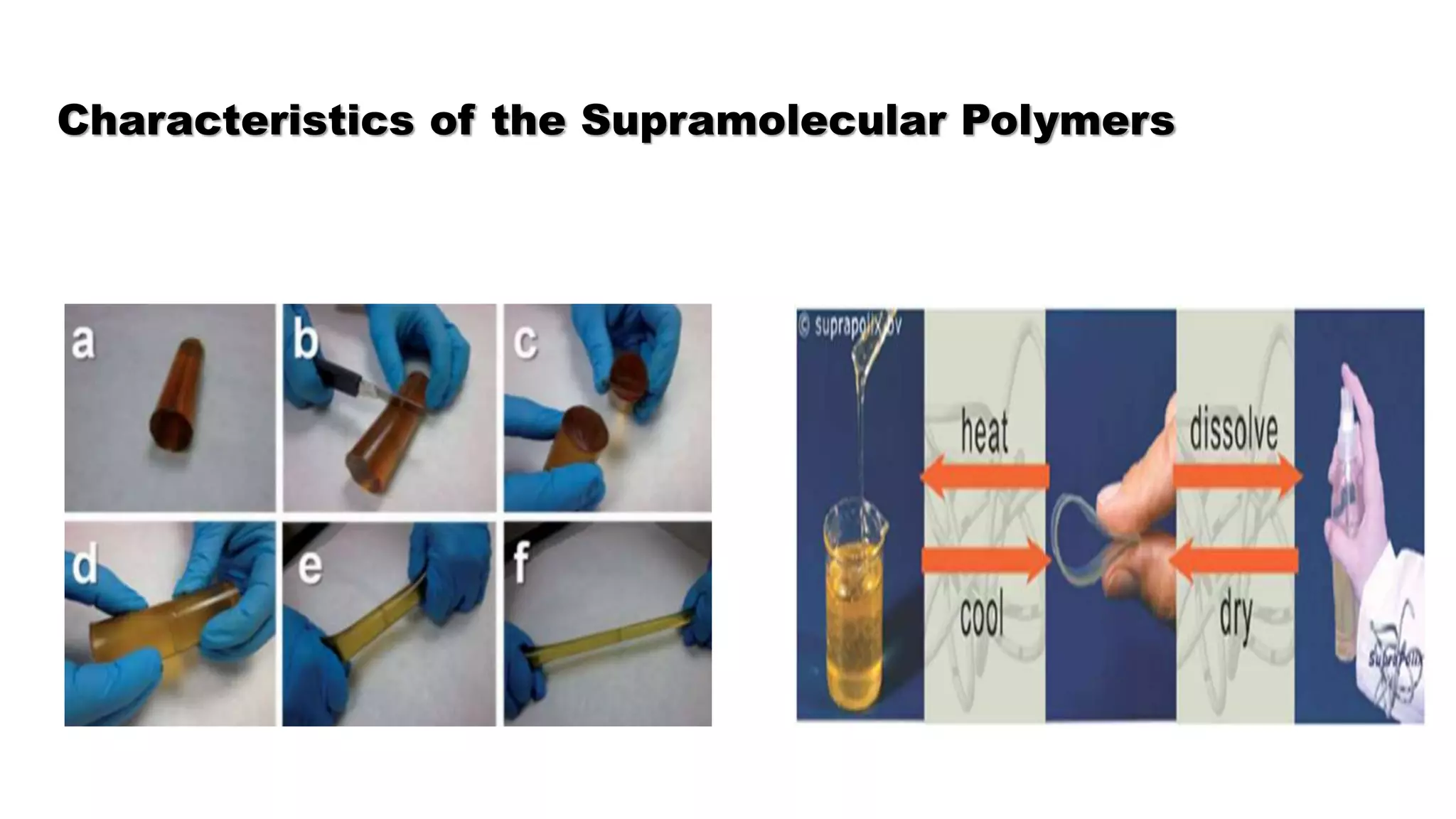
Characteristics of the Supramolecular Polymers

Supramolecular polymers

  • 1.
    SUPRAMOLECULAR POLYMERS A dn a n M u ra d B h ay o a d n a n m u r a d 0 0 1 @ g m a i l . c o m
  • 2.
    Supramolecular polymers Polymeric arraysof monomeric units that are brought together by non- covalent interactions
  • 3.
    Non-Covalent Forces Ion-Ion InteractionIon dipole Interaction Dipole-dipole Interaction
  • 4.
    1. Hydrogen-bonding 2. Metal-CoordinationBond 3. Host Guest Interaction 4. π-π stacking Driving Force for Supramolecular Polymers
  • 5.
    Hydrogen-bonding The hydrogen bondis a type of dipole-dipole attraction between an electronegative atom and a hydrogen atom bonded to another electronegative atom, such as nitrogen, oxygen, or fluorine Hydrogen bonds are weaker than covalent and ionic bonds, with an energy typically between 5 and 30 kJ/mol
  • 6.
    Based on Metal-CoordinationBond Central atom or ion, which is usually metallic and is called the co-- ordination centre and a surrounding array of bound molecules or ions, known as ligands
  • 7.
  • 8.
    π-π stacking π-π stacking(aromatic interaction) are weak electrostatic interaction between aromatic rings. There are two general types: face-to-face and edge-to-face Face-to-face edge-to-face
  • 10.
    Synthesis of QuadrupleHydrogen Bond Supramolecular Polymer Solid State Viscosity 10,000 times higher than Precursor (Mn=550 g/mol) methyl isocytosine
  • 11.
     Five gramsof poly(ethylene glycol diglycidyl ether) (PEG DGE, Mn = 526 g/mol) were dissolved in 25 ml of ethyl acetate and then of methyl isocytosine (MIC, 2-amino-4- hydroxy-6-methylpyrimidine, Aldrich) was added to the solution.  The mixture was stirred at 120 °C for 18 h.  Then the solution was allowed to cool to room temperature, and some excess of THF was added. This mixture was separated into two layers, and top solution part was filtered by syringe.  The solution was dried in a hood at room temperature for 24 h, and dried in a drying oven at 60 °C for 24 h.  The resultant material was placed in a vacuum oven for 24 h to remove the residual solvent. The resultant orange product was obtained in a yield of 95% Procedure
  • 12.
    The precursor MICexhibited the sharp stretching bands of primary amine (–NH2) at 3322 cm-1 and free carbonyl at 1655. The pristine PEG DGE showed the ether stretching band at 1100 cm-1 and the epoxy band at 910 cm-1 Upon the reaction between MIC and PEG DGE, a new strong band appeared at 3384, assigned to the formation of hydroxyl groups (–OH) by the ring opening of the epoxy group It should be noted that hydrogen bonded –OH shows a broad absorption band positioned at 3375–3385 cm-1whereas free –OH -1 FTIR Spectroscopy
  • 13.
    There was nosignificant absorption in the pristine PEG DGE in the range of 280–800 nm. However, MIC–PEG DGE exhibited the strong absorption peaks at 305, 346, 419 and 441 nm, probably resulting from the linkage of MIC with PEG DGE and the hydrogen bonding interaction of the product UV-Visible Spectroscopy
  • 14.
  • 15.
    No characteristic peakwas observed in MIC because the melting temperature of MIC is known to be above 300 °C Neat PEG DGE showed Tm of 5.2 °C, demonstrating that it is completely amorphous and liquid state at room temperature Upon the reaction between MIC and PEG DGE, the sharp melting peak around 5.2 °C attributable to PEG DGE disappeared and its Tg significantly increased to -20 °C. DSC Analysis
  • 16.
    FUNCTIONALIZATION OF TELECHELICPOLYCAPROLACTONE ) Synthesis of NCO precursor (96% Yld)
  • 17.
    Types of SupramolecularBased on Linkages Homodimerization Heterodimerization UPy-UPy UPy-Napy 1,8-naphthyridineUreidopyrimidinones
  • 18.
    Characteristics of theSupramolecular Polymers