SUPPLY CHAIN MANAGEMENT 
(SCM) 
1 
Presented by: 
Bhagirath Parmar - 72 
Shruti Pithadia - 74 
Mahesh Purohit - 76 
Nisha Sankhla - 78
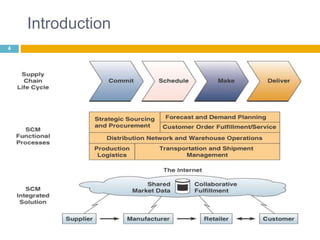
Introduction 
2 
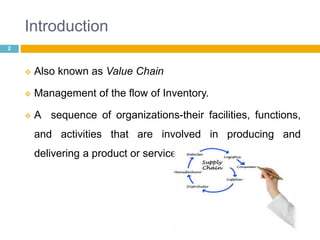
 Also known as Value Chain 
 Management of the flow of Inventory. 
 A sequence of organizations-their facilities, functions, 
and activities that are involved in producing and 
delivering a product or service.
Introduction 
3 
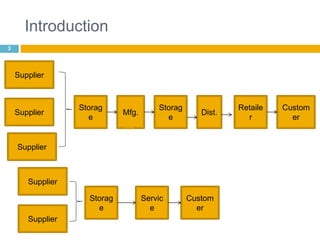
Supplier 
Supplier 
Supplier 
Supplier 
Supplier 
Storag 
e 
Storag 
e 
Servic 
e 
Custom 
er 
Mfg. 
Custom 
er 
Storag 
e 
Retaile 
r 
Dist.
Introduction 
4
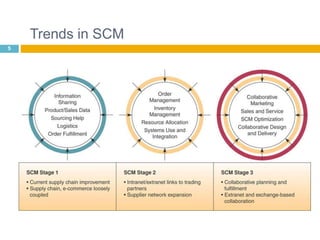
Trends in SCM 
5
Importance of SCM 
6 
 To gain efficiencies from procurement, distribution and 
logistics. 
 To make outsourcing more effective 
 To reduce transportation cost of inventories 
 To meet competitive pressures from 
• Shorter development times 
• More new products 
• Demand for more customization
Importance of SCM 
7 
 To meet the challenge of globalization and longer supply 
chains 
 To meet the new challenges from globalization 
 To manage the complexities of supply chains 
 To manage the inventories needed across the supply 
chain
Disadvantages of SCM 
8 
 Investment 
 Cost 
 Productivity 
 Unskilled Buyer 
 Backlash 
 Other Disadvantages
Objectives of SCM 
9 
 Rapid demand fulfillment 
 Shortening time to order 
 Provide flexible planning and control mechanism 
 To optimize pre and post production inventory levels 
 Greater labor, space and equipment efficiency 
 Effective distribution and channel partnerships 
 Responsiveness and accountability to customers 
 Give customers what, when and how they want, at the lowest 
cost
Continued.. 
10
Modules of SCM 
11 
 Demand and Supply Planning 
 Service parts planning 
 Procurement 
 Manufacturing 
 Warehousing 
 Order fulfillment 
 Transportation 
 Supply chain design and analytics
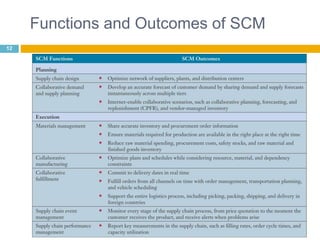
Functions and Outcomes of SCM 
12
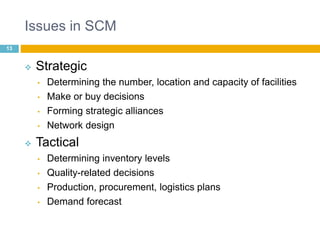
Issues in SCM 
13 
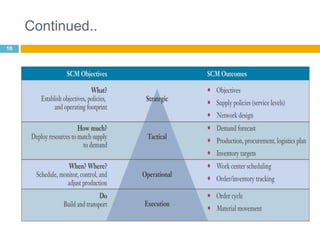
 Strategic 
• Determining the number, location and capacity of facilities 
• Make or buy decisions 
• Forming strategic alliances 
• Network design 
 Tactical 
• Determining inventory levels 
• Quality-related decisions 
• Production, procurement, logistics plans 
• Demand forecast
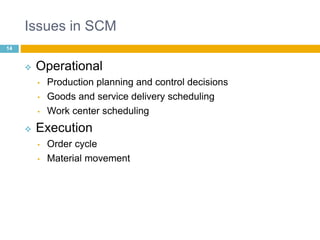
Issues in SCM 
14 
 Operational 
• Production planning and control decisions 
• Goods and service delivery scheduling 
• Work center scheduling 
 Execution 
• Order cycle 
• Material movement
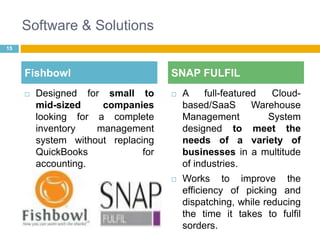
Software & Solutions 
 Designed for small to 
mid-sized companies 
looking for a complete 
inventory management 
system without replacing 
QuickBooks for 
accounting. 
15 
Fishbowl SNAP FULFIL 
 A full-featured Cloud-based/ 
SaaS Warehouse 
Management System 
designed to meet the 
needs of a variety of 
businesses in a multitude 
of industries. 
 Works to improve the 
efficiency of picking and 
dispatching, while reducing 
the time it takes to fulfil 
sorders.
Software & Solutions 
 A powerful, user-friendly 
Transportation Management 
System 
 Offers a full suite of tools that 
include direct e-carrier 
management, user-friendly 
procurement, RFQ 
development and bid 
capabilities, load tendering, 
robust analytics, and more, all 
from a simple and sleek 
interface that's accessible 
anywhere with an Internet 
connection. 
 eBid eXchange by eBid 
Systems offers a robust, 
integrated web-based 
solution that includes a 
variety of comprehensive 
features to support the 
complete contract 
procurement cycle 
 In addition to supplier 
management and 
procurement, eBid 
eXchange offers solid 
strategic sourcing, as well 
as contract and event 
management. 
16 
URoute eBid systems
Software & Solutions 
JDA Oracle 
 A leading provider of global 
supply chain solutions. 
 Offers an extensive array 
of integrated and planning 
capabilities for companies 
to manage the entire 
supply chain. 
 Transform supply chains 
from a functional necessity 
to a competitive 
advantage. 
 Products help modernize 
the operations across the 
demand, supply and 
product pillars to deliver 
operational and innovation 
excellence 
•. 
17
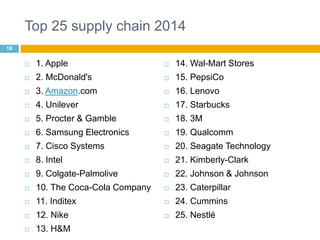
Top 25 supply chain 2014 
 1. Apple 
 2. McDonald's 
 3. Amazon.com 
 4. Unilever 
 5. Procter & Gamble 
 6. Samsung Electronics 
 7. Cisco Systems 
 8. Intel 
 9. Colgate-Palmolive 
 10. The Coca-Cola Company 
 11. Inditex 
 12. Nike 
 13. H&M 
 14. Wal-Mart Stores 
 15. PepsiCo 
 16. Lenovo 
 17. Starbucks 
 18. 3M 
 19. Qualcomm 
 20. Seagate Technology 
 21. Kimberly-Clark 
 22. Johnson & Johnson 
 23. Caterpillar 
 24. Cummins 
 25. Nestlé 
18
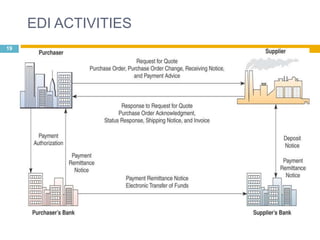
EDI ACTIVITIES 
19
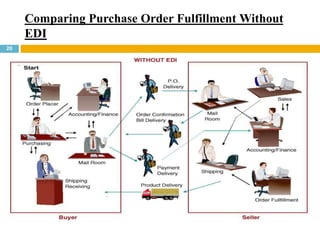
Comparing Purchase Order Fulfillment Without 
EDI 
20
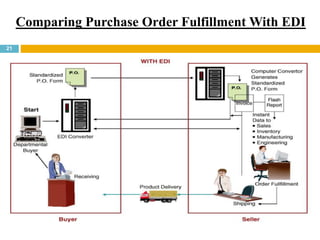
Comparing Purchase Order Fulfillment With EDI 
21
Supply Chain RFID 
22 
 A flexible technology that is convenient, easy to 
use and well-suited for automatic operation 
 Replacement of barcodes 
 does not require contact or line-of-sight between 
the reader and the object to be identified; 
 enables multiple tags to be read simultaneously; 
 Can also provide security and product 
authentication because tags can be applied 
discreetly and are extremely difficult to 
counterfeit. 
 makes the supply chain considerably more 
precise and improves the efficiency and reliability 
of the entire chain.
Supply Chain RFID 
23 
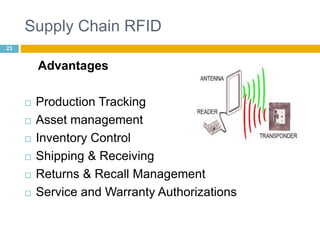
Advantages 
 Production Tracking 
 Asset management 
 Inventory Control 
 Shipping & Receiving 
 Returns & Recall Management 
 Service and Warranty Authorizations
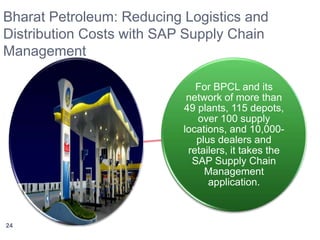
Bharat Petroleum: Reducing Logistics and 
Distribution Costs with SAP Supply Chain 
Management 
For BPCL and its 
network of more than 
49 plants, 115 depots, 
over 100 supply 
locations, and 10,000- 
plus dealers and 
retailers, it takes the 
SAP Supply Chain 
Management 
application. 
24
Executive Overview 
The company’s top objectives: 
 Improve responsiveness to market demand while lowering 
supply chain costs 
 Match available supply to demand at the lowest possible cost 
 Outperform the competition with faster, more efficient 
planning and execution 
The resolution: 
 Introduced the SAP® Supply Chain Management application 
to calibrate planning and execution with customer demand 
 Employed flexible IT solution to meet specific needs of each 
division 
 Received full support and guidance from senior management 
25
Sales growth and Supply chain costs 
 Key benefits: 
 56% reduction in inventory(average). 
 2.5% reduction in logistics costs. 
 14% improvement in demand fulfillment. 
 60% reduction in planning cycle time. 
26
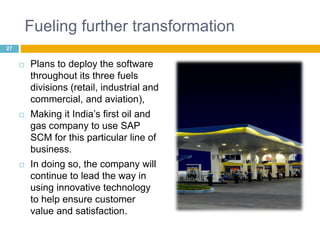
Fueling further transformation 
 Plans to deploy the software 
throughout its three fuels 
divisions (retail, industrial and 
commercial, and aviation), 
 Making it India’s first oil and 
gas company to use SAP 
SCM for this particular line of 
business. 
 In doing so, the company will 
continue to lead the way in 
using innovative technology 
to help ensure customer 
value and satisfaction. 
27
28

Supply Chain Management

  • 1.
    SUPPLY CHAIN MANAGEMENT (SCM) 1 Presented by: Bhagirath Parmar - 72 Shruti Pithadia - 74 Mahesh Purohit - 76 Nisha Sankhla - 78
  • 2.
    Introduction 2 Also known as Value Chain  Management of the flow of Inventory.  A sequence of organizations-their facilities, functions, and activities that are involved in producing and delivering a product or service.
  • 3.
    Introduction 3 Supplier Supplier Supplier Supplier Supplier Storag e Storag e Servic e Custom er Mfg. Custom er Storag e Retaile r Dist.
  • 4.
  • 5.
  • 6.
    Importance of SCM 6  To gain efficiencies from procurement, distribution and logistics.  To make outsourcing more effective  To reduce transportation cost of inventories  To meet competitive pressures from • Shorter development times • More new products • Demand for more customization
  • 7.
    Importance of SCM 7  To meet the challenge of globalization and longer supply chains  To meet the new challenges from globalization  To manage the complexities of supply chains  To manage the inventories needed across the supply chain
  • 8.
    Disadvantages of SCM 8  Investment  Cost  Productivity  Unskilled Buyer  Backlash  Other Disadvantages
  • 9.
    Objectives of SCM 9  Rapid demand fulfillment  Shortening time to order  Provide flexible planning and control mechanism  To optimize pre and post production inventory levels  Greater labor, space and equipment efficiency  Effective distribution and channel partnerships  Responsiveness and accountability to customers  Give customers what, when and how they want, at the lowest cost
  • 10.
  • 11.
    Modules of SCM 11  Demand and Supply Planning  Service parts planning  Procurement  Manufacturing  Warehousing  Order fulfillment  Transportation  Supply chain design and analytics
  • 12.
  • 13.
    Issues in SCM 13  Strategic • Determining the number, location and capacity of facilities • Make or buy decisions • Forming strategic alliances • Network design  Tactical • Determining inventory levels • Quality-related decisions • Production, procurement, logistics plans • Demand forecast
  • 14.
    Issues in SCM 14  Operational • Production planning and control decisions • Goods and service delivery scheduling • Work center scheduling  Execution • Order cycle • Material movement
  • 15.
    Software & Solutions  Designed for small to mid-sized companies looking for a complete inventory management system without replacing QuickBooks for accounting. 15 Fishbowl SNAP FULFIL  A full-featured Cloud-based/ SaaS Warehouse Management System designed to meet the needs of a variety of businesses in a multitude of industries.  Works to improve the efficiency of picking and dispatching, while reducing the time it takes to fulfil sorders.
  • 16.
    Software & Solutions  A powerful, user-friendly Transportation Management System  Offers a full suite of tools that include direct e-carrier management, user-friendly procurement, RFQ development and bid capabilities, load tendering, robust analytics, and more, all from a simple and sleek interface that's accessible anywhere with an Internet connection.  eBid eXchange by eBid Systems offers a robust, integrated web-based solution that includes a variety of comprehensive features to support the complete contract procurement cycle  In addition to supplier management and procurement, eBid eXchange offers solid strategic sourcing, as well as contract and event management. 16 URoute eBid systems
  • 17.
    Software & Solutions JDA Oracle  A leading provider of global supply chain solutions.  Offers an extensive array of integrated and planning capabilities for companies to manage the entire supply chain.  Transform supply chains from a functional necessity to a competitive advantage.  Products help modernize the operations across the demand, supply and product pillars to deliver operational and innovation excellence •. 17
  • 18.
    Top 25 supplychain 2014  1. Apple  2. McDonald's  3. Amazon.com  4. Unilever  5. Procter & Gamble  6. Samsung Electronics  7. Cisco Systems  8. Intel  9. Colgate-Palmolive  10. The Coca-Cola Company  11. Inditex  12. Nike  13. H&M  14. Wal-Mart Stores  15. PepsiCo  16. Lenovo  17. Starbucks  18. 3M  19. Qualcomm  20. Seagate Technology  21. Kimberly-Clark  22. Johnson & Johnson  23. Caterpillar  24. Cummins  25. Nestlé 18
  • 19.
  • 20.
    Comparing Purchase OrderFulfillment Without EDI 20
  • 21.
    Comparing Purchase OrderFulfillment With EDI 21
  • 22.
    Supply Chain RFID 22  A flexible technology that is convenient, easy to use and well-suited for automatic operation  Replacement of barcodes  does not require contact or line-of-sight between the reader and the object to be identified;  enables multiple tags to be read simultaneously;  Can also provide security and product authentication because tags can be applied discreetly and are extremely difficult to counterfeit.  makes the supply chain considerably more precise and improves the efficiency and reliability of the entire chain.
  • 23.
    Supply Chain RFID 23 Advantages  Production Tracking  Asset management  Inventory Control  Shipping & Receiving  Returns & Recall Management  Service and Warranty Authorizations
  • 24.
    Bharat Petroleum: ReducingLogistics and Distribution Costs with SAP Supply Chain Management For BPCL and its network of more than 49 plants, 115 depots, over 100 supply locations, and 10,000- plus dealers and retailers, it takes the SAP Supply Chain Management application. 24
  • 25.
    Executive Overview Thecompany’s top objectives:  Improve responsiveness to market demand while lowering supply chain costs  Match available supply to demand at the lowest possible cost  Outperform the competition with faster, more efficient planning and execution The resolution:  Introduced the SAP® Supply Chain Management application to calibrate planning and execution with customer demand  Employed flexible IT solution to meet specific needs of each division  Received full support and guidance from senior management 25
  • 26.
    Sales growth andSupply chain costs  Key benefits:  56% reduction in inventory(average).  2.5% reduction in logistics costs.  14% improvement in demand fulfillment.  60% reduction in planning cycle time. 26
  • 27.
    Fueling further transformation  Plans to deploy the software throughout its three fuels divisions (retail, industrial and commercial, and aviation),  Making it India’s first oil and gas company to use SAP SCM for this particular line of business.  In doing so, the company will continue to lead the way in using innovative technology to help ensure customer value and satisfaction. 27
  • 28.

Editor's Notes

  • #6 Make your company goals help customer achieve their goals
  • #13 Top three are objectives and outcomes of planning. Accomplished by the business partners in a supply chain at the Execution level of SCM
  • #20 One of the earliest uses of information technology for supply chain management The electronic exchange of business transaction documents between supply chain trading partners The almost complete automation of an e-commerce supply chain process Many transactions occur over the Internet, using secure virtual private networks
  • #21 See Figure 10.3.