Clinical Supervision Foundations
About this Course
Clinical Supervision Foundations
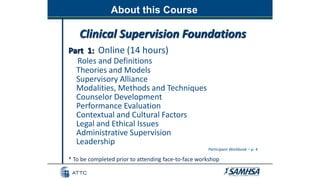
Part 1: Online (14 hours)
Roles and Definitions
Theories and Models
Supervisory Alliance
Modalities, Methods and Techniques
Counselor Development
Performance Evaluation
Contextual and Cultural Factors
Legal and Ethical Issues
Administrative Supervision
Leadership
* To be completed prior to attending face-to-face workshop
Participant Workbook – p. 4
About this Course
Clinical Supervision Foundations
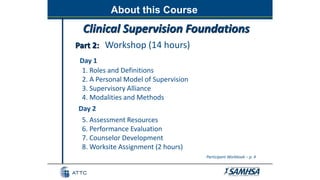
Part 2: Workshop (14 hours)
Day 1
1. Roles and Definitions
2. A Personal Model of Supervision
3. Supervisory Alliance
4. Modalities and Methods
Day 2
5. Assessment Resources
6. Performance Evaluation
7. Counselor Development
8. Worksite Assignment (2 hours)
Participant Workbook – p. 4
Why Have This Training?
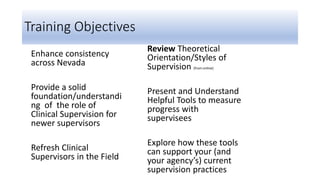
Training Objectives
Enhance consistency
across Nevada
Provide a solid
foundation/understandi
ng of the role of
Clinical Supervision for
newer supervisors
Refresh Clinical
Supervisors in the Field
Review Theoretical
Orientation/Styles of
Supervision (from online)
Present and Understand
Helpful Tools to measure
progress with
supervisees
Explore how these tools
can support your (and
your agency’s) current
supervision practices
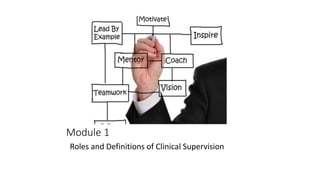
Module 1
Roles and Definitions of Clinical Supervision
Module One: Learning Objectives
1. Define primary goals of
supervisory practice
2. Identify discrepancies between
ideal and current practice
3. Analyze own supervisory practice
4. Identify barriers to balancing roles and
responsibilities
Participant Workbook – p. 12
Your Contribution
What Inspires you to Provide Clinical Supervision?
What do you hope to accomplish with your Supervisees?
Four Supervisory Goals
1. Promote professional growth
2. Protect welfare of clients
3. Monitor counselor
performance
4. Empower counselor
Participant Workbook – p. 13
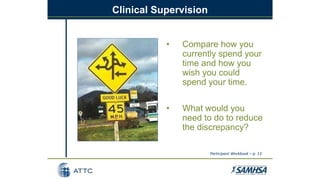
Clinical Supervision
• Compare how you
currently spend your
time and how you
wish you could
spend your time.
• What would you
need to do to reduce
the discrepancy?
Participant Workbook – p. 13
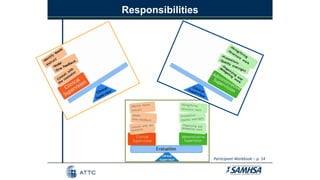
Responsibilities
Participant Workbook – p. 14
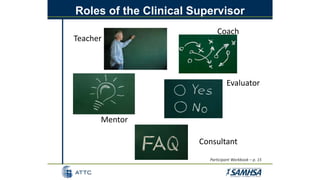
Roles of the Clinical Supervisor
Teacher
Coach
Mentor
Evaluator
Consultant
Participant Workbook – p. 15
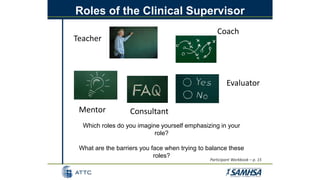
Roles of the Clinical Supervisor
Teacher
Coach
Mentor
Evaluator
Consultant
Participant Workbook – p. 15
Which roles do you imagine yourself emphasizing in your
role?
What are the barriers you face when trying to balance these
roles?
What are Characteristics of an Effective
Supervisor?
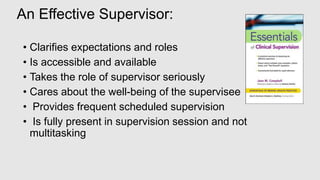
An Effective Supervisor:
• Clarifies expectations and roles
• Is accessible and available
• Takes the role of supervisor seriously
• Cares about the well-being of the supervisee
• Provides frequent scheduled supervision
• Is fully present in supervision session and not
multitasking
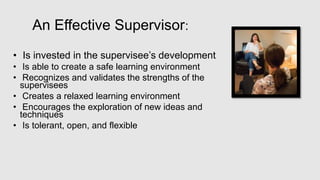
An Effective Supervisor:
• Is invested in the supervisee’s development
• Is able to create a safe learning environment
• Recognizes and validates the strengths of the
supervisees
• Creates a relaxed learning environment
• Encourages the exploration of new ideas and
techniques
• Is tolerant, open, and flexible
An Effective Supervisor:
• Models appropriate ethical behavior
• Maintains consistent and appropriate
boundaries
• Is competent and credible
• Is knowledgeable and up to date
• Has extensive practical experience in the area
in which supervising
• Demonstrates how to get work done in the
organization
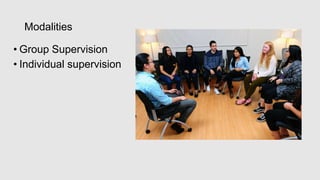
Modalities
• Group Supervision
• Individual supervision
Topics in Supervision:
Ethics/confidentiality
Boundaries
Clinical skills
Exam preparation
Professional development
Personal development
Ongoing mentorship
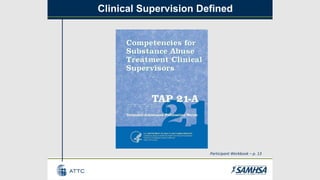
Clinical Supervision Defined
Participant Workbook – p. 13
Tip 21-A Definition of a Supervisor
“A social influence process that occurs over time, in which the
supervisor participates with supervisees to ensure quality
clinical care. Effective supervisors observe, mentor, coach,
evaluate, inspire, and create an atmosphere that promotes self-
motivation, learning, and professional development. They build
teams, create cohesion, resolve conflict, and shape
agency culture, while attending to ethical and diversity issues in
all aspects of the process. Such supervision is key to both quality
improvement and the successful implementation of consensus-
and evidence-based practices.”

Module 1

  • 1.
  • 2.
    About this Course ClinicalSupervision Foundations Part 1: Online (14 hours) Roles and Definitions Theories and Models Supervisory Alliance Modalities, Methods and Techniques Counselor Development Performance Evaluation Contextual and Cultural Factors Legal and Ethical Issues Administrative Supervision Leadership * To be completed prior to attending face-to-face workshop Participant Workbook – p. 4
  • 3.
    About this Course ClinicalSupervision Foundations Part 2: Workshop (14 hours) Day 1 1. Roles and Definitions 2. A Personal Model of Supervision 3. Supervisory Alliance 4. Modalities and Methods Day 2 5. Assessment Resources 6. Performance Evaluation 7. Counselor Development 8. Worksite Assignment (2 hours) Participant Workbook – p. 4
  • 4.
    Why Have ThisTraining?
  • 5.
    Training Objectives Enhance consistency acrossNevada Provide a solid foundation/understandi ng of the role of Clinical Supervision for newer supervisors Refresh Clinical Supervisors in the Field Review Theoretical Orientation/Styles of Supervision (from online) Present and Understand Helpful Tools to measure progress with supervisees Explore how these tools can support your (and your agency’s) current supervision practices
  • 6.
    Module 1 Roles andDefinitions of Clinical Supervision
  • 7.
    Module One: LearningObjectives 1. Define primary goals of supervisory practice 2. Identify discrepancies between ideal and current practice 3. Analyze own supervisory practice 4. Identify barriers to balancing roles and responsibilities Participant Workbook – p. 12
  • 8.
    Your Contribution What Inspiresyou to Provide Clinical Supervision? What do you hope to accomplish with your Supervisees?
  • 9.
    Four Supervisory Goals 1.Promote professional growth 2. Protect welfare of clients 3. Monitor counselor performance 4. Empower counselor Participant Workbook – p. 13
  • 10.
    Clinical Supervision • Comparehow you currently spend your time and how you wish you could spend your time. • What would you need to do to reduce the discrepancy? Participant Workbook – p. 13
  • 11.
  • 12.
    Roles of theClinical Supervisor Teacher Coach Mentor Evaluator Consultant Participant Workbook – p. 15
  • 13.
    Roles of theClinical Supervisor Teacher Coach Mentor Evaluator Consultant Participant Workbook – p. 15 Which roles do you imagine yourself emphasizing in your role? What are the barriers you face when trying to balance these roles?
  • 14.
    What are Characteristicsof an Effective Supervisor?
  • 15.
    An Effective Supervisor: •Clarifies expectations and roles • Is accessible and available • Takes the role of supervisor seriously • Cares about the well-being of the supervisee • Provides frequent scheduled supervision • Is fully present in supervision session and not multitasking
  • 16.
    An Effective Supervisor: •Is invested in the supervisee’s development • Is able to create a safe learning environment • Recognizes and validates the strengths of the supervisees • Creates a relaxed learning environment • Encourages the exploration of new ideas and techniques • Is tolerant, open, and flexible
  • 17.
    An Effective Supervisor: •Models appropriate ethical behavior • Maintains consistent and appropriate boundaries • Is competent and credible • Is knowledgeable and up to date • Has extensive practical experience in the area in which supervising • Demonstrates how to get work done in the organization
  • 18.
  • 19.
    Topics in Supervision: Ethics/confidentiality Boundaries Clinicalskills Exam preparation Professional development Personal development Ongoing mentorship
  • 21.
  • 22.
    Tip 21-A Definitionof a Supervisor “A social influence process that occurs over time, in which the supervisor participates with supervisees to ensure quality clinical care. Effective supervisors observe, mentor, coach, evaluate, inspire, and create an atmosphere that promotes self- motivation, learning, and professional development. They build teams, create cohesion, resolve conflict, and shape agency culture, while attending to ethical and diversity issues in all aspects of the process. Such supervision is key to both quality improvement and the successful implementation of consensus- and evidence-based practices.”

Editor's Notes

  • #3 See Trainer Guide (Preface) for description – page 4
  • #4 Trainer Guidebook – page 14 – Also read Preface on page 4
  • #8 Purpose of this module is to provide you with the opportunity to examine your current or anticipated supervisory pracatice and your preferences for Trainer Guidebook – page 17
  • #10 The 4 primary goals of clinical supervision are to… This requires up to balance the various responsibilities and roles of a clinical sueprvisor. Trainer Guidebook – page 18
  • #11 Consider the questions…Let’s Discuss The point of this course is to help you to move your clinical supervision closer to the type of supervision described in the definition. Trainer Guidebook – page 18
  • #12 In the on-line course you reviewed the various responsibilities of clinical supervisors. Clinical focus=improving skills and effectiveness of supervisee Administrative=following and helping counselors follow administrative and procedural aspects of the agency’s work. Evaluation is central to both clinical and administrative responsibilies. Trainer Guidebook – page 19
  • #13 Which roles do you imagine yourself emphasizing in supervision? What are the barriers you face when trying to balance these roles? Next we will be discussing theories and models of supervision….. Trainer Guidebook – page 20
  • #14 Which roles do you imagine yourself emphasizing in supervision? What are the barriers you face when trying to balance these roles? Next we will be discussing theories and models of supervision….. Trainer Guidebook – page 20
  • #22 On pg. 13 in your workbook you will find CSAT’s definition of Clinical Supervision published in TAP 21-A (2007). Please read and consider the questions…Let’s Discuss