The Power ofContinuous
Feedback
Research shows that providing continuous feedback has a powerful 0.79
effect size on student achievement, highlighting its critical role in
education.
Despite this, 62% of adults globally report having struggled with
learning issues, underlining the need for effective feedback early in
education.
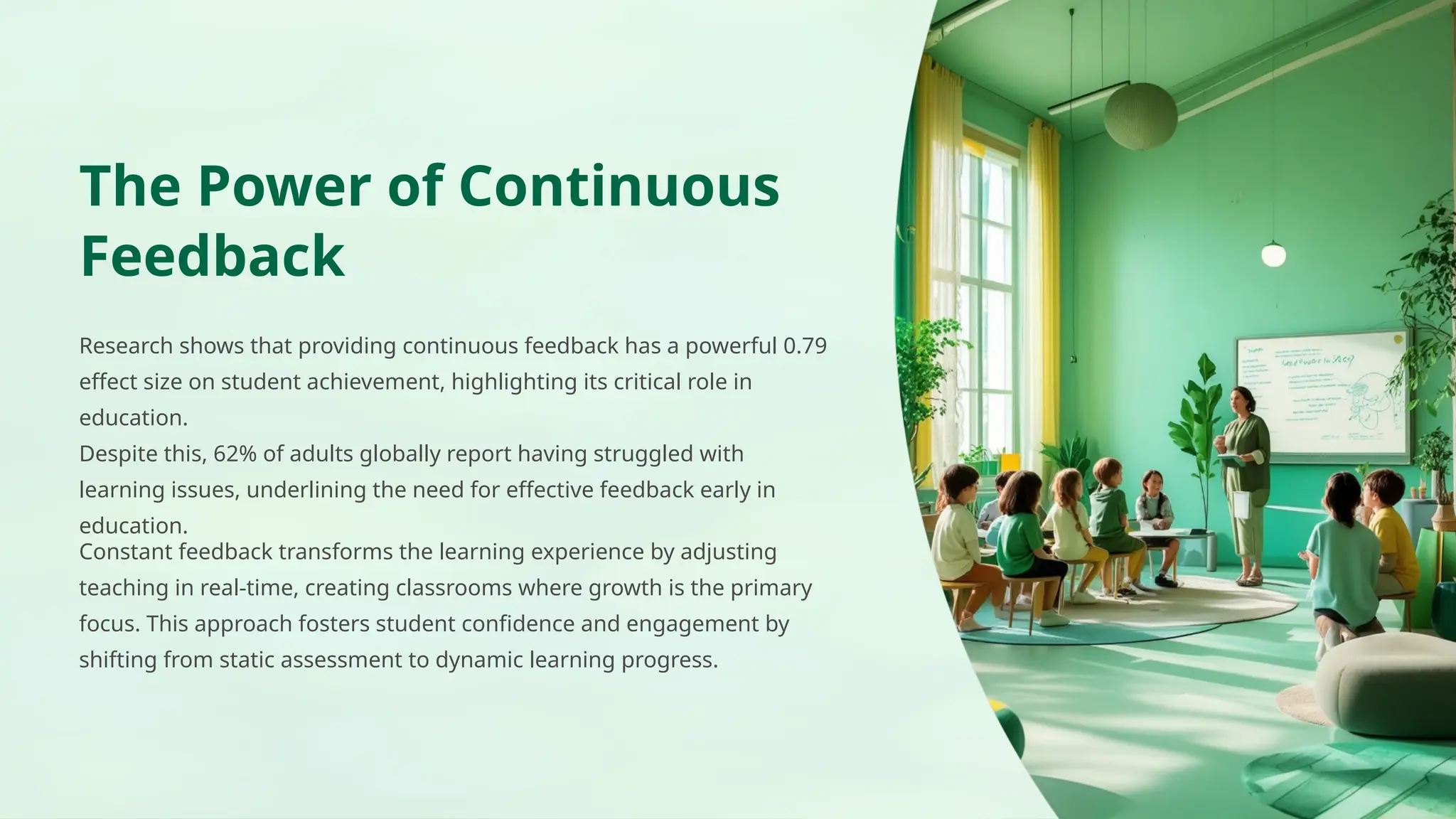
Constant feedback transforms the learning experience by adjusting
teaching in real-time, creating classrooms where growth is the primary
focus. This approach fosters student confidence and engagement by
shifting from static assessment to dynamic learning progress.
2.
Why Continuous Feedback
Matters
BridgingGaps
Continuous feedback reduces
the disparity between
students’ current abilities and
learning objectives, providing
individualized paths to
mastery.
Process Over Product
It shifts emphasis from the
final product to the ongoing
learning process, emphasizing
progress over perfection.
Self-Regulation
It promotes metacognitive skills, helping students monitor and
regulate their own learning journey.
3.
The Feedback Challenge
Class-widevs Individual
Most feedback targets the entire class rather than personalized
guidance, limiting its effectiveness.
Communication Gap
Students often struggle to understand feedback due to unclear
language or lack of actionable steps.
Quality Over Quantity
Teachers sometimes prioritize the amount of feedback over its impact,
creating overload without improvement.
Perception Disconnect
There is a 30% gap between what teachers think is helpful and what
students actually value in feedback.
4.
Effective Feedback Framework
Specific& Actionable
Feedback must be tailored to each
student's needs, providing clear next
steps to improve learning.
Timely Delivery
Providing feedback promptly allows
students to apply suggestions while
the learning context is fresh.
Balance Strengths & Growth
Highlight what students do well as
well as areas to develop, fostering
motivation and self-confidence.
5.
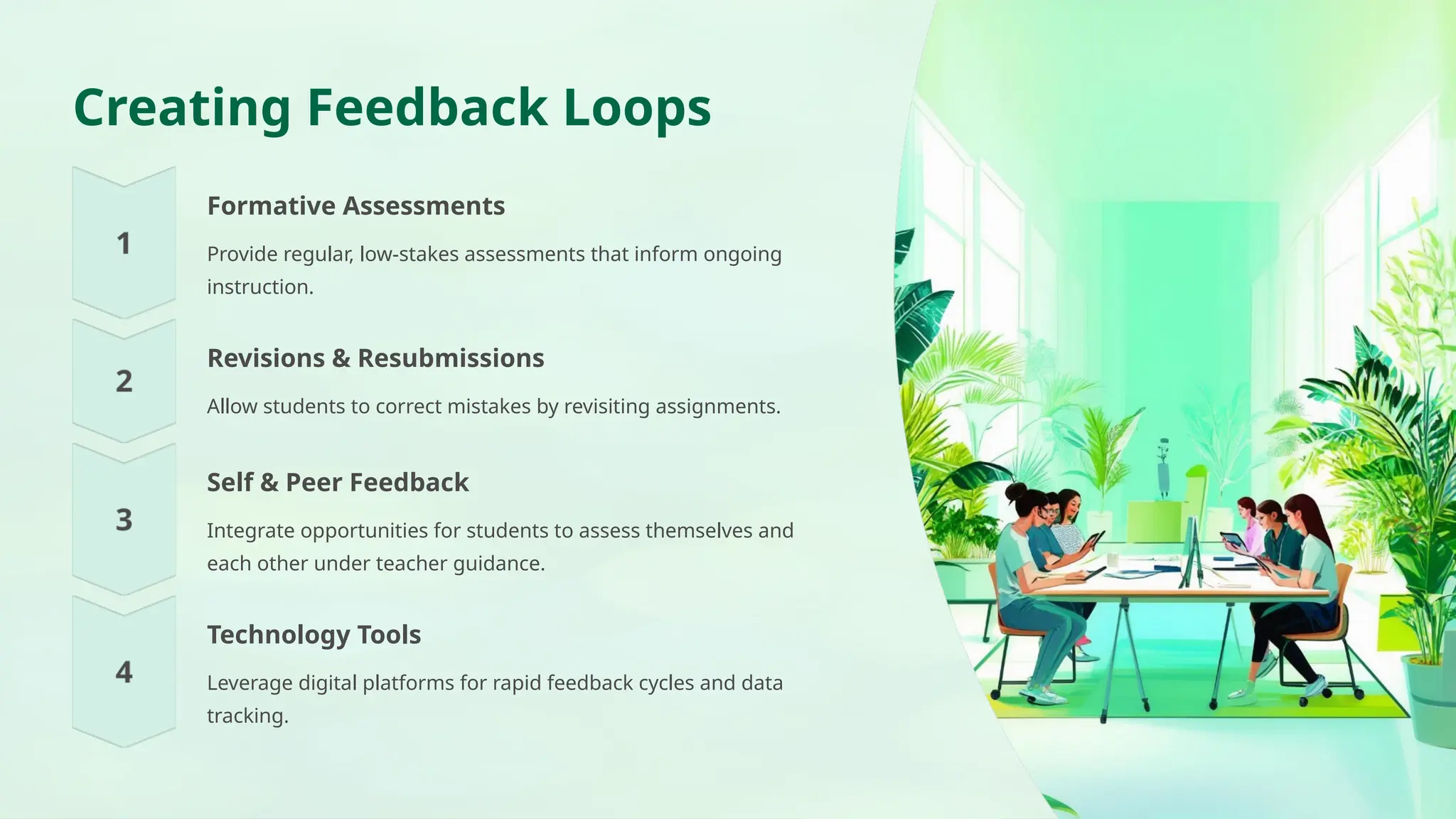
Creating Feedback Loops
FormativeAssessments
Provide regular, low-stakes assessments that inform ongoing
instruction.
Revisions & Resubmissions
Allow students to correct mistakes by revisiting assignments.
Self & Peer Feedback
Integrate opportunities for students to assess themselves and
each other under teacher guidance.
Technology Tools
Leverage digital platforms for rapid feedback cycles and data
tracking.
6.
Psychological Impact ofFeedback
Builds Confidence
Positive, genuine feedback reinforces
student self-belief and resilience.
Growth Mindset
Constructive criticism encourages
viewing intelligence as developable
rather than fixed.
Ownership
Students take more responsibility when
they see progress tied to effort and
feedback.
Motivation
Engagement rises when feedback
makes learning feel achievable and
meaningful.
7.
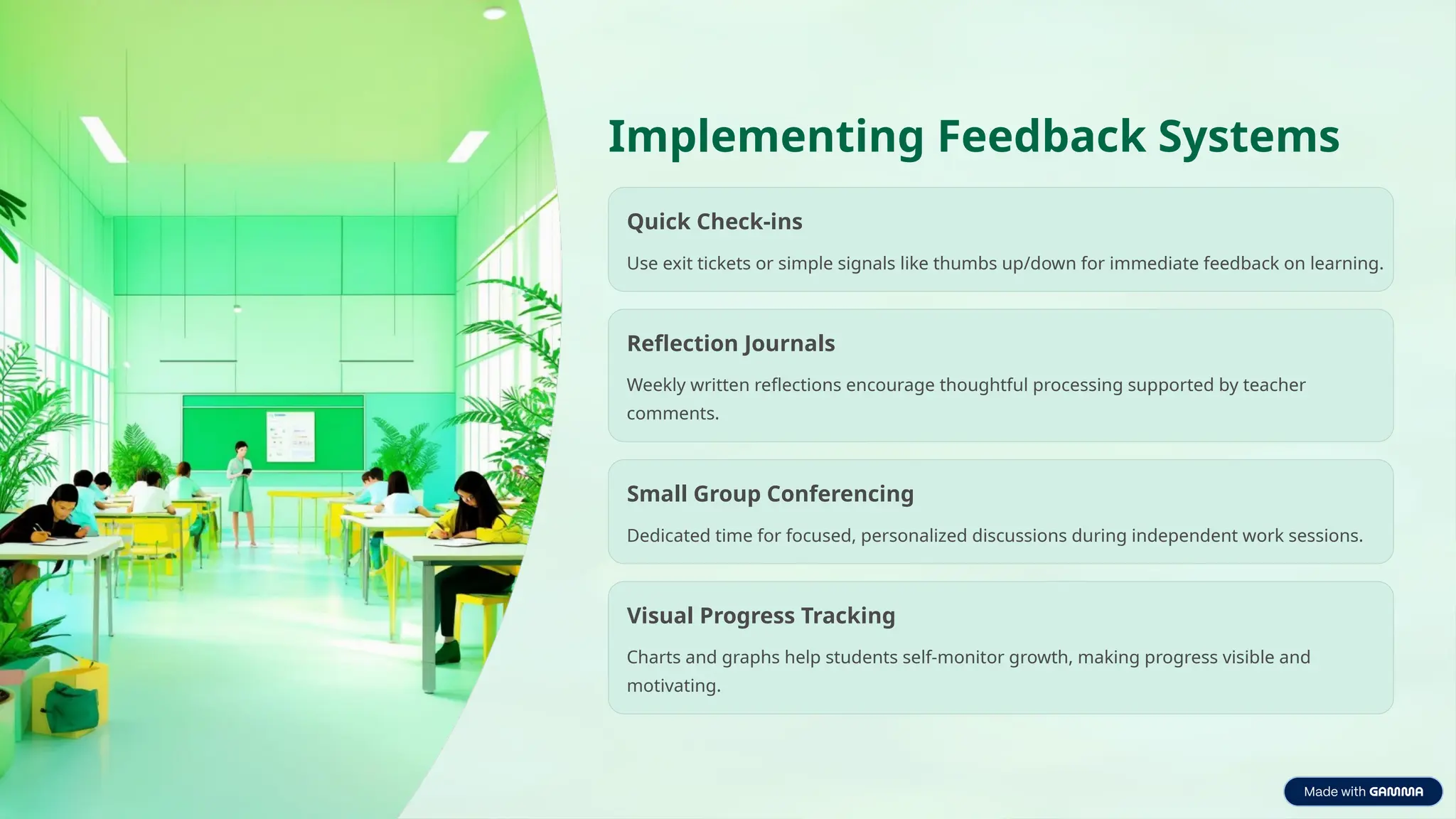
Implementing Feedback Systems
QuickCheck-ins
Use exit tickets or simple signals like thumbs up/down for immediate feedback on learning.
Reflection Journals
Weekly written reflections encourage thoughtful processing supported by teacher
comments.
Small Group Conferencing
Dedicated time for focused, personalized discussions during independent work sessions.
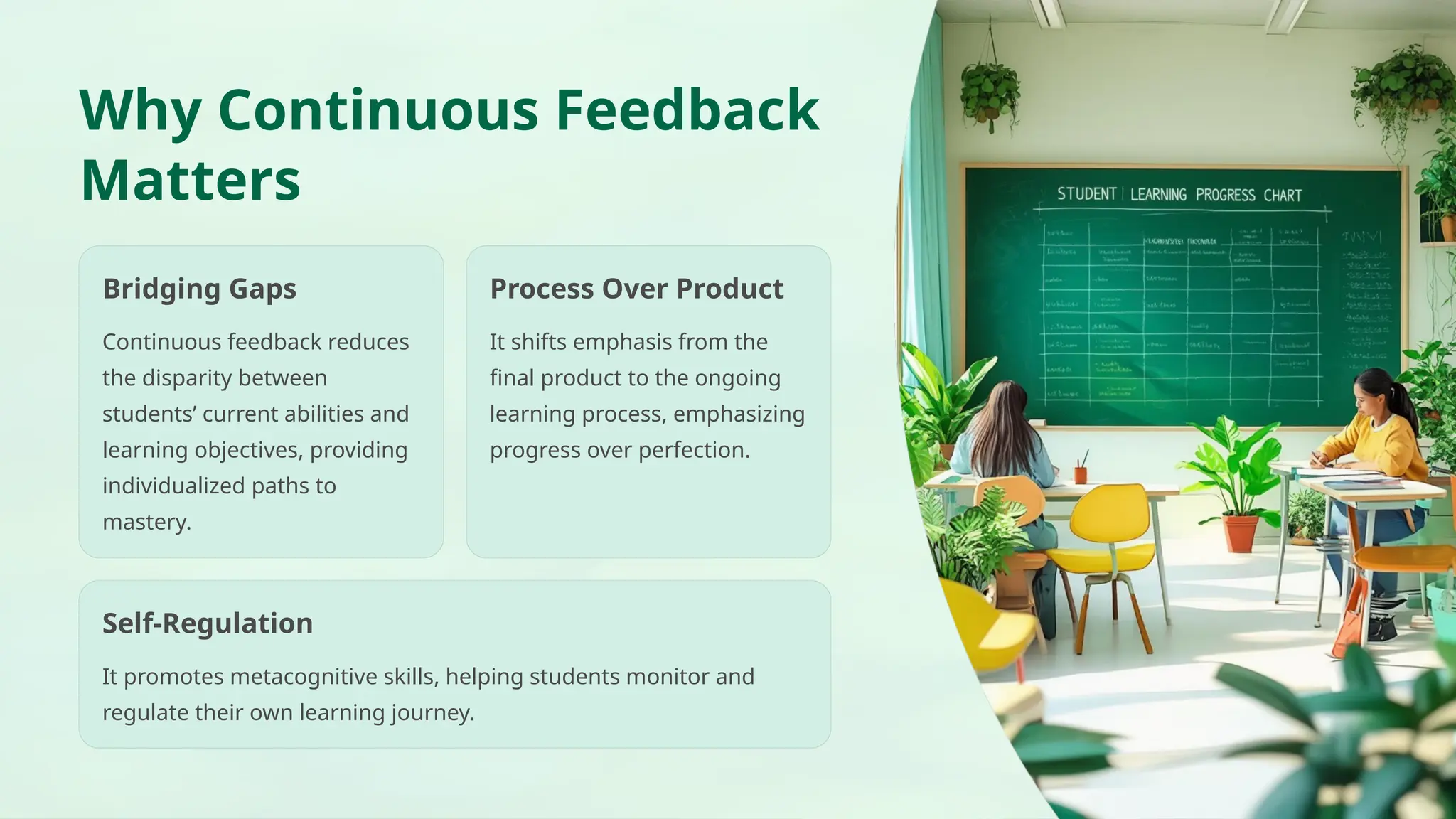
Visual Progress Tracking
Charts and graphs help students self-monitor growth, making progress visible and
motivating.
8.
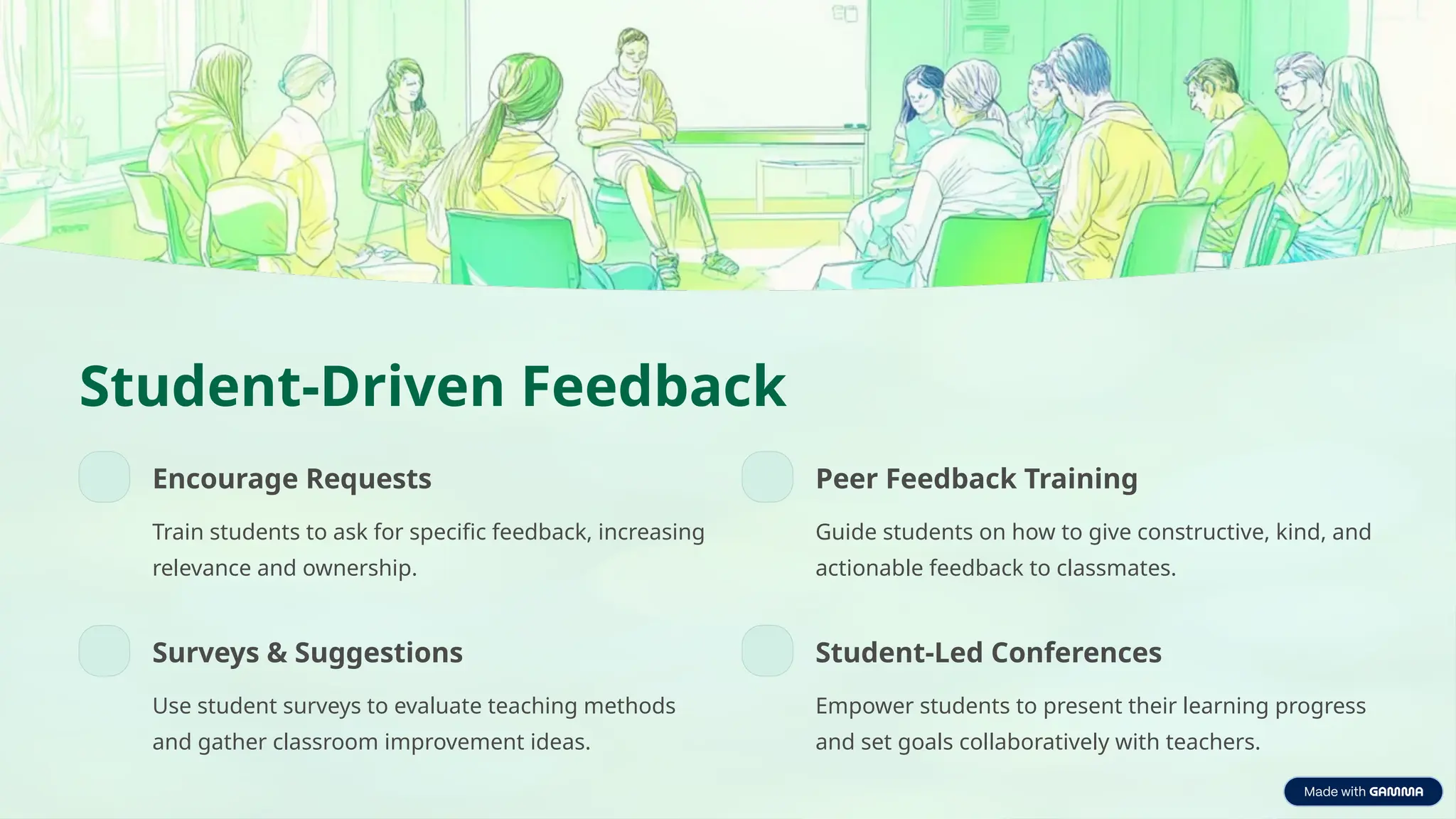
Student-Driven Feedback
Encourage Requests
Trainstudents to ask for specific feedback, increasing
relevance and ownership.
Peer Feedback Training
Guide students on how to give constructive, kind, and
actionable feedback to classmates.
Surveys & Suggestions
Use student surveys to evaluate teaching methods
and gather classroom improvement ideas.
Student-Led Conferences
Empower students to present their learning progress
and set goals collaboratively with teachers.
9.
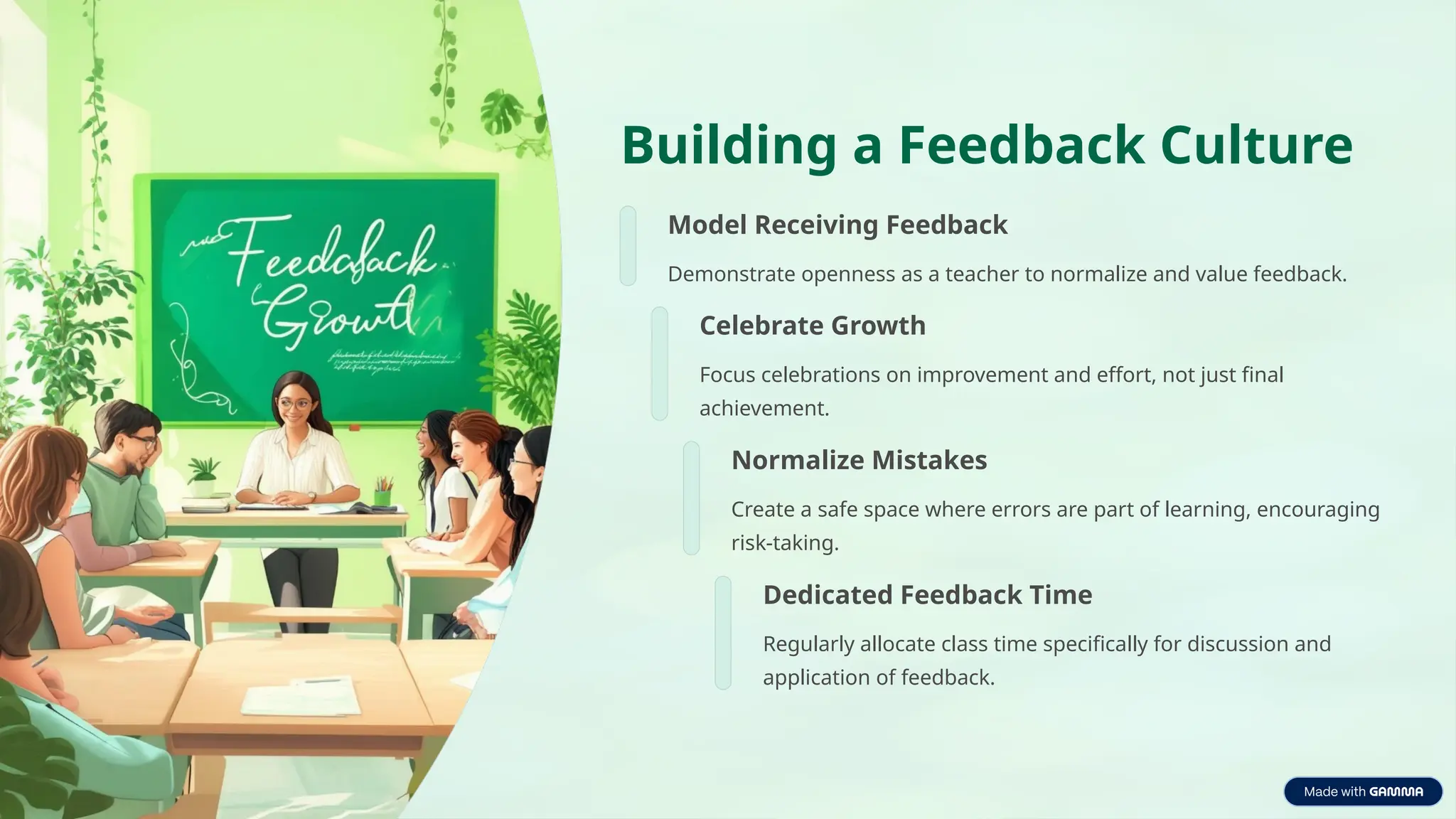
Building a FeedbackCulture
Model Receiving Feedback
Demonstrate openness as a teacher to normalize and value feedback.
Celebrate Growth
Focus celebrations on improvement and effort, not just final
achievement.
Normalize Mistakes
Create a safe space where errors are part of learning, encouraging
risk-taking.
Dedicated Feedback Time
Regularly allocate class time specifically for discussion and
application of feedback.
10.
Moving Forward: YourFeedback Plan
Assess Current Systems
Reflect on existing feedback methods and identify what’s
working well.
Immediate Actions
Choose simple, effective feedback practices you could
implement by tomorrow.
Measure Impact
Develop strategies to track how enhanced feedback affects
student learning and engagement.
Overcoming Barriers
Identify challenges in your classroom setting and
brainstorm solutions with colleagues.
Seek Support
Find mentors, peers, or professional development
resources to guide your feedback journey.