Give and Receive the Feedback
PRESENTED BY : MD PERWEZ ALAM
Encouraging a feedback culture in your workplace
Introduction
Essential aspect of personal and professional development.
Feedback is the process of providing individuals with information about
their performance or behavior, which can be used to improve future
performance.
It helps individuals identify their strengths and weaknesses, understand
how their behavior and actions impact others.
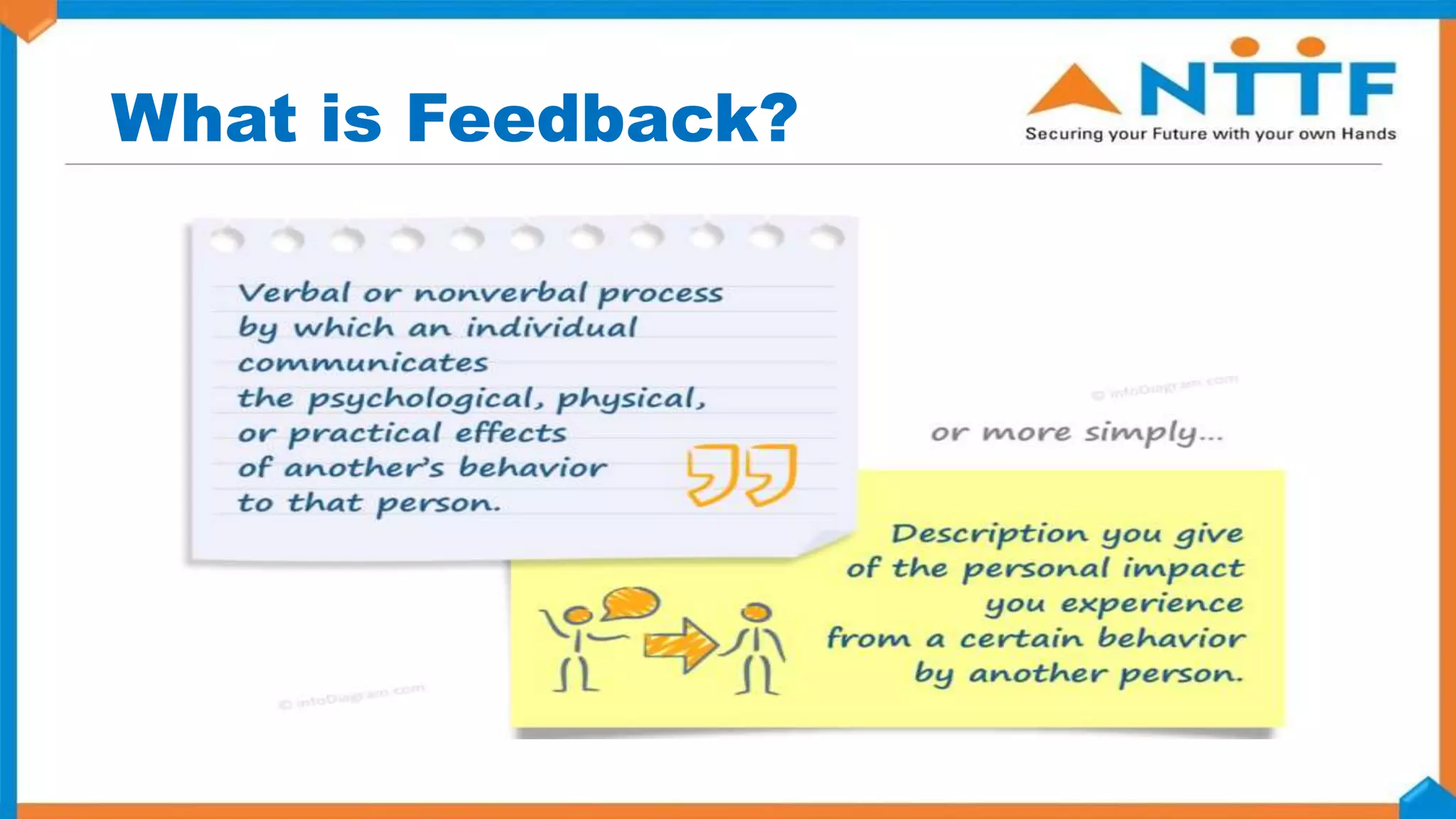
What is Feedback?
Types of Feedback
The Purpose of Feedback
Feedback can be used in a variety of contexts, including:
1. Personal development
2. Professional development
3. Team development
4. Evaluation
• The purpose of feedback is not to criticize or judge, but rather to provide
constructive criticism and guidance.
• It is important that feedback is delivered in a respectful and supportive way, with
the intention of helping the individual improve and grow
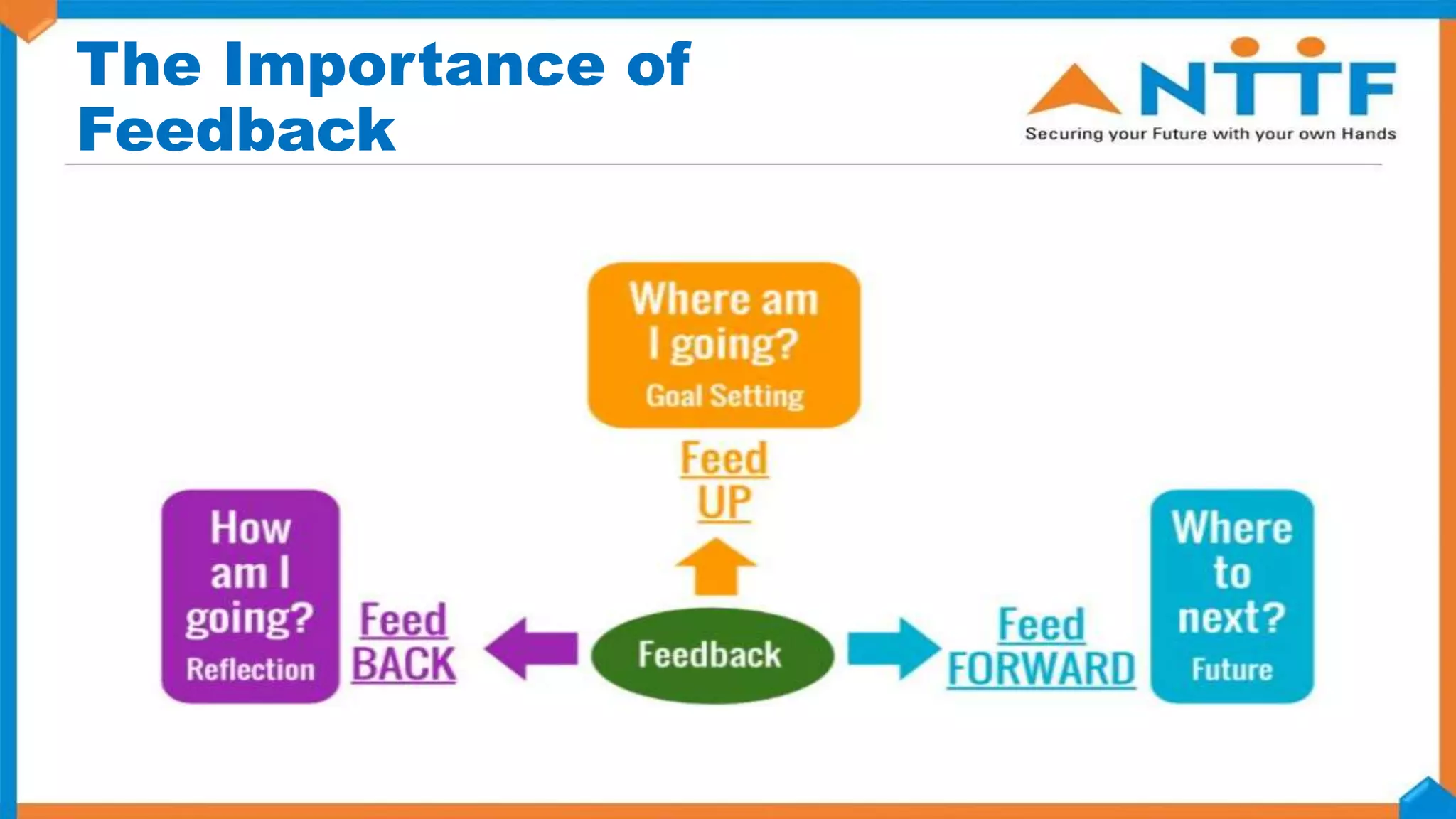
The Importance of
Feedback
Principle of Feedback
Balancing Positive and
Constructive Feedback
• What type of Feedback are you
better at giving?(Positive or
Constructive)?
• Why do you think this is the
case?
• Why should you balance Positive
and constructive Feedback?
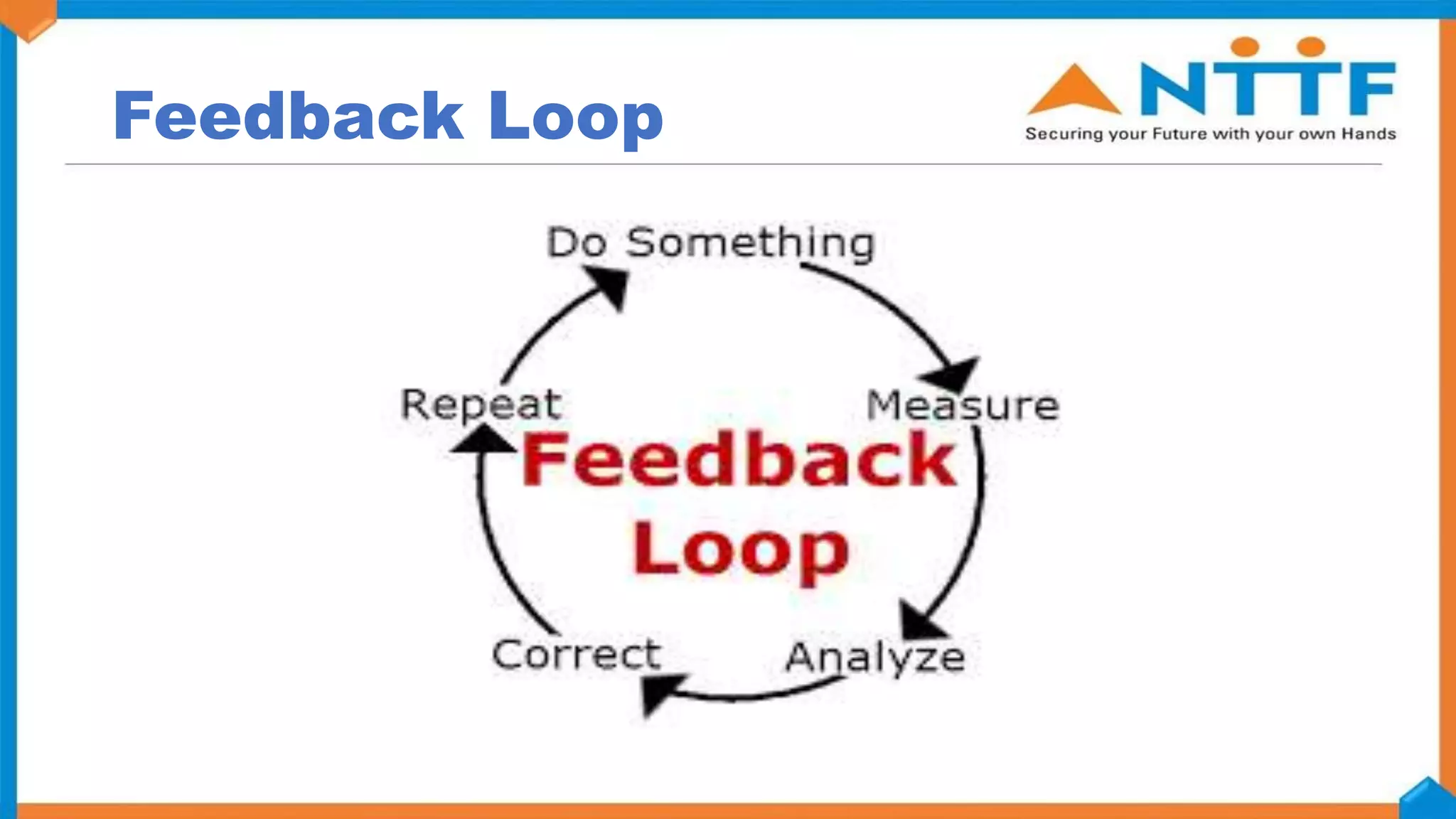
Feedback Loop
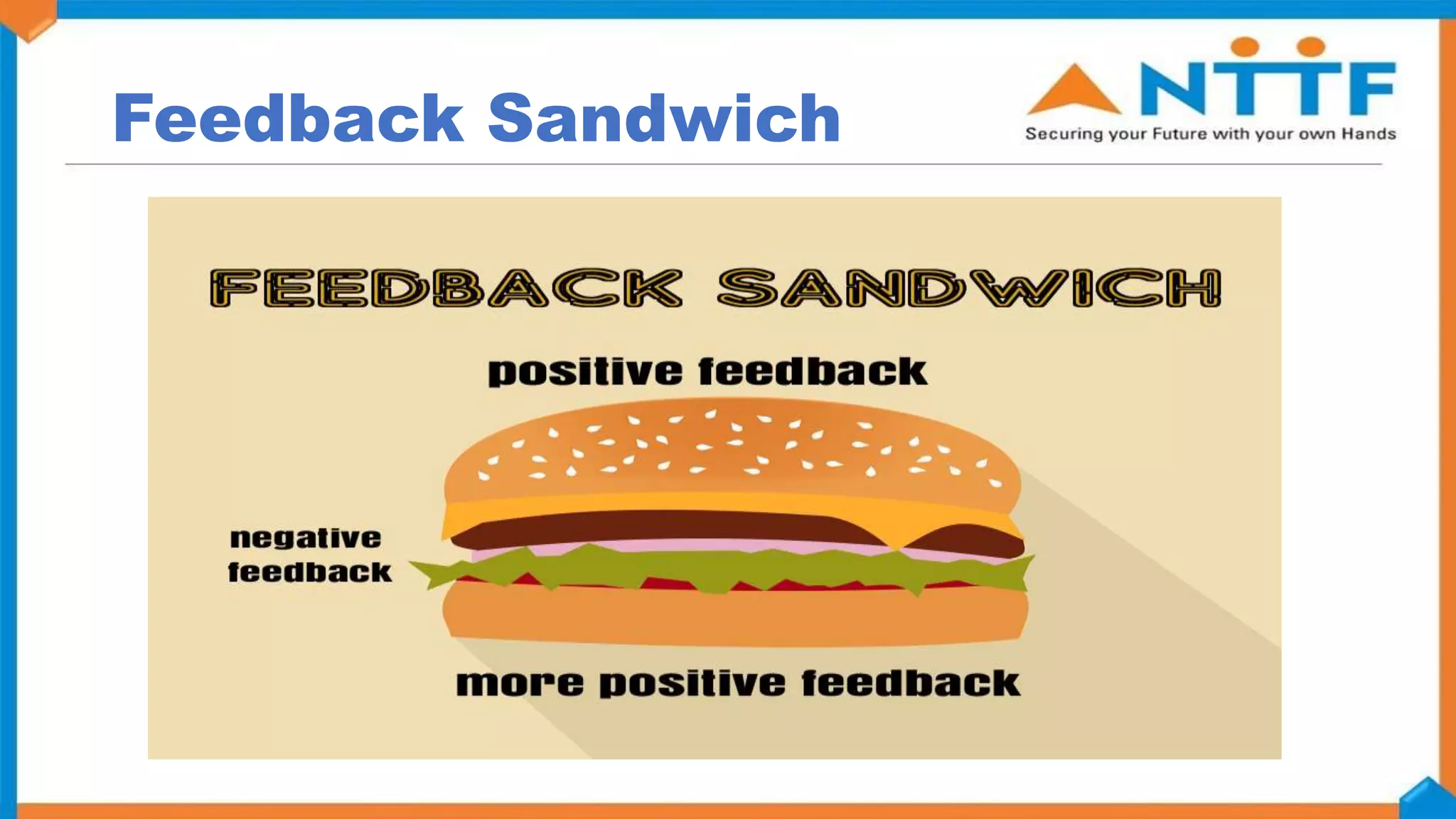
Feedback Sandwich
Why feedback is important for
personal and professional growth
1. Identifying areas for improvement.
2. Learning from mistakes.
3. Increasing self-awareness.
4. Building relationships.
5. Enhancing performance.
Characteristics of giving
effective feedback
Timely
• Feedback should be given as soon as possible after the event or behavior has occurred.
• Delayed feedback may not be as effective.
Specific
• Feedback should be specific and targeted towards the behavior or action being evaluated. V
• ague or general feedback is not helpful and can be confusing.
Actionable
• Feedback should provide actionable steps that the individual can take to improve their performance.
Balanced
• Feedback should be balanced, highlighting both strengths and areas for improvement.
• This helps to motivate and encourage individuals to continue doing what they are doing well, also address the
areas that need improvement.
How to Give and Receive the
Feedback
Give the Feedback
Be specific and objective about the
behavior or action.
Use "I" statements to avoid sounding
accusatory.
Focus on the behavior
Provide suggestions
Receive the Feedback
Listen actively and without judgment.
Seek clarification if necessary.
Reflect on the feedback before
responding.
Thank the person for their feedback.
Effective feedback helps us improve. Johari
Window, which describes 4 parts of our self-
awareness:
1. Open What we know about ourselves, and
is also known by others.
2. Blindspot What we don’t know about
ourselves, but is known by others
3. Hidden What we know about ourselves,
but is not known by others.
4. Unknown What we don’t know about
ourselves, and is not known by others.
Qualities of Effective
Feedback
7 Qualities
of Effective
Feedback
Kind
Timely
Specific Positive
Honest
Brief
Useful
Benefits of Giving and
Receiving Feedback
Feedback Reality VS
Perceptions
• Most people really want to know
how they are doing.
• They want to know if other people
like what they are doing.
• They also want to know if something
could be done more effectively or if
boundaries are being overstepped.
Feedback Strategies
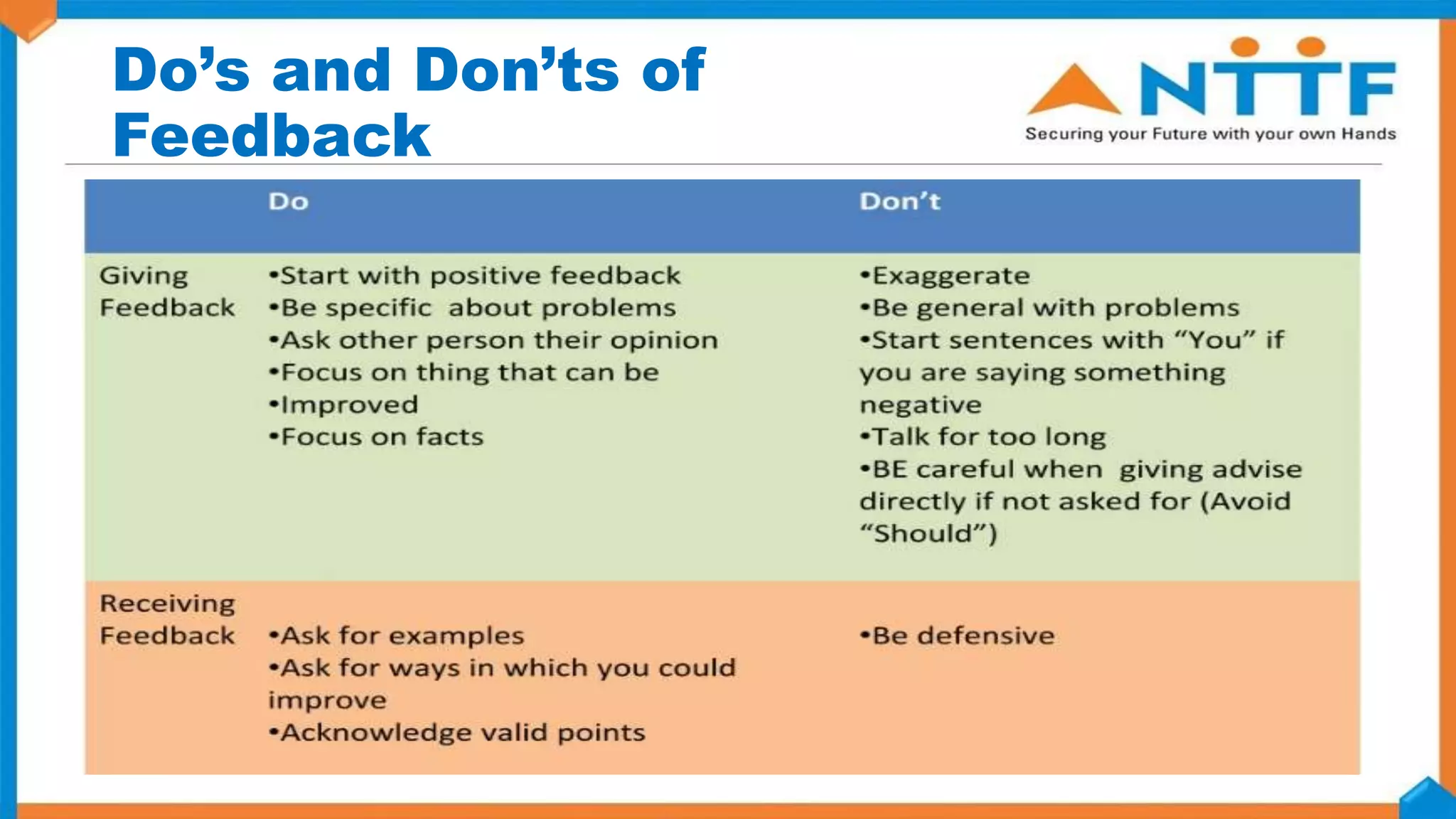
Do’s and Don’ts of
Feedback
THANK YOU

Feedback.pptx

  • 1.
    Give and Receivethe Feedback PRESENTED BY : MD PERWEZ ALAM Encouraging a feedback culture in your workplace
  • 2.
    Introduction Essential aspect ofpersonal and professional development. Feedback is the process of providing individuals with information about their performance or behavior, which can be used to improve future performance. It helps individuals identify their strengths and weaknesses, understand how their behavior and actions impact others.
  • 4.
  • 5.
  • 6.
    The Purpose ofFeedback Feedback can be used in a variety of contexts, including: 1. Personal development 2. Professional development 3. Team development 4. Evaluation • The purpose of feedback is not to criticize or judge, but rather to provide constructive criticism and guidance. • It is important that feedback is delivered in a respectful and supportive way, with the intention of helping the individual improve and grow
  • 7.
  • 8.
  • 9.
    Balancing Positive and ConstructiveFeedback • What type of Feedback are you better at giving?(Positive or Constructive)? • Why do you think this is the case? • Why should you balance Positive and constructive Feedback?
  • 10.
  • 11.
  • 13.
    Why feedback isimportant for personal and professional growth 1. Identifying areas for improvement. 2. Learning from mistakes. 3. Increasing self-awareness. 4. Building relationships. 5. Enhancing performance.
  • 14.
    Characteristics of giving effectivefeedback Timely • Feedback should be given as soon as possible after the event or behavior has occurred. • Delayed feedback may not be as effective. Specific • Feedback should be specific and targeted towards the behavior or action being evaluated. V • ague or general feedback is not helpful and can be confusing. Actionable • Feedback should provide actionable steps that the individual can take to improve their performance. Balanced • Feedback should be balanced, highlighting both strengths and areas for improvement. • This helps to motivate and encourage individuals to continue doing what they are doing well, also address the areas that need improvement.
  • 15.
    How to Giveand Receive the Feedback Give the Feedback Be specific and objective about the behavior or action. Use "I" statements to avoid sounding accusatory. Focus on the behavior Provide suggestions Receive the Feedback Listen actively and without judgment. Seek clarification if necessary. Reflect on the feedback before responding. Thank the person for their feedback.
  • 16.
    Effective feedback helpsus improve. Johari Window, which describes 4 parts of our self- awareness: 1. Open What we know about ourselves, and is also known by others. 2. Blindspot What we don’t know about ourselves, but is known by others 3. Hidden What we know about ourselves, but is not known by others. 4. Unknown What we don’t know about ourselves, and is not known by others.
  • 17.
    Qualities of Effective Feedback 7Qualities of Effective Feedback Kind Timely Specific Positive Honest Brief Useful
  • 18.
    Benefits of Givingand Receiving Feedback
  • 19.
    Feedback Reality VS Perceptions •Most people really want to know how they are doing. • They want to know if other people like what they are doing. • They also want to know if something could be done more effectively or if boundaries are being overstepped.
  • 20.
  • 23.
  • 24.