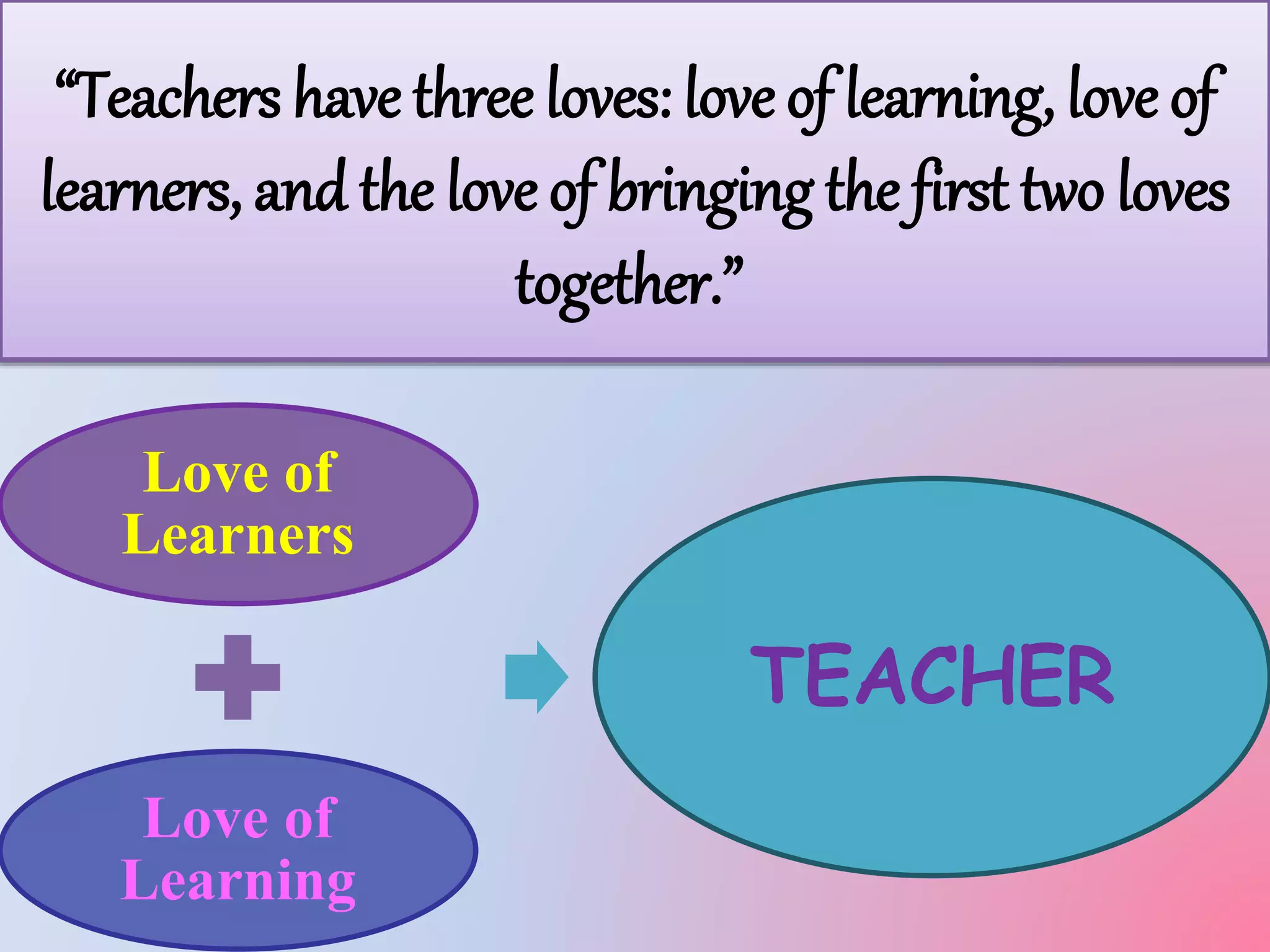
“Teachers have three loves: love of learning, love of 
learners, and the love of bringing the first two loves 
together.” 
Love of 
Learners 
Love of 
Learning 
TEACHER
Patience in a teacher- Basic components 
• Knowing how to delay judgement and give 
encouragement 
• Providing constructive feedback that supports 
the child’s thinking 
• Being able to use more than one way to 
explain a concept 
• Understanding the concept thoroughly
Aspirations of a good teacher 
• Having high expectations- Effective teachers 
strive to motivate and engage all their 
students in learning. 
• Using a range of pedagogies-There are many 
things that students can learn themselves 
through discovery, with the teacher structuring 
the learning to suit. There also are many things 
that require the teacher to teach in a more 
direct way.
A teacher who is attempting to teach 
without inspiring the pupil with a desire to 
learn is hammering o cold iron. 
• Encouraging student responsibility-Effective 
teachers teach in a way that encourages 
students to take greater responsibility for their 
own learning. 
• Having mastery of their teaching content- 
Effective teachers have a thorough knowledge 
of their subject content and skills.
What the teacher is, is more 
important than what he teaches. 
• Building positive relationships-Effective 
teachers develop productive relationships 
with their students – they get to know them 
and take a particular interest in their overall 
development and progress. 
• They treat their students with respect and 
expect the same in return.
Classroom Management –Basic Principles 
• Establish clear rules where rules are needed-rules 
without enforcement is wishful thinking. 
• Let students assume independent 
responsibility. 
• Minimize disruptions and delays. 
• Plan independent activities as well as 
organized lessons. 
• Stress positive desirable behavior.
‘'In an effective classroom students should not only 
know what they are doing, they should also know why 
and how'' 
• Recognize and reinforce desired behavior. 
• Use praise effectively. 
• Focus attention when beginning a lesson. 
• Keep lesson moving at a good pace. 
• Monitor attention during lessons 
• Terminate lessons that have gone on too long.
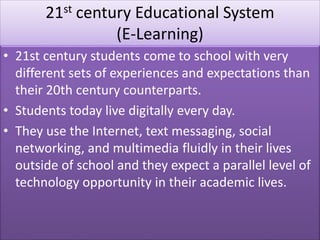
21st century Educational System 
(E-Learning) 
• 21st century students come to school with very 
different sets of experiences and expectations than 
their 20th century counterparts. 
• Students today live digitally every day. 
• They use the Internet, text messaging, social 
networking, and multimedia fluidly in their lives 
outside of school and they expect a parallel level of 
technology opportunity in their academic lives.
modeling effective, 
productive use of 
technology and then 
students perceive that 
teachers are 
• Technology is helping teachers to expand 
beyond linear, text-based learning and to 
engage students who learn best in other 
ways. 
“…engaging in their 
world.”
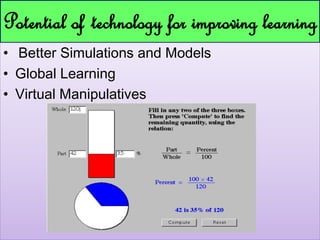
Potential of technology for improving learning 
• Better Simulations and Models 
• Global Learning 
• Virtual Manipulatives

Successful teaching2 (1)

  • 1.
    “Teachers have threeloves: love of learning, love of learners, and the love of bringing the first two loves together.” Love of Learners Love of Learning TEACHER
  • 2.
    Patience in ateacher- Basic components • Knowing how to delay judgement and give encouragement • Providing constructive feedback that supports the child’s thinking • Being able to use more than one way to explain a concept • Understanding the concept thoroughly
  • 3.
    Aspirations of agood teacher • Having high expectations- Effective teachers strive to motivate and engage all their students in learning. • Using a range of pedagogies-There are many things that students can learn themselves through discovery, with the teacher structuring the learning to suit. There also are many things that require the teacher to teach in a more direct way.
  • 4.
    A teacher whois attempting to teach without inspiring the pupil with a desire to learn is hammering o cold iron. • Encouraging student responsibility-Effective teachers teach in a way that encourages students to take greater responsibility for their own learning. • Having mastery of their teaching content- Effective teachers have a thorough knowledge of their subject content and skills.
  • 5.
    What the teacheris, is more important than what he teaches. • Building positive relationships-Effective teachers develop productive relationships with their students – they get to know them and take a particular interest in their overall development and progress. • They treat their students with respect and expect the same in return.
  • 6.
    Classroom Management –BasicPrinciples • Establish clear rules where rules are needed-rules without enforcement is wishful thinking. • Let students assume independent responsibility. • Minimize disruptions and delays. • Plan independent activities as well as organized lessons. • Stress positive desirable behavior.
  • 7.
    ‘'In an effectiveclassroom students should not only know what they are doing, they should also know why and how'' • Recognize and reinforce desired behavior. • Use praise effectively. • Focus attention when beginning a lesson. • Keep lesson moving at a good pace. • Monitor attention during lessons • Terminate lessons that have gone on too long.
  • 8.
    21st century EducationalSystem (E-Learning) • 21st century students come to school with very different sets of experiences and expectations than their 20th century counterparts. • Students today live digitally every day. • They use the Internet, text messaging, social networking, and multimedia fluidly in their lives outside of school and they expect a parallel level of technology opportunity in their academic lives.
  • 9.
    modeling effective, productiveuse of technology and then students perceive that teachers are • Technology is helping teachers to expand beyond linear, text-based learning and to engage students who learn best in other ways. “…engaging in their world.”
  • 10.
    Potential of technologyfor improving learning • Better Simulations and Models • Global Learning • Virtual Manipulatives