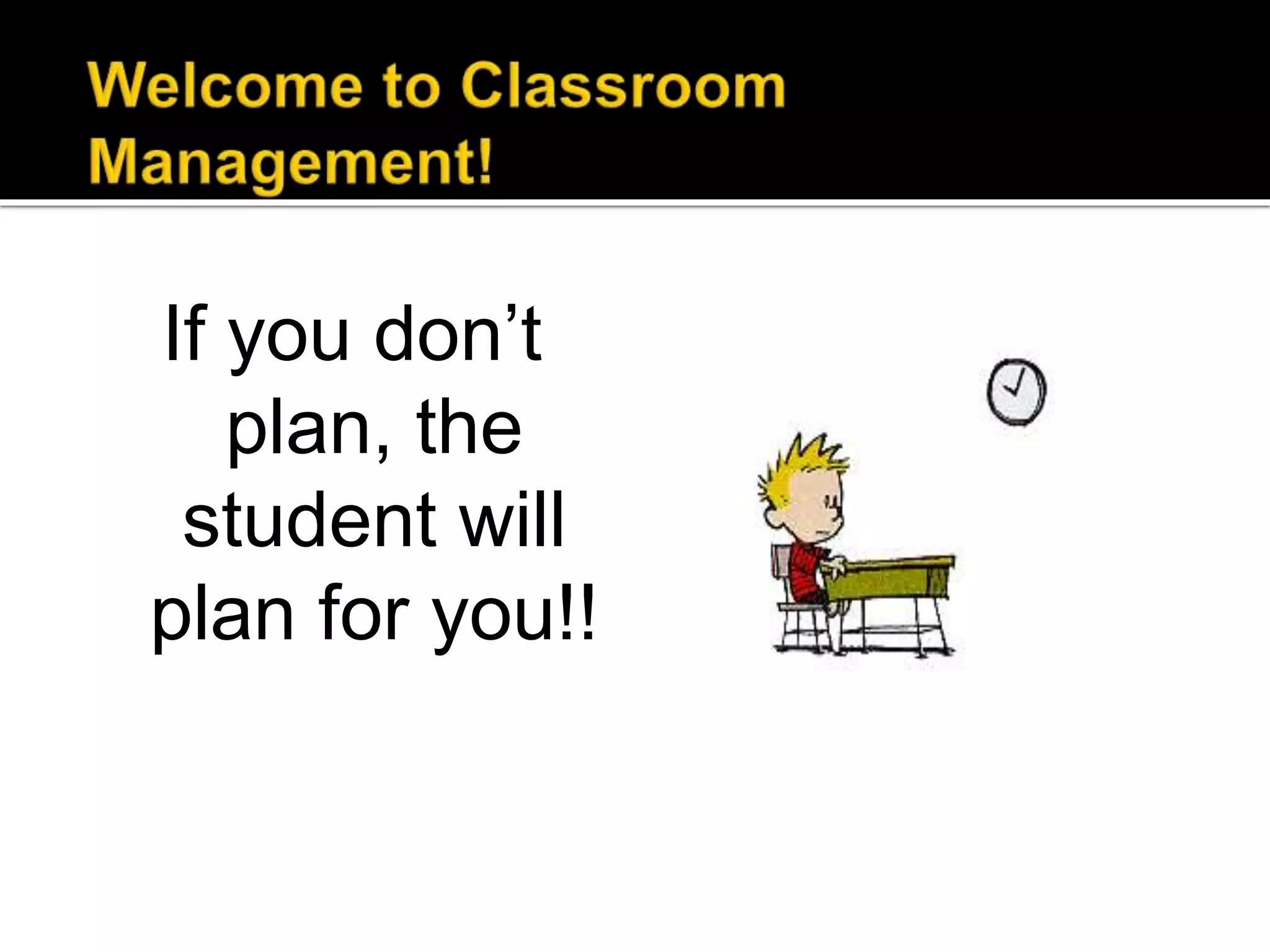
If you don’t
plan, the
student will
plan for you!!


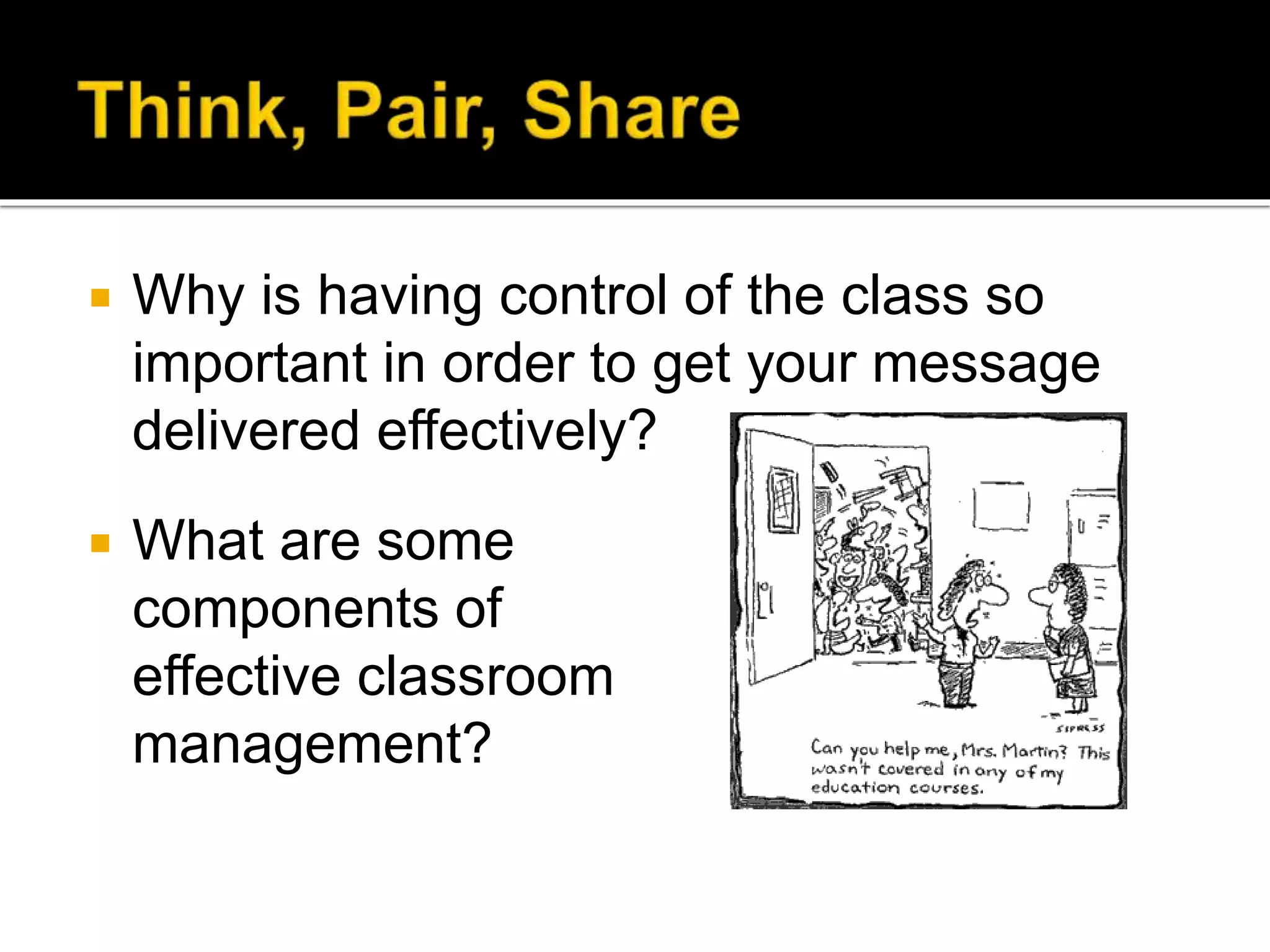
Why is having control of the class so
important in order to get your message
delivered effectively?



What are some
components of
effective classroom
management?


Classroom management is ways of
organizing the resources, pupils and
helpers so that teaching and learning can
proceed in an efficient and safe manner.
The biggest deterrent to classroom management
issues is proactive, effective lessons.

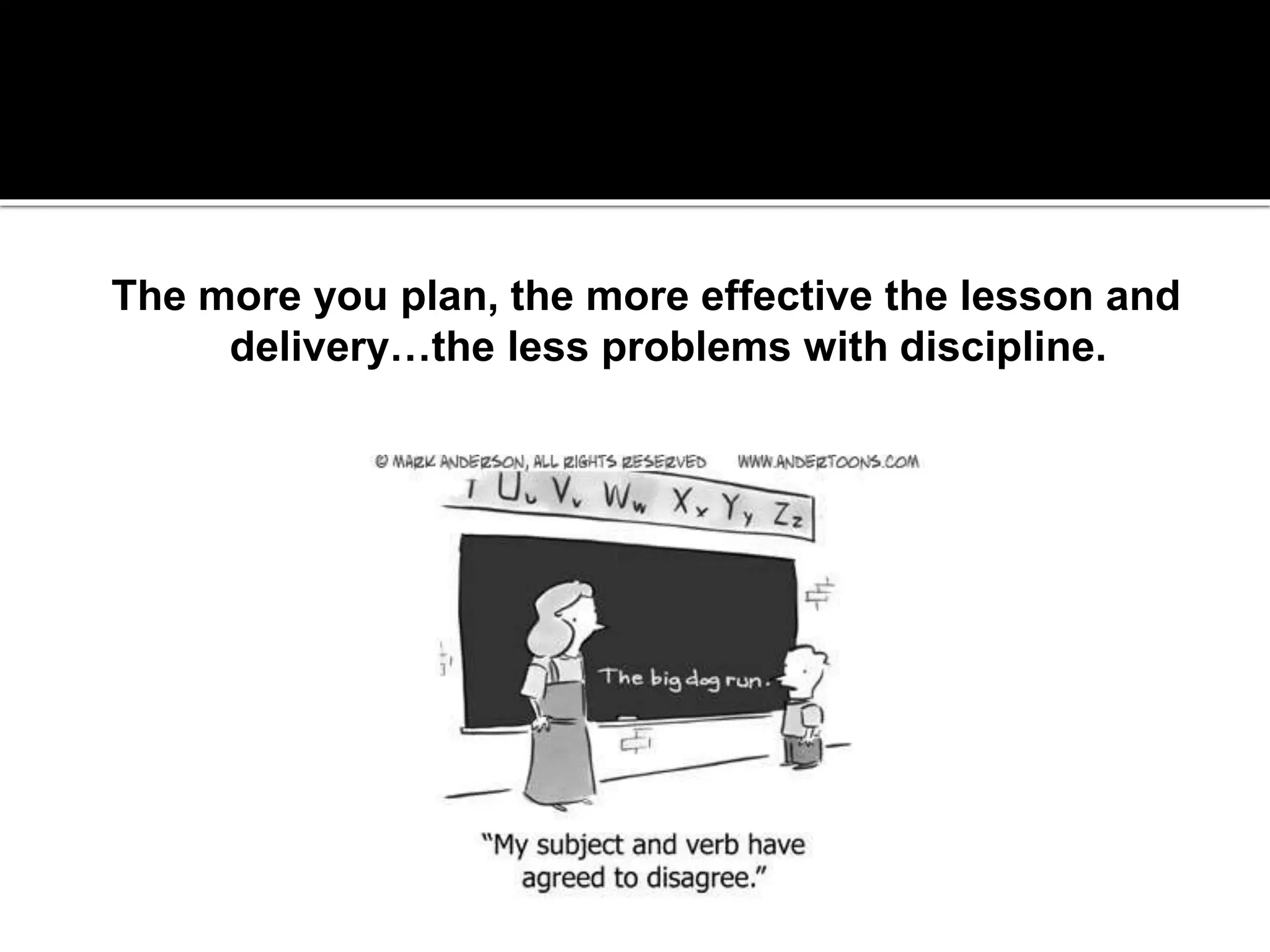
The more you plan, the more effective the lesson and
delivery…the less problems with discipline.


Classroom management refers to the ways in
which student behaviour, movement and
interaction during a lesson are organized and
controlled by the teacher.Richards (1990, 10)
.
It can be defined as the teacher’s ability to
cooperatively manage time, space, resources
and student roles and student behaviours to
provide a climate that encourages earning

(Alberto&Troutman,1986)


Classroom Management involves
establishing procedures, having rules, and
reducing discipline problems.
The procedures and needs that are created to
maintain a healthy teaching and learning
environment
 The main componets:


i.
ii.
iii.
iv.

Acertain ways to avoid the management problem in the
classroom
Acertain ways to monitor the behaviors of pupils to
maintain a positive classroom climate
Decide how to react when pupils show problematic
behaviour
Ensuring how a teacher can restrucutre a healthy
classrrom climate after correcting negative behaviors of
pupils in the classroom
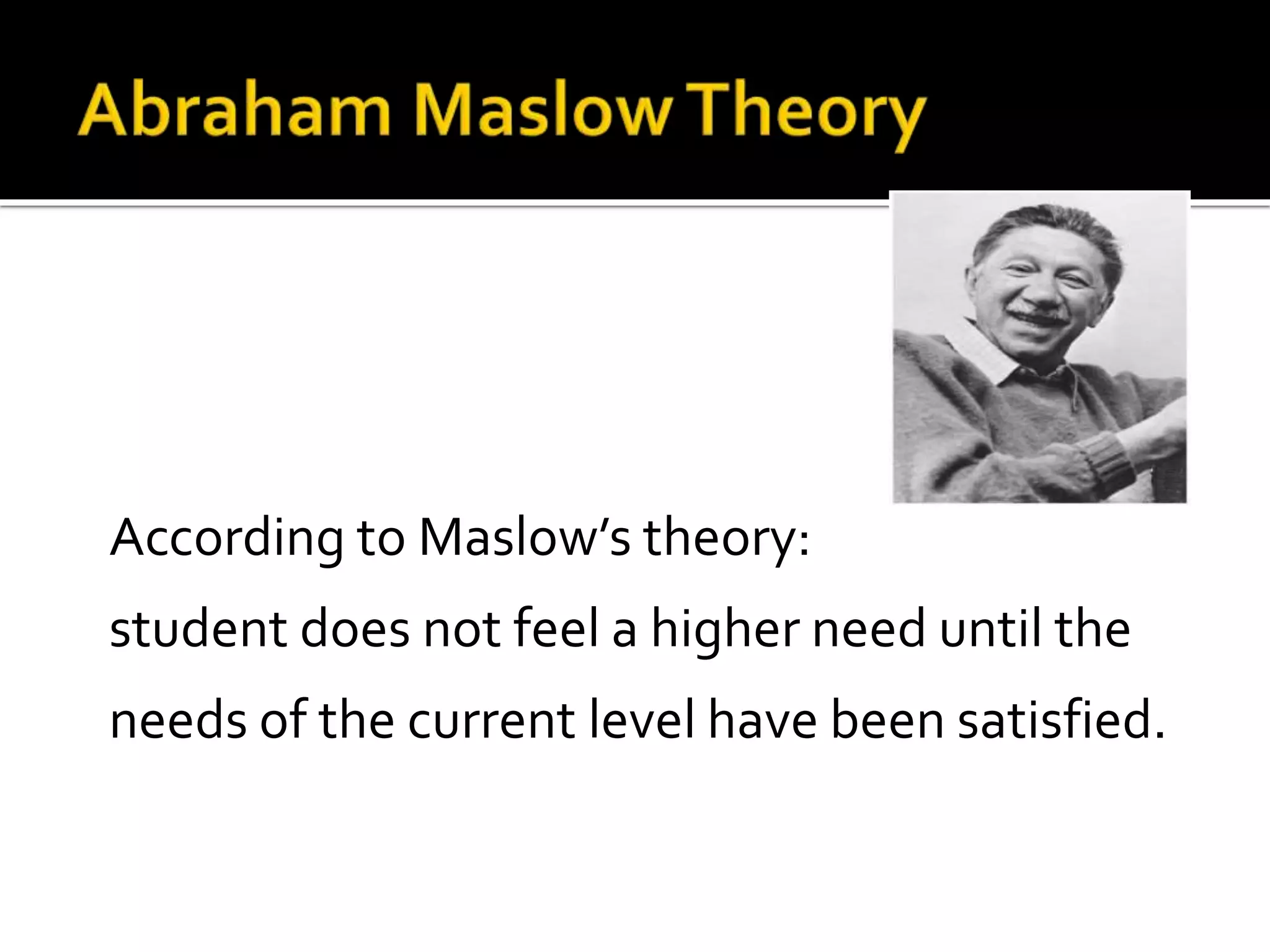
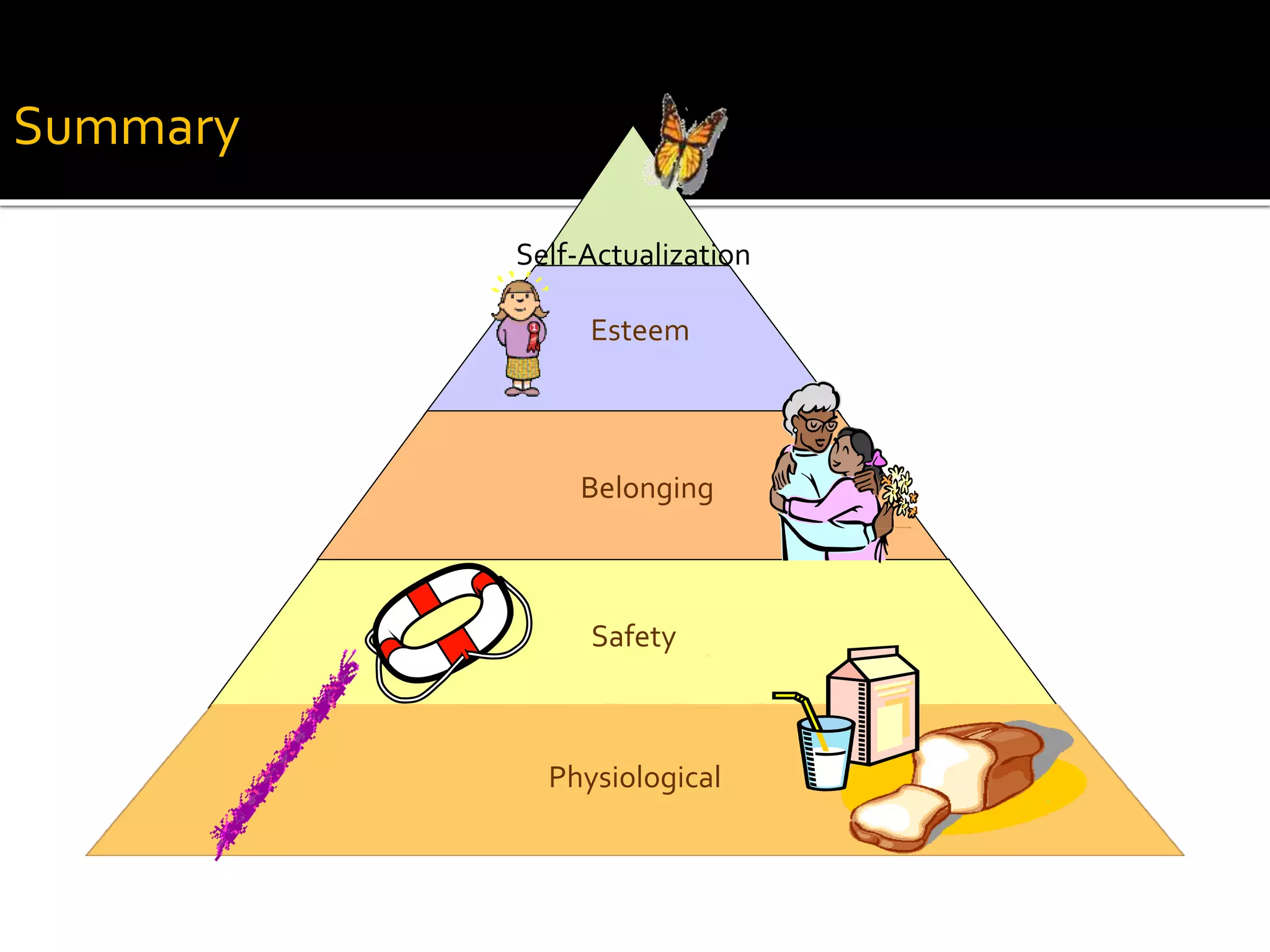
According to Maslow’s theory:
student does not feel a higher need until the
needs of the current level have been satisfied.
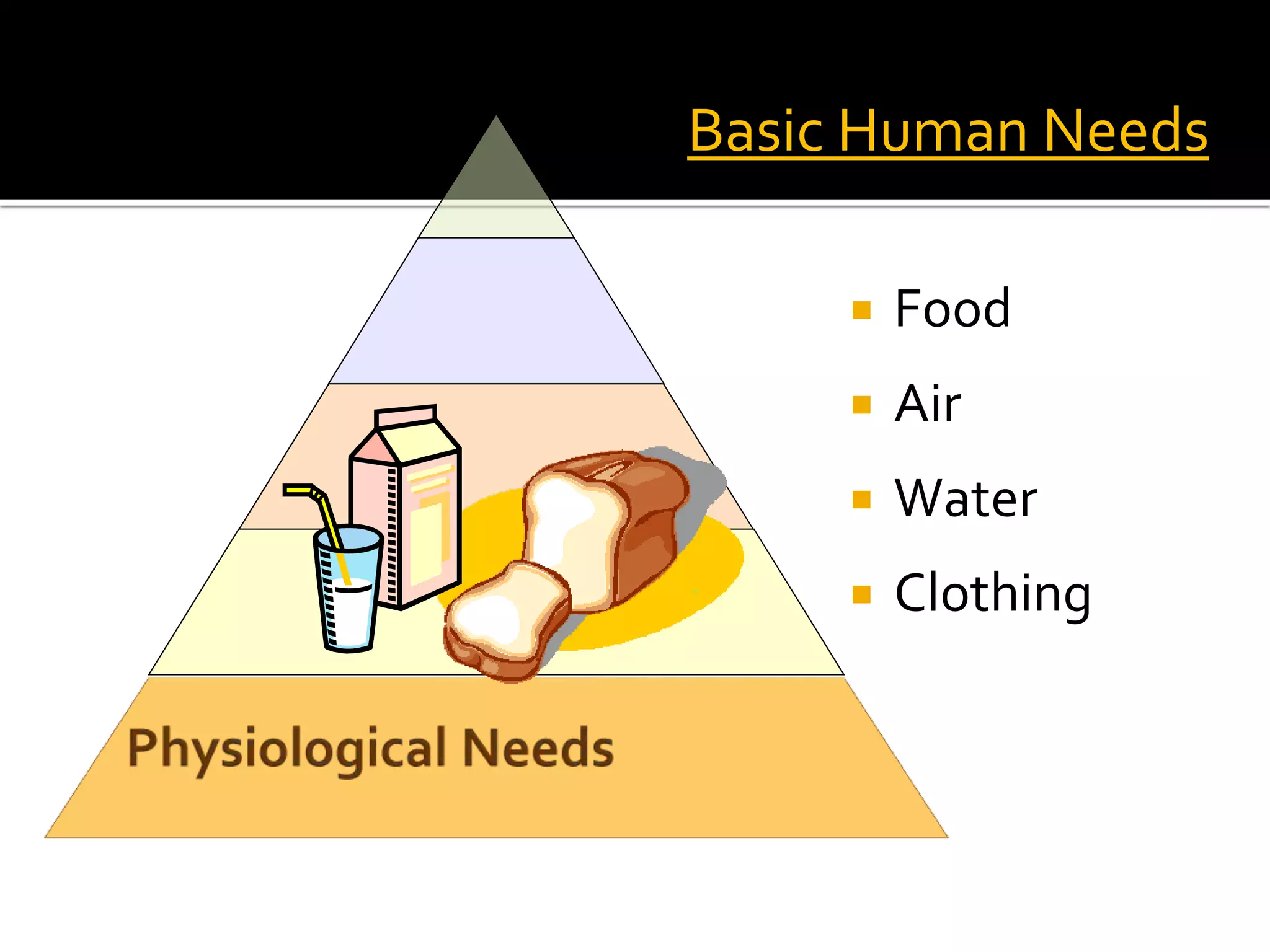
Basic Human Needs


Food



Air



Water



Clothing
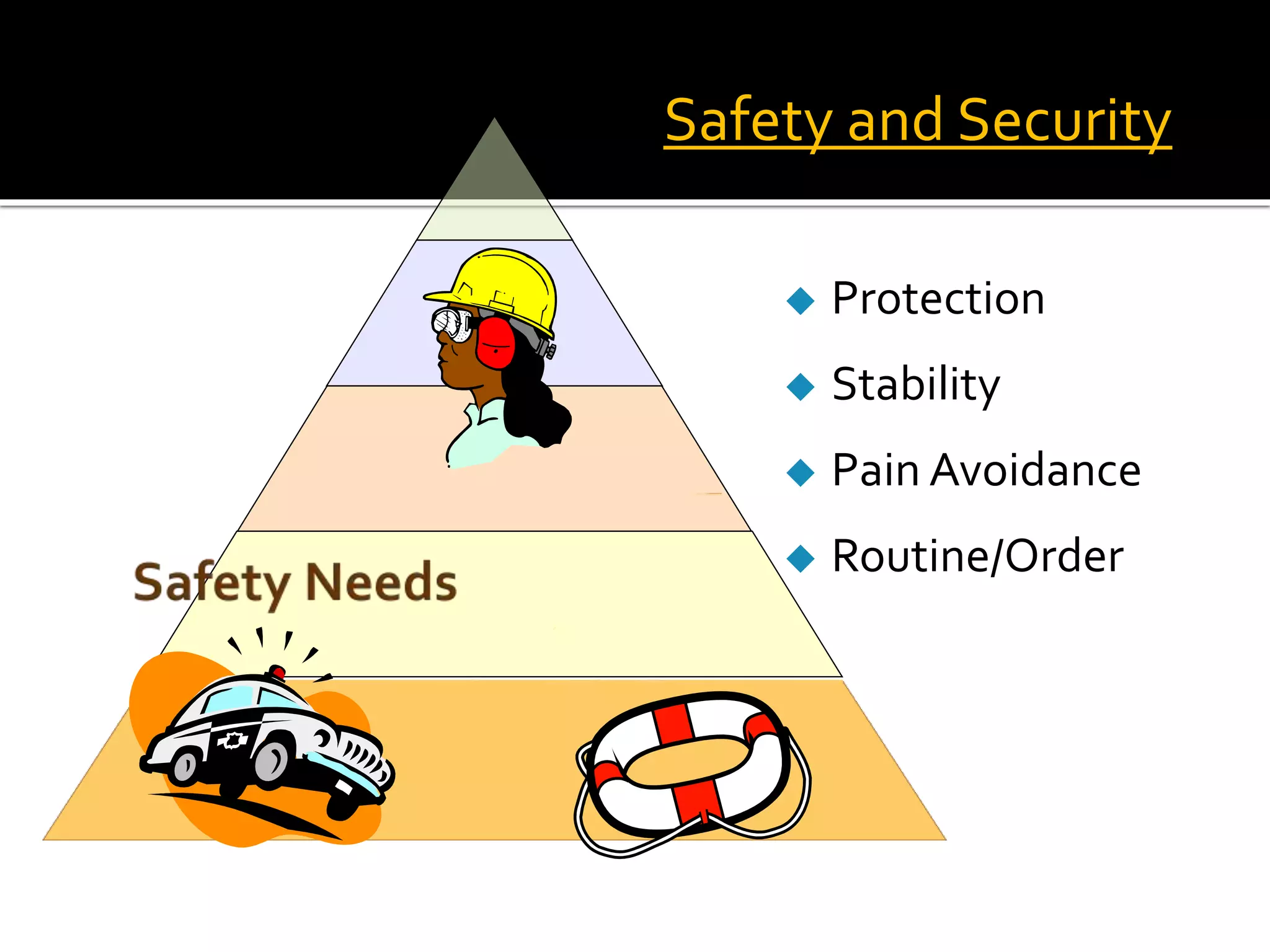
Safety and Security


Protection



Stability



Pain Avoidance



Routine/Order
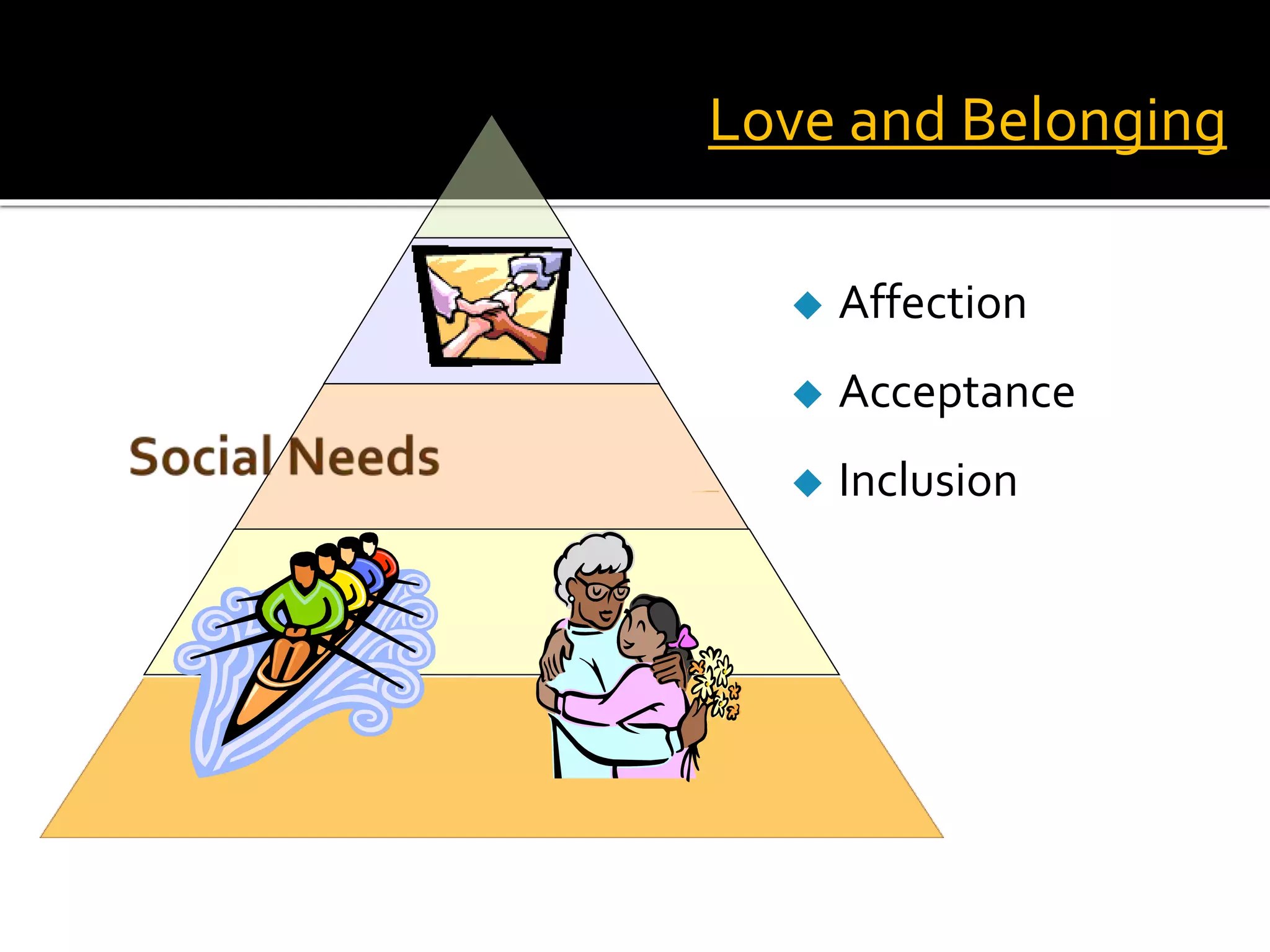
Love and Belonging


Affection



Acceptance



Inclusion
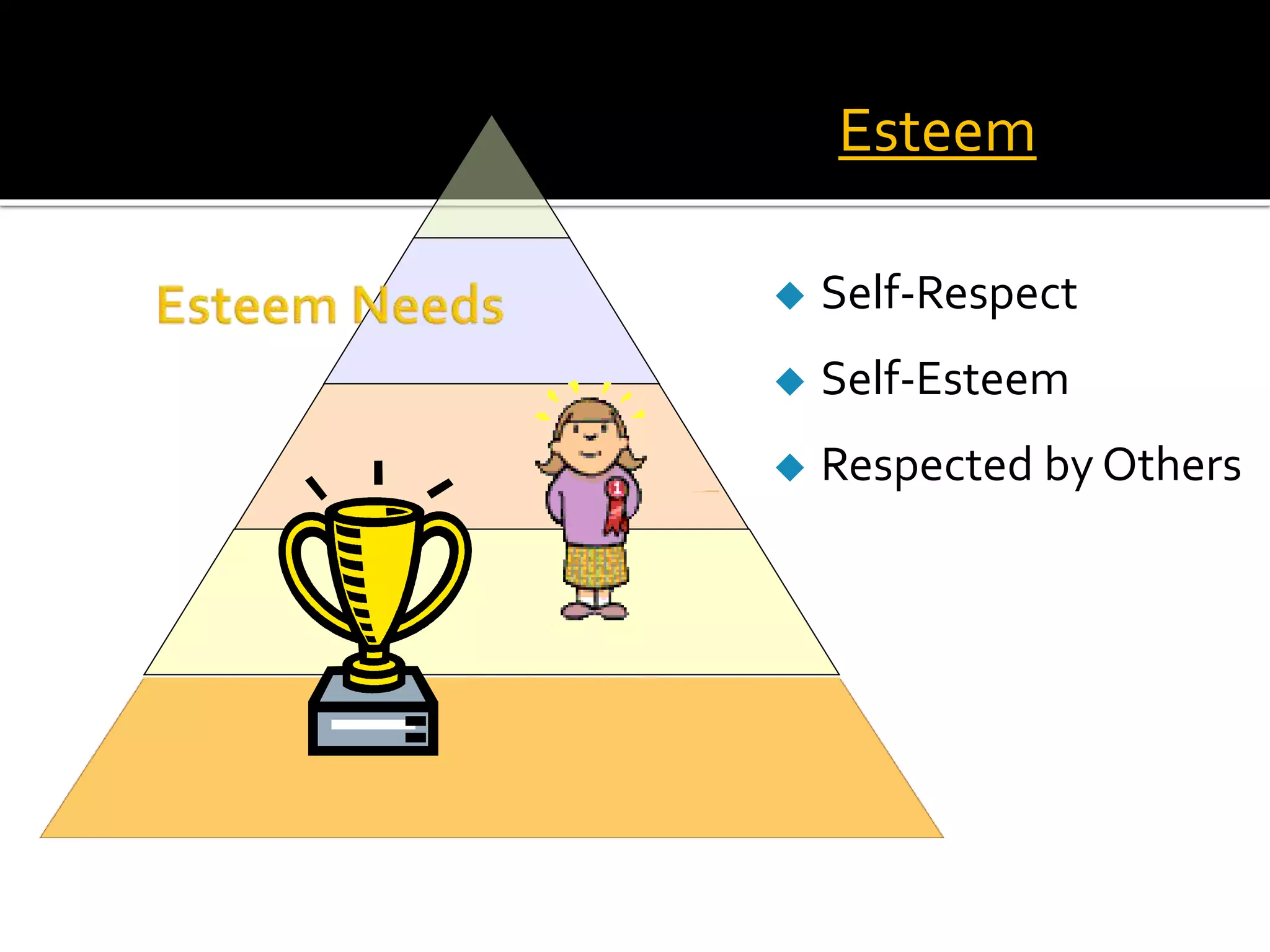
Esteem


Self-Respect



Self-Esteem



Respected by Others



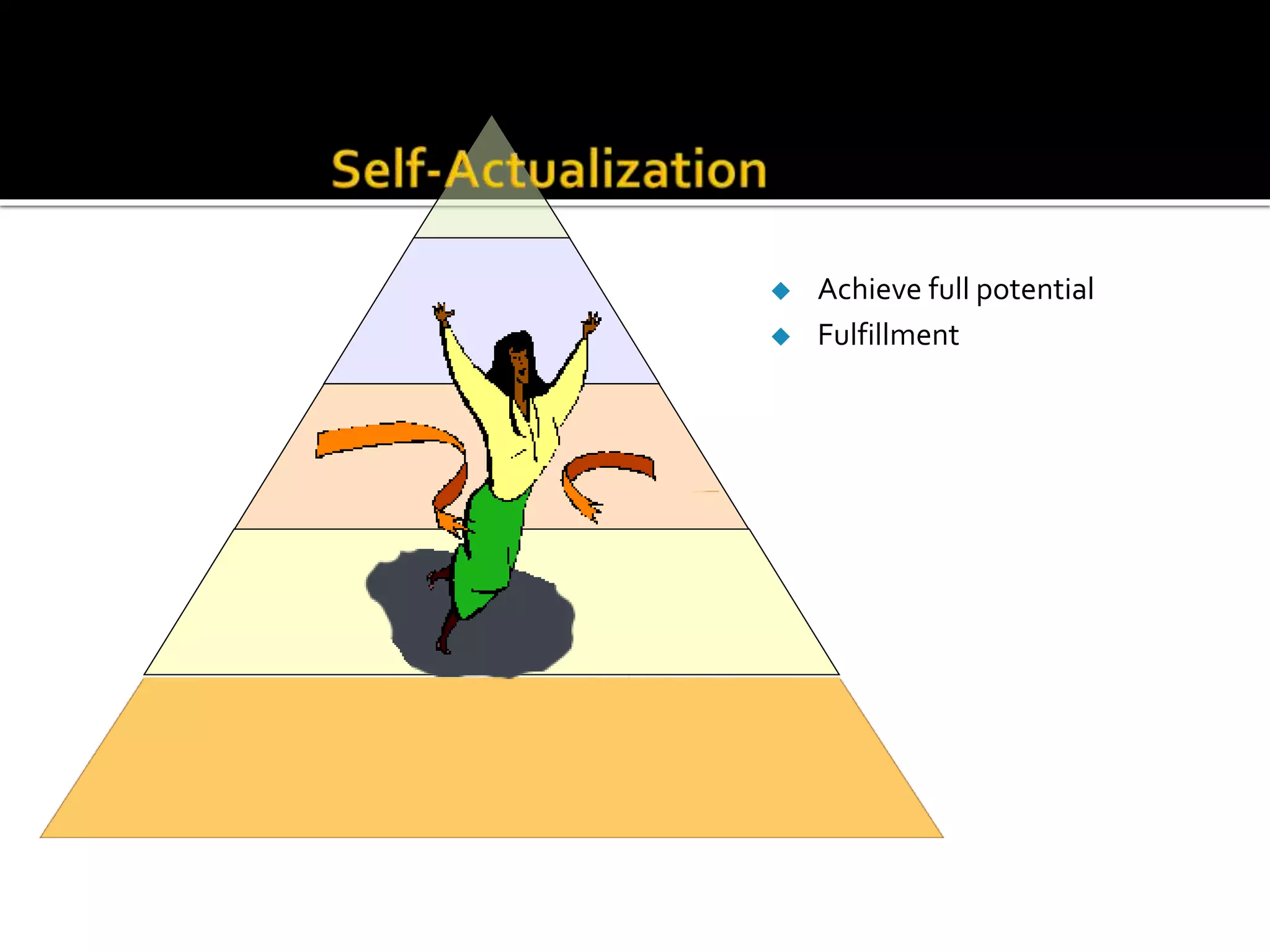
Achieve full potential
Fulfillment
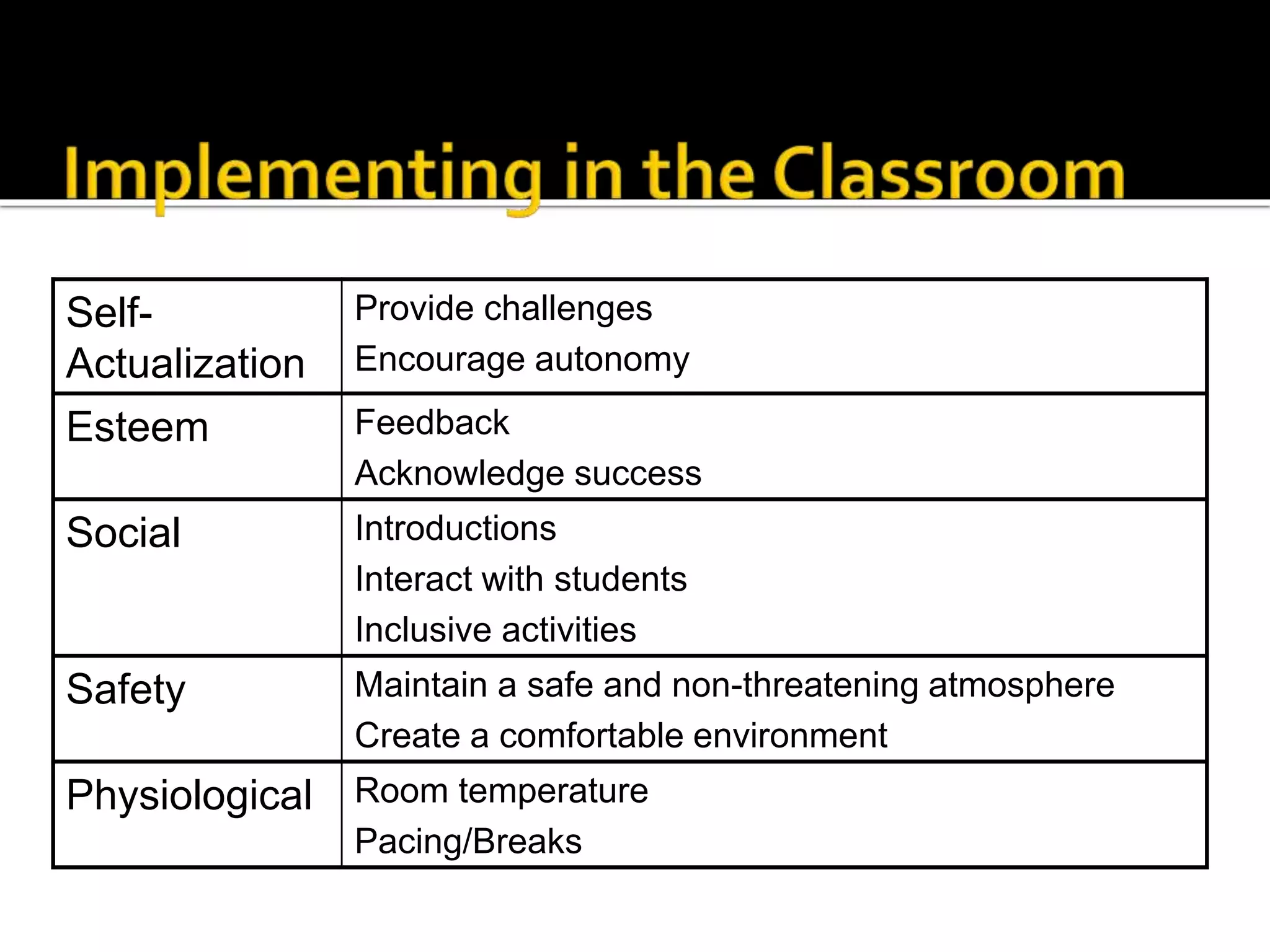
As educators, it is our responsibility to
meet the five basic levels of needs in the

classroom. Implementation strategies
include:
SelfActualization
Esteem

Provide challenges
Encourage autonomy

Social

Introductions
Interact with students
Inclusive activities

Safety

Maintain a safe and non-threatening atmosphere
Create a comfortable environment

Feedback
Acknowledge success

Physiological Room temperature
Pacing/Breaks
Summary
Self-Actualization
Esteem

Belonging

Safety

Physiological



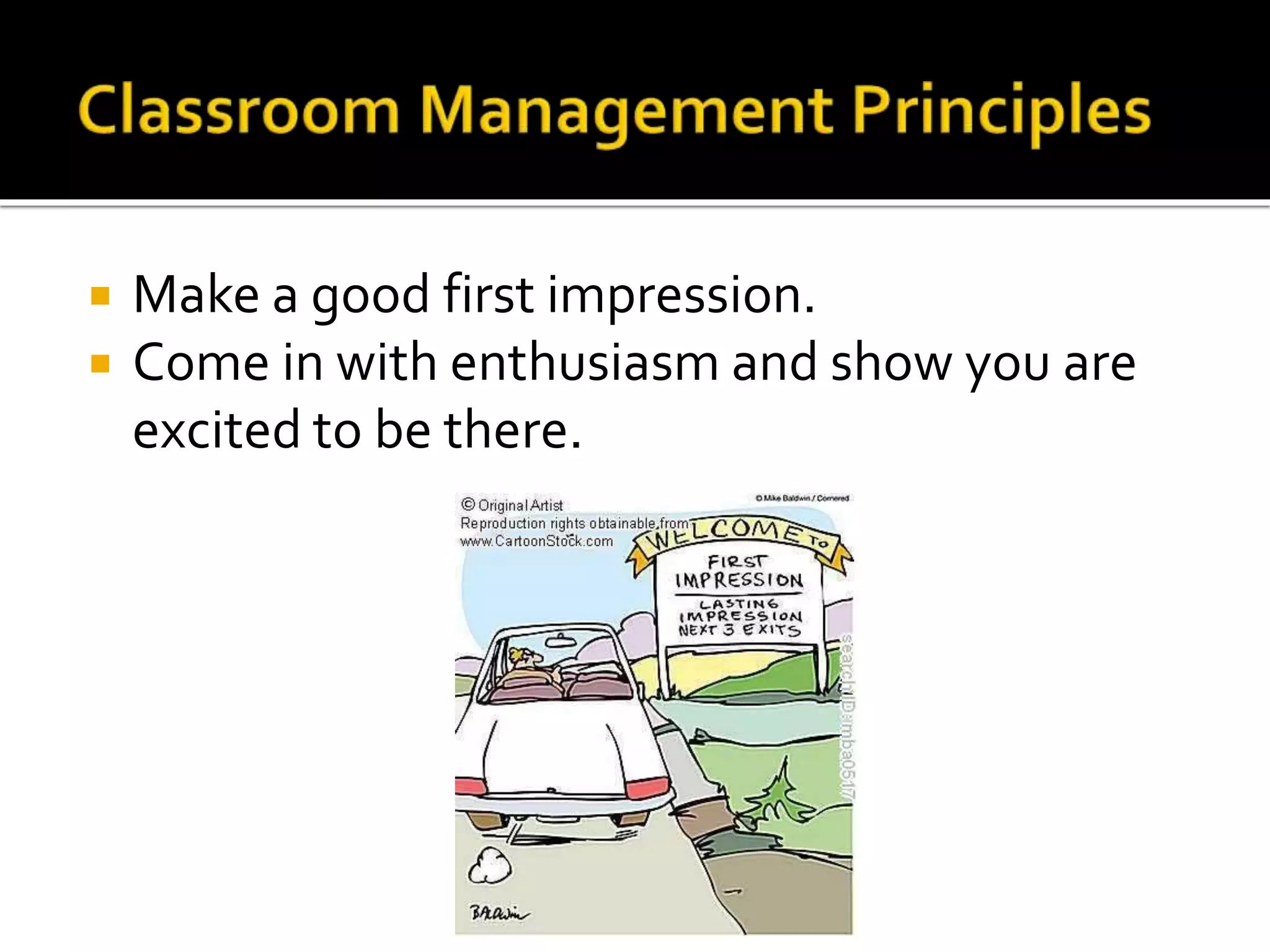
Make a good first impression.
Come in with enthusiasm and show you are
excited to be there.


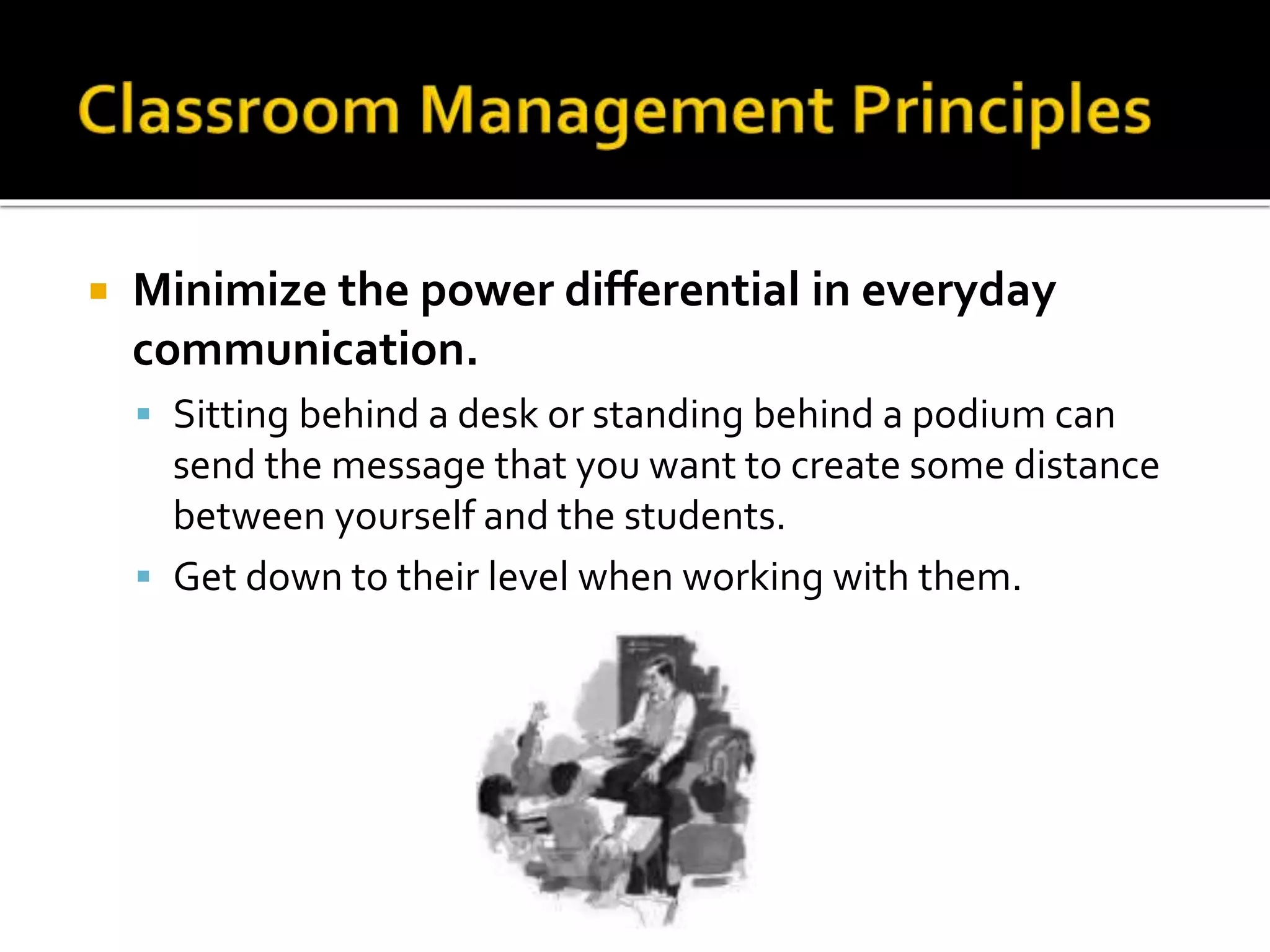
Minimize the power differential in everyday
communication.
 Sitting behind a desk or standing behind a podium can

send the message that you want to create some distance
between yourself and the students.
 Get down to their level when working with them.


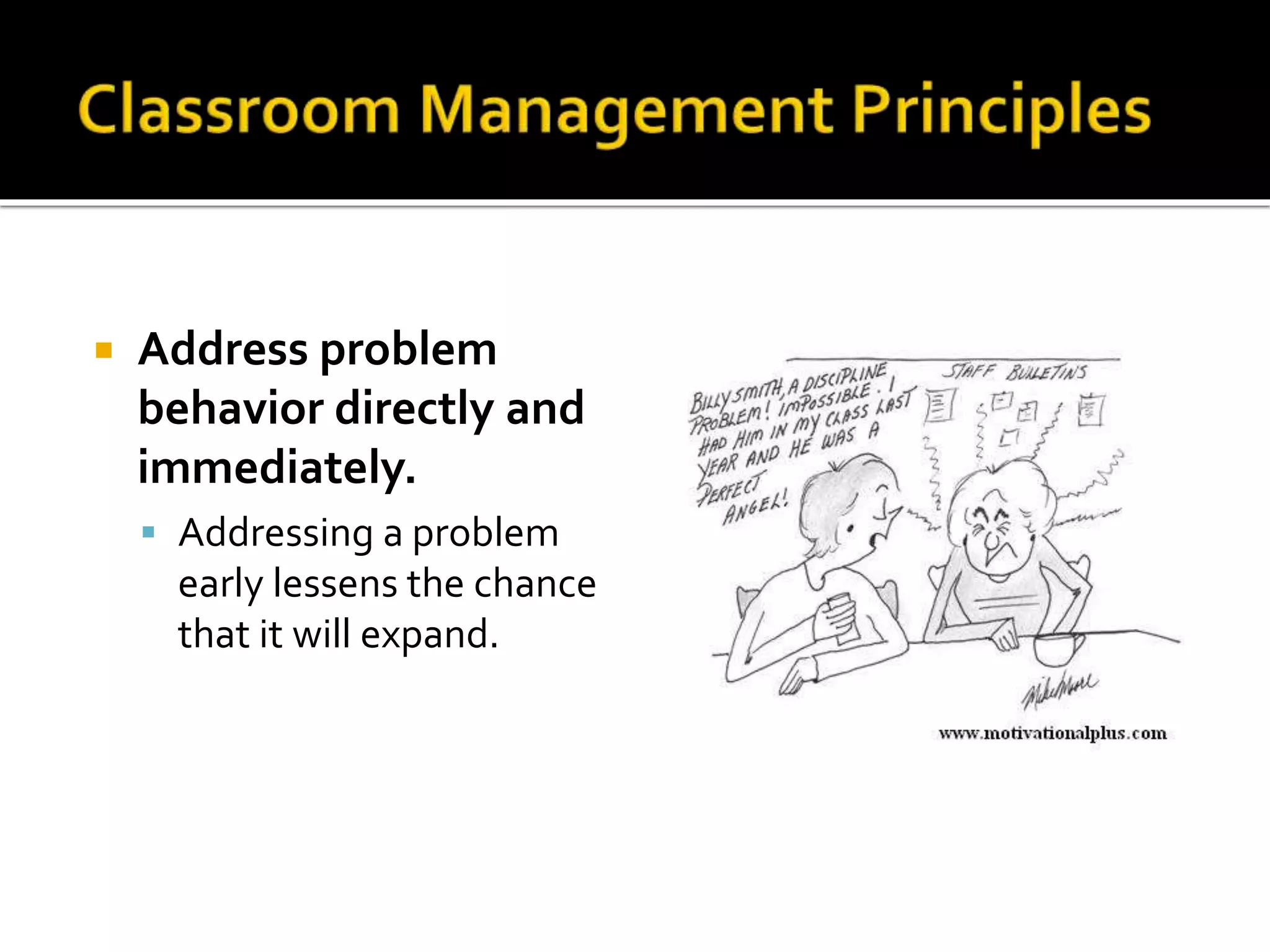
Address problem
behavior directly and
immediately.
 Addressing a problem

early lessens the chance
that it will expand.


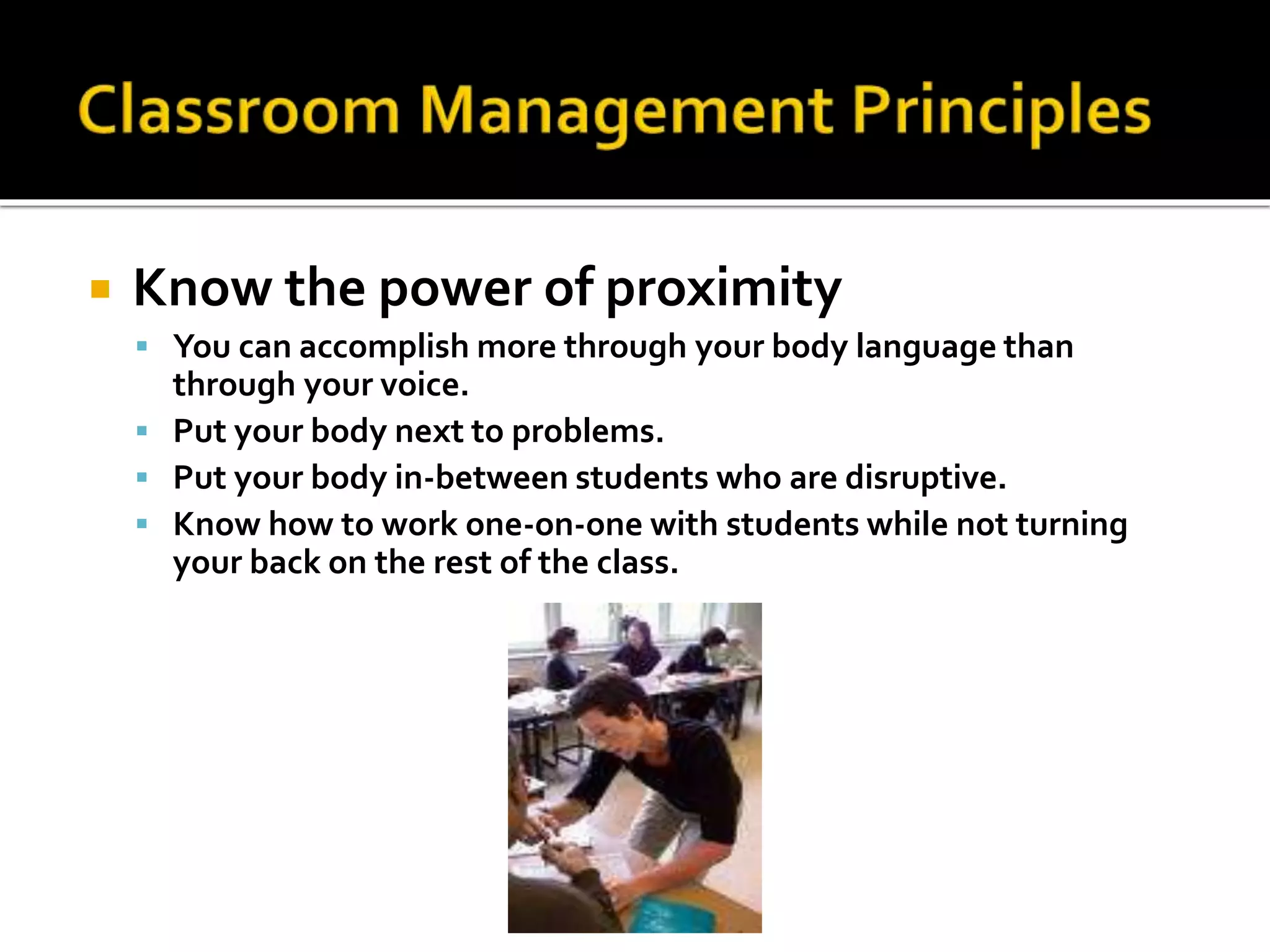
Know the power of proximity
 You can accomplish more through your body language than

through your voice.
 Put your body next to problems.
 Put your body in-between students who are disruptive.
 Know how to work one-on-one with students while not turning
your back on the rest of the class.
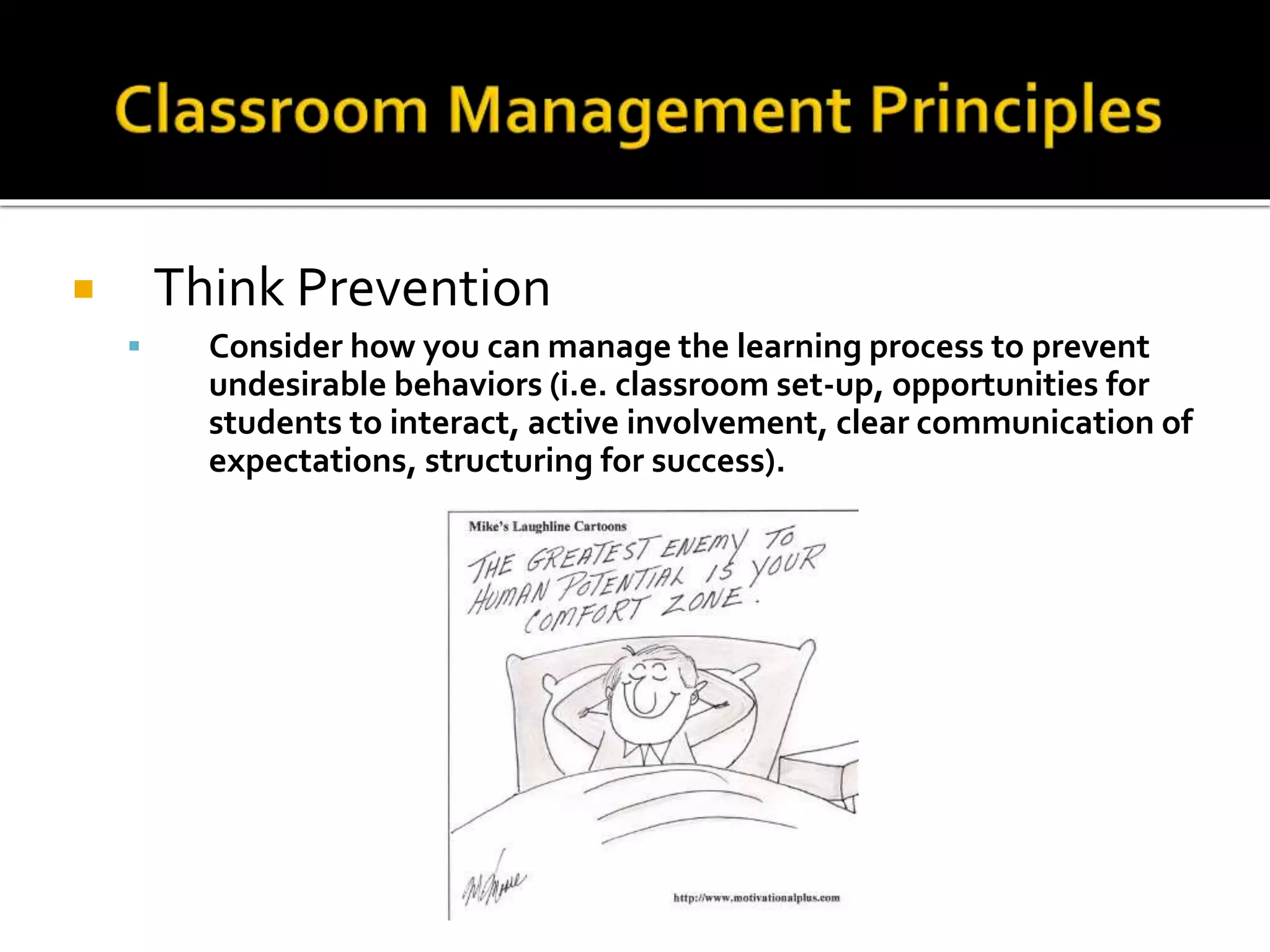
Think Prevention




Consider how you can manage the learning process to prevent
undesirable behaviors (i.e. classroom set-up, opportunities for
students to interact, active involvement, clear communication of
expectations, structuring for success).


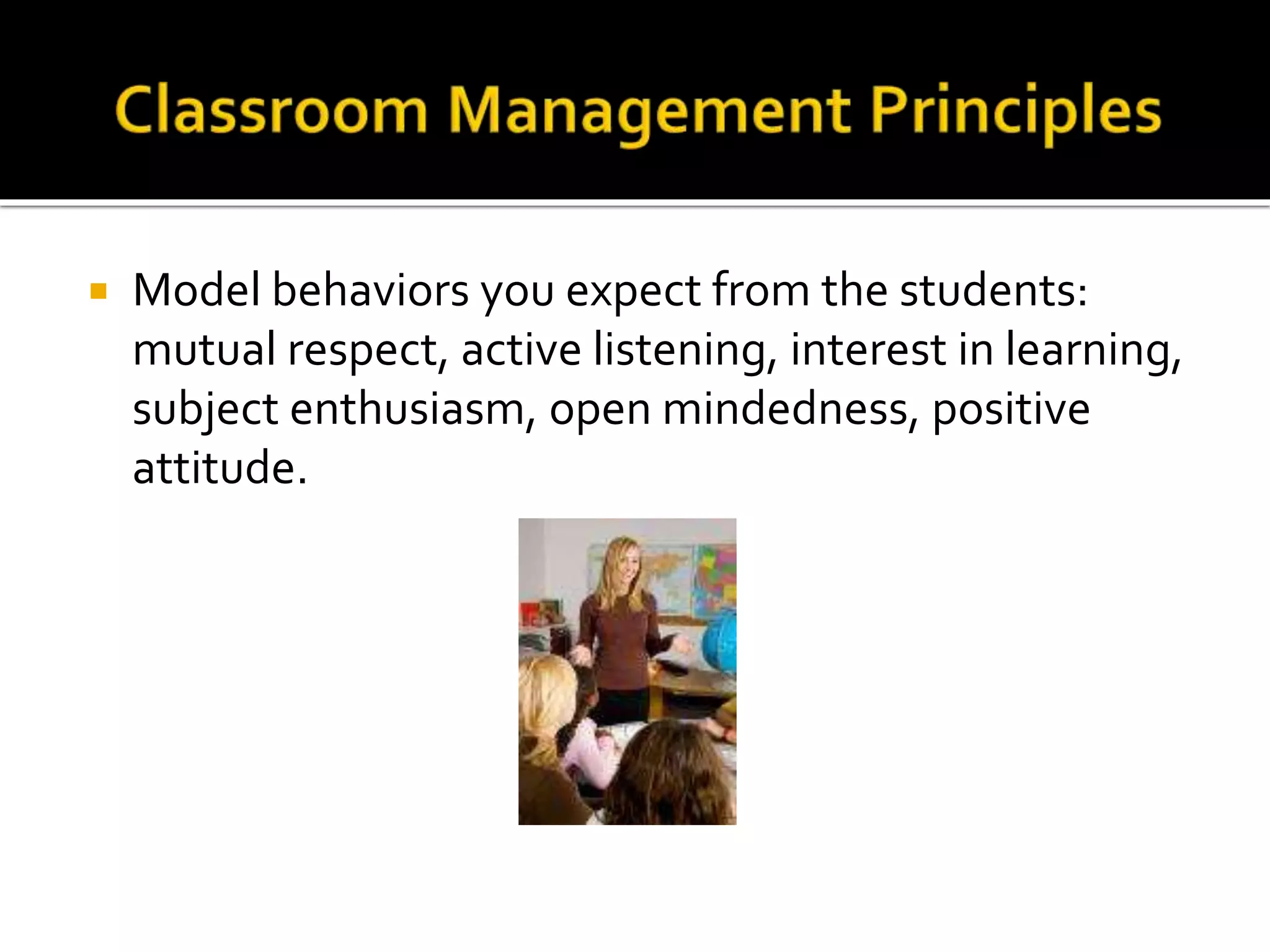
Model behaviors you expect from the students:
mutual respect, active listening, interest in learning,
subject enthusiasm, open mindedness, positive
attitude.


A proactive teacher can motivate their
student in learning because:
They feel comfortable
They feel safe
They trust their teacher.
 A good teacher is someone who

wants to know about their students.
 Be kind to their students.
 Students will feel appreciated if
their teacher are interested in them.
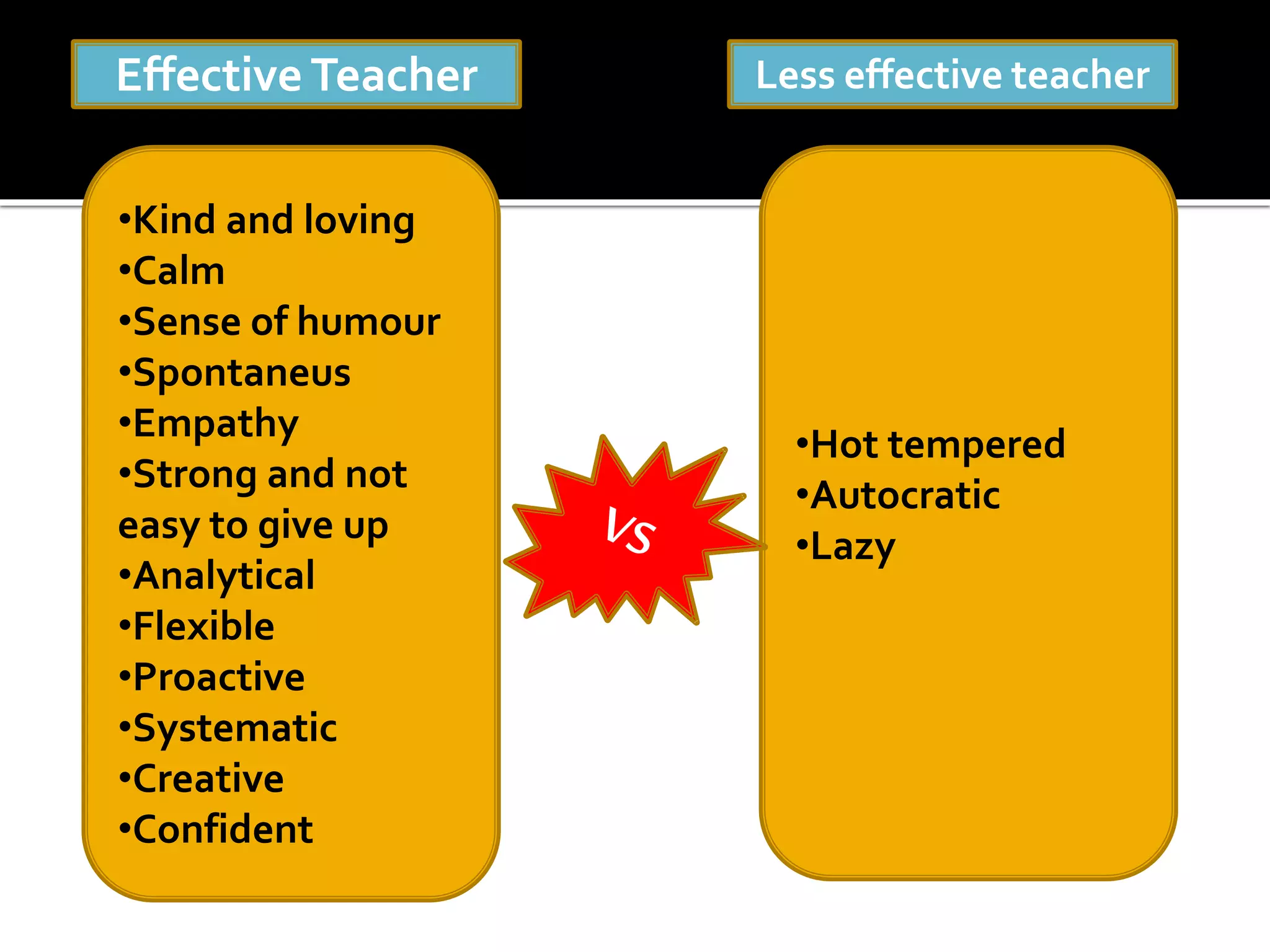
Effective Teacher
•Kind and loving
•Calm
•Sense of humour
•Spontaneus
•Empathy
•Strong and not
easy to give up
•Analytical
•Flexible
•Proactive
•Systematic
•Creative
•Confident

Less effective teacher

•Hot tempered
•Autocratic
•Lazy
They are bored.
They don’t know the purpose of your presentation.
They don’t understand how the information that you
are delivering applies to them.
 Instruction is uninteresting
 The pace of the instruction is incorrect (too fast, or
too slow).
 Not enough interaction between and among peers.





Student misbehavior isn't just an annoying
disruption --- it's a secret message the
student is (unwittingly) trying to convey to
you.





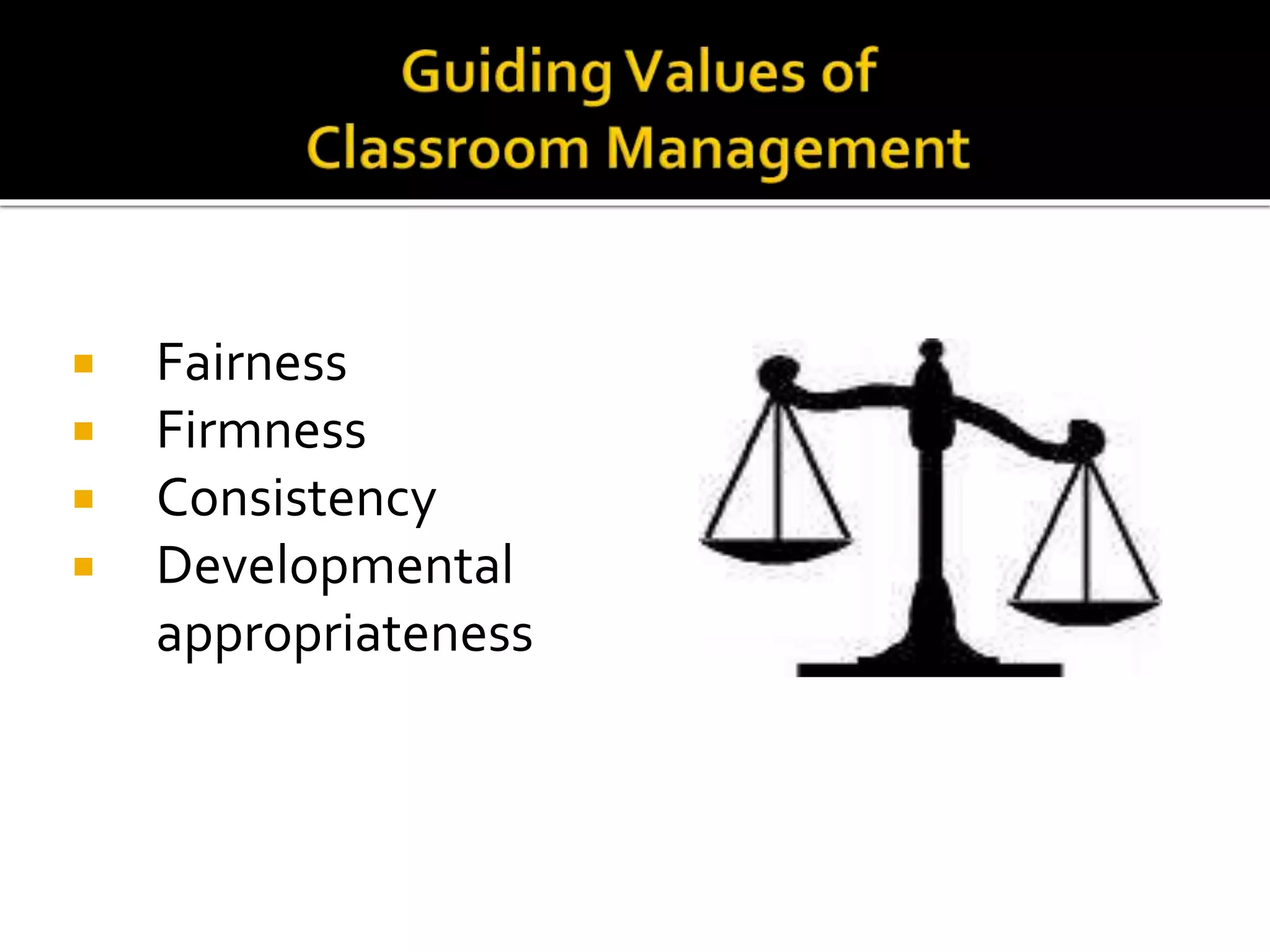
Fairness
Firmness
Consistency
Developmental
appropriateness
Teaching-Learning
Competency
Children learn from surroundings
especially
parents, siblings, peers & community
Children learn from surroundings
especially
HOWEVER,
parents, siblings, peers & community
What would make any difference
from teacher’s teaching in
the classroom ?
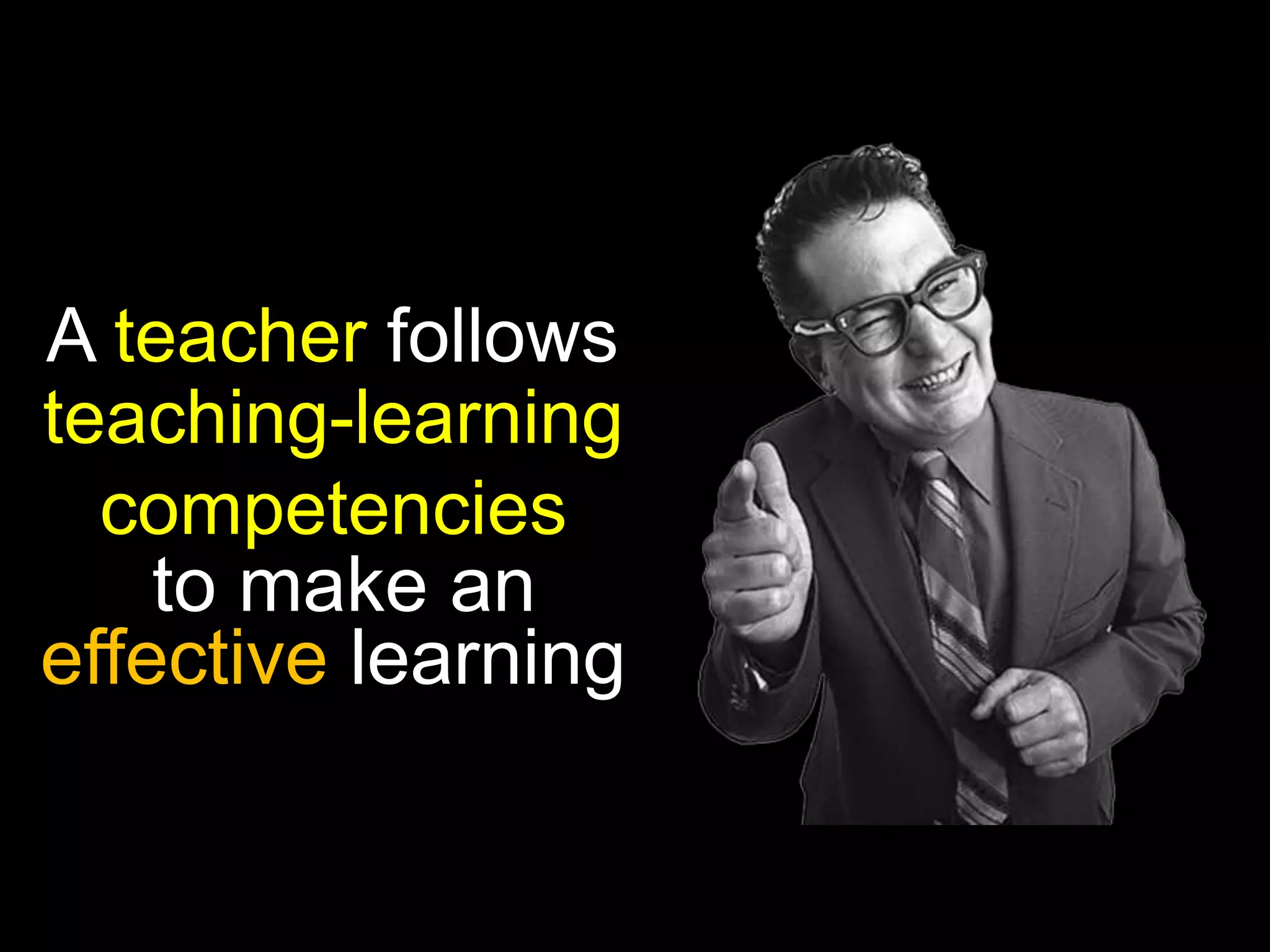
A teacher follows
teaching-learning
competencies
to make an
effective learning
What are the competencies that a
teacher should have ?
#1 Mastering knowledge & skills
A teacher with wide knowledge can
relate his/her teaching with real-world
situation
learning is a long-life experience
fill with new knowledge to share
#2 Educational pedagogy practices
Teaching pedagogy practices ensure that teacher
could understand about children development
fulfil basic needs from lesson plan to classroom
setting
Learning context fits with students’ background
Teaching with modern technology usage
#3 Effective communication
Communicate with students using
appropriate language
level of ages, development stage, sex,
race, mother tongue & socio-economy
Good interaction with parents and
colleagues
#4 Competent assessment
Self assess to detect the effectiveness
of teaching & learning
ability to design & use tools or evaluation
procedures to measure & assess
students’ learning
-

analyses, reflects and evaluates own
teaching
#5 Manage to handle problems
Effective teacher thinks critically &
solves arisen problems
encourages & guides students to
improve thinking skill
#6 Fair & Responsible
Teacher should provide fair lesson in
a class without any eliminated
student
Every student has rights to receive
new knowledge & skills
#7 Conducting teaching
professionalism
Effective teacher performing duties as
instructors, mentors, facilitators and
managers of the classroom
-

Understand the impact of social
problems that negatively affect student
learning
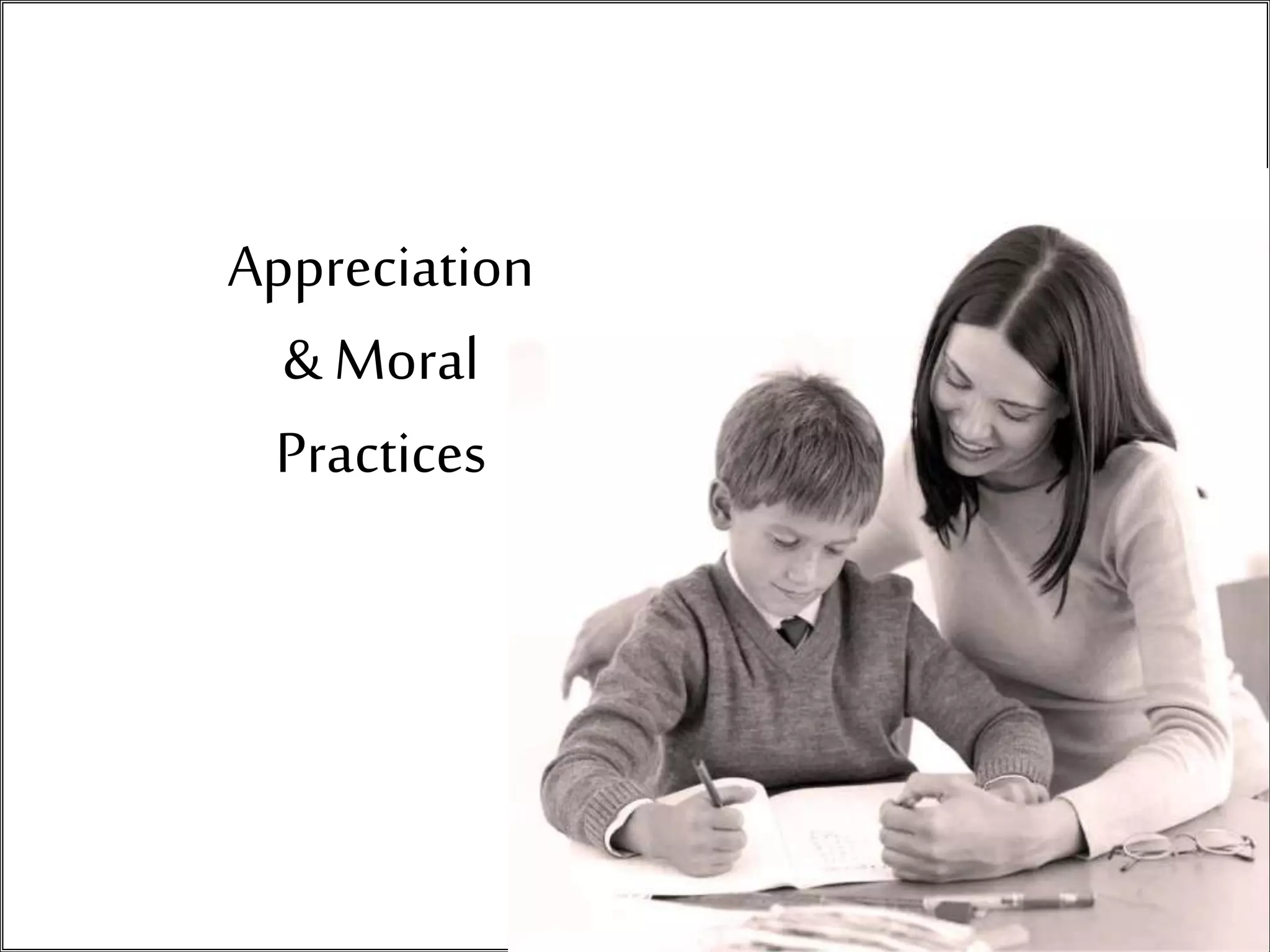
Appreciation
& Moral
Practices
Teachers must adhere
to the
regulations prescribed
by the Code of Ethics for
the Teaching Profession
The Code of Ethics for the
Teaching Profession listed
principles such as…
#1 Responsibility for pupils
#2 Responsibility to parents
#3 Responsibility towards
society & nation
#4 Responsibility for
colleagues & teaching
profession
Philosophy of Teacher Education (FPG) is a
guide for teachers about the characteristics of
the teacher qualities

“Teachers who have a good personal
well-being, progressive and scientificallyoriented, ready to uphold the nation’s
aspirations and preserve her cultural
heritage, promises individual
development and maintains a united,
democratic, progressive and discipline
society”
Teachers are also subject to the
practice of values ​like caring,
generous, resilient, patriotic,
innovative, willing to help at all
times & adhere to the ethics of the
teaching profession
or
Comments?
1. Physical Arrangement of classroom
2.Social Factors
3. Emotional Factors
THANK YOU FOR
LISTENING!

Topic 1 primary school management

  • 2.
    If you don’t plan,the student will plan for you!!
  • 3.
     Why is havingcontrol of the class so important in order to get your message delivered effectively?  What are some components of effective classroom management?
  • 4.
     Classroom management isways of organizing the resources, pupils and helpers so that teaching and learning can proceed in an efficient and safe manner.
  • 5.
    The biggest deterrentto classroom management issues is proactive, effective lessons. The more you plan, the more effective the lesson and delivery…the less problems with discipline.
  • 6.
     Classroom management refersto the ways in which student behaviour, movement and interaction during a lesson are organized and controlled by the teacher.Richards (1990, 10) .
  • 7.
    It can bedefined as the teacher’s ability to cooperatively manage time, space, resources and student roles and student behaviours to provide a climate that encourages earning (Alberto&Troutman,1986)
  • 8.
     Classroom Management involves establishingprocedures, having rules, and reducing discipline problems.
  • 9.
    The procedures andneeds that are created to maintain a healthy teaching and learning environment  The main componets:  i. ii. iii. iv. Acertain ways to avoid the management problem in the classroom Acertain ways to monitor the behaviors of pupils to maintain a positive classroom climate Decide how to react when pupils show problematic behaviour Ensuring how a teacher can restrucutre a healthy classrrom climate after correcting negative behaviors of pupils in the classroom
  • 11.
    According to Maslow’stheory: student does not feel a higher need until the needs of the current level have been satisfied.
  • 12.
  • 13.
  • 14.
  • 15.
  • 16.
  • 17.
    As educators, itis our responsibility to meet the five basic levels of needs in the classroom. Implementation strategies include:
  • 18.
    SelfActualization Esteem Provide challenges Encourage autonomy Social Introductions Interactwith students Inclusive activities Safety Maintain a safe and non-threatening atmosphere Create a comfortable environment Feedback Acknowledge success Physiological Room temperature Pacing/Breaks
  • 19.
  • 21.
      Make a goodfirst impression. Come in with enthusiasm and show you are excited to be there.
  • 22.
     Minimize the powerdifferential in everyday communication.  Sitting behind a desk or standing behind a podium can send the message that you want to create some distance between yourself and the students.  Get down to their level when working with them.
  • 23.
     Address problem behavior directlyand immediately.  Addressing a problem early lessens the chance that it will expand.
  • 24.
     Know the powerof proximity  You can accomplish more through your body language than through your voice.  Put your body next to problems.  Put your body in-between students who are disruptive.  Know how to work one-on-one with students while not turning your back on the rest of the class.
  • 25.
    Think Prevention   Consider howyou can manage the learning process to prevent undesirable behaviors (i.e. classroom set-up, opportunities for students to interact, active involvement, clear communication of expectations, structuring for success).
  • 26.
     Model behaviors youexpect from the students: mutual respect, active listening, interest in learning, subject enthusiasm, open mindedness, positive attitude.
  • 28.
     A proactive teachercan motivate their student in learning because: They feel comfortable They feel safe They trust their teacher.
  • 29.
     A goodteacher is someone who wants to know about their students.  Be kind to their students.  Students will feel appreciated if their teacher are interested in them.
  • 30.
    Effective Teacher •Kind andloving •Calm •Sense of humour •Spontaneus •Empathy •Strong and not easy to give up •Analytical •Flexible •Proactive •Systematic •Creative •Confident Less effective teacher •Hot tempered •Autocratic •Lazy
  • 31.
    They are bored. Theydon’t know the purpose of your presentation. They don’t understand how the information that you are delivering applies to them.  Instruction is uninteresting  The pace of the instruction is incorrect (too fast, or too slow).  Not enough interaction between and among peers.   
  • 32.
     Student misbehavior isn'tjust an annoying disruption --- it's a secret message the student is (unwittingly) trying to convey to you.
  • 33.
  • 34.
  • 35.
    Children learn fromsurroundings especially parents, siblings, peers & community
  • 36.
    Children learn fromsurroundings especially HOWEVER, parents, siblings, peers & community What would make any difference from teacher’s teaching in the classroom ?
  • 37.
  • 38.
    What are thecompetencies that a teacher should have ?
  • 39.
    #1 Mastering knowledge& skills A teacher with wide knowledge can relate his/her teaching with real-world situation learning is a long-life experience fill with new knowledge to share
  • 40.
    #2 Educational pedagogypractices Teaching pedagogy practices ensure that teacher could understand about children development fulfil basic needs from lesson plan to classroom setting Learning context fits with students’ background Teaching with modern technology usage
  • 41.
    #3 Effective communication Communicatewith students using appropriate language level of ages, development stage, sex, race, mother tongue & socio-economy Good interaction with parents and colleagues
  • 42.
    #4 Competent assessment Selfassess to detect the effectiveness of teaching & learning ability to design & use tools or evaluation procedures to measure & assess students’ learning - analyses, reflects and evaluates own teaching
  • 43.
    #5 Manage tohandle problems Effective teacher thinks critically & solves arisen problems encourages & guides students to improve thinking skill
  • 44.
    #6 Fair &Responsible Teacher should provide fair lesson in a class without any eliminated student Every student has rights to receive new knowledge & skills
  • 45.
    #7 Conducting teaching professionalism Effectiveteacher performing duties as instructors, mentors, facilitators and managers of the classroom - Understand the impact of social problems that negatively affect student learning
  • 46.
  • 47.
    Teachers must adhere tothe regulations prescribed by the Code of Ethics for the Teaching Profession
  • 48.
    The Code ofEthics for the Teaching Profession listed principles such as…
  • 49.
    #1 Responsibility forpupils #2 Responsibility to parents #3 Responsibility towards society & nation #4 Responsibility for colleagues & teaching profession
  • 50.
    Philosophy of TeacherEducation (FPG) is a guide for teachers about the characteristics of the teacher qualities “Teachers who have a good personal well-being, progressive and scientificallyoriented, ready to uphold the nation’s aspirations and preserve her cultural heritage, promises individual development and maintains a united, democratic, progressive and discipline society”
  • 51.
    Teachers are alsosubject to the practice of values ​like caring, generous, resilient, patriotic, innovative, willing to help at all times & adhere to the ethics of the teaching profession
  • 52.
  • 53.
    1. Physical Arrangementof classroom 2.Social Factors 3. Emotional Factors
  • 54.