




T E C H N I Q U E S F O R
S U C C E S S W I T H R O O T
V E G E T A B L E S
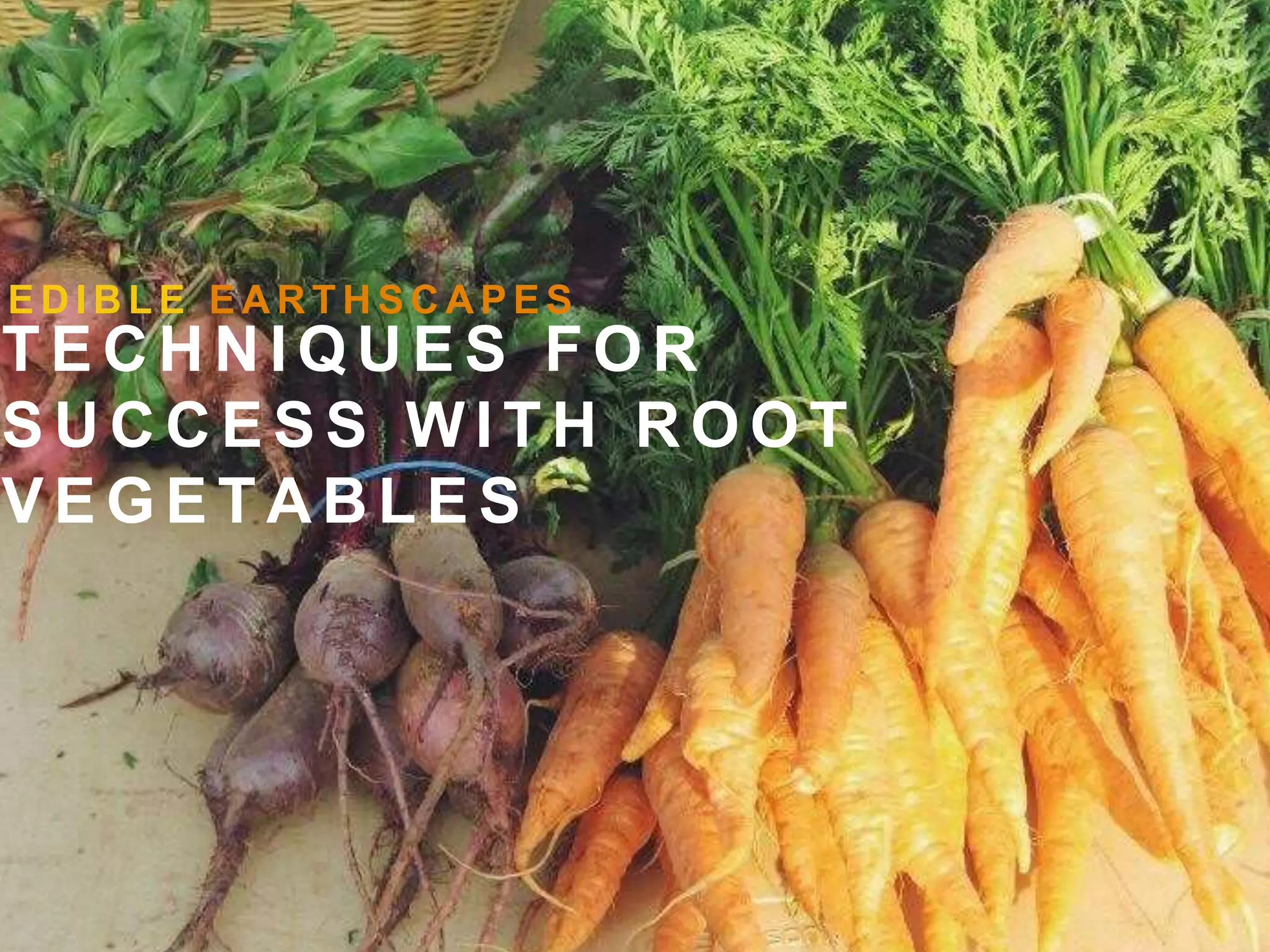
E D I B L E E A R T H S C A P E S
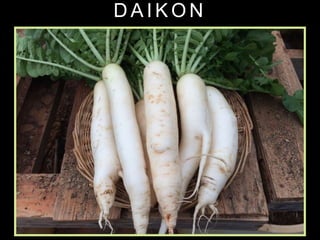
D A I K O N
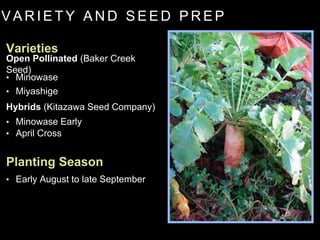
V A R I E T Y A N D S E E D P R E P
• Minowase
• Early August to late September
• Miyashige
• Minowase Early
• April Cross
Varieties
Planting Season
Hybrids (Kitazawa Seed Company)
Open Pollinated (Baker Creek
Seed)
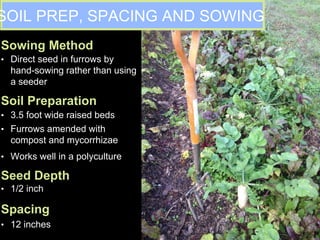
• Direct seed in furrows by
hand-sowing rather than using
a seeder
• 3.5 foot wide raised beds
• 1/2 inch
SOIL PREP, SPACING AND SOWING
Sowing Method
Soil Preparation
• Furrows amended with
compost and mycorrhizae
Seed Depth
Spacing
• 12 inches
• Works well in a polyculture
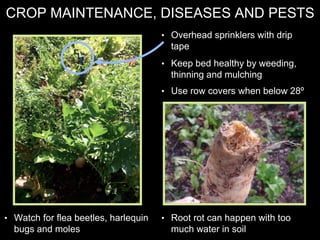
CROP MAINTENANCE, DISEASES AND PESTS
• Overhead sprinklers with drip
tape
• Keep bed healthy by weeding,
thinning and mulching
• Use row covers when below 28º
• Watch for flea beetles, harlequin
bugs and moles
• Root rot can happen with too
much water in soil
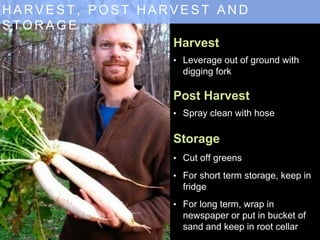
H A R V E S T , P O S T H A R V E S T A N D
S T O R A G E
Harvest
Post Harvest
Storage
• Leverage out of ground with
digging fork
• Spray clean with hose
• Cut off greens
• For short term storage, keep in
fridge
• For long term, wrap in
newspaper or put in bucket of
sand and keep in root cellar
MARKETING, EATING AND HEALTH BENEFITS
Marketing
• It’s all about presentation
• Cooking demonstrations
• CSAs and restaurants
• Share recipes with
customers
Health Benefits
• High in vitamin C • Facilitates efficient digestion • Natural diuretic
• Anti-inflammatory & antioxidant compounds • Rich source of calcium
https://www.organicfacts.net/health-benefits/vegetable/daikon.html
Daikon Steaks
• Sell as individual roots
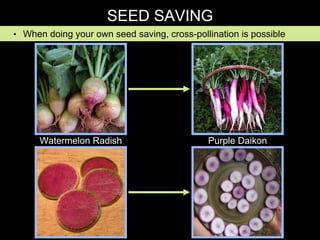
SEED SAVING
• When doing your own seed saving, cross-pollination is possible
Watermelon Radish Purple Daikon
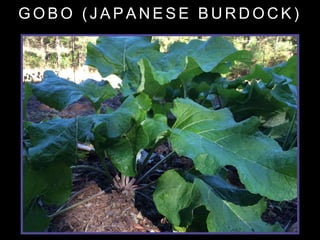
G O B O ( J A P A N E S E B U R D O C K )
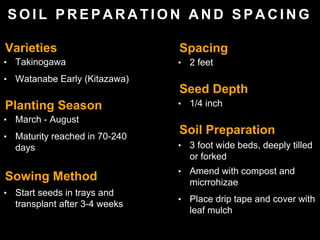
S O I L P R E P A R A T I O N A N D S P A C I N G
• March - August
• Maturity reached in 70-240
days
• Start seeds in trays and
transplant after 3-4 weeks
• 2 feet
• 3 foot wide beds, deeply tilled
or forked
• Place drip tape and cover with
leaf mulch
Varieties
Planting Season
• Takinogawa
• Watanabe Early (Kitazawa)
Sowing Method
Spacing
Soil Preparation
Seed Depth
• 1/4 inch
• Amend with compost and
micrrohizae
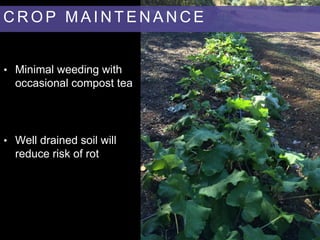
• Well drained soil will
reduce risk of rot
• Minimal weeding with
occasional compost tea
C R O P M A I N T E N A N C E
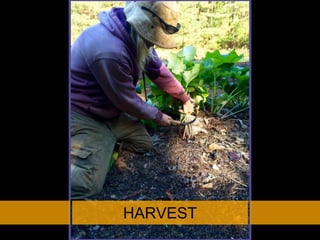
HARVEST
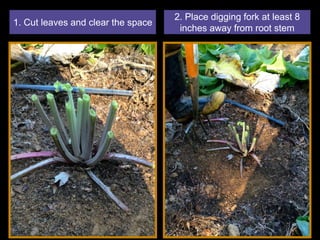
1. Cut leaves and clear the space
2. Place digging fork at least 8
inches away from root stem
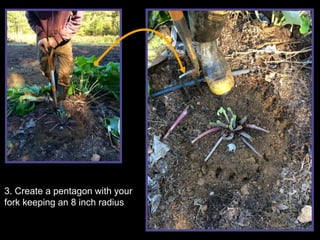
3. Create a pentagon with your
fork keeping an 8 inch radius
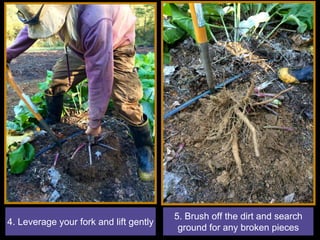
4. Leverage your fork and lift gently
5. Brush off the dirt and search
ground for any broken pieces
P O S T - H A R V E S T A N D
S T O R A G E
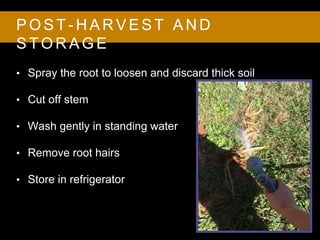
• Spray the root to loosen and discard thick soil
• Cut off stem
• Wash gently in standing water
• Remove root hairs
• Store in refrigerator
• Sell in 1/2 pound bundles
• Kimpira Gobo
Farmer’s Market and
CSA
Eating
• Good for stir fries, roasting
and soups
• Gobo burgers
Health Benefits
• High in potassium
• Rich in iron, magnesium,
vitamins C and E
• Reduces blood sugar and
cholesterol levels
M A R K E T I N G , E A T I N G & H E A L T H
B E N E F I T S
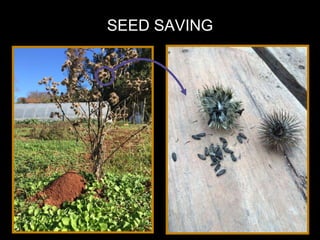
SEED SAVING
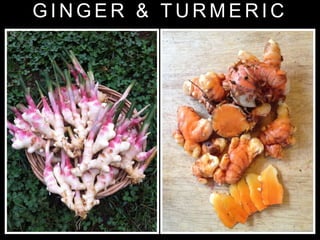
G I N G E R & T U R M E R I C
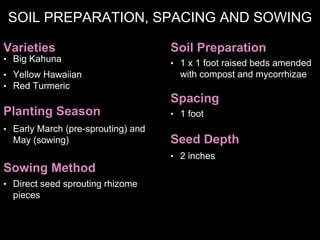
Sowing Method
Soil Preparation
Seed Depth
Spacing
• Direct seed sprouting rhizome
pieces
• 1 x 1 foot raised beds amended
with compost and mycorrhizae
• 2 inches
• 1 foot
Varieties
Planting Season
• Big Kahuna
• Early March (pre-sprouting) and
May (sowing)
SOIL PREPARATION, SPACING AND SOWING
• Yellow Hawaiian
• Red Turmeric
• Keep beds weeded and hilled
• Alternate feeding them with compost tea and epsom salt water
every other week
• Keep temperatures above 40º by keeping them under row covers or
in a greenhouse
• Be mindful of water content in soil to prevent rot and mold
CROP MAINTENANCE
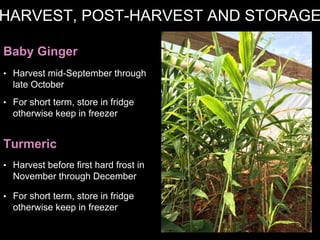
HARVEST, POST-HARVEST AND STORAGE
Baby Ginger
Turmeric
• Harvest mid-September through
late October
• For short term, store in fridge
otherwise keep in freezer
• Harvest before first hard frost in
November through December
• For short term, store in fridge
otherwise keep in freezer
M A R K E T I N G , E A T I N G & H E A L T H
B E N E F I T S
Marketing
Eating
Health Benefits
• Farmer’s Market
• CSA
• Farm Pick-up
• Restaurants
• Teas
• Cooking spice
• Immunity boost drinks
• Ginger aids in stomach health
• Turmeric is an anti-inflammatory
and most effective when eaten with
black pepper
SEED SAVING
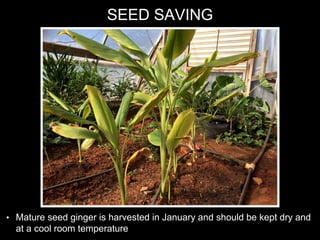
• Mature seed ginger is harvested in January and should be kept dry and
at a cool room temperature
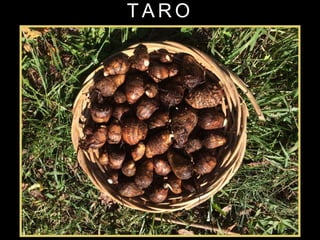
T A R O
Sowing Method
Soil Preparation
Seed Depth
Spacing
• Place sprouting corms directly into
soil
• 1 x 1 foot raised beds of well-
worked, loose soil
• 2 - 3 inches
• 1 foot
Variety
Planting Season
• Sato Imo
• Late April - late May
Bed Maintenance
• Drip tape woven between
plants
• Heavily mulched and
occasionally weeded
SOIL PREPARATION, SPACING AND SOWING
HARVEST, POST-HARVEST AND STORAGE
Harvest
Post-Harvest
Storage
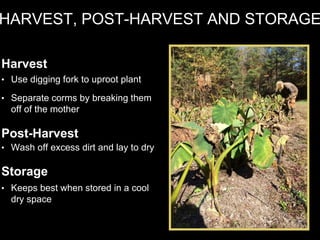
• Use digging fork to uproot plant
• Separate corms by breaking them
off of the mother
• Wash off excess dirt and lay to dry
• Keeps best when stored in a cool
dry space
MARKETING, EATING AND HEALTH BENEFITS
• Sell by the pound at Farmer’s Markets
Eating
• Can be prepared many different ways
to achieve different textures and
flavors
• Alone it is best boiled or
roasted
• Also great in curries,
soups, fritters and poi
Health Benefits
• High levels of dietary fiber
along with vitamins A, C,
E and B6
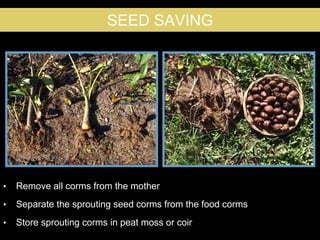
• Separate the sprouting seed corms from the food corms
• Store sprouting corms in peat moss or coir
SEED SAVING
• Remove all corms from the mother
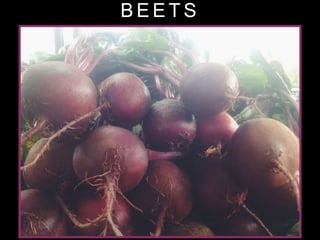
B E E T S
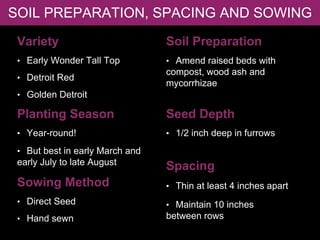
SOIL PREPARATION, SPACING AND SOWING
Variety
• Early Wonder Tall Top
• Detroit Red
• Golden Detroit
Planting Season
• Year-round!
• But best in early March and
early July to late August
Sowing Method
• Direct Seed
• Hand sewn
Soil Preparation
• Amend raised beds with
compost, wood ash and
mycorrhizae
Seed Depth
• 1/2 inch deep in furrows
Spacing
• Thin at least 4 inches apart
• Maintain 10 inches
between rows
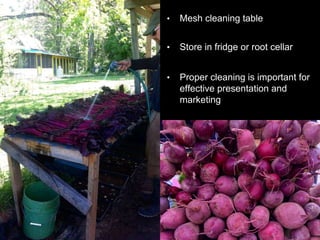
• Mesh cleaning table
• Store in fridge or root cellar
• Proper cleaning is important for
effective presentation and
marketing
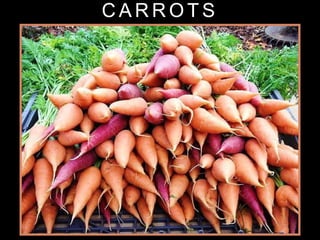
C A R R O T S
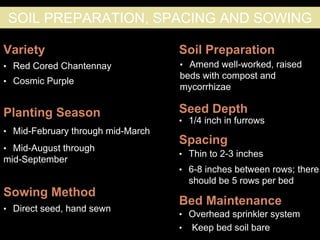
Sowing Method
Soil Preparation
Seed Depth
Spacing
• Direct seed, hand sewn
• Amend well-worked, raised
beds with compost and
mycorrhizae
• 1/4 inch in furrows
• Thin to 2-3 inches
Variety
Planting Season
• Red Cored Chantennay
• Mid-February through mid-March
Bed Maintenance
• Overhead sprinkler system
• Keep bed soil bare
SOIL PREPARATION, SPACING AND SOWING
• 6-8 inches between rows; there
should be 5 rows per bed
• Cosmic Purple
• Mid-August through
mid-September
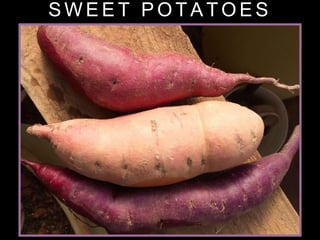
S W E E T P O T A T O E S
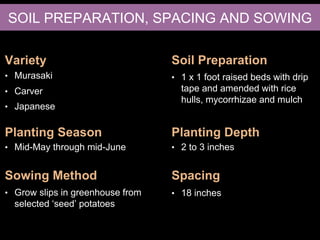
Variety
• Murasaki
Planting Season
Sowing Method
Soil Preparation
Planting Depth
Spacing
• 18 inches
• 2 to 3 inches
• 1 x 1 foot raised beds with drip
tape and amended with rice
hulls, mycorrhizae and mulch
• Grow slips in greenhouse from
selected ‘seed’ potatoes
• Mid-May through mid-June
SOIL PREPARATION, SPACING AND SOWING
• Carver
• Japanese
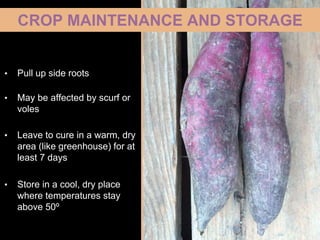
CROP MAINTENANCE AND STORAGE
• Pull up side roots
• May be affected by scurf or
voles
• Leave to cure in a warm, dry
area (like greenhouse) for at
least 7 days
• Store in a cool, dry place
where temperatures stay
above 50º
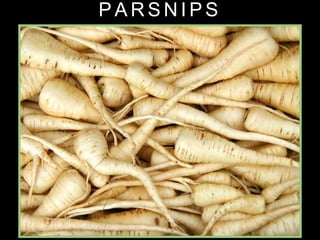
P A R S N I P S
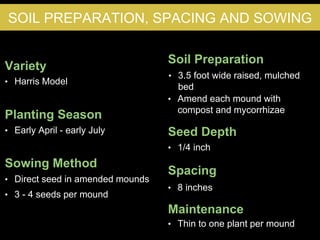
Variety
• Harris Model
Planting Season
Sowing Method
Soil Preparation
Seed Depth
Spacing
• 8 inches
• 1/4 inch
• 3.5 foot wide raised, mulched
bed
• Direct seed in amended mounds
• Early April - early July
SOIL PREPARATION, SPACING AND SOWING
• 3 - 4 seeds per mound
• Amend each mound with
compost and mycorrhizae
Maintenance
• Thin to one plant per mound
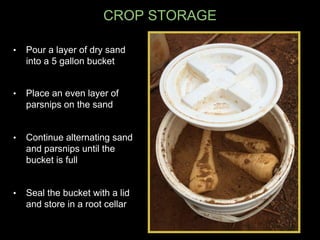
CROP STORAGE
• Pour a layer of dry sand
into a 5 gallon bucket
• Place an even layer of
parsnips on the sand
• Continue alternating sand
and parsnips until the
bucket is full
• Seal the bucket with a lid
and store in a root cellar
Haruka and Jason Oatis
Edible Earthscapes
edible.earthscapes@gmail.com
https://edibleearthscapes.wordpress.com
Facebook keyword: Edible Earthscapes

Success with root vegetables, CFSA SAC 2015

  • 1.
    T E CH N I Q U E S F O R S U C C E S S W I T H R O O T V E G E T A B L E S E D I B L E E A R T H S C A P E S
  • 2.
    D A IK O N
  • 3.
    V A RI E T Y A N D S E E D P R E P • Minowase • Early August to late September • Miyashige • Minowase Early • April Cross Varieties Planting Season Hybrids (Kitazawa Seed Company) Open Pollinated (Baker Creek Seed)
  • 4.
    • Direct seedin furrows by hand-sowing rather than using a seeder • 3.5 foot wide raised beds • 1/2 inch SOIL PREP, SPACING AND SOWING Sowing Method Soil Preparation • Furrows amended with compost and mycorrhizae Seed Depth Spacing • 12 inches • Works well in a polyculture
  • 5.
    CROP MAINTENANCE, DISEASESAND PESTS • Overhead sprinklers with drip tape • Keep bed healthy by weeding, thinning and mulching • Use row covers when below 28º • Watch for flea beetles, harlequin bugs and moles • Root rot can happen with too much water in soil
  • 6.
    H A RV E S T , P O S T H A R V E S T A N D S T O R A G E Harvest Post Harvest Storage • Leverage out of ground with digging fork • Spray clean with hose • Cut off greens • For short term storage, keep in fridge • For long term, wrap in newspaper or put in bucket of sand and keep in root cellar
  • 7.
    MARKETING, EATING ANDHEALTH BENEFITS Marketing • It’s all about presentation • Cooking demonstrations • CSAs and restaurants • Share recipes with customers Health Benefits • High in vitamin C • Facilitates efficient digestion • Natural diuretic • Anti-inflammatory & antioxidant compounds • Rich source of calcium https://www.organicfacts.net/health-benefits/vegetable/daikon.html Daikon Steaks • Sell as individual roots
  • 8.
    SEED SAVING • Whendoing your own seed saving, cross-pollination is possible Watermelon Radish Purple Daikon
  • 9.
    G O BO ( J A P A N E S E B U R D O C K )
  • 10.
    S O IL P R E P A R A T I O N A N D S P A C I N G • March - August • Maturity reached in 70-240 days • Start seeds in trays and transplant after 3-4 weeks • 2 feet • 3 foot wide beds, deeply tilled or forked • Place drip tape and cover with leaf mulch Varieties Planting Season • Takinogawa • Watanabe Early (Kitazawa) Sowing Method Spacing Soil Preparation Seed Depth • 1/4 inch • Amend with compost and micrrohizae
  • 11.
    • Well drainedsoil will reduce risk of rot • Minimal weeding with occasional compost tea C R O P M A I N T E N A N C E
  • 12.
  • 13.
    1. Cut leavesand clear the space 2. Place digging fork at least 8 inches away from root stem
  • 14.
    3. Create apentagon with your fork keeping an 8 inch radius
  • 15.
    4. Leverage yourfork and lift gently 5. Brush off the dirt and search ground for any broken pieces
  • 16.
    P O ST - H A R V E S T A N D S T O R A G E • Spray the root to loosen and discard thick soil • Cut off stem • Wash gently in standing water • Remove root hairs • Store in refrigerator
  • 17.
    • Sell in1/2 pound bundles • Kimpira Gobo Farmer’s Market and CSA Eating • Good for stir fries, roasting and soups • Gobo burgers Health Benefits • High in potassium • Rich in iron, magnesium, vitamins C and E • Reduces blood sugar and cholesterol levels M A R K E T I N G , E A T I N G & H E A L T H B E N E F I T S
  • 18.
  • 19.
    G I NG E R & T U R M E R I C
  • 20.
    Sowing Method Soil Preparation SeedDepth Spacing • Direct seed sprouting rhizome pieces • 1 x 1 foot raised beds amended with compost and mycorrhizae • 2 inches • 1 foot Varieties Planting Season • Big Kahuna • Early March (pre-sprouting) and May (sowing) SOIL PREPARATION, SPACING AND SOWING • Yellow Hawaiian • Red Turmeric
  • 21.
    • Keep bedsweeded and hilled • Alternate feeding them with compost tea and epsom salt water every other week • Keep temperatures above 40º by keeping them under row covers or in a greenhouse • Be mindful of water content in soil to prevent rot and mold CROP MAINTENANCE
  • 22.
    HARVEST, POST-HARVEST ANDSTORAGE Baby Ginger Turmeric • Harvest mid-September through late October • For short term, store in fridge otherwise keep in freezer • Harvest before first hard frost in November through December • For short term, store in fridge otherwise keep in freezer
  • 23.
    M A RK E T I N G , E A T I N G & H E A L T H B E N E F I T S Marketing Eating Health Benefits • Farmer’s Market • CSA • Farm Pick-up • Restaurants • Teas • Cooking spice • Immunity boost drinks • Ginger aids in stomach health • Turmeric is an anti-inflammatory and most effective when eaten with black pepper
  • 24.
    SEED SAVING • Matureseed ginger is harvested in January and should be kept dry and at a cool room temperature
  • 25.
  • 26.
    Sowing Method Soil Preparation SeedDepth Spacing • Place sprouting corms directly into soil • 1 x 1 foot raised beds of well- worked, loose soil • 2 - 3 inches • 1 foot Variety Planting Season • Sato Imo • Late April - late May Bed Maintenance • Drip tape woven between plants • Heavily mulched and occasionally weeded SOIL PREPARATION, SPACING AND SOWING
  • 27.
    HARVEST, POST-HARVEST ANDSTORAGE Harvest Post-Harvest Storage • Use digging fork to uproot plant • Separate corms by breaking them off of the mother • Wash off excess dirt and lay to dry • Keeps best when stored in a cool dry space
  • 28.
    MARKETING, EATING ANDHEALTH BENEFITS • Sell by the pound at Farmer’s Markets Eating • Can be prepared many different ways to achieve different textures and flavors • Alone it is best boiled or roasted • Also great in curries, soups, fritters and poi Health Benefits • High levels of dietary fiber along with vitamins A, C, E and B6
  • 29.
    • Separate thesprouting seed corms from the food corms • Store sprouting corms in peat moss or coir SEED SAVING • Remove all corms from the mother
  • 30.
    B E ET S
  • 31.
    SOIL PREPARATION, SPACINGAND SOWING Variety • Early Wonder Tall Top • Detroit Red • Golden Detroit Planting Season • Year-round! • But best in early March and early July to late August Sowing Method • Direct Seed • Hand sewn Soil Preparation • Amend raised beds with compost, wood ash and mycorrhizae Seed Depth • 1/2 inch deep in furrows Spacing • Thin at least 4 inches apart • Maintain 10 inches between rows
  • 32.
    • Mesh cleaningtable • Store in fridge or root cellar • Proper cleaning is important for effective presentation and marketing
  • 33.
    C A RR O T S
  • 34.
    Sowing Method Soil Preparation SeedDepth Spacing • Direct seed, hand sewn • Amend well-worked, raised beds with compost and mycorrhizae • 1/4 inch in furrows • Thin to 2-3 inches Variety Planting Season • Red Cored Chantennay • Mid-February through mid-March Bed Maintenance • Overhead sprinkler system • Keep bed soil bare SOIL PREPARATION, SPACING AND SOWING • 6-8 inches between rows; there should be 5 rows per bed • Cosmic Purple • Mid-August through mid-September
  • 35.
    S W EE T P O T A T O E S
  • 36.
    Variety • Murasaki Planting Season SowingMethod Soil Preparation Planting Depth Spacing • 18 inches • 2 to 3 inches • 1 x 1 foot raised beds with drip tape and amended with rice hulls, mycorrhizae and mulch • Grow slips in greenhouse from selected ‘seed’ potatoes • Mid-May through mid-June SOIL PREPARATION, SPACING AND SOWING • Carver • Japanese
  • 37.
    CROP MAINTENANCE ANDSTORAGE • Pull up side roots • May be affected by scurf or voles • Leave to cure in a warm, dry area (like greenhouse) for at least 7 days • Store in a cool, dry place where temperatures stay above 50º
  • 38.
    P A RS N I P S
  • 39.
    Variety • Harris Model PlantingSeason Sowing Method Soil Preparation Seed Depth Spacing • 8 inches • 1/4 inch • 3.5 foot wide raised, mulched bed • Direct seed in amended mounds • Early April - early July SOIL PREPARATION, SPACING AND SOWING • 3 - 4 seeds per mound • Amend each mound with compost and mycorrhizae Maintenance • Thin to one plant per mound
  • 40.
    CROP STORAGE • Poura layer of dry sand into a 5 gallon bucket • Place an even layer of parsnips on the sand • Continue alternating sand and parsnips until the bucket is full • Seal the bucket with a lid and store in a root cellar
  • 41.
    Haruka and JasonOatis Edible Earthscapes edible.earthscapes@gmail.com https://edibleearthscapes.wordpress.com Facebook keyword: Edible Earthscapes