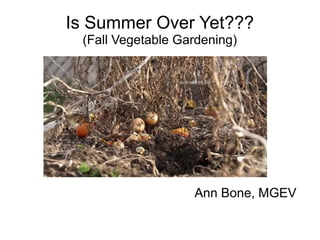
Is Summer Over Yet???
(Fall Vegetable Gardening)
Ann Bone, MGEV
The Best Time of the Year
● Milder temperatures
● Many garden pests getting ready to hide out for
the winter
● Breezes keep flying insects at bay
● Steadier rain patterns (we hope) produces that
elusive “moist, but well-drained” soil
The Best Time of the Year
● Milder temperatures
● Many garden pests getting ready to hide out for
the winter
● Breezes keep flying insects at bay
● Steadier rain patterns (we hope) produces that
elusive “moist, but well-drained” soil
Preparing for a Fall Garden
● Rip out old stuff
● Dispose of diseased and rotten stuff
● Turn the soil to expose hidden pests
● Allow a couple of days for birds to do the dirty
work
● Add organic matter
● Work it in
● Water to settle
What to Plant?
● Brassicas
● Leafy Greens
● Root crops
● Cover crops
Brassicas
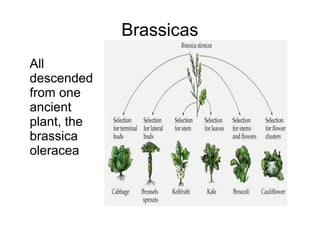
All
descended
from one
ancient
plant, the
brassica
oleracea
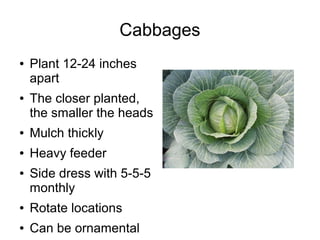
Cabbages
● Plant 12-24 inches
apart
● The closer planted,
the smaller the heads
● Mulch thickly
● Heavy feeder
● Side dress with 5-5-5
monthly
● Rotate locations
● Can be ornamental
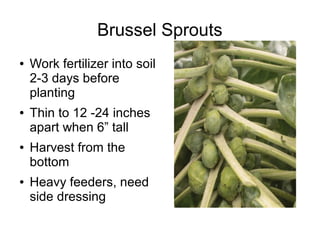
Brussel Sprouts
● Work fertilizer into soil
2-3 days before
planting
● Thin to 12 -24 inches
apart when 6” tall
● Harvest from the
bottom
● Heavy feeders, need
side dressing
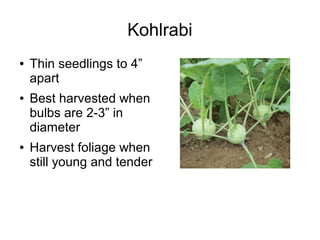
Kohlrabi
● Thin seedlings to 4”
apart
● Best harvested when
bulbs are 2-3” in
diameter
● Harvest foliage when
still young and tender
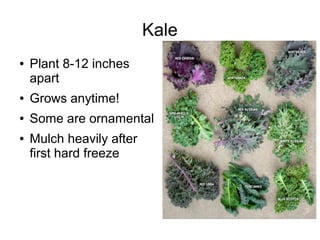
Kale
● Plant 8-12 inches
apart
● Grows anytime!
● Some are ornamental
● Mulch heavily after
first hard freeze
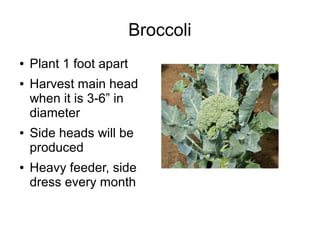
Broccoli
● Plant 1 foot apart
● Harvest main head
when it is 3-6” in
diameter
● Side heads will be
produced
● Heavy feeder, side
dress every month
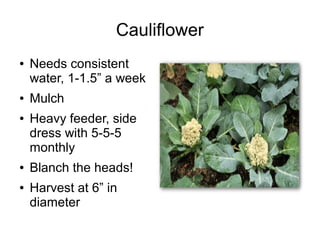
Cauliflower
● Needs consistent
water, 1-1.5” a week
● Mulch
● Heavy feeder, side
dress with 5-5-5
monthly
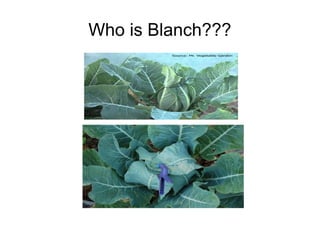
● Blanch the heads!
● Harvest at 6” in
diameter
Who is Blanch???
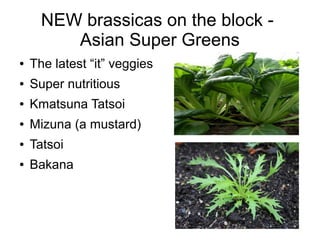
NEW brassicas on the block -
Asian Super Greens
● The latest “it” veggies
● Super nutritious
● Kmatsuna Tatsoi
● Mizuna (a mustard)
● Tatsoi
● Bakana
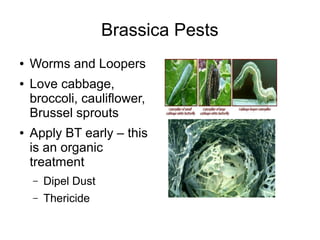
Brassica Pests
● Worms and Loopers
● Love cabbage,
broccoli, cauliflower,
Brussel sprouts
● Apply BT early – this
is an organic
treatment
– Dipel Dust
– Thericide
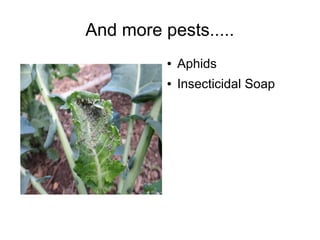
And more pests.....
● Aphids
● Insecticidal Soap
Leafy Greens
● Lettuces
● Collards
● Mustard Greens
● Spinach
● Kales
● Bok Choy
● Swiss Chard
● Arugula
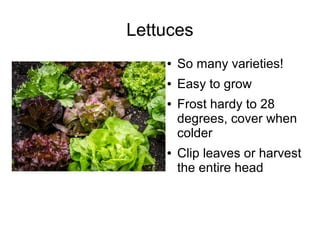
Lettuces
● So many varieties!
● Easy to grow
● Frost hardy to 28
degrees, cover when
colder
● Clip leaves or harvest
the entire head
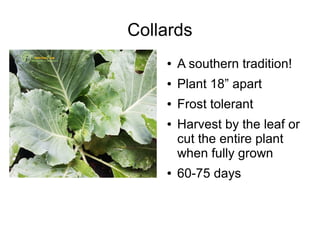
Collards
● A southern tradition!
● Plant 18” apart
● Frost tolerant
● Harvest by the leaf or
cut the entire plant
when fully grown
● 60-75 days
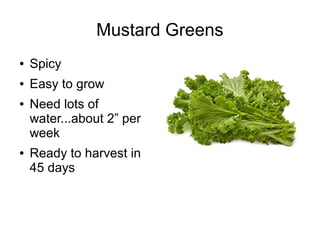
Mustard Greens
● Spicy
● Easy to grow
● Need lots of
water...about 2” per
week
● Ready to harvest in
45 days
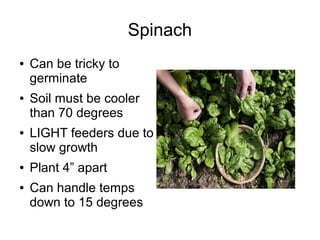
Spinach
● Can be tricky to
germinate
● Soil must be cooler
than 70 degrees
● LIGHT feeders due to
slow growth
● Plant 4” apart
● Can handle temps
down to 15 degrees
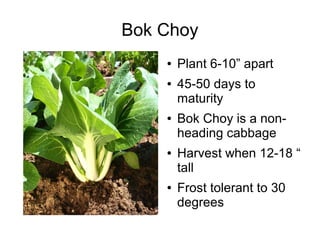
Bok Choy
● Plant 6-10” apart
● 45-50 days to
maturity
● Bok Choy is a non-
heading cabbage
● Harvest when 12-18 “
tall
● Frost tolerant to 30
degrees
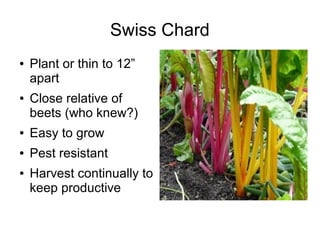
Swiss Chard
● Plant or thin to 12”
apart
● Close relative of
beets (who knew?)
● Easy to grow
● Pest resistant
● Harvest continually to
keep productive
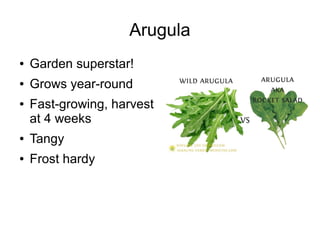
Arugula
● Garden superstar!
● Grows year-round
● Fast-growing, harvest
at 4 weeks
● Tangy
● Frost hardy
Root Crops
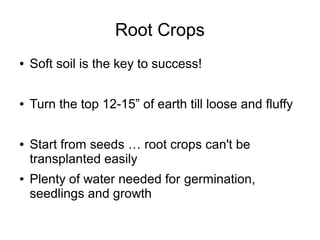
● Soft soil is the key to success!
● Turn the top 12-15” of earth till loose and fluffy
● Start from seeds … root crops can't be
transplanted easily
● Plenty of water needed for germination,
seedlings and growth
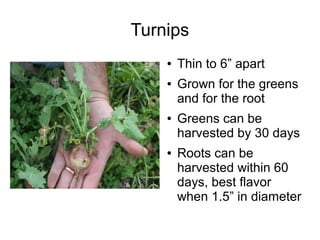
Turnips
● Thin to 6” apart
● Grown for the greens
and for the root
● Greens can be
harvested by 30 days
● Roots can be
harvested within 60
days, best flavor
when 1.5” in diameter
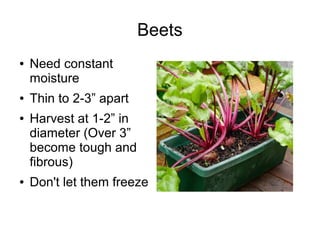
Beets
● Need constant
moisture
● Thin to 2-3” apart
● Harvest at 1-2” in
diameter (Over 3”
become tough and
fibrous)
● Don't let them freeze
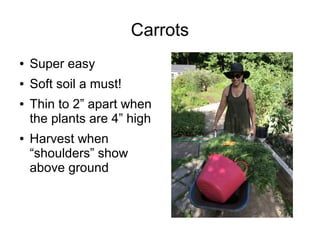
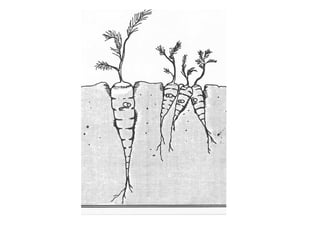
Carrots
● Super easy
● Soft soil a must!
● Thin to 2” apart when
the plants are 4” high
● Harvest when
“shoulders” show
above ground
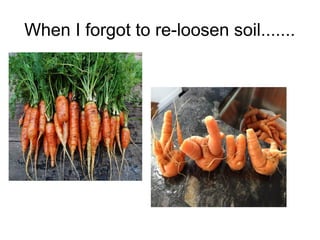
When I forgot to re-loosen soil.......
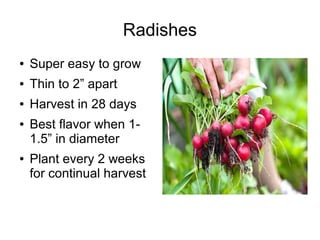
Radishes
● Super easy to grow
● Thin to 2” apart
● Harvest in 28 days
● Best flavor when 1-
1.5” in diameter
● Plant every 2 weeks
for continual harvest
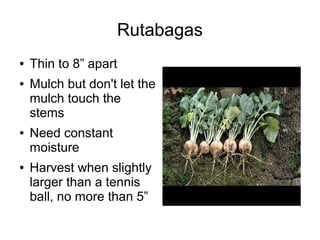
Rutabagas
● Thin to 8” apart
● Mulch but don't let the
mulch touch the
stems
● Need constant
moisture
● Harvest when slightly
larger than a tennis
ball, no more than 5”
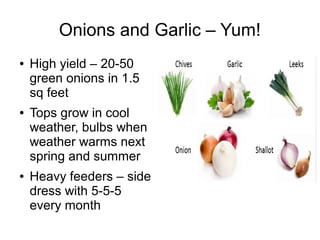
Onions and Garlic – Yum!
● High yield – 20-50
green onions in 1.5
sq feet
● Tops grow in cool
weather, bulbs when
weather warms next
spring and summer
● Heavy feeders – side
dress with 5-5-5
every month
Feeding the Garden
● Work in organic matter before planting
● Work in some organic 5-5-5
● Side dress the heavy feeders monthly while
growing:
– Brussels sprouts
– Cabbage
– Broccoli
– Cauliflower
– Onions
Mulch
Mulching is essential – 1-3 inches
● Pine straw
● Chips
● Chopped dead leaves
● Newspapers (not 1-3 inches!)
Protection from Freezing
● Don't panic!
● Covering isn't needed for most cool season
crops until it drops below 20 degrees
● Row cover fabric
● Plastic
● Don't place directly on the plants – support with
hoops or other framework
Cover Crops
● Crimson clover – replenishes nitrogen into the
soil
● Rye grass
● Millet
Fall vegetable gardening

Fall vegetable gardening

  • 1.
    Is Summer OverYet??? (Fall Vegetable Gardening) Ann Bone, MGEV
  • 2.
    The Best Timeof the Year ● Milder temperatures ● Many garden pests getting ready to hide out for the winter ● Breezes keep flying insects at bay ● Steadier rain patterns (we hope) produces that elusive “moist, but well-drained” soil
  • 3.
    The Best Timeof the Year ● Milder temperatures ● Many garden pests getting ready to hide out for the winter ● Breezes keep flying insects at bay ● Steadier rain patterns (we hope) produces that elusive “moist, but well-drained” soil
  • 4.
    Preparing for aFall Garden ● Rip out old stuff ● Dispose of diseased and rotten stuff ● Turn the soil to expose hidden pests ● Allow a couple of days for birds to do the dirty work ● Add organic matter ● Work it in ● Water to settle
  • 5.
    What to Plant? ●Brassicas ● Leafy Greens ● Root crops ● Cover crops
  • 6.
  • 7.
    Cabbages ● Plant 12-24inches apart ● The closer planted, the smaller the heads ● Mulch thickly ● Heavy feeder ● Side dress with 5-5-5 monthly ● Rotate locations ● Can be ornamental
  • 8.
    Brussel Sprouts ● Workfertilizer into soil 2-3 days before planting ● Thin to 12 -24 inches apart when 6” tall ● Harvest from the bottom ● Heavy feeders, need side dressing
  • 9.
    Kohlrabi ● Thin seedlingsto 4” apart ● Best harvested when bulbs are 2-3” in diameter ● Harvest foliage when still young and tender
  • 10.
    Kale ● Plant 8-12inches apart ● Grows anytime! ● Some are ornamental ● Mulch heavily after first hard freeze
  • 11.
    Broccoli ● Plant 1foot apart ● Harvest main head when it is 3-6” in diameter ● Side heads will be produced ● Heavy feeder, side dress every month
  • 12.
    Cauliflower ● Needs consistent water,1-1.5” a week ● Mulch ● Heavy feeder, side dress with 5-5-5 monthly ● Blanch the heads! ● Harvest at 6” in diameter
  • 13.
  • 14.
    NEW brassicas onthe block - Asian Super Greens ● The latest “it” veggies ● Super nutritious ● Kmatsuna Tatsoi ● Mizuna (a mustard) ● Tatsoi ● Bakana
  • 15.
    Brassica Pests ● Wormsand Loopers ● Love cabbage, broccoli, cauliflower, Brussel sprouts ● Apply BT early – this is an organic treatment – Dipel Dust – Thericide
  • 16.
    And more pests..... ●Aphids ● Insecticidal Soap
  • 17.
    Leafy Greens ● Lettuces ●Collards ● Mustard Greens ● Spinach ● Kales ● Bok Choy ● Swiss Chard ● Arugula
  • 18.
    Lettuces ● So manyvarieties! ● Easy to grow ● Frost hardy to 28 degrees, cover when colder ● Clip leaves or harvest the entire head
  • 19.
    Collards ● A southerntradition! ● Plant 18” apart ● Frost tolerant ● Harvest by the leaf or cut the entire plant when fully grown ● 60-75 days
  • 20.
    Mustard Greens ● Spicy ●Easy to grow ● Need lots of water...about 2” per week ● Ready to harvest in 45 days
  • 21.
    Spinach ● Can betricky to germinate ● Soil must be cooler than 70 degrees ● LIGHT feeders due to slow growth ● Plant 4” apart ● Can handle temps down to 15 degrees
  • 22.
    Bok Choy ● Plant6-10” apart ● 45-50 days to maturity ● Bok Choy is a non- heading cabbage ● Harvest when 12-18 “ tall ● Frost tolerant to 30 degrees
  • 23.
    Swiss Chard ● Plantor thin to 12” apart ● Close relative of beets (who knew?) ● Easy to grow ● Pest resistant ● Harvest continually to keep productive
  • 24.
    Arugula ● Garden superstar! ●Grows year-round ● Fast-growing, harvest at 4 weeks ● Tangy ● Frost hardy
  • 25.
    Root Crops ● Softsoil is the key to success! ● Turn the top 12-15” of earth till loose and fluffy ● Start from seeds … root crops can't be transplanted easily ● Plenty of water needed for germination, seedlings and growth
  • 26.
    Turnips ● Thin to6” apart ● Grown for the greens and for the root ● Greens can be harvested by 30 days ● Roots can be harvested within 60 days, best flavor when 1.5” in diameter
  • 27.
    Beets ● Need constant moisture ●Thin to 2-3” apart ● Harvest at 1-2” in diameter (Over 3” become tough and fibrous) ● Don't let them freeze
  • 28.
    Carrots ● Super easy ●Soft soil a must! ● Thin to 2” apart when the plants are 4” high ● Harvest when “shoulders” show above ground
  • 29.
    When I forgotto re-loosen soil.......
  • 30.
    Radishes ● Super easyto grow ● Thin to 2” apart ● Harvest in 28 days ● Best flavor when 1- 1.5” in diameter ● Plant every 2 weeks for continual harvest
  • 31.
    Rutabagas ● Thin to8” apart ● Mulch but don't let the mulch touch the stems ● Need constant moisture ● Harvest when slightly larger than a tennis ball, no more than 5”
  • 32.
    Onions and Garlic– Yum! ● High yield – 20-50 green onions in 1.5 sq feet ● Tops grow in cool weather, bulbs when weather warms next spring and summer ● Heavy feeders – side dress with 5-5-5 every month
  • 33.
    Feeding the Garden ●Work in organic matter before planting ● Work in some organic 5-5-5 ● Side dress the heavy feeders monthly while growing: – Brussels sprouts – Cabbage – Broccoli – Cauliflower – Onions
  • 34.
    Mulch Mulching is essential– 1-3 inches ● Pine straw ● Chips ● Chopped dead leaves ● Newspapers (not 1-3 inches!)
  • 35.
    Protection from Freezing ●Don't panic! ● Covering isn't needed for most cool season crops until it drops below 20 degrees ● Row cover fabric ● Plastic ● Don't place directly on the plants – support with hoops or other framework
  • 36.
    Cover Crops ● Crimsonclover – replenishes nitrogen into the soil ● Rye grass ● Millet

Editor's Notes

  • #2 If your garden looks anything like mine, things have gotten away from us just a little bit..... How nice to have an opportunity to “start over” with cool season crops.
  • #5 If your tomatoes and peppers are still producing now that the temps are dropping a bit, it's OK to leave them in. The organic matter can be well-aged compost or aged manure. A slow release organic fertilizer would also be good - 5-5-5