Subnetting and Variable Length
   Subnet Masks (VLSMs)
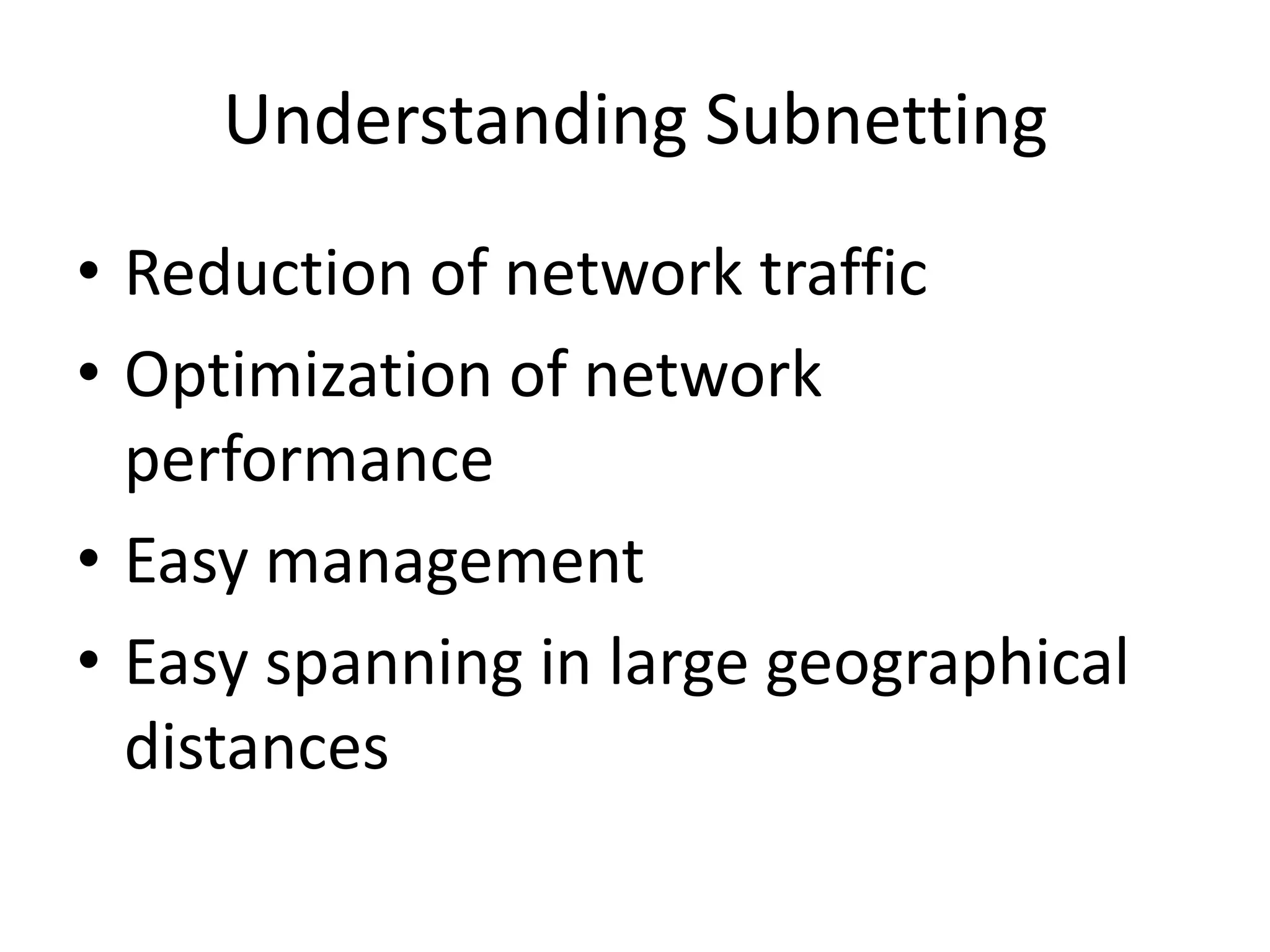
Understanding Subnetting
• Reduction of network traffic
• Optimization of network
  performance
• Easy management
• Easy spanning in large geographical
  distances
Understanding Subnetting
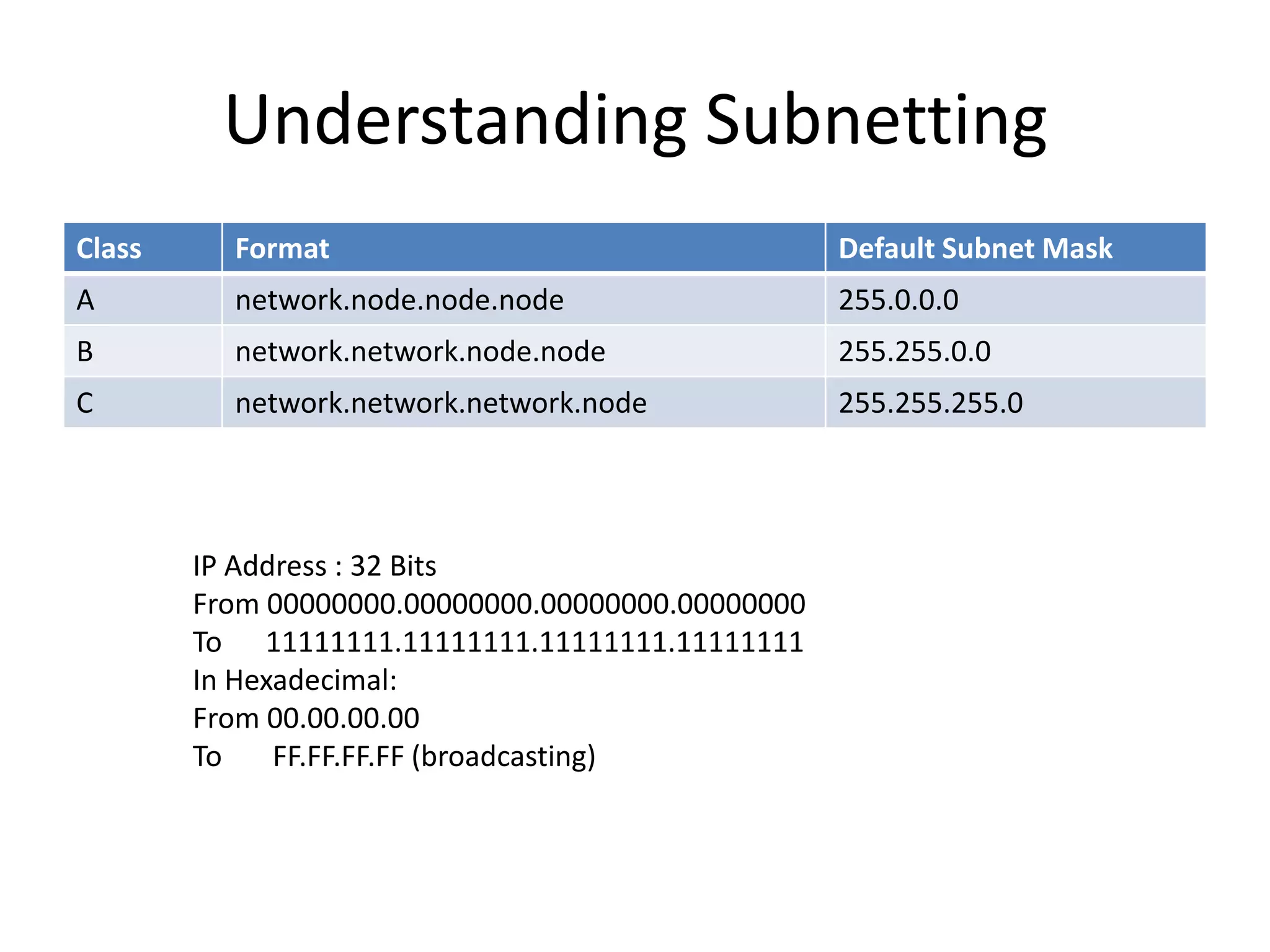
Class     Format                                   Default Subnet Mask
A         network.node.node.node                   255.0.0.0
B         network.network.node.node                255.255.0.0
C         network.network.network.node             255.255.255.0


        IP Address : 32 Bits
        From 00000000.00000000.00000000.00000000
        To 11111111.11111111.11111111.11111111
        In Hexadecimal:
        From 00.00.00.00
        To    FF.FF.FF.FF (broadcasting)
Understanding Subnetting
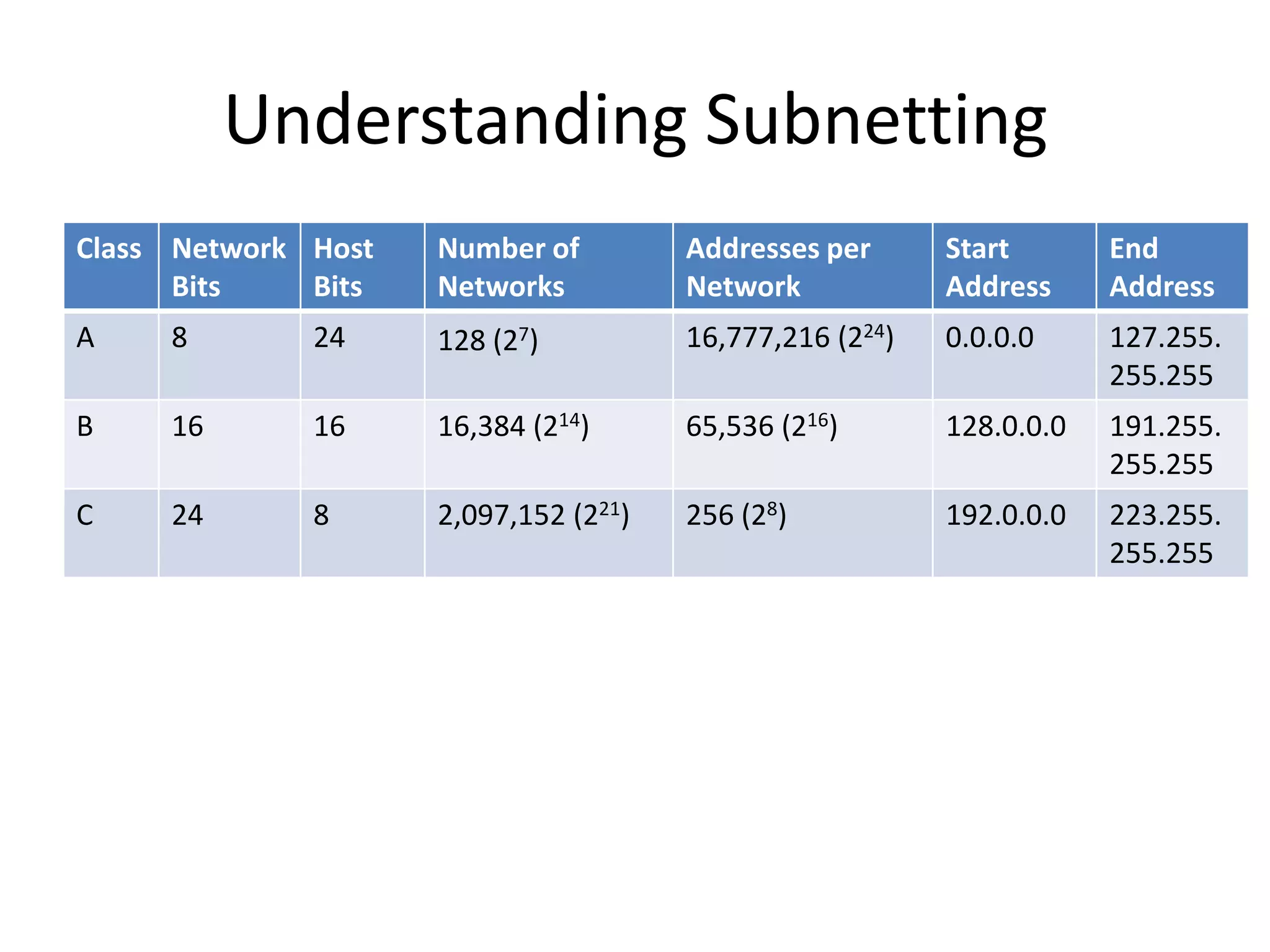
Class Network Host   Number of         Addresses per      Start       End
      Bits    Bits   Networks          Network            Address     Address
A    8        24     128 (27)          16,777,216 (224)   0.0.0.0     127.255.
                                                                      255.255
B    16       16     16,384 (214)      65,536 (216)       128.0.0.0   191.255.
                                                                      255.255
C    24       8      2,097,152 (221)   256 (28)           192.0.0.0   223.255.
                                                                      255.255
Easy way to subnet
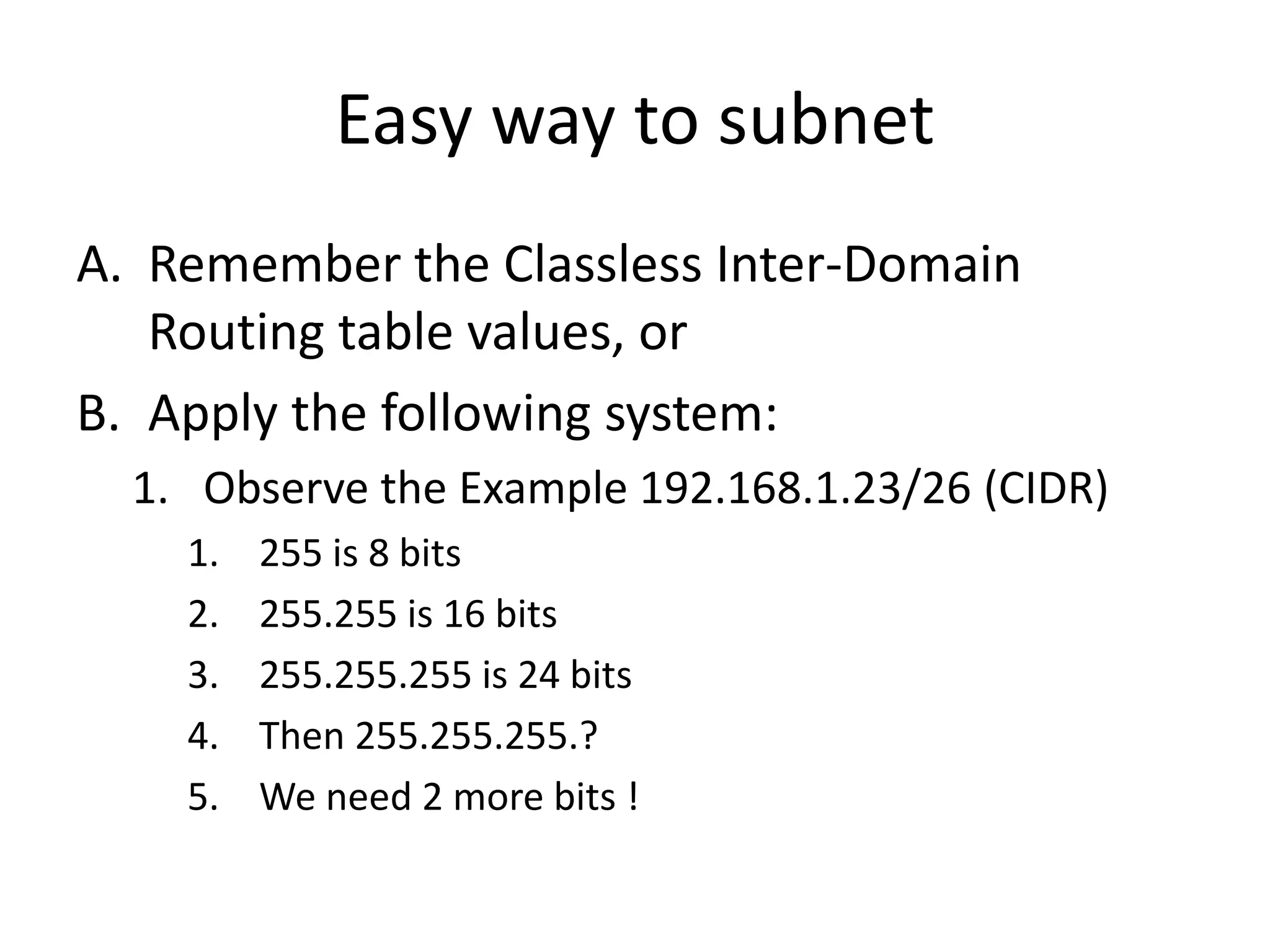
A. Remember the Classless Inter-Domain
   Routing table values, or
B. Apply the following system:
  1. Observe the Example 192.168.1.23/26 (CIDR)
    1.   255 is 8 bits
    2.   255.255 is 16 bits
    3.   255.255.255 is 24 bits
    4.   Then 255.255.255.?
    5.   We need 2 more bits !
Easy way to subnet
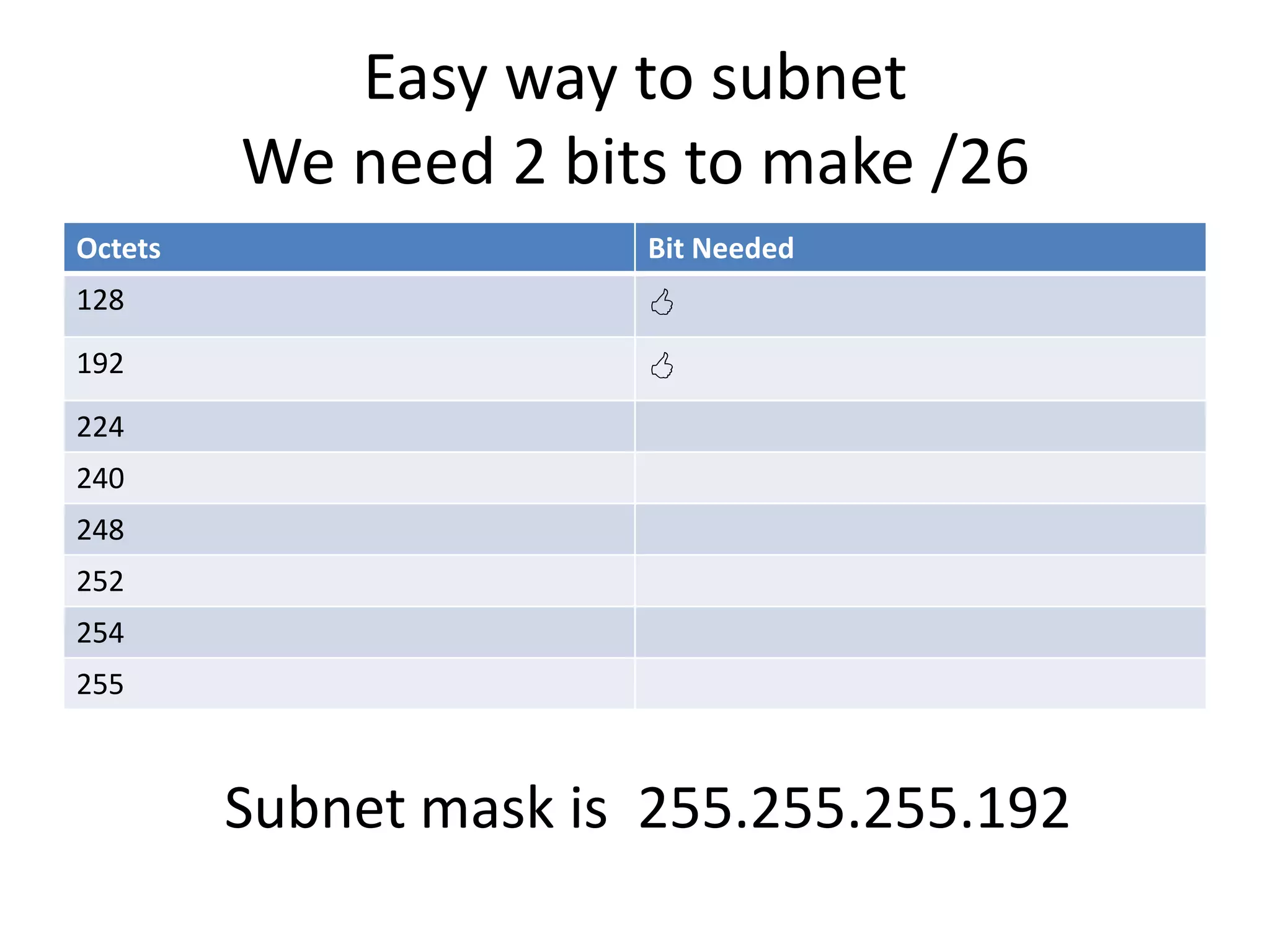
         We need 2 bits to make /26
Octets                 Bit Needed
128                    
192                    
224
240
248
252
254
255


         Subnet mask is 255.255.255.192
So, how many networks then?
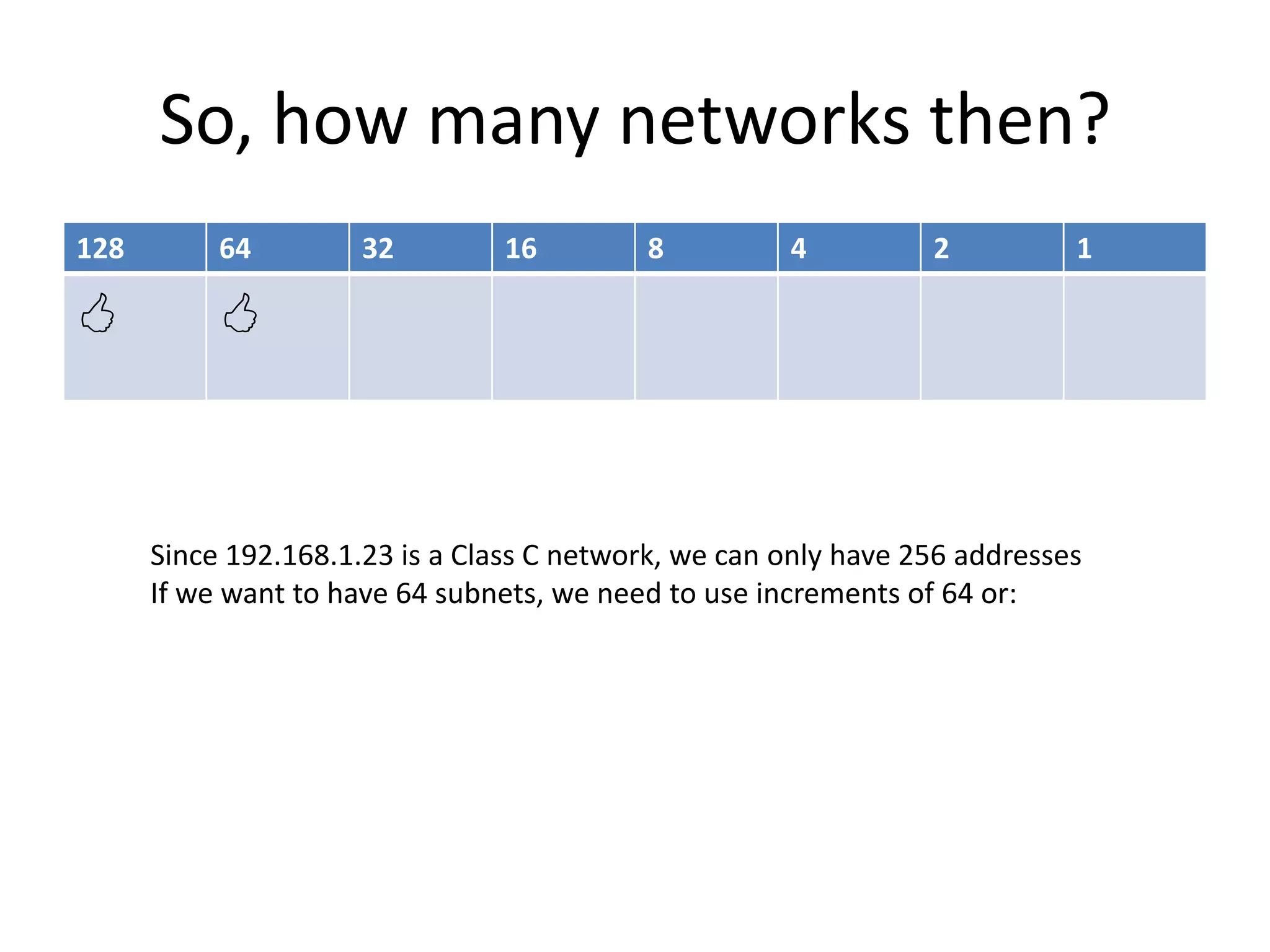
128        64         32         16        8          4          2          1

          


      Since 192.168.1.23 is a Class C network, we can only have 256 addresses
      If we want to have 64 subnets, we need to use increments of 64 or:
So, how many networks then?
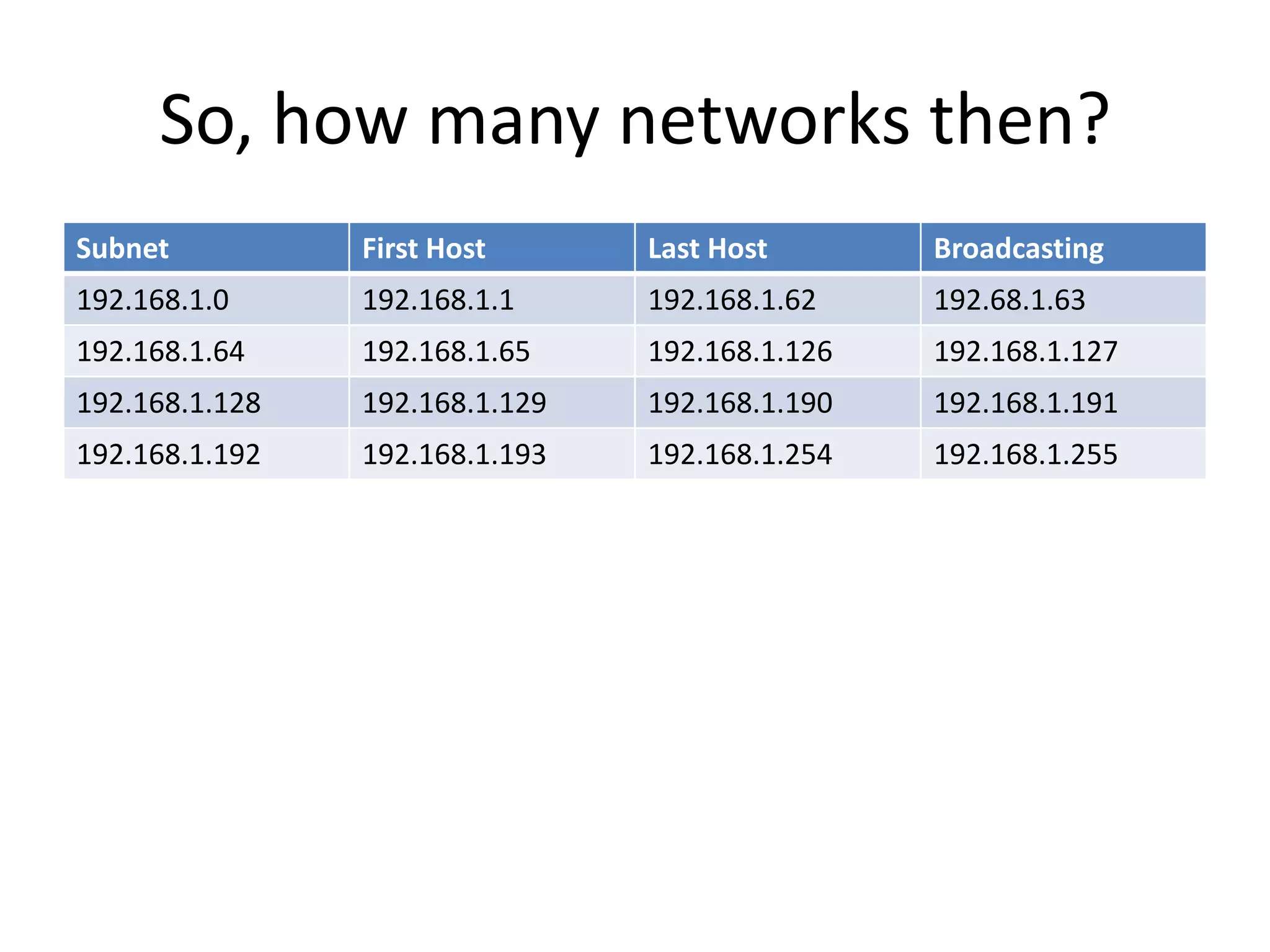
Subnet          First Host      Last Host       Broadcasting
192.168.1.0     192.168.1.1     192.168.1.62    192.68.1.63
192.168.1.64    192.168.1.65    192.168.1.126   192.168.1.127
192.168.1.128   192.168.1.129   192.168.1.190   192.168.1.191
192.168.1.192   192.168.1.193   192.168.1.254   192.168.1.255
Variable Length Subnet Mask
                 VLSM
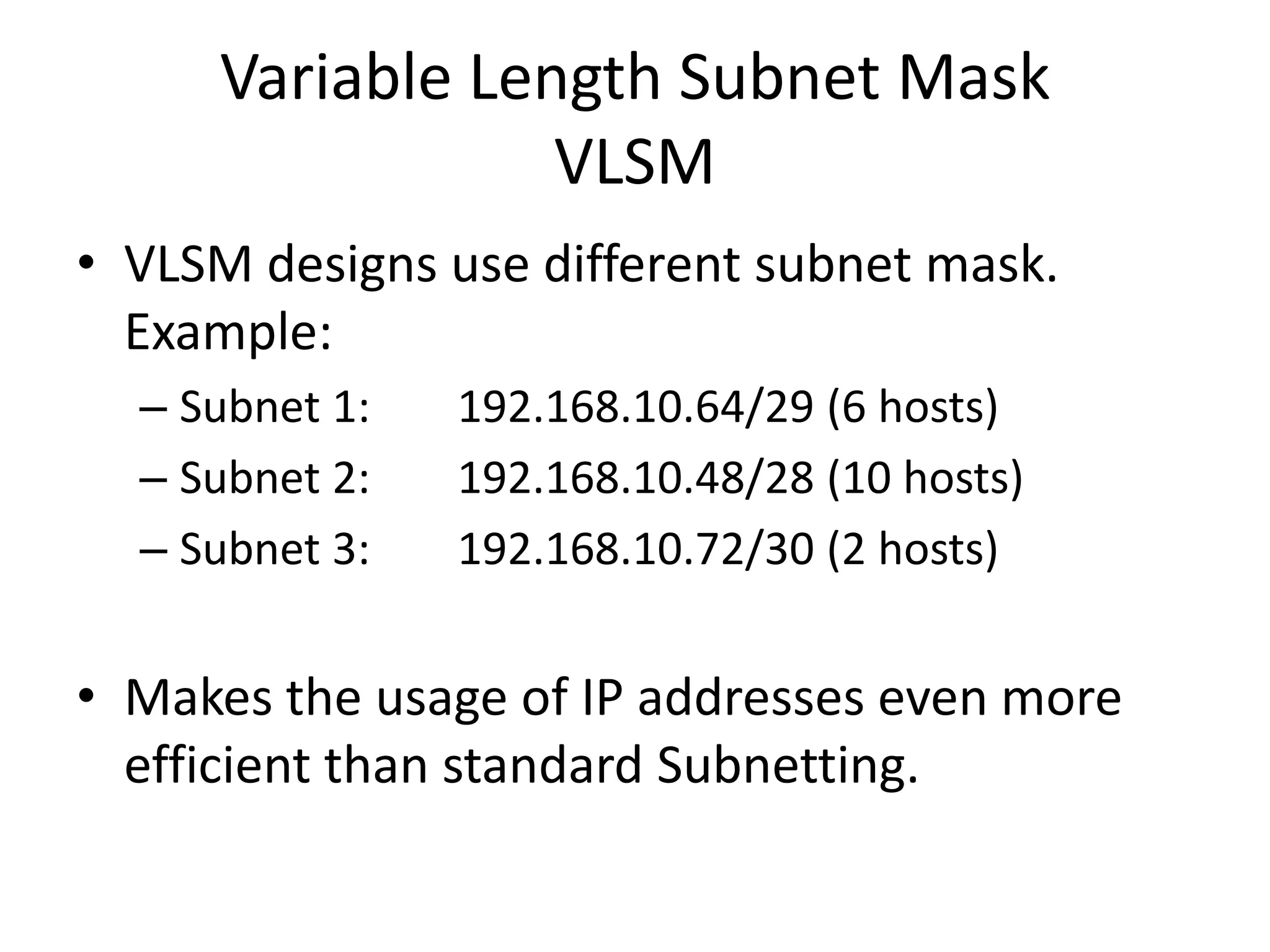
• VLSM designs use different subnet mask.
  Example:
  – Subnet 1:   192.168.10.64/29 (6 hosts)
  – Subnet 2:   192.168.10.48/28 (10 hosts)
  – Subnet 3:   192.168.10.72/30 (2 hosts)


• Makes the usage of IP addresses even more
  efficient than standard Subnetting.
Variable Length Subnet Mask
              VLSM

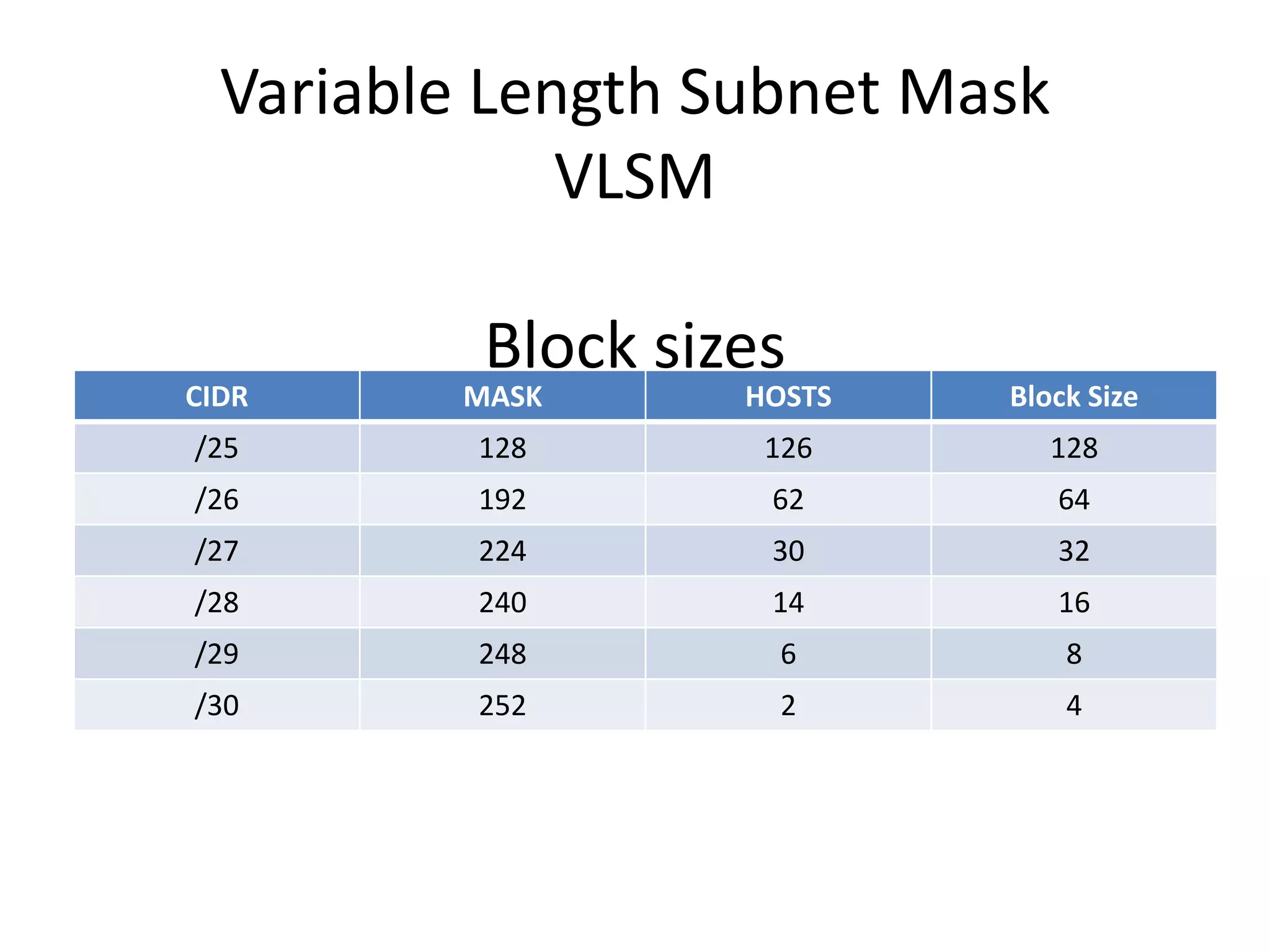
          Block sizes
CIDR     MASK      HOSTS   Block Size
/25       128       126       128
/26       192       62          64
/27       224       30          32
/28       240       14          16
/29       248        6          8
/30       252        2          4
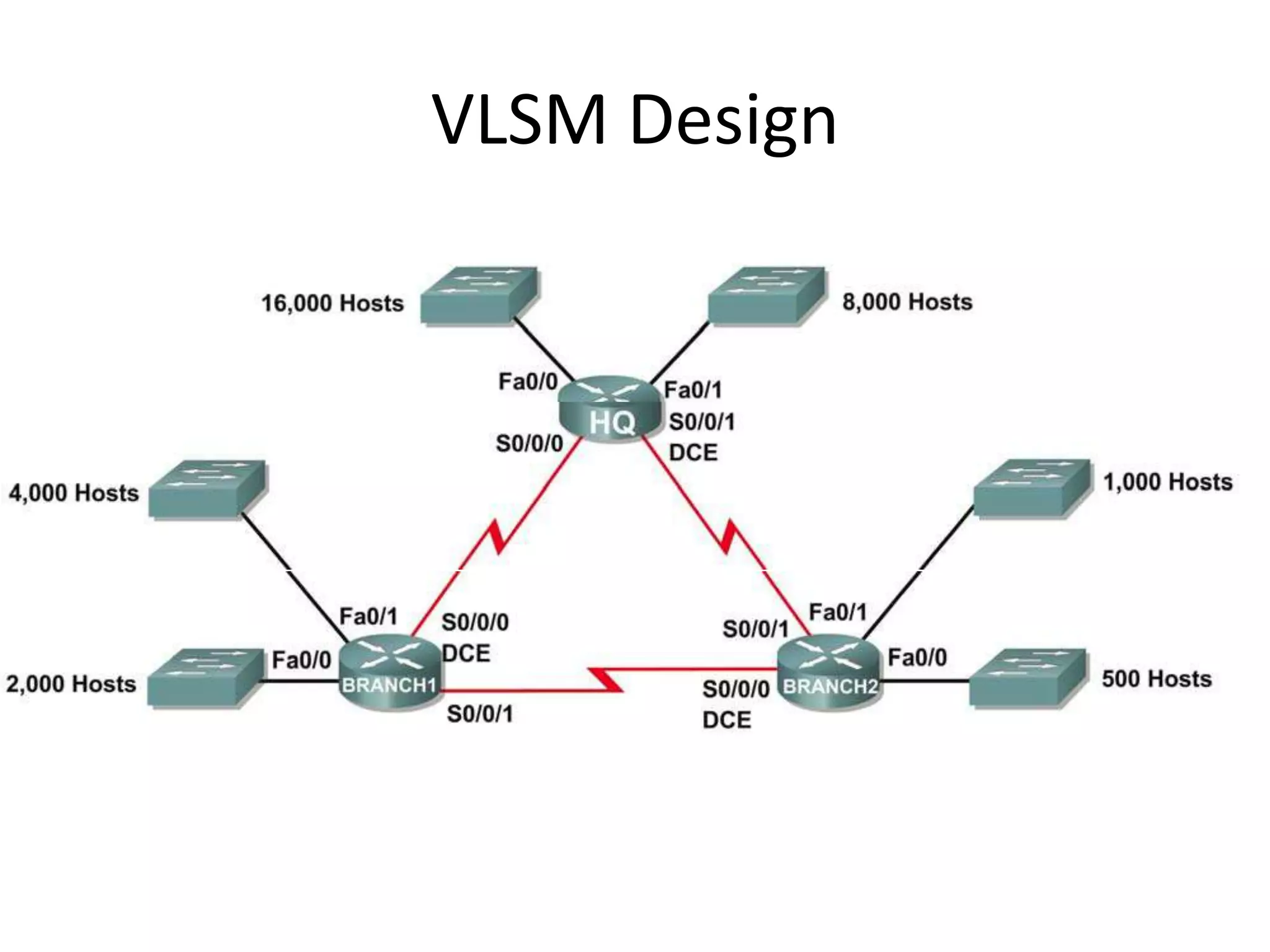
VLSM Design

Subnetting class

  • 1.
    Subnetting and VariableLength Subnet Masks (VLSMs)
  • 2.
    Understanding Subnetting • Reductionof network traffic • Optimization of network performance • Easy management • Easy spanning in large geographical distances
  • 3.
    Understanding Subnetting Class Format Default Subnet Mask A network.node.node.node 255.0.0.0 B network.network.node.node 255.255.0.0 C network.network.network.node 255.255.255.0 IP Address : 32 Bits From 00000000.00000000.00000000.00000000 To 11111111.11111111.11111111.11111111 In Hexadecimal: From 00.00.00.00 To FF.FF.FF.FF (broadcasting)
  • 4.
    Understanding Subnetting Class NetworkHost Number of Addresses per Start End Bits Bits Networks Network Address Address A 8 24 128 (27) 16,777,216 (224) 0.0.0.0 127.255. 255.255 B 16 16 16,384 (214) 65,536 (216) 128.0.0.0 191.255. 255.255 C 24 8 2,097,152 (221) 256 (28) 192.0.0.0 223.255. 255.255
  • 5.
    Easy way tosubnet A. Remember the Classless Inter-Domain Routing table values, or B. Apply the following system: 1. Observe the Example 192.168.1.23/26 (CIDR) 1. 255 is 8 bits 2. 255.255 is 16 bits 3. 255.255.255 is 24 bits 4. Then 255.255.255.? 5. We need 2 more bits !
  • 6.
    Easy way tosubnet We need 2 bits to make /26 Octets Bit Needed 128  192  224 240 248 252 254 255 Subnet mask is 255.255.255.192
  • 7.
    So, how manynetworks then? 128 64 32 16 8 4 2 1   Since 192.168.1.23 is a Class C network, we can only have 256 addresses If we want to have 64 subnets, we need to use increments of 64 or:
  • 8.
    So, how manynetworks then? Subnet First Host Last Host Broadcasting 192.168.1.0 192.168.1.1 192.168.1.62 192.68.1.63 192.168.1.64 192.168.1.65 192.168.1.126 192.168.1.127 192.168.1.128 192.168.1.129 192.168.1.190 192.168.1.191 192.168.1.192 192.168.1.193 192.168.1.254 192.168.1.255
  • 9.
    Variable Length SubnetMask VLSM • VLSM designs use different subnet mask. Example: – Subnet 1: 192.168.10.64/29 (6 hosts) – Subnet 2: 192.168.10.48/28 (10 hosts) – Subnet 3: 192.168.10.72/30 (2 hosts) • Makes the usage of IP addresses even more efficient than standard Subnetting.
  • 10.
    Variable Length SubnetMask VLSM Block sizes CIDR MASK HOSTS Block Size /25 128 126 128 /26 192 62 64 /27 224 30 32 /28 240 14 16 /29 248 6 8 /30 252 2 4
  • 11.