INJECTION FLAWS
DANISH INAMDAR
Security Researcher
What are Injection Flaws??
 Injection flaws are a class of security vulnerability
that allows a user to “break out” of the web
application context.
 Weakness in an application whereby foreign input
subverts the otherwise legitimate use of a
subsystem.
 Injection flaws allow attackers to relay malicious
code through an application to another system
Is Your Web App Vulnerable to
Injection?
 User Supplied data is not validated , filtered
or sanitized by Application.
 Hostile data is supplied directly to dynamic
queries or non parameterized calls for the
interpreter without context-aware escaping.
 Hostile data is used with ORM search
parameters such that search evaluates out
to include sensitive or all records.
Different types of Injection
flaws Different subsystems == Different flaws
 SQL Injection
 Command Injection
 HTML Injection
 LDAP Injection
 XML Injection
 IMAP/SMTP Injection
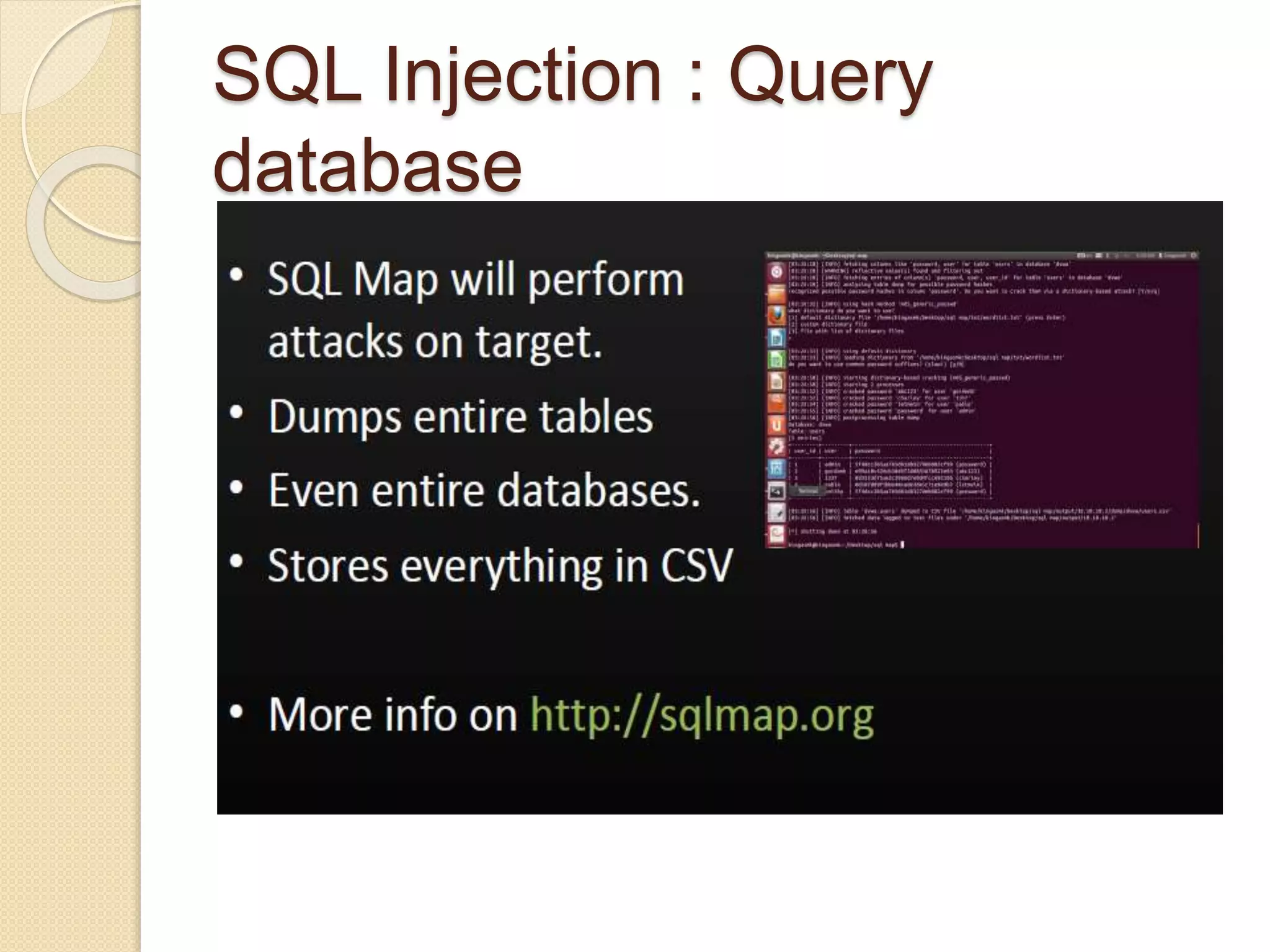
SQL Injection: Database Query
 Dynamic script to look into database
 “Direct” access to database
 Possible to issue CRUD statements and many
more….
SQL Injection : Query
database
Command Injection
 Web application performs operating system
tasks
 Execute external programs/script
 List files etc.
ping –c <user_input>
Protection using Command Execution API
os.system(ping –c 127.0.0.1)
HTML Injection
 Possible to include HTML Tags like iframe , fake forms,
XSS also possible….
 Can be used in phishing attacks
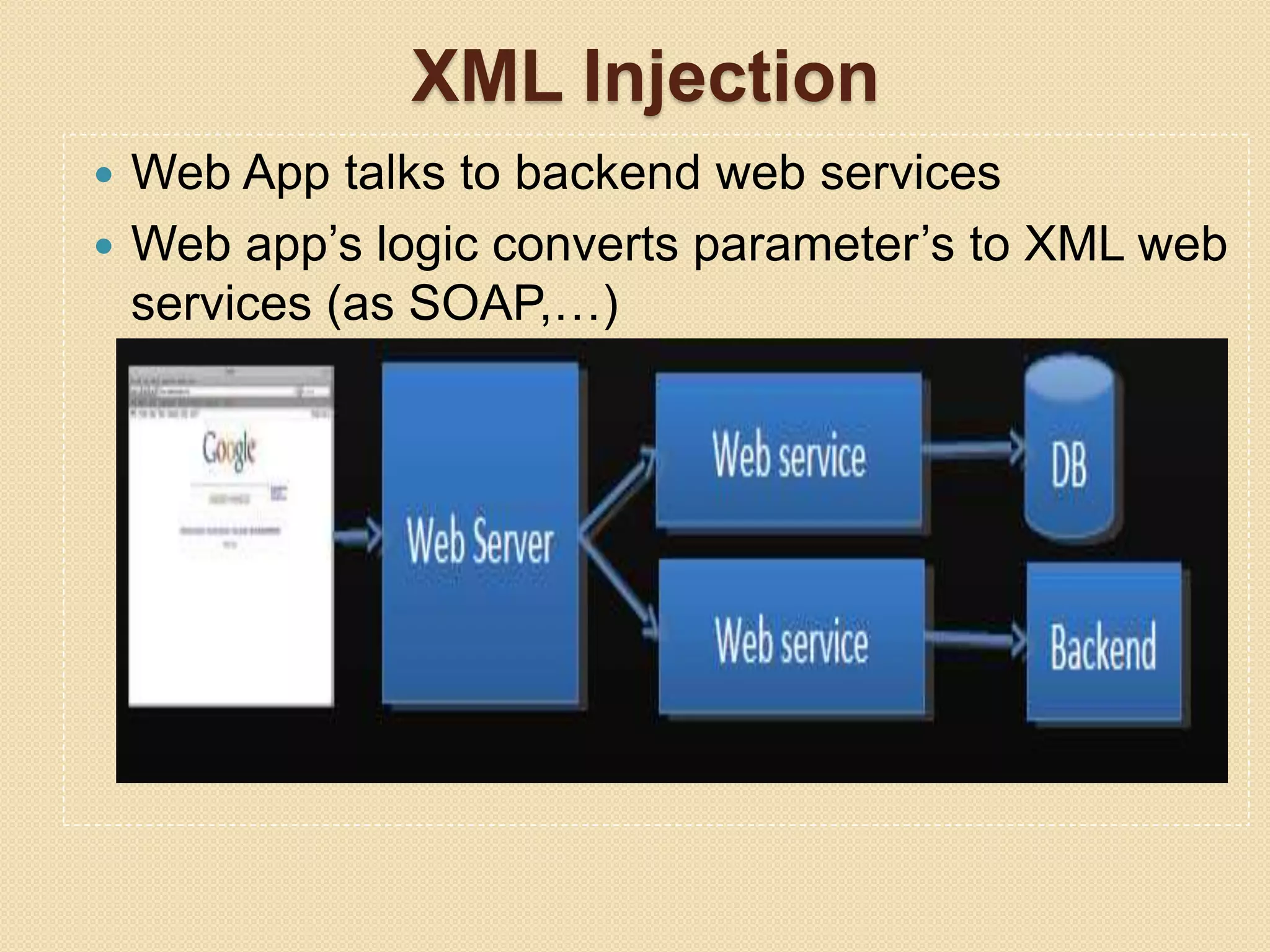
XML Injection
 Web App talks to backend web services
 Web app’s logic converts parameter’s to XML web
services (as SOAP,…)
XML Injection
LDAP Injection
 Lightweight Directory Access protocol
 It is used to access information directories like
users, user information, software, computers.
LDAP Injection
 Insert Special characters like(*,|,&,…) leading
to exposure of user’s confidential data
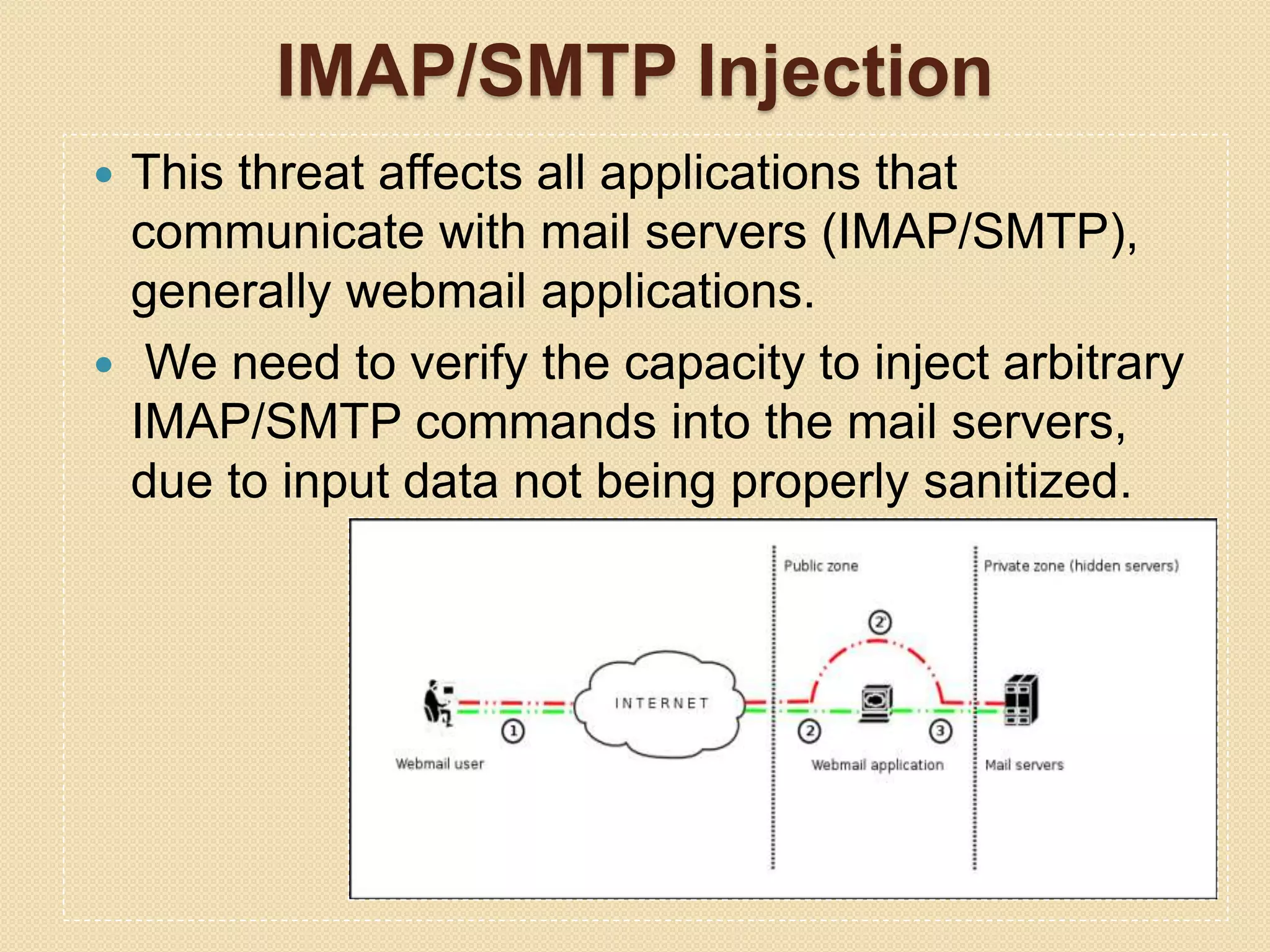
IMAP/SMTP Injection
 This threat affects all applications that
communicate with mail servers (IMAP/SMTP),
generally webmail applications.
 We need to verify the capacity to inject arbitrary
IMAP/SMTP commands into the mail servers,
due to input data not being properly sanitized.
State of Web framework
Security
 Anti CSRF tokens – can easily turned
off/miss-configurations
 Templates escapes user input – just HTML
escape ->XSS
 Uses ORM – SQLi still possible
https://rails-sqli.org/
 We need to use secure APIs or write secure
code
Can WAF solve the problem?
 Web Application Firewalls are for Attack
Detection and Prevention
 Most of WAFs use blacklists. No
vulnerability detection.
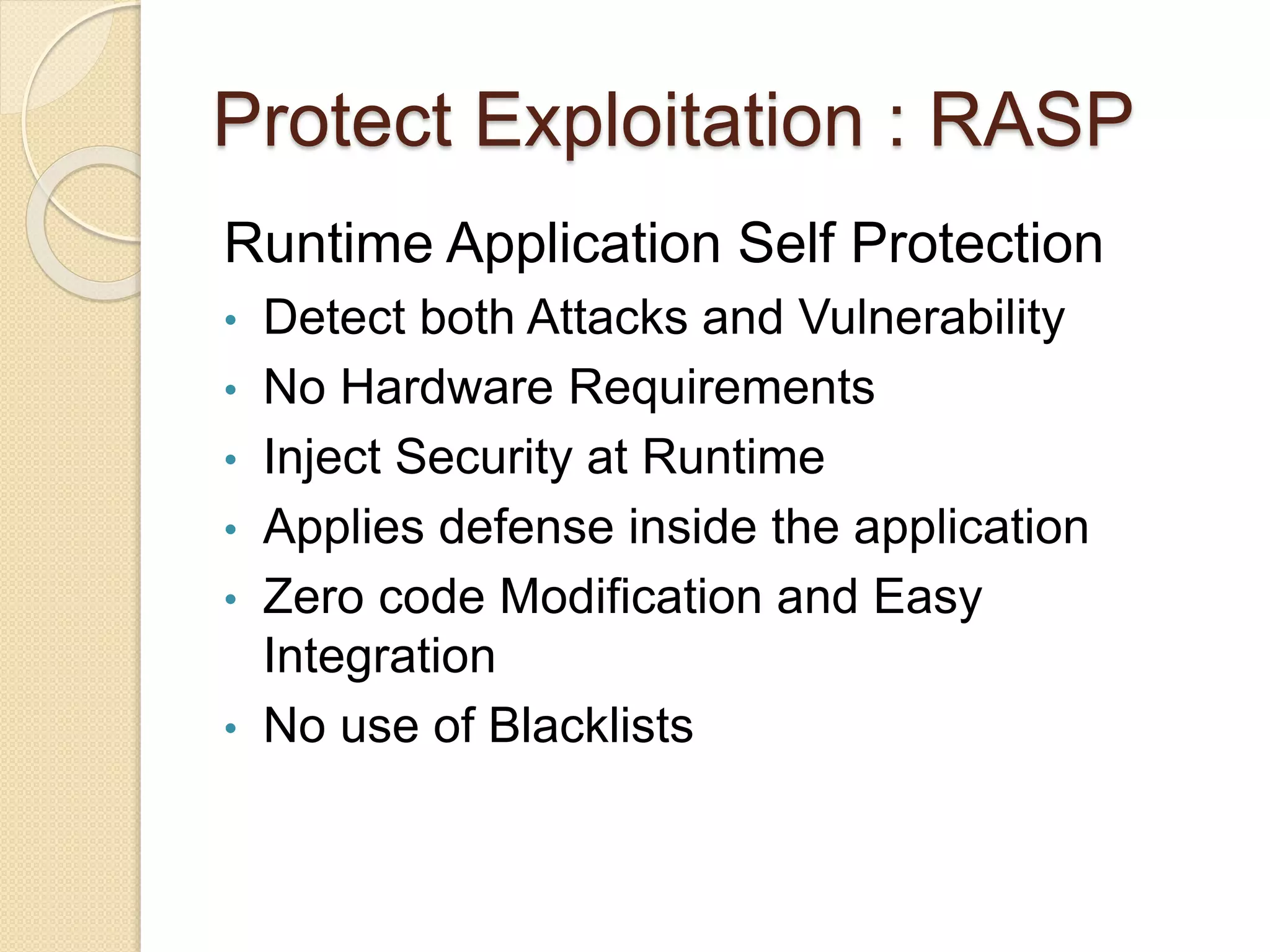
Protect Exploitation : RASP
Runtime Application Self Protection
• Detect both Attacks and Vulnerability
• No Hardware Requirements
• Inject Security at Runtime
• Applies defense inside the application
• Zero code Modification and Easy
Integration
• No use of Blacklists
RASP by API Instrumentation
and Dynamic White-list
 Monkey Patching
 Lexical Analysis and Token Generation
 Context Determination
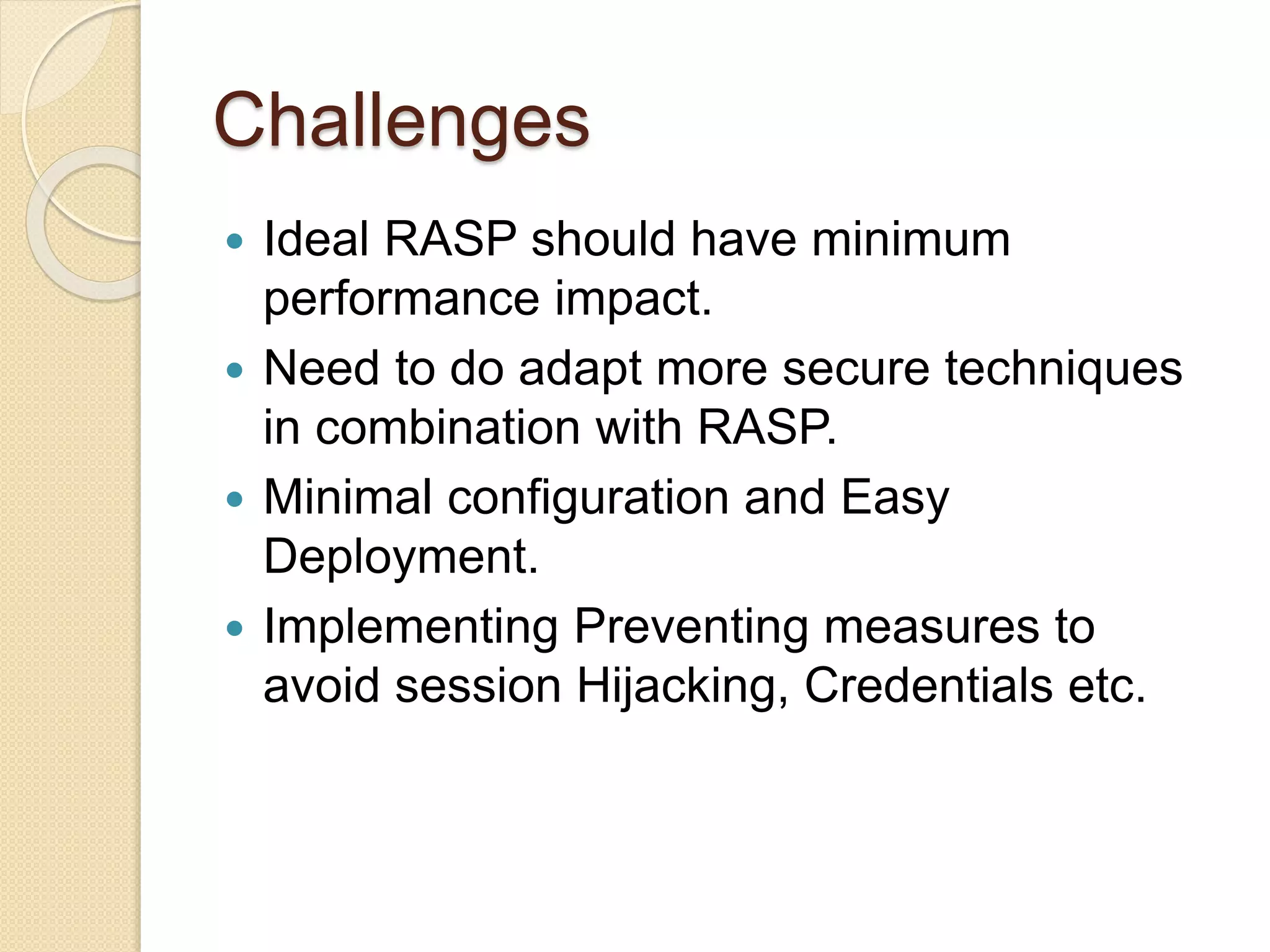
Challenges
 Ideal RASP should have minimum
performance impact.
 Need to do adapt more secure techniques
in combination with RASP.
 Minimal configuration and Easy
Deployment.
 Implementing Preventing measures to
avoid session Hijacking, Credentials etc.
Thank You

Injection flaws

  • 1.
  • 2.
    What are InjectionFlaws??  Injection flaws are a class of security vulnerability that allows a user to “break out” of the web application context.  Weakness in an application whereby foreign input subverts the otherwise legitimate use of a subsystem.  Injection flaws allow attackers to relay malicious code through an application to another system
  • 3.
    Is Your WebApp Vulnerable to Injection?  User Supplied data is not validated , filtered or sanitized by Application.  Hostile data is supplied directly to dynamic queries or non parameterized calls for the interpreter without context-aware escaping.  Hostile data is used with ORM search parameters such that search evaluates out to include sensitive or all records.
  • 4.
    Different types ofInjection flaws Different subsystems == Different flaws  SQL Injection  Command Injection  HTML Injection  LDAP Injection  XML Injection  IMAP/SMTP Injection
  • 5.
    SQL Injection: DatabaseQuery  Dynamic script to look into database  “Direct” access to database  Possible to issue CRUD statements and many more….
  • 6.
    SQL Injection :Query database
  • 7.
    Command Injection  Webapplication performs operating system tasks  Execute external programs/script  List files etc. ping –c <user_input> Protection using Command Execution API os.system(ping –c 127.0.0.1)
  • 8.
    HTML Injection  Possibleto include HTML Tags like iframe , fake forms, XSS also possible….  Can be used in phishing attacks
  • 9.
    XML Injection  WebApp talks to backend web services  Web app’s logic converts parameter’s to XML web services (as SOAP,…)
  • 10.
  • 11.
    LDAP Injection  LightweightDirectory Access protocol  It is used to access information directories like users, user information, software, computers.
  • 12.
    LDAP Injection  InsertSpecial characters like(*,|,&,…) leading to exposure of user’s confidential data
  • 13.
    IMAP/SMTP Injection  Thisthreat affects all applications that communicate with mail servers (IMAP/SMTP), generally webmail applications.  We need to verify the capacity to inject arbitrary IMAP/SMTP commands into the mail servers, due to input data not being properly sanitized.
  • 14.
    State of Webframework Security  Anti CSRF tokens – can easily turned off/miss-configurations  Templates escapes user input – just HTML escape ->XSS  Uses ORM – SQLi still possible https://rails-sqli.org/  We need to use secure APIs or write secure code
  • 15.
    Can WAF solvethe problem?  Web Application Firewalls are for Attack Detection and Prevention  Most of WAFs use blacklists. No vulnerability detection.
  • 16.
    Protect Exploitation :RASP Runtime Application Self Protection • Detect both Attacks and Vulnerability • No Hardware Requirements • Inject Security at Runtime • Applies defense inside the application • Zero code Modification and Easy Integration • No use of Blacklists
  • 17.
    RASP by APIInstrumentation and Dynamic White-list  Monkey Patching  Lexical Analysis and Token Generation  Context Determination
  • 21.
    Challenges  Ideal RASPshould have minimum performance impact.  Need to do adapt more secure techniques in combination with RASP.  Minimal configuration and Easy Deployment.  Implementing Preventing measures to avoid session Hijacking, Credentials etc.
  • 22.