











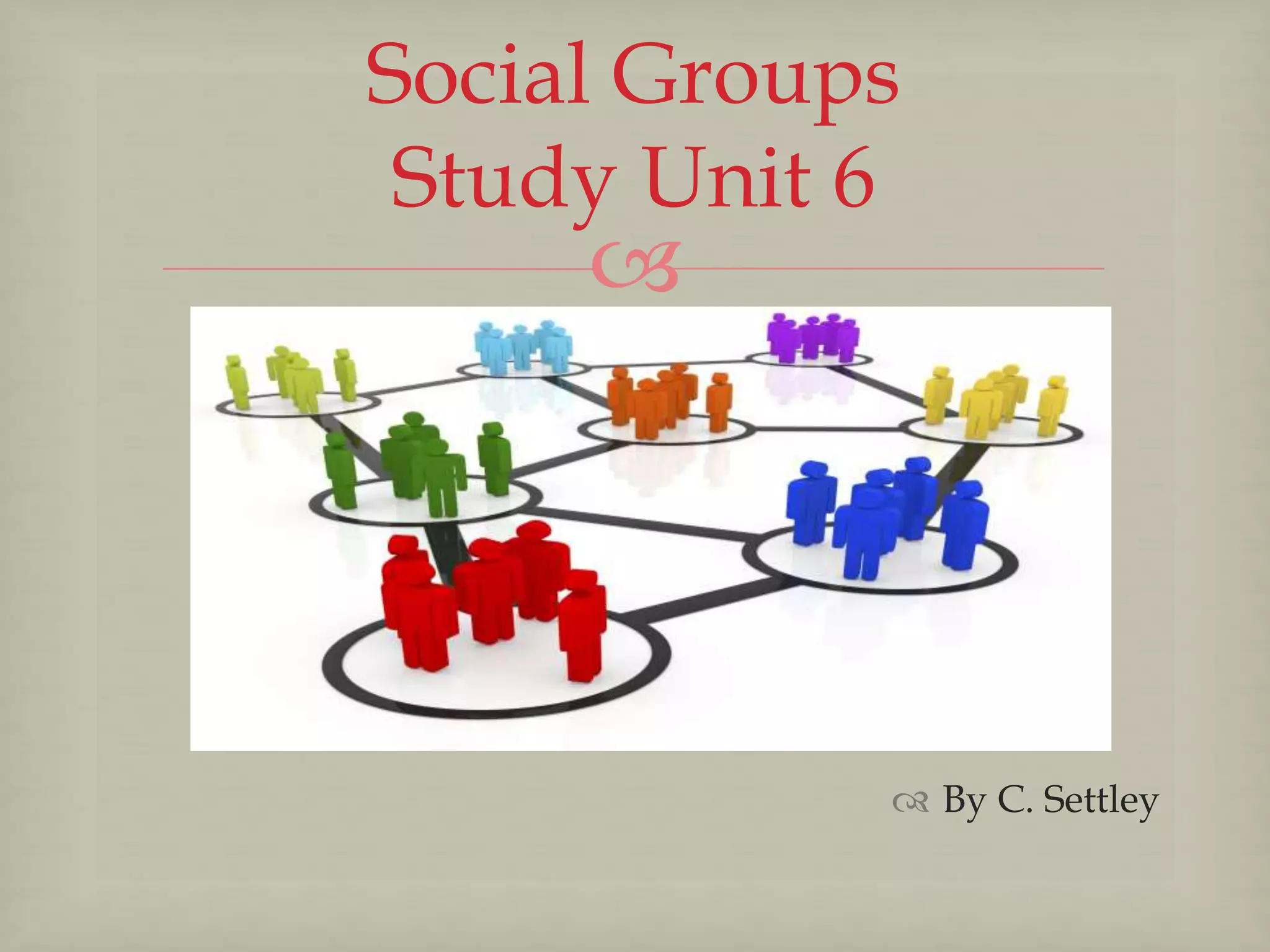
 By C. Settley
Social Groups
Study Unit 6

 • Distinguish between the following non groups:
 Aggregate of people
 Category of people
 • Define a social group
 • Give a detailed explanation of various characteristics of the
social group
 • Distinguish between primary and secondary groups under
the following:
 Definition
 Examples
 Characteristics
 Functions
Learning Outcomes

 • Distinguish between the following social groups:
 Expressive and instrumental
 In and out
 Open and closed
 Vertical and horizontal
 Permanent and temporary
 Voluntary and involuntary
Learning Outcomes
Continued

What is your
understanding of a
social group?

Social Groups
 A Social Group consist of a number of people among
whom interaction takes place with a view to
achieving a common ( or similar) goal.
 The interaction follows certain patterns and a group
sentiment (awareness of similarity) and shared
group norms arise among the members.

 Group members
 - small group: +/- 20 members
 - limited entry/no limit
 Large group: > 20 members
 Interaction and patterns of interaction
 - presence of two or more people
 - dependent on one another
 - differs among groups
 - Wilson: group unity (solidarity)
Characteristics of a
social group

 Common/similar group goals
 - interdepended
 - interaction
 - coordinated goals
 Group sentiment/group awareness
 - aware of membership
 - recognise themselves and others
 - sense of belonging
Characteristics of a
social group

 Group norms
 - rules, conduct
 - developed over time
 - to ensure what is expected, is delivered
 - pressure
 - negative/positive sanctions
Characteristics of a
social group

Non Groups
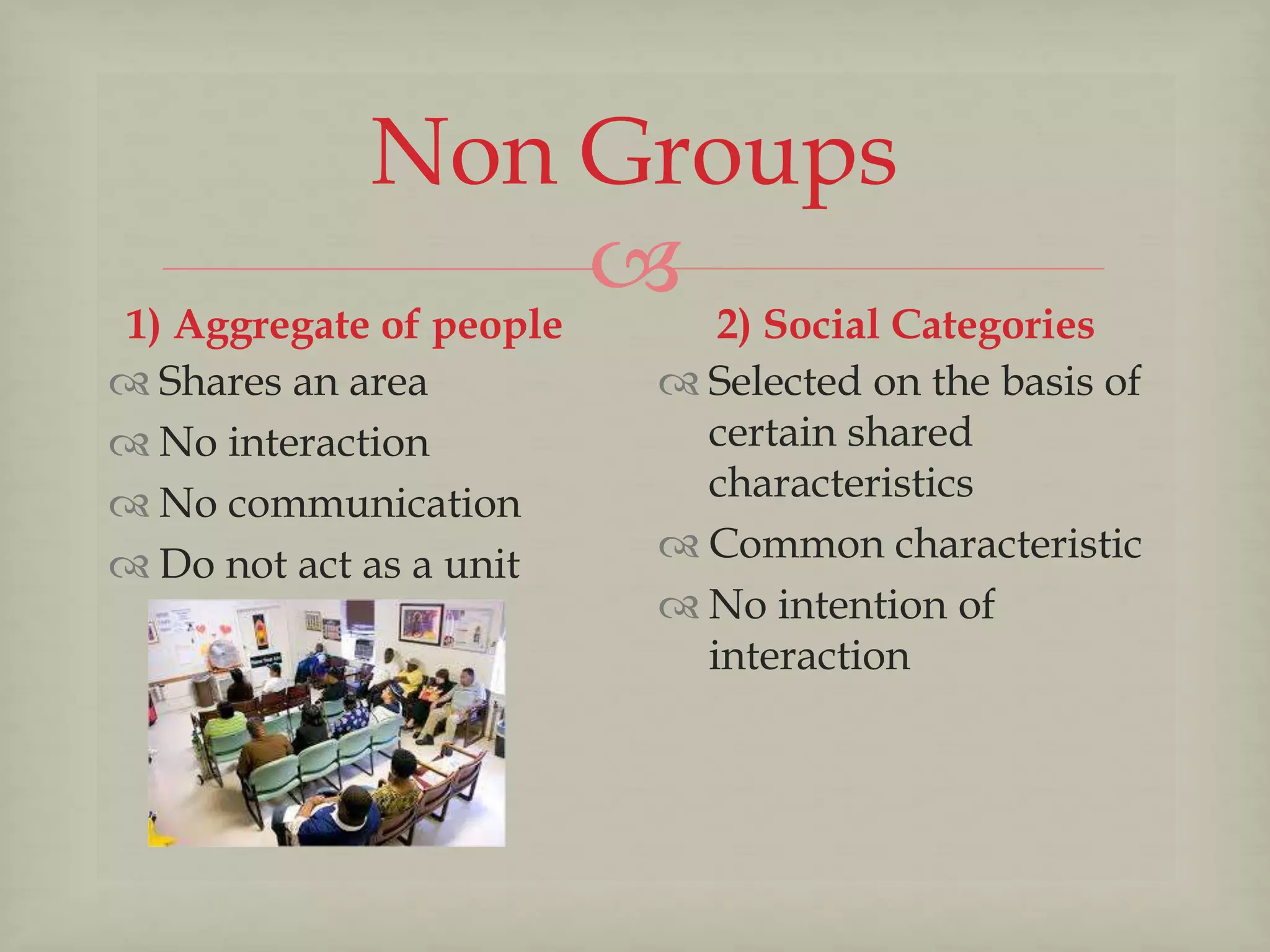
1) Aggregate of people
 Shares an area
 No interaction
 No communication
 Do not act as a unit
2) Social Categories
 Selected on the basis of
certain shared
characteristics
 Common characteristic
 No intention of
interaction

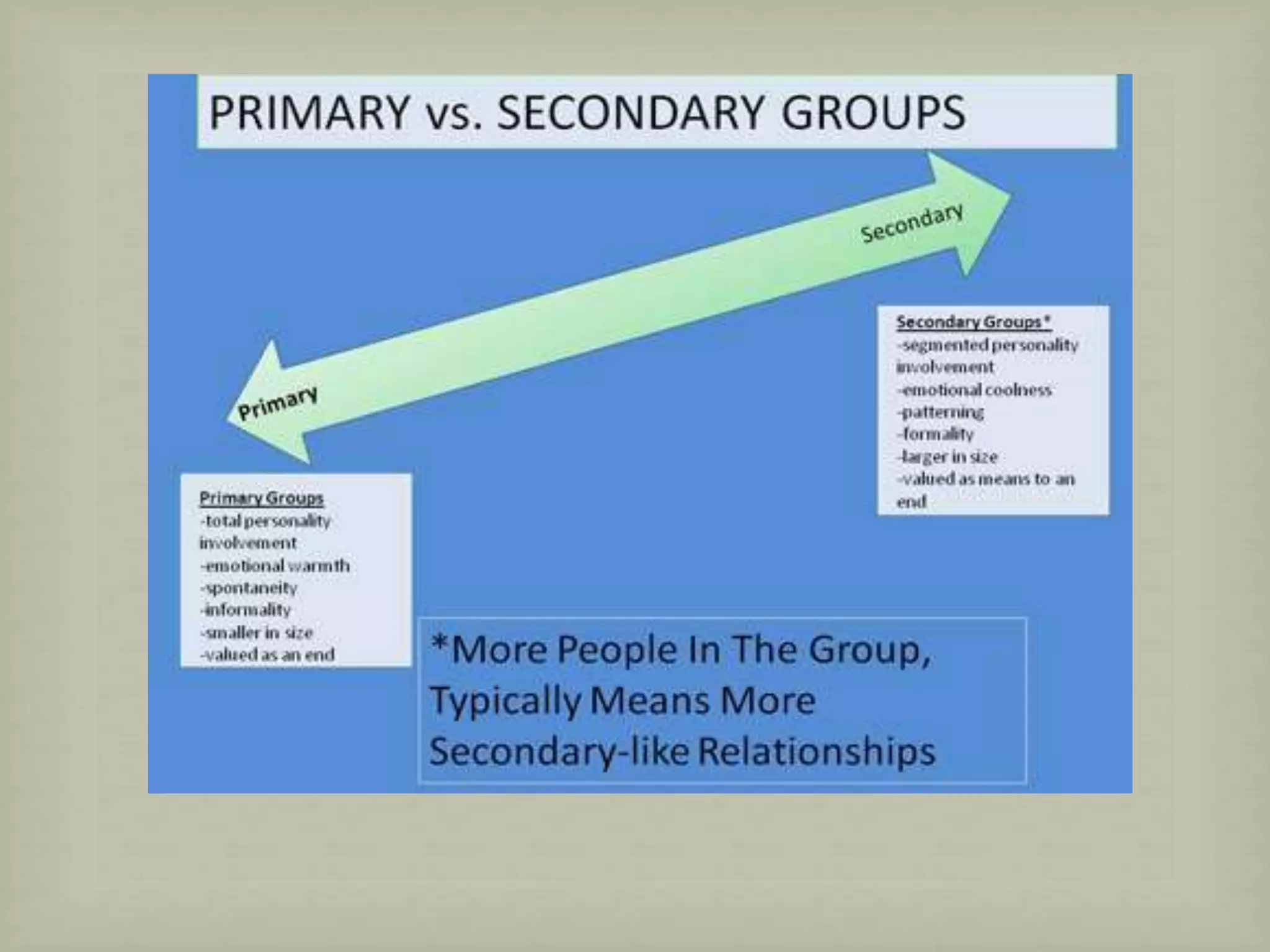
 a group held together by relationships formed by
family and environmental associations, regarded as
basic to social life and culture
 Eg family, friends, love relationships
Primary Groups
Defined

Characteristics of Primary
Groups
 Few members
 Face to face
relationships
 Emotional security
 Constant contact
 Informal interaction
Primary Group - A couple embraces
one another in a personal, intimate
relationship

 a group of people with whom one's contacts are
detached and impersonal
 Eg classroom, place of employment
Secondary Group
Defined

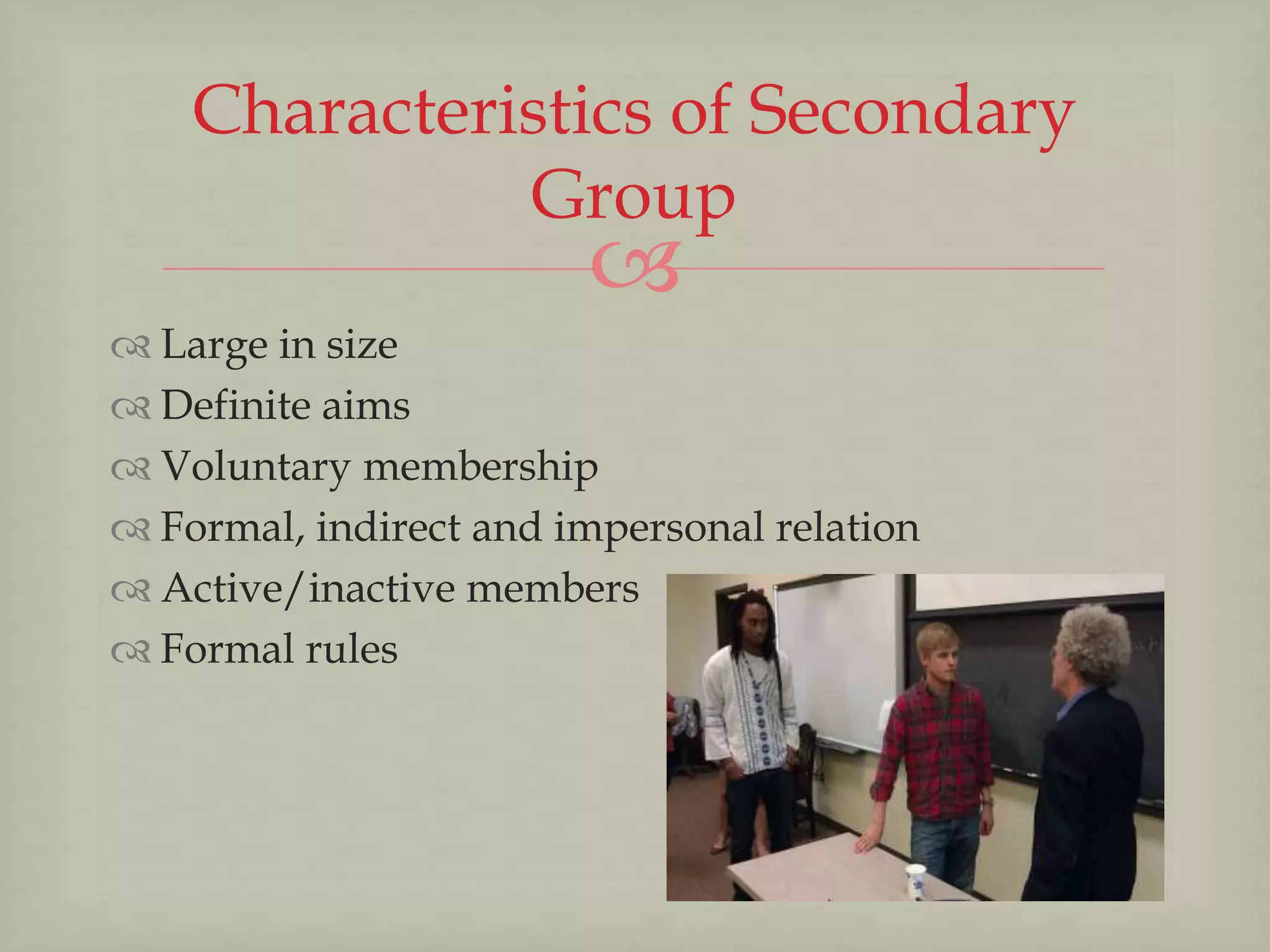
 Large in size
 Definite aims
 Voluntary membership
 Formal, indirect and impersonal relation
 Active/inactive members
 Formal rules
Characteristics of Secondary
Group

FUNCTIONS
Primary Group
 Shaping of personality
 Nb group for individual-
sense of belonging
 Fulfills psychological needs
 Spontaneity
 stimulus in the pursuit of
interest
 Security
 agency of social control
Secondary Group
 Created to carry out
tasks
 Creates/maintain order
 Increases efficiency
 Wider outlook
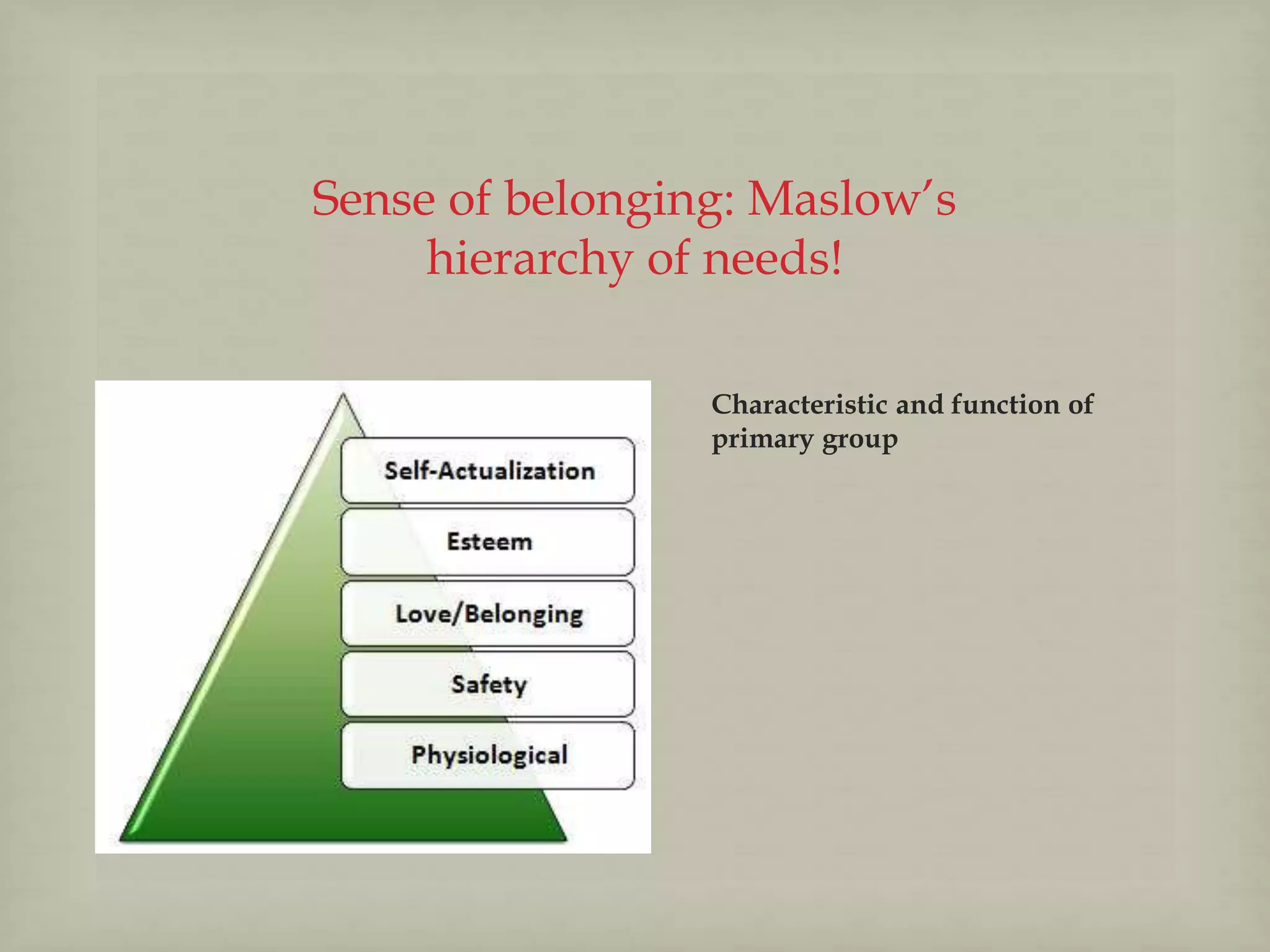
Sense of belonging: Maslow’s
hierarchy of needs!
Characteristic and function of
primary group
TYPES OF SOCIAL GROUPS
EXPRESSIVE
GROUP
- Expressive ties are social links
formed when we emotionally
invest ourselves in and commit
ourselves to other people.
- Through association with people
who are meaningful to us, we
achieve a sense of security, love,
acceptance, companionship, and
personal worth.
INSTRUMENTAL
GROUPS
- Social links formed when we
cooperate with other people to
achieve some goal
- Purpose
- Task group
- Eg nursing professionals as they
provide a task by caring for the
patients

The in- group and the out-
group
The in-group
 Symbols, names,
slogans, clothing
 Self positive evaluation
 Mutual
identification/loyalty
 Tend to compete
 Evaluation of social
behaviour
The out- group
 Opposite of the in-
group
 Viewed as negative by
the in-group
 Both groups use as
reference

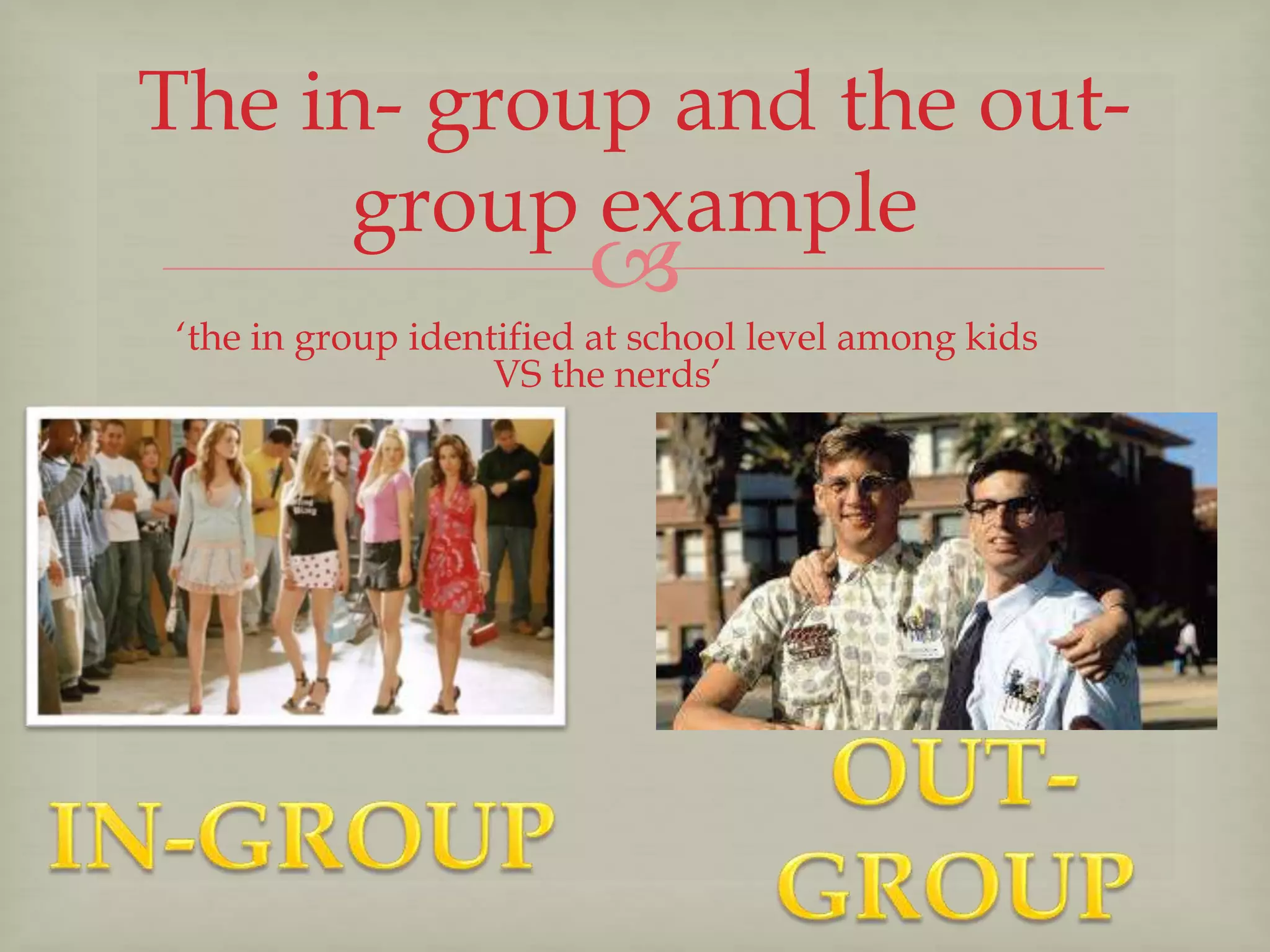
The in- group and the out-
group example
‘the in group identified at school level among kids
VS the nerds’

Vertical and horizontal groups
Vertical groups
 Different social and
economical classes
 Eg church
Horizontal groups
 More or less the same
financial, occupational
social background
 Eg DENOSA

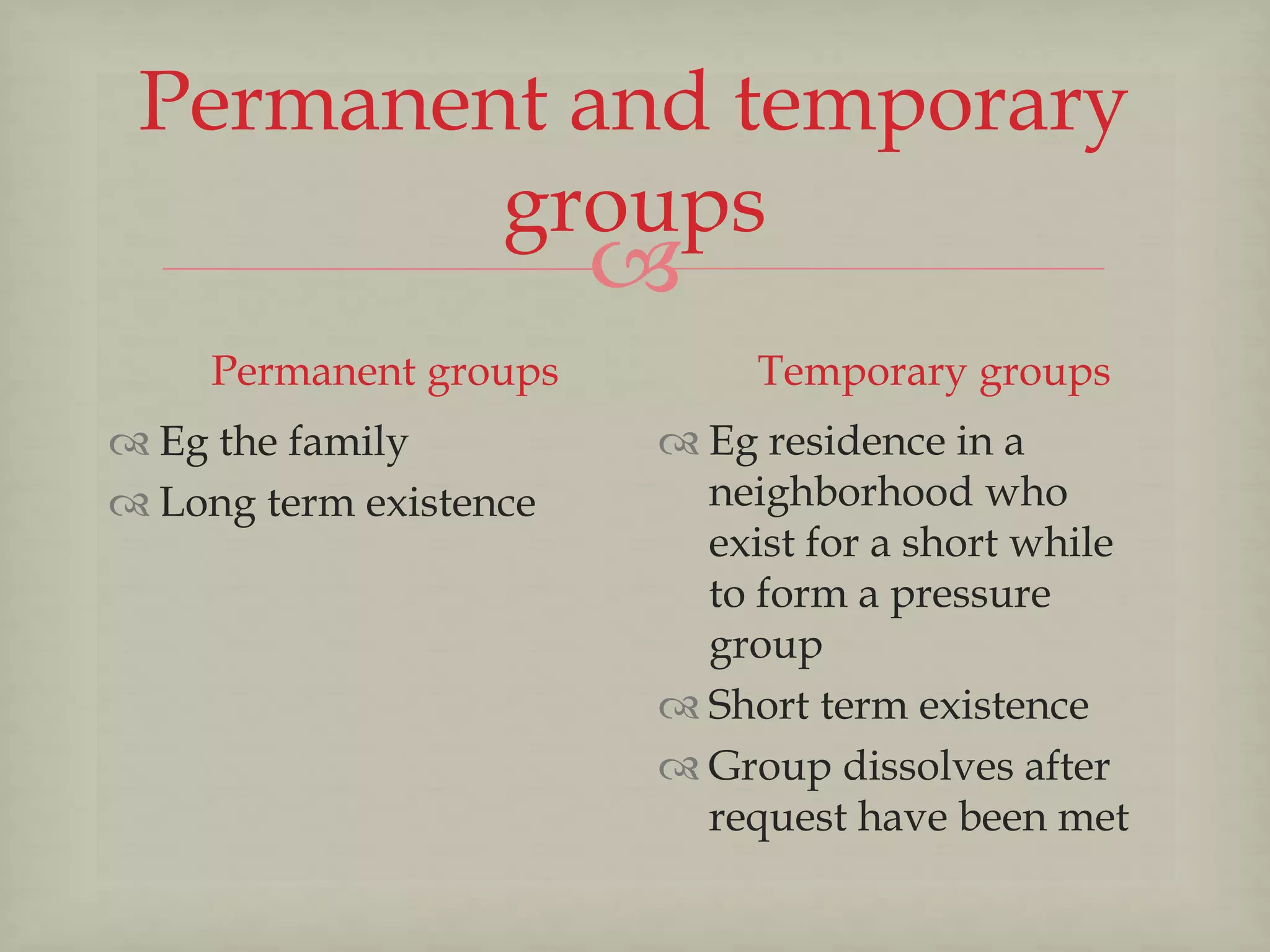
Permanent and temporary
groups
Permanent groups
 Eg the family
 Long term existence
Temporary groups
 Eg residence in a
neighborhood who
exist for a short while
to form a pressure
group
 Short term existence
 Group dissolves after
request have been met

Open and closed groups
Open groups
 No limitations
 Any person can join
 Eg Facebook, Twitter
Closed groups
 Limitations
 Requirements
 Eg SANC

Voluntary and involuntary
groups
Voluntary groups
 Occupational groups,
eg teachers nurses
 Made a decision
Involuntary groups
 Not based on a decision
 Eg family

 Appelbaum, R. P., Carr, D., Duneir, M., Giddens, A.,
2009, "Conformity, Deviance, and Crime."
Introduction to Sociology, New York, NY: W. W.
Norton & Company, Inc., p 137.
References

Social groups

  • 1.
      By C.Settley Social Groups Study Unit 6
  • 2.
      • Distinguishbetween the following non groups:  Aggregate of people  Category of people  • Define a social group  • Give a detailed explanation of various characteristics of the social group  • Distinguish between primary and secondary groups under the following:  Definition  Examples  Characteristics  Functions Learning Outcomes
  • 3.
      • Distinguishbetween the following social groups:  Expressive and instrumental  In and out  Open and closed  Vertical and horizontal  Permanent and temporary  Voluntary and involuntary Learning Outcomes Continued
  • 4.
  • 5.
     Social Groups  ASocial Group consist of a number of people among whom interaction takes place with a view to achieving a common ( or similar) goal.  The interaction follows certain patterns and a group sentiment (awareness of similarity) and shared group norms arise among the members.
  • 6.
      Group members - small group: +/- 20 members  - limited entry/no limit  Large group: > 20 members  Interaction and patterns of interaction  - presence of two or more people  - dependent on one another  - differs among groups  - Wilson: group unity (solidarity) Characteristics of a social group
  • 7.
      Common/similar groupgoals  - interdepended  - interaction  - coordinated goals  Group sentiment/group awareness  - aware of membership  - recognise themselves and others  - sense of belonging Characteristics of a social group
  • 8.
      Group norms - rules, conduct  - developed over time  - to ensure what is expected, is delivered  - pressure  - negative/positive sanctions Characteristics of a social group
  • 9.
     Non Groups 1) Aggregateof people  Shares an area  No interaction  No communication  Do not act as a unit 2) Social Categories  Selected on the basis of certain shared characteristics  Common characteristic  No intention of interaction
  • 10.
      a groupheld together by relationships formed by family and environmental associations, regarded as basic to social life and culture  Eg family, friends, love relationships Primary Groups Defined
  • 11.
     Characteristics of Primary Groups Few members  Face to face relationships  Emotional security  Constant contact  Informal interaction Primary Group - A couple embraces one another in a personal, intimate relationship
  • 12.
      a groupof people with whom one's contacts are detached and impersonal  Eg classroom, place of employment Secondary Group Defined
  • 13.
      Large insize  Definite aims  Voluntary membership  Formal, indirect and impersonal relation  Active/inactive members  Formal rules Characteristics of Secondary Group
  • 15.
     FUNCTIONS Primary Group  Shapingof personality  Nb group for individual- sense of belonging  Fulfills psychological needs  Spontaneity  stimulus in the pursuit of interest  Security  agency of social control Secondary Group  Created to carry out tasks  Creates/maintain order  Increases efficiency  Wider outlook
  • 16.
    Sense of belonging:Maslow’s hierarchy of needs! Characteristic and function of primary group
  • 17.
  • 18.
    EXPRESSIVE GROUP - Expressive tiesare social links formed when we emotionally invest ourselves in and commit ourselves to other people. - Through association with people who are meaningful to us, we achieve a sense of security, love, acceptance, companionship, and personal worth.
  • 19.
    INSTRUMENTAL GROUPS - Social linksformed when we cooperate with other people to achieve some goal - Purpose - Task group - Eg nursing professionals as they provide a task by caring for the patients
  • 20.
     The in- groupand the out- group The in-group  Symbols, names, slogans, clothing  Self positive evaluation  Mutual identification/loyalty  Tend to compete  Evaluation of social behaviour The out- group  Opposite of the in- group  Viewed as negative by the in-group  Both groups use as reference
  • 21.
     The in- groupand the out- group example ‘the in group identified at school level among kids VS the nerds’
  • 22.
     Vertical and horizontalgroups Vertical groups  Different social and economical classes  Eg church Horizontal groups  More or less the same financial, occupational social background  Eg DENOSA
  • 23.
     Permanent and temporary groups Permanentgroups  Eg the family  Long term existence Temporary groups  Eg residence in a neighborhood who exist for a short while to form a pressure group  Short term existence  Group dissolves after request have been met
  • 24.
     Open and closedgroups Open groups  No limitations  Any person can join  Eg Facebook, Twitter Closed groups  Limitations  Requirements  Eg SANC
  • 25.
     Voluntary and involuntary groups Voluntarygroups  Occupational groups, eg teachers nurses  Made a decision Involuntary groups  Not based on a decision  Eg family
  • 26.
      Appelbaum, R.P., Carr, D., Duneir, M., Giddens, A., 2009, "Conformity, Deviance, and Crime." Introduction to Sociology, New York, NY: W. W. Norton & Company, Inc., p 137. References