1. When you are making decisions or you are planning
to do things for yourself, it is already a form of
communication. What type of communication is this?
A. Interpersonal
B. Intrapersonal
C. Technology-Mediated
D. Organizational
2. The team elected Jose as leader.
The underlined word functions as
A. Direct Object
B. Subject Complement
C. Object Complement
D. Indirect Object
Sentence Pattern
3. What should the teacher do first prior to remedial
instruction?
A. Design remedial materials
B. Thoroughly assess and evaluate students'
difficulty
C. Conduct an interest inventory for students
D. Plan the remedial instruction
4. Which of the following characterizes the
students in remedial instruction?
A. Their abilities fall several levels below their
current level
B. They failed in two or more subjects in their level
C. They have learning difficulties
D. They have low IQ
.
Remedial Instruction
• The remedial instruction is intended for
students who, for one reason or another, have
fallen behind their current level. It is designed to
help students cope with the demands of their
actual level.
• Remedial instruction also focuses on the skill.
5. It is the replacement of lexical items by other
equivalent items to be more suited to the target
audience.
A. Interlingual
B. Intersemiotic
C. Intralingual
D. Intersectional
3 Types of Translation
(Roman J akobson)
.
3 Types of Translation (Roman Jakobson)
1. Intralingual Translation: Translation within a language which would involve
explaining it in words of the same language (rewording or paraphrasing,
summarizing, expanding or commenting within a language)
Example:
When your teacher presented the meaning of morphology and you were asked to
explain it in your own words.
Definition: Morphology is the study of the internal structure of words and forms a
core part of linguistic study today.
Your version: Morphology deals with how the words are formed. In short, it is
concerned with the structure of words.
.
3 Types of Translation (Roman Jakobson
2. Interlingual Translation: Translation from one language
into another language (traditional concept of translation or
translation proper)
Example:
Translation from English to Filipino
Rationalization (Question #5)
It is the replacement of lexical items by other equivalent items to be more
suited to the target audience.
.
3 Types of Translation (Roman Jakobson)
3. Intersemiotic Translation: Translation from one linguistic system
to another which means the transference of meaning from a verbal
to a non-verbal system or from one medium to another
(transmutation)
Example:
Translation from words to images, to numerical codes, or to non-verbal sounds
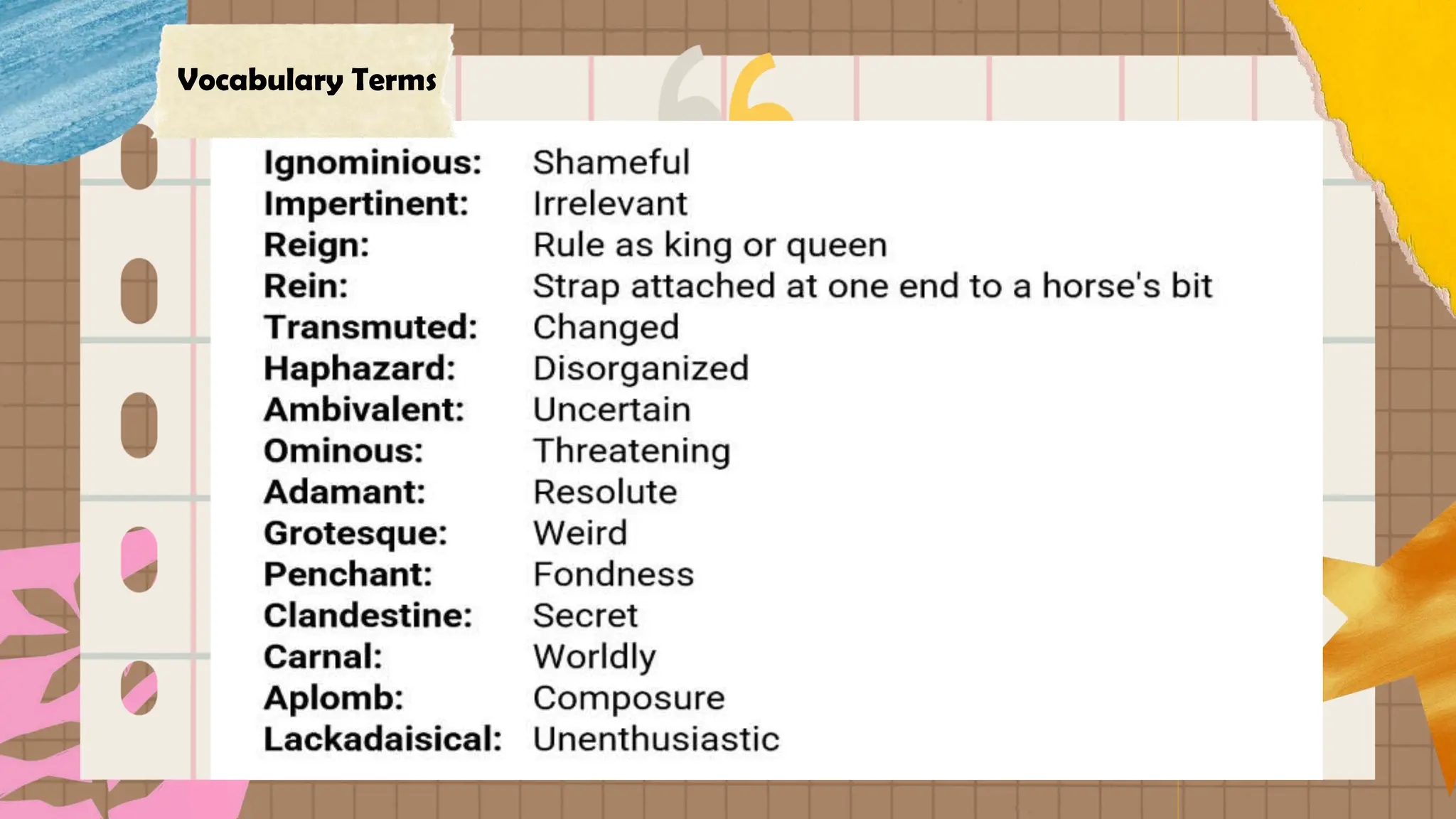
Vocabulary Terms
.
Where are words stored in the brain?
Mathematical Enigma
If a shirt costs $2 0 and is on sale
for 2 5 % off, how much will you
save?
Answer
2 5 % off
of $2 0 is
STRUCTURE OF ENGLISH.pptx review english major

STRUCTURE OF ENGLISH.pptx review english major

  • 2.
    1. When youare making decisions or you are planning to do things for yourself, it is already a form of communication. What type of communication is this? A. Interpersonal B. Intrapersonal C. Technology-Mediated D. Organizational
  • 3.
    2. The teamelected Jose as leader. The underlined word functions as A. Direct Object B. Subject Complement C. Object Complement D. Indirect Object
  • 4.
  • 10.
    3. What shouldthe teacher do first prior to remedial instruction? A. Design remedial materials B. Thoroughly assess and evaluate students' difficulty C. Conduct an interest inventory for students D. Plan the remedial instruction
  • 11.
    4. Which ofthe following characterizes the students in remedial instruction? A. Their abilities fall several levels below their current level B. They failed in two or more subjects in their level C. They have learning difficulties D. They have low IQ
  • 12.
    . Remedial Instruction • Theremedial instruction is intended for students who, for one reason or another, have fallen behind their current level. It is designed to help students cope with the demands of their actual level. • Remedial instruction also focuses on the skill.
  • 13.
    5. It isthe replacement of lexical items by other equivalent items to be more suited to the target audience. A. Interlingual B. Intersemiotic C. Intralingual D. Intersectional
  • 14.
    3 Types ofTranslation (Roman J akobson)
  • 15.
    . 3 Types ofTranslation (Roman Jakobson) 1. Intralingual Translation: Translation within a language which would involve explaining it in words of the same language (rewording or paraphrasing, summarizing, expanding or commenting within a language) Example: When your teacher presented the meaning of morphology and you were asked to explain it in your own words. Definition: Morphology is the study of the internal structure of words and forms a core part of linguistic study today. Your version: Morphology deals with how the words are formed. In short, it is concerned with the structure of words.
  • 16.
    . 3 Types ofTranslation (Roman Jakobson 2. Interlingual Translation: Translation from one language into another language (traditional concept of translation or translation proper) Example: Translation from English to Filipino Rationalization (Question #5) It is the replacement of lexical items by other equivalent items to be more suited to the target audience.
  • 17.
    . 3 Types ofTranslation (Roman Jakobson) 3. Intersemiotic Translation: Translation from one linguistic system to another which means the transference of meaning from a verbal to a non-verbal system or from one medium to another (transmutation) Example: Translation from words to images, to numerical codes, or to non-verbal sounds
  • 18.
  • 19.
  • 21.
    Where are wordsstored in the brain?
  • 24.
    Mathematical Enigma If ashirt costs $2 0 and is on sale for 2 5 % off, how much will you save?
  • 25.
    Answer 2 5 %off of $2 0 is