Structure
of DNA &
Their
Types
Introduction
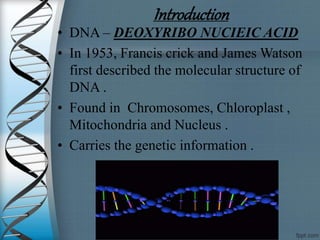
• DNA – DEOXYRIBO NUCIEIC ACID
• In 1953, Francis crick and James Watson
first described the molecular structure of
DNA .
• Found in Chromosomes, Chloroplast ,
Mitochondria and Nucleus .
• Carries the genetic information .
STRUCTURE
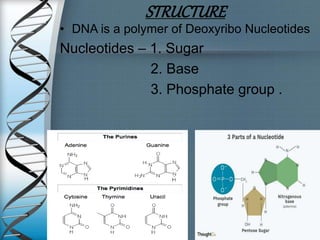
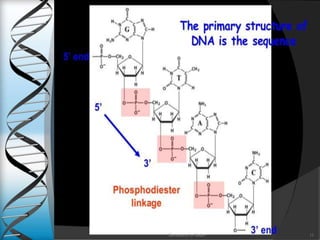
• DNA is a polymer of Deoxyribo Nucleotides
Nucleotides – 1. Sugar
2. Base
3. Phosphate group .
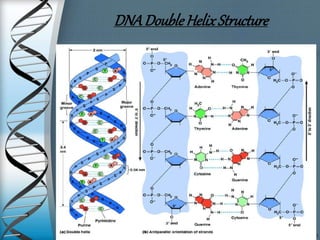
DNADoubleHelixStructure
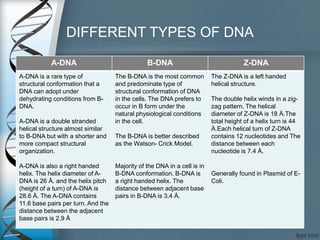
DIFFERENT TYPES OF DNA
A-DNA B-DNA Z-DNA
A-DNA is a rare type of
structural conformation that a
DNA can adopt under
dehydrating conditions from B-
DNA.
A-DNA is a double stranded
helical structure almost similar
to B-DNA but with a shorter and
more compact structural
organization.
A-DNA is also a right handed
helix. The helix diameter of A-
DNA is 26 Å. and the helix pitch
(height of a turn) of A-DNA is
28.6 Å. The A-DNA contains
11.6 base pairs per turn. And the
distance between the adjacent
base pairs is 2.9 Å
The B-DNA is the most common
and predominate type of
structural conformation of DNA
in the cells. The DNA prefers to
occur in B form under the
natural physiological conditions
in the cell.
The B-DNA is better described
as the Watson- Crick Model.
Majority of the DNA in a cell is in
B-DNA conformation. B-DNA is
a right handed helix. The
distance between adjacent base
pairs in B-DNA is 3.4 Å.
The Z-DNA is a left handed
helical structure.
The double helix winds in a zig-
zag pattern. The helical
diameter of Z-DNA is 18 Å.The
total height of a helix turn is 44
Å.Each helical turn of Z-DNA
contains 12 nucleotides and The
distance between each
nucleotide is 7.4 Å.
Generally found in Plasmid of E-
Coli.
THANK YOU

Structure of DNA & Their Types.pptx

  • 1.
  • 2.
    Introduction • DNA –DEOXYRIBO NUCIEIC ACID • In 1953, Francis crick and James Watson first described the molecular structure of DNA . • Found in Chromosomes, Chloroplast , Mitochondria and Nucleus . • Carries the genetic information .
  • 3.
    STRUCTURE • DNA isa polymer of Deoxyribo Nucleotides Nucleotides – 1. Sugar 2. Base 3. Phosphate group .
  • 5.
  • 6.
    DIFFERENT TYPES OFDNA A-DNA B-DNA Z-DNA A-DNA is a rare type of structural conformation that a DNA can adopt under dehydrating conditions from B- DNA. A-DNA is a double stranded helical structure almost similar to B-DNA but with a shorter and more compact structural organization. A-DNA is also a right handed helix. The helix diameter of A- DNA is 26 Å. and the helix pitch (height of a turn) of A-DNA is 28.6 Å. The A-DNA contains 11.6 base pairs per turn. And the distance between the adjacent base pairs is 2.9 Å The B-DNA is the most common and predominate type of structural conformation of DNA in the cells. The DNA prefers to occur in B form under the natural physiological conditions in the cell. The B-DNA is better described as the Watson- Crick Model. Majority of the DNA in a cell is in B-DNA conformation. B-DNA is a right handed helix. The distance between adjacent base pairs in B-DNA is 3.4 Å. The Z-DNA is a left handed helical structure. The double helix winds in a zig- zag pattern. The helical diameter of Z-DNA is 18 Å.The total height of a helix turn is 44 Å.Each helical turn of Z-DNA contains 12 nucleotides and The distance between each nucleotide is 7.4 Å. Generally found in Plasmid of E- Coli.
  • 7.