Structure Leads to Function;The Cell Membrane
The Words…STRUCTURE: the shape, organization,    and/or chemical makeup of an objectFUNCTION: what something does, its roleSTRUCTURE always leads to FUNCTION!
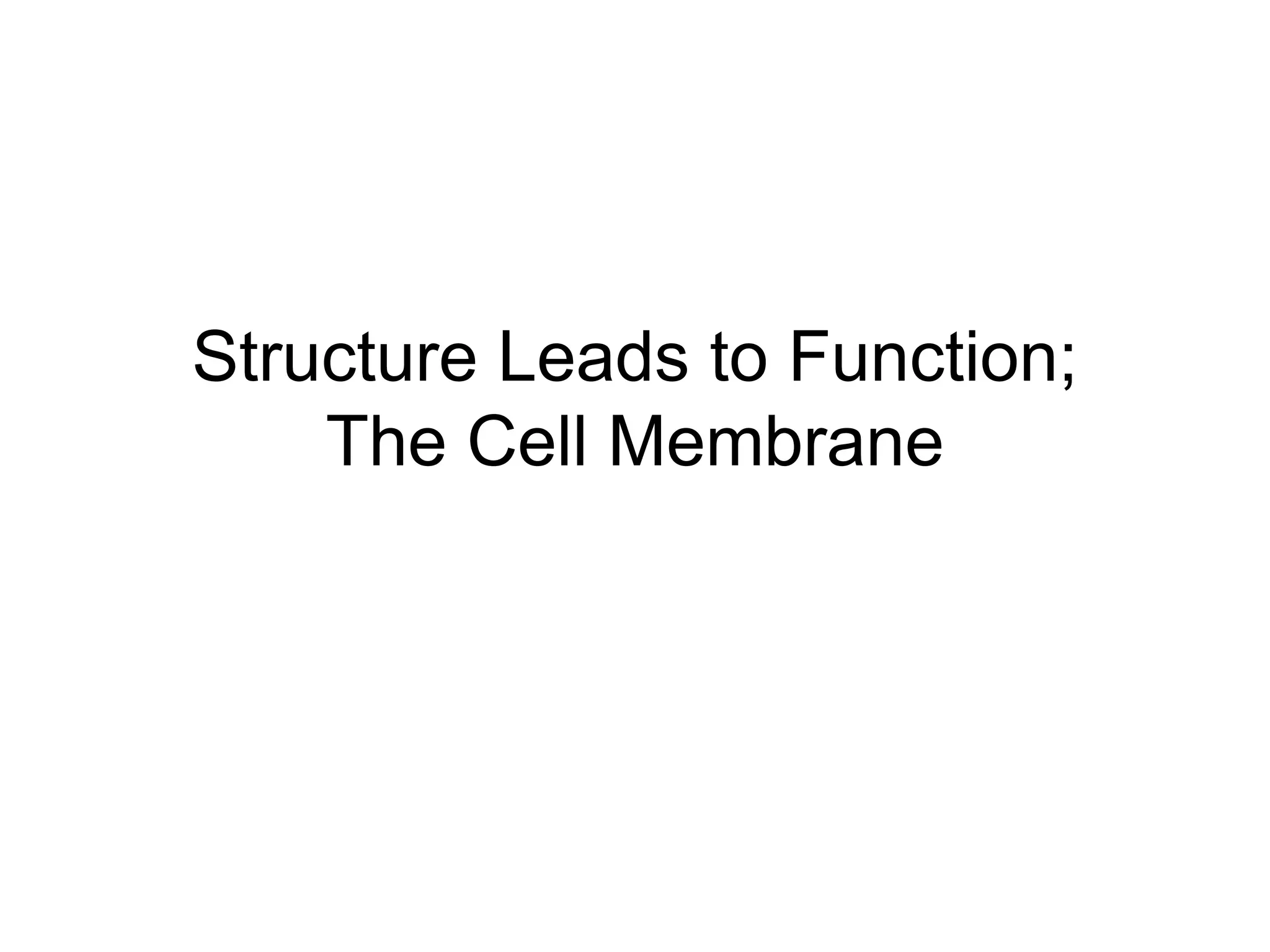
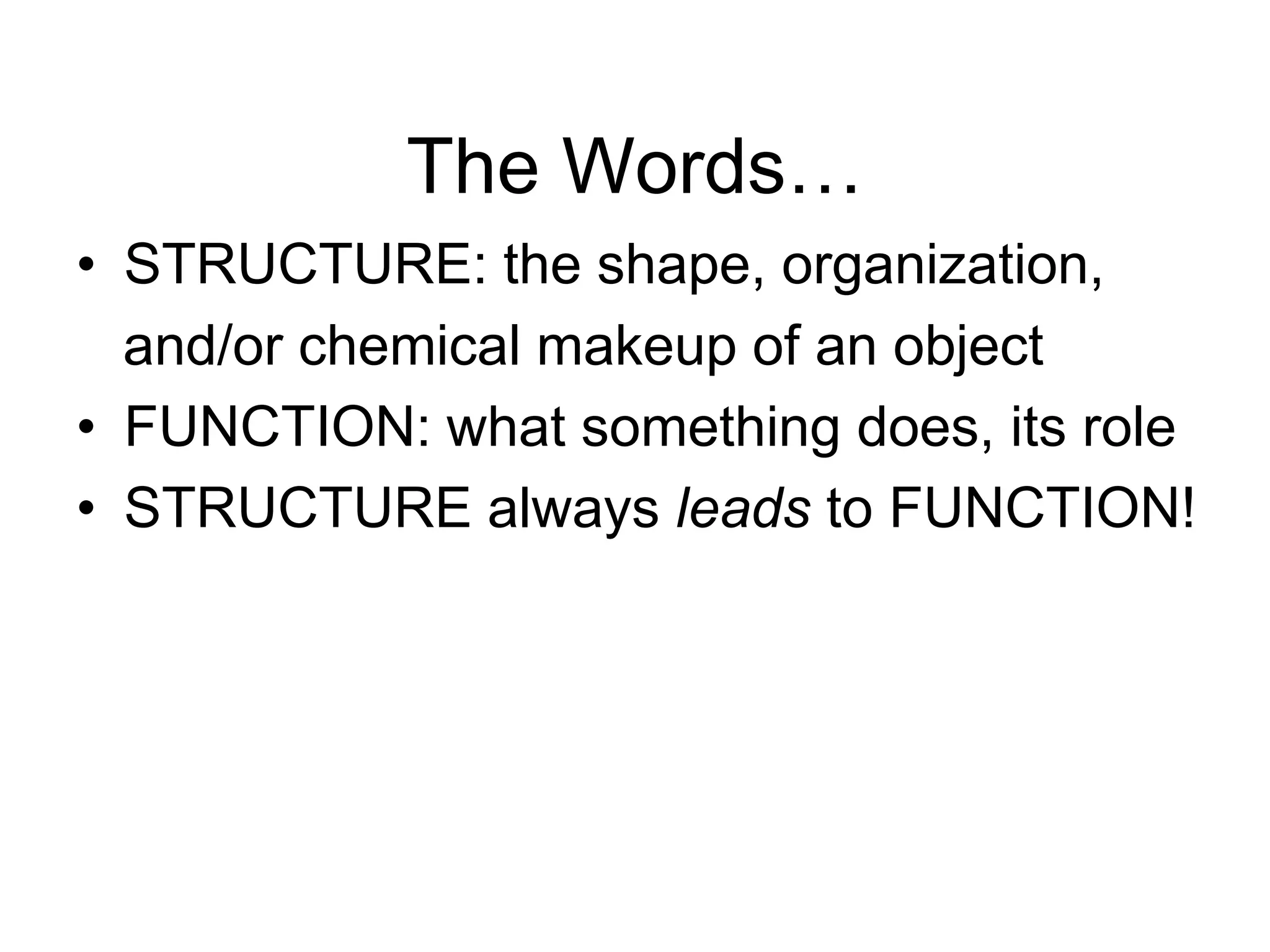
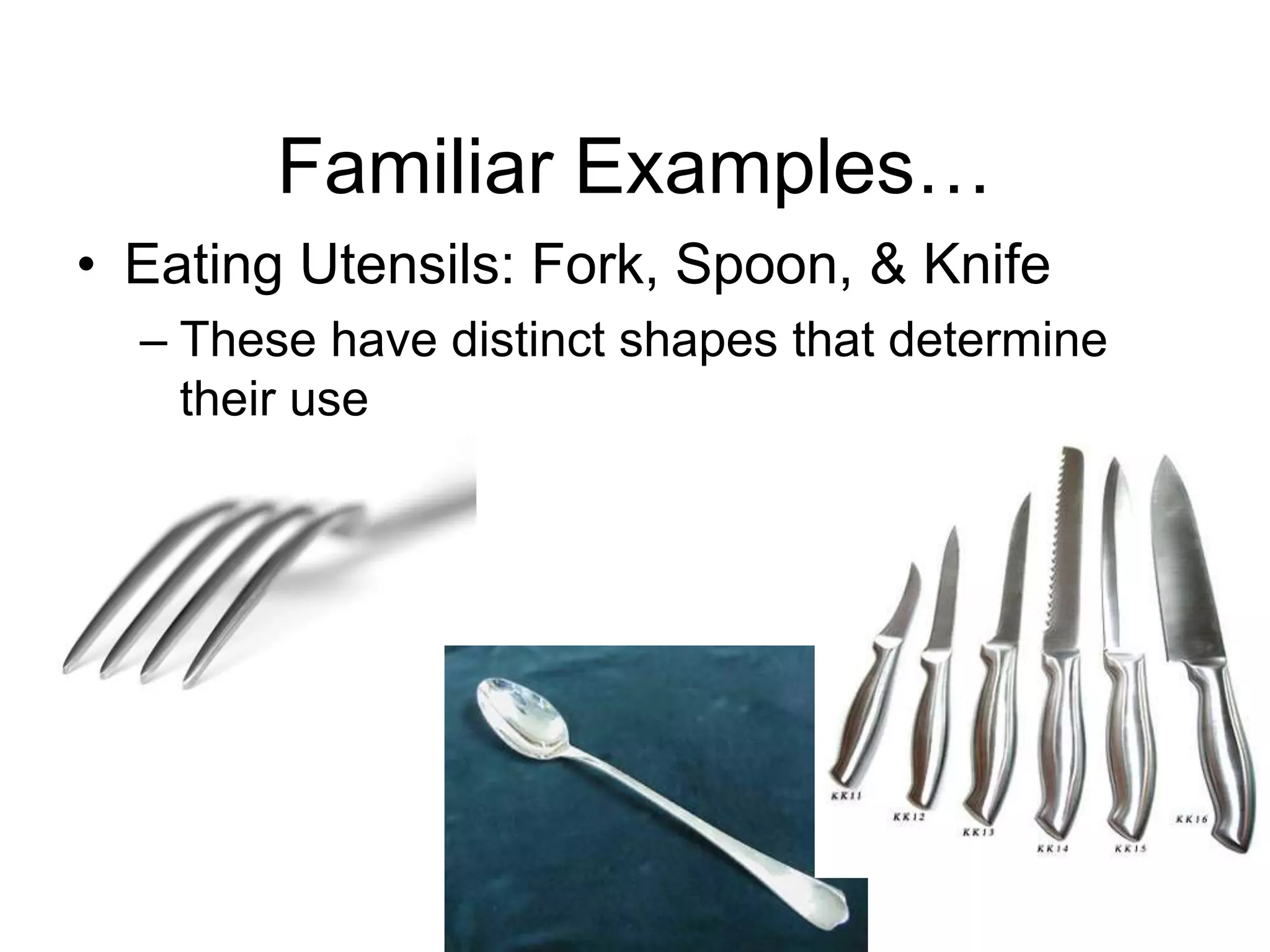
Familiar Examples…Eating Utensils: Fork, Spoon, & KnifeThese have distinct shapes that determine their use
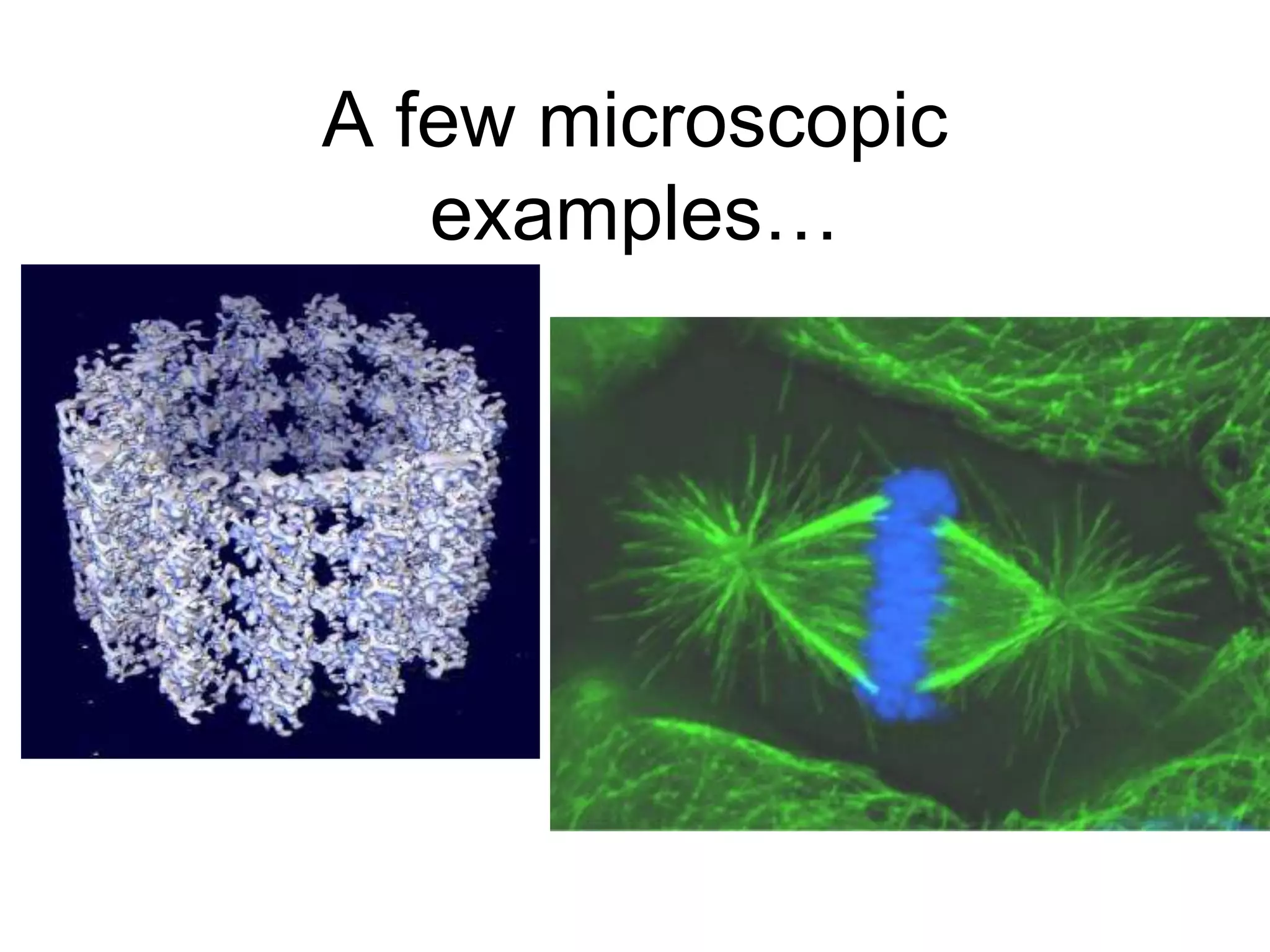
A few microscopic examples…Microtubules
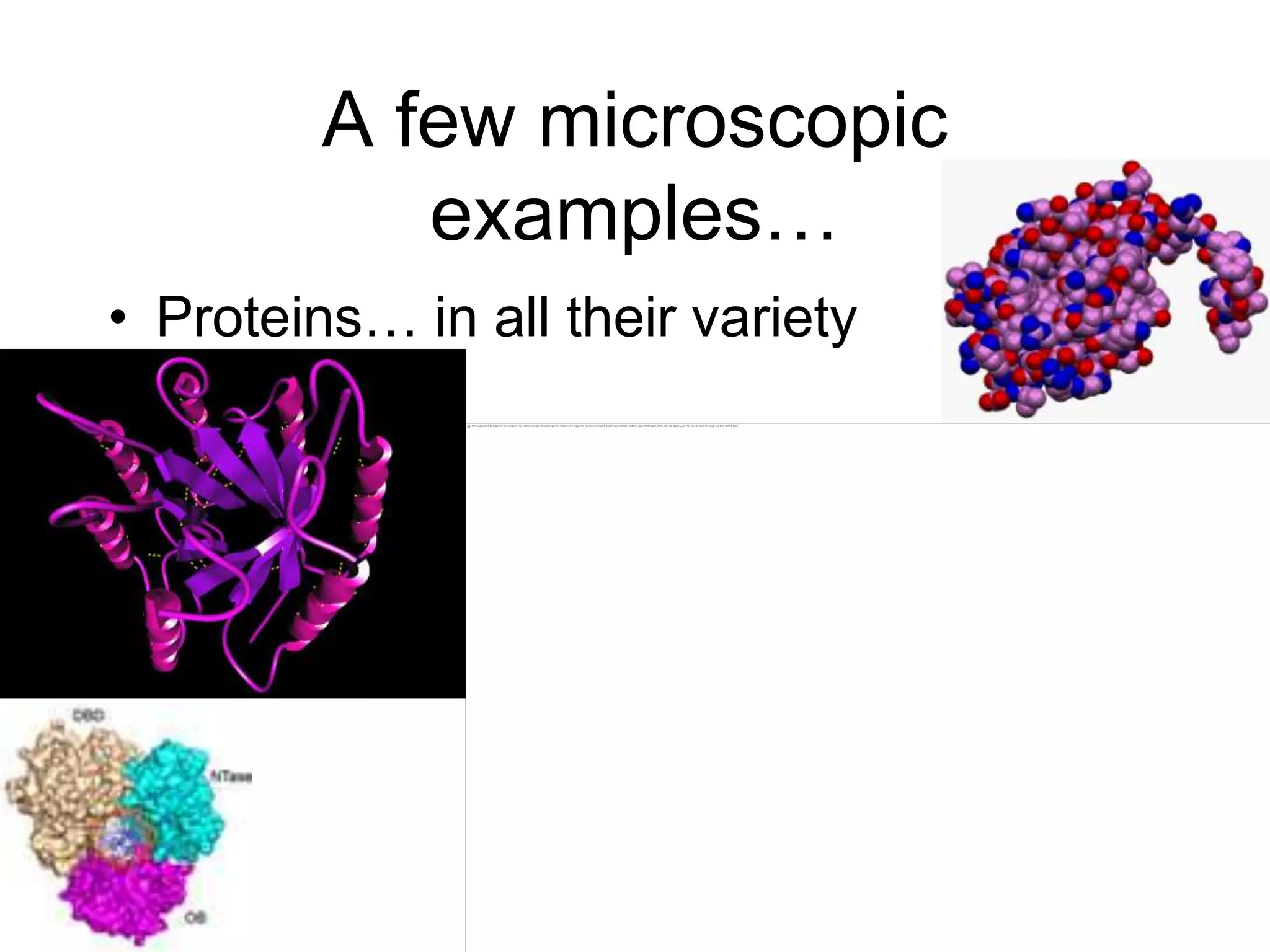
A few microscopic examples…Proteins… in all their variety
Take Home Message?STRUCTURE 			 LEADS       		 TO 	 	FUNCTION!!!!!
The Plasma (cell) MembraneStructure: Made up of a lipidbilayer, proteins, & cholesterol
Plasma MembraneFunctions:Forms the principle barrier between the inside of the cell and its environmentProtect the cellRegulate traffic into and out of the cellSupport the creation of multiple concentration gradients and an electrostatic gradient between the inside and outside of the cellMaintain the overall integrity of the cell, particularly in cold temperatures
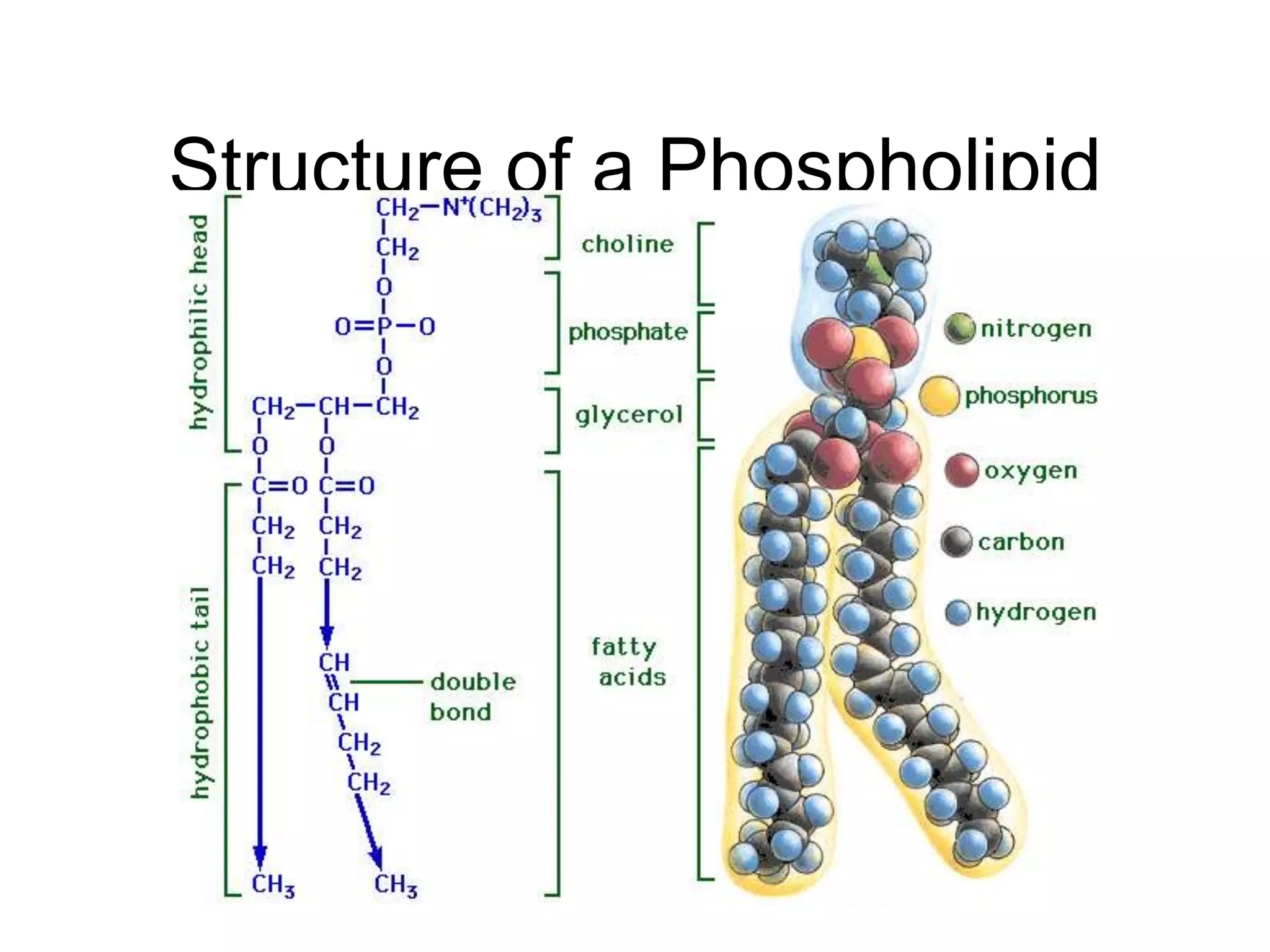
Structure of a Phospholipid
Chemical StructureThe chemical makeup of a phospholipid causes multiple phospholipids to naturally align themselves in a characteristic bilayer shape (structure).This is due to the chemical properties of the phospholipid: the polar,hydrophilic head and the hydrophobic tailFunction: hydrophilic region allows the plasma membrane to associate with water, other polar molecules, & hydrophilic proteins on the inside and outside of the cell Function: hydrophobic region creates a hydrophobic barrier to keep out large and/or polar/hydrophilic molecules
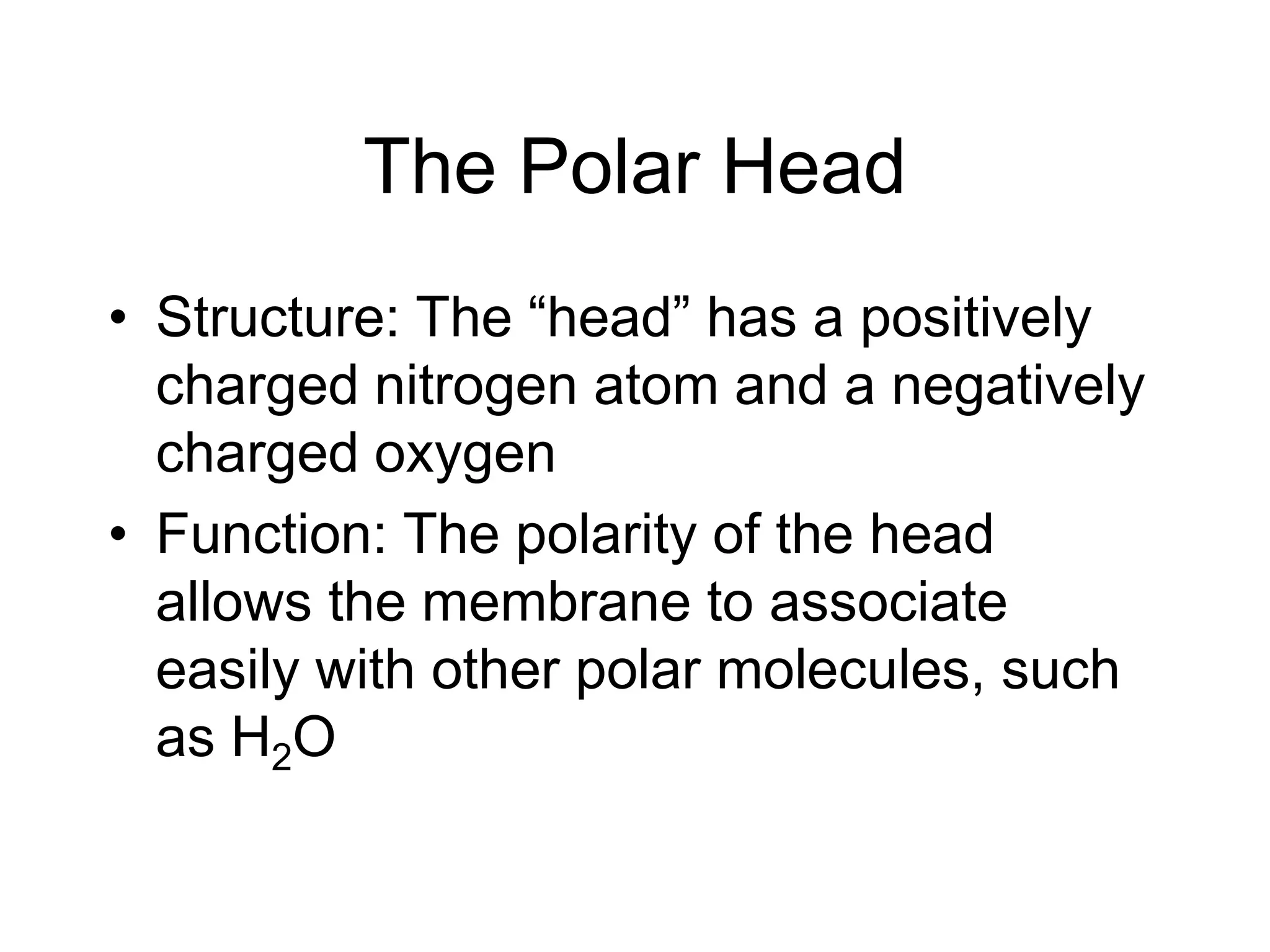
The Polar HeadStructure: The “head” has a positively charged nitrogen atom and a negatively charged oxygen Function: The polarity of the head allows the membrane to associate easily with other polar molecules, such as H2O
Cholesterol FunctionsFunction 1: Easily inserts into the plasma membrane between the tails of different phospholipids, thus filling in the gaps between phospholipids and helping to keep out other small moleculesFunction 2: Pay attention… it stiffens the membrane at “normal” temperatures, but keeps the membrane fluid at cold temperatures
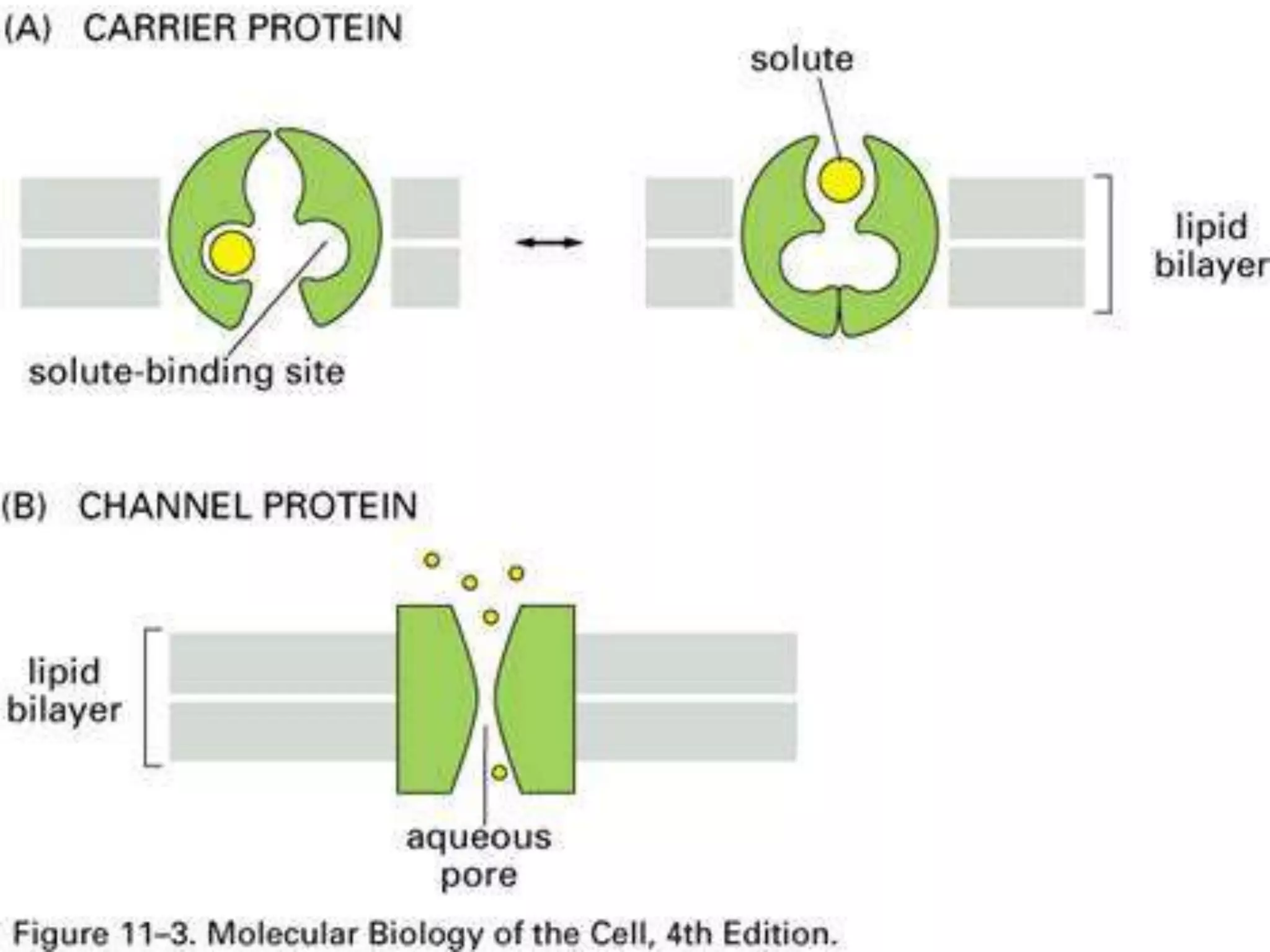
Membrane ProteinsHave both hydrophilic and hydrophobic regions, allowing them to associate with the plasma membrane in a variety of waysCome in all different shapes and thus, perform many different functionsSpecifically, help regulate traffic across the plasma membrane
Types of TransportThere are 2 main categories of transport: Passive Active
PASSIVE TRANSPORTDoes NOT require EnergyGradient = “change in the value of a quantity (as temperature, pressure,or concentration) with change in a given variable and especially per unit on a linear scale”
Facilitated DiffusionA form of Passive Transport… Facilitated: to help or allowChannel proteins, Along their concentration gradient
Active TransportNecessary when transporting a particle against (up) its concentration gradientREQUIRES ENERGYATP
5 levels of organization1.) Protoplasmic organization Unicellular organisms: protozoa 2.) Cellular Organization Sponges Cells that are functionally differentiated and exhibit a division of labor 3.) Tissue LevelCells organized into layers which form tissue
4.) Organs Composed of one or more tissues.Have more specialized funtion than tissueFlatworms: reproductive organs, eyespots, feeding structures 5.) System level Organs work together to form systems: circulatory, digestive, reproductive, respiratory
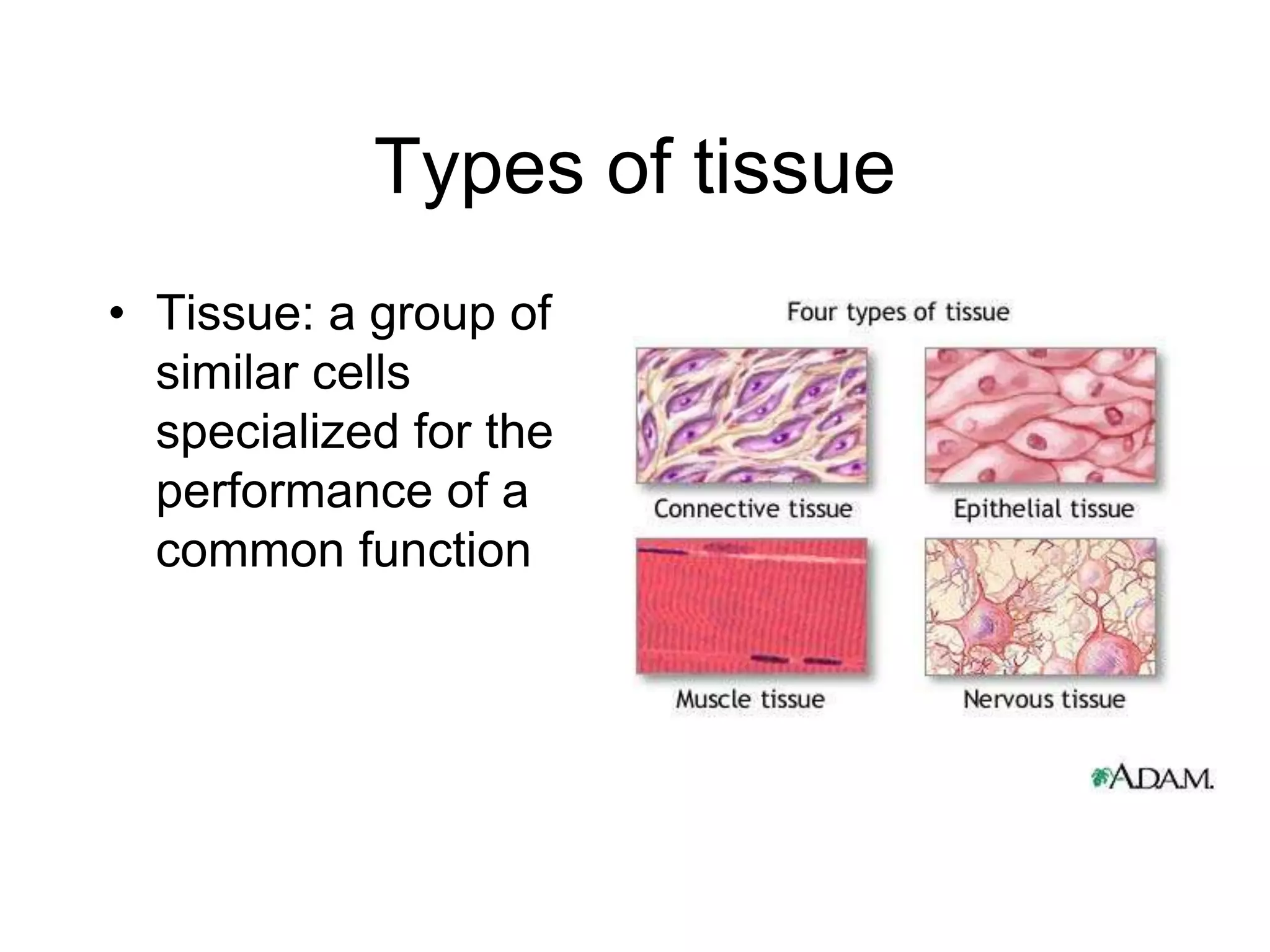
Types of tissue Tissue: a group of similar cells specialized for the performance of a common function
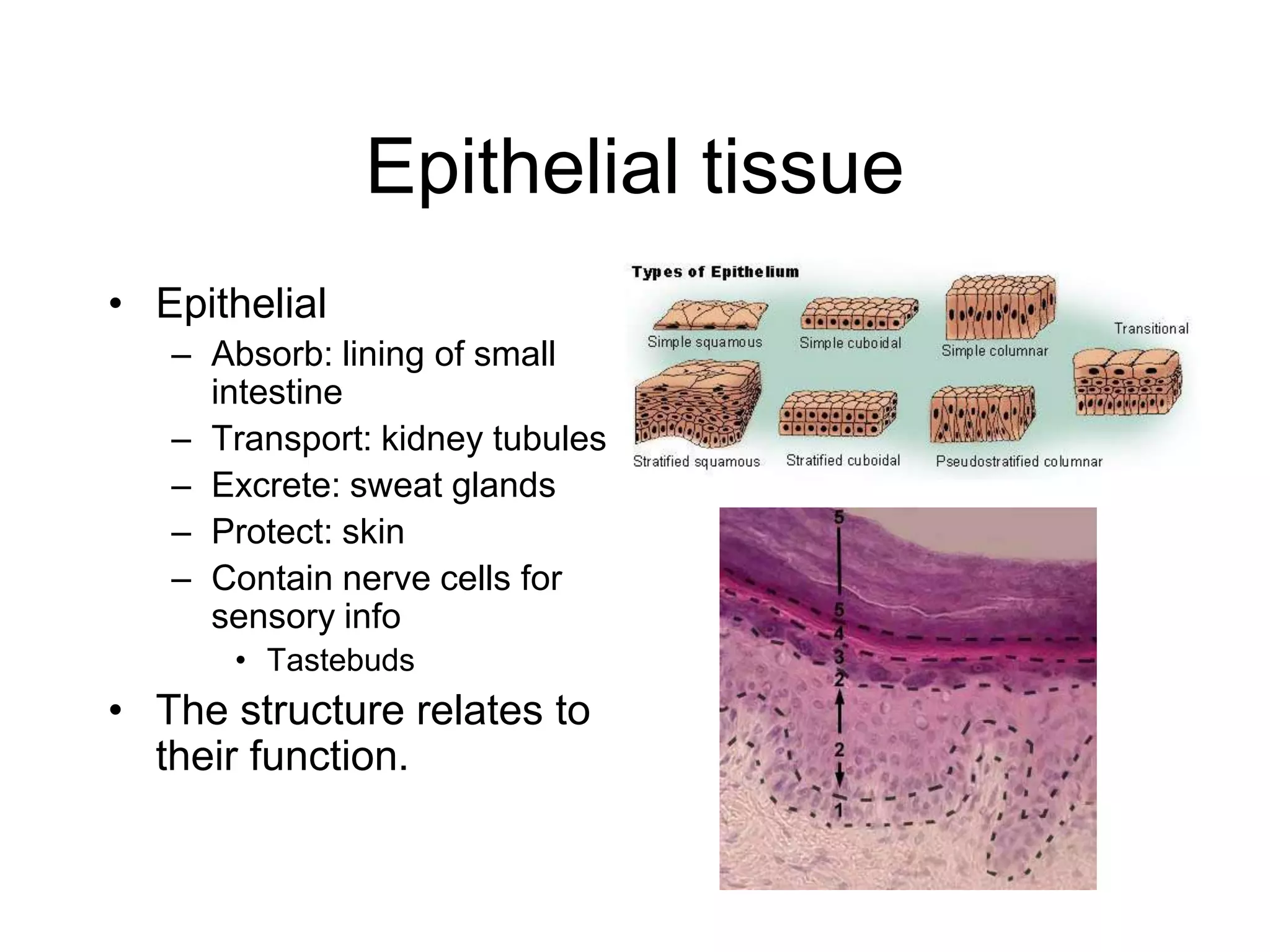
Epithelial tissue EpithelialAbsorb: lining of small intestine Transport: kidney tubulesExcrete: sweat glandsProtect: skinContain nerve cells for sensory infoTastebuds The structure relates to their function.
Connective tissue Connective Support and bind Distributed throughout an extracellular matrix Loose connective tissueElastic Binds skin to muscleFibrous connective tissue Tendons (muscle to bone or other muscle)Ligaments (bones to bones) Adipose tissue: Store lipids Form fat
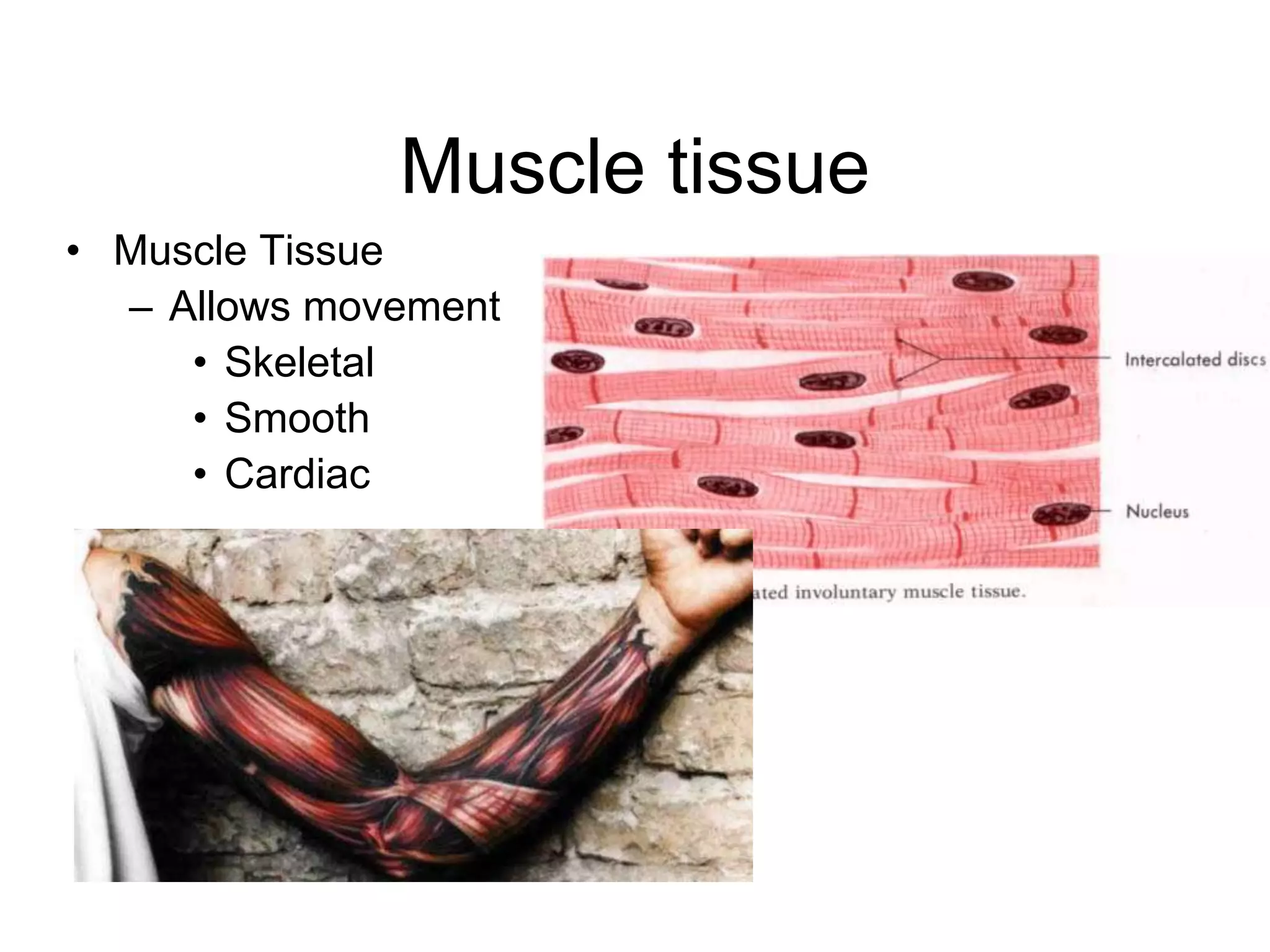
Muscle tissue Muscle Tissue Allows movement SkeletalSmoothCardiac
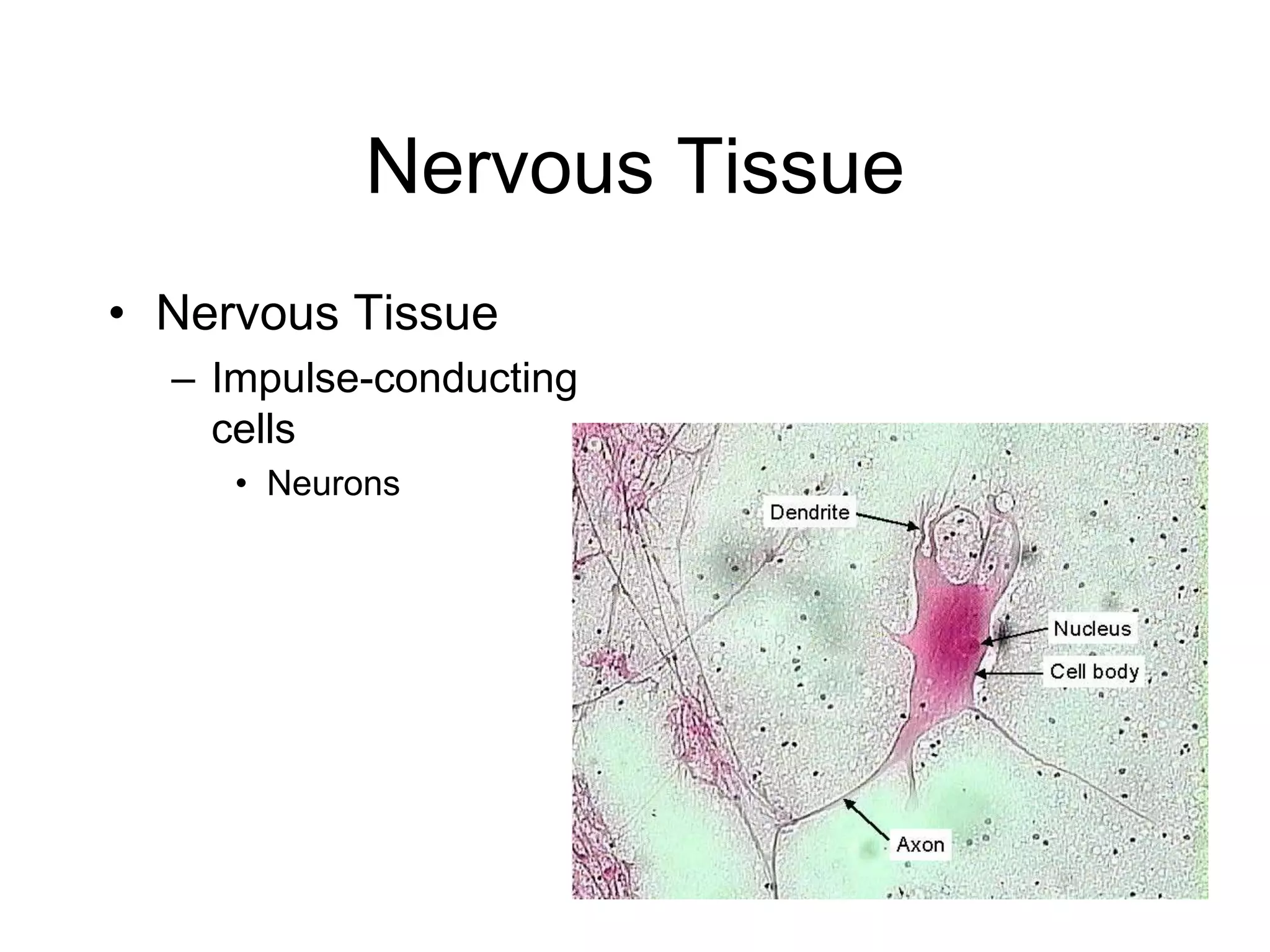
Nervous TissueNervous Tissue Impulse-conducting cellsNeurons
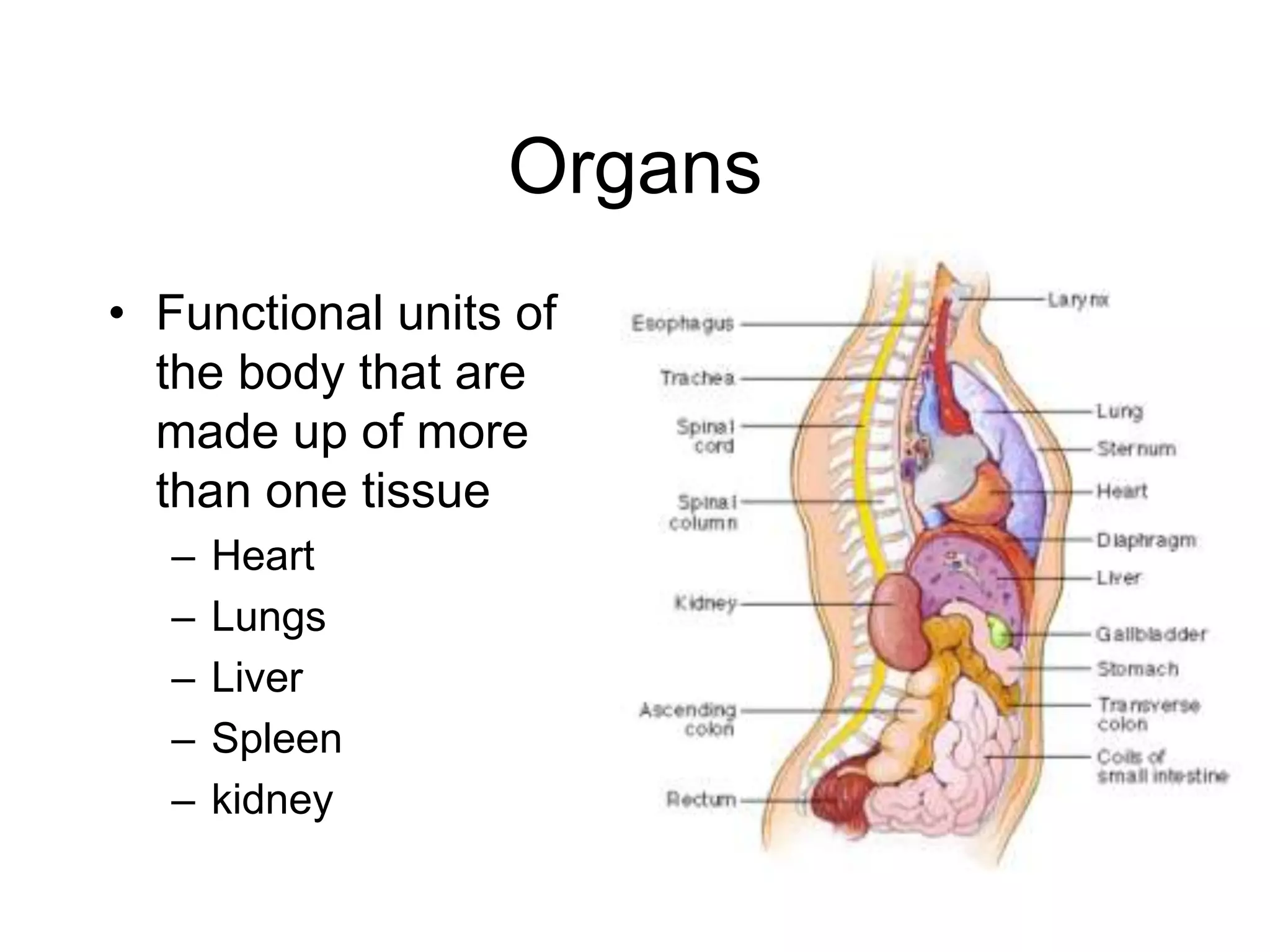
OrgansFunctional units of the body that are made up of more than one tissue HeartLungsLiver Spleen kidney
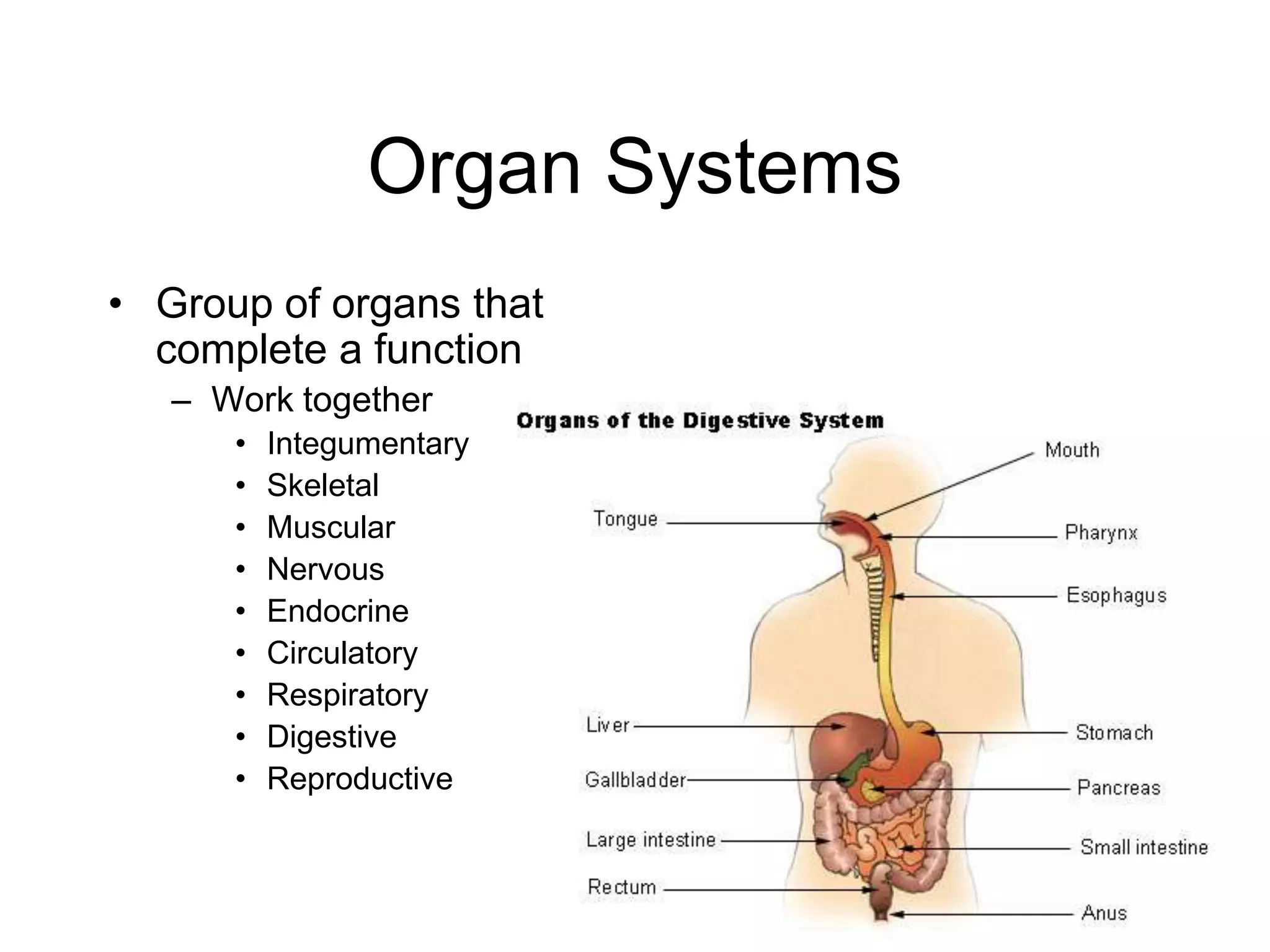
Organ SystemsGroup of organs that complete a function Work together IntegumentarySkeletalMuscularNervousEndocrineCirculatoryRespiratoryDigestiveReproductive

Structure leads to function

  • 1.
    Structure Leads toFunction;The Cell Membrane
  • 2.
    The Words…STRUCTURE: theshape, organization, and/or chemical makeup of an objectFUNCTION: what something does, its roleSTRUCTURE always leads to FUNCTION!
  • 3.
    Familiar Examples…Eating Utensils:Fork, Spoon, & KnifeThese have distinct shapes that determine their use
  • 4.
    A few microscopicexamples…Microtubules
  • 5.
    A few microscopicexamples…Proteins… in all their variety
  • 6.
    Take Home Message?STRUCTURE LEADS TO FUNCTION!!!!!
  • 7.
    The Plasma (cell)MembraneStructure: Made up of a lipidbilayer, proteins, & cholesterol
  • 8.
    Plasma MembraneFunctions:Forms theprinciple barrier between the inside of the cell and its environmentProtect the cellRegulate traffic into and out of the cellSupport the creation of multiple concentration gradients and an electrostatic gradient between the inside and outside of the cellMaintain the overall integrity of the cell, particularly in cold temperatures
  • 9.
    Structure of aPhospholipid
  • 10.
    Chemical StructureThe chemicalmakeup of a phospholipid causes multiple phospholipids to naturally align themselves in a characteristic bilayer shape (structure).This is due to the chemical properties of the phospholipid: the polar,hydrophilic head and the hydrophobic tailFunction: hydrophilic region allows the plasma membrane to associate with water, other polar molecules, & hydrophilic proteins on the inside and outside of the cell Function: hydrophobic region creates a hydrophobic barrier to keep out large and/or polar/hydrophilic molecules
  • 11.
    The Polar HeadStructure:The “head” has a positively charged nitrogen atom and a negatively charged oxygen Function: The polarity of the head allows the membrane to associate easily with other polar molecules, such as H2O
  • 12.
    Cholesterol FunctionsFunction 1:Easily inserts into the plasma membrane between the tails of different phospholipids, thus filling in the gaps between phospholipids and helping to keep out other small moleculesFunction 2: Pay attention… it stiffens the membrane at “normal” temperatures, but keeps the membrane fluid at cold temperatures
  • 13.
    Membrane ProteinsHave bothhydrophilic and hydrophobic regions, allowing them to associate with the plasma membrane in a variety of waysCome in all different shapes and thus, perform many different functionsSpecifically, help regulate traffic across the plasma membrane
  • 14.
    Types of TransportThereare 2 main categories of transport: Passive Active
  • 15.
    PASSIVE TRANSPORTDoes NOTrequire EnergyGradient = “change in the value of a quantity (as temperature, pressure,or concentration) with change in a given variable and especially per unit on a linear scale”
  • 16.
    Facilitated DiffusionA formof Passive Transport… Facilitated: to help or allowChannel proteins, Along their concentration gradient
  • 17.
    Active TransportNecessary whentransporting a particle against (up) its concentration gradientREQUIRES ENERGYATP
  • 19.
    5 levels oforganization1.) Protoplasmic organization Unicellular organisms: protozoa 2.) Cellular Organization Sponges Cells that are functionally differentiated and exhibit a division of labor 3.) Tissue LevelCells organized into layers which form tissue
  • 20.
    4.) Organs Composedof one or more tissues.Have more specialized funtion than tissueFlatworms: reproductive organs, eyespots, feeding structures 5.) System level Organs work together to form systems: circulatory, digestive, reproductive, respiratory
  • 21.
    Types of tissueTissue: a group of similar cells specialized for the performance of a common function
  • 22.
    Epithelial tissue EpithelialAbsorb:lining of small intestine Transport: kidney tubulesExcrete: sweat glandsProtect: skinContain nerve cells for sensory infoTastebuds The structure relates to their function.
  • 23.
    Connective tissue ConnectiveSupport and bind Distributed throughout an extracellular matrix Loose connective tissueElastic Binds skin to muscleFibrous connective tissue Tendons (muscle to bone or other muscle)Ligaments (bones to bones) Adipose tissue: Store lipids Form fat
  • 24.
    Muscle tissue MuscleTissue Allows movement SkeletalSmoothCardiac
  • 25.
    Nervous TissueNervous TissueImpulse-conducting cellsNeurons
  • 26.
    OrgansFunctional units ofthe body that are made up of more than one tissue HeartLungsLiver Spleen kidney
  • 27.
    Organ SystemsGroup oforgans that complete a function Work together IntegumentarySkeletalMuscularNervousEndocrineCirculatoryRespiratoryDigestiveReproductive