STRESS MANAGEMENT
LOSHY CHANDRAN
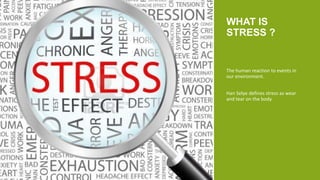
The human reaction to events in
our environment.
Han Selye defines stress as wear
and tear on the body
WHAT IS
STRESS ?
Getting into college
Getting married
First day of the job.
EUSTRESS
KNOW YOUR STRESS
▪ General Stress
▪ Cumulative Stress
▪ Acute Traumatic Stress
▪ Post Traumatic Stress
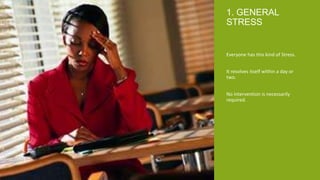
Everyone has this kind of Stress.
It resolves itself within a day or
two.
No intervention is necessarily
required.
1. GENERAL
STRESS
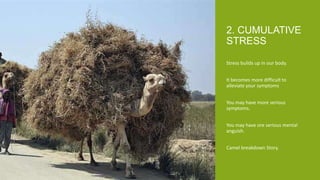
Stress builds up in our body.
It becomes more difficult to
alleviate your symptoms
You may have more serious
symptoms.
You may have ore serious mental
anguish.
Camel breakdown Story.
2. CUMULATIVE
STRESS
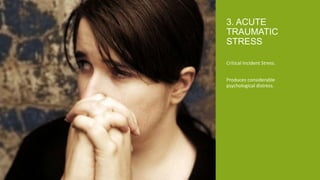
Critical Incident Stress.
Produces considerable
psychological distress.
3. ACUTE
TRAUMATIC
STRESS
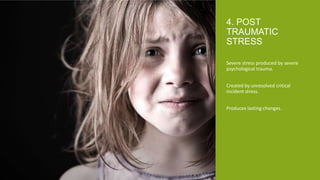
Severe stress produced by severe
psychological trauma.
Created by unresolved critical
incident stress.
Produces lasting changes.
4. POST
TRAUMATIC
STRESS
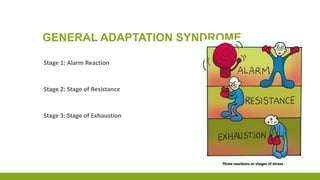
GENERAL ADAPTATION SYNDROME
Stage 1: Alarm Reaction
Stage 2: Stage of Resistance
Stage 3: Stage of Exhaustion
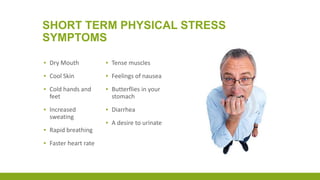
SHORT TERM PHYSICAL STRESS
SYMPTOMS
▪ Dry Mouth
▪ Cool Skin
▪ Cold hands and
feet
▪ Increased
sweating
▪ Rapid breathing
▪ Faster heart rate
▪ Tense muscles
▪ Feelings of nausea
▪ Butterflies in your
stomach
▪ Diarrhea
▪ A desire to urinate
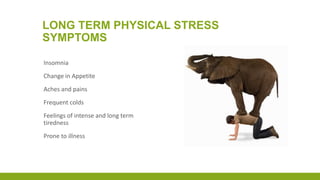
LONG TERM PHYSICAL STRESS
SYMPTOMS
Insomnia
Change in Appetite
Aches and pains
Frequent colds
Feelings of intense and long term
tiredness
Prone to illness
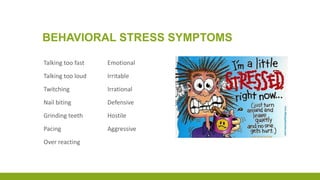
BEHAVIORAL STRESS SYMPTOMS
Talking too fast
Talking too loud
Twitching
Nail biting
Grinding teeth
Pacing
Over reacting
Emotional
Irritable
Irrational
Defensive
Hostile
Aggressive
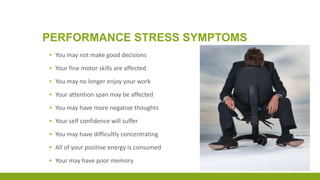
PERFORMANCE STRESS SYMPTOMS
▪ You may not make good decisions
▪ Your fine motor skills are affected
▪ You may no longer enjoy your work
▪ Your attention span may be affected
▪ You may have more negative thoughts
▪ Your self confidence will suffer
▪ You may have difficultly concentrating
▪ All of your positive energy is consumed
▪ Your may have poor memory
HOW TO DEAL WITH
STRESS?
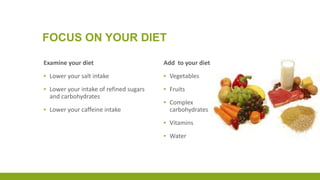
FOCUS ON YOUR DIET
Examine your diet
▪ Lower your salt intake
▪ Lower your intake of refined sugars
and carbohydrates
▪ Lower your caffeine intake
Add to your diet
▪ Vegetables
▪ Fruits
▪ Complex
carbohydrates
▪ Vitamins
▪ Water
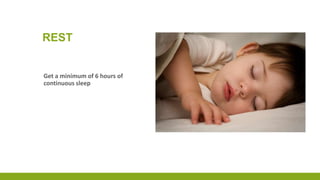
REST
Get a minimum of 6 hours of
continuous sleep
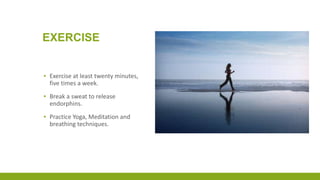
EXERCISE
▪ Exercise at least twenty minutes,
five times a week.
▪ Break a sweat to release
endorphins.
▪ Practice Yoga, Meditation and
breathing techniques.
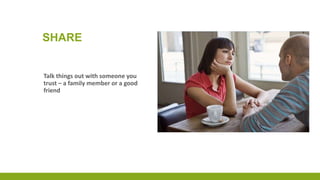
SHARE
Talk things out with someone you
trust – a family member or a good
friend
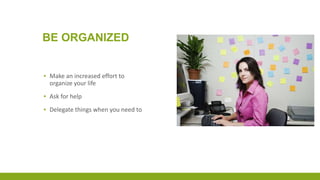
BE ORGANIZED
▪ Make an increased effort to
organize your life
▪ Ask for help
▪ Delegate things when you need to
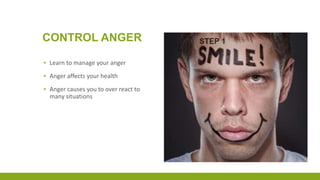
CONTROL ANGER
▪ Learn to manage your anger
▪ Anger affects your health
▪ Anger causes you to over react to
many situations
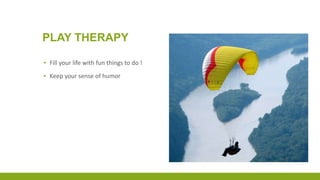
PLAY THERAPY
▪ Fill your life with fun things to do !
▪ Keep your sense of humor
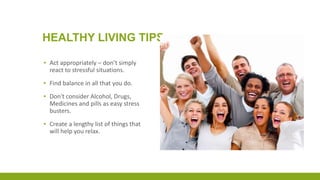
HEALTHY LIVING TIPS
▪ Act appropriately – don’t simply
react to stressful situations.
▪ Find balance in all that you do.
▪ Don't consider Alcohol, Drugs,
Medicines and pills as easy stress
busters.
▪ Create a lengthy list of things that
will help you relax.
HEALTHY LIVING TIPS
▪ Relaxing needs to be part of your
daily routine.
▪ Schedule “me” time.
▪Be Optimistic.
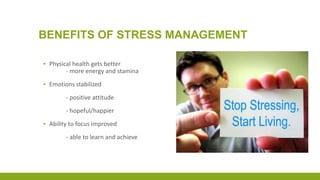
BENEFITS OF STRESS MANAGEMENT
▪ Physical health gets better
- more energy and stamina
▪ Emotions stabilized
- positive attitude
- hopeful/happier
▪ Ability to focus improved
- able to learn and achieve
RELAX……

Stress management for your physical and mental well being.

  • 1.
  • 2.
    The human reactionto events in our environment. Han Selye defines stress as wear and tear on the body WHAT IS STRESS ?
  • 3.
    Getting into college Gettingmarried First day of the job. EUSTRESS
  • 4.
    KNOW YOUR STRESS ▪General Stress ▪ Cumulative Stress ▪ Acute Traumatic Stress ▪ Post Traumatic Stress
  • 5.
    Everyone has thiskind of Stress. It resolves itself within a day or two. No intervention is necessarily required. 1. GENERAL STRESS
  • 6.
    Stress builds upin our body. It becomes more difficult to alleviate your symptoms You may have more serious symptoms. You may have ore serious mental anguish. Camel breakdown Story. 2. CUMULATIVE STRESS
  • 7.
    Critical Incident Stress. Producesconsiderable psychological distress. 3. ACUTE TRAUMATIC STRESS
  • 8.
    Severe stress producedby severe psychological trauma. Created by unresolved critical incident stress. Produces lasting changes. 4. POST TRAUMATIC STRESS
  • 9.
    GENERAL ADAPTATION SYNDROME Stage1: Alarm Reaction Stage 2: Stage of Resistance Stage 3: Stage of Exhaustion
  • 10.
    SHORT TERM PHYSICALSTRESS SYMPTOMS ▪ Dry Mouth ▪ Cool Skin ▪ Cold hands and feet ▪ Increased sweating ▪ Rapid breathing ▪ Faster heart rate ▪ Tense muscles ▪ Feelings of nausea ▪ Butterflies in your stomach ▪ Diarrhea ▪ A desire to urinate
  • 11.
    LONG TERM PHYSICALSTRESS SYMPTOMS Insomnia Change in Appetite Aches and pains Frequent colds Feelings of intense and long term tiredness Prone to illness
  • 12.
    BEHAVIORAL STRESS SYMPTOMS Talkingtoo fast Talking too loud Twitching Nail biting Grinding teeth Pacing Over reacting Emotional Irritable Irrational Defensive Hostile Aggressive
  • 13.
    PERFORMANCE STRESS SYMPTOMS ▪You may not make good decisions ▪ Your fine motor skills are affected ▪ You may no longer enjoy your work ▪ Your attention span may be affected ▪ You may have more negative thoughts ▪ Your self confidence will suffer ▪ You may have difficultly concentrating ▪ All of your positive energy is consumed ▪ Your may have poor memory
  • 14.
    HOW TO DEALWITH STRESS?
  • 15.
    FOCUS ON YOURDIET Examine your diet ▪ Lower your salt intake ▪ Lower your intake of refined sugars and carbohydrates ▪ Lower your caffeine intake Add to your diet ▪ Vegetables ▪ Fruits ▪ Complex carbohydrates ▪ Vitamins ▪ Water
  • 16.
    REST Get a minimumof 6 hours of continuous sleep
  • 17.
    EXERCISE ▪ Exercise atleast twenty minutes, five times a week. ▪ Break a sweat to release endorphins. ▪ Practice Yoga, Meditation and breathing techniques.
  • 18.
    SHARE Talk things outwith someone you trust – a family member or a good friend
  • 19.
    BE ORGANIZED ▪ Makean increased effort to organize your life ▪ Ask for help ▪ Delegate things when you need to
  • 20.
    CONTROL ANGER ▪ Learnto manage your anger ▪ Anger affects your health ▪ Anger causes you to over react to many situations
  • 21.
    PLAY THERAPY ▪ Fillyour life with fun things to do ! ▪ Keep your sense of humor
  • 22.
    HEALTHY LIVING TIPS ▪Act appropriately – don’t simply react to stressful situations. ▪ Find balance in all that you do. ▪ Don't consider Alcohol, Drugs, Medicines and pills as easy stress busters. ▪ Create a lengthy list of things that will help you relax.
  • 23.
    HEALTHY LIVING TIPS ▪Relaxing needs to be part of your daily routine. ▪ Schedule “me” time. ▪Be Optimistic.
  • 24.
    BENEFITS OF STRESSMANAGEMENT ▪ Physical health gets better - more energy and stamina ▪ Emotions stabilized - positive attitude - hopeful/happier ▪ Ability to focus improved - able to learn and achieve
  • 25.

Editor's Notes

  • #9 General adaptation syndrome, or GAS, is a term used to describe the body's short-term and long-term reactions to stress.