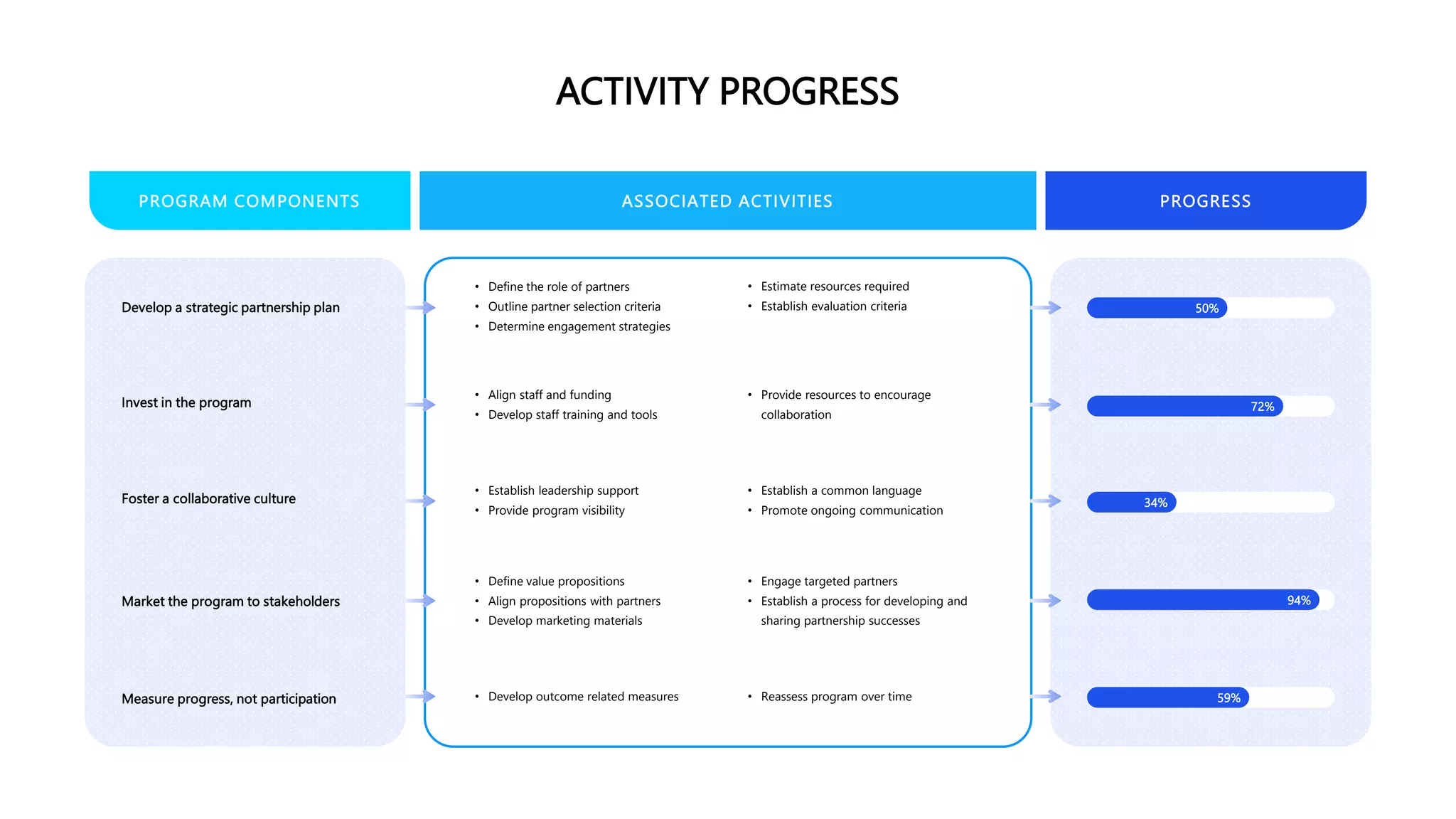
ACTIVITY PROGRESS
Develop a strategic partnership plan
Invest in the program
Foster a collaborative culture
Market the program to stakeholders
Measure progress, not participation
• Define the role of partners
• Outline partner selection criteria
• Determine engagement strategies
• Align staff and funding
• Develop staff training and tools
• Establish leadership support
• Provide program visibility
• Define value propositions
• Align propositions with partners
• Develop marketing materials
• Estimate resources required
• Establish evaluation criteria
• Provide resources to encourage
collaboration
• Establish a common language
• Promote ongoing communication
• Engage targeted partners
• Establish a process for developing and
sharing partnership successes
• Develop outcome related measures • Reassess program over time
50%
72%
34%
94%
59%
PROGRAM COMPONENTS PROGRESS
ASSOCIATED ACTIVITIES
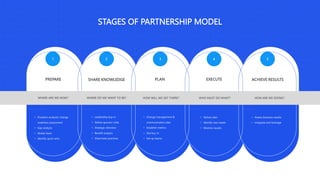
PREPARE SHARE KNOWLEDGE PLAN EXECUTE ACHIEVE RESULTS
1 2 3 4 5
STAGES OF PARTNERSHIP MODEL
WHERE ARE WE NOW? WHERE DO WE WANT TO BE? HOW WILL WE GET THERE? WHO MUST DO WHAT? HOW ARE WE DOING?
• Situation analysis/ change
readiness assessment
• Gap analysis
• Global team
• Identify quick wins
• Leadership buy-in
• Define sponsor roles
• Strategic direction
• Benefit analysis
• Share best practices
• Change management &
communication plan
• Establish metrics
• Get buy-in
• Set up teams
• Deliver plan
• Identify new needs
• Monitor results
• Assess business results
• Integrate and leverage
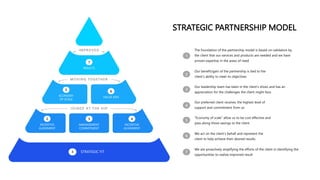
STRATEGIC PARTNERSHIP MODEL
I M PR O V E D
M O V I N G TO G E TH E R
J O I N E D A T TH E H I P
1 STRATEGIC FIT
2
INCENTIVE
ALIGNMENT
3
MANAGEMENT
COMMITMENT
4
INCENTIVE
ALIGNMENT
5
ECONOMY
OF SCALE
6
VALUE ADD
7
RESULTS
1
The foundation of the partnership model is based on validation by
the client that our services and products are needed and we have
proven expertise in the areas of need
2
Our benefit/gain of the partnership is tied to the
client’s ability to meet its objectives
3
Our leadership team has been in the client’s shoes and has an
appreciation for the challenges the client might face.
4
Our preferred client receives the highest level of
support and commitment from us
5
“Economy of scale” allow us to be cost effective and
pass along those savings to the client
6
We act on the client’s behalf and represent the
client to help achieve their desired results
7
We are proactively amplifying the efforts of the client in identifying the
opportunities to realize improved result
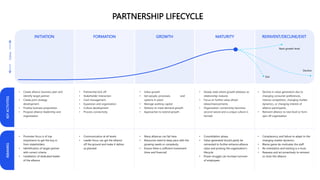
GROWTH
PARTNERSHIP LIFECYCLE
KEY
ACTIVITIES
REMARKS
• Create alliance business plan and
identify target partner
• Create joint strategy
development.
• Finalize business proposition
• Propose alliance leadership and
organization
• Decline in value generation due to
changing consumer preferences,
intense competition, changing market
dynamics, or changing interest of
alliance participants.
• Reinvent alliance to next level or form
spin off organization
• Partnership kick off
• Stakeholder interaction
• Cash management
• Expansion and organization
• Culture development
• Process connectivity
• Value growth
• Get people, processes, and
systems in place
• Manage working capital
• Delivery to meet demand growth
• Approaches to extend growth
• Steady state where growth plateaus as
relationship matures
• Focus on further value driven
ideas/improvements.
• Organization connectivity becomes
second nature and a unique culture is
formed
• Promoter focus is of top
importance to get the buy in
from stakeholders.
• Identification of target partner
with correct criteria.
• Installation of dedicated leader
of the alliance
• Complacency and failure to adapt to the
changing market dynamics
• Blame game de-motivates the staff.
• Re-orientation and training is a must.
• Reassess and act proactively to reinvent
or close this alliance
• Communication at all levels.
• Leader focus can get the alliance
off the ground and make it deliver
as planned
• Many alliances can fail here
• Resources need to keep pace with the
growing needs or complexity
• Ensure there is sufficient investment
(time and financial)
• Consolidation phase.
• Value generated should partly be
reinvested to further enhance alliance
value and prolong the organization’s
lifecycle.
• Power struggle can increase turnover
of employees
INITIATION FORMATION MATURITY REINVENT/DECLINE/EXIT
Next growth level
Exit
Decline
(Value)
7
3
1
9
2
6
7
10
9
5
6
5
7
5
8
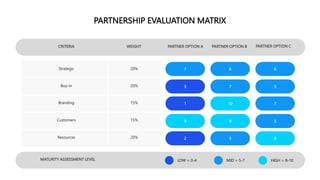
PARTNERSHIP EVALUATION MATRIX
CRITERIA WEIGHT PARTNER OPTION A PARTNER OPTION B PARTNER OPTION C
Strategic
Buy-in
Branding
Customers
Resources
20%
20%
15%
15%
20%
MATURITY ASSESSMENT LEVEL LOW = 0-4 MID = 5-7 HIGH = 8-10

Strategic Partnership.pptx

  • 1.
    ACTIVITY PROGRESS Develop astrategic partnership plan Invest in the program Foster a collaborative culture Market the program to stakeholders Measure progress, not participation • Define the role of partners • Outline partner selection criteria • Determine engagement strategies • Align staff and funding • Develop staff training and tools • Establish leadership support • Provide program visibility • Define value propositions • Align propositions with partners • Develop marketing materials • Estimate resources required • Establish evaluation criteria • Provide resources to encourage collaboration • Establish a common language • Promote ongoing communication • Engage targeted partners • Establish a process for developing and sharing partnership successes • Develop outcome related measures • Reassess program over time 50% 72% 34% 94% 59% PROGRAM COMPONENTS PROGRESS ASSOCIATED ACTIVITIES
  • 2.
    PREPARE SHARE KNOWLEDGEPLAN EXECUTE ACHIEVE RESULTS 1 2 3 4 5 STAGES OF PARTNERSHIP MODEL WHERE ARE WE NOW? WHERE DO WE WANT TO BE? HOW WILL WE GET THERE? WHO MUST DO WHAT? HOW ARE WE DOING? • Situation analysis/ change readiness assessment • Gap analysis • Global team • Identify quick wins • Leadership buy-in • Define sponsor roles • Strategic direction • Benefit analysis • Share best practices • Change management & communication plan • Establish metrics • Get buy-in • Set up teams • Deliver plan • Identify new needs • Monitor results • Assess business results • Integrate and leverage
  • 3.
    STRATEGIC PARTNERSHIP MODEL IM PR O V E D M O V I N G TO G E TH E R J O I N E D A T TH E H I P 1 STRATEGIC FIT 2 INCENTIVE ALIGNMENT 3 MANAGEMENT COMMITMENT 4 INCENTIVE ALIGNMENT 5 ECONOMY OF SCALE 6 VALUE ADD 7 RESULTS 1 The foundation of the partnership model is based on validation by the client that our services and products are needed and we have proven expertise in the areas of need 2 Our benefit/gain of the partnership is tied to the client’s ability to meet its objectives 3 Our leadership team has been in the client’s shoes and has an appreciation for the challenges the client might face. 4 Our preferred client receives the highest level of support and commitment from us 5 “Economy of scale” allow us to be cost effective and pass along those savings to the client 6 We act on the client’s behalf and represent the client to help achieve their desired results 7 We are proactively amplifying the efforts of the client in identifying the opportunities to realize improved result
  • 4.
    GROWTH PARTNERSHIP LIFECYCLE KEY ACTIVITIES REMARKS • Createalliance business plan and identify target partner • Create joint strategy development. • Finalize business proposition • Propose alliance leadership and organization • Decline in value generation due to changing consumer preferences, intense competition, changing market dynamics, or changing interest of alliance participants. • Reinvent alliance to next level or form spin off organization • Partnership kick off • Stakeholder interaction • Cash management • Expansion and organization • Culture development • Process connectivity • Value growth • Get people, processes, and systems in place • Manage working capital • Delivery to meet demand growth • Approaches to extend growth • Steady state where growth plateaus as relationship matures • Focus on further value driven ideas/improvements. • Organization connectivity becomes second nature and a unique culture is formed • Promoter focus is of top importance to get the buy in from stakeholders. • Identification of target partner with correct criteria. • Installation of dedicated leader of the alliance • Complacency and failure to adapt to the changing market dynamics • Blame game de-motivates the staff. • Re-orientation and training is a must. • Reassess and act proactively to reinvent or close this alliance • Communication at all levels. • Leader focus can get the alliance off the ground and make it deliver as planned • Many alliances can fail here • Resources need to keep pace with the growing needs or complexity • Ensure there is sufficient investment (time and financial) • Consolidation phase. • Value generated should partly be reinvested to further enhance alliance value and prolong the organization’s lifecycle. • Power struggle can increase turnover of employees INITIATION FORMATION MATURITY REINVENT/DECLINE/EXIT Next growth level Exit Decline (Value)
  • 5.
    7 3 1 9 2 6 7 10 9 5 6 5 7 5 8 PARTNERSHIP EVALUATION MATRIX CRITERIAWEIGHT PARTNER OPTION A PARTNER OPTION B PARTNER OPTION C Strategic Buy-in Branding Customers Resources 20% 20% 15% 15% 20% MATURITY ASSESSMENT LEVEL LOW = 0-4 MID = 5-7 HIGH = 8-10