Management of 
SUBSTANCE-RELATED 
Psychiatric Disorders 
Wednesday, 19/11/14 
A/P Dr. Ramli Musa
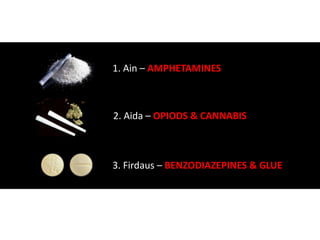
1. Ain – AMPHETAMINES 
2. Aida – OPIODS & CANNABIS 
3. Firdaus – BENZODIAZEPINES & GLUE
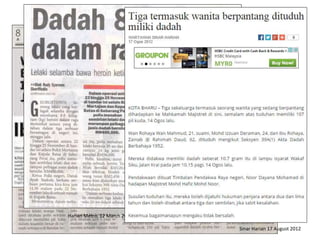
Harian Metro, 12 February 2014 
Kosmo September 2008 
Harian Metro, 12 March 2008 
Sinar Harian 17 August 2012
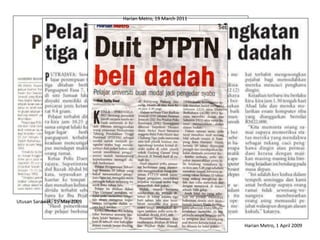
Utusan Sarawak, 15 May 2009 
Harian Metro, 1 April 2009 
Harian Metro, 19 March 2011
The Star 4 March 2014 
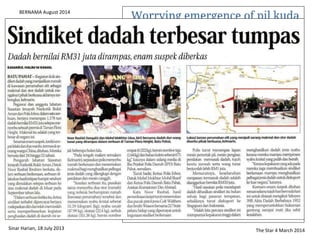
BERNAMA August 2014 
Sinar Harian, 18 July 2013
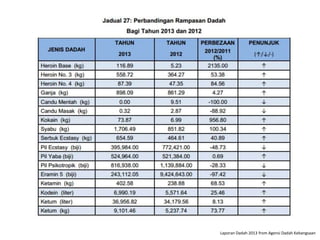
Laporan Dadah 2013 from Agensi Dadah Kebangsaan
OUTLINES 
1. Diagnostic criteria in DSM-IV-TR (Dependence, Abuse, Intoxication, Withdrawal) 
2. Change in DSM-V 
3. Introduction of Amphetamines (Classification, Indications, Common users) 
4. How Amphetamines Work 
5. Amphetamine Intoxication & Withdrawal 
6. Management 
7. Other Specific Amphetamine-Related Psychiatric Disorders
1. Diagnostic criteria in DSM-IV-TR 
(Dependence, Abuse, Intoxication, Withdrawal)
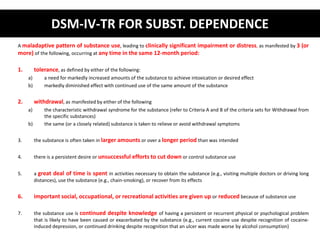
DSM-IV-TR FOR SUBST. DEPENDENCE 
A maladaptive pattern of substance use, leading to clinically significant impairment or distress, as manifested by 3 (or 
more) of the following, occurring at any time in the same 12-month period: 
1. tolerance, as defined by either of the following: 
a) a need for markedly increased amounts of the substance to achieve intoxication or desired effect 
b) markedly diminished effect with continued use of the same amount of the substance 
2. withdrawal, as manifested by either of the following 
a) the characteristic withdrawal syndrome for the substance (refer to Criteria A and B of the criteria sets for Withdrawal from 
the specific substances) 
b) the same (or a closely related) substance is taken to relieve or avoid withdrawal symptoms 
3. the substance is often taken in larger amounts or over a longer period than was intended 
4. there is a persistent desire or unsuccessful efforts to cut down or control substance use 
5. a great deal of time is spent in activities necessary to obtain the substance (e.g., visiting multiple doctors or driving long 
distances), use the substance (e.g., chain-smoking), or recover from its effects 
6. important social, occupational, or recreational activities are given up or reduced because of substance use 
7. the substance use is continued despite knowledge of having a persistent or recurrent physical or psychological problem 
that is likely to have been caused or exacerbated by the substance (e.g., current cocaine use despite recognition of cocaine-induced 
depression, or continued drinking despite recognition that an ulcer was made worse by alcohol consumption)
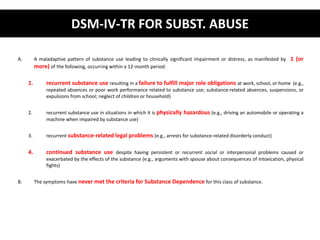
DSM-IV-TR FOR SUBST. ABUSE 
A. A maladaptive pattern of substance use leading to clinically significant impairment or distress, as manifested by 1 (or 
more) of the following, occurring within a 12-month period: 
1. recurrent substance use resulting in a failure to fulfill major role obligations at work, school, or home (e.g., 
repeated absences or poor work performance related to substance use; substance-related absences, suspensions, or 
expulsions from school; neglect of children or household) 
2. recurrent substance use in situations in which it is physically hazardous (e.g., driving an automobile or operating a 
machine when impaired by substance use) 
3. recurrent substance-related legal problems (e.g., arrests for substance-related disorderly conduct) 
4. continued substance use despite having persistent or recurrent social or interpersonal problems caused or 
exacerbated by the effects of the substance (e.g., arguments with spouse about consequences of intoxication, physical 
fights) 
B. The symptoms have never met the criteria for Substance Dependence for this class of substance.
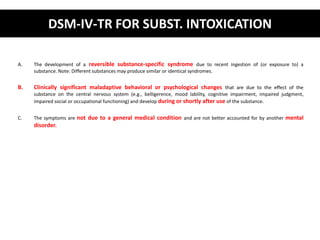
DSM-IV-TR FOR SUBST. INTOXICATION 
A. The development of a reversible substance-specific syndrome due to recent ingestion of (or exposure to) a 
substance. Note: Different substances may produce similar or identical syndromes. 
B. Clinically significant maladaptive behavioral or psychological changes that are due to the effect of the 
substance on the central nervous system (e.g., belligerence, mood lability, cognitive impairment, impaired judgment, 
impaired social or occupational functioning) and develop during or shortly after use of the substance. 
C. The symptoms are not due to a general medical condition and are not better accounted for by another mental 
disorder.
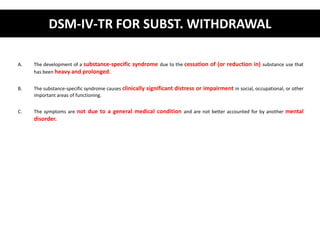
DSM-IV-TR FOR SUBST. WITHDRAWAL 
A. The development of a substance-specific syndrome due to the cessation of (or reduction in) substance use that 
has been heavy and prolonged. 
B. The substance-specific syndrome causes clinically significant distress or impairment in social, occupational, or other 
important areas of functioning. 
C. The symptoms are not due to a general medical condition and are not better accounted for by another mental 
disorder.
2. Change in DSM-V
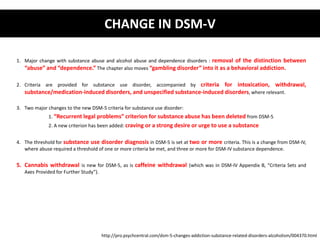
1. Major change with substance abuse and alcohol abuse and dependence disorders : removal of the distinction between 
“abuse” and “dependence.” The chapter also moves “gambling disorder” into it as a behavioral addiction. 
2. Criteria are provided for substance use disorder, accompanied by criteria for intoxication, withdrawal, 
substance/medication-induced disorders, and unspecified substance-induced disorders, where relevant. 
3. Two major changes to the new DSM-5 criteria for substance use disorder: 
1. “Recurrent legal problems” criterion for substance abuse has been deleted from DSM-5 
2. A new criterion has been added: craving or a strong desire or urge to use a substance 
4. The threshold for substance use disorder diagnosis in DSM-5 is set at two or more criteria. This is a change from DSM-IV, 
where abuse required a threshold of one or more criteria be met, and three or more for DSM-IV substance dependence. 
5. Cannabis withdrawal is new for DSM-5, as is caffeine withdrawal (which was in DSM-IV Appendix B, “Criteria Sets and 
Axes Provided for Further Study”). 
CHANGE IN DSM-V 
http://pro.psychcentral.com/dsm-5-changes-addiction-substance-related-disorders-alcoholism/004370.html
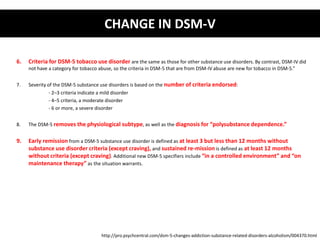
CHANGE IN DSM-V 
6. Criteria for DSM-5 tobacco use disorder are the same as those for other substance use disorders. By contrast, DSM-IV did 
not have a category for tobacco abuse, so the criteria in DSM-5 that are from DSM-IV abuse are new for tobacco in DSM-5.” 
7. Severity of the DSM-5 substance use disorders is based on the number of criteria endorsed: 
- 2–3 criteria indicate a mild disorder 
- 4–5 criteria, a moderate disorder 
- 6 or more, a severe disorder 
8. The DSM-5 removes the physiological subtype, as well as the diagnosis for “polysubstance dependence.” 
9. Early remission from a DSM-5 substance use disorder is defined as at least 3 but less than 12 months without 
substance use disorder criteria (except craving), and sustained re-mission is defined as at least 12 months 
without criteria (except craving). Additional new DSM-5 specifiers include “in a controlled environment” and “on 
maintenance therapy” as the situation warrants. 
http://pro.psychcentral.com/dsm-5-changes-addiction-substance-related-disorders-alcoholism/004370.html
VIDEO 1 : HISTORY OF AMPHETAMINES
3. Introduction of Amphetamines 
(Classification, Indications, Common users)
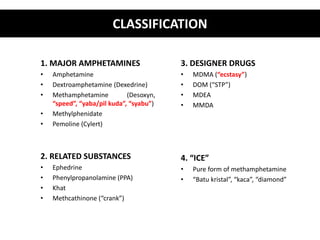
CLASSIFICATION 
1. MAJOR AMPHETAMINES 
• Amphetamine 
• Dextroamphetamine (Dexedrine) 
• Methamphetamine (Desoxyn, 
“speed”, “yaba/pil kuda”, “syabu”) 
• Methylphenidate 
• Pemoline (Cylert) 
2. RELATED SUBSTANCES 
• Ephedrine 
• Phenylpropanolamine (PPA) 
• Khat 
• Methcathinone (“crank”) 
3. DESIGNER DRUGS 
• MDMA (“ecstasy”) 
• DOM (“STP”) 
• MDEA 
• MMDA 
4. “ICE” 
• Pure form of methamphetamine 
• “Batu kristal”, “kaca”, “diamond”
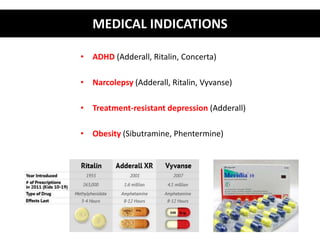
MEDICAL INDICATIONS 
• ADHD (Adderall, Ritalin, Concerta) 
• Narcolepsy (Adderall, Ritalin, Vyvanse) 
• Treatment-resistant depression (Adderall) 
• Obesity (Sibutramine, Phentermine)
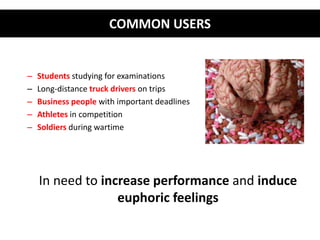
COMMON USERS 
– Students studying for examinations 
– Long-distance truck drivers on trips 
– Business people with important deadlines 
– Athletes in competition 
– Soldiers during wartime 
In need to increase performance and induce 
euphoric feelings
4. How Amphetamines Work
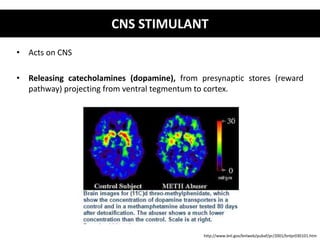
• Acts on CNS 
CNS STIMULANT 
• Releasing catecholamines (dopamine), from presynaptic stores (reward 
pathway) projecting from ventral tegmentum to cortex. 
http://www.bnl.gov/bnlweb/pubaf/pr/2001/bnlpr030101.htm
VIDEO 2 : REWARD PATHWAY
5. Amphetamine Intoxication & Withdrawal
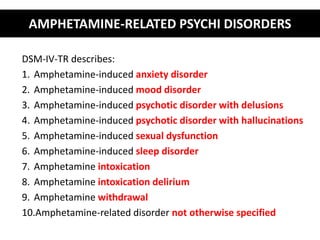
AMPHETAMINE-RELATED PSYCHI DISORDERS 
DSM-IV-TR describes: 
1. Amphetamine-induced anxiety disorder 
2. Amphetamine-induced mood disorder 
3. Amphetamine-induced psychotic disorder with delusions 
4. Amphetamine-induced psychotic disorder with hallucinations 
5. Amphetamine-induced sexual dysfunction 
6. Amphetamine-induced sleep disorder 
7. Amphetamine intoxication 
8. Amphetamine intoxication delirium 
9. Amphetamine withdrawal 
10.Amphetamine-related disorder not otherwise specified
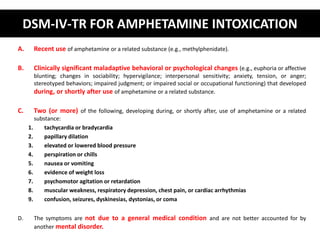
DSM-IV-TR FOR AMPHETAMINE INTOXICATION 
A. Recent use of amphetamine or a related substance (e.g., methylphenidate). 
B. Clinically significant maladaptive behavioral or psychological changes (e.g., euphoria or affective 
blunting; changes in sociability; hypervigilance; interpersonal sensitivity; anxiety, tension, or anger; 
stereotyped behaviors; impaired judgment; or impaired social or occupational functioning) that developed 
during, or shortly after use of amphetamine or a related substance. 
C. Two (or more) of the following, developing during, or shortly after, use of amphetamine or a related 
substance: 
1. tachycardia or bradycardia 
2. papillary dilation 
3. elevated or lowered blood pressure 
4. perspiration or chills 
5. nausea or vomiting 
6. evidence of weight loss 
7. psychomotor agitation or retardation 
8. muscular weakness, respiratory depression, chest pain, or cardiac arrhythmias 
9. confusion, seizures, dyskinesias, dystonias, or coma 
D. The symptoms are not due to a general medical condition and are not better accounted for by 
another mental disorder.
VIDEO 3 : PATIENTS
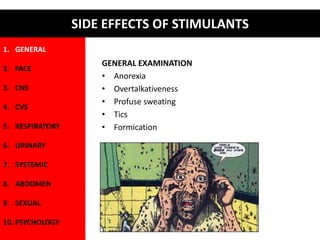
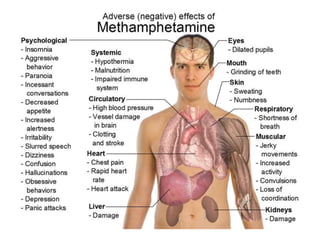
GENERAL EXAMINATION 
• Anorexia 
• Overtalkativeness 
• Profuse sweating 
• Tics 
• Formication 
1. GENERAL 
2. FACE 
3. CNS 
4. CVS 
5. RESPIRATORY 
6. URINARY 
7. SYSTEMIC 
8. ABDOMEN 
9. SEXUAL 
10. PSYCHOLOGY 
SIDE EFFECTS OF STIMULANTS
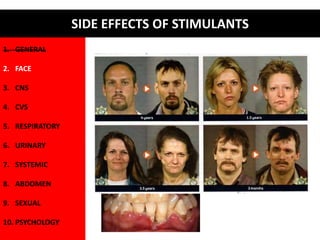
FACE 
• Acne 
• Dilated pupils 
• Blurred vision 
• Dry mouth and nose 
• Excessive grinding of teeth 
• Meth mouth 
• Dehydration 
1. GENERAL 
2. FACE 
3. CNS 
4. CVS 
5. RESPIRATORY 
6. URINARY 
7. SYSTEMIC 
8. ABDOMEN 
9. SEXUAL 
10. PSYCHOLOGY 
SIDE EFFECTS OF STIMULANTS
1. GENERAL 
2. FACE 
3. CNS 
4. CVS 
5. RESPIRATORY 
6. URINARY 
7. SYSTEMIC 
8. ABDOMEN 
9. SEXUAL 
10. PSYCHOLOGY 
SIDE EFFECTS OF STIMULANTS 
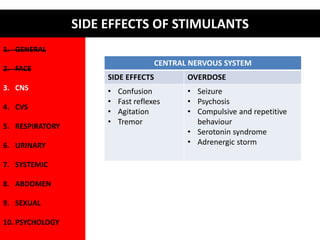
CENTRAL NERVOUS SYSTEM 
SIDE EFFECTS OVERDOSE 
• Confusion 
• Fast reflexes 
• Agitation 
• Tremor 
• Seizure 
• Psychosis 
• Compulsive and repetitive 
behaviour 
• Serotonin syndrome 
• Adrenergic storm
1. GENERAL 
2. FACE 
3. CNS 
4. CVS 
5. RESPIRATORY 
6. URINARY 
7. SYSTEMIC 
8. ABDOMEN 
9. SEXUAL 
10. PSYCHOLOGY 
SIDE EFFECTS OF STIMULANTS 
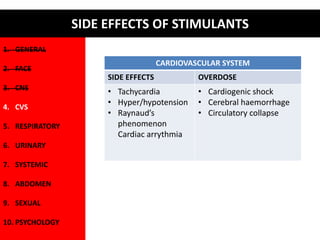
CARDIOVASCULAR SYSTEM 
SIDE EFFECTS OVERDOSE 
• Tachycardia 
• Hyper/hypotension 
• Raynaud’s 
phenomenon 
Cardiac arrythmia 
• Cardiogenic shock 
• Cerebral haemorrhage 
• Circulatory collapse
1. GENERAL 
2. FACE 
3. CNS 
4. CVS 
5. RESPIRATORY 
6. URINARY 
7. SYSTEMIC 
8. ABDOMEN 
9. SEXUAL 
10. PSYCHOLOGY 
SIDE EFFECTS OF STIMULANTS 
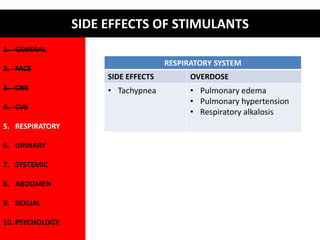
RESPIRATORY SYSTEM 
SIDE EFFECTS OVERDOSE 
• Tachypnea • Pulmonary edema 
• Pulmonary hypertension 
• Respiratory alkalosis
1. GENERAL 
2. FACE 
3. CNS 
4. CVS 
5. RESPIRATORY 
6. URINARY 
7. SYSTEMIC 
8. ABDOMEN 
9. SEXUAL 
10. PSYCHOLOGY 
SIDE EFFECTS OF STIMULANTS 
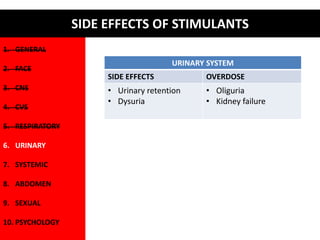
URINARY SYSTEM 
SIDE EFFECTS OVERDOSE 
• Urinary retention 
• Dysuria 
• Oliguria 
• Kidney failure
1. GENERAL 
2. FACE 
3. CNS 
4. CVS 
5. RESPIRATORY 
6. URINARY 
7. SYSTEMIC 
8. ABDOMEN 
9. SEXUAL 
10. PSYCHOLOGY 
SIDE EFFECTS OF STIMULANTS 
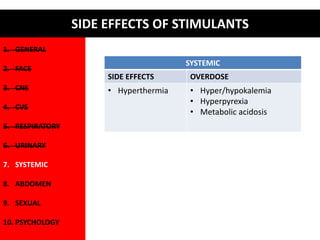
SYSTEMIC 
SIDE EFFECTS OVERDOSE 
• Hyperthermia • Hyper/hypokalemia 
• Hyperpyrexia 
• Metabolic acidosis
1. GENERAL 
2. FACE 
3. CNS 
4. CVS 
5. RESPIRATORY 
6. URINARY 
7. SYSTEMIC 
8. ABDOMEN 
9. SEXUAL 
10. PSYCHOLOGY 
SIDE EFFECTS OF STIMULANTS 
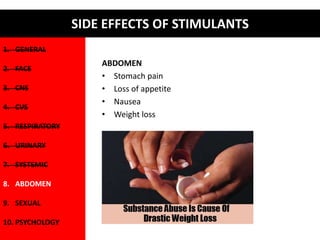
ABDOMEN 
• Stomach pain 
• Loss of appetite 
• Nausea 
• Weight loss
1. GENERAL 
2. FACE 
3. CNS 
4. CVS 
5. RESPIRATORY 
6. URINARY 
7. SYSTEMIC 
8. ABDOMEN 
9. SEXUAL 
10. PSYCHOLOGY 
SIDE EFFECTS OF STIMULANTS 
SEXUAL 
• Erectile dysfunction 
• Frequent erections 
• Prolonged erections
1. GENERAL 
2. FACE 
3. CNS 
4. CVS 
5. RESPIRATORY 
6. URINARY 
7. SYSTEMIC 
8. ABDOMEN 
9. SEXUAL 
10. PSYCHOLOGY 
SIDE EFFECTS OF STIMULANTS 
PSYCHOLOGY 
• Increased alertness 
• Concentration 
• Prolonged wakefulness 
• Insomnia 
• Less fatigue 
• Elated mood followed by mildly depressed mood 
• Sociability
WHAT HAPPENS IF YOU STOP TAKING THEM?
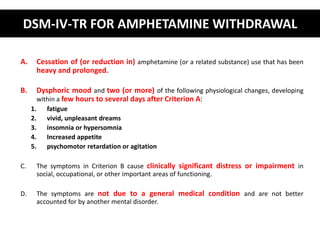
DSM-IV-TR FOR AMPHETAMINE WITHDRAWAL 
A. Cessation of (or reduction in) amphetamine (or a related substance) use that has been 
heavy and prolonged. 
B. Dysphoric mood and two (or more) of the following physiological changes, developing 
within a few hours to several days after Criterion A: 
1. fatigue 
2. vivid, unpleasant dreams 
3. insomnia or hypersomnia 
4. Increased appetite 
5. psychomotor retardation or agitation 
C. The symptoms in Criterion B cause clinically significant distress or impairment in 
social, occupational, or other important areas of functioning. 
D. The symptoms are not due to a general medical condition and are not better 
accounted for by another mental disorder.
6. Management
• Symptomatic 
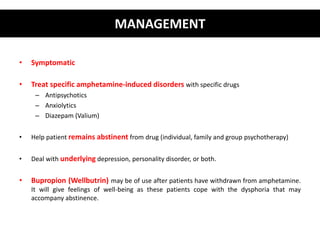
MANAGEMENT 
• Treat specific amphetamine-induced disorders with specific drugs 
– Antipsychotics 
– Anxiolytics 
– Diazepam (Valium) 
• Help patient remains abstinent from drug (individual, family and group psychotherapy) 
• Deal with underlying depression, personality disorder, or both. 
• Bupropion (Wellbutrin) may be of use after patients have withdrawn from amphetamine. 
It will give feelings of well-being as these patients cope with the dysphoria that may 
accompany abstinence.
7. Other Specific Amphetamine-Related 
Psychiatric Disorders
AMPHETAMINE-RELATED PSYCHI DISORDERS 
DSM-IV-TR describes: 
1. Amphetamine-induced anxiety disorder 
2. Amphetamine-induced mood disorder 
3. Amphetamine-induced psychotic disorder with delusions 
4. Amphetamine-induced psychotic disorder with hallucinations 
5. Amphetamine-induced sexual dysfunction 
6. Amphetamine-induced sleep disorder 
7. Amphetamine intoxication 
8. Amphetamine intoxication delirium 
9. Amphetamine withdrawal 
10.Amphetamine-related disorder not otherwise specified
AMPHETAMINE-RELATED PSYCHI DISORDERS 
1. Amphetamine-Induced Anxiety Disorder 
Can induce symptoms similar to those seen in obsessive-compulsive 
disorder, panic disorder & phobic disorders 
2. Amphetamine-Induced Mood Disorder 
- Intoxication : manic or mixed mood features 
- Withdrawal : depressive mood features 
3. Amphetamine-Induced Sexual Dysfunction 
High doses and long-term is associated with erectile disorder and other 
sexual dysfunctions 
4. Amphetamine-Induced Sleep Disorder 
- Intoxication : insomnia and sleep deprivation 
- Withdrawal : hypersomnolence & nightmares
AMPHETAMINE-RELATED PSYCHI DISORDERS 
6. Amphetamine-induced psychotic disorder 
– Hallmark : presence of paranoia 
– Differentiating characteristics from paranoid schizophrenia: 
• Hyperactivity 
• Generally appropriate affects 
• Predominance of visual hallucinations 
• Little evidence of disordered thinking 
• Confusion and incoherence 
• Hypersexuality 
– If acute, can be completely indistinguishable from schizophrenia 
– Treatment of choice : short-term use of an antipsychotic (eg: haloperidol)
REFERENCES 
• Oxford Psychiatry Third Edition (2005). Written by Gelder, M., 
Mayou, R. & Geddes, J. Published by Oxford University Press. 
• Kaplan and Sadock's Synopsis of Psychiatry (10th ed), pp. 407-412 
• Kaplan & Sadock’s Pocket Handbook of Clinical Psychiatry Fifth 
Edition (2010). Written by Sadock, B.J. & Sadock, V.A. Published by 
Lippincott Williams & Wilkins. 
• http://www.adk.gov.my/html/pdf/hada2014/01-%20ATS.pdf 
• emedicine.medscape.com

Management of Substance-Related Psychiatric Disorders (Amphetamines)

  • 1.
    Management of SUBSTANCE-RELATED Psychiatric Disorders Wednesday, 19/11/14 A/P Dr. Ramli Musa
  • 2.
    1. Ain –AMPHETAMINES 2. Aida – OPIODS & CANNABIS 3. Firdaus – BENZODIAZEPINES & GLUE
  • 3.
    Harian Metro, 12February 2014 Kosmo September 2008 Harian Metro, 12 March 2008 Sinar Harian 17 August 2012
  • 4.
    Utusan Sarawak, 15May 2009 Harian Metro, 1 April 2009 Harian Metro, 19 March 2011
  • 5.
    The Star 4March 2014 BERNAMA August 2014 Sinar Harian, 18 July 2013
  • 6.
    Laporan Dadah 2013from Agensi Dadah Kebangsaan
  • 9.
    OUTLINES 1. Diagnosticcriteria in DSM-IV-TR (Dependence, Abuse, Intoxication, Withdrawal) 2. Change in DSM-V 3. Introduction of Amphetamines (Classification, Indications, Common users) 4. How Amphetamines Work 5. Amphetamine Intoxication & Withdrawal 6. Management 7. Other Specific Amphetamine-Related Psychiatric Disorders
  • 10.
    1. Diagnostic criteriain DSM-IV-TR (Dependence, Abuse, Intoxication, Withdrawal)
  • 11.
    DSM-IV-TR FOR SUBST.DEPENDENCE A maladaptive pattern of substance use, leading to clinically significant impairment or distress, as manifested by 3 (or more) of the following, occurring at any time in the same 12-month period: 1. tolerance, as defined by either of the following: a) a need for markedly increased amounts of the substance to achieve intoxication or desired effect b) markedly diminished effect with continued use of the same amount of the substance 2. withdrawal, as manifested by either of the following a) the characteristic withdrawal syndrome for the substance (refer to Criteria A and B of the criteria sets for Withdrawal from the specific substances) b) the same (or a closely related) substance is taken to relieve or avoid withdrawal symptoms 3. the substance is often taken in larger amounts or over a longer period than was intended 4. there is a persistent desire or unsuccessful efforts to cut down or control substance use 5. a great deal of time is spent in activities necessary to obtain the substance (e.g., visiting multiple doctors or driving long distances), use the substance (e.g., chain-smoking), or recover from its effects 6. important social, occupational, or recreational activities are given up or reduced because of substance use 7. the substance use is continued despite knowledge of having a persistent or recurrent physical or psychological problem that is likely to have been caused or exacerbated by the substance (e.g., current cocaine use despite recognition of cocaine-induced depression, or continued drinking despite recognition that an ulcer was made worse by alcohol consumption)
  • 12.
    DSM-IV-TR FOR SUBST.ABUSE A. A maladaptive pattern of substance use leading to clinically significant impairment or distress, as manifested by 1 (or more) of the following, occurring within a 12-month period: 1. recurrent substance use resulting in a failure to fulfill major role obligations at work, school, or home (e.g., repeated absences or poor work performance related to substance use; substance-related absences, suspensions, or expulsions from school; neglect of children or household) 2. recurrent substance use in situations in which it is physically hazardous (e.g., driving an automobile or operating a machine when impaired by substance use) 3. recurrent substance-related legal problems (e.g., arrests for substance-related disorderly conduct) 4. continued substance use despite having persistent or recurrent social or interpersonal problems caused or exacerbated by the effects of the substance (e.g., arguments with spouse about consequences of intoxication, physical fights) B. The symptoms have never met the criteria for Substance Dependence for this class of substance.
  • 13.
    DSM-IV-TR FOR SUBST.INTOXICATION A. The development of a reversible substance-specific syndrome due to recent ingestion of (or exposure to) a substance. Note: Different substances may produce similar or identical syndromes. B. Clinically significant maladaptive behavioral or psychological changes that are due to the effect of the substance on the central nervous system (e.g., belligerence, mood lability, cognitive impairment, impaired judgment, impaired social or occupational functioning) and develop during or shortly after use of the substance. C. The symptoms are not due to a general medical condition and are not better accounted for by another mental disorder.
  • 14.
    DSM-IV-TR FOR SUBST.WITHDRAWAL A. The development of a substance-specific syndrome due to the cessation of (or reduction in) substance use that has been heavy and prolonged. B. The substance-specific syndrome causes clinically significant distress or impairment in social, occupational, or other important areas of functioning. C. The symptoms are not due to a general medical condition and are not better accounted for by another mental disorder.
  • 15.
  • 16.
    1. Major changewith substance abuse and alcohol abuse and dependence disorders : removal of the distinction between “abuse” and “dependence.” The chapter also moves “gambling disorder” into it as a behavioral addiction. 2. Criteria are provided for substance use disorder, accompanied by criteria for intoxication, withdrawal, substance/medication-induced disorders, and unspecified substance-induced disorders, where relevant. 3. Two major changes to the new DSM-5 criteria for substance use disorder: 1. “Recurrent legal problems” criterion for substance abuse has been deleted from DSM-5 2. A new criterion has been added: craving or a strong desire or urge to use a substance 4. The threshold for substance use disorder diagnosis in DSM-5 is set at two or more criteria. This is a change from DSM-IV, where abuse required a threshold of one or more criteria be met, and three or more for DSM-IV substance dependence. 5. Cannabis withdrawal is new for DSM-5, as is caffeine withdrawal (which was in DSM-IV Appendix B, “Criteria Sets and Axes Provided for Further Study”). CHANGE IN DSM-V http://pro.psychcentral.com/dsm-5-changes-addiction-substance-related-disorders-alcoholism/004370.html
  • 17.
    CHANGE IN DSM-V 6. Criteria for DSM-5 tobacco use disorder are the same as those for other substance use disorders. By contrast, DSM-IV did not have a category for tobacco abuse, so the criteria in DSM-5 that are from DSM-IV abuse are new for tobacco in DSM-5.” 7. Severity of the DSM-5 substance use disorders is based on the number of criteria endorsed: - 2–3 criteria indicate a mild disorder - 4–5 criteria, a moderate disorder - 6 or more, a severe disorder 8. The DSM-5 removes the physiological subtype, as well as the diagnosis for “polysubstance dependence.” 9. Early remission from a DSM-5 substance use disorder is defined as at least 3 but less than 12 months without substance use disorder criteria (except craving), and sustained re-mission is defined as at least 12 months without criteria (except craving). Additional new DSM-5 specifiers include “in a controlled environment” and “on maintenance therapy” as the situation warrants. http://pro.psychcentral.com/dsm-5-changes-addiction-substance-related-disorders-alcoholism/004370.html
  • 18.
    VIDEO 1 :HISTORY OF AMPHETAMINES
  • 19.
    3. Introduction ofAmphetamines (Classification, Indications, Common users)
  • 20.
    CLASSIFICATION 1. MAJORAMPHETAMINES • Amphetamine • Dextroamphetamine (Dexedrine) • Methamphetamine (Desoxyn, “speed”, “yaba/pil kuda”, “syabu”) • Methylphenidate • Pemoline (Cylert) 2. RELATED SUBSTANCES • Ephedrine • Phenylpropanolamine (PPA) • Khat • Methcathinone (“crank”) 3. DESIGNER DRUGS • MDMA (“ecstasy”) • DOM (“STP”) • MDEA • MMDA 4. “ICE” • Pure form of methamphetamine • “Batu kristal”, “kaca”, “diamond”
  • 21.
    MEDICAL INDICATIONS •ADHD (Adderall, Ritalin, Concerta) • Narcolepsy (Adderall, Ritalin, Vyvanse) • Treatment-resistant depression (Adderall) • Obesity (Sibutramine, Phentermine)
  • 22.
    COMMON USERS –Students studying for examinations – Long-distance truck drivers on trips – Business people with important deadlines – Athletes in competition – Soldiers during wartime In need to increase performance and induce euphoric feelings
  • 23.
  • 24.
    • Acts onCNS CNS STIMULANT • Releasing catecholamines (dopamine), from presynaptic stores (reward pathway) projecting from ventral tegmentum to cortex. http://www.bnl.gov/bnlweb/pubaf/pr/2001/bnlpr030101.htm
  • 25.
    VIDEO 2 :REWARD PATHWAY
  • 26.
  • 27.
    AMPHETAMINE-RELATED PSYCHI DISORDERS DSM-IV-TR describes: 1. Amphetamine-induced anxiety disorder 2. Amphetamine-induced mood disorder 3. Amphetamine-induced psychotic disorder with delusions 4. Amphetamine-induced psychotic disorder with hallucinations 5. Amphetamine-induced sexual dysfunction 6. Amphetamine-induced sleep disorder 7. Amphetamine intoxication 8. Amphetamine intoxication delirium 9. Amphetamine withdrawal 10.Amphetamine-related disorder not otherwise specified
  • 28.
    DSM-IV-TR FOR AMPHETAMINEINTOXICATION A. Recent use of amphetamine or a related substance (e.g., methylphenidate). B. Clinically significant maladaptive behavioral or psychological changes (e.g., euphoria or affective blunting; changes in sociability; hypervigilance; interpersonal sensitivity; anxiety, tension, or anger; stereotyped behaviors; impaired judgment; or impaired social or occupational functioning) that developed during, or shortly after use of amphetamine or a related substance. C. Two (or more) of the following, developing during, or shortly after, use of amphetamine or a related substance: 1. tachycardia or bradycardia 2. papillary dilation 3. elevated or lowered blood pressure 4. perspiration or chills 5. nausea or vomiting 6. evidence of weight loss 7. psychomotor agitation or retardation 8. muscular weakness, respiratory depression, chest pain, or cardiac arrhythmias 9. confusion, seizures, dyskinesias, dystonias, or coma D. The symptoms are not due to a general medical condition and are not better accounted for by another mental disorder.
  • 29.
    VIDEO 3 :PATIENTS
  • 30.
    GENERAL EXAMINATION •Anorexia • Overtalkativeness • Profuse sweating • Tics • Formication 1. GENERAL 2. FACE 3. CNS 4. CVS 5. RESPIRATORY 6. URINARY 7. SYSTEMIC 8. ABDOMEN 9. SEXUAL 10. PSYCHOLOGY SIDE EFFECTS OF STIMULANTS
  • 31.
    FACE • Acne • Dilated pupils • Blurred vision • Dry mouth and nose • Excessive grinding of teeth • Meth mouth • Dehydration 1. GENERAL 2. FACE 3. CNS 4. CVS 5. RESPIRATORY 6. URINARY 7. SYSTEMIC 8. ABDOMEN 9. SEXUAL 10. PSYCHOLOGY SIDE EFFECTS OF STIMULANTS
  • 32.
    1. GENERAL 2.FACE 3. CNS 4. CVS 5. RESPIRATORY 6. URINARY 7. SYSTEMIC 8. ABDOMEN 9. SEXUAL 10. PSYCHOLOGY SIDE EFFECTS OF STIMULANTS CENTRAL NERVOUS SYSTEM SIDE EFFECTS OVERDOSE • Confusion • Fast reflexes • Agitation • Tremor • Seizure • Psychosis • Compulsive and repetitive behaviour • Serotonin syndrome • Adrenergic storm
  • 33.
    1. GENERAL 2.FACE 3. CNS 4. CVS 5. RESPIRATORY 6. URINARY 7. SYSTEMIC 8. ABDOMEN 9. SEXUAL 10. PSYCHOLOGY SIDE EFFECTS OF STIMULANTS CARDIOVASCULAR SYSTEM SIDE EFFECTS OVERDOSE • Tachycardia • Hyper/hypotension • Raynaud’s phenomenon Cardiac arrythmia • Cardiogenic shock • Cerebral haemorrhage • Circulatory collapse
  • 34.
    1. GENERAL 2.FACE 3. CNS 4. CVS 5. RESPIRATORY 6. URINARY 7. SYSTEMIC 8. ABDOMEN 9. SEXUAL 10. PSYCHOLOGY SIDE EFFECTS OF STIMULANTS RESPIRATORY SYSTEM SIDE EFFECTS OVERDOSE • Tachypnea • Pulmonary edema • Pulmonary hypertension • Respiratory alkalosis
  • 35.
    1. GENERAL 2.FACE 3. CNS 4. CVS 5. RESPIRATORY 6. URINARY 7. SYSTEMIC 8. ABDOMEN 9. SEXUAL 10. PSYCHOLOGY SIDE EFFECTS OF STIMULANTS URINARY SYSTEM SIDE EFFECTS OVERDOSE • Urinary retention • Dysuria • Oliguria • Kidney failure
  • 36.
    1. GENERAL 2.FACE 3. CNS 4. CVS 5. RESPIRATORY 6. URINARY 7. SYSTEMIC 8. ABDOMEN 9. SEXUAL 10. PSYCHOLOGY SIDE EFFECTS OF STIMULANTS SYSTEMIC SIDE EFFECTS OVERDOSE • Hyperthermia • Hyper/hypokalemia • Hyperpyrexia • Metabolic acidosis
  • 37.
    1. GENERAL 2.FACE 3. CNS 4. CVS 5. RESPIRATORY 6. URINARY 7. SYSTEMIC 8. ABDOMEN 9. SEXUAL 10. PSYCHOLOGY SIDE EFFECTS OF STIMULANTS ABDOMEN • Stomach pain • Loss of appetite • Nausea • Weight loss
  • 38.
    1. GENERAL 2.FACE 3. CNS 4. CVS 5. RESPIRATORY 6. URINARY 7. SYSTEMIC 8. ABDOMEN 9. SEXUAL 10. PSYCHOLOGY SIDE EFFECTS OF STIMULANTS SEXUAL • Erectile dysfunction • Frequent erections • Prolonged erections
  • 39.
    1. GENERAL 2.FACE 3. CNS 4. CVS 5. RESPIRATORY 6. URINARY 7. SYSTEMIC 8. ABDOMEN 9. SEXUAL 10. PSYCHOLOGY SIDE EFFECTS OF STIMULANTS PSYCHOLOGY • Increased alertness • Concentration • Prolonged wakefulness • Insomnia • Less fatigue • Elated mood followed by mildly depressed mood • Sociability
  • 41.
    WHAT HAPPENS IFYOU STOP TAKING THEM?
  • 42.
    DSM-IV-TR FOR AMPHETAMINEWITHDRAWAL A. Cessation of (or reduction in) amphetamine (or a related substance) use that has been heavy and prolonged. B. Dysphoric mood and two (or more) of the following physiological changes, developing within a few hours to several days after Criterion A: 1. fatigue 2. vivid, unpleasant dreams 3. insomnia or hypersomnia 4. Increased appetite 5. psychomotor retardation or agitation C. The symptoms in Criterion B cause clinically significant distress or impairment in social, occupational, or other important areas of functioning. D. The symptoms are not due to a general medical condition and are not better accounted for by another mental disorder.
  • 43.
  • 44.
    • Symptomatic MANAGEMENT • Treat specific amphetamine-induced disorders with specific drugs – Antipsychotics – Anxiolytics – Diazepam (Valium) • Help patient remains abstinent from drug (individual, family and group psychotherapy) • Deal with underlying depression, personality disorder, or both. • Bupropion (Wellbutrin) may be of use after patients have withdrawn from amphetamine. It will give feelings of well-being as these patients cope with the dysphoria that may accompany abstinence.
  • 45.
    7. Other SpecificAmphetamine-Related Psychiatric Disorders
  • 46.
    AMPHETAMINE-RELATED PSYCHI DISORDERS DSM-IV-TR describes: 1. Amphetamine-induced anxiety disorder 2. Amphetamine-induced mood disorder 3. Amphetamine-induced psychotic disorder with delusions 4. Amphetamine-induced psychotic disorder with hallucinations 5. Amphetamine-induced sexual dysfunction 6. Amphetamine-induced sleep disorder 7. Amphetamine intoxication 8. Amphetamine intoxication delirium 9. Amphetamine withdrawal 10.Amphetamine-related disorder not otherwise specified
  • 47.
    AMPHETAMINE-RELATED PSYCHI DISORDERS 1. Amphetamine-Induced Anxiety Disorder Can induce symptoms similar to those seen in obsessive-compulsive disorder, panic disorder & phobic disorders 2. Amphetamine-Induced Mood Disorder - Intoxication : manic or mixed mood features - Withdrawal : depressive mood features 3. Amphetamine-Induced Sexual Dysfunction High doses and long-term is associated with erectile disorder and other sexual dysfunctions 4. Amphetamine-Induced Sleep Disorder - Intoxication : insomnia and sleep deprivation - Withdrawal : hypersomnolence & nightmares
  • 48.
    AMPHETAMINE-RELATED PSYCHI DISORDERS 6. Amphetamine-induced psychotic disorder – Hallmark : presence of paranoia – Differentiating characteristics from paranoid schizophrenia: • Hyperactivity • Generally appropriate affects • Predominance of visual hallucinations • Little evidence of disordered thinking • Confusion and incoherence • Hypersexuality – If acute, can be completely indistinguishable from schizophrenia – Treatment of choice : short-term use of an antipsychotic (eg: haloperidol)
  • 49.
    REFERENCES • OxfordPsychiatry Third Edition (2005). Written by Gelder, M., Mayou, R. & Geddes, J. Published by Oxford University Press. • Kaplan and Sadock's Synopsis of Psychiatry (10th ed), pp. 407-412 • Kaplan & Sadock’s Pocket Handbook of Clinical Psychiatry Fifth Edition (2010). Written by Sadock, B.J. & Sadock, V.A. Published by Lippincott Williams & Wilkins. • http://www.adk.gov.my/html/pdf/hada2014/01-%20ATS.pdf • emedicine.medscape.com

Editor's Notes

  • #29 DSM-IV-TR specifies perceptual disturbances as a symptom of amphetamine intoxication. If intact reality testing is absent, a diagnosis of amphetamine-induced psychotic disorder with onset during intoxication is indicated. The symptoms of amphetamine intoxication are mostly resolved after 24 hours and are generally completely resolved after 48 hours.
  • #43 After amphetamine intoxication, a crash occurs with symptoms of anxiety, tremulousness, dysphoric mood, lethargy, fatigue, nightmares (accompanied by rebound rapid eye movement [REM] sleep), headache, profuse sweating, muscle cramps, stomach cramps, and insatiable hunger. The withdrawal symptoms generally peak in 2 to 4 days and are resolved in 1 week. The most serious withdrawal symptom is depression, which can be particularly severe after the sustained use of high doses of amphetamine and which can be associated with suicidal ideation or behavior. Dysphoria:Feeling of unpleasantness or discomfort; a mood of general dissatisfaction and restlessness. Occurs in depression and anxiety.