ANISHA RAJ
MATHEMATICS
S1, B. Ed
Steps for e-content
development
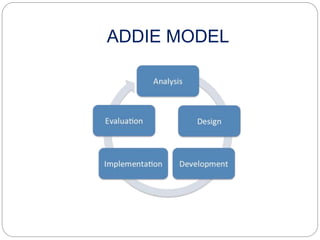
ADDIE
MODEL
Most common and popular model used for creating
e-content script writing steps are ADDIE model.
This abbreviation stands for the five phases involved
in this model. They are:-
1) Analysis
2) Design
3) Development
4) Implementation
ADDIE MODEL
1. ANALYSIS
 Identifies the learning environment.
 Basic information for the development
 Estimate time
 Budget and resources
STEPS
 Instructional goal
 Instructional analysis
 Learner analysis
 Learning objectives
2. DESIGN
 Deals with the learning objectives, assessment
instruments, exercises, content, subject matter
analysis, lesson plan and media selection.
 Preparing a planning document.
 To conduct primary analysis.
 Prepare visual and technical design.
3. DEVELOPMENT
 It is related to the creation of story board.
 Scripting the entire course content.
 Integration of all media elements into a cohesive
multimedia package.
4. IMPLEMENT
 Materials are distributed to learners.
 It develop procedures for training facilitators and
learners.
5. EVALUATION
 Feedback
 Commits of two parts; that is,
formative and summative evaluation
The initial evaluation actually happens during the
development stage. The formative phase happens while
students and instructional designers are conducting the
study, while the summative portion occurs at the end of
the program.
THANK YOU

Steps for e-content development.pptx

  • 1.
    ANISHA RAJ MATHEMATICS S1, B.Ed Steps for e-content development
  • 2.
    ADDIE MODEL Most common andpopular model used for creating e-content script writing steps are ADDIE model. This abbreviation stands for the five phases involved in this model. They are:- 1) Analysis 2) Design 3) Development 4) Implementation
  • 3.
  • 4.
    1. ANALYSIS  Identifiesthe learning environment.  Basic information for the development  Estimate time  Budget and resources STEPS  Instructional goal  Instructional analysis  Learner analysis  Learning objectives
  • 5.
    2. DESIGN  Dealswith the learning objectives, assessment instruments, exercises, content, subject matter analysis, lesson plan and media selection.  Preparing a planning document.  To conduct primary analysis.  Prepare visual and technical design.
  • 6.
    3. DEVELOPMENT  Itis related to the creation of story board.  Scripting the entire course content.  Integration of all media elements into a cohesive multimedia package.
  • 7.
    4. IMPLEMENT  Materialsare distributed to learners.  It develop procedures for training facilitators and learners.
  • 8.
    5. EVALUATION  Feedback Commits of two parts; that is, formative and summative evaluation The initial evaluation actually happens during the development stage. The formative phase happens while students and instructional designers are conducting the study, while the summative portion occurs at the end of the program.
  • 9.