ANISHA RAJ
MATHEMATICS
ROLL NO:16
S1, B Ed
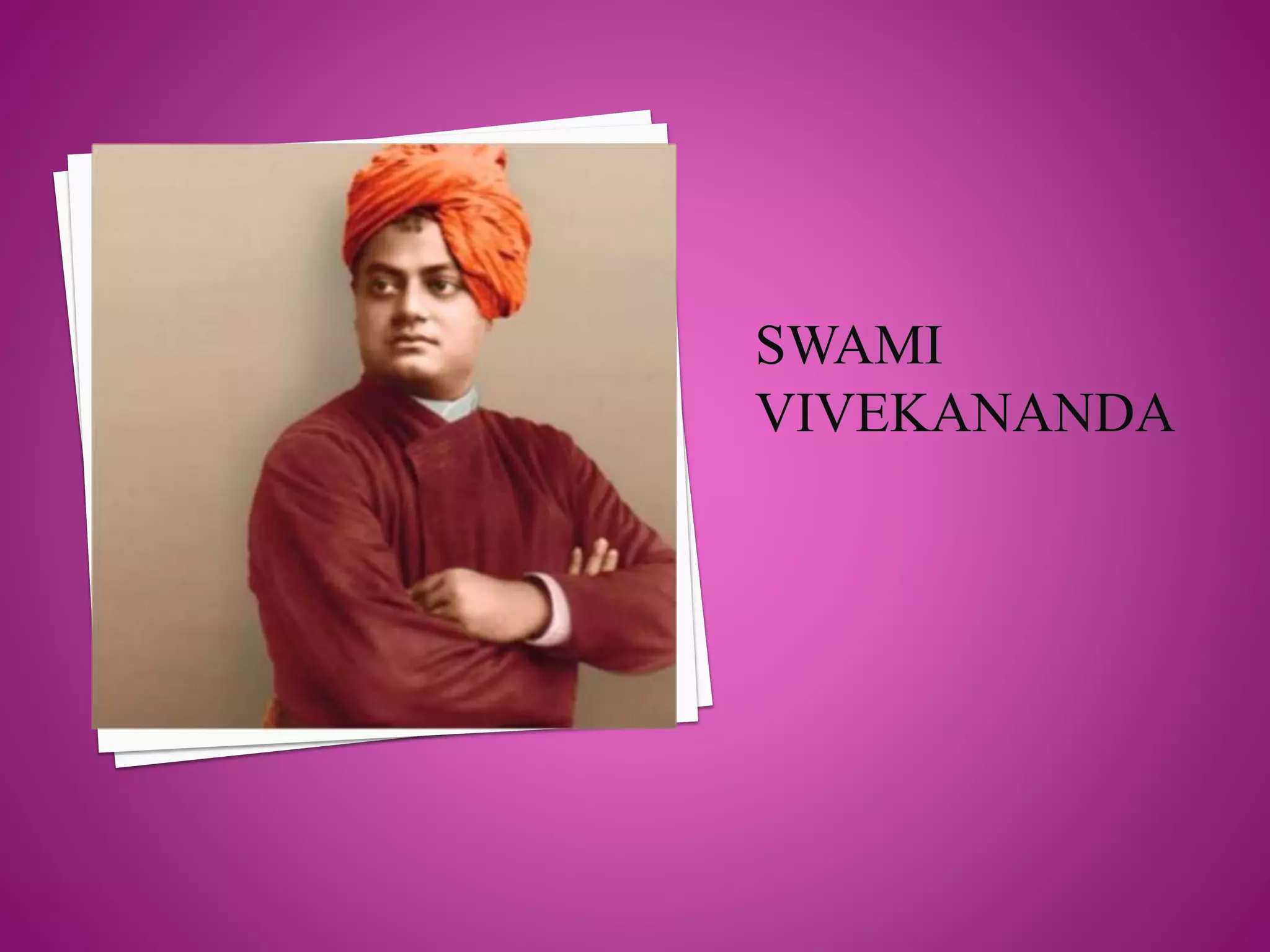
 Swami Vivekananda is known to the world as the
patriot-saint of India, as a social reformer, as a
religious leader, as a philosopher and so on.
 He believed in the essential unity of man & god.
 He tried to unite Indian spirituality & Western
materialism.
 He didn’t write a book on education but he
contributed valuable thoughts on the subject of
education that are relevant & viable today.
 He was an idealist in fixing the aims, naturalists in
suggesting methods & pragmatist in setting the
curriculum.
 He defines education as ‘the manifestation of the
perfection already in man’.
 Vedanta comes from the Sanskrit words Veda
(wisdom) and anta (end) and signifies supreme
wisdom.
 We are primarily consciousness and the individual soul
is part of the cosmic consciousness.
 Our real nature is divine.
 We are born in this world to realise this divinity.
 He defines education as:- process by which character
is formed strength of mind increased, and intellect
sharpened, as a result of which one can stand on one
own’s feet.
 He saw that the problem facing the country, is the
production of enough food for the hungry
millions.
 He wanted Indians to master Western science and
technology and improve their economic condition.
 He was not against the use of machines and
technology. But he taught us that we should be
masters of machines and not their slaves.
 The individual development is not a full development
of our nation, so he needs to give education to the
society or common people.
 He takes mass education as an instrument to improve
the individual as well as society.
 He pointed out that the neglect of the masses was the
main cause of India’s downfall.
 The important features of his scheme of female
education are to make them strong, fearless and
conscious of their chastity and dignity.
 He insists that men and women are equally
competent not only in the academic matters, but
also must have equal companion in the home and
family.
 Vivekananda was not in favour of the prevalent system
of education in the country, as the education in India
was influenced by the British system of education.
 Curriculum should synthesize the knowledge and
wisdom of the east and the west.
 He also attached great importance to the physical
development of the individual for which he wanted to
include physical education as an integral part of the
curriculum.
 To ensure the self development of the learner.
 To facilitate character formation.
 To optimise physical, mental, moral and spiritual
development.
 To promote universal brotherhood.
 He revived the spirit of humanism in education.
 He laid stress on the character development
education.
 He advocated the education of the masses which
implies adult education and free and compulsory
education regardless of caste creed or colour
 He considered the education of women as the
chief instrument of national regeneration.
 He stressed the teaching of western learning.
INDIAN THINKER - SWAMI VIVEKANANTHAN.pptx

INDIAN THINKER - SWAMI VIVEKANANTHAN.pptx

  • 1.
  • 3.
     Swami Vivekanandais known to the world as the patriot-saint of India, as a social reformer, as a religious leader, as a philosopher and so on.  He believed in the essential unity of man & god.  He tried to unite Indian spirituality & Western materialism.  He didn’t write a book on education but he contributed valuable thoughts on the subject of education that are relevant & viable today.  He was an idealist in fixing the aims, naturalists in suggesting methods & pragmatist in setting the curriculum.
  • 5.
     He defineseducation as ‘the manifestation of the perfection already in man’.  Vedanta comes from the Sanskrit words Veda (wisdom) and anta (end) and signifies supreme wisdom.  We are primarily consciousness and the individual soul is part of the cosmic consciousness.  Our real nature is divine.  We are born in this world to realise this divinity.  He defines education as:- process by which character is formed strength of mind increased, and intellect sharpened, as a result of which one can stand on one own’s feet.
  • 6.
     He sawthat the problem facing the country, is the production of enough food for the hungry millions.  He wanted Indians to master Western science and technology and improve their economic condition.  He was not against the use of machines and technology. But he taught us that we should be masters of machines and not their slaves.
  • 7.
     The individualdevelopment is not a full development of our nation, so he needs to give education to the society or common people.  He takes mass education as an instrument to improve the individual as well as society.  He pointed out that the neglect of the masses was the main cause of India’s downfall.
  • 8.
     The importantfeatures of his scheme of female education are to make them strong, fearless and conscious of their chastity and dignity.  He insists that men and women are equally competent not only in the academic matters, but also must have equal companion in the home and family.
  • 9.
     Vivekananda wasnot in favour of the prevalent system of education in the country, as the education in India was influenced by the British system of education.  Curriculum should synthesize the knowledge and wisdom of the east and the west.  He also attached great importance to the physical development of the individual for which he wanted to include physical education as an integral part of the curriculum.
  • 10.
     To ensurethe self development of the learner.  To facilitate character formation.  To optimise physical, mental, moral and spiritual development.  To promote universal brotherhood.
  • 11.
     He revivedthe spirit of humanism in education.  He laid stress on the character development education.  He advocated the education of the masses which implies adult education and free and compulsory education regardless of caste creed or colour  He considered the education of women as the chief instrument of national regeneration.  He stressed the teaching of western learning.