IIIrd Semesester B. pharmacy
Physical Pharmaceutics-I
Unit-II
State of matter and properties
of matter (Part-1)
(State of matter, properties of matter and changes in
state of matter)
Miss. Pooja D. Bhandare
(Assistant professor)
Kandhar college of pharmacy
• STATE OF MATTER
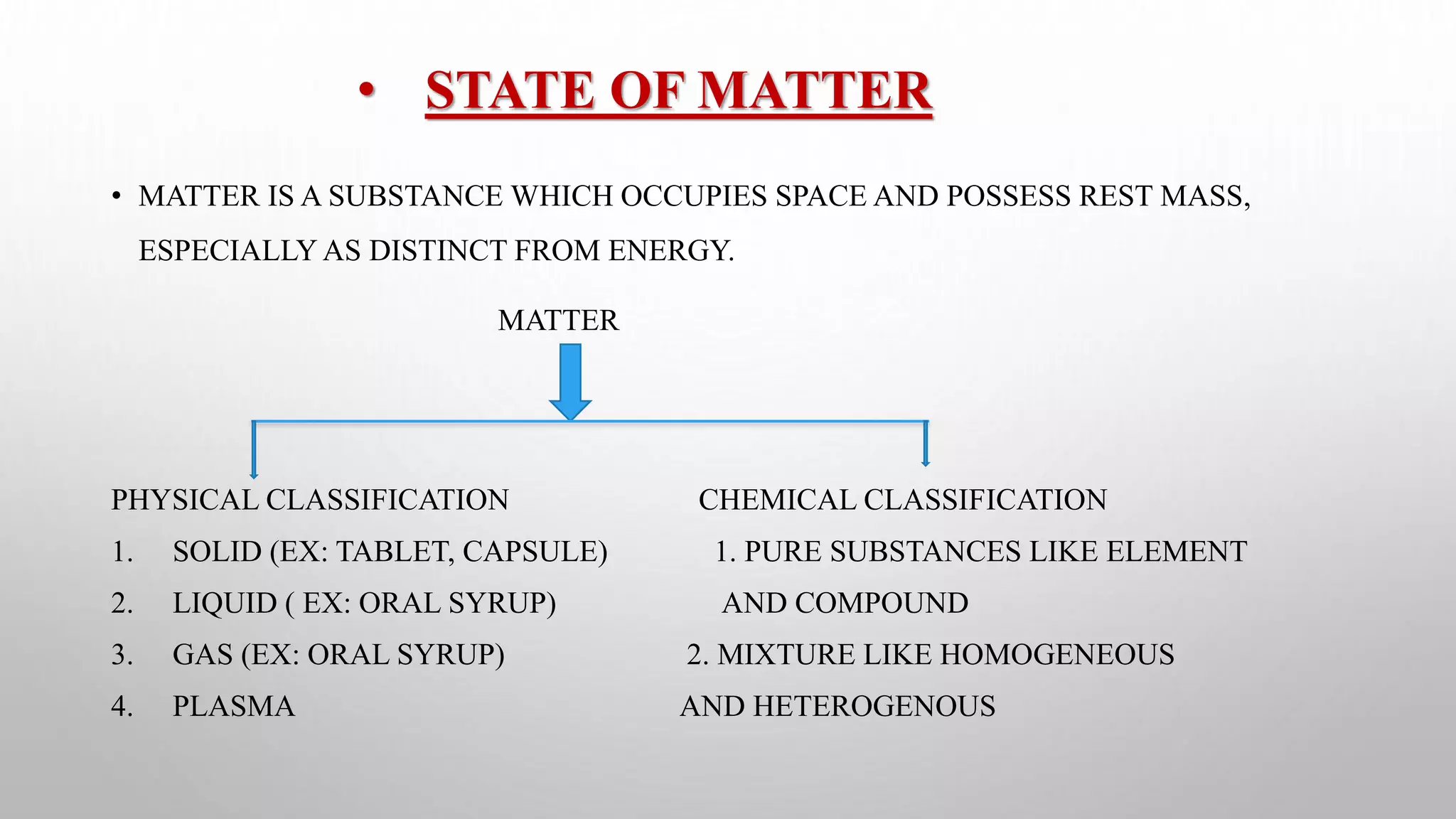
• MATTER IS A SUBSTANCE WHICH OCCUPIES SPACE AND POSSESS REST MASS,
ESPECIALLY AS DISTINCT FROM ENERGY.
MATTER
PHYSICAL CLASSIFICATION CHEMICAL CLASSIFICATION
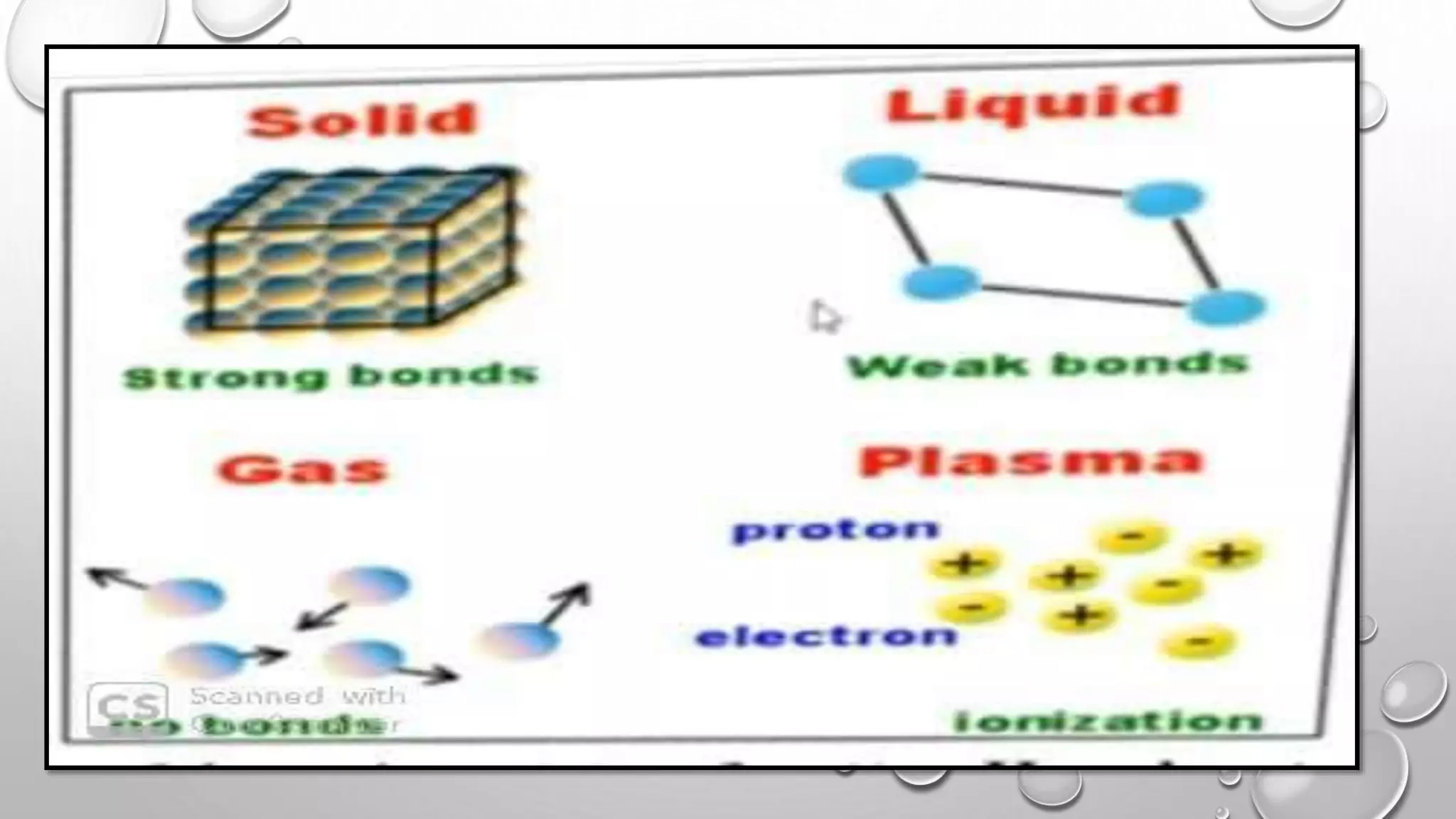
1. SOLID (EX: TABLET, CAPSULE) 1. PURE SUBSTANCES LIKE ELEMENT
2. LIQUID ( EX: ORAL SYRUP) AND COMPOUND
3. GAS (EX: ORAL SYRUP) 2. MIXTURE LIKE HOMOGENEOUS
4. PLASMA AND HETEROGENOUS
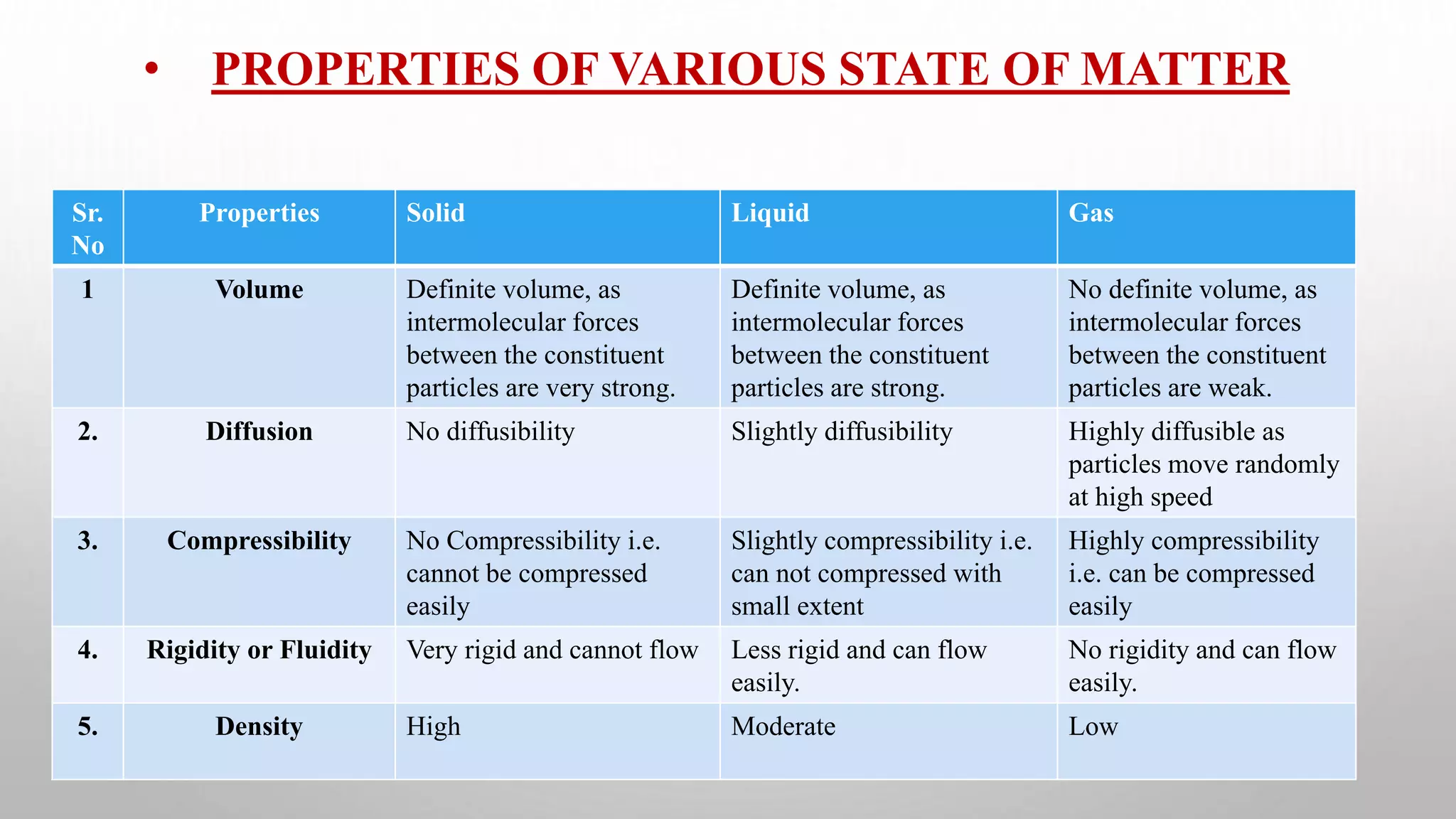
• PROPERTIES OF VARIOUS STATE OF MATTER
Sr.
No
Properties Solid Liquid Gas
1 Volume Definite volume, as
intermolecular forces
between the constituent
particles are very strong.
Definite volume, as
intermolecular forces
between the constituent
particles are strong.
No definite volume, as
intermolecular forces
between the constituent
particles are weak.
2. Diffusion No diffusibility Slightly diffusibility Highly diffusible as
particles move randomly
at high speed
3. Compressibility No Compressibility i.e.
cannot be compressed
easily
Slightly compressibility i.e.
can not compressed with
small extent
Highly compressibility
i.e. can be compressed
easily
4. Rigidity or Fluidity Very rigid and cannot flow Less rigid and can flow
easily.
No rigidity and can flow
easily.
5. Density High Moderate Low
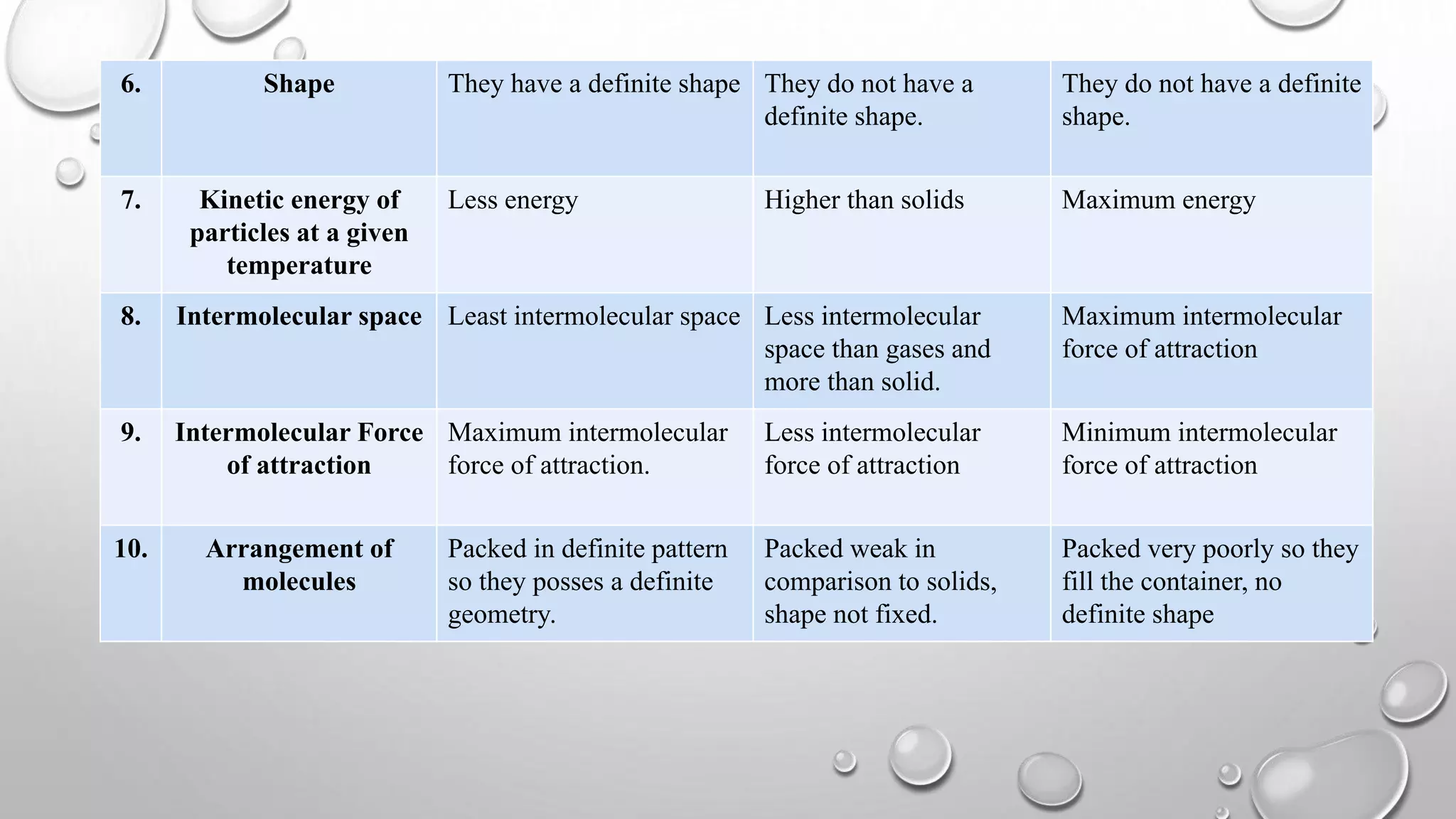
6. Shape They have a definite shape They do not have a
definite shape.
They do not have a definite
shape.
7. Kinetic energy of
particles at a given
temperature
Less energy Higher than solids Maximum energy
8. Intermolecular space Least intermolecular space Less intermolecular
space than gases and
more than solid.
Maximum intermolecular
force of attraction
9. Intermolecular Force
of attraction
Maximum intermolecular
force of attraction.
Less intermolecular
force of attraction
Minimum intermolecular
force of attraction
10. Arrangement of
molecules
Packed in definite pattern
so they posses a definite
geometry.
Packed weak in
comparison to solids,
shape not fixed.
Packed very poorly so they
fill the container, no
definite shape
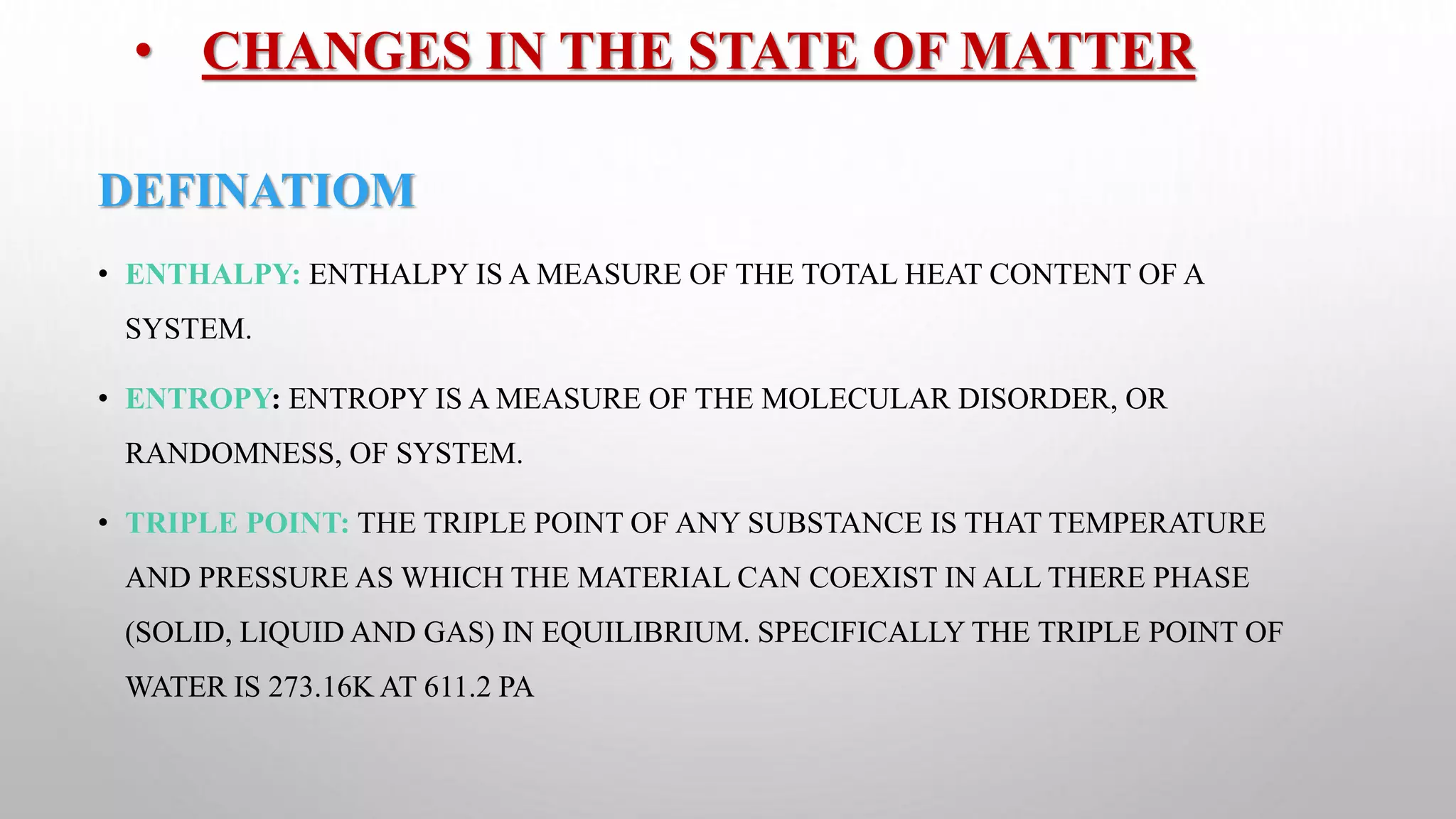
• CHANGES IN THE STATE OF MATTER
DEFINATIOM
• ENTHALPY: ENTHALPY IS A MEASURE OF THE TOTAL HEAT CONTENT OF A
SYSTEM.
• ENTROPY: ENTROPY IS A MEASURE OF THE MOLECULAR DISORDER, OR
RANDOMNESS, OF SYSTEM.
• TRIPLE POINT: THE TRIPLE POINT OF ANY SUBSTANCE IS THAT TEMPERATURE
AND PRESSURE AS WHICH THE MATERIAL CAN COEXIST IN ALL THERE PHASE
(SOLID, LIQUID AND GAS) IN EQUILIBRIUM. SPECIFICALLY THE TRIPLE POINT OF
WATER IS 273.16K AT 611.2 PA
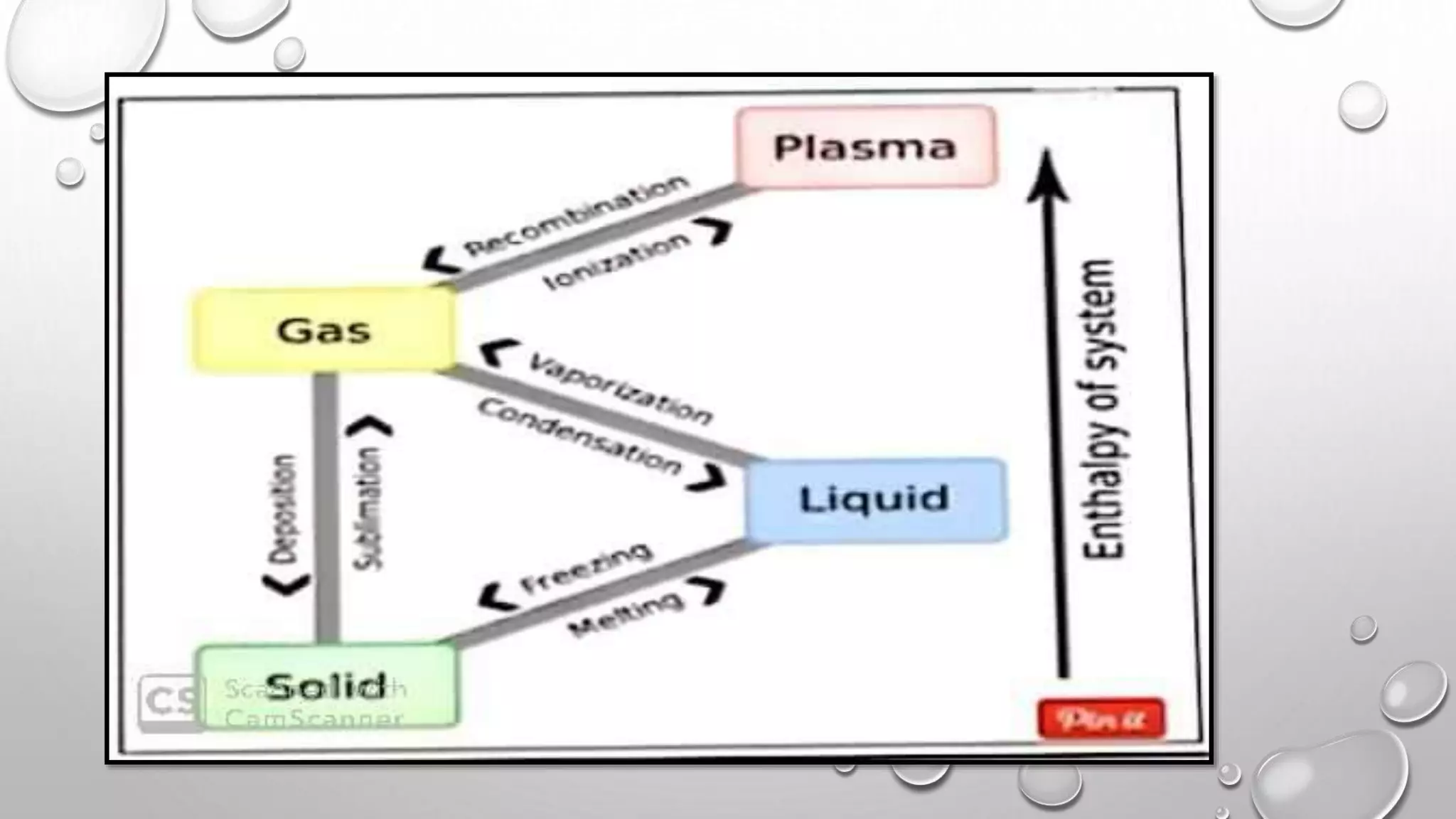
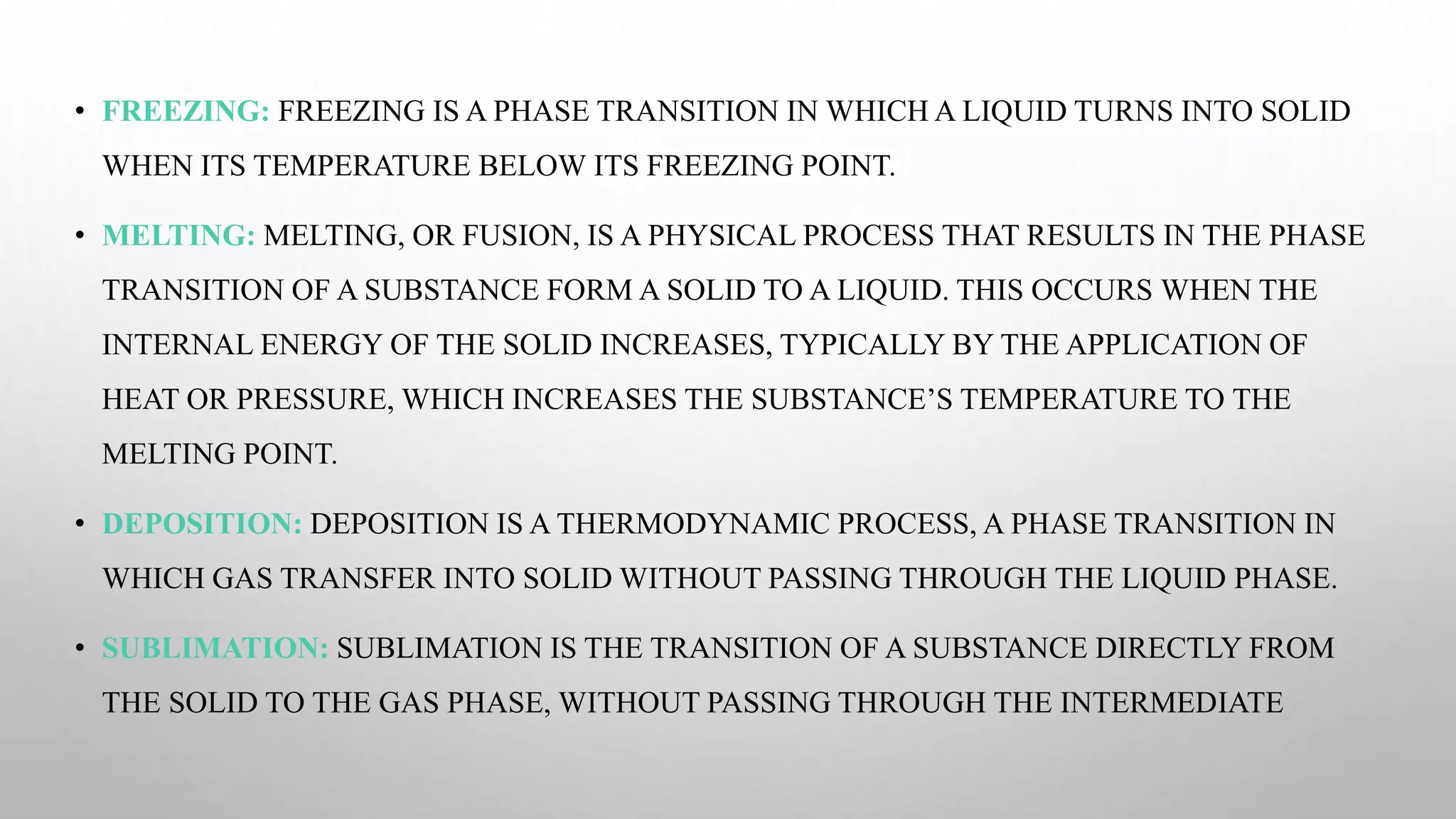
• FREEZING: FREEZING IS A PHASE TRANSITION IN WHICH A LIQUID TURNS INTO SOLID
WHEN ITS TEMPERATURE BELOW ITS FREEZING POINT.
• MELTING: MELTING, OR FUSION, IS A PHYSICAL PROCESS THAT RESULTS IN THE PHASE
TRANSITION OF A SUBSTANCE FORM A SOLID TO A LIQUID. THIS OCCURS WHEN THE
INTERNAL ENERGY OF THE SOLID INCREASES, TYPICALLY BY THE APPLICATION OF
HEAT OR PRESSURE, WHICH INCREASES THE SUBSTANCE’S TEMPERATURE TO THE
MELTING POINT.
• DEPOSITION: DEPOSITION IS A THERMODYNAMIC PROCESS, A PHASE TRANSITION IN
WHICH GAS TRANSFER INTO SOLID WITHOUT PASSING THROUGH THE LIQUID PHASE.
• SUBLIMATION: SUBLIMATION IS THE TRANSITION OF A SUBSTANCE DIRECTLY FROM
THE SOLID TO THE GAS PHASE, WITHOUT PASSING THROUGH THE INTERMEDIATE
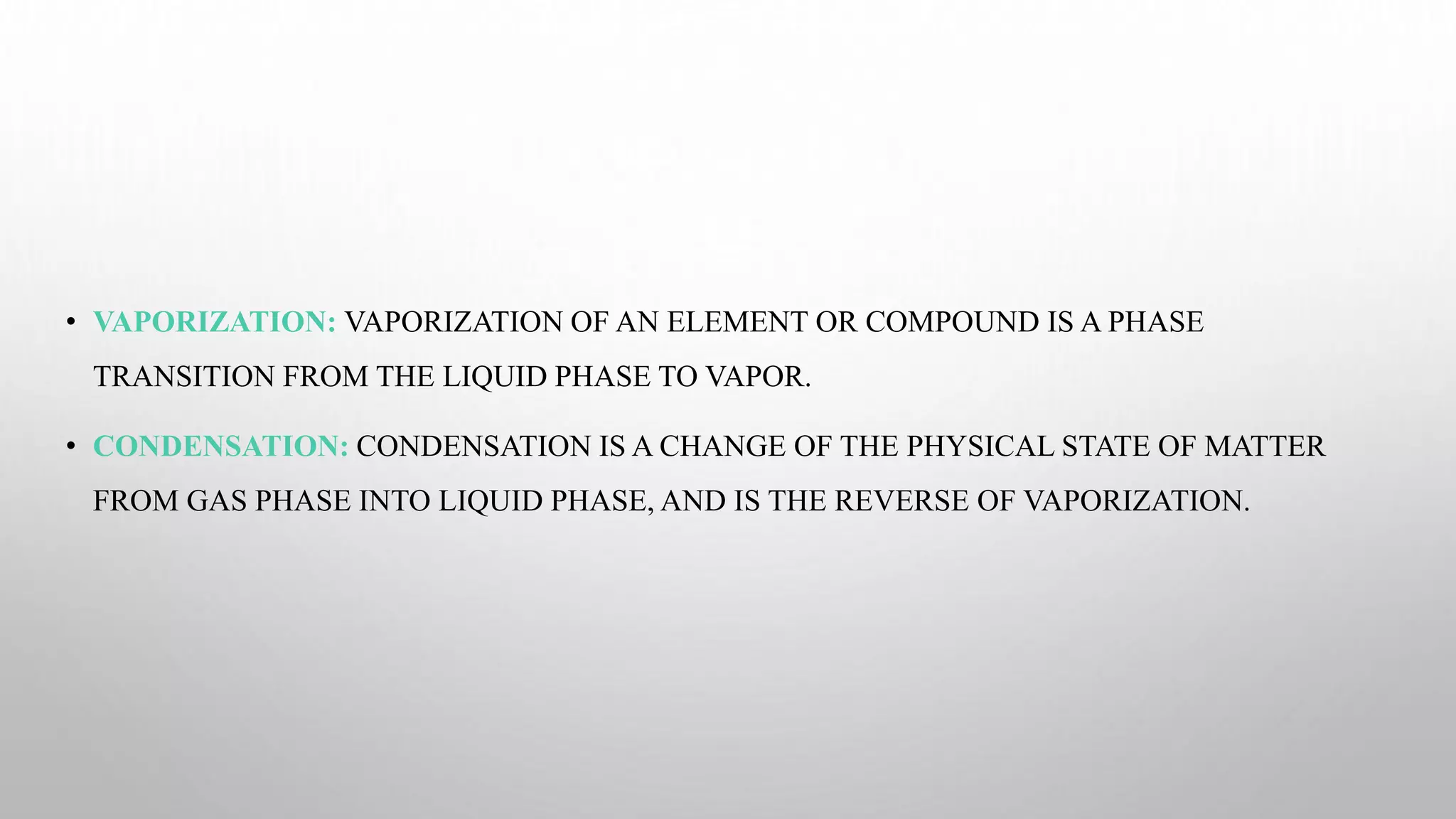
• VAPORIZATION: VAPORIZATION OF AN ELEMENT OR COMPOUND IS A PHASE
TRANSITION FROM THE LIQUID PHASE TO VAPOR.
• CONDENSATION: CONDENSATION IS A CHANGE OF THE PHYSICAL STATE OF MATTER
FROM GAS PHASE INTO LIQUID PHASE, AND IS THE REVERSE OF VAPORIZATION.
THANK
YOU!

State of matter and properties of matter(part 1)

  • 1.
    IIIrd Semesester B.pharmacy Physical Pharmaceutics-I Unit-II State of matter and properties of matter (Part-1) (State of matter, properties of matter and changes in state of matter) Miss. Pooja D. Bhandare (Assistant professor) Kandhar college of pharmacy
  • 2.
    • STATE OFMATTER • MATTER IS A SUBSTANCE WHICH OCCUPIES SPACE AND POSSESS REST MASS, ESPECIALLY AS DISTINCT FROM ENERGY. MATTER PHYSICAL CLASSIFICATION CHEMICAL CLASSIFICATION 1. SOLID (EX: TABLET, CAPSULE) 1. PURE SUBSTANCES LIKE ELEMENT 2. LIQUID ( EX: ORAL SYRUP) AND COMPOUND 3. GAS (EX: ORAL SYRUP) 2. MIXTURE LIKE HOMOGENEOUS 4. PLASMA AND HETEROGENOUS
  • 4.
    • PROPERTIES OFVARIOUS STATE OF MATTER Sr. No Properties Solid Liquid Gas 1 Volume Definite volume, as intermolecular forces between the constituent particles are very strong. Definite volume, as intermolecular forces between the constituent particles are strong. No definite volume, as intermolecular forces between the constituent particles are weak. 2. Diffusion No diffusibility Slightly diffusibility Highly diffusible as particles move randomly at high speed 3. Compressibility No Compressibility i.e. cannot be compressed easily Slightly compressibility i.e. can not compressed with small extent Highly compressibility i.e. can be compressed easily 4. Rigidity or Fluidity Very rigid and cannot flow Less rigid and can flow easily. No rigidity and can flow easily. 5. Density High Moderate Low
  • 5.
    6. Shape Theyhave a definite shape They do not have a definite shape. They do not have a definite shape. 7. Kinetic energy of particles at a given temperature Less energy Higher than solids Maximum energy 8. Intermolecular space Least intermolecular space Less intermolecular space than gases and more than solid. Maximum intermolecular force of attraction 9. Intermolecular Force of attraction Maximum intermolecular force of attraction. Less intermolecular force of attraction Minimum intermolecular force of attraction 10. Arrangement of molecules Packed in definite pattern so they posses a definite geometry. Packed weak in comparison to solids, shape not fixed. Packed very poorly so they fill the container, no definite shape
  • 6.
    • CHANGES INTHE STATE OF MATTER DEFINATIOM • ENTHALPY: ENTHALPY IS A MEASURE OF THE TOTAL HEAT CONTENT OF A SYSTEM. • ENTROPY: ENTROPY IS A MEASURE OF THE MOLECULAR DISORDER, OR RANDOMNESS, OF SYSTEM. • TRIPLE POINT: THE TRIPLE POINT OF ANY SUBSTANCE IS THAT TEMPERATURE AND PRESSURE AS WHICH THE MATERIAL CAN COEXIST IN ALL THERE PHASE (SOLID, LIQUID AND GAS) IN EQUILIBRIUM. SPECIFICALLY THE TRIPLE POINT OF WATER IS 273.16K AT 611.2 PA
  • 8.
    • FREEZING: FREEZINGIS A PHASE TRANSITION IN WHICH A LIQUID TURNS INTO SOLID WHEN ITS TEMPERATURE BELOW ITS FREEZING POINT. • MELTING: MELTING, OR FUSION, IS A PHYSICAL PROCESS THAT RESULTS IN THE PHASE TRANSITION OF A SUBSTANCE FORM A SOLID TO A LIQUID. THIS OCCURS WHEN THE INTERNAL ENERGY OF THE SOLID INCREASES, TYPICALLY BY THE APPLICATION OF HEAT OR PRESSURE, WHICH INCREASES THE SUBSTANCE’S TEMPERATURE TO THE MELTING POINT. • DEPOSITION: DEPOSITION IS A THERMODYNAMIC PROCESS, A PHASE TRANSITION IN WHICH GAS TRANSFER INTO SOLID WITHOUT PASSING THROUGH THE LIQUID PHASE. • SUBLIMATION: SUBLIMATION IS THE TRANSITION OF A SUBSTANCE DIRECTLY FROM THE SOLID TO THE GAS PHASE, WITHOUT PASSING THROUGH THE INTERMEDIATE
  • 9.
    • VAPORIZATION: VAPORIZATIONOF AN ELEMENT OR COMPOUND IS A PHASE TRANSITION FROM THE LIQUID PHASE TO VAPOR. • CONDENSATION: CONDENSATION IS A CHANGE OF THE PHYSICAL STATE OF MATTER FROM GAS PHASE INTO LIQUID PHASE, AND IS THE REVERSE OF VAPORIZATION.
  • 10.