STARBUCKS COFFE
BY,
JAYDEV RATHOD
CONTENTS
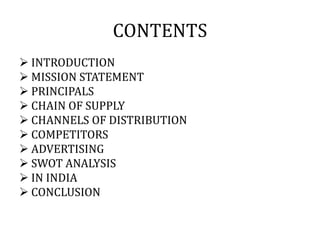
 INTRODUCTION
 MISSION STATEMENT
 PRINCIPALS
 CHAIN OF SUPPLY
 CHANNELS OF DISTRIBUTION
 COMPETITORS
 ADVERTISING
 SWOT ANALYSIS
 IN INDIA
 CONCLUSION
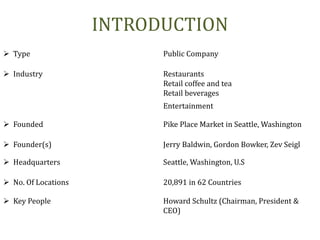
INTRODUCTION
 Type Public Company
 Industry Restaurants
Retail coffee and tea
Retail beverages
Entertainment
 Founded Pike Place Market in Seattle, Washington
 Founder(s) Jerry Baldwin, Gordon Bowker, Zev Seigl
 Headquarters Seattle, Washington, U.S
 No. Of Locations 20,891 in 62 Countries
 Key People Howard Schultz (Chairman, President &
CEO)
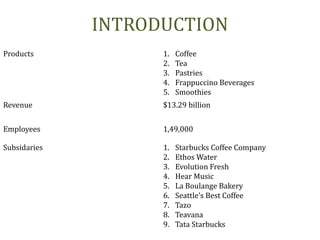
INTRODUCTION
Products 1. Coffee
2. Tea
3. Pastries
4. Frappuccino Beverages
5. Smoothies
Revenue $13.29 billion
Employees 1,49,000
Subsidaries 1. Starbucks Coffee Company
2. Ethos Water
3. Evolution Fresh
4. Hear Music
5. La Boulange Bakery
6. Seattle’s Best Coffee
7. Tazo
8. Teavana
9. Tata Starbucks
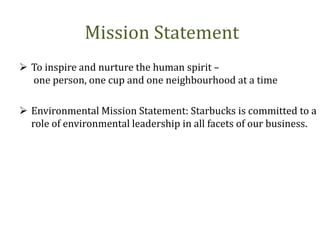
Mission Statement
 To inspire and nurture the human spirit –
one person, one cup and one neighbourhood at a time
 Environmental Mission Statement: Starbucks is committed to a
role of environmental leadership in all facets of our business.
PRINCIPLES
 Coffee: Apply highest standards of excellence in purchasing, roasting
and fresh delivery of coffee
 Partners: Provide a great work experience and treat each other with
respect and dignity
 Customers: Develop enthusiastically satisfied customers all the time
 Neighbourhood: Positive contribution to communities and
environment
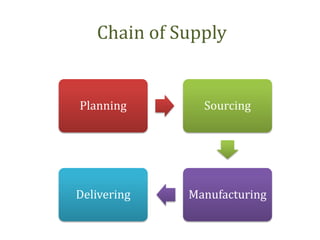
Chain of Supply
Planning Sourcing
ManufacturingDelivering
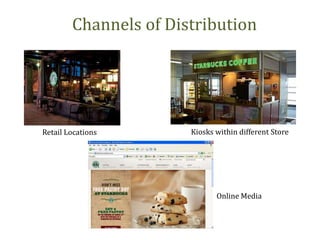
Channels of Distribution
Retail Locations Kiosks within different Store
Online Media
Competitors
 Dunkin’ Donuts
 McDonalds
 Caribou Coffee
Advertising
 Word-of-mouth advertising through “third home”
 Providing quality products and services
 Viral marketing
SWOT Analysis
Strengths:
• biggest and best in the
business
• Focuses on consistency
in delivering positive
consumer experience
• Engaging in smart joint
ventures with the right
companies
• Spends less than 1% of
its annual revenues on
advertising
• Quality
Weakness:
• Entire business rests on the
coffee industry
• High price
Opportunities:
• New Market Opportunities
Internationally
• New Products
• Form partnerships with other
coffee companies
Threats:
• The threat from new entry
• Smaller coffee houses-
Privately owned.
In India
 January 2011, 50:50 joint venture with Tata Coffee
 19th, October 2012- Opens first store in India in Mumbai
 Presently, 15 outlets in India – 7 in Delhi, 8 in Mumbai
 International Products + Indian style product offerings such as
Tandoori Paneer Roll, Elaichi Mawa Croissant, Murg Tikka Panini
and Chai Tea Latte to suit Indian customers
 Competitors in India Include: Café Coffee Day, Barista and Costa
Coffee
Corporate Social Responsibility
1. Commitment to Environment
 Building greener Stores
 Recycling and Reducing waste
 Cups and Materials
 Climate Change
2. Commitment to Communities through Star Bucks Foundation
 Community Service
 Youth Leadership
 Farming Communities
 Access to Get Clean Water
 Fostering Education in China

Starbucks coffe

  • 1.
  • 2.
    CONTENTS  INTRODUCTION  MISSIONSTATEMENT  PRINCIPALS  CHAIN OF SUPPLY  CHANNELS OF DISTRIBUTION  COMPETITORS  ADVERTISING  SWOT ANALYSIS  IN INDIA  CONCLUSION
  • 3.
    INTRODUCTION  Type PublicCompany  Industry Restaurants Retail coffee and tea Retail beverages Entertainment  Founded Pike Place Market in Seattle, Washington  Founder(s) Jerry Baldwin, Gordon Bowker, Zev Seigl  Headquarters Seattle, Washington, U.S  No. Of Locations 20,891 in 62 Countries  Key People Howard Schultz (Chairman, President & CEO)
  • 4.
    INTRODUCTION Products 1. Coffee 2.Tea 3. Pastries 4. Frappuccino Beverages 5. Smoothies Revenue $13.29 billion Employees 1,49,000 Subsidaries 1. Starbucks Coffee Company 2. Ethos Water 3. Evolution Fresh 4. Hear Music 5. La Boulange Bakery 6. Seattle’s Best Coffee 7. Tazo 8. Teavana 9. Tata Starbucks
  • 5.
    Mission Statement  Toinspire and nurture the human spirit – one person, one cup and one neighbourhood at a time  Environmental Mission Statement: Starbucks is committed to a role of environmental leadership in all facets of our business.
  • 6.
    PRINCIPLES  Coffee: Applyhighest standards of excellence in purchasing, roasting and fresh delivery of coffee  Partners: Provide a great work experience and treat each other with respect and dignity  Customers: Develop enthusiastically satisfied customers all the time  Neighbourhood: Positive contribution to communities and environment
  • 7.
    Chain of Supply PlanningSourcing ManufacturingDelivering
  • 8.
    Channels of Distribution RetailLocations Kiosks within different Store Online Media
  • 9.
    Competitors  Dunkin’ Donuts McDonalds  Caribou Coffee
  • 10.
    Advertising  Word-of-mouth advertisingthrough “third home”  Providing quality products and services  Viral marketing
  • 11.
    SWOT Analysis Strengths: • biggestand best in the business • Focuses on consistency in delivering positive consumer experience • Engaging in smart joint ventures with the right companies • Spends less than 1% of its annual revenues on advertising • Quality Weakness: • Entire business rests on the coffee industry • High price Opportunities: • New Market Opportunities Internationally • New Products • Form partnerships with other coffee companies Threats: • The threat from new entry • Smaller coffee houses- Privately owned.
  • 12.
    In India  January2011, 50:50 joint venture with Tata Coffee  19th, October 2012- Opens first store in India in Mumbai  Presently, 15 outlets in India – 7 in Delhi, 8 in Mumbai  International Products + Indian style product offerings such as Tandoori Paneer Roll, Elaichi Mawa Croissant, Murg Tikka Panini and Chai Tea Latte to suit Indian customers  Competitors in India Include: Café Coffee Day, Barista and Costa Coffee
  • 13.
    Corporate Social Responsibility 1.Commitment to Environment  Building greener Stores  Recycling and Reducing waste  Cups and Materials  Climate Change 2. Commitment to Communities through Star Bucks Foundation  Community Service  Youth Leadership  Farming Communities  Access to Get Clean Water  Fostering Education in China