Starbucks
Corporate Social Responsibility Report
Julianne Rowe
History
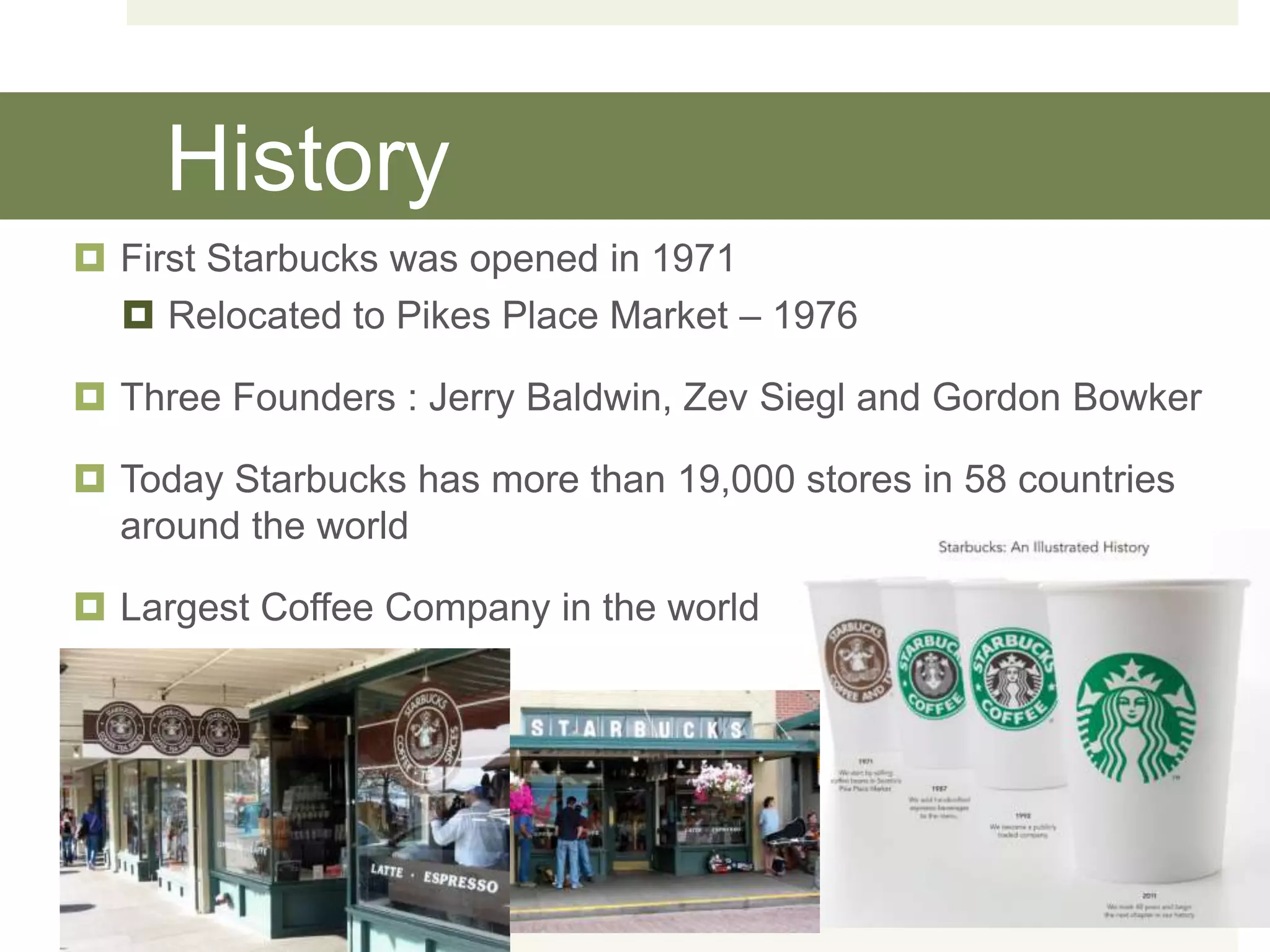
 First Starbucks was opened in 1971
   Relocated to Pikes Place Market – 1976

 Three Founders : Jerry Baldwin, Zev Siegl and Gordon Bowker

 Today Starbucks has more than 19,000 stores in 58 countries
  around the world

 Largest Coffee Company in the world
Environmental Stewardship
 Focused on the long-term stability of coffee-growing
  communities

 Through innovative programs we’re taking action to address
  climate change and the impact it will have on the long-term
  supply of our coffee

 We’re working to reduce our environmental impact
Recycling
Reusable Cups
Renewable Energy
Energy Conservation
Water Conservation
Green Buildings
Recycling
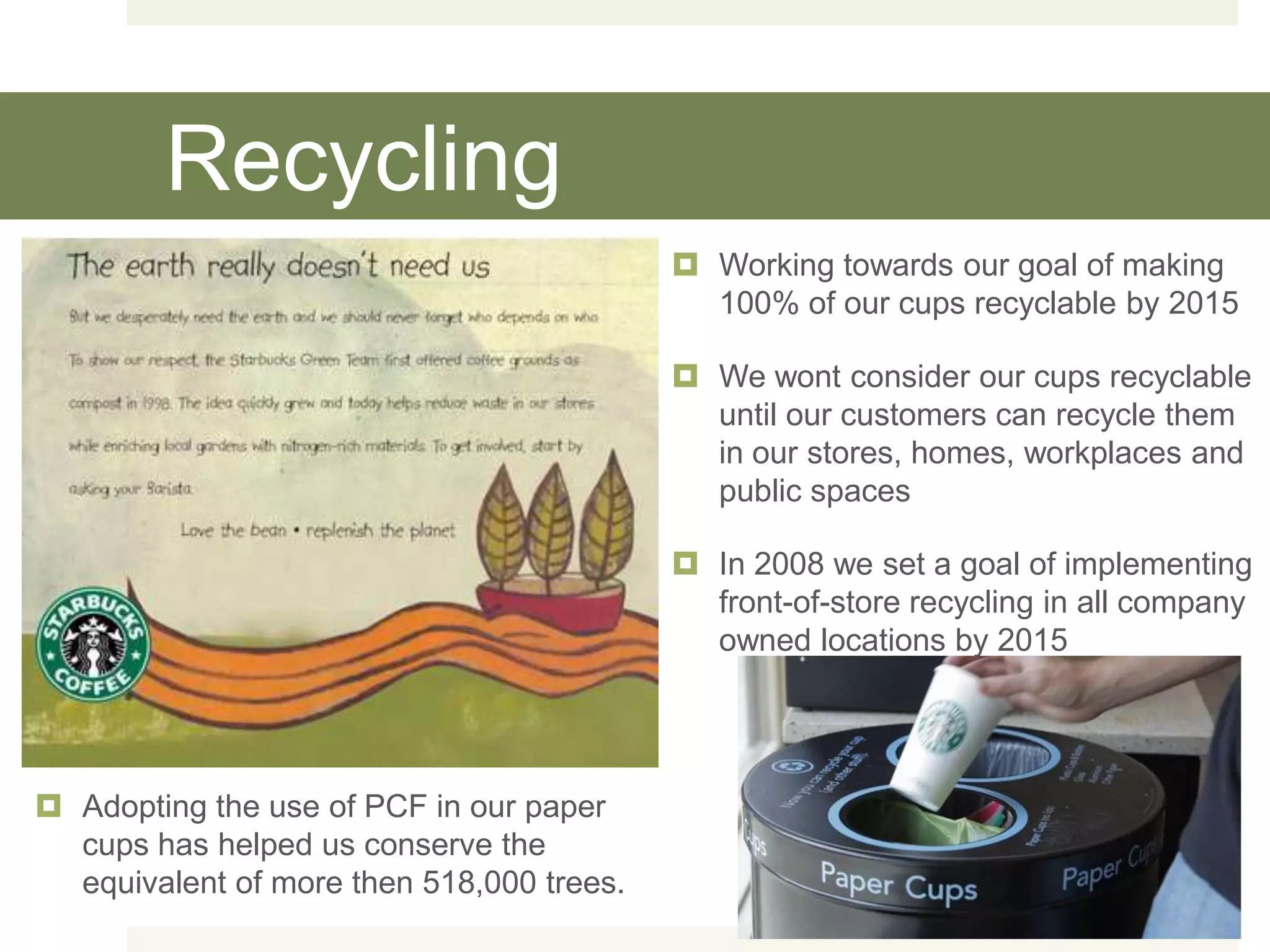
                                            Working towards our goal of making
                                             100% of our cups recyclable by 2015

                                            We wont consider our cups recyclable
                                             until our customers can recycle them
                                             in our stores, homes, workplaces and
                                             public spaces

                                            In 2008 we set a goal of implementing
                                             front-of-store recycling in all company
                                             owned locations by 2015


 Adopting the use of PCF in our paper
  cups has helped us conserve the
  equivalent of more then 518,000 trees.
Reusable Cups
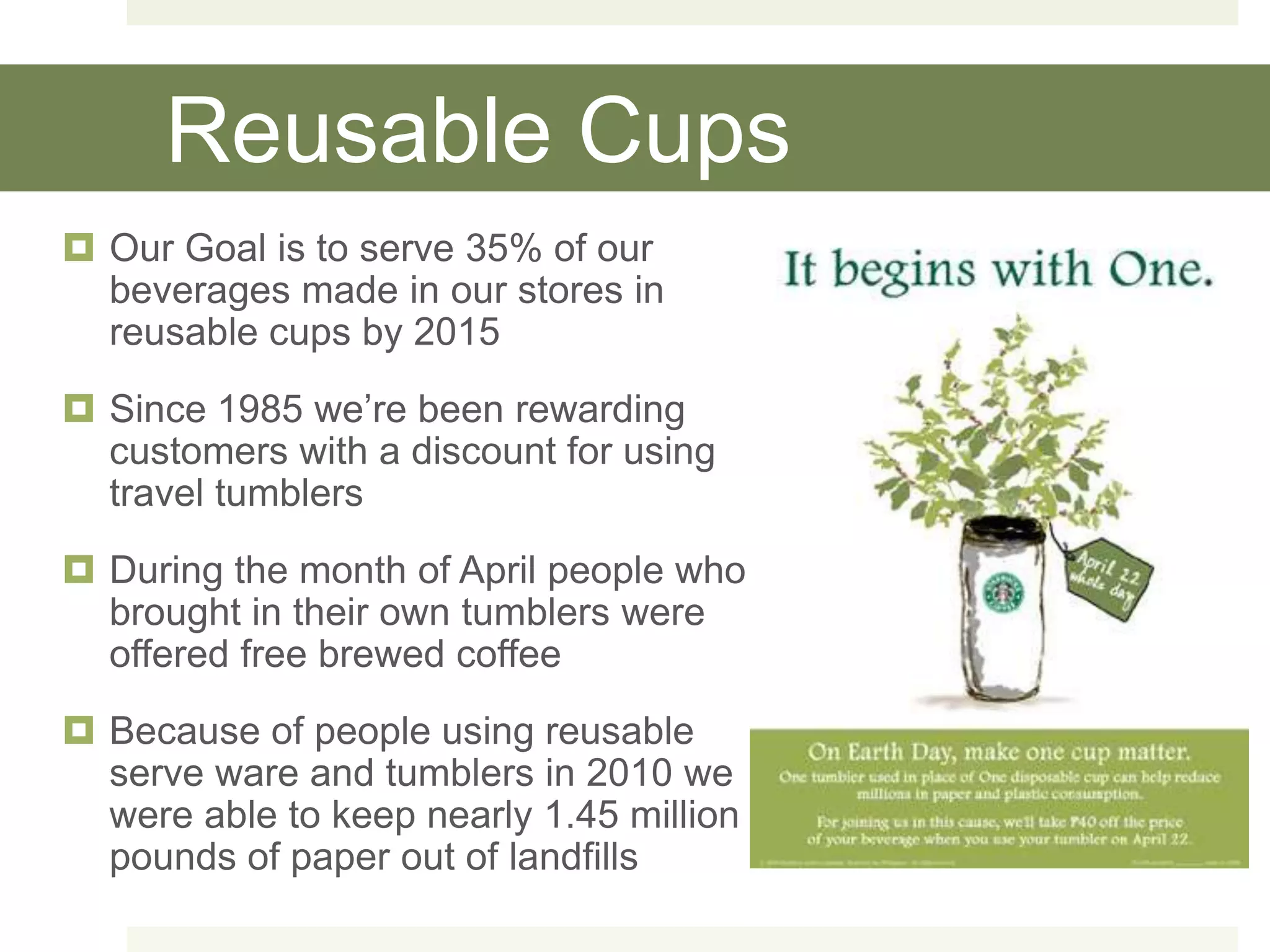
 Our Goal is to serve 35% of our
  beverages made in our stores in
  reusable cups by 2015
 Since 1985 we’re been rewarding
  customers with a discount for using
  travel tumblers
 During the month of April people who
  brought in their own tumblers were
  offered free brewed coffee
 Because of people using reusable
  serve ware and tumblers in 2010 we
  were able to keep nearly 1.45 million
  pounds of paper out of landfills
Energy
 Replaced incandescent and halogen
  lighting with more efficient LED lighting

 By 2010 we were able to complete
  installation of LED lights in more than
  7000 company-owned stores. This has
  reduced our energy consumption by 3.3%
  from 2008-2010

 Goal to achieve 25% reduction in energy
  use by 2015

 In 2010 we were named among the top
  five green power purchasers in the
  country by the Environmental Protection
  Agency
Water Conservation
 Water is the most vital resource our business relies on.

 We set a goal to reduce water consumption by 25% by
  2015 as a result of several proactive measures we had
  already decreased our water use by 22% between 2008
  and 2010.
Green Buildings
 All new company-owned store will be built to achieve LEED
  certifications by the US Green Building Council (USGBC)
 2009 we became one of the first retailers to join USGBC’s LEED
  Volume Certification pilot program

   Seattle (University Village) -
    The community table is made
    of wood from a fallen tree
    recovered from a nearby
    neighborhood
   London (Paris Disney location)
    The countertop material
    contains recycled cell phone
    parts
   Fukuoka Japan- rainwater
    collected from the roof is used
    to nourish the surrounding
    landscape
Community
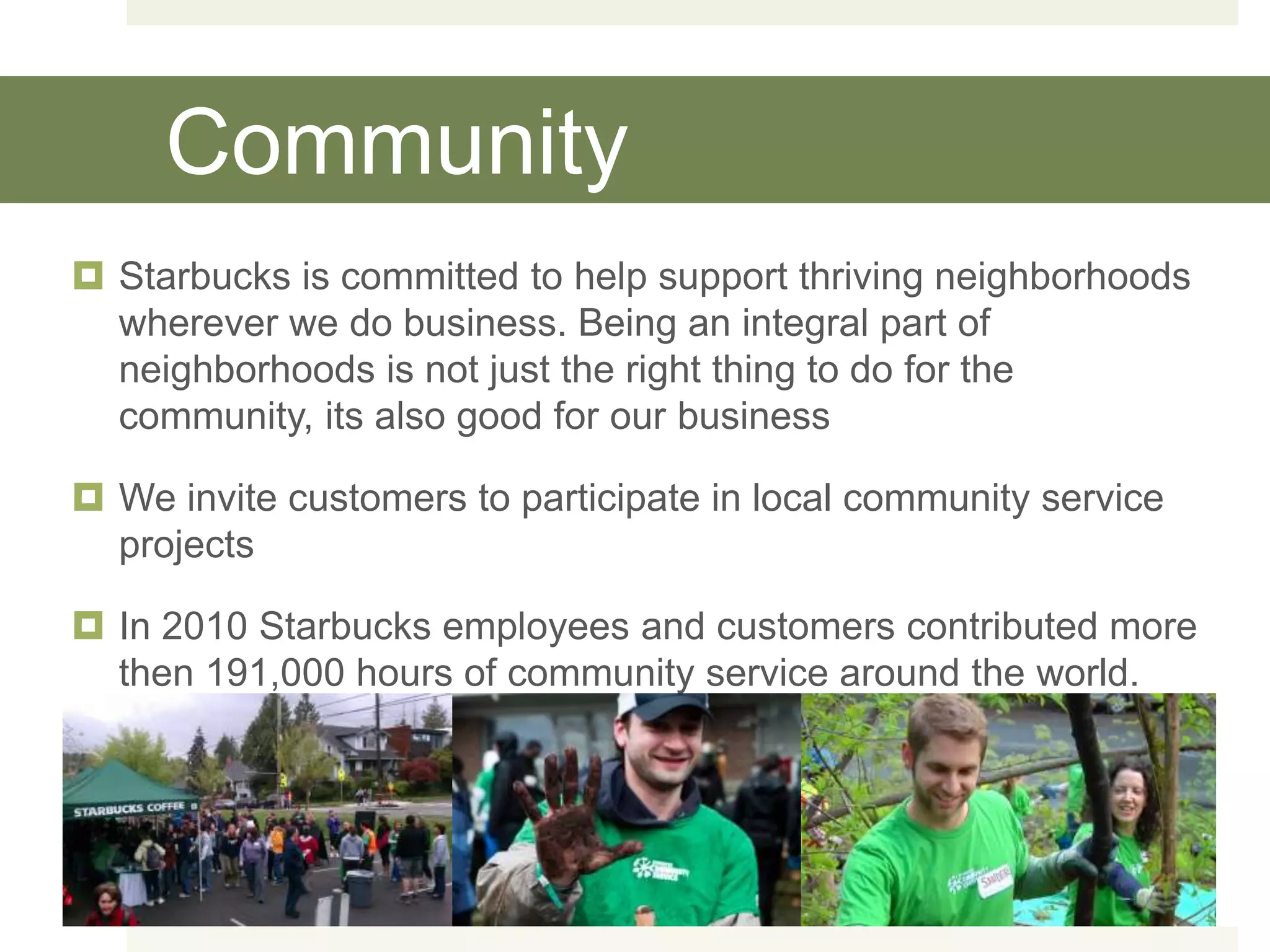
 Starbucks is committed to help support thriving neighborhoods
  wherever we do business. Being an integral part of
  neighborhoods is not just the right thing to do for the
  community, its also good for our business

 We invite customers to participate in local community service
  projects

 In 2010 Starbucks employees and customers contributed more
  then 191,000 hours of community service around the world.
Youth Action Grants
 Through Youth Action Grants, In 2010, We were able to support the
  engagement of more than 74,000 young people since 2008, who in
  turn mobilized more than 950,000 hours of community service in their
  local communities
    Children’s Environmental Heritage Foundation in Malaysia, where young
     people from low-income communities are educated about the importance
     of environmental stewardship
Giving
 In 2010, the Starbucks foundation gave a total of $22.4 million

 We gave more than 100 grants to nonprofit organizations, including
  $1.6 million for the Starbucks Youth Action Grants and $1 million to
  the American Red Cross for the Haiti earthquake relief effort
Ethical Sourcing
 Since opening our first store we’ve
  remained committed to sourcing and
  roasting the worlds finest coffee

 We’re committed to continuously
  improving economic transparency,
  promoting responsible labor practices,
  reducing environmental impacts and
  ensuring the long-term supply of our
  high-quality coffee
Ethical Sourcing
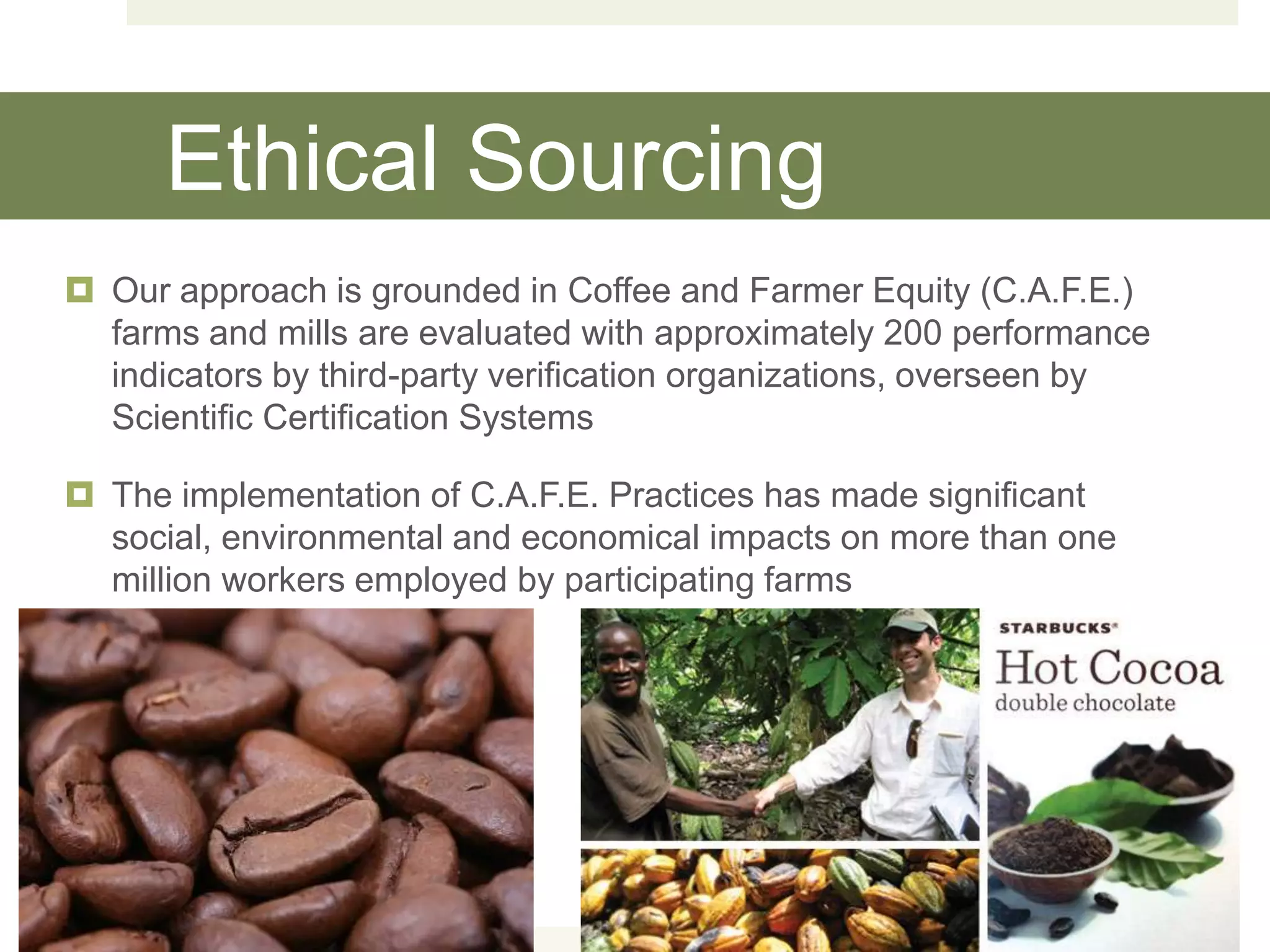
 Our approach is grounded in Coffee and Farmer Equity (C.A.F.E.)
  farms and mills are evaluated with approximately 200 performance
  indicators by third-party verification organizations, overseen by
  Scientific Certification Systems

 The implementation of C.A.F.E. Practices has made significant
  social, environmental and economical impacts on more than one
  million workers employed by participating farms
Ethical Sourcing
 99% of school-aged children on small farms were able to attend school

 99% of farms have not converted any natural forest habitat to coffee
  products since 2004

 The majority of workers earn higher than the legal minimum wage for
  their country

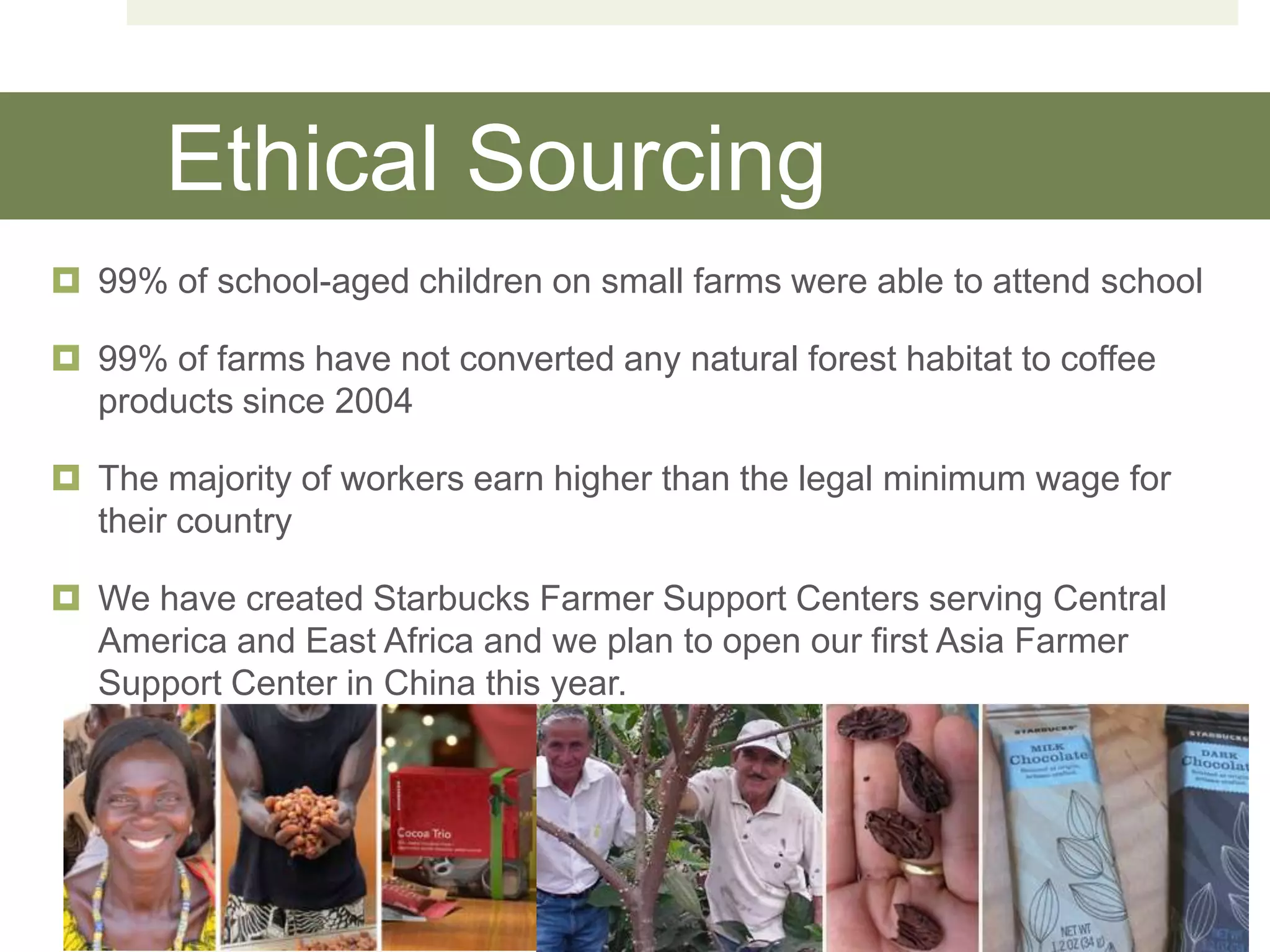
 We have created Starbucks Farmer Support Centers serving Central
  America and East Africa and we plan to open our first Asia Farmer
  Support Center in China this year.
Ethical Sourcing
            We’re also helping farmers
             advance their businesses by
             improving their access to credit
             through our farmer loans
             program

            In 2010 alone we helped support
             nearly 56,000 farmers who grow
             coffee with a total of $14.6
             million in loans

            By investing in programs that
             provide access to credit, we’re
             helping farmers manage risk and
             strengthen their business
Thank You
Questions?

Julianne Rowe Starbucks CSR Report

  • 1.
  • 2.
    History  First Starbuckswas opened in 1971  Relocated to Pikes Place Market – 1976  Three Founders : Jerry Baldwin, Zev Siegl and Gordon Bowker  Today Starbucks has more than 19,000 stores in 58 countries around the world  Largest Coffee Company in the world
  • 3.
    Environmental Stewardship  Focusedon the long-term stability of coffee-growing communities  Through innovative programs we’re taking action to address climate change and the impact it will have on the long-term supply of our coffee  We’re working to reduce our environmental impact Recycling Reusable Cups Renewable Energy Energy Conservation Water Conservation Green Buildings
  • 4.
    Recycling  Working towards our goal of making 100% of our cups recyclable by 2015  We wont consider our cups recyclable until our customers can recycle them in our stores, homes, workplaces and public spaces  In 2008 we set a goal of implementing front-of-store recycling in all company owned locations by 2015  Adopting the use of PCF in our paper cups has helped us conserve the equivalent of more then 518,000 trees.
  • 5.
    Reusable Cups  OurGoal is to serve 35% of our beverages made in our stores in reusable cups by 2015  Since 1985 we’re been rewarding customers with a discount for using travel tumblers  During the month of April people who brought in their own tumblers were offered free brewed coffee  Because of people using reusable serve ware and tumblers in 2010 we were able to keep nearly 1.45 million pounds of paper out of landfills
  • 6.
    Energy  Replaced incandescentand halogen lighting with more efficient LED lighting  By 2010 we were able to complete installation of LED lights in more than 7000 company-owned stores. This has reduced our energy consumption by 3.3% from 2008-2010  Goal to achieve 25% reduction in energy use by 2015  In 2010 we were named among the top five green power purchasers in the country by the Environmental Protection Agency
  • 7.
    Water Conservation  Wateris the most vital resource our business relies on.  We set a goal to reduce water consumption by 25% by 2015 as a result of several proactive measures we had already decreased our water use by 22% between 2008 and 2010.
  • 8.
    Green Buildings  Allnew company-owned store will be built to achieve LEED certifications by the US Green Building Council (USGBC)  2009 we became one of the first retailers to join USGBC’s LEED Volume Certification pilot program  Seattle (University Village) - The community table is made of wood from a fallen tree recovered from a nearby neighborhood  London (Paris Disney location) The countertop material contains recycled cell phone parts  Fukuoka Japan- rainwater collected from the roof is used to nourish the surrounding landscape
  • 9.
    Community  Starbucks iscommitted to help support thriving neighborhoods wherever we do business. Being an integral part of neighborhoods is not just the right thing to do for the community, its also good for our business  We invite customers to participate in local community service projects  In 2010 Starbucks employees and customers contributed more then 191,000 hours of community service around the world.
  • 10.
    Youth Action Grants Through Youth Action Grants, In 2010, We were able to support the engagement of more than 74,000 young people since 2008, who in turn mobilized more than 950,000 hours of community service in their local communities  Children’s Environmental Heritage Foundation in Malaysia, where young people from low-income communities are educated about the importance of environmental stewardship
  • 11.
    Giving  In 2010,the Starbucks foundation gave a total of $22.4 million  We gave more than 100 grants to nonprofit organizations, including $1.6 million for the Starbucks Youth Action Grants and $1 million to the American Red Cross for the Haiti earthquake relief effort
  • 12.
    Ethical Sourcing  Sinceopening our first store we’ve remained committed to sourcing and roasting the worlds finest coffee  We’re committed to continuously improving economic transparency, promoting responsible labor practices, reducing environmental impacts and ensuring the long-term supply of our high-quality coffee
  • 13.
    Ethical Sourcing  Ourapproach is grounded in Coffee and Farmer Equity (C.A.F.E.) farms and mills are evaluated with approximately 200 performance indicators by third-party verification organizations, overseen by Scientific Certification Systems  The implementation of C.A.F.E. Practices has made significant social, environmental and economical impacts on more than one million workers employed by participating farms
  • 14.
    Ethical Sourcing  99%of school-aged children on small farms were able to attend school  99% of farms have not converted any natural forest habitat to coffee products since 2004  The majority of workers earn higher than the legal minimum wage for their country  We have created Starbucks Farmer Support Centers serving Central America and East Africa and we plan to open our first Asia Farmer Support Center in China this year.
  • 15.
    Ethical Sourcing  We’re also helping farmers advance their businesses by improving their access to credit through our farmer loans program  In 2010 alone we helped support nearly 56,000 farmers who grow coffee with a total of $14.6 million in loans  By investing in programs that provide access to credit, we’re helping farmers manage risk and strengthen their business
  • 16.

Editor's Notes

  • #3 After point 2: In 1984 these three founders took the opportunity to purchase Peet’s Coffee. And in 1988 the Starbucks brand began to dramatically expand
  • #4 After 1st point: to help maintain our high-quality standards and preserve the planet for future generations
  • #5 FIRST: Some communities already recycle our paper and plastic cups but most don’t have the infrastructure in place to handle collection, hauling and processing due to the lack of demand for cup material by the recycling industry.After 3th point: and we’re well on our way of reaching this goal
  • #6 After second point: In 2010 customers brought their own tumblers into our stores more than 32 million timesAfter point 3:This campaign resulted in more than 1.2 million people participating and over 47,000 people around the world have pledged to use their own tumblers on an ongoing basis.
  • #7 First: We’re working to reduce our energy consumption byAfter 1st point :Our LED lights-combined with the energy-efficient compact flourescent lights already installed in our stores will have a big impact on our energy use over time
  • #8 END: We did this by replacing dipper wells with new manually operated hand-meter faucets, which has allowed us to conserve approximately 100 gallons of water per store per day.
  • #9 After 1st point: LEED is the Leadership in Energy and Environmental DesignAfter 2nd point: Inside LEED stores customers will find reused, recycled and locally sourced elements as well as innovative features that conserve water and energy
  • #10 After 1nd point: We know we can accomplish more together then we can alone,which is why we bring together our employees and customers in their communities to make a differenceAfter 2nd point: this allows us to reach out to customers beyond the walls of our stores
  • #11 First:We invest in young people to inspire them to create new and innovative solutions to address community issues while gaining valuable leadership skills
  • #13 Start:We’re able to serve a great cup of coffee while helping to improve the lives of farmers and protect the planet
  • #15 END: These centers bring quality experts directly  to coffee farmers to help them implement more responsible growing practices, improve the quality and size of their harvests, and ultimately earn better prices
  • #16 After 1st point: We’re steadfastly committed to helping small-scale farmers thrive now and in the future