SQC
Standard on Quality Control
- Vakharia Vaibhav A.
Other Assurance
Services
Framework of Assurance
Engagement
Related
Services
Assurance
Services
SQC
Standards on
Quality Control
[1 to 90]
Assurance
Services
Audit & Review of Historical
Financial Information
SA
Standards on
Auditing
[100 to 900]
SAE
Standards on
Assurance
Engagements
[3000 to 3699]
SRS
Standards on
Related
services
[4000 to 4699]
Related
Services
Structure of Standards issued by AASB
Other Assurance
Services
SRE
Standards on
Review
Engagement
[2000 to 2699]
Framework of Assurance
Engagement
Assurance
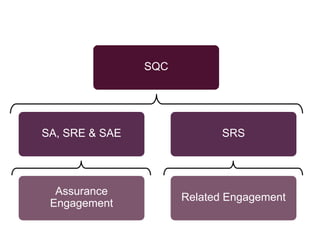
Engagement
Related Engagement
SA, SRE & SAE SRS
SQC
SQC 1
SQC-1 : Quality Control for Firms that perform Audits
& Reviews of Historical Financial Information and
Other Assurance & Related Services Engagements
Applicability
● applies to all firms
● in respect of services falling under the
Engagement Standards issued by AASB
● w.e.f. 01/04/2009
Factors for Applicability
Nature of the policies and procedures
developed by firms to comply with SQC 1
will depend on various factors such as:
● size,
● operating characteristics of the firm, and
● whether it is part of a network or not
Elements of Quality Control System
1. Leadership responsibilities
2. Ethical requirements incl. Independence
3. Client acceptance / continuance criteria
4. Human resource management
5. Engagement performance
6. Monitoring process
1. Leadership responsibilities for quality
- Establishment of policies & procedures to:
i. Promote culture of quality within firm
ii. Ensure that commercial considerations do
not override quality
iii. Demonstrate overall commitment to
quality
- Managing Partner / CEO should assume ultimate
responsibility for implementation of above policies
& procedures
2. Ethical requirements
- Requirements as per Code of Ethics:
i. Integrity
ii. Objectivity
iii. Professional competence & due care
iv. Confidentiality
v. Professional Behaviour
- Set up internal procedures for ethical compliance
Threats to independence
- Principal threats to independence:
i. Self - interest threat
ii. Self - review threat
iii. Advocacy threat
iv. Familiarity threat
v. Intimidation threat
- Withdrawal if any threat to independence
- Written confirmations to maintain independence
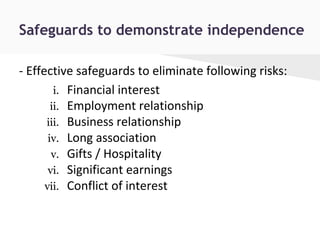
Safeguards to demonstrate independence
- Effective safeguards to eliminate following risks:
i. Financial interest
ii. Employment relationship
iii. Business relationship
iv. Long association
v. Gifts / Hospitality
vi. Significant earnings
vii. Conflict of interest
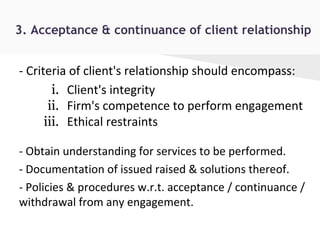
3. Acceptance & continuance of client relationship
- Criteria of client's relationship should encompass:
i. Client's integrity
ii. Firm's competence to perform engagement
iii. Ethical restraints
- Obtain understanding for services to be performed.
- Documentation of issued raised & solutions thereof.
- Policies & procedures w.r.t. acceptance / continuance /
withdrawal from any engagement.
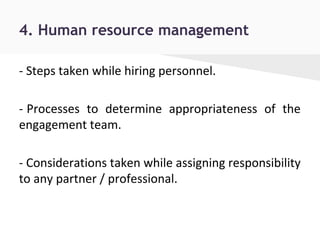
4. Human resource management
- Steps taken while hiring personnel.
- Processes to determine appropriateness of the
engagement team.
- Considerations taken while assigning responsibility
to any partner / professional.
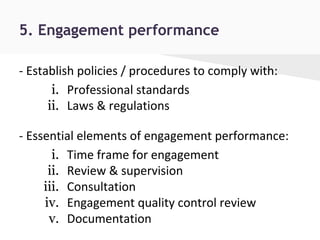
5. Engagement performance
- Establish policies / procedures to comply with:
i. Professional standards
ii. Laws & regulations
- Essential elements of engagement performance:
i. Time frame for engagement
ii. Review & supervision
iii. Consultation
iv. Engagement quality control review
v. Documentation
Engagement quality control review
- Engagement quality control review involves review:
i. by other partner of firm, or
ii. by a technical expert
- Important aspects for qulaity control review :
i. Criteria for engaging QC reviewer
ii. Nature, timing & extent of QCR
iii. Documentation
6. Monitoring
- Monitoring procedure should reasonably assure
that Quality Control policies & procedures are:
i. Relevant
ii. Adequate
iii. Operating efficiently
iv. Complied with in practice
- Selective inspection of completed engagements.
- Communicating deficiencies & recommendations.
- Adequate documentation to ensure monitoring.
Peer Review
Peer Review means review of work done by a
professional, by another professional of
similar standing.
- Submission of duly filled in Questionnaire
- Notes on policies & procedures followed for:
i. Maintaining independence
ii. Carrying out assurance services
iii. Second person review
iv. Staff supervision & development
- Review of attestation work:
i. List of clients
ii. Selection of samples
iii. Review of samples
- Report to Peer Review Board
- Certificate of Peer Review
Process of Peer Review
- Statement on Peer Review
- Code of Ethics
- Guidance Note on Independence
- Implementation guide to SQC
Resources for Peer Review
Thank You
- Vaibhav

Standard on quality control (sqc) peer review

  • 1.
    SQC Standard on QualityControl - Vakharia Vaibhav A.
  • 2.
    Other Assurance Services Framework ofAssurance Engagement Related Services Assurance Services SQC Standards on Quality Control [1 to 90] Assurance Services Audit & Review of Historical Financial Information SA Standards on Auditing [100 to 900] SAE Standards on Assurance Engagements [3000 to 3699] SRS Standards on Related services [4000 to 4699] Related Services Structure of Standards issued by AASB Other Assurance Services SRE Standards on Review Engagement [2000 to 2699] Framework of Assurance Engagement
  • 3.
  • 4.
    SQC 1 SQC-1 :Quality Control for Firms that perform Audits & Reviews of Historical Financial Information and Other Assurance & Related Services Engagements
  • 5.
    Applicability ● applies toall firms ● in respect of services falling under the Engagement Standards issued by AASB ● w.e.f. 01/04/2009
  • 6.
    Factors for Applicability Natureof the policies and procedures developed by firms to comply with SQC 1 will depend on various factors such as: ● size, ● operating characteristics of the firm, and ● whether it is part of a network or not
  • 7.
    Elements of QualityControl System 1. Leadership responsibilities 2. Ethical requirements incl. Independence 3. Client acceptance / continuance criteria 4. Human resource management 5. Engagement performance 6. Monitoring process
  • 8.
    1. Leadership responsibilitiesfor quality - Establishment of policies & procedures to: i. Promote culture of quality within firm ii. Ensure that commercial considerations do not override quality iii. Demonstrate overall commitment to quality - Managing Partner / CEO should assume ultimate responsibility for implementation of above policies & procedures
  • 9.
    2. Ethical requirements -Requirements as per Code of Ethics: i. Integrity ii. Objectivity iii. Professional competence & due care iv. Confidentiality v. Professional Behaviour - Set up internal procedures for ethical compliance
  • 10.
    Threats to independence -Principal threats to independence: i. Self - interest threat ii. Self - review threat iii. Advocacy threat iv. Familiarity threat v. Intimidation threat - Withdrawal if any threat to independence - Written confirmations to maintain independence
  • 11.
    Safeguards to demonstrateindependence - Effective safeguards to eliminate following risks: i. Financial interest ii. Employment relationship iii. Business relationship iv. Long association v. Gifts / Hospitality vi. Significant earnings vii. Conflict of interest
  • 12.
    3. Acceptance &continuance of client relationship - Criteria of client's relationship should encompass: i. Client's integrity ii. Firm's competence to perform engagement iii. Ethical restraints - Obtain understanding for services to be performed. - Documentation of issued raised & solutions thereof. - Policies & procedures w.r.t. acceptance / continuance / withdrawal from any engagement.
  • 13.
    4. Human resourcemanagement - Steps taken while hiring personnel. - Processes to determine appropriateness of the engagement team. - Considerations taken while assigning responsibility to any partner / professional.
  • 14.
    5. Engagement performance -Establish policies / procedures to comply with: i. Professional standards ii. Laws & regulations - Essential elements of engagement performance: i. Time frame for engagement ii. Review & supervision iii. Consultation iv. Engagement quality control review v. Documentation
  • 15.
    Engagement quality controlreview - Engagement quality control review involves review: i. by other partner of firm, or ii. by a technical expert - Important aspects for qulaity control review : i. Criteria for engaging QC reviewer ii. Nature, timing & extent of QCR iii. Documentation
  • 16.
    6. Monitoring - Monitoringprocedure should reasonably assure that Quality Control policies & procedures are: i. Relevant ii. Adequate iii. Operating efficiently iv. Complied with in practice - Selective inspection of completed engagements. - Communicating deficiencies & recommendations. - Adequate documentation to ensure monitoring.
  • 17.
    Peer Review Peer Reviewmeans review of work done by a professional, by another professional of similar standing.
  • 18.
    - Submission ofduly filled in Questionnaire - Notes on policies & procedures followed for: i. Maintaining independence ii. Carrying out assurance services iii. Second person review iv. Staff supervision & development - Review of attestation work: i. List of clients ii. Selection of samples iii. Review of samples - Report to Peer Review Board - Certificate of Peer Review Process of Peer Review
  • 19.
    - Statement onPeer Review - Code of Ethics - Guidance Note on Independence - Implementation guide to SQC Resources for Peer Review
  • 20.