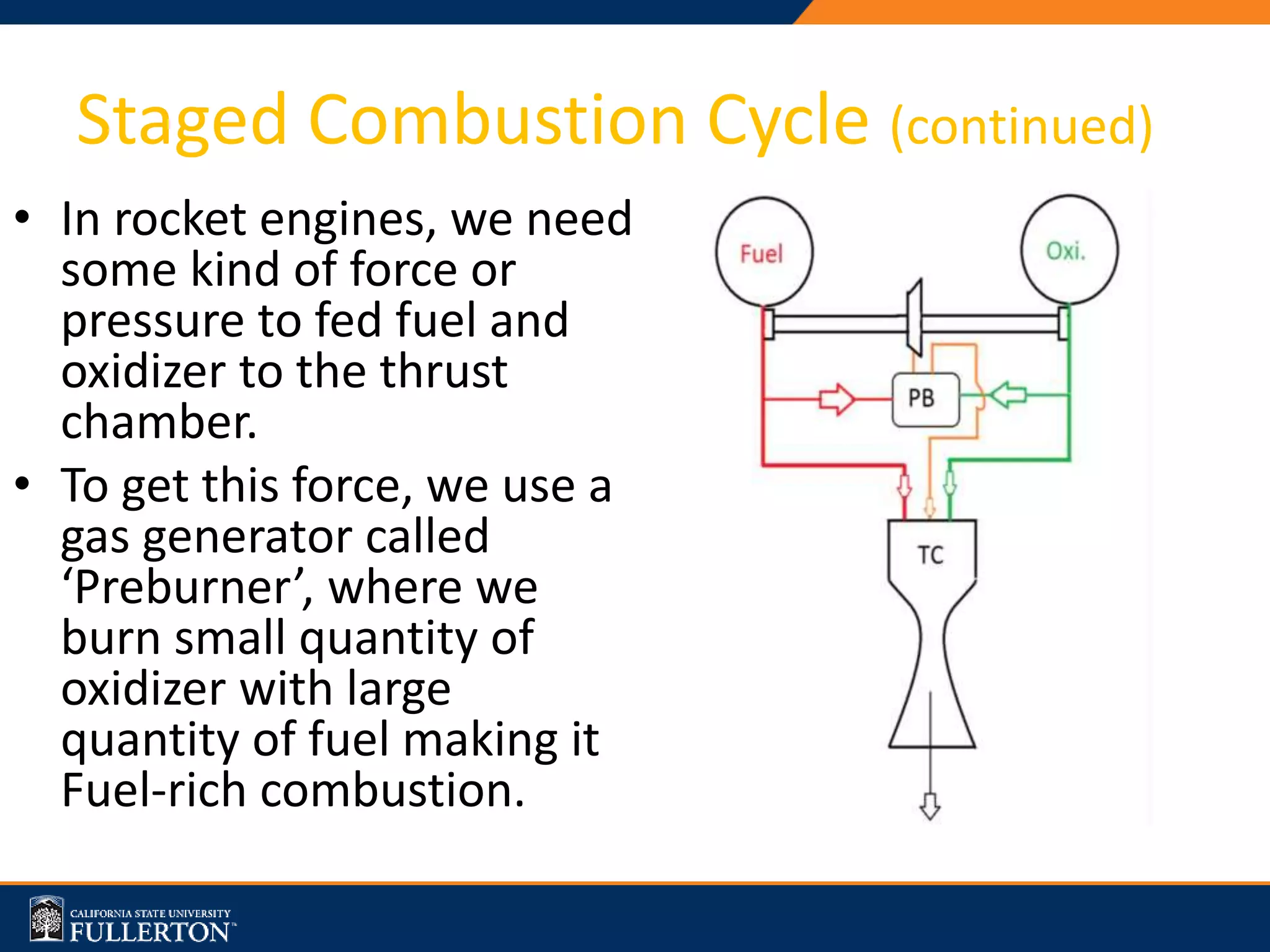
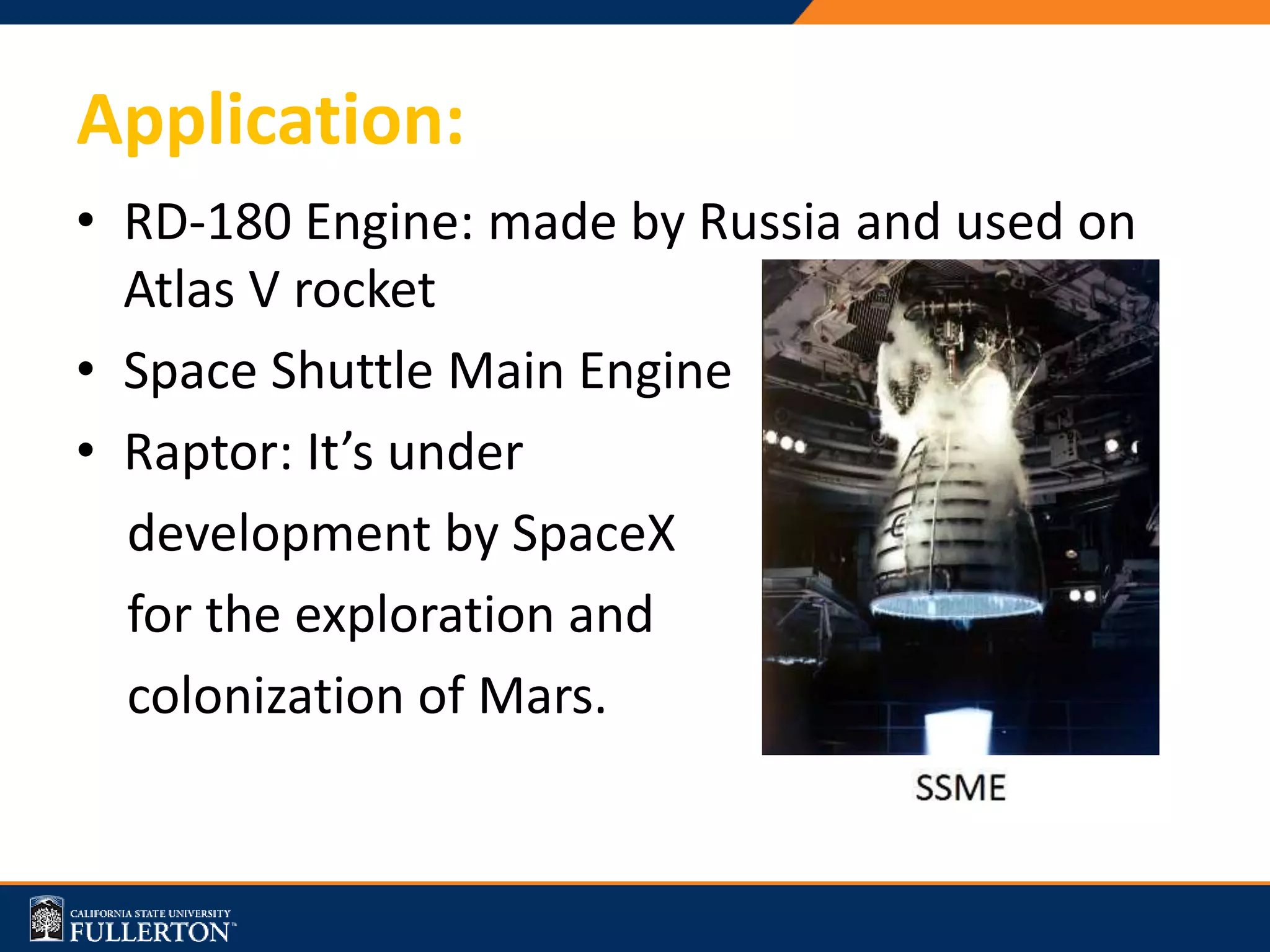
This document discusses the staged combustion cycle used in rocket engines. The staged combustion cycle was first proposed in 1949 and allows for higher efficiency and performance compared to other cycles. It works by burning a small amount of fuel and oxidizer in a preburner to power turbines that pressurize the propellants. The preburner exhaust then mixes with the remaining propellants and burns again in the main combustion chamber. This staged combustion burns almost all the fuel and allows operation at high pressures and thrust. However, the design is more complex which increases costs. Examples of engines that use staged combustion include the RD-180 and Space Shuttle Main Engine.