Stage Gate Process
Economics And Risk Management In Exploration
By
Simson Raju
Sapid- 500073494
Ashok Kumar Dhaked
Sapid-500077738
Introduction
• Stage gate process is also called phase gate process. It is a project
management technique in which a project is divided into
distinct stages or phases, separated by decision points (known as gates).
• The Stage-Gate process consist of a series of stages and gates. Each Stage is
defined by a set of specific research activities and gates are checkpoints where
critical decisions are made.
Overall objectives are to:
 integrate uniform guidelines into portfolio management
 optimize research investments
 control project quality and maximize outcomes
 standardize decision-making
.
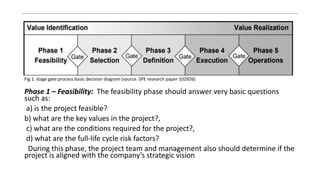
Fig 1. stage gate process basic decision diagram (source. SPE research paper 102926)
Phase 1 – Feasibility: The feasibility phase should answer very basic questions
such as:
a) is the project feasible?
b) what are the key values in the project?,
c) what are the conditions required for the project?,
d) what are the full-life cycle risk factors?
During this phase, the project team and management also should determine if the
project is aligned with the company’s strategic vision
Phase 2 – Selection: The goal of the Selection Phase or Phase 2 is to select the best
development plan out of a wide range of commercialization concepts. This phase
requires a balanced mixture of creativity and discipline that allows the project team
to identify and evaluate alternatives that will lead to the maximum value
creation. At the end of this phase, a preferred development plan is identified that
will be the basis of the future project activities.
Phase 3 – Definition: During Phase 3 or Definition Phase, the selected
development alternative is further studied and refined into sufficient detail as
required to proceed further.
Phase 4- execution- it defines whether the project eveluation been sufficiently
done so that the execution phase can start safely and economically
Phase 5- operations- considers whether the project is operated in a safe and
operationally effective manner.
Gates- These are decision points for initiating funding or moving
forward with a project.
At each gate the following occurs:
• A set of criteria is used to judge the progress of the project
• A decision is made as to whether the project should go ahead, be
delayed, or stopped
• Approval of funding is made for the next stage
• A path forward for the next stage is presented and approved
• Gate review is done by gate keepers who are individuals or groups of
individuals that are responsible for deciding whether a project should
continue and receive funding for the next stage.
• Gate reviews are held to evaluate the progress of each project against
a set of criteria that are defined at the outset of each stage. Work
completed during a stage produces the information needed for
decision-making regarding continued funding of a project.
• Gates must have clear, well-understood criteria so that gatekeepers
can make objective and timely decisions. Criteria must be specific
enough to engage management in the decision process and enable
them to ascertain the risks and benefits of going forward.
Gate Review Outcomes
In Managerial terms-
GO FORWARD -goals for the previous stage were met;
technical, market, financial and operational information
has met expectations and funds approved for the next
stage dependent on annual funding.
KILL (stop)- project is not progressing as it should
because the market has shifted permanently, The project
is not good enough to develop further and is shut down
right away.
HOLD -project has been suspended for a specified period
of time and the criteria will be re-evaluated at a future
date.
RETURN- goals have not been accomplished or the
criteria have not been met, but the project is good
enough to develop further, provided some changes are
made.
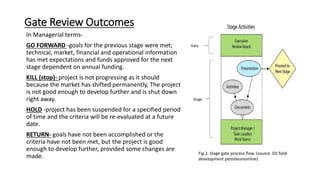
Stage
Gate
Fig.2. Stage gate process flow. (source. Oil field
development petroleumonline)
Stage Gate Process In Oil And Gas Industry
• Throughout its life cycle from exploration to abandonment, an oilfield requires
the participation of many different experts, working in teams, to make major
investment and operating decisions.
• These decisions must be made under conditions where uncertainties exist not
only about the operating costs and future performance of the reservoir, but also
with respect to the future price and market demand for the produced oil and gas.
• To understand these risks and uncertainties and to understand investments
needed to develop a field in an economically efficient way, stage gate analysis is
done.
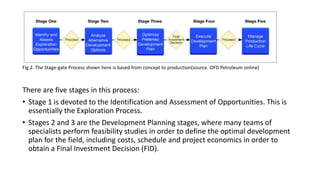
Fig.2. The Stage-gate Process shown here is based from concept to production(source. OFD Petroleum online)
There are five stages in this process:
• Stage 1 is devoted to the Identification and Assessment of Opportunities. This is
essentially the Exploration Process.
• Stages 2 and 3 are the Development Planning stages, where many teams of
specialists perform feasibility studies in order to define the optimal development
plan for the field, including costs, schedule and project economics in order to
obtain a Final Investment Decision (FID).
• Once the FID is made, Stage 4, the Execution of the Development Plan,
(essentially the Field Construction period) takes place.
• Stage 5 is devoted to the long-term Management of Production Operations. At
this stage, the objectives are to optimize production, improve efficiency and
maximize the net present worth of the asset by often making additional
investments to recover incremental reserves.
Application
• Scaled to Suit Different Risk-Level Projects
• Flexible process
• Adaptable
• Can be applied at any point during life cycle of project
• Used mainly at time of development
Limitations
• The effectiveness of the method highly depends on the behavior of senior
management members that are appointed as gatekeepers.
• Where the Stage-Gate Process allows many other tools to be incorporated within
the framework, no clear guidelines are given on possible limitations or guidelines
for implementation.
• For new product development processes requiring high flexibility and (therefore)
a number of iterations, formalization of the process may emphasize the loss of
time and money too much. This might result in a negative attitude of the
gatekeepers towards recycling of gates.
• Stage gate mostly depended on time rather than scope of the developing project
profile.
• Takes too much iterative steps between the stages
Conclusion
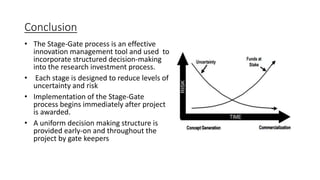
• The Stage-Gate process is an effective
innovation management tool and used to
incorporate structured decision-making
into the research investment process.
• Each stage is designed to reduce levels of
uncertainty and risk
• Implementation of the Stage-Gate
process begins immediately after project
is awarded.
• A uniform decision making structure is
provided early-on and throughout the
project by gate keepers
References
• Optimizing the Stage-Gate Process, Part II,“ Robert Cooper, Research Technology
Management, Industrial Research Institute, Volume 45, Number 6, November-
December 2002.
• http://apppm.man.dtu.dk/index.php/Stage-
Gate_Process#Basic_Elements_of_the_Stage-Gate_Process
• https://www.petroleumonline.com/content/overview.asp?mod=5
• https://www1.eere.energy.gov/manufacturing/financial/pdfs/itp_stage_gate_ov
erview.pdf
Thank you
Questions?

Stage gate process

  • 1.
    Stage Gate Process EconomicsAnd Risk Management In Exploration By Simson Raju Sapid- 500073494 Ashok Kumar Dhaked Sapid-500077738
  • 2.
    Introduction • Stage gateprocess is also called phase gate process. It is a project management technique in which a project is divided into distinct stages or phases, separated by decision points (known as gates). • The Stage-Gate process consist of a series of stages and gates. Each Stage is defined by a set of specific research activities and gates are checkpoints where critical decisions are made. Overall objectives are to:  integrate uniform guidelines into portfolio management  optimize research investments  control project quality and maximize outcomes  standardize decision-making
  • 3.
    . Fig 1. stagegate process basic decision diagram (source. SPE research paper 102926) Phase 1 – Feasibility: The feasibility phase should answer very basic questions such as: a) is the project feasible? b) what are the key values in the project?, c) what are the conditions required for the project?, d) what are the full-life cycle risk factors? During this phase, the project team and management also should determine if the project is aligned with the company’s strategic vision
  • 4.
    Phase 2 –Selection: The goal of the Selection Phase or Phase 2 is to select the best development plan out of a wide range of commercialization concepts. This phase requires a balanced mixture of creativity and discipline that allows the project team to identify and evaluate alternatives that will lead to the maximum value creation. At the end of this phase, a preferred development plan is identified that will be the basis of the future project activities. Phase 3 – Definition: During Phase 3 or Definition Phase, the selected development alternative is further studied and refined into sufficient detail as required to proceed further. Phase 4- execution- it defines whether the project eveluation been sufficiently done so that the execution phase can start safely and economically Phase 5- operations- considers whether the project is operated in a safe and operationally effective manner.
  • 5.
    Gates- These aredecision points for initiating funding or moving forward with a project. At each gate the following occurs: • A set of criteria is used to judge the progress of the project • A decision is made as to whether the project should go ahead, be delayed, or stopped • Approval of funding is made for the next stage • A path forward for the next stage is presented and approved
  • 6.
    • Gate reviewis done by gate keepers who are individuals or groups of individuals that are responsible for deciding whether a project should continue and receive funding for the next stage. • Gate reviews are held to evaluate the progress of each project against a set of criteria that are defined at the outset of each stage. Work completed during a stage produces the information needed for decision-making regarding continued funding of a project. • Gates must have clear, well-understood criteria so that gatekeepers can make objective and timely decisions. Criteria must be specific enough to engage management in the decision process and enable them to ascertain the risks and benefits of going forward.
  • 7.
    Gate Review Outcomes InManagerial terms- GO FORWARD -goals for the previous stage were met; technical, market, financial and operational information has met expectations and funds approved for the next stage dependent on annual funding. KILL (stop)- project is not progressing as it should because the market has shifted permanently, The project is not good enough to develop further and is shut down right away. HOLD -project has been suspended for a specified period of time and the criteria will be re-evaluated at a future date. RETURN- goals have not been accomplished or the criteria have not been met, but the project is good enough to develop further, provided some changes are made. Stage Gate Fig.2. Stage gate process flow. (source. Oil field development petroleumonline)
  • 8.
    Stage Gate ProcessIn Oil And Gas Industry • Throughout its life cycle from exploration to abandonment, an oilfield requires the participation of many different experts, working in teams, to make major investment and operating decisions. • These decisions must be made under conditions where uncertainties exist not only about the operating costs and future performance of the reservoir, but also with respect to the future price and market demand for the produced oil and gas. • To understand these risks and uncertainties and to understand investments needed to develop a field in an economically efficient way, stage gate analysis is done.
  • 9.
    Fig.2. The Stage-gateProcess shown here is based from concept to production(source. OFD Petroleum online) There are five stages in this process: • Stage 1 is devoted to the Identification and Assessment of Opportunities. This is essentially the Exploration Process. • Stages 2 and 3 are the Development Planning stages, where many teams of specialists perform feasibility studies in order to define the optimal development plan for the field, including costs, schedule and project economics in order to obtain a Final Investment Decision (FID).
  • 10.
    • Once theFID is made, Stage 4, the Execution of the Development Plan, (essentially the Field Construction period) takes place. • Stage 5 is devoted to the long-term Management of Production Operations. At this stage, the objectives are to optimize production, improve efficiency and maximize the net present worth of the asset by often making additional investments to recover incremental reserves.
  • 11.
    Application • Scaled toSuit Different Risk-Level Projects • Flexible process • Adaptable • Can be applied at any point during life cycle of project • Used mainly at time of development
  • 12.
    Limitations • The effectivenessof the method highly depends on the behavior of senior management members that are appointed as gatekeepers. • Where the Stage-Gate Process allows many other tools to be incorporated within the framework, no clear guidelines are given on possible limitations or guidelines for implementation. • For new product development processes requiring high flexibility and (therefore) a number of iterations, formalization of the process may emphasize the loss of time and money too much. This might result in a negative attitude of the gatekeepers towards recycling of gates. • Stage gate mostly depended on time rather than scope of the developing project profile. • Takes too much iterative steps between the stages
  • 13.
    Conclusion • The Stage-Gateprocess is an effective innovation management tool and used to incorporate structured decision-making into the research investment process. • Each stage is designed to reduce levels of uncertainty and risk • Implementation of the Stage-Gate process begins immediately after project is awarded. • A uniform decision making structure is provided early-on and throughout the project by gate keepers
  • 14.
    References • Optimizing theStage-Gate Process, Part II,“ Robert Cooper, Research Technology Management, Industrial Research Institute, Volume 45, Number 6, November- December 2002. • http://apppm.man.dtu.dk/index.php/Stage- Gate_Process#Basic_Elements_of_the_Stage-Gate_Process • https://www.petroleumonline.com/content/overview.asp?mod=5 • https://www.petroleumonline.com/content/overview.asp?mod=5 • https://www1.eere.energy.gov/manufacturing/financial/pdfs/itp_stage_gate_ov erview.pdf
  • 15.