SUSTAINABLE SUGARCANE 
INITIATIVE (SSI)
SUSTAINABLE SUGARCANE 
INITIATIVE 
Sustainable Sugarcane Initiative is a method of 
sugarcane production which involves sugarcane 
production using less seeds, less water and 
optimum utilization of fertilizers and land to 
achieve more yields. 
SSI is an alternate to conventional seed, water 
and space intensive Sugarcane cultivation.
Aims of SSI: 
To provide: 
•practical options to farmers for improving the 
productivity of land, water, and labour 
•Reduce crop duration. 
•Providing factories a longer crushing season and 
increased employment opportunities for workers. 
•It's estimated that by adopting SSI, a farmer can be 
able to produce at least 20% more sugarcane while 
reducing water inputs by 30% and chemical inputs 
by 25%
Problems faced by sugarcane growers: 
•Rising cost of cultivation 
•Low market price. 
•Unavailability of good quality of seeds 
•Improper cultivation practices 
•Unpredictable climatic aberrations 
•Depletion of water table hence water crisis
Issues with millers: 
•Poor recovery 
•Short crushing season: all canes are planted almost 
same time so pressure on machinery 
•Fluctuating yield 
•Price fluctuation
Benefits of SSI to farmers: 
•Less seed: saving in seed material 
•Wide spadcing: go for inter cropping 
•Water saving: easy for drip, low cost 
•Intercrops: additional income
Benefits of SSI to millers: 
•Increase recovery 
•Improves the raw material supply 
•Improves the profitability 
•Increases the efficiency of the mills: more systematic 
supply during the season
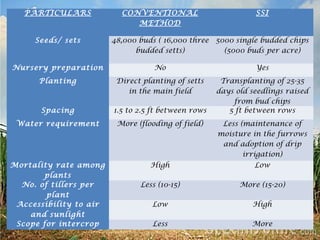
PARTICULARS CONVENTIONAL 
METHOD 
SSI 
Seeds/ sets 48,000 buds ( 16,000 three 
budded setts) 
5000 single budded chips 
(5000 buds per acre) 
Nursery preparation No Yes 
Planting Direct planting of setts 
in the main field 
Transplanting of 25-35 
days old seedlings raised 
from bud chips 
Spacing 1.5 to 2.5 ft between rows 5 ft between rows 
Water requirement More (flooding of field) Less (maintenance of 
moisture in the furrows 
and adoption of drip 
irrigation) 
Mortality rate among 
plants 
High Low 
No. of tillers per 
plant 
Less (10-15) More (15-20) 
Accessibility to air 
and sunlight 
Low High 
Scope for intercrop Less More
Principles of SSI 
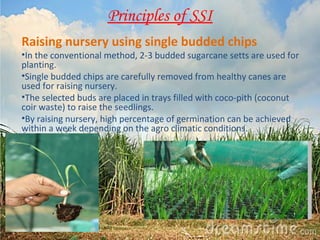
Raising nursery using single budded chips 
•In the conventional method, 2-3 budded sugarcane setts are used for 
planting. 
•Single budded chips are carefully removed from healthy canes are 
used for raising nursery. 
•The selected buds are placed in trays filled with coco-pith (coconut 
coir waste) to raise the seedlings. 
•By raising nursery, high percentage of germination can be achieved 
within a week depending on the agro climatic conditions.
Transplanting young seedlings 
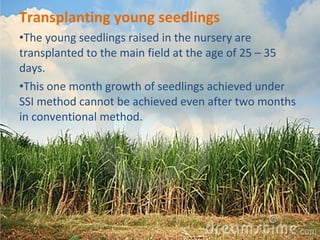
•The young seedlings raised in the nursery are 
transplanted to the main field at the age of 25 – 35 
days. 
•This one month growth of seedlings achieved under 
SSI method cannot be achieved even after two months 
in conventional method.
Transplanting at wider spacing 
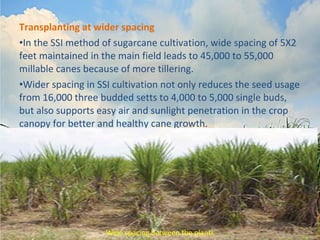
•In the SSI method of sugarcane cultivation, wide spacing of 5X2 
feet maintained in the main field leads to 45,000 to 55,000 
millable canes because of more tillering. 
•Wider spacing in SSI cultivation not only reduces the seed usage 
from 16,000 three budded setts to 4,000 to 5,000 single buds, 
but also supports easy air and sunlight penetration in the crop 
canopy for better and healthy cane growth. 
Wide spacing between the plants
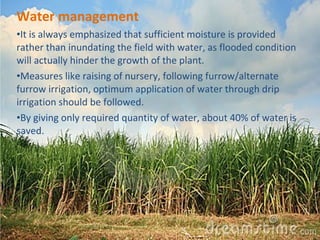
Water management 
•It is always emphasized that sufficient moisture is provided 
rather than inundating the field with water, as flooded condition 
will actually hinder the growth of the plant. 
•Measures like raising of nursery, following furrow/alternate 
furrow irrigation, optimum application of water through drip 
irrigation should be followed. 
•By giving only required quantity of water, about 40% of water is 
saved.
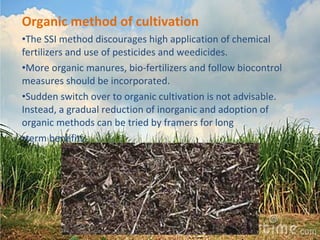
Organic method of cultivation 
•The SSI method discourages high application of chemical 
fertilizers and use of pesticides and weedicides. 
•More organic manures, bio-fertilizers and follow biocontrol 
measures should be incorporated. 
•Sudden switch over to organic cultivation is not advisable. 
Instead, a gradual reduction of inorganic and adoption of 
organic methods can be tried by framers for long 
•term benefits.
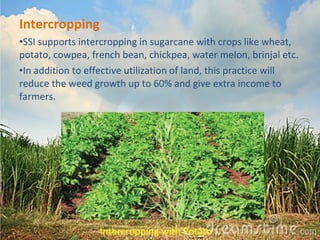
Intercropping 
•SSI supports intercropping in sugarcane with crops like wheat, 
potato, cowpea, french bean, chickpea, water melon, brinjal etc. 
•In addition to effective utilization of land, this practice will 
reduce the weed growth up to 60% and give extra income to 
farmers. 
Intercropping with Potato
Overall benefits 
•In conventional method, the cost of setts occupies a major part 
of the cost of cultivation. 
•But by practicing SSI, the seed cost can be drastically reduced up 
to 75%. 
•Reduction in plant mortality rate. 
•Increase in the length and weight of individual canes. 
•Easy to transport the young seedlings to longer distance. 
•Easy intercultural operations because of wider spacing.
SSI

SSI

  • 1.
  • 2.
    SUSTAINABLE SUGARCANE INITIATIVE Sustainable Sugarcane Initiative is a method of sugarcane production which involves sugarcane production using less seeds, less water and optimum utilization of fertilizers and land to achieve more yields. SSI is an alternate to conventional seed, water and space intensive Sugarcane cultivation.
  • 3.
    Aims of SSI: To provide: •practical options to farmers for improving the productivity of land, water, and labour •Reduce crop duration. •Providing factories a longer crushing season and increased employment opportunities for workers. •It's estimated that by adopting SSI, a farmer can be able to produce at least 20% more sugarcane while reducing water inputs by 30% and chemical inputs by 25%
  • 4.
    Problems faced bysugarcane growers: •Rising cost of cultivation •Low market price. •Unavailability of good quality of seeds •Improper cultivation practices •Unpredictable climatic aberrations •Depletion of water table hence water crisis
  • 5.
    Issues with millers: •Poor recovery •Short crushing season: all canes are planted almost same time so pressure on machinery •Fluctuating yield •Price fluctuation
  • 6.
    Benefits of SSIto farmers: •Less seed: saving in seed material •Wide spadcing: go for inter cropping •Water saving: easy for drip, low cost •Intercrops: additional income
  • 7.
    Benefits of SSIto millers: •Increase recovery •Improves the raw material supply •Improves the profitability •Increases the efficiency of the mills: more systematic supply during the season
  • 8.
    PARTICULARS CONVENTIONAL METHOD SSI Seeds/ sets 48,000 buds ( 16,000 three budded setts) 5000 single budded chips (5000 buds per acre) Nursery preparation No Yes Planting Direct planting of setts in the main field Transplanting of 25-35 days old seedlings raised from bud chips Spacing 1.5 to 2.5 ft between rows 5 ft between rows Water requirement More (flooding of field) Less (maintenance of moisture in the furrows and adoption of drip irrigation) Mortality rate among plants High Low No. of tillers per plant Less (10-15) More (15-20) Accessibility to air and sunlight Low High Scope for intercrop Less More
  • 9.
    Principles of SSI Raising nursery using single budded chips •In the conventional method, 2-3 budded sugarcane setts are used for planting. •Single budded chips are carefully removed from healthy canes are used for raising nursery. •The selected buds are placed in trays filled with coco-pith (coconut coir waste) to raise the seedlings. •By raising nursery, high percentage of germination can be achieved within a week depending on the agro climatic conditions.
  • 10.
    Transplanting young seedlings •The young seedlings raised in the nursery are transplanted to the main field at the age of 25 – 35 days. •This one month growth of seedlings achieved under SSI method cannot be achieved even after two months in conventional method.
  • 11.
    Transplanting at widerspacing •In the SSI method of sugarcane cultivation, wide spacing of 5X2 feet maintained in the main field leads to 45,000 to 55,000 millable canes because of more tillering. •Wider spacing in SSI cultivation not only reduces the seed usage from 16,000 three budded setts to 4,000 to 5,000 single buds, but also supports easy air and sunlight penetration in the crop canopy for better and healthy cane growth. Wide spacing between the plants
  • 12.
    Water management •Itis always emphasized that sufficient moisture is provided rather than inundating the field with water, as flooded condition will actually hinder the growth of the plant. •Measures like raising of nursery, following furrow/alternate furrow irrigation, optimum application of water through drip irrigation should be followed. •By giving only required quantity of water, about 40% of water is saved.
  • 13.
    Organic method ofcultivation •The SSI method discourages high application of chemical fertilizers and use of pesticides and weedicides. •More organic manures, bio-fertilizers and follow biocontrol measures should be incorporated. •Sudden switch over to organic cultivation is not advisable. Instead, a gradual reduction of inorganic and adoption of organic methods can be tried by framers for long •term benefits.
  • 14.
    Intercropping •SSI supportsintercropping in sugarcane with crops like wheat, potato, cowpea, french bean, chickpea, water melon, brinjal etc. •In addition to effective utilization of land, this practice will reduce the weed growth up to 60% and give extra income to farmers. Intercropping with Potato
  • 15.
    Overall benefits •Inconventional method, the cost of setts occupies a major part of the cost of cultivation. •But by practicing SSI, the seed cost can be drastically reduced up to 75%. •Reduction in plant mortality rate. •Increase in the length and weight of individual canes. •Easy to transport the young seedlings to longer distance. •Easy intercultural operations because of wider spacing.