Intercultural
operations in
vegetable crops
Experiment 6
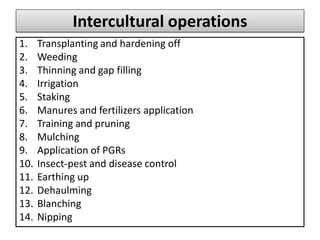
Intercultural operations
1. Transplanting and hardening off
2. Weeding
3. Thinning and gap filling
4. Irrigation
5. Staking
6. Manures and fertilizers application
7. Training and pruning
8. Mulching
9. Application of PGRs
10. Insect-pest and disease control
11. Earthing up
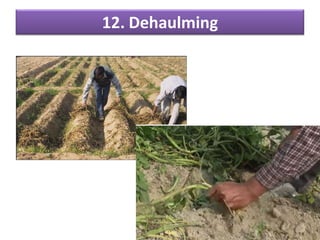
12. Dehaulming
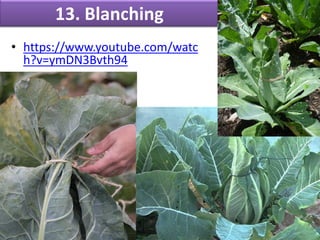
13. Blanching
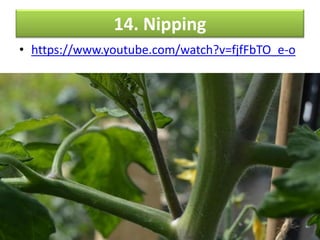
14. Nipping
1. Transplanting and hardening off
Already discussed in 5th experiment.
https://www.youtube.com/watch?v=V1-K7qpuGYY&t=2s
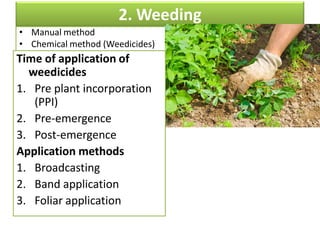
2. Weeding
• Manual method
• Chemical method (Weedicides)
Time of application of
weedicides
1. Pre plant incorporation
(PPI)
2. Pre-emergence
3. Post-emergence
Application methods
1. Broadcasting
2. Band application
3. Foliar application
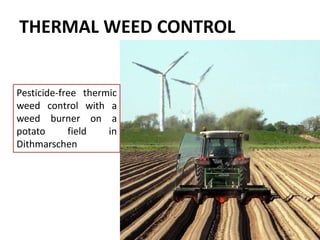
THERMAL WEED CONTROL
Pesticide-free thermic
weed control with a
weed burner on a
potato field in
Dithmarschen
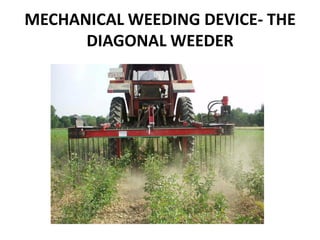
MECHANICAL WEEDING DEVICE- THE
DIAGONAL WEEDER
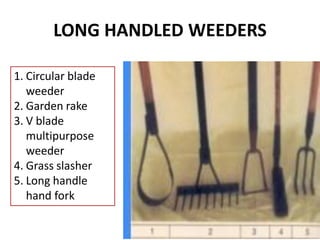
LONG HANDLED WEEDERS
1. Circular blade
weeder
2. Garden rake
3. V blade
multipurpose
weeder
4. Grass slasher
5. Long handle
hand fork
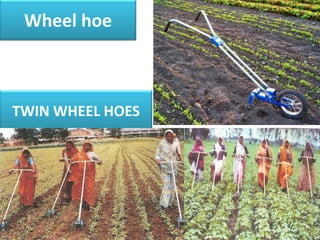
Wheel hoe
TWIN WHEEL HOES
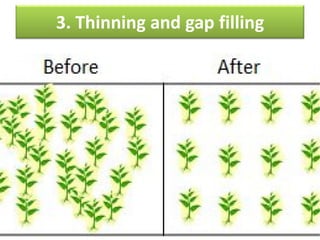
3. Thinning and gap filling
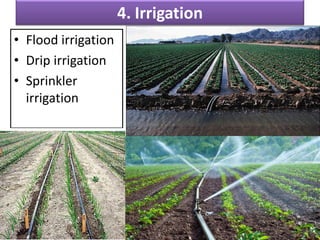
4. Irrigation
• Flood irrigation
• Drip irrigation
• Sprinkler
irrigation
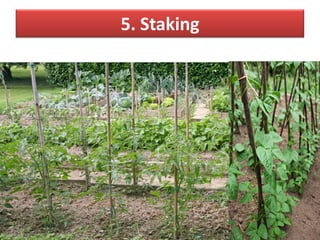
5. Staking
Removal of extra plants from the field
is known as-
a) Gap filling
b) Staking
c) Thinning
d) None
Which is not the characteristic of
weed?
a) Produce abundant seed
b) Hardy in nature
c) Grow very slow
d) All of the above
In which vegetable staking is not
required?
a) Tomato
b) Pea
c) Coriander
d) Beans
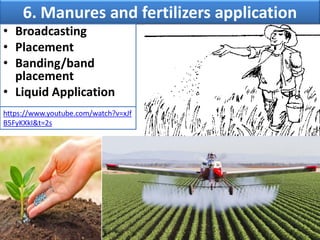
6. Manures and fertilizers application
• Broadcasting
• Placement
• Banding/band
placement
• Liquid Application
https://www.youtube.com/watch?v=xJf
B5FyKXkI&t=2s
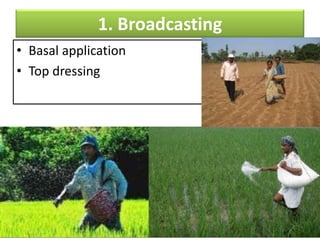
1. Broadcasting
• Basal application
• Top dressing
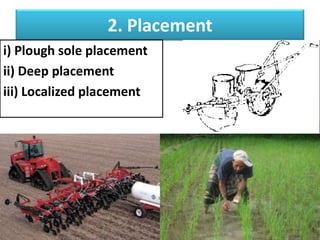
2. Placement
i) Plough sole placement
ii) Deep placement
iii) Localized placement
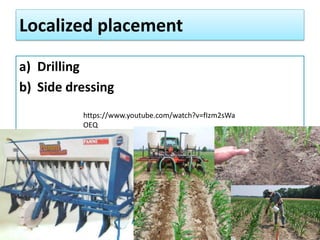
Localized placement
a) Drilling
b) Side dressing
https://www.youtube.com/watch?v=fIzm2sWa
OEQ
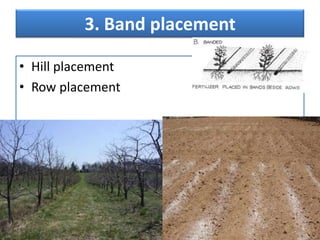
3. Band placement
• Hill placement
• Row placement
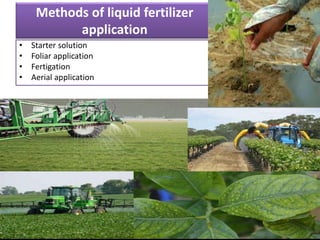
Methods of liquid fertilizer
application
• Starter solution
• Foliar application
• Fertigation
• Aerial application
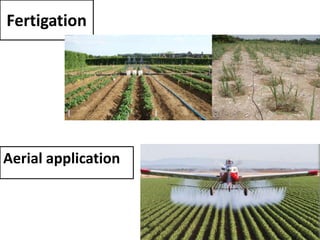
Fertigation
Aerial application
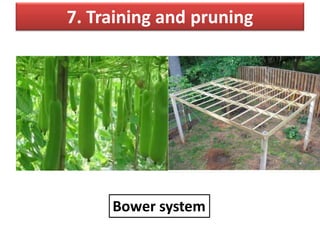
7. Training and pruning
Bower system
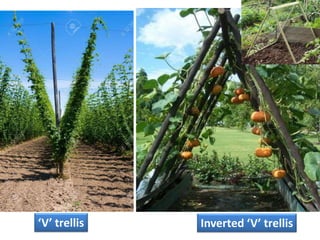
Inverted ‘V’ trellis
‘V’ trellis
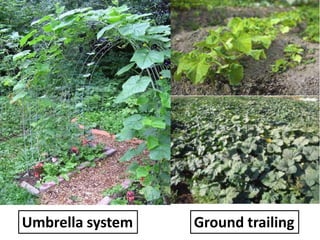
Ground trailing
Umbrella system
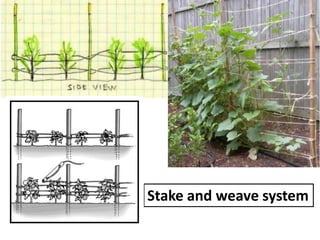
Stake and weave system
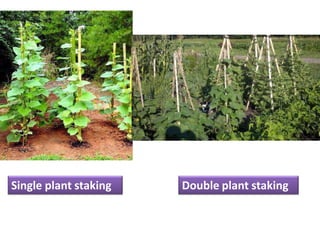
Single plant staking Double plant staking
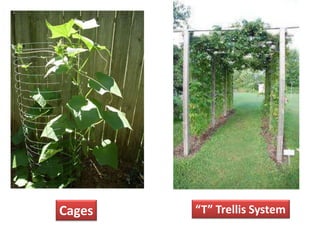
“T” Trellis System
Cages
Application of only fertilizers with
irrigation water is known as
a) Drenching
b) Fertigation
c) Both a and b
d) None
Which fertilizer is applied in split
dozes?
a) DAP
b) MOP
c) SSP
d) Urea
Training and pruning is required in-
a) Tomato
b) Bottle gourd
c) Cucumber
d) All of the above
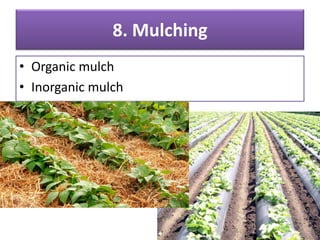
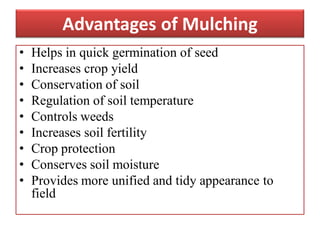
8. Mulching
• Organic mulch
• Inorganic mulch
Advantages of Mulching
• Helps in quick germination of seed
• Increases crop yield
• Conservation of soil
• Regulation of soil temperature
• Controls weeds
• Increases soil fertility
• Crop protection
• Conserves soil moisture
• Provides more unified and tidy appearance to
field
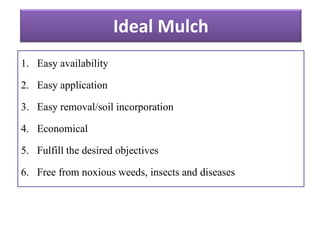
Ideal Mulch
1. Easy availability
2. Easy application
3. Easy removal/soil incorporation
4. Economical
5. Fulfill the desired objectives
6. Free from noxious weeds, insects and diseases
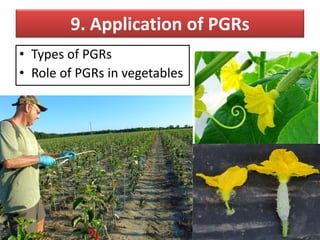
9. Application of PGRs
• Types of PGRs
• Role of PGRs in vegetables
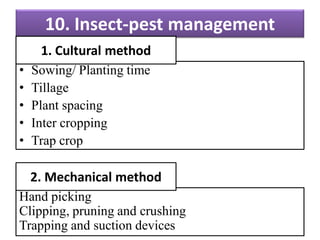
10. Insect-pest management
• Sowing/ Planting time
• Tillage
• Plant spacing
• Inter cropping
• Trap crop
1. Cultural method
Hand picking
Clipping, pruning and crushing
Trapping and suction devices
2. Mechanical method
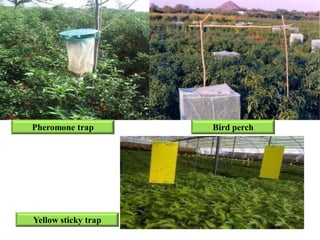
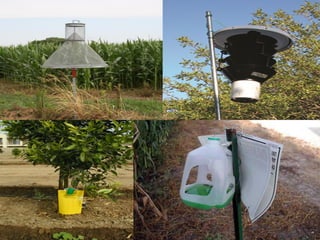
Pheromone trap Bird perch
Yellow sticky trap
3. Biological control
Egg parasitiods :
 Trichogramma chilonis @ 50,000/ ha, four times
from 30 DAT - 20 days .
Larval parasitoids:
 Pristomerus testaceus
 Cremastus flavoorbitalis
 Shirakia schoenobii
 Bracon greeni
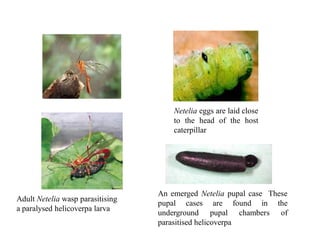
Netelia eggs are laid close
to the head of the host
caterpillar
An emerged Netelia pupal case These
pupal cases are found in the
underground pupal chambers of
parasitised helicoverpa
Adult Netelia wasp parasitising
a paralysed helicoverpa larva
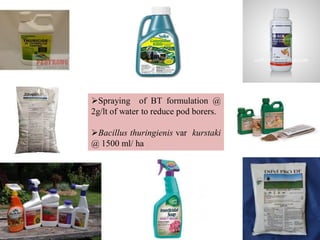
Spraying of BT formulation @
2g/lt of water to reduce pod borers.
Bacillus thuringienis var kurstaki
@ 1500 ml/ ha
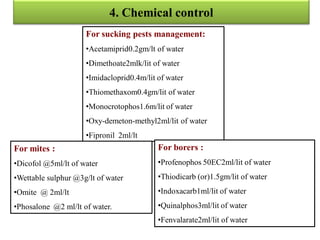
For sucking pests management:
•Acetamiprid0.2gm/lt of water
•Dimethoate2mlk/lit of water
•Imidacloprid0.4m/lit of water
•Thiomethaxom0.4gm/lit of water
•Monocrotophos1.6m/lit of water
•Oxy-demeton-methyl2ml/lit of water
•Fipronil 2ml/lt
For borers :
•Profenophos 50EC2ml/lit of water
•Thiodicarb (or)1.5gm/lit of water
•Indoxacarb1ml/lit of water
•Quinalphos3ml/lit of water
•Fenvalarate2ml/lit of water
For mites :
•Dicofol @5ml/lt of water
•Wettable sulphur @3g/lt of water
•Omite @ 2ml/lt
•Phosalone @2 ml/lt of water.
4. Chemical control
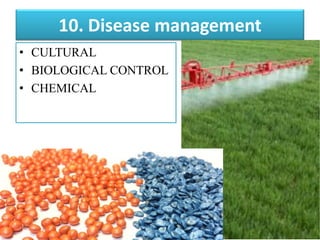
10. Disease management
• CULTURAL
• BIOLOGICAL CONTROL
• CHEMICAL
Which chemical is used to induce male
flower in cucurbits?
a) Ethephon
b) Silver nitrate
c) NAA
d) All of the above
Bt brinjal was developed against which
insect?
a) Jassids
b) Leaf hopper
c) Shoot and fruit borer
d) Aphids
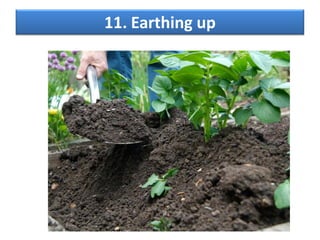
11. Earthing up
12. Dehaulming
13. Blanching
• https://www.youtube.com/watc
h?v=ymDN3Bvth94
14. Nipping
• https://www.youtube.com/watch?v=fjfFbTO_e-o
Blanching is required in which
vegetable?
a) Tomato
b) Potato
c) Cauliflower
d) All of the above
Which intercultural operation is not
required in potato?
a) Dehaulming
b) Thinning
c) Earthing up
d) None

Intercultural operations in vegetable crops