HERBICIDE RESIDUES & 
THEIR MANAGEMENT
RESIDUAL HERBICIDE 
• Herbicide breakdown requires sufficient time 
under adequate moisture and soil temperature to 
support the growth of microbes that degrade 
herbicide molecules. 
• Some herbicides are broken down quickly 
• Other herbicides take longer to decay, hence 
persist into seasons following the year they were 
applied. 
• These can injure sensitive crops that are seeded 
in following seasons.
Risk of residual herbicides 
• Gives lower yield on the next season crop. 
o Eg: spraying imidazolinone-family herbicides on 
sunflowers gave lower oil content in next season 
• It also shows phytotoxic effect on the crops of 
next season 
• Residue of last season herbicides incompatible 
to present season crop may cause heavy 
damage
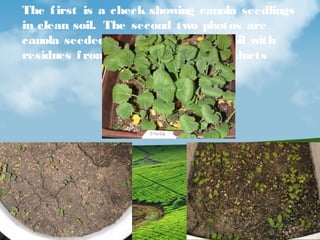
The f irst is a check showing canola seedlings 
in clean soil. The second two photos are 
canola seeded the same day into soil with 
residues f rom common Group- 2 products
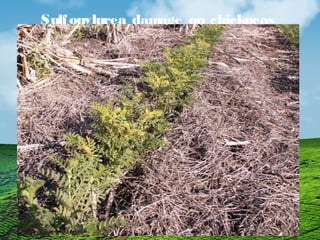
Sulfonylurea damage on chickpeas
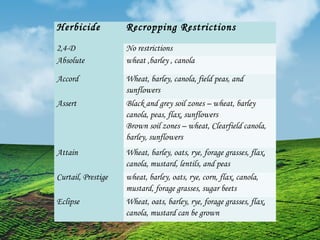
Herbicide Recropping Restrictions 
2,4-D No restrictions 
Absolute wheat ,barley , canola 
Accord Wheat, barley, canola, field peas, and 
sunflowers 
Assert Black and grey soil zones – wheat, barley 
canola, peas, flax, sunflowers 
Brown soil zones – wheat, Clearfield canola, 
barley, sunflowers 
Attain Wheat, barley, oats, rye, forage grasses, flax, 
canola, mustard, lentils, and peas 
Curtail, Prestige wheat, barley, oats, rye, corn, flax, canola, 
mustard, forage grasses, sugar beets 
Eclipse Wheat, oats, barley, rye, forage grasses, flax, 
canola, mustard can be grown
Factors Affecting Herbicide Carryover 
• Herbicide Factors 
o Herbicides differ in their physical and chemical 
properties such as water solubility, volatility and 
susceptibility to breakdown by sunlight, and 
microbes. 
o Their method of breakdown also ranges from 
simple chemical reaction to a more complex 
microbial degradation. 
o Residual herbicide activity is also described in 
terms of the half life; the half life varies by 
herbicide and ranges from a few days to a few 
years
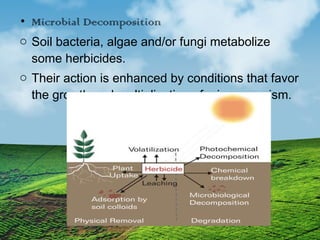
• Microbial Decomposition 
o Soil bacteria, algae and/or fungi metabolize 
some herbicides. 
o Their action is enhanced by conditions that favor 
the growth and multiplication of microorganism.
• Chemical Degradation: 
o Some herbicides may react with water or other 
chemicals in the soil, changing the nature of the 
molecules responsible for the herbicidal activity. 
o Eg: the sulfonylurea (SU) chemically react with water 
in a process called hydrolysis. Once the SU is in 
contact with water, the chemical breakdown is 
initiated, and the herbicide is no longer biologically 
active. 
• Photodecomposition 
o Some herbicide will degrade when exposed to ultra-violet 
light of sun 
o Eg: Herbicides such as trifluralin, ethalfluralin and the 
cyclohexanones (Poast, Achieve, Select) can 
degrade in sunlight. Specific management strategies
• Plant Uptake 
o Some plants absorb specific herbicides 
and metabolize it. 
o This effectively removes residues from the 
soil. 
• Soil Factors 
o Soil pH-affects the stability of the herbicide 
o Organic matter-Organic matter (OM) can absorb 
large amounts of herbicides, so the less the OM, 
the more biologically active the herbicide residue 
o Soil texture 
o Soil moisture-The higher the soil moisture levels 
the higher the rates of leaching, volatilization 
and microbial/ chemical degradation
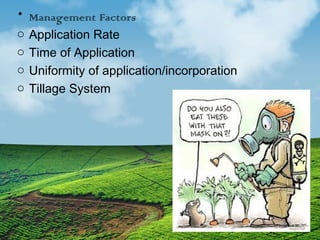
• Management Factors 
o Application Rate 
o Time of Application 
o Uniformity of application/incorporation 
o Tillage System
Avoiding or Minimizing Herbicide 
Carry-over Effects 
• Integrated weed management 
• Herbicide rotation with crop rotation 
• Selection of herbicides with minimum carry-over 
potential 
• Applying minimum & Accurate application rates 
of herbicides 
• Time of application –Early season application 
also assists in reducing the carry-over potential 
to succeeding crops
• Grow a tolerant crop 
• Soil additives - Adsorption of herbicide residue 
can be increased by the addition of adsorbent 
material such as activated charcoal. Though the 
use of activated charcoal on a large scale is not 
economic.
Determining Herbicide Residues 
• Field bioassay- means growing to maturity a 
test strip of the crop(s) intended for production 
the following year 
• Chemical analysis- requires the submission of 
representative soil samples to a laboratory for 
the detection of residual herbicide in soil 
• Commercial plant bioassay- involves 
collecting and sending suspect soil samples to a 
commercial laboratory where a simple, accurate 
method is used to determine the residues.
• Random Soil Sampling- Random sampling is 
the most common method of soil sampling. 
Cores need to be collected from the entire area 
to obtain reliable estimates 
• Problem areas like, saline spots, poorly drained 
areas, and eroded knolls should not be sampled 
unless they represent a significant portion of the 
field
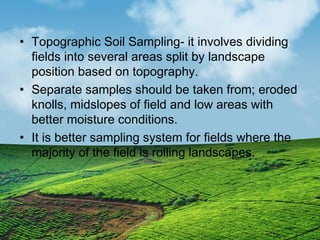
• Topographic Soil Sampling- it involves dividing 
fields into several areas split by landscape 
position based on topography. 
• Separate samples should be taken from; eroded 
knolls, midslopes of field and low areas with 
better moisture conditions. 
• It is better sampling system for fields where the 
majority of the field is rolling landscapes.
HERBICIDE RESIDUES & THEIR MANAGEMENT

HERBICIDE RESIDUES & THEIR MANAGEMENT

  • 1.
    HERBICIDE RESIDUES & THEIR MANAGEMENT
  • 2.
    RESIDUAL HERBICIDE •Herbicide breakdown requires sufficient time under adequate moisture and soil temperature to support the growth of microbes that degrade herbicide molecules. • Some herbicides are broken down quickly • Other herbicides take longer to decay, hence persist into seasons following the year they were applied. • These can injure sensitive crops that are seeded in following seasons.
  • 3.
    Risk of residualherbicides • Gives lower yield on the next season crop. o Eg: spraying imidazolinone-family herbicides on sunflowers gave lower oil content in next season • It also shows phytotoxic effect on the crops of next season • Residue of last season herbicides incompatible to present season crop may cause heavy damage
  • 4.
    The f irstis a check showing canola seedlings in clean soil. The second two photos are canola seeded the same day into soil with residues f rom common Group- 2 products
  • 5.
  • 6.
    Herbicide Recropping Restrictions 2,4-D No restrictions Absolute wheat ,barley , canola Accord Wheat, barley, canola, field peas, and sunflowers Assert Black and grey soil zones – wheat, barley canola, peas, flax, sunflowers Brown soil zones – wheat, Clearfield canola, barley, sunflowers Attain Wheat, barley, oats, rye, forage grasses, flax, canola, mustard, lentils, and peas Curtail, Prestige wheat, barley, oats, rye, corn, flax, canola, mustard, forage grasses, sugar beets Eclipse Wheat, oats, barley, rye, forage grasses, flax, canola, mustard can be grown
  • 7.
    Factors Affecting HerbicideCarryover • Herbicide Factors o Herbicides differ in their physical and chemical properties such as water solubility, volatility and susceptibility to breakdown by sunlight, and microbes. o Their method of breakdown also ranges from simple chemical reaction to a more complex microbial degradation. o Residual herbicide activity is also described in terms of the half life; the half life varies by herbicide and ranges from a few days to a few years
  • 9.
    • Microbial Decomposition o Soil bacteria, algae and/or fungi metabolize some herbicides. o Their action is enhanced by conditions that favor the growth and multiplication of microorganism.
  • 10.
    • Chemical Degradation: o Some herbicides may react with water or other chemicals in the soil, changing the nature of the molecules responsible for the herbicidal activity. o Eg: the sulfonylurea (SU) chemically react with water in a process called hydrolysis. Once the SU is in contact with water, the chemical breakdown is initiated, and the herbicide is no longer biologically active. • Photodecomposition o Some herbicide will degrade when exposed to ultra-violet light of sun o Eg: Herbicides such as trifluralin, ethalfluralin and the cyclohexanones (Poast, Achieve, Select) can degrade in sunlight. Specific management strategies
  • 11.
    • Plant Uptake o Some plants absorb specific herbicides and metabolize it. o This effectively removes residues from the soil. • Soil Factors o Soil pH-affects the stability of the herbicide o Organic matter-Organic matter (OM) can absorb large amounts of herbicides, so the less the OM, the more biologically active the herbicide residue o Soil texture o Soil moisture-The higher the soil moisture levels the higher the rates of leaching, volatilization and microbial/ chemical degradation
  • 12.
    • Management Factors o Application Rate o Time of Application o Uniformity of application/incorporation o Tillage System
  • 13.
    Avoiding or MinimizingHerbicide Carry-over Effects • Integrated weed management • Herbicide rotation with crop rotation • Selection of herbicides with minimum carry-over potential • Applying minimum & Accurate application rates of herbicides • Time of application –Early season application also assists in reducing the carry-over potential to succeeding crops
  • 14.
    • Grow atolerant crop • Soil additives - Adsorption of herbicide residue can be increased by the addition of adsorbent material such as activated charcoal. Though the use of activated charcoal on a large scale is not economic.
  • 15.
    Determining Herbicide Residues • Field bioassay- means growing to maturity a test strip of the crop(s) intended for production the following year • Chemical analysis- requires the submission of representative soil samples to a laboratory for the detection of residual herbicide in soil • Commercial plant bioassay- involves collecting and sending suspect soil samples to a commercial laboratory where a simple, accurate method is used to determine the residues.
  • 16.
    • Random SoilSampling- Random sampling is the most common method of soil sampling. Cores need to be collected from the entire area to obtain reliable estimates • Problem areas like, saline spots, poorly drained areas, and eroded knolls should not be sampled unless they represent a significant portion of the field
  • 17.
    • Topographic SoilSampling- it involves dividing fields into several areas split by landscape position based on topography. • Separate samples should be taken from; eroded knolls, midslopes of field and low areas with better moisture conditions. • It is better sampling system for fields where the majority of the field is rolling landscapes.