Cognitive and psychiatric
phenotypes of movement
disorders in children
       Hilla Ben-Pazi, MD

       Movement Disorders Clinic,
       Neuropediatric Unit,
       Shaare Zedek Medical Center,
       Jerusalem, Israel
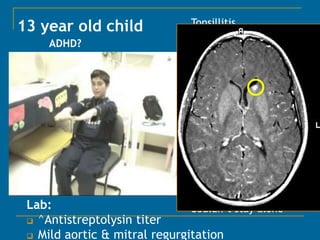
13 year old child              Tonsillitis
                               Temper tantrums
     ADHD?
                              Referred : hemichorea
                              Haloperidol treatment

                              Insects crawling
                              Haloperidol –
                                discontinued

                              Psychosis:
                              Heard voices
                              Locked doors
 Lab:                         Couldn’t stay alone
  ^Antistreptolysin titer

  Mild aortic & mitral regurgitation
Basal Ganglia: Schematic slices


 Caudal                                   Rostral
 striatum                                 striatum


            Striatal = Caudate+ Putamen
Basal ganglia- Dual processing
Parallel and integrative processing of
motor cognitive and psychiatric pathways
Parallel                            striatum
Emotional processing
Motivation
Cognitive & executive
  function
Motor planning
Motor execution

Integrative:
Emotional -> cognitive ->   Substantia nigra- Midbrain
motor
                                          Haber, 2003
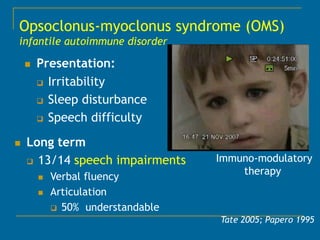
Opsoclonus-myoclonus syndrome (OMS)
infantile autoimmune disorder

       Presentation:
         Irritability

         Sleep disturbance

         Speech difficulty


   Long term
     13/14 speech impairments     Immuno-modulatory
                                       therapy
           Verbal fluency
           Articulation
             50% understandable
                                   Tate 2005; Papero 1995
Long term OMS
60-80% cognitive impairment
       IQ 50 – 70
       >50% special education
   Psychiatric symptoms                    most disruptive:
       Irritability                        speech
       Emotional labiality                 behavior
       ODD (65%)
       Obsessive or compulsive symptoms (58%)
       Poor affective regulation (10/17)

Behavioral problems and low cognitive function
- inconsistent correlation
- poor regardless of early treatment
                            Tate 2005; Papero 1995; Hayward 2001
Tourette syndrome and tics
repeated, intermittent movements, briefly suppressible and
usually associated with premonitory urge.

Emotional comorbidities
       extensively studied            Compulsions
       more disturbing than tics          Touching
   ADHD              (70%)                    Palms
   ODD                (30%)               Counting
   OCD               (26%)
                                       Obsessions
   Separation anxiety (14%)
                                           Somatosensory
   Bipolar disorder   (11%)
   Depression        (2-9%)               Symmetry
   PDD                 (5%)           Concern with appearance
   Schizophrenia      (3%)


                                                 Kurlan 2002; Miguel 1997
17 y/o girl deterioration in school
performance
   General weakness
   Psychiatric evaluation
     Psychological problems

     She couldn’t write

   Tremor, difficulty eating
     Referred to a neurologist

     Bradykinesia, rigidity

   No Kayser- Fliesher ring
   ^ urinary Cu
   Low ceruloplasmin
   Liver Bx-> ^Cu accumulation
                     T2 Hyperintensity- Caudate & Putamen
Wilson disease            malfunction of the copper-
transporting adenosine triphosphatase
 Cognitive impairments are common
        time of onset is not certain

 Psychiatric symptoms
  30-50% of adults prior to diagnosis
  >50% of children (n=96)
        Depression & suicidal ideation
        Anxiety
        Bipolar affective disorder
        Excessive talkativeness
        Apathy
    Multiplicity of signs -> different neuroanatomical sites


                                          Machado 2006; Ullah, 2009
Restless Legs Syndrome
 characterized by a desire to relieve leg discomfort
by movement at night
   A 6-year-old girl was referred for ADHD
   At night, she would fall off her bed without waking
   Polysomnogram: intermittent leg movements
    Iron supplementation
       improved sleep
        not in ADHD
         -> methylphenidate
Restless Legs Syndrome is common (2%)
90% ADHD
   Correlates with RLS
       Not with sleep fragmentation
   Anxiety / depression


                                        Hyperactivity
   Iron supplementation
       Improves RLS
       Not ADHD

   Dopaminergic treatment
       Improves both RLS & ADHD


                                                        Leg movements
                       Chervin, 2002; Picchietti 2008; Miller , 2000
Psychiatric side effects – Mov dis drugs
Mov Dis    Drug            Mechanism     Side effect
Chorea     Tetrabenazine   D depletion   Depression
           Haloperidol     D antagonist Lethargy
Myoclonus Clonazepam       Enhancing    Cog,
                           GABA-A recp Irritability
Tremor     Propranonol     β blocker   Hallucinations
Tics       Clonidine       α 2 agonist   Drowsiness
Dystonia   Trihexyphenidyl Anti Ach      Anxiety
                                         Confusion
           L-Dopa          D precursor   Depression,
                                         Anxiety
Take home message

פנוטיפים שכליים ופסיכיאטריים

  • 1.
    Cognitive and psychiatric phenotypesof movement disorders in children Hilla Ben-Pazi, MD Movement Disorders Clinic, Neuropediatric Unit, Shaare Zedek Medical Center, Jerusalem, Israel
  • 2.
    13 year oldchild Tonsillitis Temper tantrums ADHD? Referred : hemichorea Haloperidol treatment Insects crawling Haloperidol – discontinued Psychosis: Heard voices Locked doors Lab: Couldn’t stay alone  ^Antistreptolysin titer  Mild aortic & mitral regurgitation
  • 3.
    Basal Ganglia: Schematicslices Caudal Rostral striatum striatum Striatal = Caudate+ Putamen
  • 4.
    Basal ganglia- Dualprocessing Parallel and integrative processing of motor cognitive and psychiatric pathways Parallel striatum Emotional processing Motivation Cognitive & executive function Motor planning Motor execution Integrative: Emotional -> cognitive -> Substantia nigra- Midbrain motor Haber, 2003
  • 5.
    Opsoclonus-myoclonus syndrome (OMS) infantileautoimmune disorder  Presentation:  Irritability  Sleep disturbance  Speech difficulty  Long term  13/14 speech impairments Immuno-modulatory therapy  Verbal fluency  Articulation  50% understandable Tate 2005; Papero 1995
  • 6.
    Long term OMS 60-80%cognitive impairment  IQ 50 – 70  >50% special education  Psychiatric symptoms most disruptive:  Irritability speech  Emotional labiality behavior  ODD (65%)  Obsessive or compulsive symptoms (58%)  Poor affective regulation (10/17) Behavioral problems and low cognitive function - inconsistent correlation - poor regardless of early treatment Tate 2005; Papero 1995; Hayward 2001
  • 7.
    Tourette syndrome andtics repeated, intermittent movements, briefly suppressible and usually associated with premonitory urge. Emotional comorbidities  extensively studied  Compulsions  more disturbing than tics  Touching  ADHD (70%)  Palms  ODD (30%)  Counting  OCD (26%)  Obsessions  Separation anxiety (14%)  Somatosensory  Bipolar disorder (11%)  Depression (2-9%)  Symmetry  PDD (5%)  Concern with appearance  Schizophrenia (3%) Kurlan 2002; Miguel 1997
  • 8.
    17 y/o girldeterioration in school performance  General weakness  Psychiatric evaluation  Psychological problems  She couldn’t write  Tremor, difficulty eating  Referred to a neurologist  Bradykinesia, rigidity  No Kayser- Fliesher ring  ^ urinary Cu  Low ceruloplasmin  Liver Bx-> ^Cu accumulation T2 Hyperintensity- Caudate & Putamen
  • 9.
    Wilson disease malfunction of the copper- transporting adenosine triphosphatase Cognitive impairments are common  time of onset is not certain Psychiatric symptoms  30-50% of adults prior to diagnosis  >50% of children (n=96)  Depression & suicidal ideation  Anxiety  Bipolar affective disorder  Excessive talkativeness  Apathy  Multiplicity of signs -> different neuroanatomical sites Machado 2006; Ullah, 2009
  • 10.
    Restless Legs Syndrome characterized by a desire to relieve leg discomfort by movement at night  A 6-year-old girl was referred for ADHD  At night, she would fall off her bed without waking  Polysomnogram: intermittent leg movements  Iron supplementation  improved sleep  not in ADHD  -> methylphenidate
  • 11.
    Restless Legs Syndromeis common (2%) 90% ADHD  Correlates with RLS  Not with sleep fragmentation  Anxiety / depression Hyperactivity  Iron supplementation  Improves RLS  Not ADHD  Dopaminergic treatment  Improves both RLS & ADHD Leg movements Chervin, 2002; Picchietti 2008; Miller , 2000
  • 12.
    Psychiatric side effects– Mov dis drugs Mov Dis Drug Mechanism Side effect Chorea Tetrabenazine D depletion Depression Haloperidol D antagonist Lethargy Myoclonus Clonazepam Enhancing  Cog, GABA-A recp Irritability Tremor Propranonol β blocker Hallucinations Tics Clonidine α 2 agonist Drowsiness Dystonia Trihexyphenidyl Anti Ach Anxiety Confusion L-Dopa D precursor Depression, Anxiety
  • 13.