surgical anatomy
site
surface anatomy
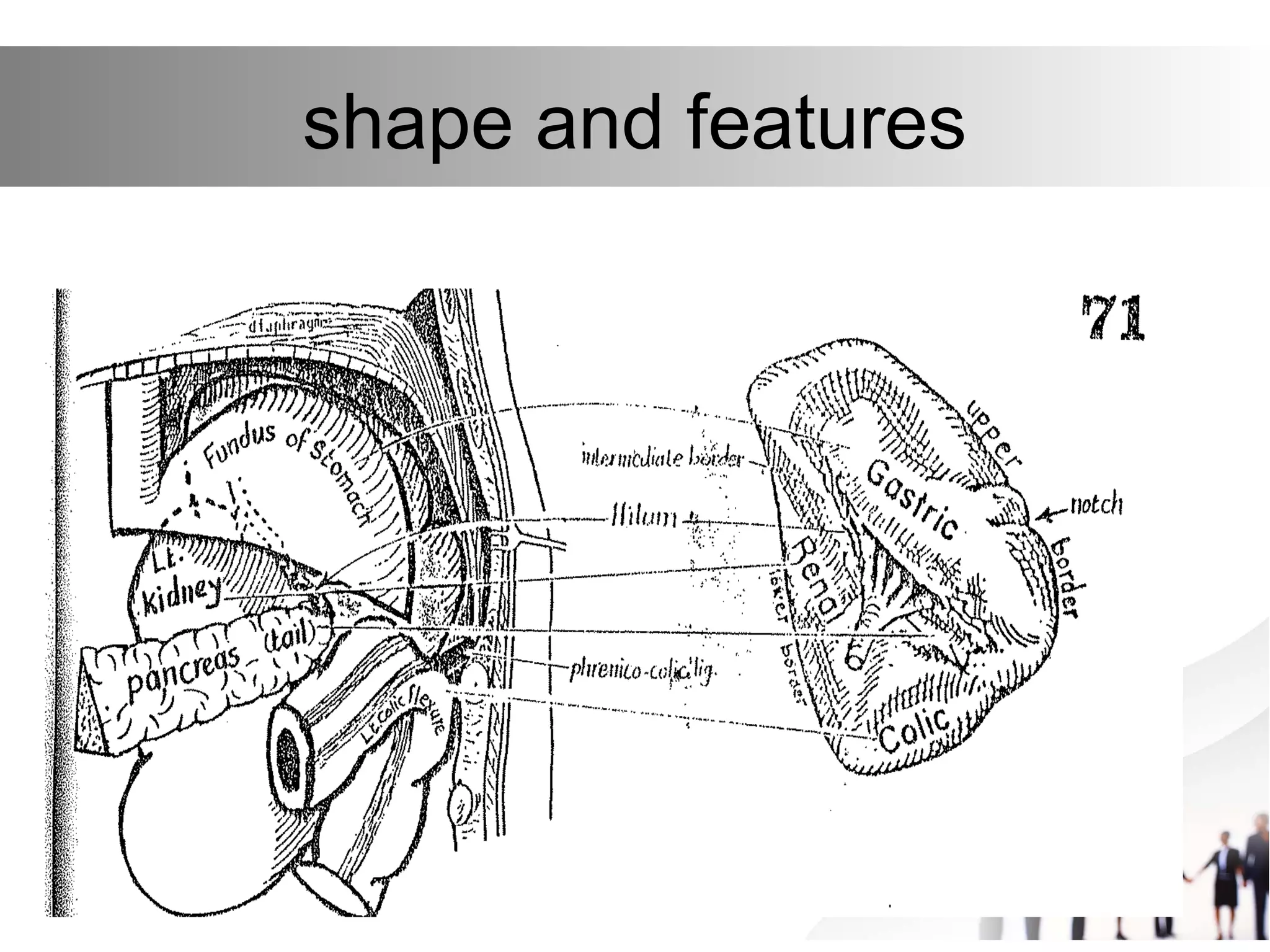
shape and features
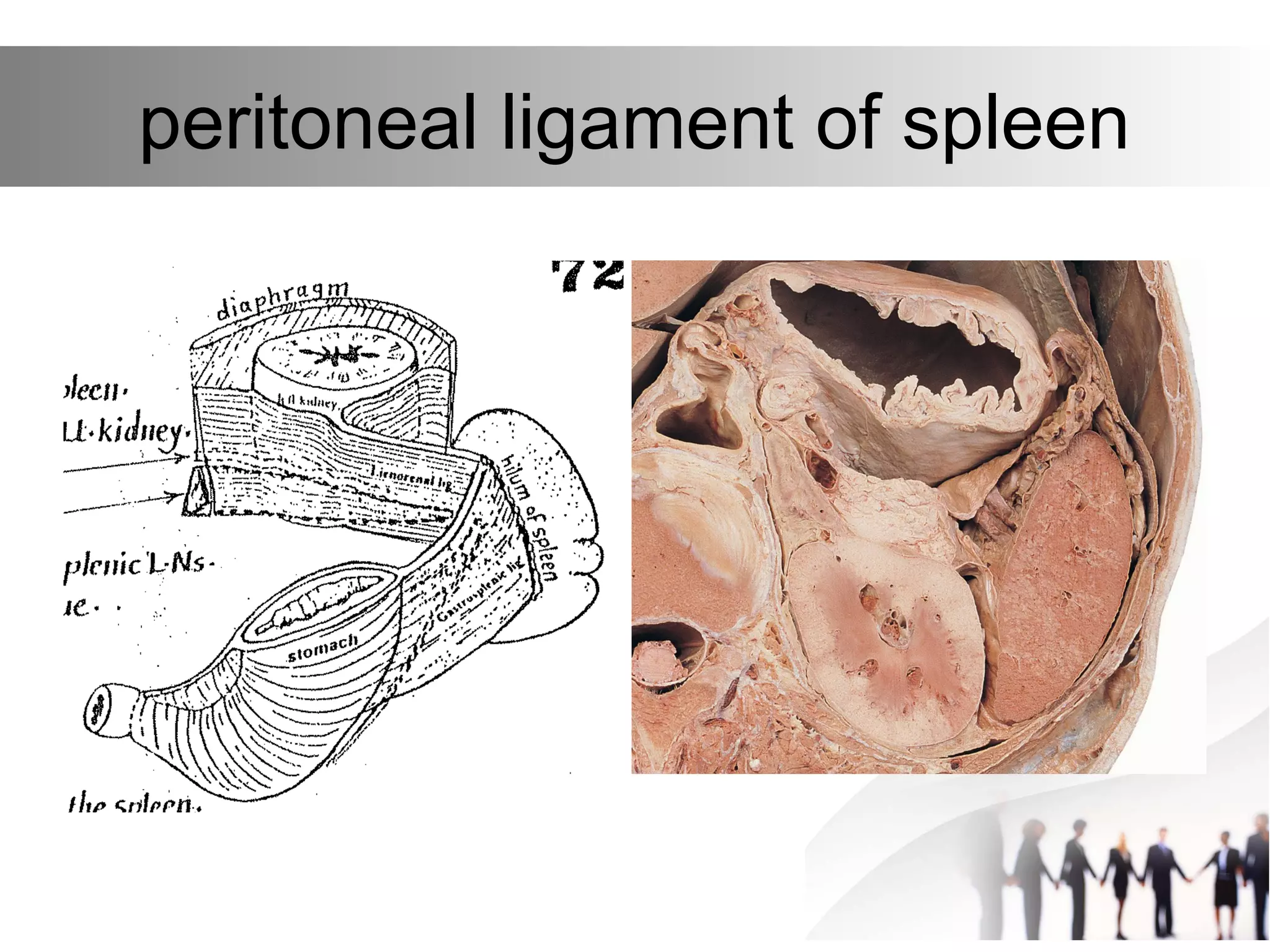
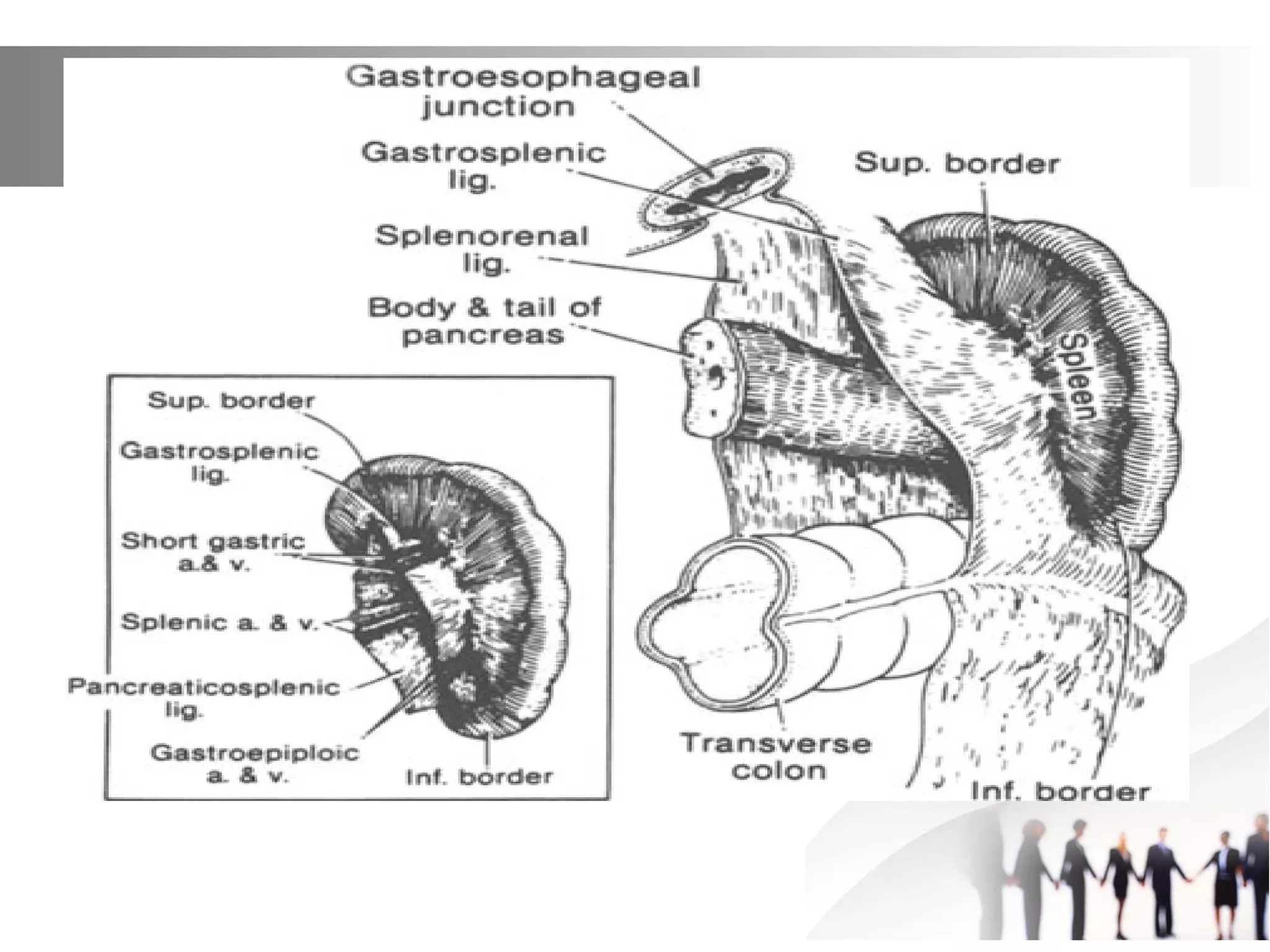
peritoneal ligament of spleen
gross picture
blood supply
Indications for splenectomy:
1. Trauma.
2. In distal pancreatectomy, total pancreatectomy, rarely
radical
gastrectomy—removed “en bloc” with stomach.
3. Staging laparotomy in case of Hodgkin’s lymphoma.
4. Hereditary spherocytosis and other haemolytic
anaemias.
5. Idiopathic thrombocytopaenic purpura (ITP).
6. Portal hypertension with variceal bleeding—mainly
gastric varices
with splenic vein thrombosis.
7. Tuberculosis of spleen.
8. Others:
Gaucher’s disease.
Chronic myeloid leukaemia, myelofi brosis.
Felty’s syndrome.
Carcinoma of tail of the pancreas during distal
pancreatectomy.
Schistosomiasis.
Splenic artery aneurysm.
Splenic infarction.
Cystic disease of spleen.
Splenic tumours.
pre operative preperation
• Pre-operative vaccine
• Adequate blood is kept ready need arises
• antibiotics, nasogastric tube, urinary
catheterisation are needed preoperatively
steps
Splenectomy Due to
Hemorrhage Secondary to
Trauma
Step 1. Make an incision.
Step 2. Mobilize the spleen.
Step 3. Ligate the vessels.
Step 4. Divide the hilum.
Step 5. Obtain hemostasis.
Step 6. Provide drainage.
Step 7. Close the wound.
Splenectomy Due to
Hematological Disorders
(Hypersplenism)
Step 1. Make an incision.
Step 2. Ligate the arteries.
Step 3. Mobilize the spleen.
Step 4. Divide the hilum.
Step 5. Obtain hemostasis.
Step 6. Search for accessory
spleens.
Step 7. Provide drainage.
Step 8. Close the wound.
incision
Mobilize the spleen
Mobilize the spleen
ligation of short gastric
ligation of splenic arteries
posterior mobilization
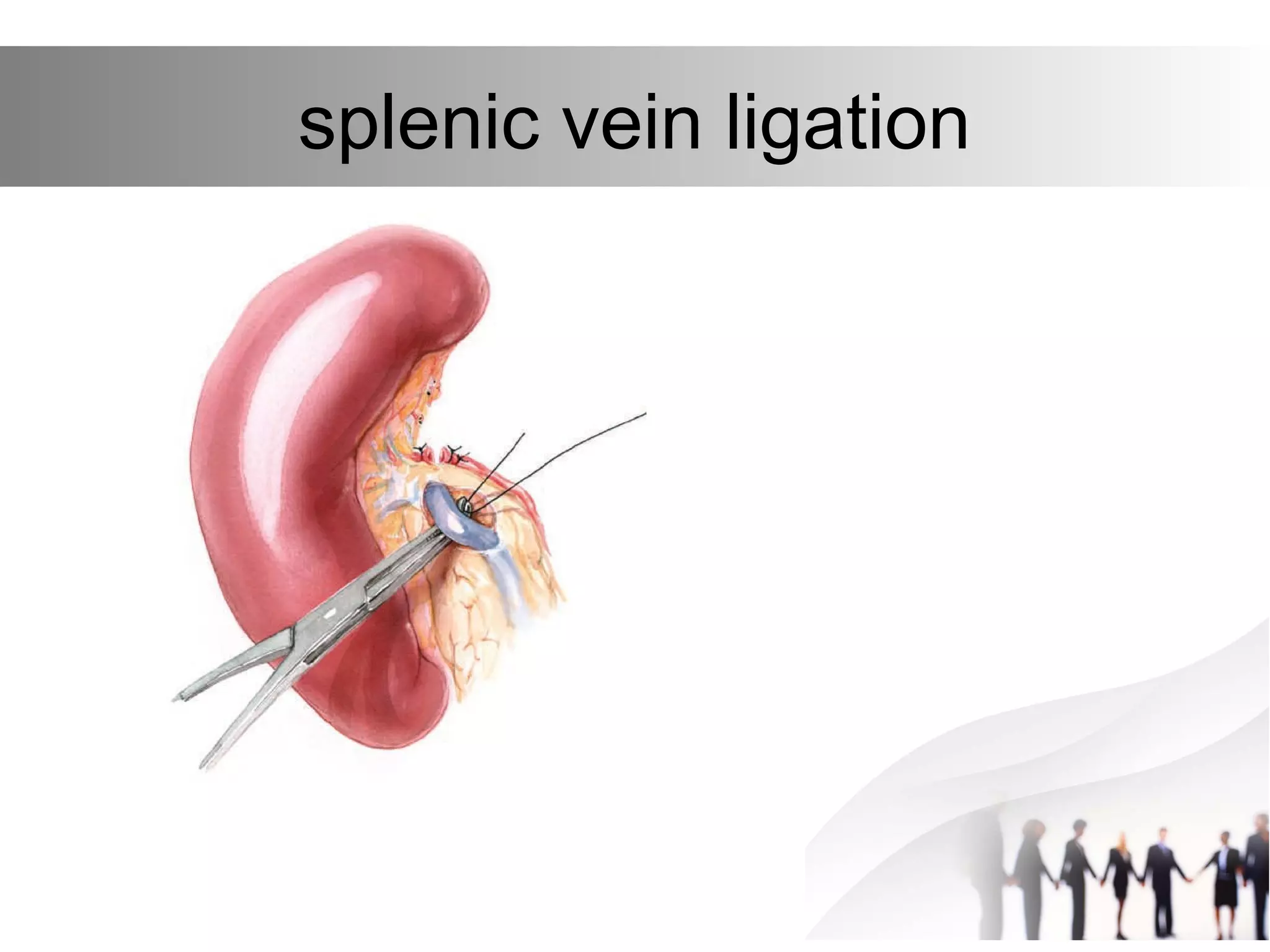
splenic vein ligation
Postoperative Care
• a nasogastric tube in place for 24-48
hours
• antibiotics are needed in post-
operative period.
• leg exercises and respiratory
physiotherapy are always given
• asperin
Splenic Preservation Surgeries
• Small injuries like superficial lacerations
which are often controlled by pressure,
packing, haemostatic agents, surgical,
• haemoclips, omental pedicle patch,
suturing.
• Argon beam laser is useful for surface
oozing.
• Surgicel is oxidized cellulose.
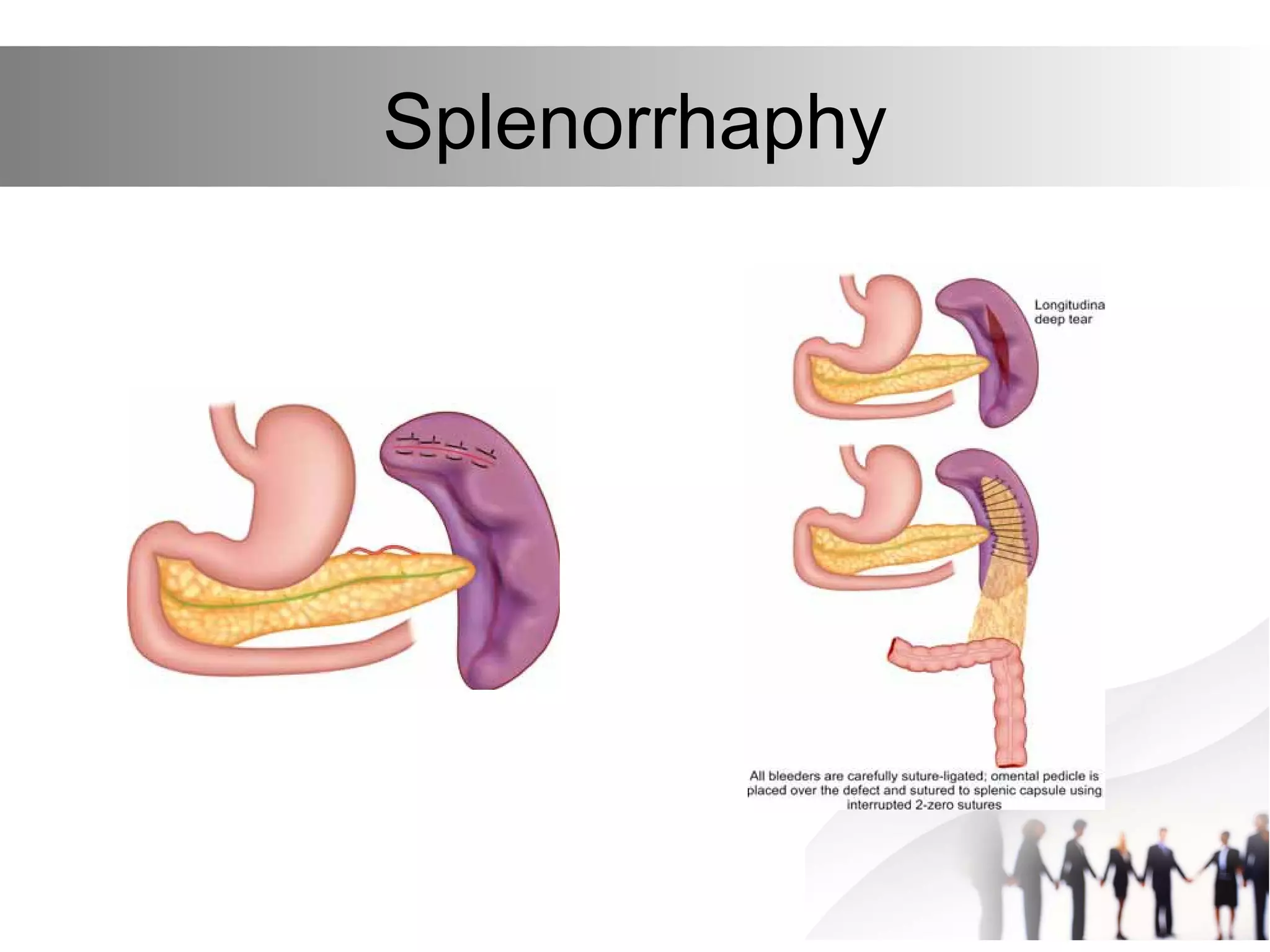
Splenorrhaphy
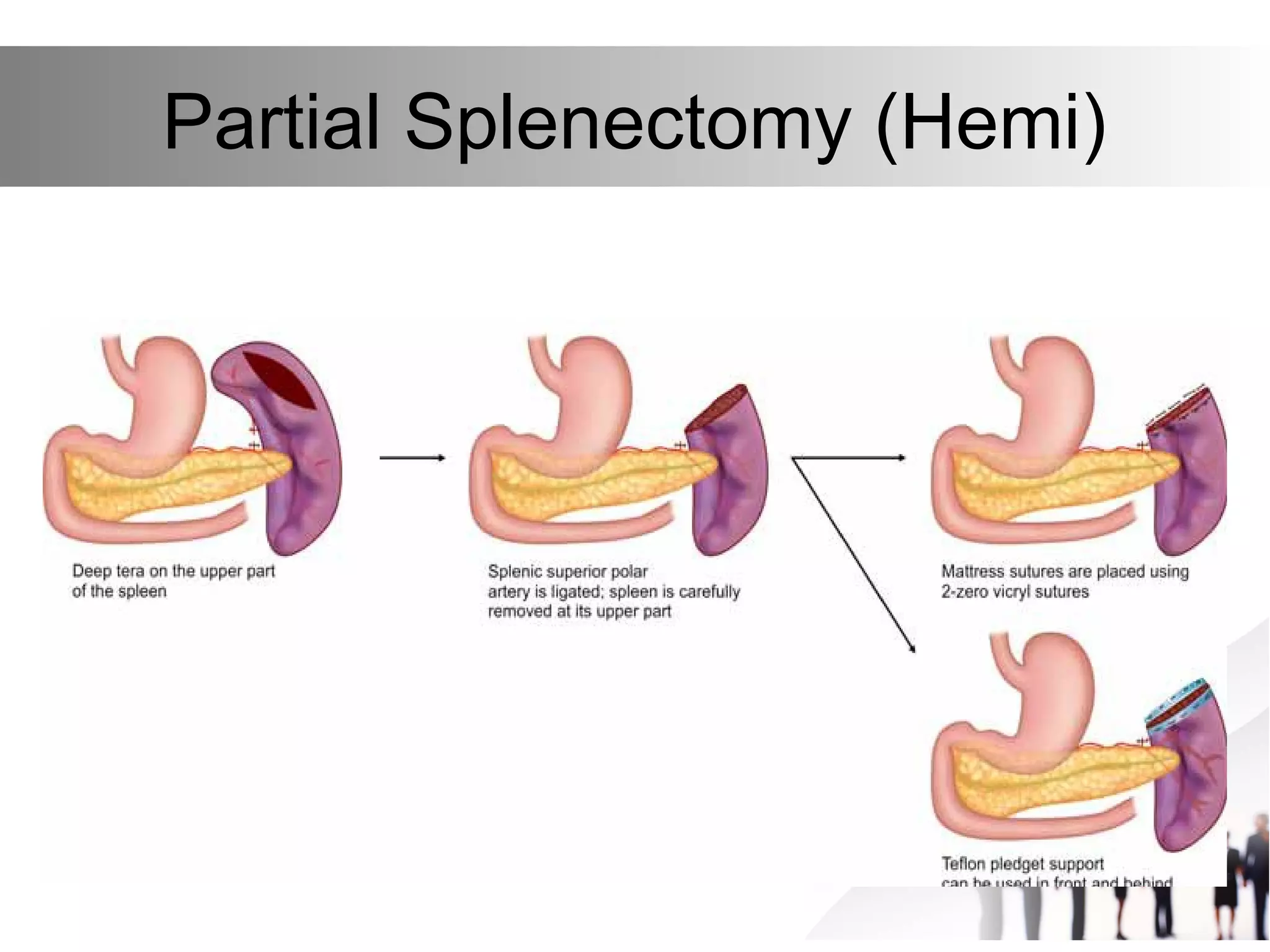
Partial Splenectomy (Hemi)
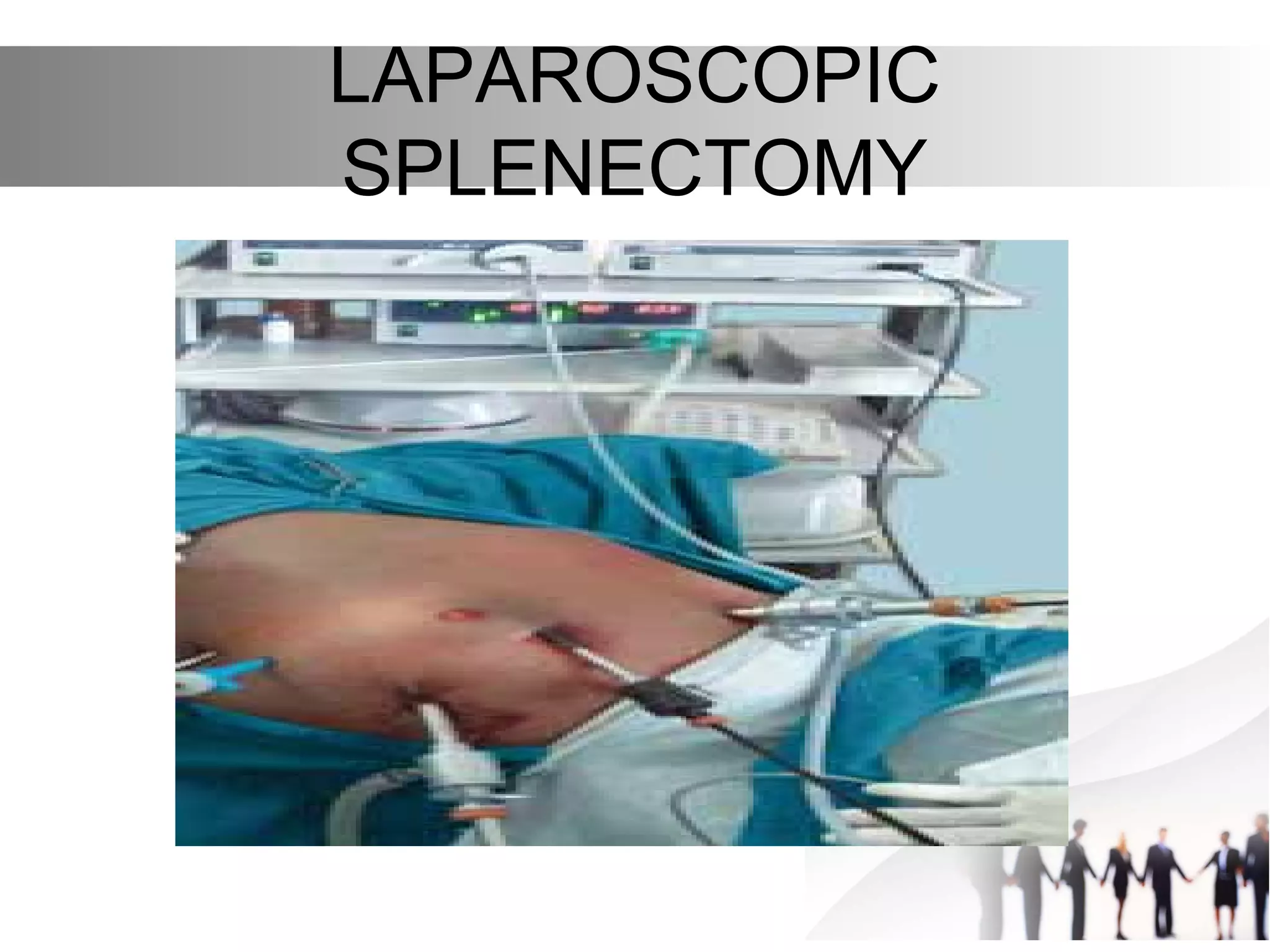
LAPAROSCOPIC
SPLENECTOMY
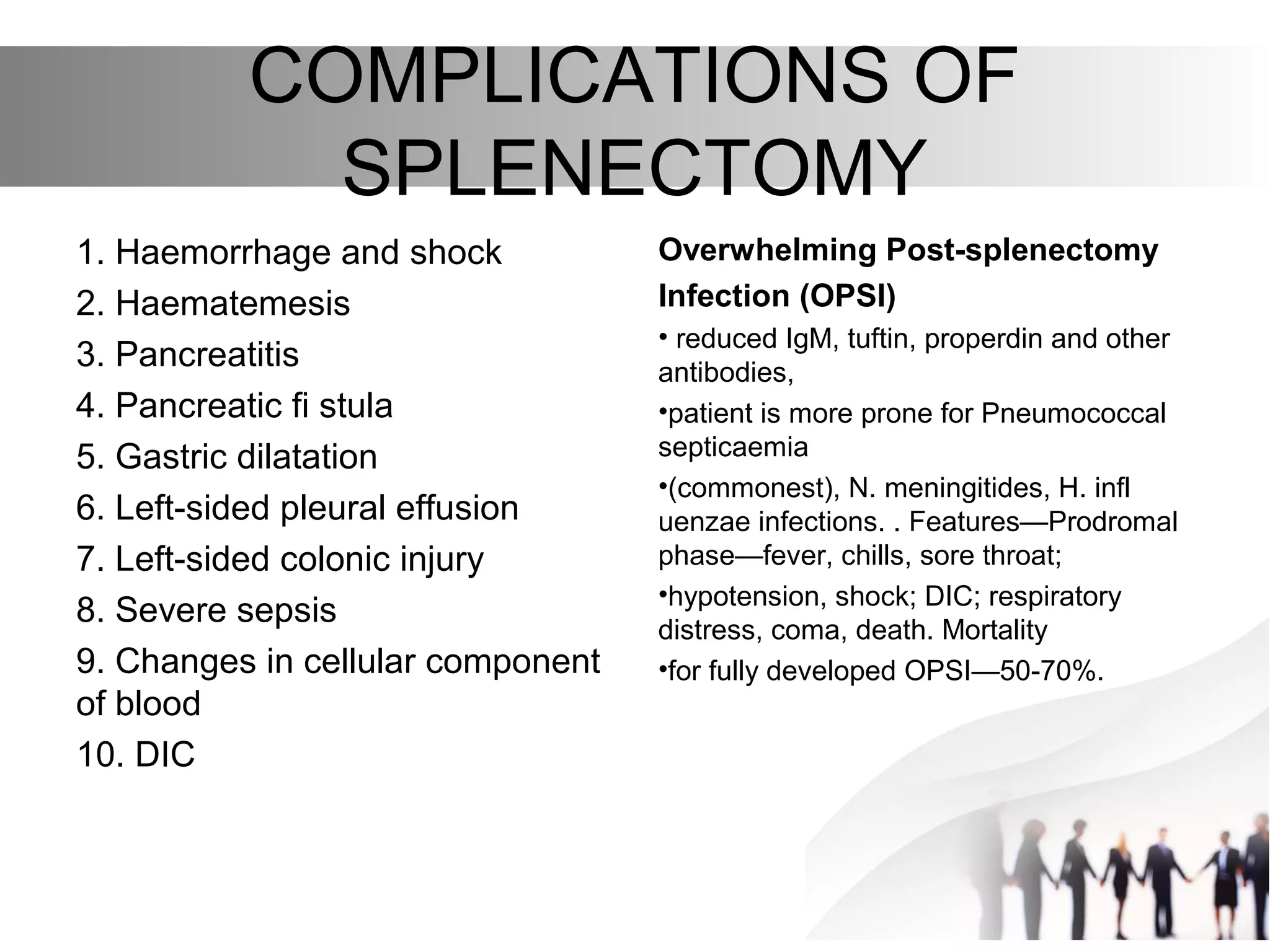
COMPLICATIONS OF
SPLENECTOMY
1. Haemorrhage and shock
2. Haematemesis
3. Pancreatitis
4. Pancreatic fi stula
5. Gastric dilatation
6. Left-sided pleural effusion
7. Left-sided colonic injury
8. Severe sepsis
9. Changes in cellular component
of blood
10. DIC
Overwhelming Post-splenectomy
Infection (OPSI)
• reduced IgM, tuftin, properdin and other
antibodies,
•patient is more prone for Pneumococcal
septicaemia
•(commonest), N. meningitides, H. infl
uenzae infections. . Features—Prodromal
phase—fever, chills, sore throat;
•hypotension, shock; DIC; respiratory
distress, coma, death. Mortality
•for fully developed OPSI—50-70%.
THANK YOU

Spleenectomy

  • 2.
  • 3.
  • 4.
  • 5.
  • 8.
  • 9.
  • 10.
    Indications for splenectomy: 1.Trauma. 2. In distal pancreatectomy, total pancreatectomy, rarely radical gastrectomy—removed “en bloc” with stomach. 3. Staging laparotomy in case of Hodgkin’s lymphoma. 4. Hereditary spherocytosis and other haemolytic anaemias. 5. Idiopathic thrombocytopaenic purpura (ITP). 6. Portal hypertension with variceal bleeding—mainly gastric varices with splenic vein thrombosis. 7. Tuberculosis of spleen.
  • 11.
    8. Others: Gaucher’s disease. Chronicmyeloid leukaemia, myelofi brosis. Felty’s syndrome. Carcinoma of tail of the pancreas during distal pancreatectomy. Schistosomiasis. Splenic artery aneurysm. Splenic infarction. Cystic disease of spleen. Splenic tumours.
  • 12.
    pre operative preperation •Pre-operative vaccine • Adequate blood is kept ready need arises • antibiotics, nasogastric tube, urinary catheterisation are needed preoperatively
  • 13.
    steps Splenectomy Due to HemorrhageSecondary to Trauma Step 1. Make an incision. Step 2. Mobilize the spleen. Step 3. Ligate the vessels. Step 4. Divide the hilum. Step 5. Obtain hemostasis. Step 6. Provide drainage. Step 7. Close the wound. Splenectomy Due to Hematological Disorders (Hypersplenism) Step 1. Make an incision. Step 2. Ligate the arteries. Step 3. Mobilize the spleen. Step 4. Divide the hilum. Step 5. Obtain hemostasis. Step 6. Search for accessory spleens. Step 7. Provide drainage. Step 8. Close the wound.
  • 14.
  • 15.
  • 16.
  • 17.
  • 18.
  • 19.
  • 20.
  • 22.
    Postoperative Care • anasogastric tube in place for 24-48 hours • antibiotics are needed in post- operative period. • leg exercises and respiratory physiotherapy are always given • asperin
  • 23.
    Splenic Preservation Surgeries •Small injuries like superficial lacerations which are often controlled by pressure, packing, haemostatic agents, surgical, • haemoclips, omental pedicle patch, suturing. • Argon beam laser is useful for surface oozing. • Surgicel is oxidized cellulose.
  • 24.
  • 25.
  • 26.
  • 27.
    COMPLICATIONS OF SPLENECTOMY 1. Haemorrhageand shock 2. Haematemesis 3. Pancreatitis 4. Pancreatic fi stula 5. Gastric dilatation 6. Left-sided pleural effusion 7. Left-sided colonic injury 8. Severe sepsis 9. Changes in cellular component of blood 10. DIC Overwhelming Post-splenectomy Infection (OPSI) • reduced IgM, tuftin, properdin and other antibodies, •patient is more prone for Pneumococcal septicaemia •(commonest), N. meningitides, H. infl uenzae infections. . Features—Prodromal phase—fever, chills, sore throat; •hypotension, shock; DIC; respiratory distress, coma, death. Mortality •for fully developed OPSI—50-70%.
  • 28.