SPELLING
RULES
 PREPARED BY:
 ALIF
 ANIS
 ARIF
 BIHA
 IZZATI
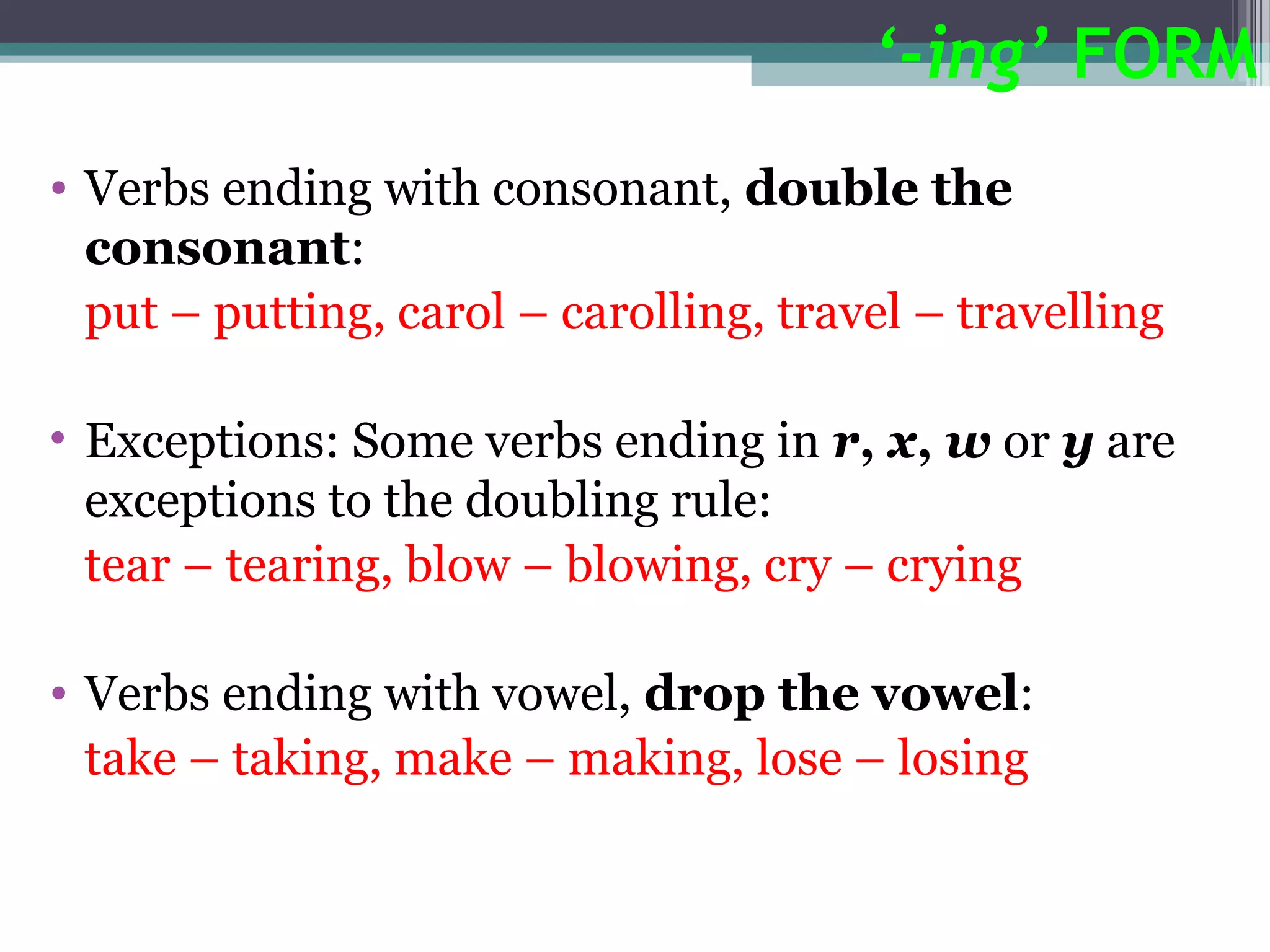
‘-ing’ FORM
• Verbs ending with consonant, double the
  consonant:
  put – putting, carol – carolling, travel – travelling

• Exceptions: Some verbs ending in r, x, w or y are
  exceptions to the doubling rule:
  tear – tearing, blow – blowing, cry – crying

• Verbs ending with vowel, drop the vowel:
  take – taking, make – making, lose – losing
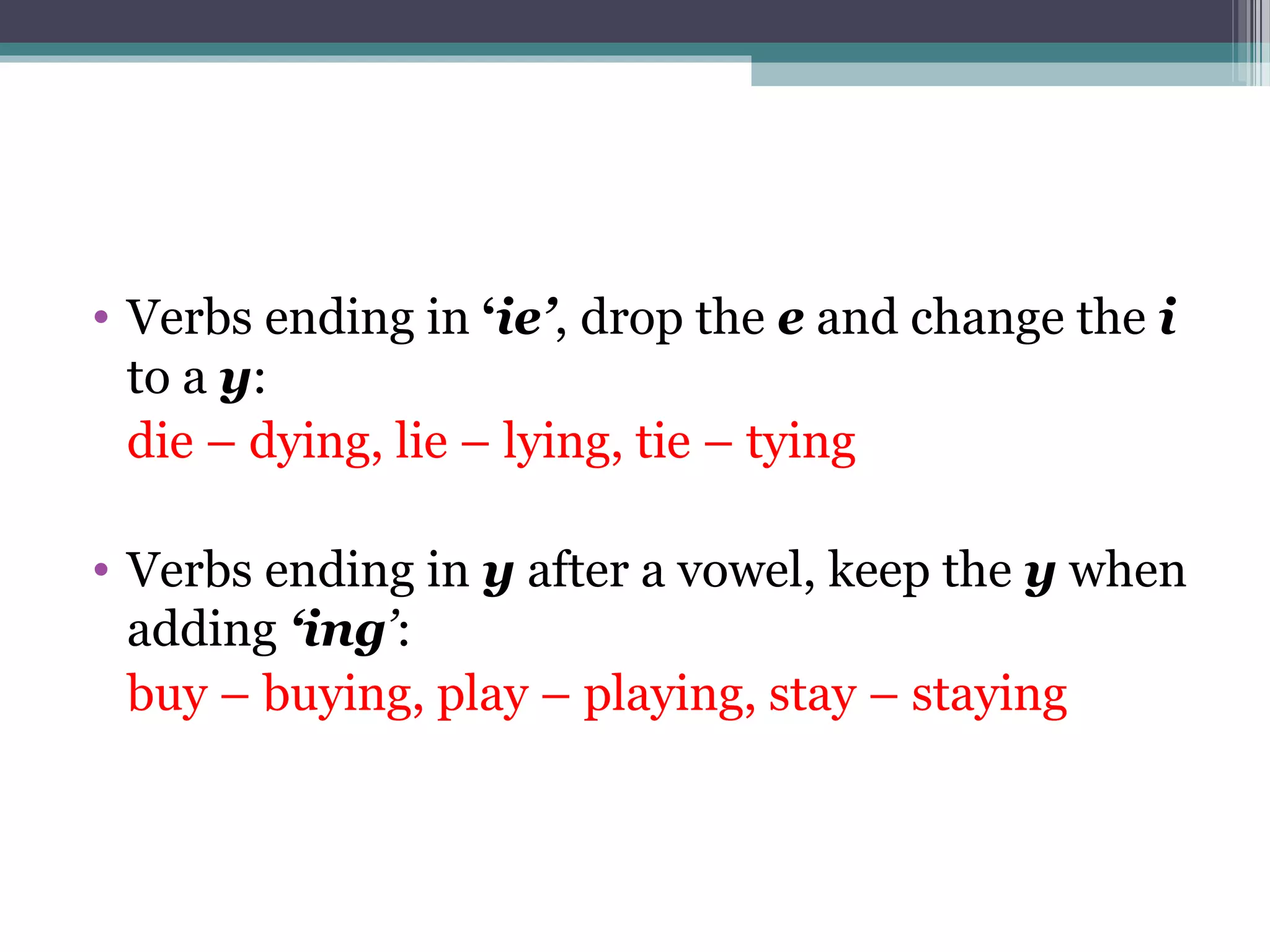
• Verbs ending in ‘ie’, drop the e and change the i
  to a y:
  die – dying, lie – lying, tie – tying

• Verbs ending in y after a vowel, keep the y when
  adding ‘ing’:
  buy – buying, play – playing, stay – staying
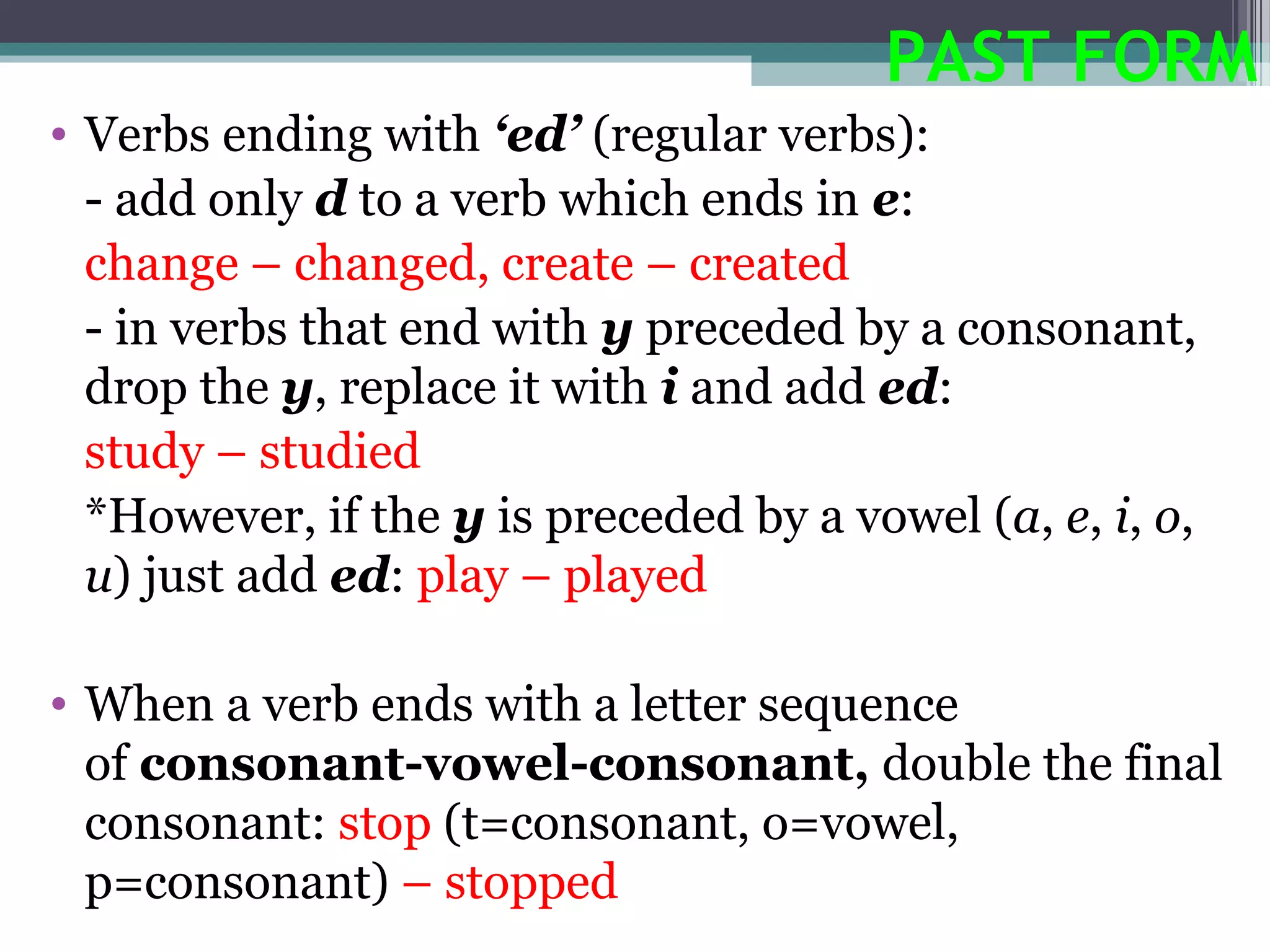
PAST FORM
• Verbs ending with ‘ed’ (regular verbs):
  - add only d to a verb which ends in e:
  change – changed, create – created
  - in verbs that end with y preceded by a consonant,
  drop the y, replace it with i and add ed:
  study – studied
  *However, if the y is preceded by a vowel (a, e, i, o,
  u) just add ed: play – played

• When a verb ends with a letter sequence
  of consonant-vowel-consonant, double the final
  consonant: stop (t=consonant, o=vowel,
  p=consonant) – stopped
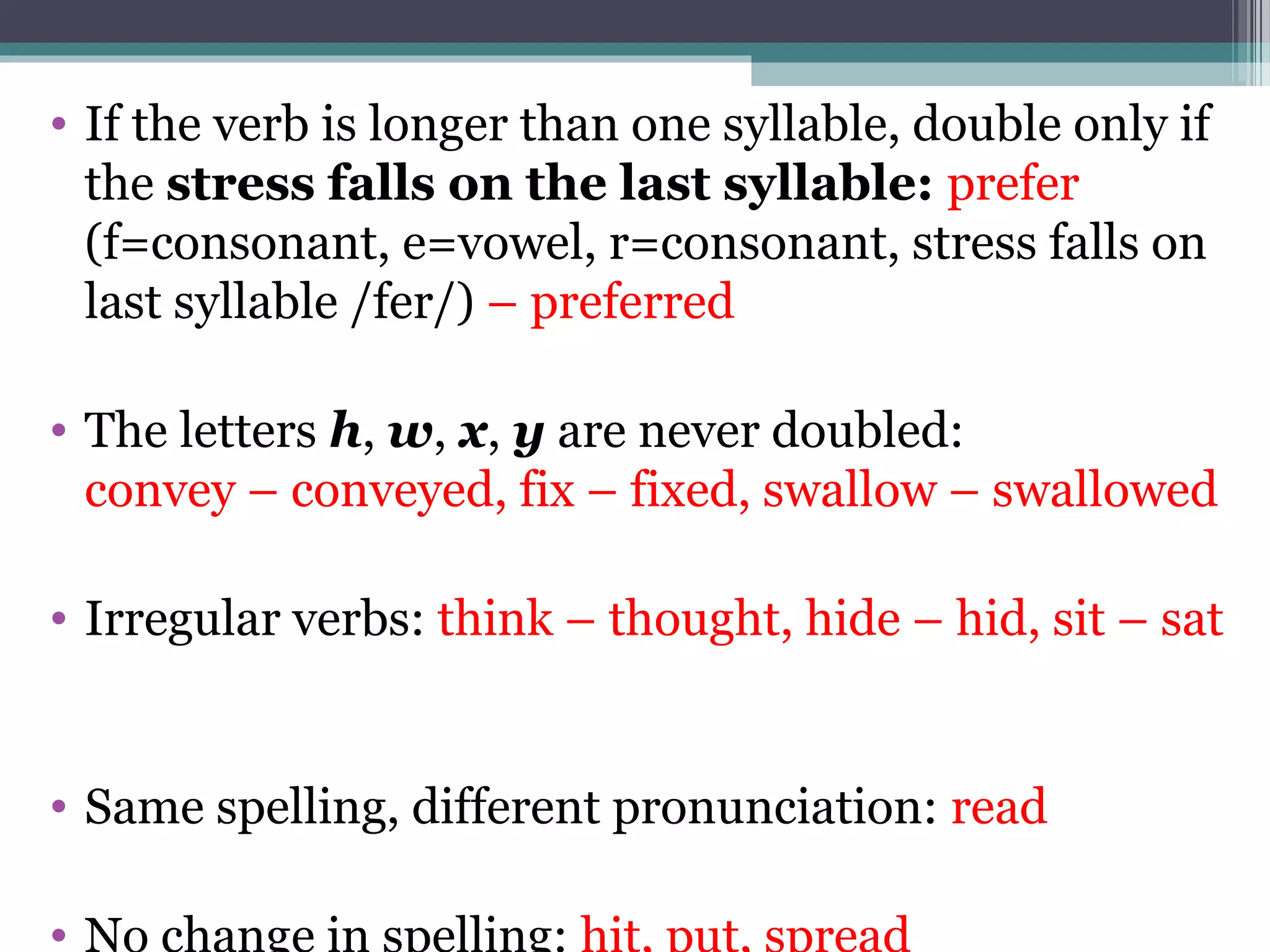
• If the verb is longer than one syllable, double only if
  the stress falls on the last syllable: prefer
  (f=consonant, e=vowel, r=consonant, stress falls on
  last syllable /fer/) – preferred

• The letters h, w, x, y are never doubled:
  convey – conveyed, fix – fixed, swallow – swallowed

• Irregular verbs: think – thought, hide – hid, sit – sat


• Same spelling, different pronunciation: read

•
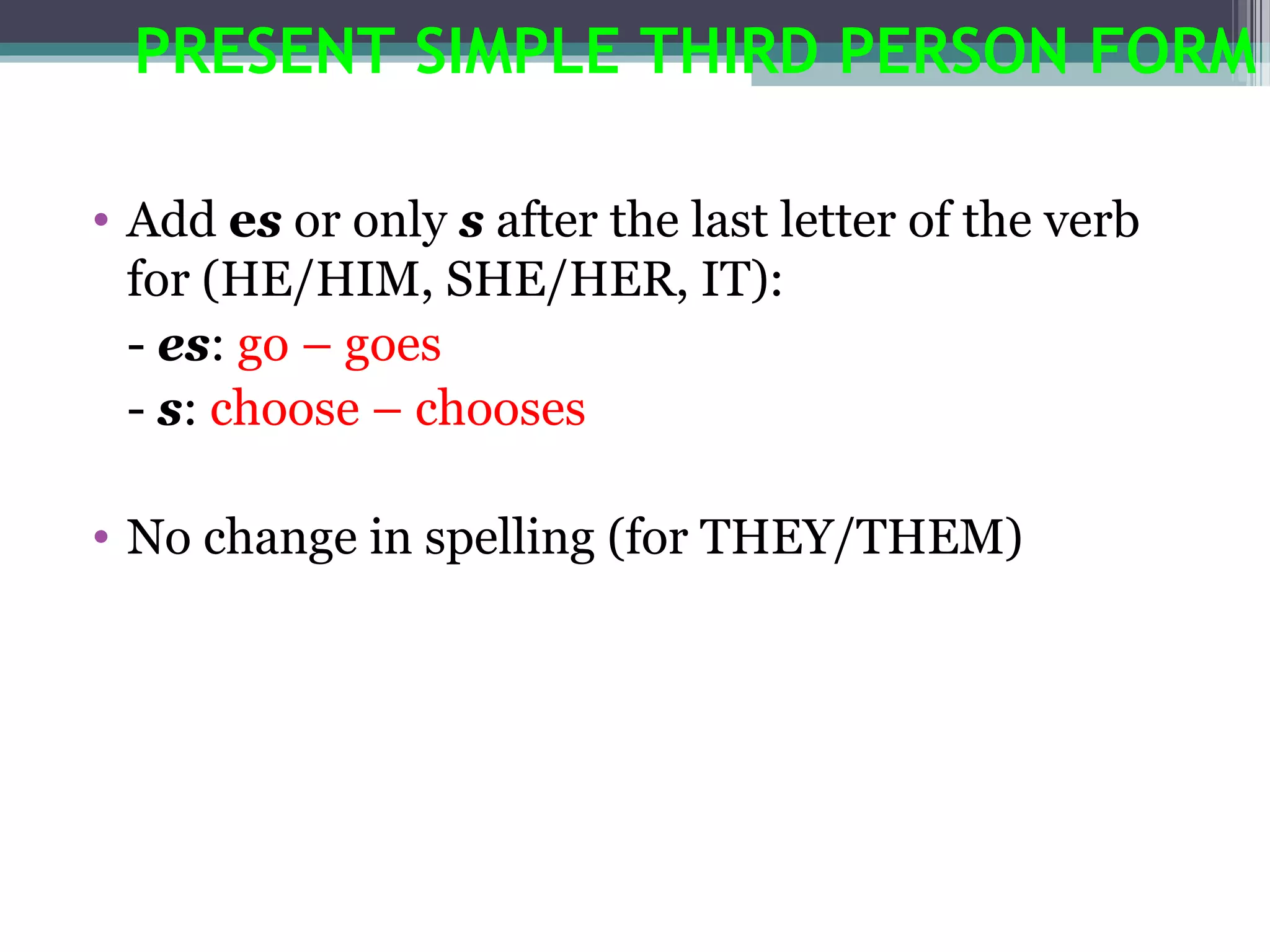
PRESENT SIMPLE THIRD PERSON FORM

• Add es or only s after the last letter of the verb
  for (HE/HIM, SHE/HER, IT):
  - es: go – goes
  - s: choose – chooses

• No change in spelling (for THEY/THEM)
THANK YOU…

Spelling rules

  • 1.
    SPELLING RULES PREPARED BY: ALIF ANIS ARIF BIHA IZZATI
  • 2.
    ‘-ing’ FORM • Verbsending with consonant, double the consonant: put – putting, carol – carolling, travel – travelling • Exceptions: Some verbs ending in r, x, w or y are exceptions to the doubling rule: tear – tearing, blow – blowing, cry – crying • Verbs ending with vowel, drop the vowel: take – taking, make – making, lose – losing
  • 3.
    • Verbs endingin ‘ie’, drop the e and change the i to a y: die – dying, lie – lying, tie – tying • Verbs ending in y after a vowel, keep the y when adding ‘ing’: buy – buying, play – playing, stay – staying
  • 4.
    PAST FORM • Verbsending with ‘ed’ (regular verbs): - add only d to a verb which ends in e: change – changed, create – created - in verbs that end with y preceded by a consonant, drop the y, replace it with i and add ed: study – studied *However, if the y is preceded by a vowel (a, e, i, o, u) just add ed: play – played • When a verb ends with a letter sequence of consonant-vowel-consonant, double the final consonant: stop (t=consonant, o=vowel, p=consonant) – stopped
  • 5.
    • If theverb is longer than one syllable, double only if the stress falls on the last syllable: prefer (f=consonant, e=vowel, r=consonant, stress falls on last syllable /fer/) – preferred • The letters h, w, x, y are never doubled: convey – conveyed, fix – fixed, swallow – swallowed • Irregular verbs: think – thought, hide – hid, sit – sat • Same spelling, different pronunciation: read •
  • 6.
    PRESENT SIMPLE THIRDPERSON FORM • Add es or only s after the last letter of the verb for (HE/HIM, SHE/HER, IT): - es: go – goes - s: choose – chooses • No change in spelling (for THEY/THEM)
  • 7.