





At its best, English spelling can be
perplexing, especially for non-native
speakers and writers. The following rules
and suggestions are offered as aids. You
will always be able to find exceptions to
these rules, but most writers find them
helpful.
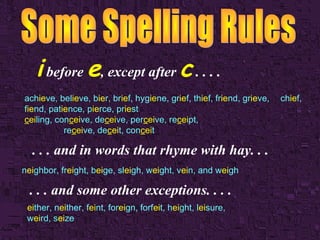
i before e, except after c . . . .
achieve, believe, bier, brief, hygiene, grief, thief, friend, grieve,
fiend, patience, pierce, priest
ceiling, conceive, deceive, perceive, receipt,
receive, deceit, conceit

. . . and in words that rhyme with hay. . .
neighbor, freight, beige, sleigh, weight, vein, and weigh

. . . and some other exceptions. . . .
either, neither, feint, foreign, forfeit, height, leisure,
weird, seize

chief,
A final y changes to i when an ending is added .
supply becomes supplies
worry becomes worried
merry becomes merrier

. . . except when that ending is -ing. . .
crying, studying

. . . And when the y is preceded by a vowel. . . .
obeyed, saying
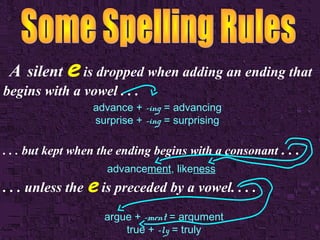
A silent e is dropped when adding an ending that
begins with a vowel . . .
advance + -ing = advancing
surprise + -ing = surprising

. . . but kept when the ending begins with a consonant . . .
advancement, likeness

. . . unless the e is preceded by a vowel. . . .
argue + -ment = argument
true + -ly = truly
Adding a prefix seldom changes the
spelling of a word.
misspelled
unnecessary
dissatisfied
disinterested
misinform
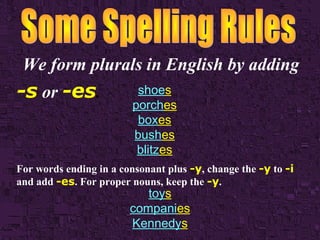
We form plurals in English by adding

-s or -es.

shoes
porches
boxes
bushes
blitzes

For words ending in a consonant plus -y, change the -y to -i
and add -es. For proper nouns, keep the -y.

toys
companies
Kennedys
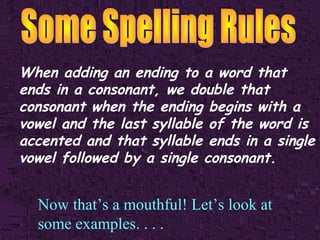
When adding an ending to a word that
ends in a consonant, we double that
consonant when the ending begins with a
vowel and the last syllable of the word is
accented and that syllable ends in a single
vowel followed by a single consonant.

Now that’s a mouthful! Let’s look at
some examples. . . .
When adding an ending to a word that ends in a consonant,
we double that consonant when the ending begins with a
vowel and the last syllable of the word is accented and that
syllable ends in a single vowel followed by a single
consonant.

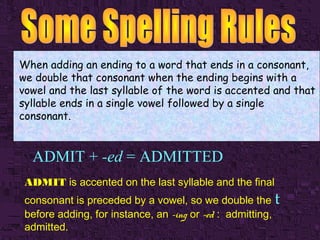
ADMIT + -ed = ADMITTED
ADMIT is accented on the last syllable and the final

consonant is preceded by a vowel, so we double the t
before adding, for instance, an -ing or -ed : admitting,
admitted.
When adding an ending to a word that ends in a consonant,
we double that consonant when the ending begins with a
vowel and the last syllable of the word is accented and that
syllable ends in a single vowel followed by a single
consonant.

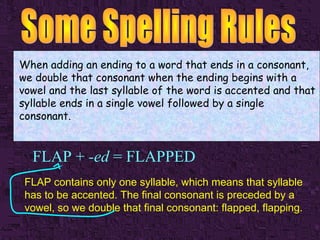
FLAP + -ed = FLAPPED
FLAP contains only one syllable, which means that syllable
has to be accented. The final consonant is preceded by a
vowel, so we double that final consonant: flapped, flapping.
When adding an ending to a word that ends in a consonant,
we double that consonant when the ending begins with a
vowel and the last syllable of the word is accented and that
syllable ends in a single vowel followed by a single
consonant.

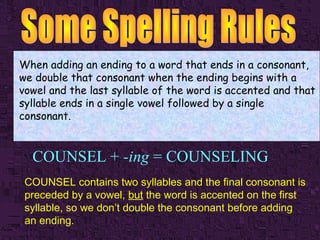
COUNSEL + -ing = COUNSELING
COUNSEL contains two syllables and the final consonant is
preceded by a vowel, but the word is accented on the first
syllable, so we don’t double the consonant before adding
an ending.
When adding an ending to a word that ends in a consonant,
we double that consonant when the ending begins with a
vowel and the last syllable of the word is accented and that
syllable ends in a single vowel followed by a single
consonant.

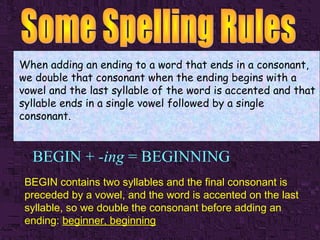
BEGIN + -ing = BEGINNING
BEGIN contains two syllables and the final consonant is
preceded by a vowel, and the word is accented on the last
syllable, so we double the consonant before adding an
ending: beginner, beginning
When adding an ending to a word that ends in a consonant,
we double that consonant when the ending begins with a
vowel and the last syllable of the word is accented and that
syllable ends in a single vowel followed by a single
consonant.

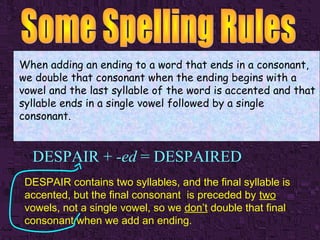
DESPAIR + -ed = DESPAIRED
DESPAIR contains two syllables, and the final syllable is
accented, but the final consonant is preceded by two
vowels, not a single vowel, so we don’t double that final
consonant when we add an ending.
Becoming a better speller is a matter of personal
commitment and finding your own method to add this
important skill to your writing arsenal. Refer to the
Guide to Grammar and Writing for recommendations on
working on spelling. Also, take the spelling quizzes on the
List of Interactive Quizzes.
This PowerPoint presentation was created by
Charles Darling, PhD
Professor of English and Webmaster
Capital Community College
Hartford, Connecticut
copyright November 1999

Basic Grammar Spelling[1]

  • 1.
    At its best,English spelling can be perplexing, especially for non-native speakers and writers. The following rules and suggestions are offered as aids. You will always be able to find exceptions to these rules, but most writers find them helpful.
  • 2.
    i before e,except after c . . . . achieve, believe, bier, brief, hygiene, grief, thief, friend, grieve, fiend, patience, pierce, priest ceiling, conceive, deceive, perceive, receipt, receive, deceit, conceit . . . and in words that rhyme with hay. . . neighbor, freight, beige, sleigh, weight, vein, and weigh . . . and some other exceptions. . . . either, neither, feint, foreign, forfeit, height, leisure, weird, seize chief,
  • 3.
    A final ychanges to i when an ending is added . supply becomes supplies worry becomes worried merry becomes merrier . . . except when that ending is -ing. . . crying, studying . . . And when the y is preceded by a vowel. . . . obeyed, saying
  • 4.
    A silent eis dropped when adding an ending that begins with a vowel . . . advance + -ing = advancing surprise + -ing = surprising . . . but kept when the ending begins with a consonant . . . advancement, likeness . . . unless the e is preceded by a vowel. . . . argue + -ment = argument true + -ly = truly
  • 5.
    Adding a prefixseldom changes the spelling of a word. misspelled unnecessary dissatisfied disinterested misinform
  • 6.
    We form pluralsin English by adding -s or -es. shoes porches boxes bushes blitzes For words ending in a consonant plus -y, change the -y to -i and add -es. For proper nouns, keep the -y. toys companies Kennedys
  • 7.
    When adding anending to a word that ends in a consonant, we double that consonant when the ending begins with a vowel and the last syllable of the word is accented and that syllable ends in a single vowel followed by a single consonant. Now that’s a mouthful! Let’s look at some examples. . . .
  • 8.
    When adding anending to a word that ends in a consonant, we double that consonant when the ending begins with a vowel and the last syllable of the word is accented and that syllable ends in a single vowel followed by a single consonant. ADMIT + -ed = ADMITTED ADMIT is accented on the last syllable and the final consonant is preceded by a vowel, so we double the t before adding, for instance, an -ing or -ed : admitting, admitted.
  • 9.
    When adding anending to a word that ends in a consonant, we double that consonant when the ending begins with a vowel and the last syllable of the word is accented and that syllable ends in a single vowel followed by a single consonant. FLAP + -ed = FLAPPED FLAP contains only one syllable, which means that syllable has to be accented. The final consonant is preceded by a vowel, so we double that final consonant: flapped, flapping.
  • 10.
    When adding anending to a word that ends in a consonant, we double that consonant when the ending begins with a vowel and the last syllable of the word is accented and that syllable ends in a single vowel followed by a single consonant. COUNSEL + -ing = COUNSELING COUNSEL contains two syllables and the final consonant is preceded by a vowel, but the word is accented on the first syllable, so we don’t double the consonant before adding an ending.
  • 11.
    When adding anending to a word that ends in a consonant, we double that consonant when the ending begins with a vowel and the last syllable of the word is accented and that syllable ends in a single vowel followed by a single consonant. BEGIN + -ing = BEGINNING BEGIN contains two syllables and the final consonant is preceded by a vowel, and the word is accented on the last syllable, so we double the consonant before adding an ending: beginner, beginning
  • 12.
    When adding anending to a word that ends in a consonant, we double that consonant when the ending begins with a vowel and the last syllable of the word is accented and that syllable ends in a single vowel followed by a single consonant. DESPAIR + -ed = DESPAIRED DESPAIR contains two syllables, and the final syllable is accented, but the final consonant is preceded by two vowels, not a single vowel, so we don’t double that final consonant when we add an ending.
  • 13.
    Becoming a betterspeller is a matter of personal commitment and finding your own method to add this important skill to your writing arsenal. Refer to the Guide to Grammar and Writing for recommendations on working on spelling. Also, take the spelling quizzes on the List of Interactive Quizzes.
  • 14.
    This PowerPoint presentationwas created by Charles Darling, PhD Professor of English and Webmaster Capital Community College Hartford, Connecticut copyright November 1999