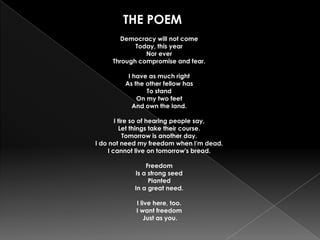
THE POEM
       Democracy will not come
            Today, this year
               Nor ever
     Through compromise and fear.

          I have as much right
         As the other fellow has
                To stand
             On my two feet
            And own the land.

        I tire so of hearing people say,
           Let things take their course.
            Tomorrow is another day.
I do not need my freedom when I'm dead.
     I cannot live on tomorrow's bread.

                Freedom
            Is a strong seed
                 Planted
            In a great need.

            I live here, too.
            I want freedom
                Just as you.
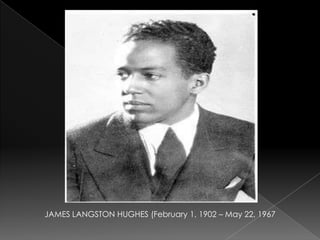
JAMES LANGSTON HUGHES (February 1, 1902 – May 22, 1967
 Born in Joplin, Missouri
 His great-great-grandparent’s brother was the first
  Black American to be elected to public office.
 He is the member of abolitionist family, where he
   fight for his skin colour.
 Langston Hughes died of cancer on May 22, 1967.
 His father wants him to become a lawyer but he
  refused.
 He had works many part time job before
  discovered by poet Vachet Lindsay.
 His most famous poem is ‘The Negro Speaks of
  Rivers.
• The first stanza – This stanza shows the poet true feelings. He
  tired of being compromise all the time yearning for
  democracy to come. He assumes maybe his people need
  to change their strategy to be heard by the authority.


• The second stanza – He shows and asks for his right as
  American citizen to be the same as the white people. He
  also wants to walk around his own land without feeling no
  fear.
• The third stanza – This stanza shows his character which is
 so eager to fight for his right and he does not want to
 wait and tired of hearing ‘Let things take their course,
 Tomorrow is another day’.
• The fourth stanza –‘planted by great need’ means that
  everyone want freedom in their life and everyone
  deserve it.
• The fifth stanza – Emphasizes what the poet want as a
  American citizen by saying it again
• Democracy
 He asks for his right and freedom as an American
 regardless his colour. He wants equal treat in his
 own country.
• Racial
 How the black is isolated by the dominant white
 people. The society assumes black as the
 second class people.
    Serious
    - Since democracy is a serious topic to
    discuss, he uses serious tone to deliver it
    in his poem. He seriously emphasizes his
    point of wanting a democracy and
    wants the reader to get the message
    sharply and clearly.
 First stanza- ABBB
 Second stanza- ABCDC
 Third stanza- ABACC
 Fourth stanza- ABBB
 Fifth stanza- ABA


- Hence, the poem is free verse where the
   rhymes are not consistent.
LITERARY DEVICES
 Rhyming couplets:
                     Today, this year
                        Nor Ever
               Through comprise and fear

                       To stand
                    On my two feet
                   And own the land

 Metaphor:
  - I cannot live on tomorrow’s bread
        he means he cannot live on unsure, tomorrow
        promises

   - Freedom is a strong seed
        The poet compare freedom with a seed
THANK YOU

Democracy by Langston Hughes

  • 2.
    THE POEM Democracy will not come Today, this year Nor ever Through compromise and fear. I have as much right As the other fellow has To stand On my two feet And own the land. I tire so of hearing people say, Let things take their course. Tomorrow is another day. I do not need my freedom when I'm dead. I cannot live on tomorrow's bread. Freedom Is a strong seed Planted In a great need. I live here, too. I want freedom Just as you.
  • 3.
    JAMES LANGSTON HUGHES(February 1, 1902 – May 22, 1967
  • 4.
     Born inJoplin, Missouri  His great-great-grandparent’s brother was the first Black American to be elected to public office.  He is the member of abolitionist family, where he fight for his skin colour.  Langston Hughes died of cancer on May 22, 1967.  His father wants him to become a lawyer but he refused.  He had works many part time job before discovered by poet Vachet Lindsay.  His most famous poem is ‘The Negro Speaks of Rivers.
  • 5.
    • The firststanza – This stanza shows the poet true feelings. He tired of being compromise all the time yearning for democracy to come. He assumes maybe his people need to change their strategy to be heard by the authority. • The second stanza – He shows and asks for his right as American citizen to be the same as the white people. He also wants to walk around his own land without feeling no fear.
  • 6.
    • The thirdstanza – This stanza shows his character which is so eager to fight for his right and he does not want to wait and tired of hearing ‘Let things take their course, Tomorrow is another day’. • The fourth stanza –‘planted by great need’ means that everyone want freedom in their life and everyone deserve it. • The fifth stanza – Emphasizes what the poet want as a American citizen by saying it again
  • 7.
    • Democracy Heasks for his right and freedom as an American regardless his colour. He wants equal treat in his own country. • Racial How the black is isolated by the dominant white people. The society assumes black as the second class people.
  • 8.
    Serious - Since democracy is a serious topic to discuss, he uses serious tone to deliver it in his poem. He seriously emphasizes his point of wanting a democracy and wants the reader to get the message sharply and clearly.
  • 9.
     First stanza-ABBB  Second stanza- ABCDC  Third stanza- ABACC  Fourth stanza- ABBB  Fifth stanza- ABA - Hence, the poem is free verse where the rhymes are not consistent.
  • 10.
    LITERARY DEVICES  Rhymingcouplets: Today, this year Nor Ever Through comprise and fear To stand On my two feet And own the land  Metaphor: - I cannot live on tomorrow’s bread he means he cannot live on unsure, tomorrow promises - Freedom is a strong seed The poet compare freedom with a seed
  • 11.