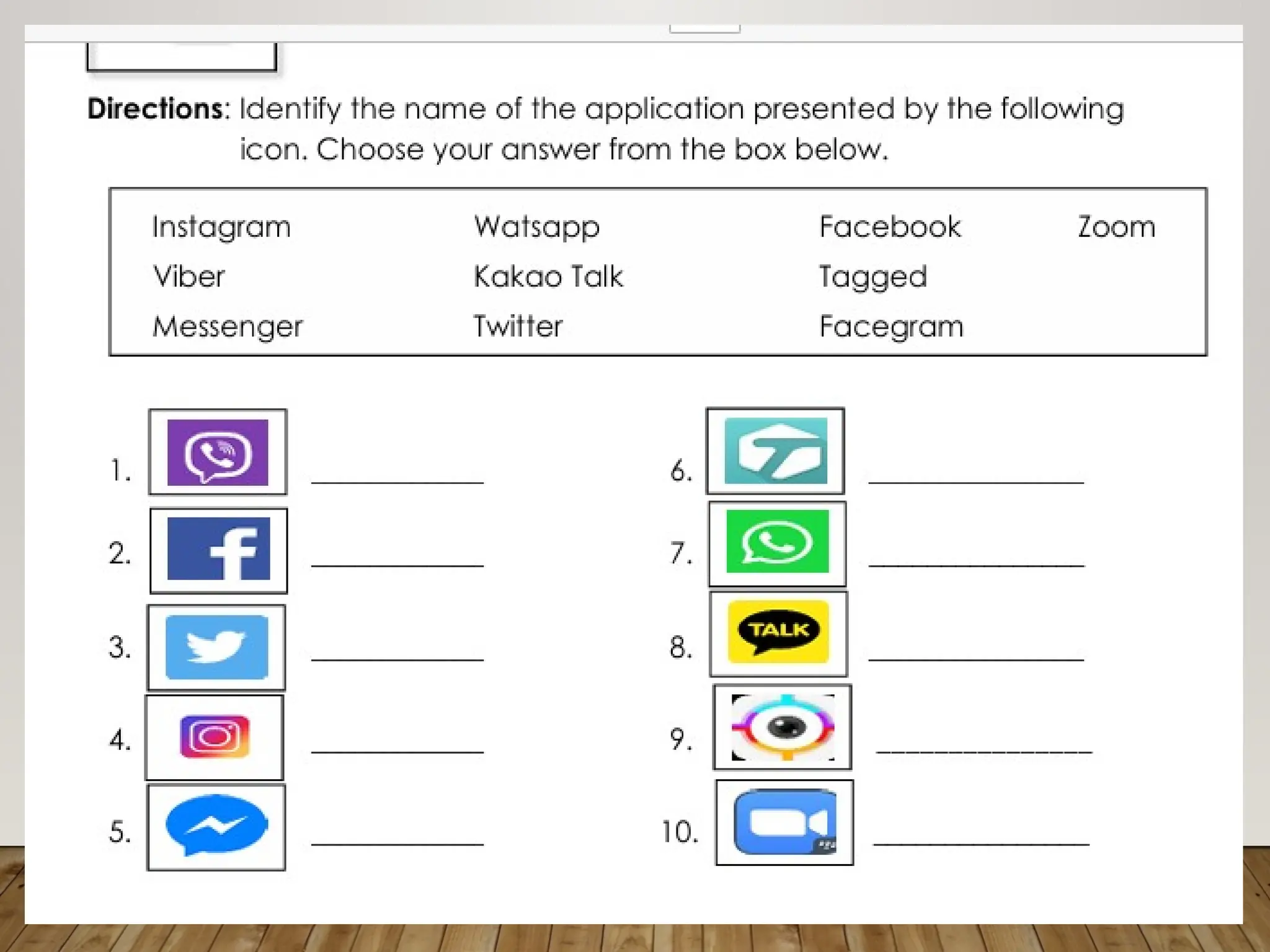
•What is the common use
of these computer/cell
phone applications?
•Does our relationship
with others affect the way
we talk to them? Why?
•“What do we mean
by communication?”
•“What did you notice about
how people communicated
in each situation?”
COMMUNICATIVE
STYLES
ENGLISH 9 | TYPES OF SPEECH STYLES
OBJECTIVES
• - Define communicative styles
• - Identify the five types of communicative
styles
• - Demonstrate appropriate
communicative styles through role-playing
WHAT IS COMMUNICATIVE STYLE?
•It is the way language is used
depending on the context,
relationship of speaker and listener,
and purpose of communication.
TYPES OF COMMUNICATIVE
STYLES
•1. Intimate
•2. Casual
•3. Consultative
•4. Formal
•5. Frozen
1. INTIMATE STYLE
•- Used among close family members,
partners, or best friends
•- Language is private and personal
•Example:Whispering secrets to a sibling
2. CASUAL STYLE
•- Informal communication among
friends or peers
•- May use slang and ellipsis
•Example: Chatting with a classmate
3. CONSULTATIVE STYLE
• - Semi-formal; used in professional or
educational settings
• - Speaker provides guidance; listener
participates
• Example:Asking a teacher for help
4. FORMAL STYLE
•- Used in formal settings; structured
and well-organized
•- Often one-way communication
•Example: Delivering a speech or report
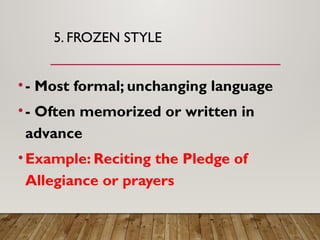
5. FROZEN STYLE
•- Most formal; unchanging language
•- Often memorized or written in
advance
•Example: Reciting the Pledge of
Allegiance or prayers
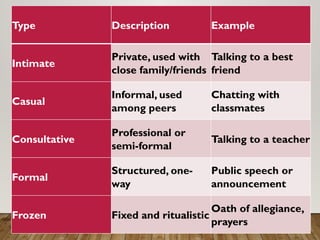
Type Description Example
Intimate
Private, used with
close family/friends
Talking to a best
friend
Casual
Informal, used
among peers
Chatting with
classmates
Consultative
Professional or
semi-formal
Talking to a teacher
Formal
Structured, one-
way
Public speech or
announcement
Frozen Fixed and ritualistic
Oath of allegiance,
prayers
ACTIVITY
• Group Role-Play:
• - Each group presents a scenario
showing one communicative style
• - Class guesses the style used and
explains why
•
•Why is it important to know
different communicative styles?
•How do we choose the correct style
in a situation?
SUMMARY
• - Communicative styles vary
depending on the relationship and
context
• - Using the right style improves
communication and respect
EVALUATION
• Identify the communicative style used in each
situation:
• 1.Talking to your teacher
• 2. Reciting a prayer
• 3.Talking to a friend
• 4. Giving a speech
• 5.Whispering to a sibling
COMMUNICATIVE STYLES
•It is the interaction of individuals
with one another through their
behavior.
1. CASUAL/INFORMAL COMMUNICATION
STYLE
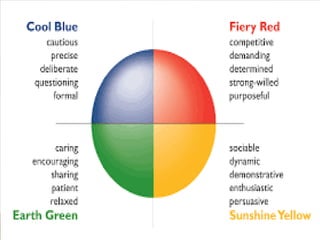
• Described as: SUNSHINEYELLOW – sociable, dynamic,
demonstrative, enthusiastic, persuasive Casual / Informal - Much
more informal.
• This style is used in conversations between friends and insiders
who have something to share and have shared background
information
• There is free and easy participation of both speaker and listener.
• The use of language is general. - It makes use of slang,
colloquialisms and idioms.
• SLANG – kind of language occurring chiefly in
casual and playful speech
• COLLOQUIALISM – is any form of informal, day-
to-day language you
• would use with close friends
• IDIOMS – expressions that cannot be taken
literally
EXAMPLES OF CASUAL/INFORMAL
COMMUNICATIVE STYLE
•-use of contractions
•-use of slang words
•-use of simplified grammar
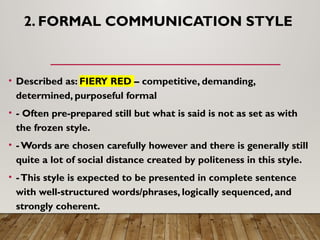
2. FORMAL COMMUNICATION STYLE
• Described as: FIERY RED – competitive, demanding,
determined, purposeful formal
• - Often pre-prepared still but what is said is not as set as with
the frozen style.
• -Words are chosen carefully however and there is generally still
quite a lot of social distance created by politeness in this style.
• -This style is expected to be presented in complete sentence
with well-structured words/phrases, logically sequenced, and
strongly coherent.
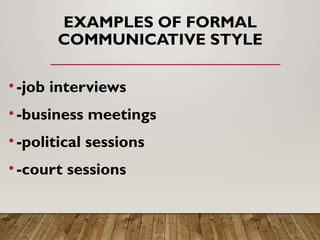
EXAMPLES OF FORMAL
COMMUNICATIVE STYLE
• -job interviews
• -business meetings
• -political sessions
• -court sessions
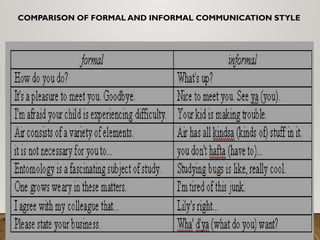
COMPARISON OF FORMAL AND INFORMAL COMMUNICATION STYLE
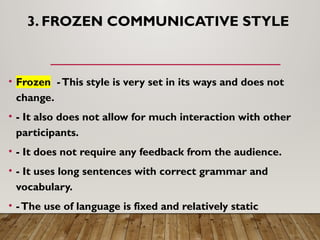
3. FROZEN COMMUNICATIVE STYLE
• Frozen -This style is very set in its ways and does not
change.
• - It also does not allow for much interaction with other
participants.
• - It does not require any feedback from the audience.
• - It uses long sentences with correct grammar and
vocabulary.
• -The use of language is fixed and relatively static
EXAMPLES OF FROZEN COMMUNICATION STYLE
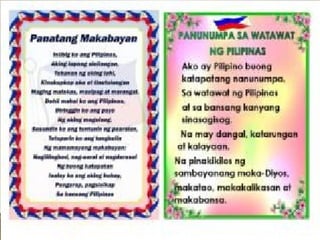
• • Pledge of Allegiance
• • Weddings
• • Shakespeare plays
• • Church Mass
4. CONSULTATIVE COMMUNICATIVE STYLE
• Cool Blue – cautious, precise, deliberate, questioning, formal
• Consultative -The style used most often for everyday interaction.
• -This is an unplanned speech.
• -This communicative style uses listener participation and feedback
• -The two defining features of this style are:
a. the speaker supplies the background information
b. the listener participates continuously
EXAMPLES OF CONSULTATIVE
• • when a student is talking/asking to his or her
teacher
• • when a student recites in class
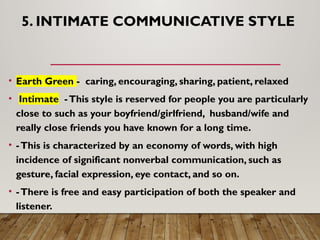
5. INTIMATE COMMUNICATIVE STYLE
• Earth Green - caring, encouraging, sharing, patient, relaxed
• Intimate -This style is reserved for people you are particularly
close to such as your boyfriend/girlfriend, husband/wife and
really close friends you have known for a long time.
• -This is characterized by an economy of words, with high
incidence of significant nonverbal communication, such as
gesture, facial expression, eye contact, and so on.
• -There is free and easy participation of both the speaker and
listener.
Communicative_Styles......_English9.pptx

Communicative_Styles......_English9.pptx

  • 2.
    •What is thecommon use of these computer/cell phone applications?
  • 4.
    •Does our relationship withothers affect the way we talk to them? Why?
  • 5.
    •“What do wemean by communication?”
  • 8.
    •“What did younotice about how people communicated in each situation?”
  • 9.
    COMMUNICATIVE STYLES ENGLISH 9 |TYPES OF SPEECH STYLES
  • 10.
    OBJECTIVES • - Definecommunicative styles • - Identify the five types of communicative styles • - Demonstrate appropriate communicative styles through role-playing
  • 11.
    WHAT IS COMMUNICATIVESTYLE? •It is the way language is used depending on the context, relationship of speaker and listener, and purpose of communication.
  • 12.
    TYPES OF COMMUNICATIVE STYLES •1.Intimate •2. Casual •3. Consultative •4. Formal •5. Frozen
  • 13.
    1. INTIMATE STYLE •-Used among close family members, partners, or best friends •- Language is private and personal •Example:Whispering secrets to a sibling
  • 14.
    2. CASUAL STYLE •-Informal communication among friends or peers •- May use slang and ellipsis •Example: Chatting with a classmate
  • 15.
    3. CONSULTATIVE STYLE •- Semi-formal; used in professional or educational settings • - Speaker provides guidance; listener participates • Example:Asking a teacher for help
  • 16.
    4. FORMAL STYLE •-Used in formal settings; structured and well-organized •- Often one-way communication •Example: Delivering a speech or report
  • 17.
    5. FROZEN STYLE •-Most formal; unchanging language •- Often memorized or written in advance •Example: Reciting the Pledge of Allegiance or prayers
  • 18.
    Type Description Example Intimate Private,used with close family/friends Talking to a best friend Casual Informal, used among peers Chatting with classmates Consultative Professional or semi-formal Talking to a teacher Formal Structured, one- way Public speech or announcement Frozen Fixed and ritualistic Oath of allegiance, prayers
  • 19.
    ACTIVITY • Group Role-Play: •- Each group presents a scenario showing one communicative style • - Class guesses the style used and explains why
  • 20.
    • •Why is itimportant to know different communicative styles? •How do we choose the correct style in a situation?
  • 21.
    SUMMARY • - Communicativestyles vary depending on the relationship and context • - Using the right style improves communication and respect
  • 22.
    EVALUATION • Identify thecommunicative style used in each situation: • 1.Talking to your teacher • 2. Reciting a prayer • 3.Talking to a friend • 4. Giving a speech • 5.Whispering to a sibling
  • 23.
    COMMUNICATIVE STYLES •It isthe interaction of individuals with one another through their behavior.
  • 25.
    1. CASUAL/INFORMAL COMMUNICATION STYLE •Described as: SUNSHINEYELLOW – sociable, dynamic, demonstrative, enthusiastic, persuasive Casual / Informal - Much more informal. • This style is used in conversations between friends and insiders who have something to share and have shared background information • There is free and easy participation of both speaker and listener. • The use of language is general. - It makes use of slang, colloquialisms and idioms.

  • 26.
    • SLANG –kind of language occurring chiefly in casual and playful speech • COLLOQUIALISM – is any form of informal, day- to-day language you • would use with close friends • IDIOMS – expressions that cannot be taken literally
  • 27.
    EXAMPLES OF CASUAL/INFORMAL COMMUNICATIVESTYLE •-use of contractions •-use of slang words •-use of simplified grammar
  • 29.
    2. FORMAL COMMUNICATIONSTYLE • Described as: FIERY RED – competitive, demanding, determined, purposeful formal • - Often pre-prepared still but what is said is not as set as with the frozen style. • -Words are chosen carefully however and there is generally still quite a lot of social distance created by politeness in this style. • -This style is expected to be presented in complete sentence with well-structured words/phrases, logically sequenced, and strongly coherent.
  • 30.
    EXAMPLES OF FORMAL COMMUNICATIVESTYLE • -job interviews • -business meetings • -political sessions • -court sessions
  • 34.
    COMPARISON OF FORMALAND INFORMAL COMMUNICATION STYLE
  • 35.
    3. FROZEN COMMUNICATIVESTYLE • Frozen -This style is very set in its ways and does not change. • - It also does not allow for much interaction with other participants. • - It does not require any feedback from the audience. • - It uses long sentences with correct grammar and vocabulary. • -The use of language is fixed and relatively static
  • 36.
    EXAMPLES OF FROZENCOMMUNICATION STYLE • • Pledge of Allegiance • • Weddings • • Shakespeare plays • • Church Mass
  • 39.
    4. CONSULTATIVE COMMUNICATIVESTYLE • Cool Blue – cautious, precise, deliberate, questioning, formal • Consultative -The style used most often for everyday interaction. • -This is an unplanned speech. • -This communicative style uses listener participation and feedback • -The two defining features of this style are: a. the speaker supplies the background information b. the listener participates continuously
  • 40.
    EXAMPLES OF CONSULTATIVE •• when a student is talking/asking to his or her teacher • • when a student recites in class
  • 43.
    5. INTIMATE COMMUNICATIVESTYLE • Earth Green - caring, encouraging, sharing, patient, relaxed • Intimate -This style is reserved for people you are particularly close to such as your boyfriend/girlfriend, husband/wife and really close friends you have known for a long time. • -This is characterized by an economy of words, with high incidence of significant nonverbal communication, such as gesture, facial expression, eye contact, and so on. • -There is free and easy participation of both the speaker and listener.